Tehran can likely contemplate a deal, but it is far less clear that it can yet imagine lasting peace
ATTA KENARE / AFP
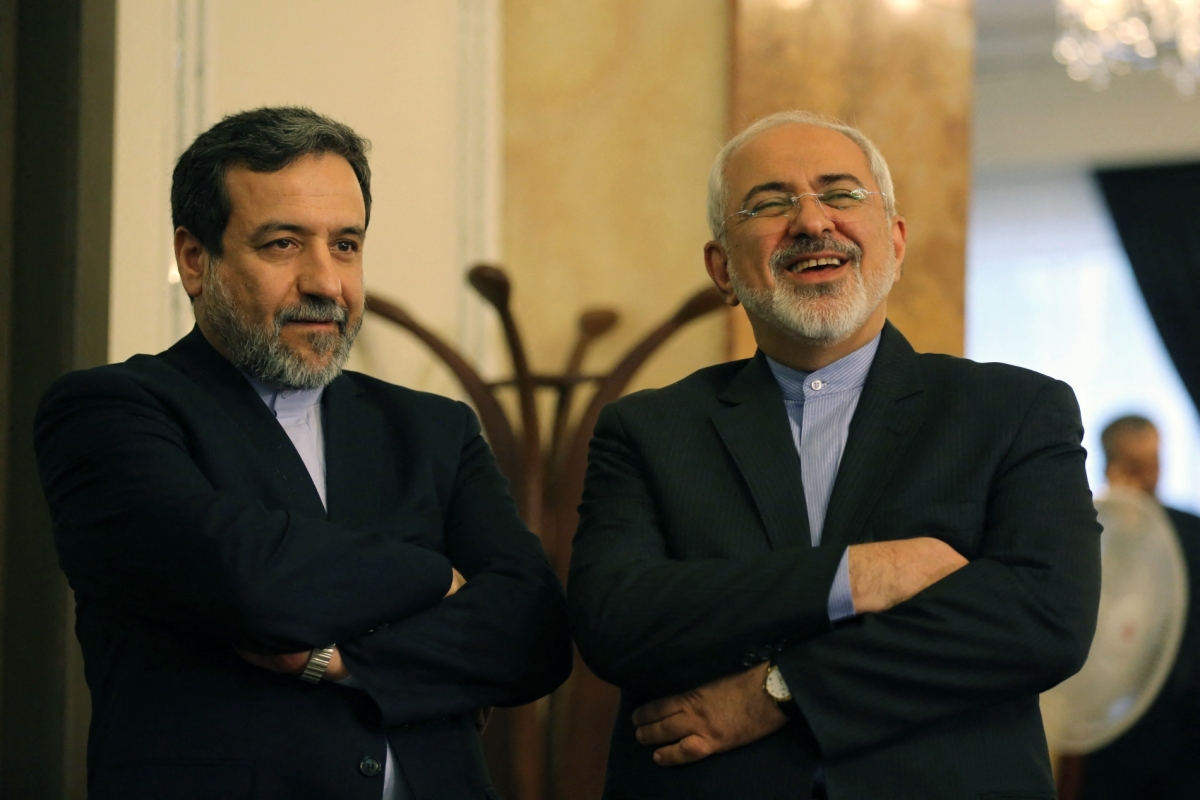
Iranian Foreign Minister Javad Zarif (R) and Deputy Foreign Minister and chief nuclear negotiator Abbas Araghchi react as they listen to President Hassan Rouhani (unseen) speaking during a press conference in Tehran on 3 April 2015
What made Mohammad Javad Zarif’s recent Foreign Affairs article so explosive was not simply what he proposed, but when and where he proposed it. Zarif argued that Iran should use what he presented as its wartime resilience not to prolong the fight, but to convert it into a lasting settlement with the United States: limits on the nuclear file in exchange for the lifting of sanctions, the reopening of the Strait of Hormuz, a nonaggression pact, and even the possibility of future economic interaction with US companies.
In Tehran, that was immediately read by hardline critics not as strategic flexibility but as an opening to compromise with an enemy still at war. In some corners, the response was ferocious. He was denounced as weak, accused of offering Donald Trump an escape hatch, and, in some cases, subjected to outright death threats. One prominent critic warned that Zarif had days to retract his words or face an angry crowd at his home.
At first glance, that uproar seemed to confirm a familiar story about Tehran: a regime split between pragmatic diplomats who still think in the language of statecraft and hardliner ideologues who know only the language of resistance. But the composition of the Iranian team sent to Islamabad for talks with Vice President JD Vance suggests something more complicated.
The delegation was led not by marginal moderates but by the parliamentary speaker, Mohammad Baqher Ghalibaf, and the foreign minister, Abbas Araqchi, and reportedly numbered around 70 people, including technical specialists in economic, security, and political fields. That is not the profile of a fragmented state improvising under pressure. It looks far more like a regime-sanctioned effort drawing on different arms of the Islamic Republic to test whether a deal could be reached on terms Tehran could tolerate.
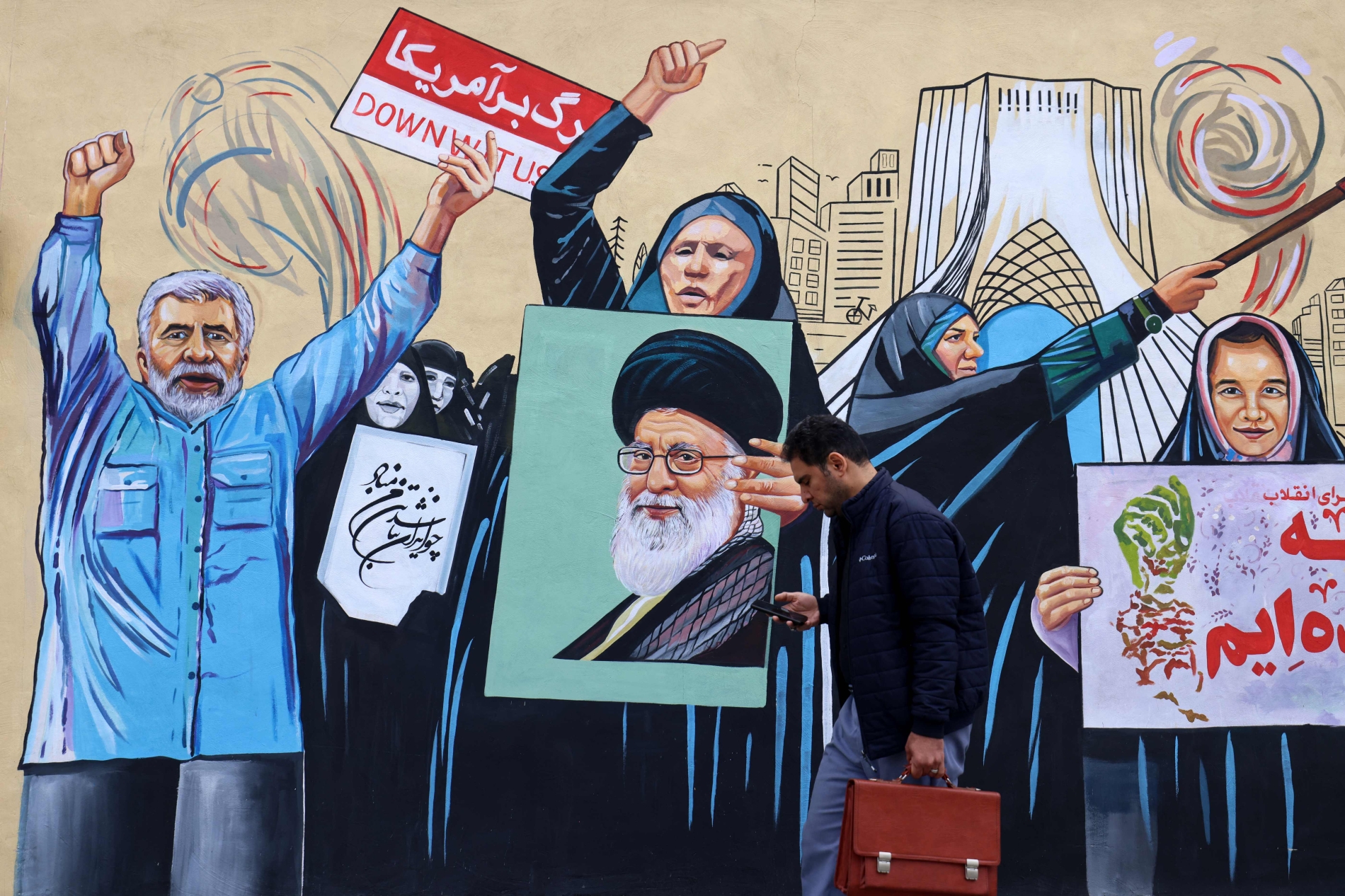
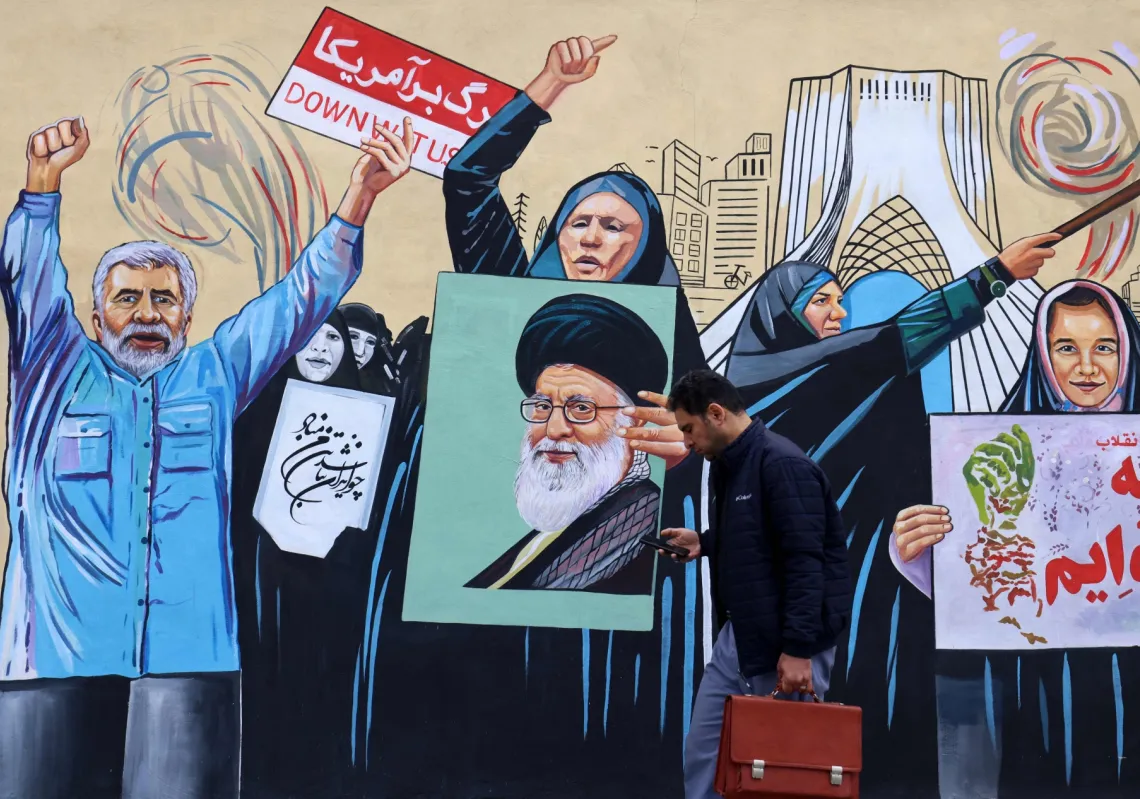
A man walks past a pro-resistance mural in Tehran on 8 April 2026.
Deal vs lasting peace
That distinction matters. In the short term, the real question is not whether parts of the Iranian regime want an end to the war. The available evidence suggests almost all do. The question is whether the appetite for a short-term end to the fighting extends to the kind of lasting peace with Washington that Zarif laid out. On that point, the answer is much murkier.
In a way, Zarif’s article was important because it tried to redefine the meaning of compromise in a highly tense geopolitical moment. He did not write as an apologetic critic of the Islamic Republic, nor as an advocate of Western alignment. He wrote as an establishment insider, arguing that Iran had already demonstrated enough resilience to negotiate from strength. In his framing, a peace deal would not be a surrender but the harvesting of wartime gains. That is why the article was controversial. Had Zarif called for concessions from a position of Iranian weakness, he would have been dismissed as naïve.
What made Zarif dangerous to his critics was that he called for diplomacy from a position that he himself described as an advantage
What made him dangerous to his critics was that he called for diplomacy from a position he described as an advantage. That challenged one of the central emotional and political claims of wartime hardliners: that endurance itself must remain the strategy, not the means to another strategy.
Yet the backlash also revealed something deeper than ideological rage. It showed that in Tehran, diplomacy is not merely about substance. It is about authority. Who gets to signal? Under what mandate and in whose name?
Zarif's article may have reflected one strand of elite thinking, but by publishing it in an American journal for an elite foreign policy readership, he was also speaking outside the tightly managed channels through which the Islamic Republic prefers to communicate. That made the article look less like an authorised regime position than like an intervention in the debate over what the regime should do next. In a wartime system shaped by suspicion, that alone was enough to trigger a severe response.
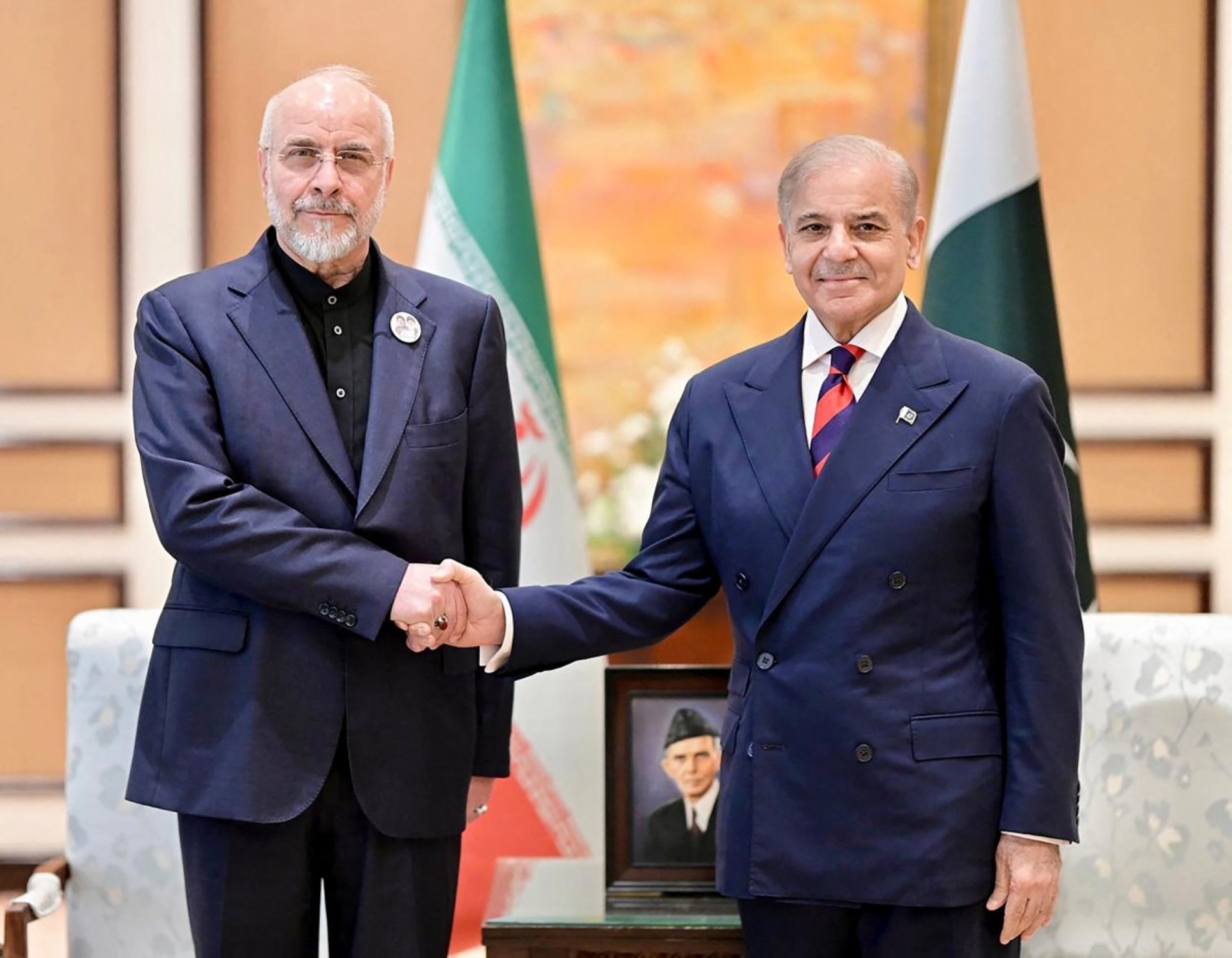
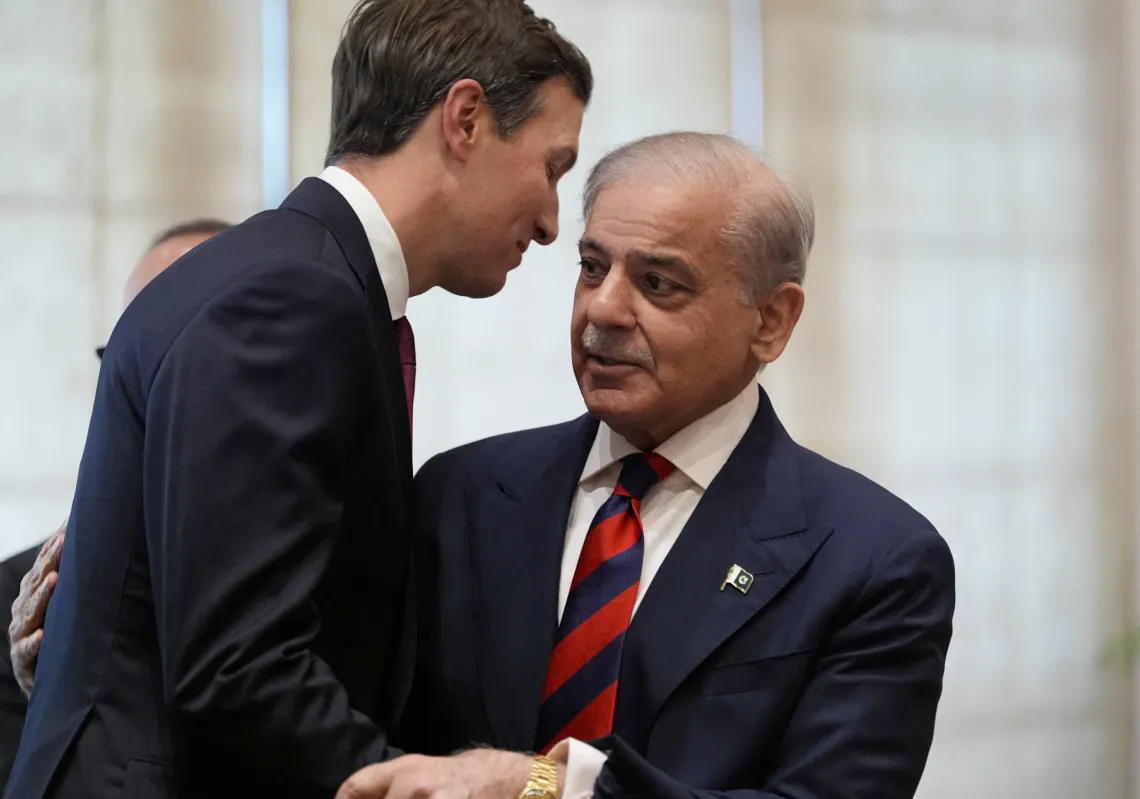
Pakistan's Prime Minister Shehbaz Sharif shakes hands with Iran's parliamentary speaker Mohammad Bagher Ghalibaf during their meeting prior to the US-Iran peace talks in Islamabad on 11 April, 2026.
A serious delegation
And yet Islamabad tells us that the regime itself is not allergic to negotiation. Quite the contrary. Tehran did not send a symbolic team. It sent Ghalibaf, a man whose biography matters here. He is not Zarif's mirror image. He is a former Revolutionary Guards commander, a figure of the security (and so-called powerful "deep-state") state, and someone whose presence itself signals that any serious diplomacy now has to pass through institutions closer to the coercive centre of the regime. Beside him was Araqchi, an experienced diplomat who has long represented the more technical, negotiated face of Iranian statecraft.
Around them, according to reporting from Islamabad, was a large delegation spanning political, security, and economic portfolios. That is not the anatomy of factional collapse. It is closer to a coordinated regime effort to see whether battlefield endurance could be converted into a political arrangement.
This is where many outside observers get Tehran wrong. They often confuse public noise with actual decision-making. The Islamic Republic is noisy by design. It contains competing institutions, rival personalities, ideological entrepreneurs, and media ecosystems that often speak in radically different registers. But on questions of war and peace, the system has historically shown an ability to narrow debate once the core leadership decides what line to pursue.
Public argument, even ugly public argument, does not necessarily mean strategic incoherence. In fact, it can serve a purpose: testing reactions, signalling limits, intimidating dissenters, and preserving ambiguity until a final line is set.
That is why the contrast between the message from Zarif's Foreign Affairs article and the failed talks in Islamabad should not be overstated. Zarif's article did not prove that one camp wants peace while another wants endless war. At best, it revealed differences in method, timing, and political ownership.
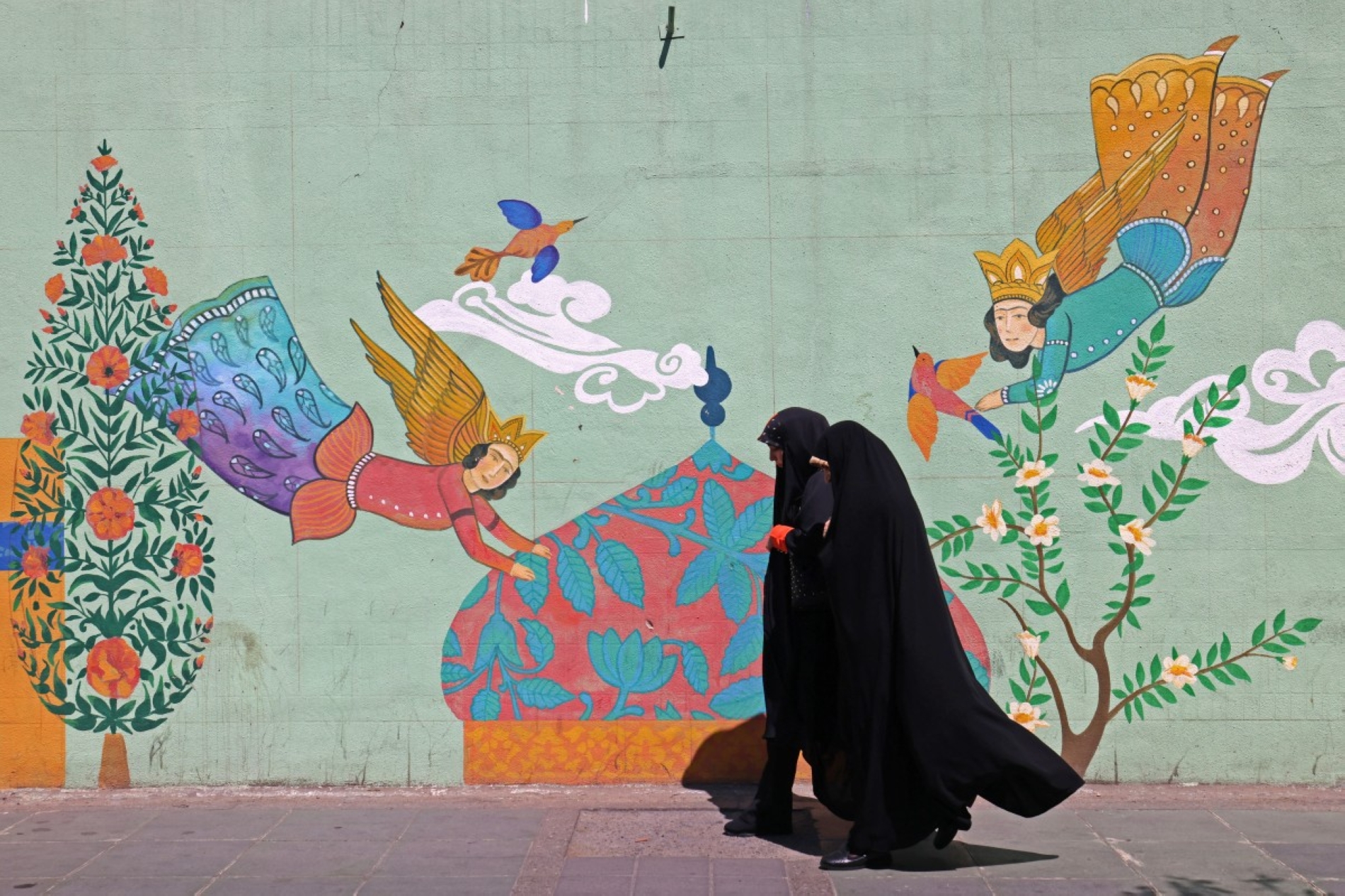
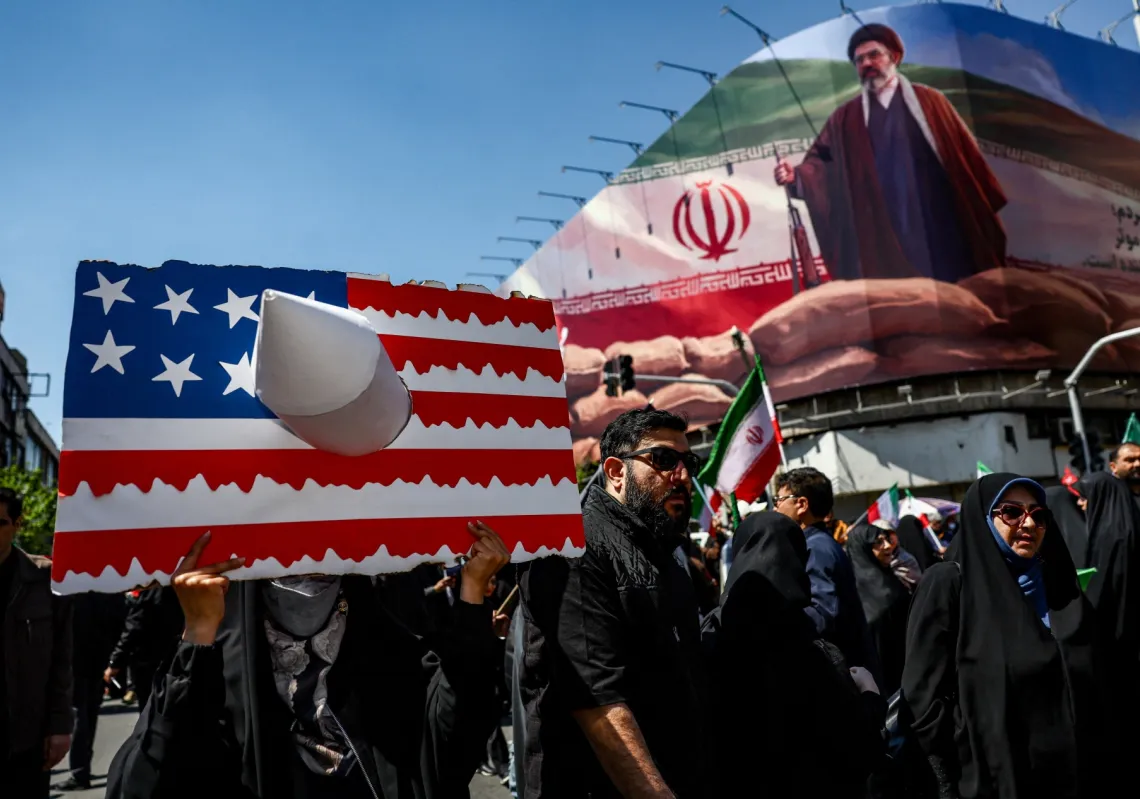
Women walk past a wall mural along the roadside in Tehran on 11 April 2026.
The men who attacked Zarif were not necessarily rejecting all diplomacy forever. Many were rejecting the idea that a former foreign minister, writing in a US magazine, should appear to define the acceptable terms of peace. The delegation to Pakistan, by contrast, represented diplomacy brought back under regime control.
Major gap
Still, there is a major gap between these two things: between accepting talks to end a dangerous war and embracing the sort of lasting peace Zarif described. The Islamabad team itself suggests where that line may lie. Reuters reported that Iran's delegation came with demands centred on unfreezing assets, sanctions relief, wartime compensation, and recognition of Iranian nuclear rights, while broader reporting on the talks pointed to the enormous gulf that remained over uranium enrichment, missiles, regional alliances, and the future of Hormuz.
What that suggests is that the Iranian leadership is not prepared to normalise relations with the US in any deep sense. It suggests a leadership interested in ending the war without abandoning the deterrent architecture on which the Islamic Republic now believes its survival depends.
That is a much narrower objective than Zarif's. He was writing about something closer to a strategic reset: not friendship, certainly, but a stable arrangement in which each side accepts the other's permanence and builds mechanisms to reduce the chance of future conflict. That is precisely where the system's hard edge begins to resist.
A short-term deal can be sold inside Tehran as a product of resistance. A durable peace is harder. It requires not only tactical flexibility but a different theory of the US itself. It requires believing that Washington can be bound by agreements, that de-escalation can outlast the immediate crisis, and that the Islamic Republic's legitimacy is not damaged by an openly negotiated modus vivendi with its principal enemy. Those are much heavier lifts than reopening a diplomatic channel in Islamabad.
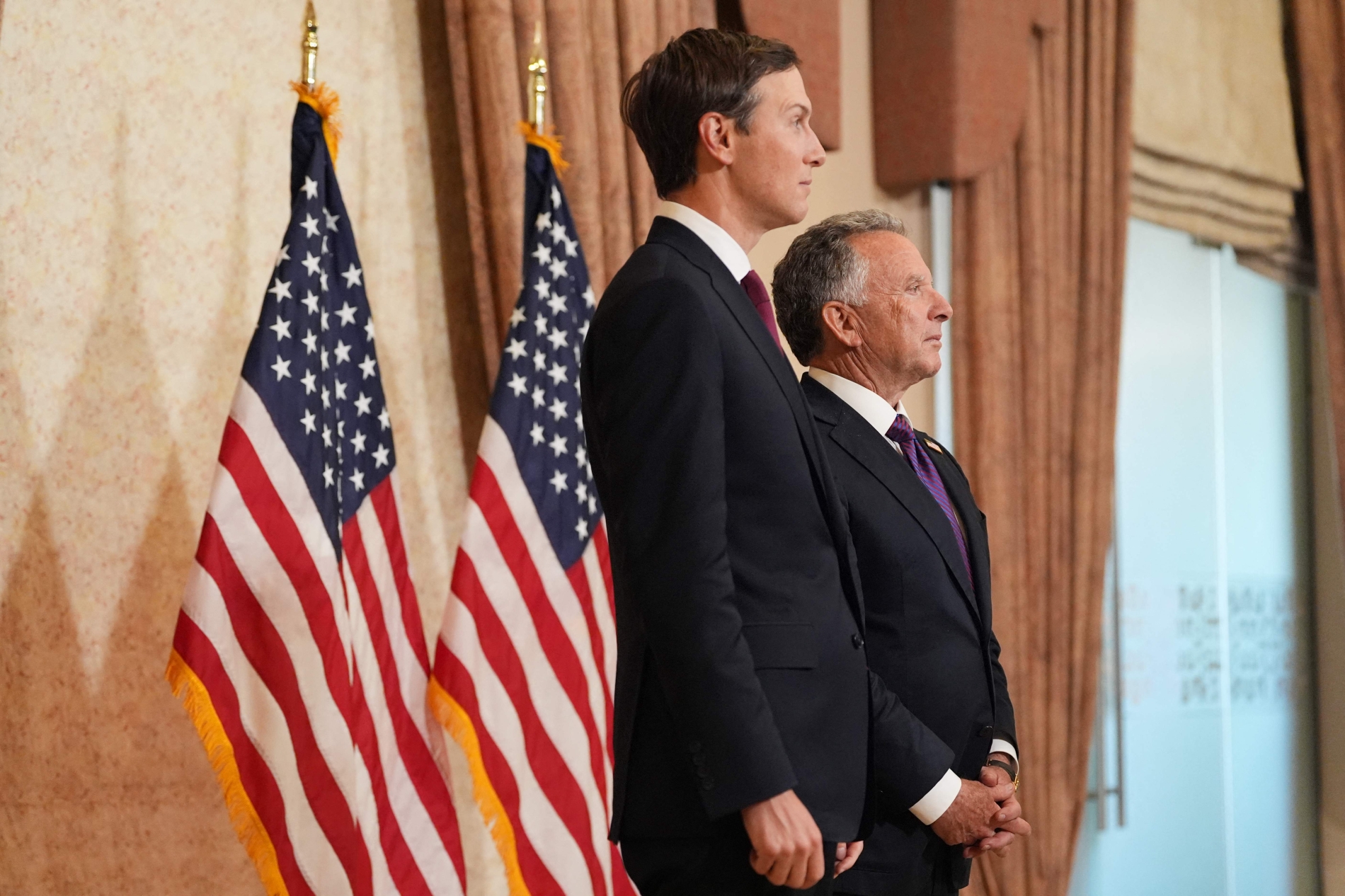
Vice President JD Vance at a news conference as Jared Kushner, left, and Steve Witkoff, Special Envoy for Peace Missions, listen on 12 April 2026, in Islamabad.
Hardliner gains
There is also a structural reason for caution. The war has strengthened the part of the regime that is least inclined to trust peace. Security institutions and those politically aligned with them can accept negotiations when the costs of war become too high or when leverage must be monetised.
But lasting peace is another matter. Peace can lead to the redistribution of power within the Iranian Islamist system. It elevates diplomats, economists, and technocrats. It weakens the monopoly of institutions whose authority is built on permanent confrontation. It invites new social expectations at home. It raises the old question of whether the Islamic Republic can normalise externally without beginning to loosen internally. For a system built on controlled tension, that is not a technical concern. It can be existential.
So, the lesson of the Zarif controversy is not that Tehran is hopelessly divided. It is that the system may be more unified than the shouting suggests, but unified around a limited goal. The delegation to Pakistan showed that Iran's political, diplomatic, and security institutions can still come together when they believe talks may help end a costly war.
It did not show that they are ready to embrace Zarif's larger idea of a lasting peace with America. That is the boundary now coming into view. Tehran can likely contemplate a deal, but it is far less clear that it can yet imagine lasting peace.