Glimpses of Bush's Iraq debacle appear in Trump's foray into Iranhttps://en.majalla.com/node/330615/politics/glimpses-bushs-iraq-debacle-appear-trumps-foray-iran
Glimpses of Bush's Iraq debacle appear in Trump's foray into Iran
The Iraq war was viewed as disastrous in retrospect, while the Iran war was unpopular from the get-go. Al Majalla highlights the similarities and differences between the two.
Glimpses of Bush's Iraq debacle appear in Trump's foray into Iran
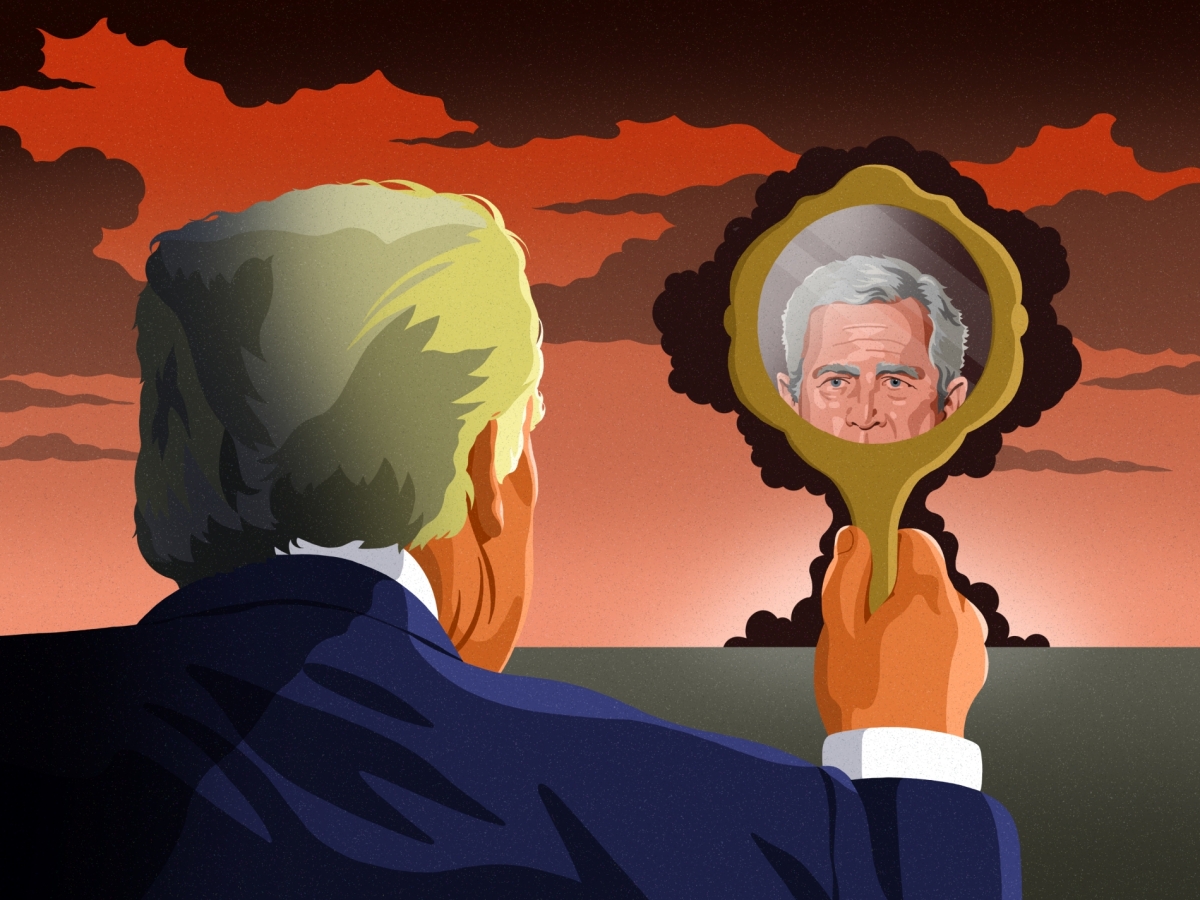
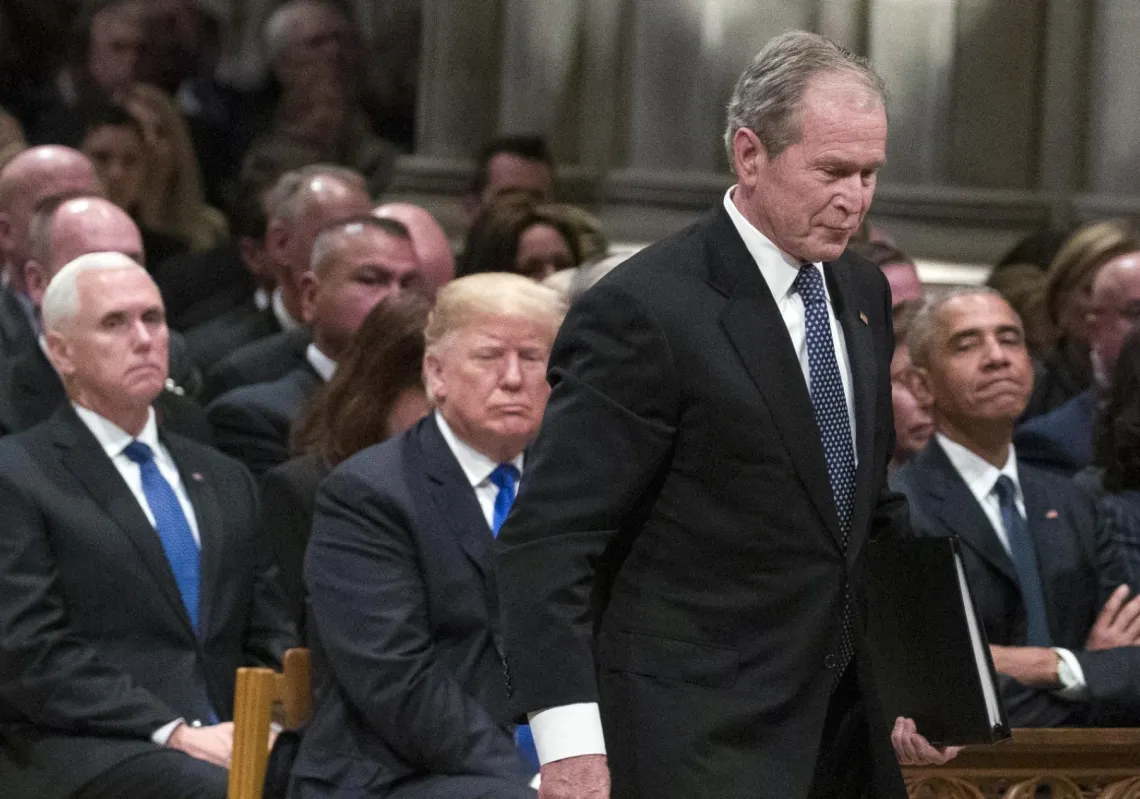
In a speech in Riyadh in May 2025, US President Donald Trump appeared to criticise his White House predecessors, including fellow Republican President George W. Bush, for invading Iraq in 2003, bringing down Saddam Hussein’s regime, and trying to rebuild the Iraqi state. Trump’s barb was at “so-called nation builders” and “neocons” who spent “trillions and trillions of dollars” in places like Iraq and Afghanistan. It is ironic that, less than a year later, Trump has made the same mistakes that Bush made by invading Iraq 23 years ago.
Like Bush, Trump focused heavily on the military aspects of destroying the adversary. Bush relied on advanced technology such as cruise missiles to overwhelm the Iraqi military in a campaign he dubbed ‘Shock and Awe.’ US-led forces reached Baghdad in 22 days and brought down the regime with a loss of only 172 coalition soldiers (Iraqi military and civilian casualties were of course far more). As an initial military operation, it was a complete success, but security in Iraqi cities collapsed after Saddam’s fall, which showed that—despite Bush’s hopes—the war would not be over quickly.
Assumptions unravel
Press reports regarding the Trump administration’s decision to attack Iran with Israel on 28 February 2026 show that, like Bush, Trump expected a short war. Unlike Bush, he was not planning to take the enemy’s capital. Instead, Trump thought his own ‘shock and awe’ would decapitate the Iranian leadership and that Iran’s remaining military forces would be unable to retaliate effectively.
On 8 April, Trump’s Secretary of War Peter Hegseth listed the Iranian military losses, from its leaders to its air force, navy ships, missiles, and production facilities. He also poured scorn on Iran’s failed attempts to hit the American aircraft carrier USS Abraham Lincoln.
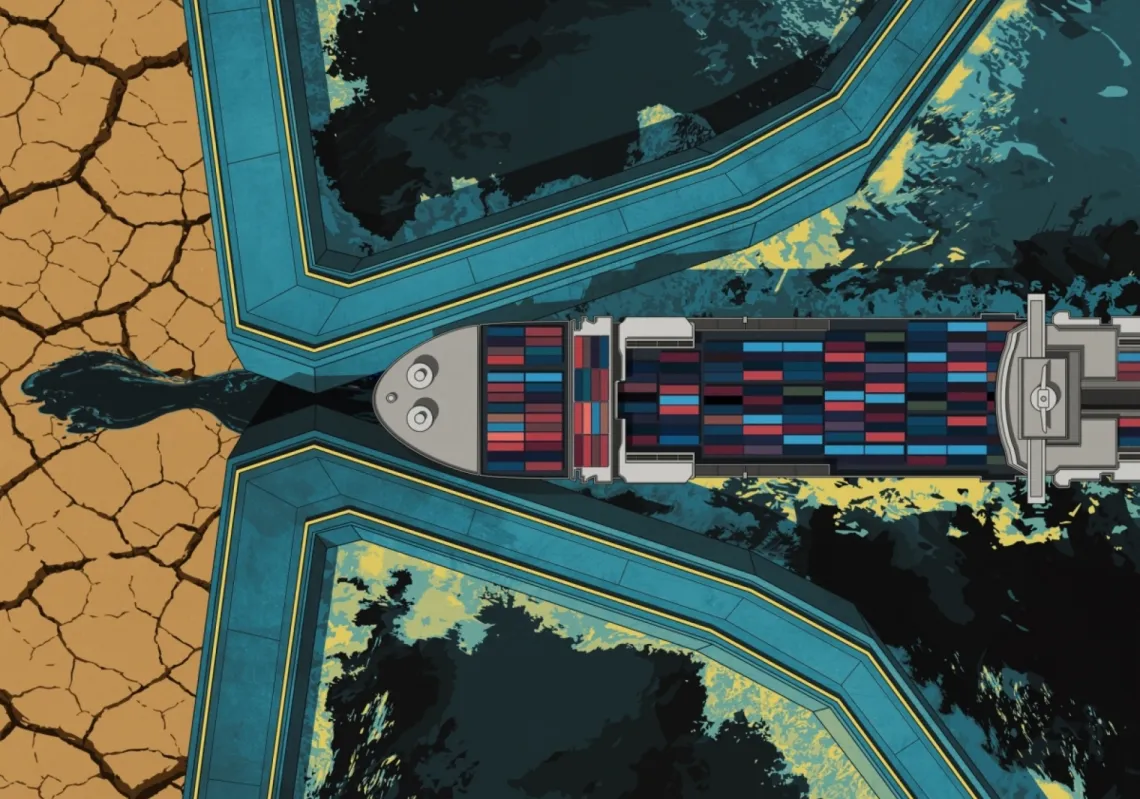
But there was a problem: the Iranians were still firing missiles and drones, their new national leadership was still a cohesive authority (which surprised the Americans and Israelis), and their military forces were blocking the commercially critical Strait of Hormuz and damaging energy, water, and civilian infrastructure in neighbouring Gulf states, most of them US allies. Like Bush, Trump found he could not re-establish security.
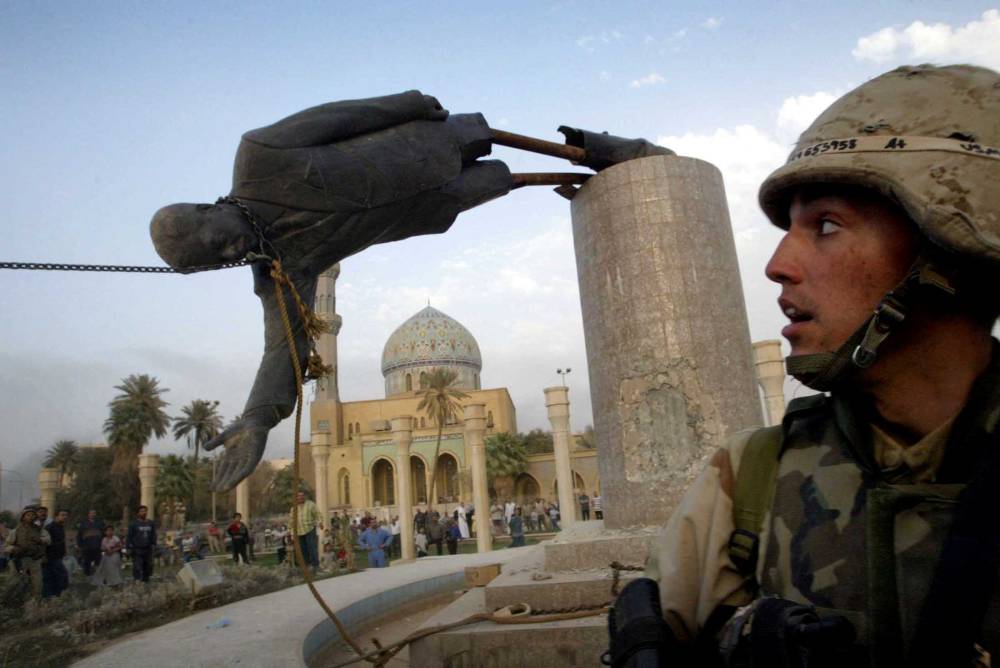
A US soldier watches as a statue of Iraq's President Saddam Hussein falls in central Baghdad's Firdaus Square, in this file photo from 9 April 2003.
Historians criticise Bush and his team for not organising a plan for Iraq after Saddam’s fall, but they never expected Iraqi government employees and police to abandon their posts in fear of retribution from fellow citizens. Bush’s commanders also disbanded the Iraqi army, aggravating the security problems. Asked about the looting in Baghdad and other cities, Bush’s influential Secretary of Defence Donald Rumsfeld said casually: “Stuff happens, and it’s untidy. Freedom’s untidy.”
Unfortunately for the Americans, the looting and insecurity in Iraq developed into armed resistance, for which there was no counterinsurgency plan. An American team that included the National Security Council’s then director for Iraq, Brett McGurk, tried to establish a new Iraqi government that could contain the Iraqi resistance, with Sunni Arab groups fighting the Americans in western Iraq and Muqtada Sadr’s Shiite group Jaysh al-Mahdi fighting them in central and southern Iraq.
American intelligence reportedly told Trump in late February 2026 that Israel's claim that the Iranian regime would quickly collapse was ridiculous
Mistakes and miscalculations
According to a report in The New York Times on 7 April, American intelligence told Trump in late February 2026 that Israel's claim that the Iranian regime would quickly collapse was ridiculous. Moreover, Gen. Dan Caine, the chairman of the Joint Chiefs of Staff, warned Trump about the risk that Iran would close the Strait of Hormuz, but Trump thought Iran would be unable to after its leadership had been decimated.
Oddly, and just like in Baghdad in 2003, the US military did not position its forces in case the war against Iran deteriorated, despite the Pentagon in March saying it did not have the ships to escort convoys of commercial ships through the strait, while all four US minesweeping ships were sitting in port on America's East Coast. Similarly, the Americans had to be quick-moving anti-missile systems from Europe and Asia to the Gulf when Iran's missile attacks continued. Only a week after the Iranians successfully blocked passage through the strait, did the Americans begin to move soldiers and sailors from Japan and the US to the Gulf, giving the option of a limited land operation.
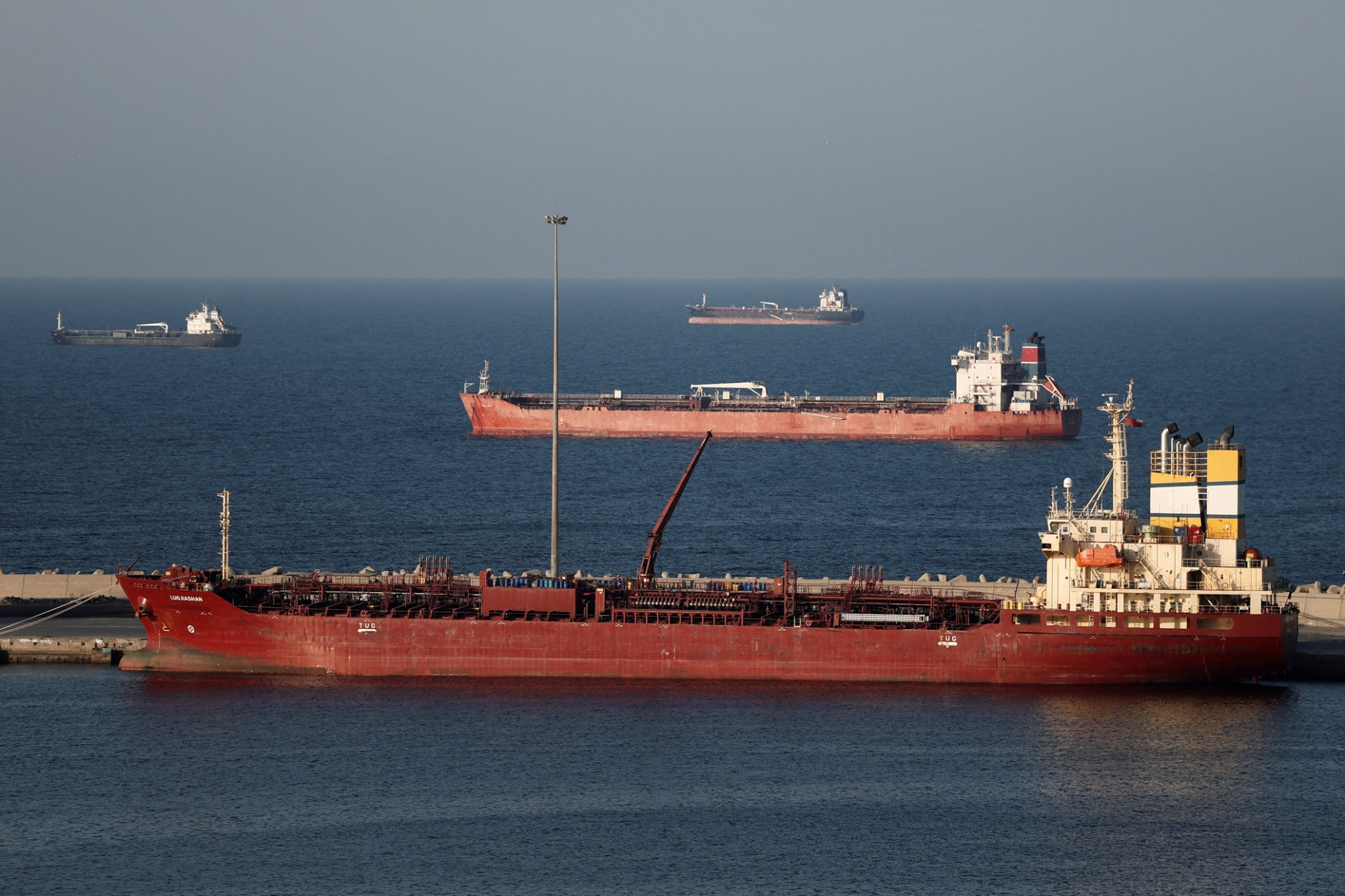
An oil tanker docked in Muscat port, Oman, amid Iranian threats to close the Strait of Hormuz, on 7 March 2026.
It is important to note that neither Bush nor Trump was well served by professional military and intelligence officers. Historians have shown how the CIA intentionally emphasised unreliable intelligence to exaggerate the threat of weapons of mass destruction in Iraq.
Similarly, Gen. Tommy Franks in US Central Command (CENTCOM) ignored warnings from the then Army Chief of Staff Eric Shinseki that the Iraq invasion force was too small. Shinseki said in February 2003 that "several hundred thousand" troops would be needed for postwar Iraq, which drew an angry reaction from Rumsfeld, who feared that a large force would spark domestic political debate. Years later, CENTCOM acknowledged that Shinseki was right (Shinseki retired a few months after his remarks).
In 2026, a New York Times investigation suggested that Gen. Caine was careful not to recommend against attacking Iran, after he warned of problems. Likewise, CIA director John Ratcliffe also avoided recommending against the attack. In the face of implicit acquiescence from his military and intelligence chiefs, Trump was urged to attack by Hegseth, Secretary of State Marco Rubio, and Israeli officials.
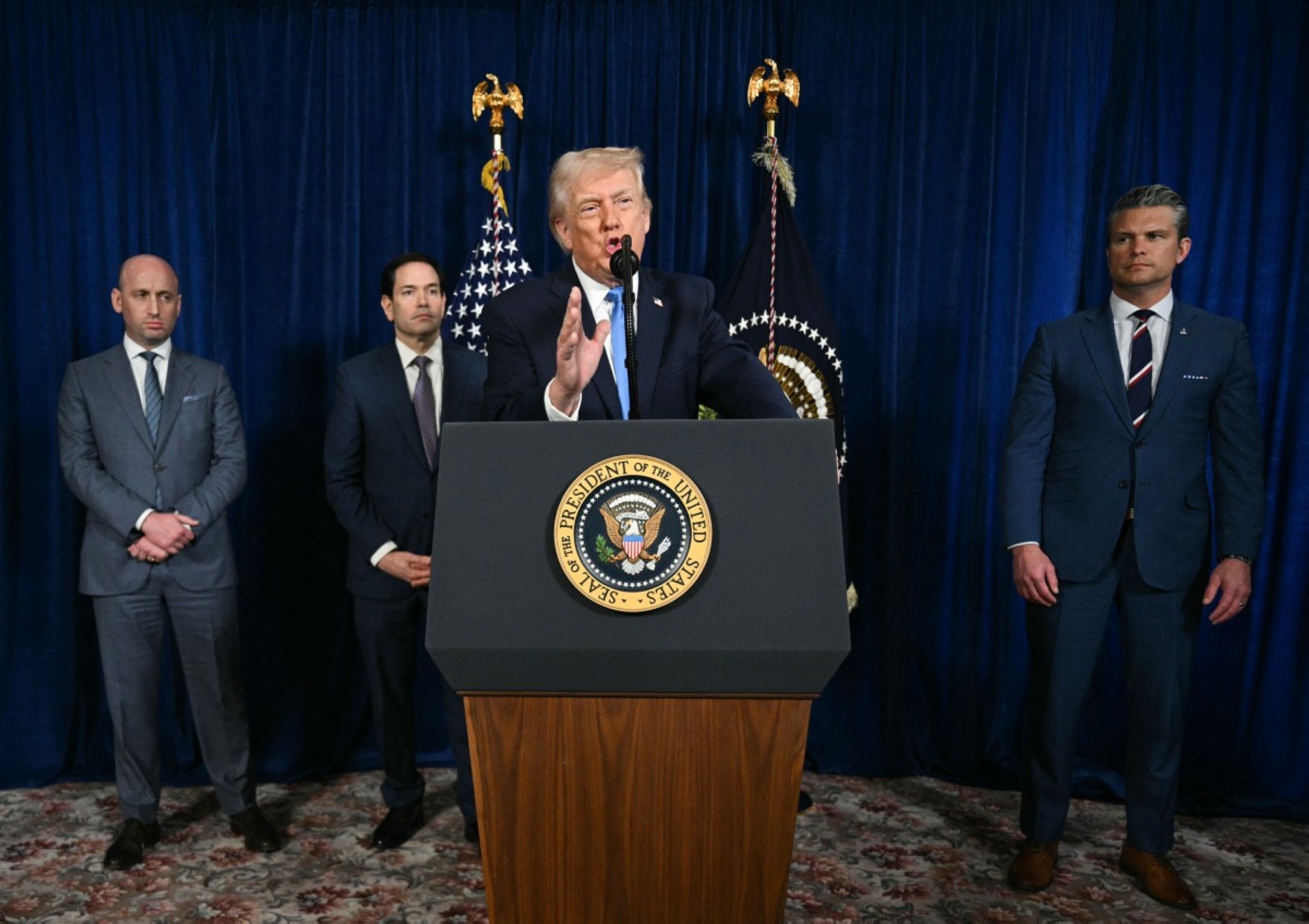
US President Donald Trump, alongside Deputy Chief of Staff Stephen Miller, Secretary of State Marco Rubio and Defence Secretary Pete Hegseth at Trump's Mar-a-Lago residence in Palm Beach, Florida, on 3 January 2026.
Then and now
Bush was conscious of the diplomatic requirements before he invaded Iraq in 2003. He coordinated closely with the British Prime Minister Tony Blair, who sent 45,000 soldiers to join the American attack. Several other European countries provided small military elements and political support. Bush also got some implicit support from Arab states.
Bush's Secretary of State Colin Powell and the American diplomatic corps were told to justify the war to get international support, which led to 32 countries joining the 'Coalition of the Willing' (even though most did not send any forces). Bush's father undertook an even bigger diplomatic push before liberating Kuwait in 1991.
By contrast, Trump made no such diplomatic effort in 2026 and kept the State Department on the margins. It knew so little about the decision to go to war on 28 February that it did not even warn American citizens to leave the Gulf until 2 March. Trump made no effort to coordinate with allies or to build a coalition with anyone except Israel, so the war shocked America's European and Middle Eastern partners. It was only when Iran closed the Strait of Hormuz that Trump started demanding help from NATO (his demands got short shrift).
With the US midterm elections coming up in November, Trump may suffer political damage from his decision to go to war in the Middle East. In 2004, about half the public still supported the war in Iraq, but by 2006, far fewer did. This had an effect in the Congressional elections of that year, halfway through Bush's second term. They were a disaster for Bush and the Republicans, as the Democrats seized control of both chambers, laying the ground for Barack Obama to win the White House in 2008.
Hugely unpopular
Trump should pay close attention. Opinion polls in the months before the 2006 midterms showed that 35-40% of Americans approved of Bush. Trump's approval ratings today hover around similar levels. Even Trump's famously loyal political base is beginning to turn. Former Trump devotee and Georgia Representative Marjorie Taylor Greene said that Trump betrayed the Make America Great Again (MAGA) movement by launching a war against Iran and urged his impeachment.
Conservative media personalities such as Alex Jones (4.4 million followers), Megyn Kelly (3.6 million) and Tucker Carlson (17.4 million) have denounced Trump for putting Israeli interests ahead of American interests. Others, such as Glen Beck (2.2 million) and Mark Levin (5 million), still support Trump, but the criticism has irked the president, leading him to denounce his denouncers.
There is a key difference. In 2006, the American economy was strong, and the Iraq war did not raise energy prices. In 2026, however, the war against Iran is already having an effect. Before the war, gasoline prices averaged around $3 per gallon. Since the war, a gallon is now more than $4. Trump knows the economic impact of the war will worsen the Republican Party's chances in the upcoming elections. An opinion poll from CNN at the end of March indicated that 65% of Americans believe Trump's Iran war and tariffs are making the economy worse. Only 31% supported his economic policies.
Six months is a long time in American politics. The war may end soon, and the polls may be wrong, but if the Strait of Hormuz remains closed for much longer, there could be more economic pain coming, with price inflation and higher interest rates. If that arrives before November, it could give the Democrats a majority in the House of Representatives again, and perhaps even in the Senate.
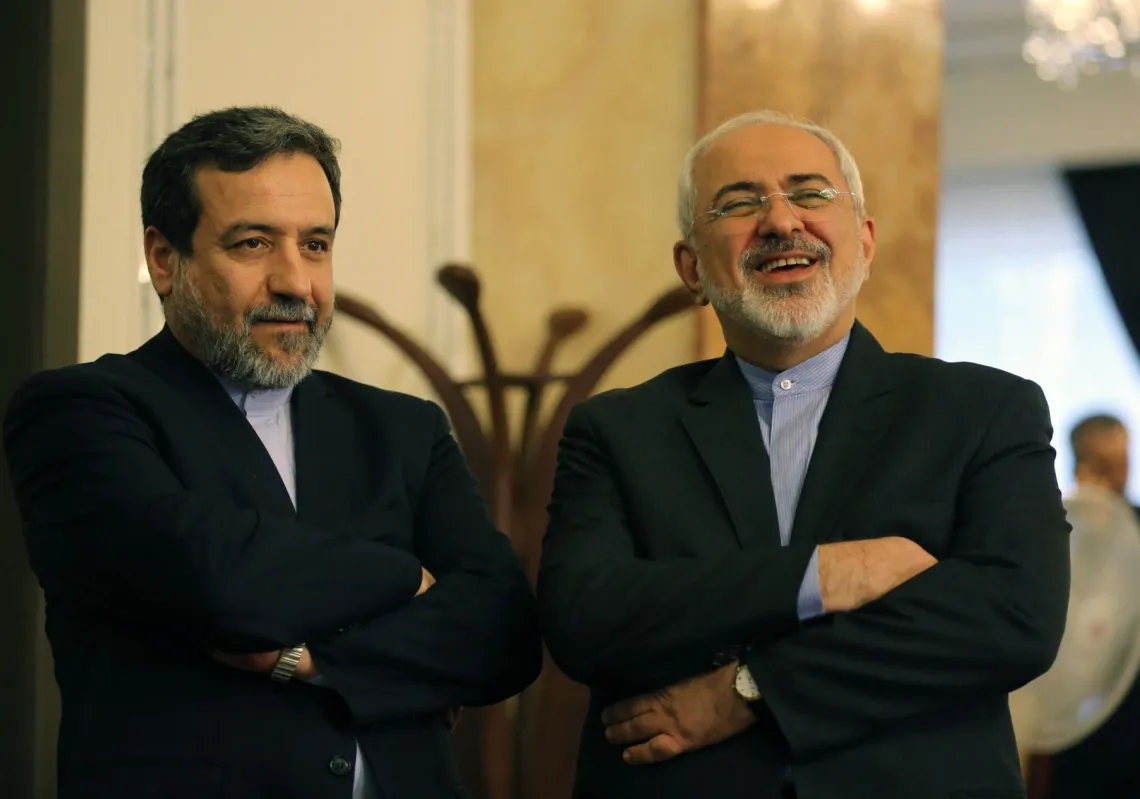
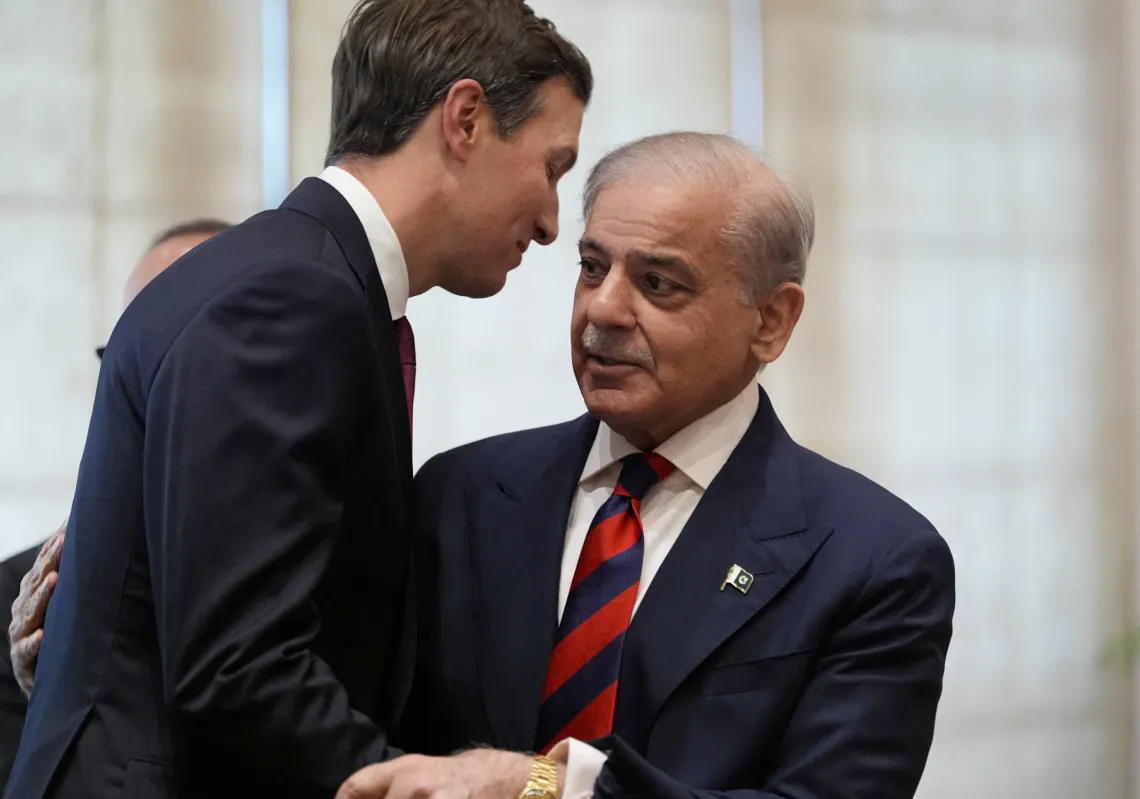
Haunted by the spectre of the 2006 Democratic election tsunami, Trump's hopes lie in agreeing a deal with Iran through Pakistani mediation. The costs of not doing so could be Trump's domestic agenda, and even an impeachment trial. For many, that will seem far-fetched, but for Trump, there is still fighting to be done after the bombs stop falling.