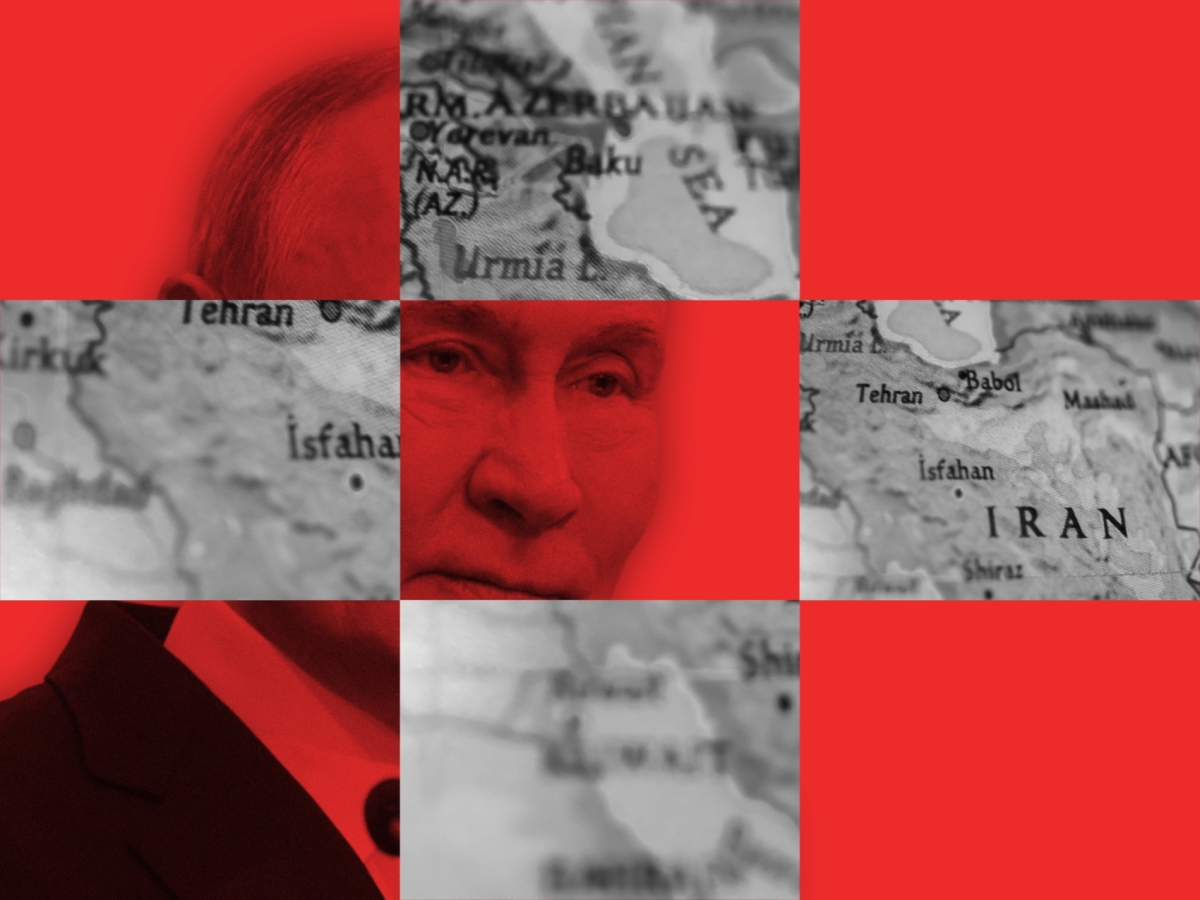
The Iran war brought Russia both opportunity and risk

Moscow saw oil and gas revenue double in April and was happy to see US resources diverted away from Ukraine. But an extended war could have carried serious costs for the Kremlin.

AFP / Al Majalla

The Iran war brought Russia both opportunity and risk

The strategy of providing limited support to Iran while maintaining an indirect role in the US-Israeli war seemed to have paid off for Moscow. Yet, despite all the short-term benefits Russia derived from instability in the Middle East, from a strategic planning perspective, an extended war in Iran could have carried serious costs for the Kremlin. As pro-Kremlin political analyst Fyodor Lukyanov noted, no war goes as planned, but each one becomes a catalyst for trends that emerge in peacetime and, as a rule, makes them irreversible.

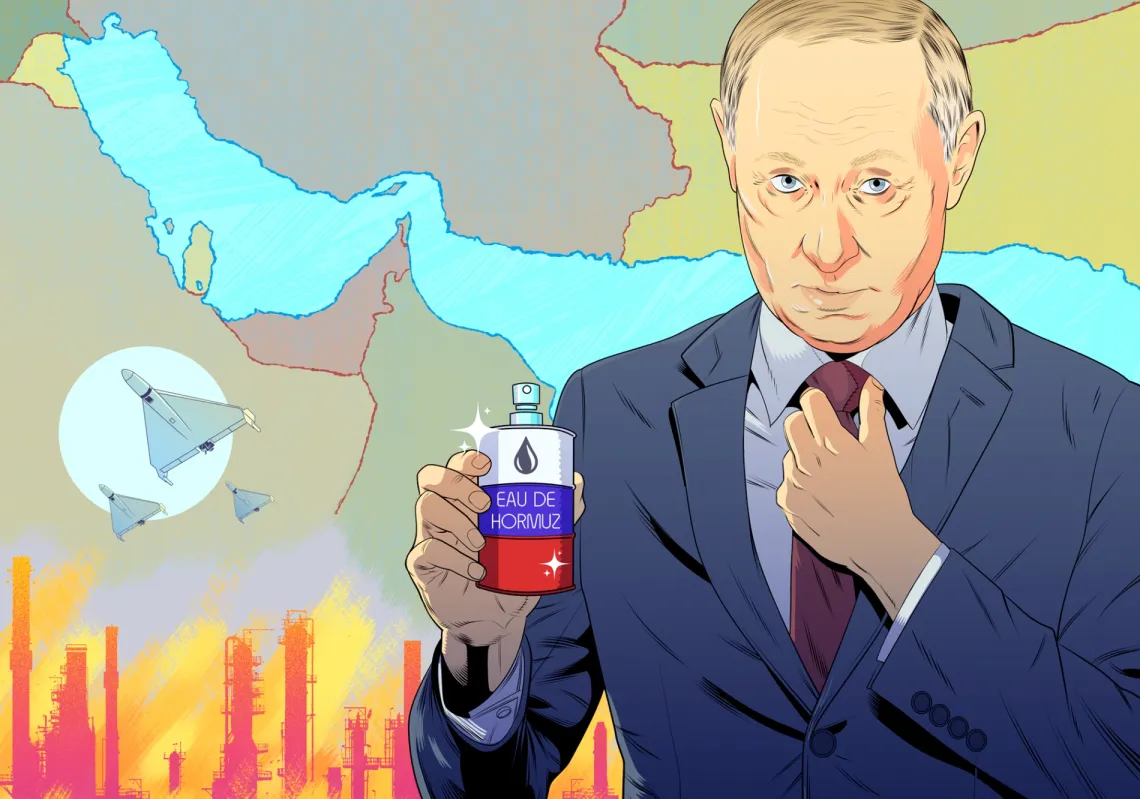
According to forecasts by Russian economists, oil and gas revenues were set to double in April compared with March. Unlike other vessels, tankers from Russia’s “shadow fleet” (often subject to sanctions for transporting Iranian oil) passed through the Strait of Hormuz virtually unhindered.

According to some estimates, 12 Russian vessels passed through the strait in a single day in early April, showing how it is only closed to some. Russia’s oil and gas profits would have been higher had Ukraine not struck its oil and gas infrastructure, significantly reducing export capacity. Oil pumping through the Druzhba pipeline was halted at the end of January, which led to the suspension of Russian oil supplies to Hungary and Slovakia. Europe is feeling the effects.

Risks and benefits

Rising energy prices are a temporary rather than a systemic factor that cannot be incorporated into any long-term planning. It is similar to food and fertiliser exports. According to UN data, around one-third of the world’s fertiliser shipments (about 16 million tonnes per year) pass through the Strait of Hormuz. At the start of the planting season, crop yields are a major concern if farmers cannot buy fertiliser.

Transit disruptions could become critical for the world’s poorest countries, particularly those south of the Sahara. According to various estimates, 90% of the fertilisers used there are imported. Rising gas prices have helped drive up fertiliser prices, which in turn drive up the price of grain. Many are looking to shift their grain procurement to markets with a stable supply of fertiliser, including Russia.

Moscow, flush with grain, is using the price hike to break through some of the political and sanctions barriers to capture new grain export markets that may open due to the disruptions, although some big grain buyers such as Egypt have already said that they will not buy Ukrainian wheat. Alongside this, fuel and fertiliser price rises will increase production costs, potentially affecting long-term yields.
AFP
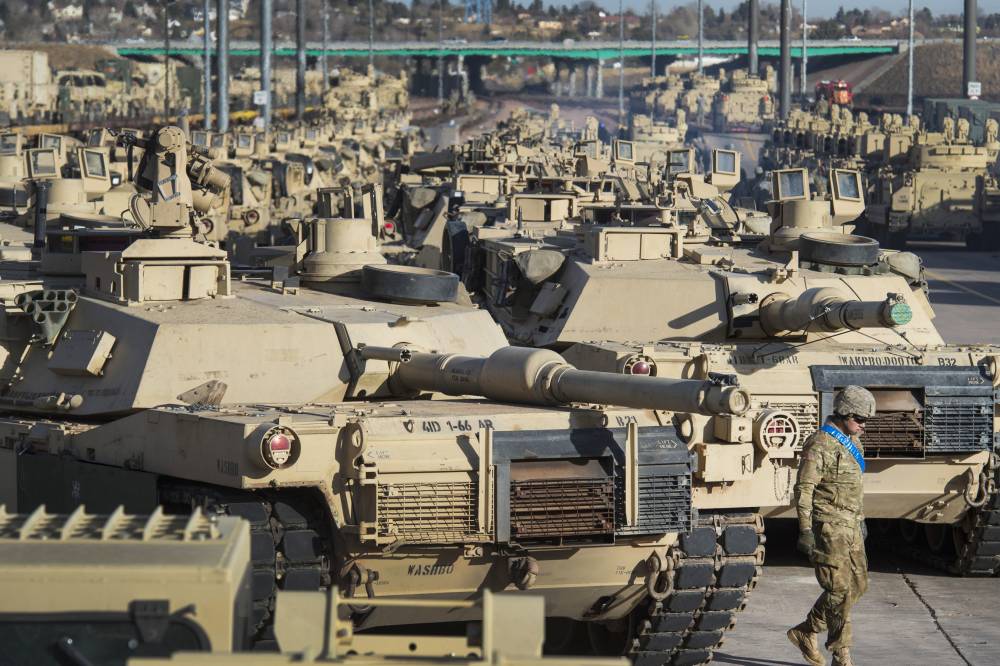
An American soldier walks past a line of M1 Abrams tanks destined for Ukraine.

Military implications

However, the most obvious benefits for Russia from the US-Israeli war against Iran are military. The US shift in priorities from Ukraine to the Middle East means there are fewer resources for Ukrainian air defence.

Some analysts suspect that the US will soon need to restock. In the first 16 days alone, it is thought to have used more than 6,000 defensive and offensive munitions, including nearly 46% of its ATACMS precision-guided missiles and nearly 40% of its THAAD interceptors. Currently, a two-week truce is in place, but should hostilities resume, a protracted war could force the US to redeploy yet more troops and resources, such as from Eastern Europe and South-East Asia.
Moscow may be providing some support in terms of reconnaissance, target acquisition, and missile guidance for airstrikes

War with Iran proved costly for the US, reducing its forces' flexibility and operational capacity for global deployment. Iran's own communications and reconnaissance satellites are extremely limited, so Moscow may have provided reconnaissance support in target acquisition and missile guidance for airstrikes, as well as supplying components for modified Shahed-type drones. 

If the war in Ukraine sparked a drone revolution, then the war in Iran has seen the rise of AI-powered guidance systems in military operations. Russia is likely to take heed, but its adoption into the military is being slowed by a lack of its own neural network libraries. The main technical vulnerability of the Russian system is its dependence on Western firms such as OpenAI and Anthropic.

Seizing the moment

Within the US-led multilateral system, Moscow's options are limited, so it has largely chosen to strike opportunistically from the sidelines, capitalising on others' mistakes. In this way, Moscow hopes to build a network of sustainable partnerships with countries in the Middle East and Asia to consolidate its presence and subsequently expand it.

That could be why Russia was quick to draw comparisons between the US-Israeli war against Iran and its own war against Ukraine, again accusing the West of failing to establish a security architecture in either the Middle East or Europe. Some feel that Russia's advocacy of multilateralism as a means of managing international relations has put Moscow back on the world stage. 

MAXIM SHIPENKOV / AFP
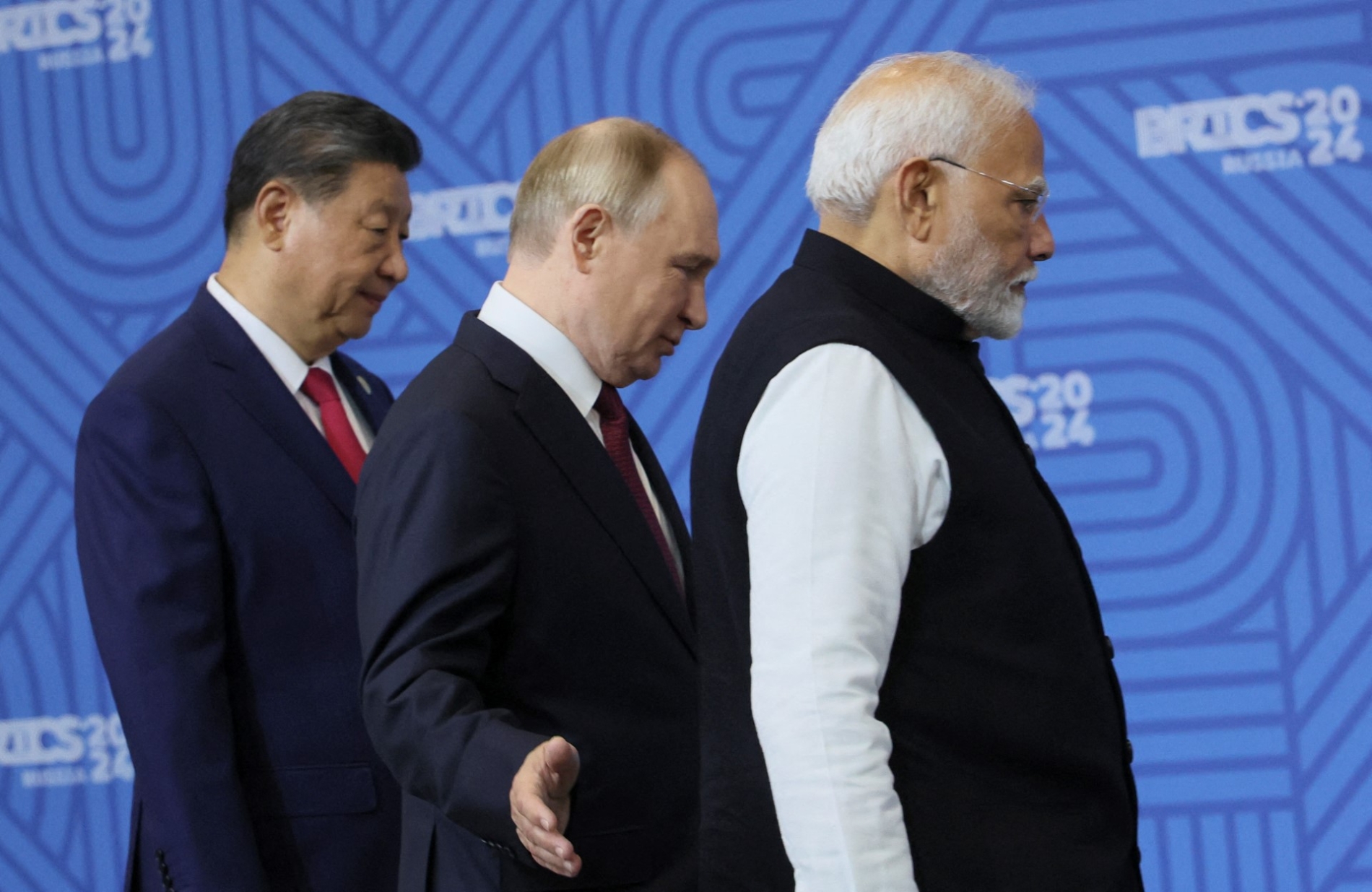
Chinese President Xi Jinping, Russian President Vladimir Putin and Indian Prime Minister Narendra Modi arrive for a family photo during the BRICS summit in Kazan on 23 October 2024.

Still, the US-Israeli war against Iran has placed the BRICS group and the Shanghai Cooperation Organisation (SCO) in a difficult position, because Iran is a member of both. For BRICS and SCO members to essentially ignore an attack on one of their number undermines the significance and credibility of these groups.

Some Russian experts believe that after the war, Iran will have to divert resources to buy weapons—primarily air defence systems and aircraft—to counter future attacks. But Moscow's capacity for rapid deliveries is extremely limited, since all its military-industrial priorities are to keep the war effort going in Ukraine.

In these circumstances, China is likely to emerge as the beneficiary. Last year, Beijing supplied Iran with HQ-9 air defence systems and YLC-8B radar systems, but these were destroyed by the US and Israel in the first few days of the current war.

From the Kremlin's perspective, the prospect of expanding its influence in Central Asia appears more promising. The war in Ukraine has benefited Central Asian states, which have monopolised transit cargo and financial flows and have received substantial Russian investment. In parallel, these former Soviet states now have increased freedom to form their own international relationships, including with the West. If Iran is blown off the map, however, these former 'stans' may be more inclined to remain within the Russian-Chinese orbit.

AFP
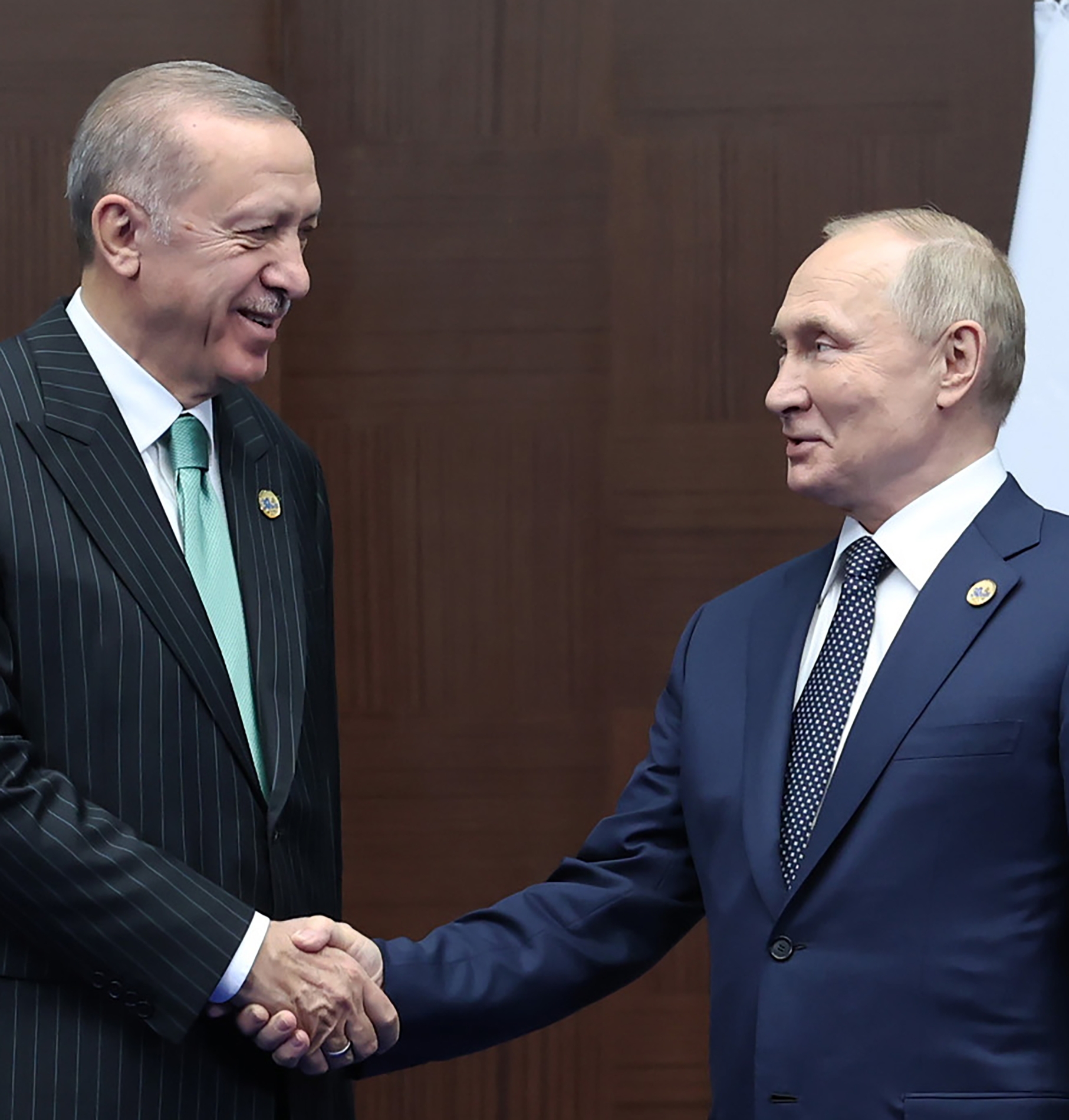
Turkish President Recep Tayyip Erdogan meets Russian President Vladimir Putin on the sidelines of the Conference on Interaction and Confidence Building Measures in Asia (CICA) in Astana, on 13 October 2022.

Potential partnerships

Another opportunity presented by the war in Iran concerns the development of relations between Russia and Türkiye. Both states have reason not to want a zone of instability in the Middle East, which could spread northward to the Caucasus and the Black Sea. Türkiye, Russia, Azerbaijan, and Iran could work together to secure this belt. Ankara may also sense an opportunity to reduce dependence on Washington, stabilise the Caucasus, secure Black Sea transit, link Caspian and Russian routes, and manage the risk posed by armed Kurdish groups along its borders.

Others think that would be fanciful. Türkiye and the US are partners in NATO, and the presidents of each country have good relations. Besides, Moscow-Ankara ties could upset Saudi Arabia, with whom Türkiye is developing relations within a trilateral framework that also includes Pakistan.

Should the Iran war resume, this could hypothetically give Russia diplomatic opportunities, not least to expand its leverage with the United States, but Moscow is unlikely to gain any significant advantage from this situation. While alliances are temporary, interests are more permanent.

font change