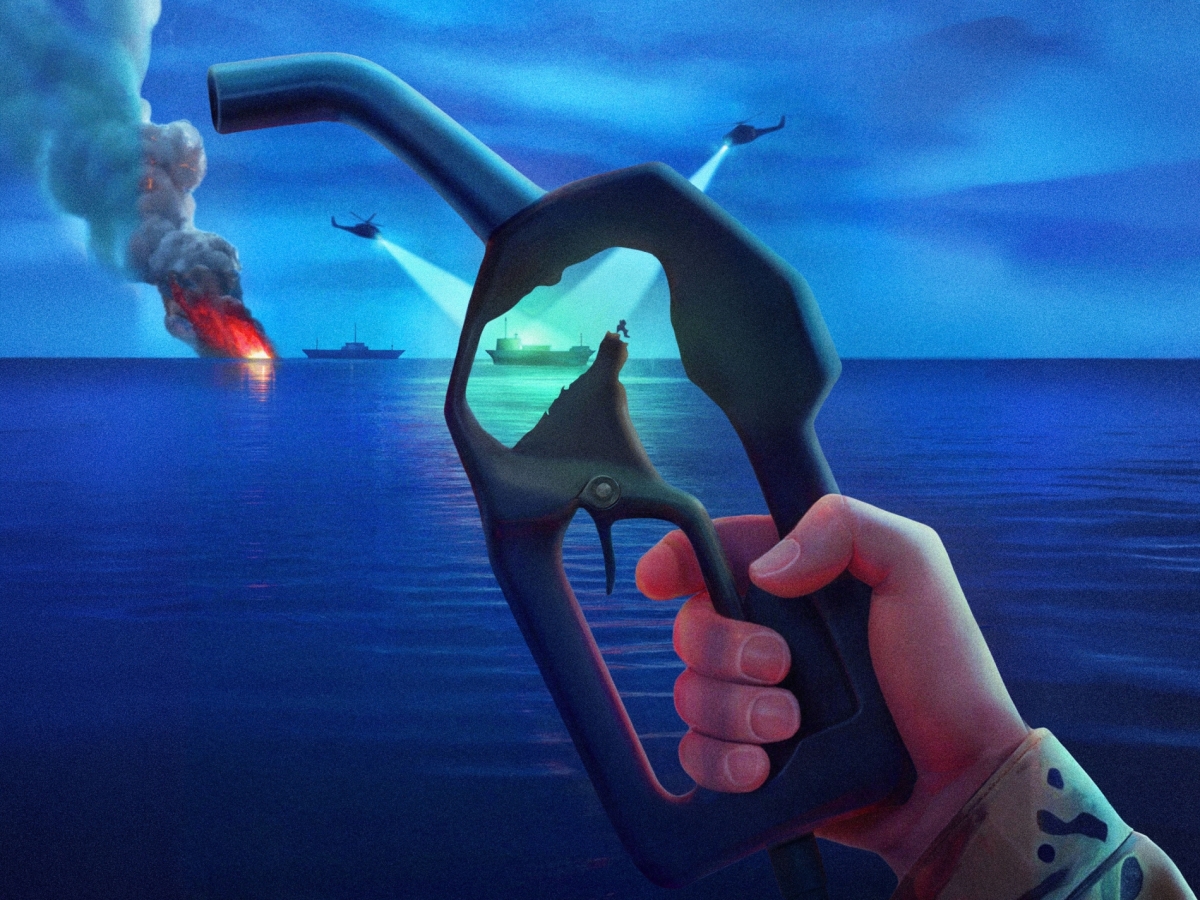

The Strait of Hormuz—a narrow waterway linking the Arabian Gulf to the wider world—is proving a critical link in the global economic order, and especially crucial to global energy security, with around 20% of the world’s oil and liquefied natural gas supplies passing through this maritime choke point.
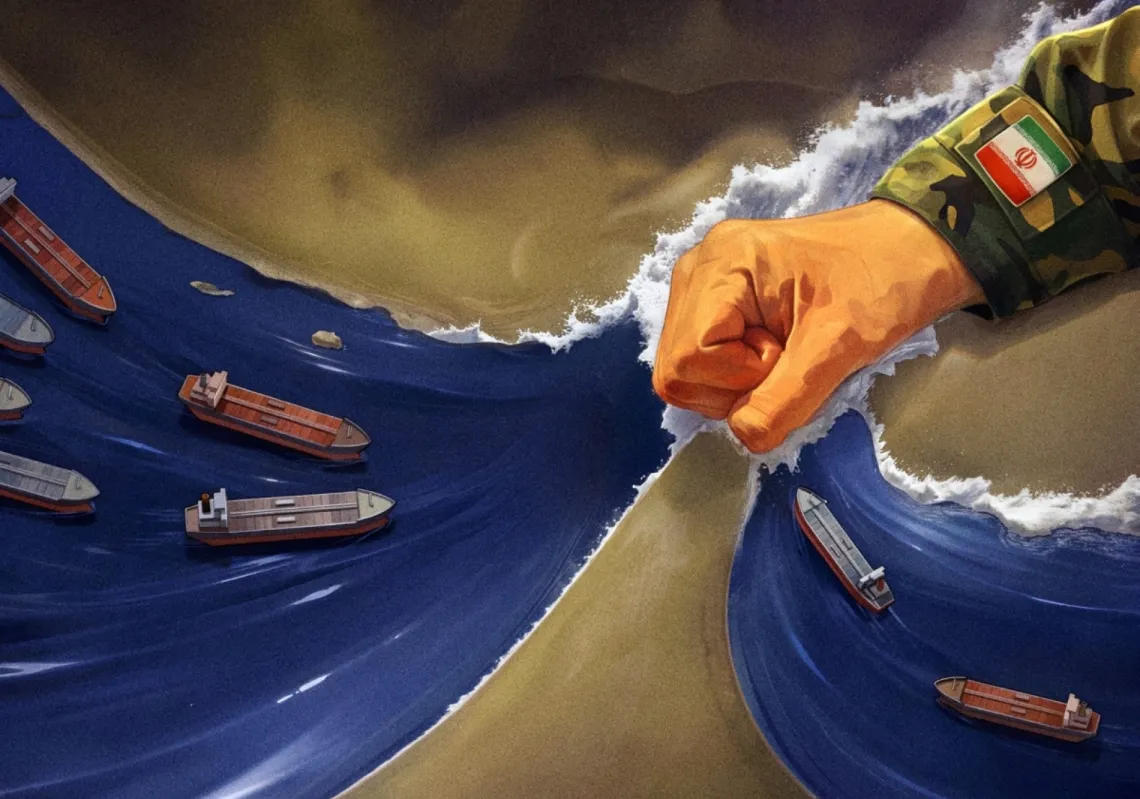
With the Strait being effectively closed “to its enemies” by Tehran amid a war launched on Iran by the US and Israel, Al Majalla chose, Strait of Hormuz: the waterway critical to global trade as the topic for this week’s cover story. The latest war has reminded the world of the fragility of its few maritime passageways.
Although there have been similar maritime crises in the past—from the oil embargo of the 1970s to the Tanker war, and later the Gulf war and the Iraq war—the present conflict is especially worrisome given the increased global economic interdependence since then. As we are fast discovering, any disruption in the Hormuz has cascading knock-on effects that extend far beyond energy markets, impacting international trade, investment flows, and the well-being of developing and advanced economies alike.
Our cover story unpacks the different layers and consequences of this current crisis—especially its impact on global energy markets and inflation. We also lay out the strategic calculations of regional and global powers, as well as possible risk-management scenarios aimed at safeguarding oil supplies.
Read more:
1. Energy infrastructure attacks and the new security imperative by Jessica Obeid
2. The Hormuz Strait: a vital oil lifeline to the world by Abdel-Rahman Ayas
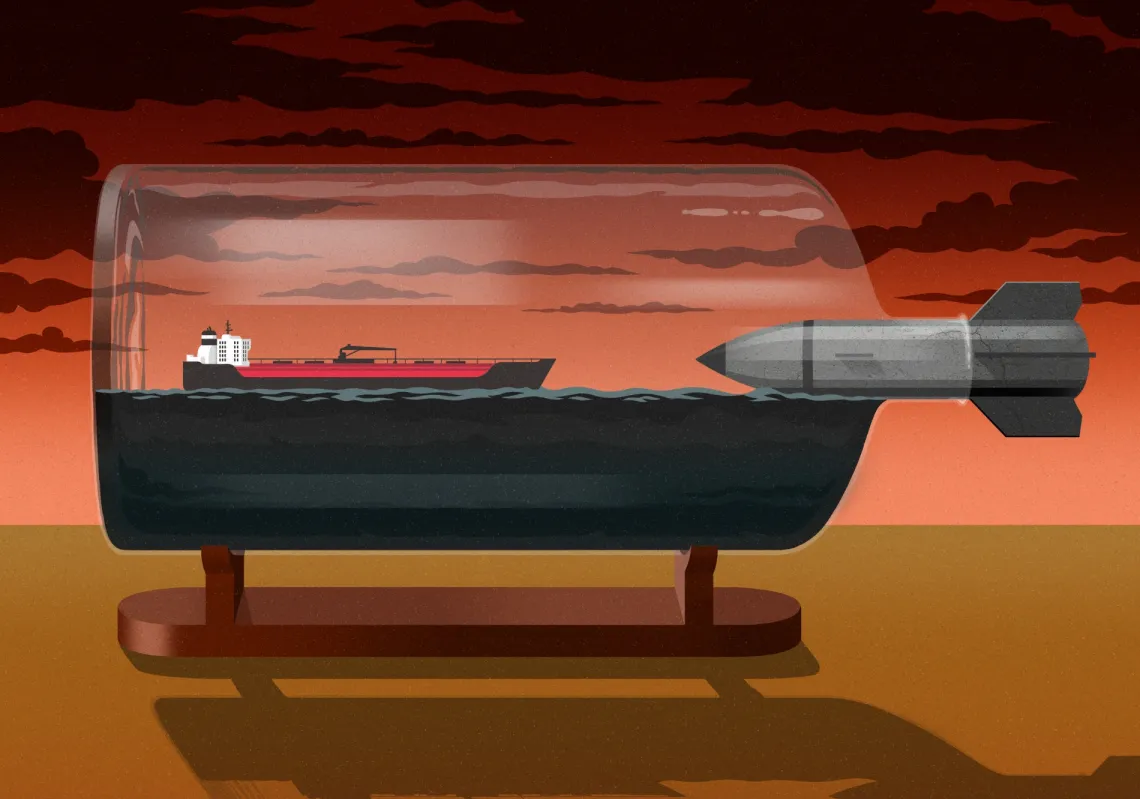
3. Choke point: how the Iran war is stifling global energy markets by Abdulfattah Khattab
4. There are few good alternatives to the Hormuz Strait by Marcelle Nasr
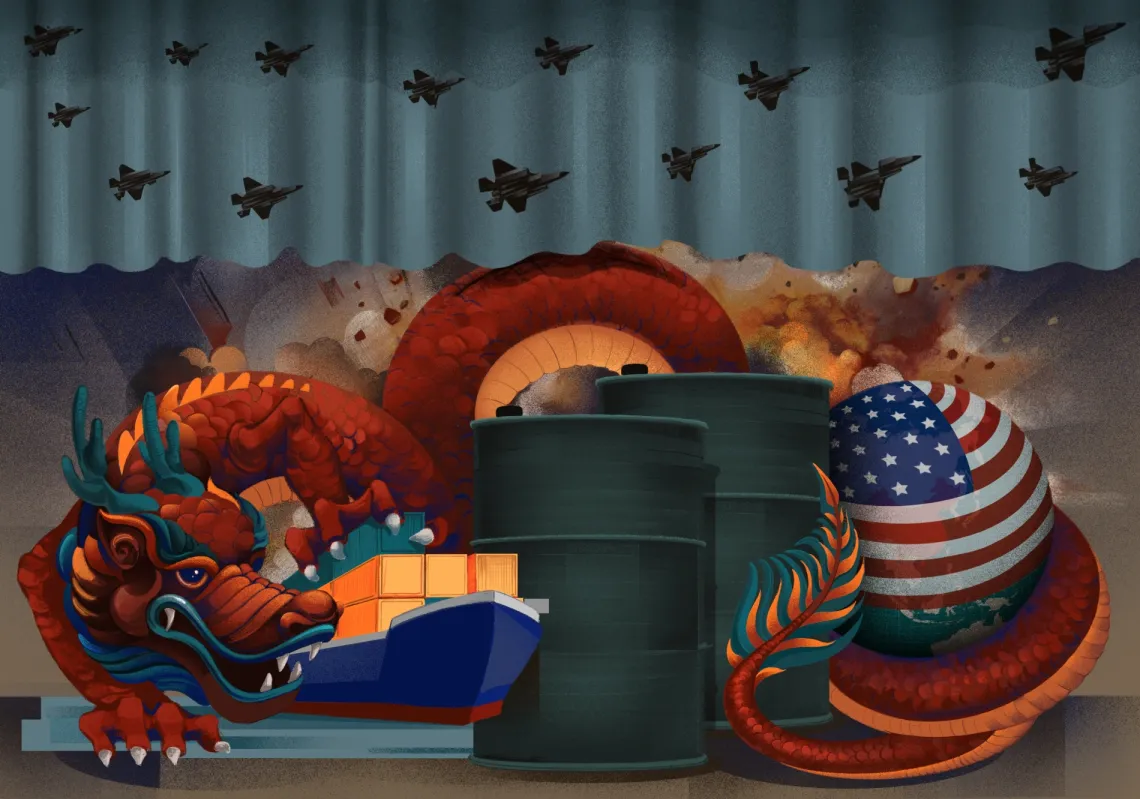
5. The US-Iran war confirms China’s four worst fears by Shirley Ze Yu
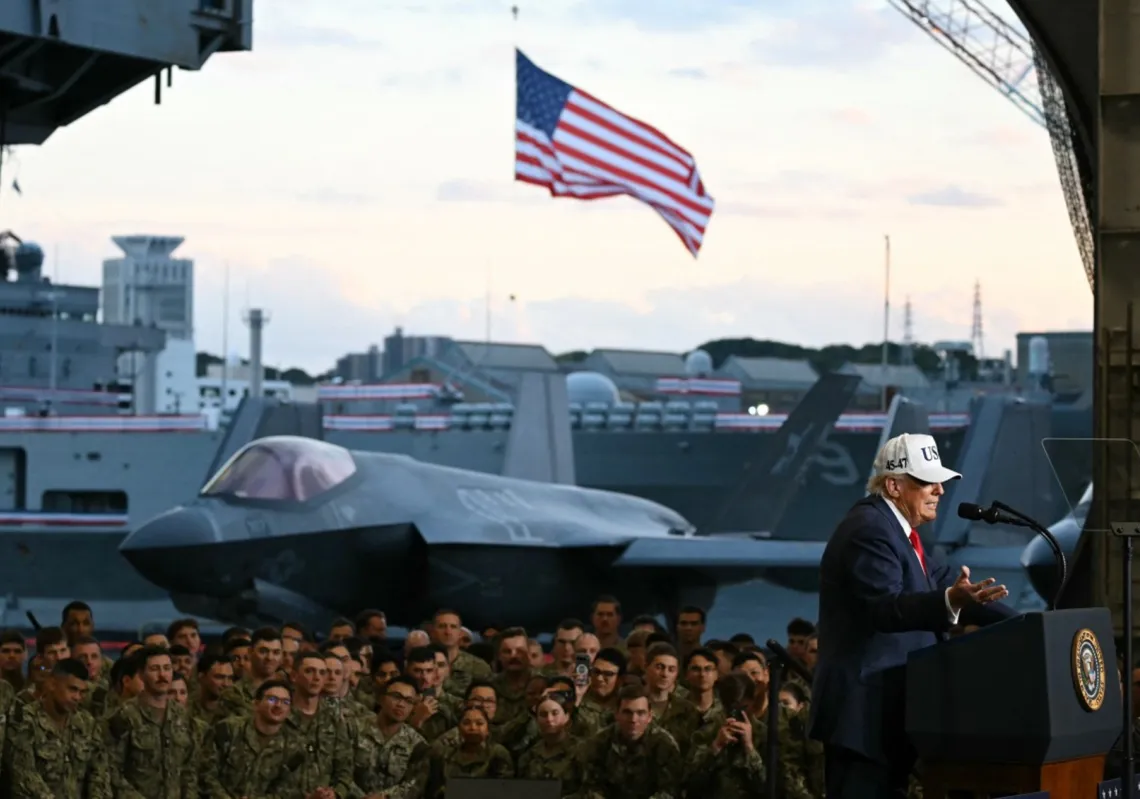
6. Mission creep: Trump's goal in Iran remains unclear by Ramzy Ezzeldin Ramzy
7. Could the US-Iran war spark World War III? by Christopher Phillips