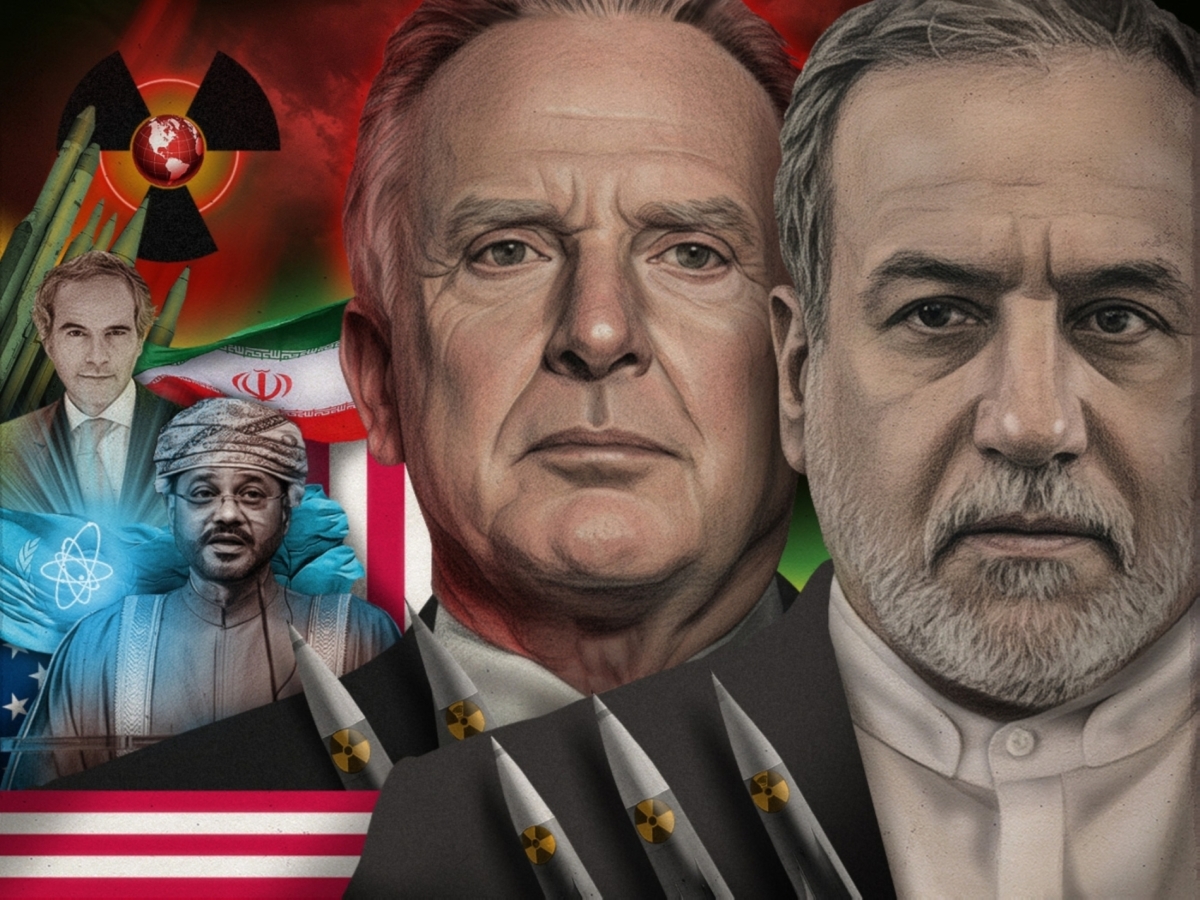
Economic considerations appear to be taking over political and security calculations in the US approach to Iran, particularly as negotiations between the two sides gather pace. Beneath the visible choreography of diplomacy lies a steady American preoccupation with energy access—an undercurrent increasingly taking centre stage in negotiations.
Only days before the second round of indirect nuclear talks between the US and Iran commenced in Geneva, Iran’s Deputy Foreign Minister for Economic Diplomacy Hamid Qanbari declared that Tehran seeks a nuclear agreement with the US capable of yielding tangible economic benefits for both parties.
In remarks marked by unusual candour on the eve of discussions mediated by Oman, he stressed that the durability of any agreement will depend on ensuring swift and substantial US returns.
Against this backdrop, negotiations have broached the topic of prospective cooperation in oil and gas fields, investment in mining, and even the purchase of aircraft. Initial sessions proceeded without American nuclear specialists in attendance, while figures such as Steve Witkoff, the US’s special envoy to the Middle East, and Jared Kushner, the son-in-law of US President Donald Trump, known for their economic and strategic advisory roles, were front and centre.
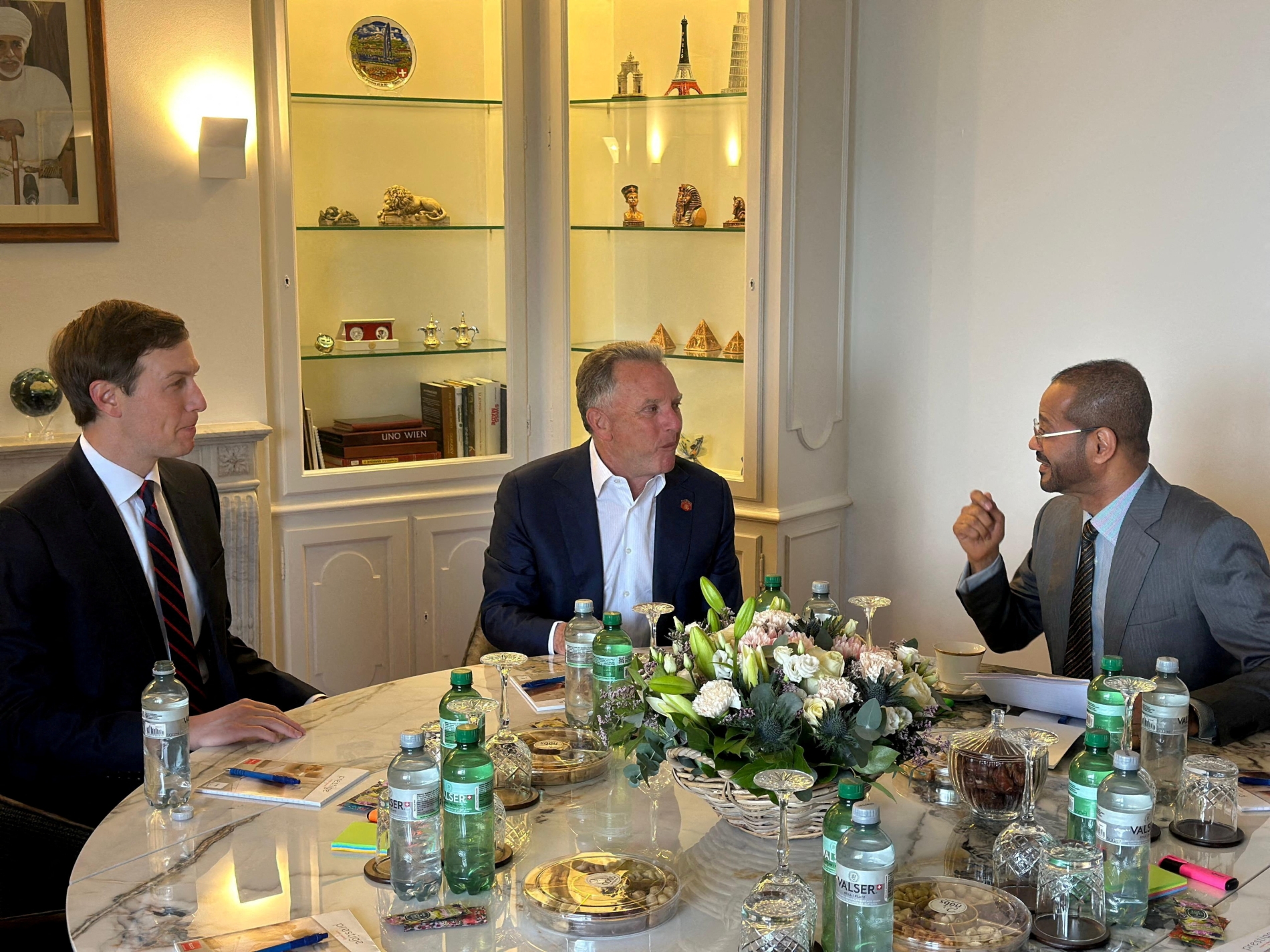
Oman's Foreign Minister Sayyid Badr bin Hamad Al Busaidi meets with US Special Envoy Steve Witkoff and Trump's son-in-law, Jared Kushner, ahead of the indirect US-Iran talks, in Geneva, Switzerland, on 17 February 2026.
Vast mineral wealth
Iran ranks 15th worldwide in mineral reserves, estimated at approximately 60 billion tonnes, according to the Iranian Mines and Mining Industries Development and Renovation Organisation (IMIDRO). The country hosts more than 10,000 active mines and possesses over 68 minerals, including extensive deposits of iron ore, copper, zinc, and rare materials essential to advanced industries.
Iran holds the world’s fifth-largest reserves of natural and mineral resources, yet only around 2% of its mineral potential has been comprehensively explored. The total value of Iran’s natural and mineral wealth is roughly $27.3tn, of which approximately $1.4tn derives from minerals alone. By comparison, resources that have been formally identified and developed amount to just $29bn, a modest sum set against the scale of the country’s latent abundance.
If Trump finds a way to draw Iran away from China and Russia, he could very well sell this as a win to his base and leverage this as an off-ramp to avert war
Iran holds an estimated 3.8 billion metric tonnes of iron ore, equivalent to around 1.9% of global reserves, according to the United States Geological Survey. Data from the IMIDRO indicate that the country also possesses 2.6 billion metric tonnes of copper reserves, accounting for approximately 5% of the world's total, alongside substantial zinc reserves estimated at about 15 million tonnes, which is a significant deposit in the global zinc market. Its bauxite reserves, concentrated in Iran's largest mine, are estimated at 10.6 million metric tonnes.
Gold is also abundant in Iran's expansive mineral portfolio. Confirmed deposits amount to 340 million tonnes spread across 24 mines, while recent discoveries at the Shadan mine, one of the largest in Khorasan province, suggest considerable untapped capacity. In recent years, Iran has identified 125 million tonnes of prospective deposits and 85 million tonnes of discovered resources, some of which contain rare earth elements such as lanthanum and cerium, minerals of considerable strategic importance for advanced technologies. Lead reserves are also measured in millions of tonnes.
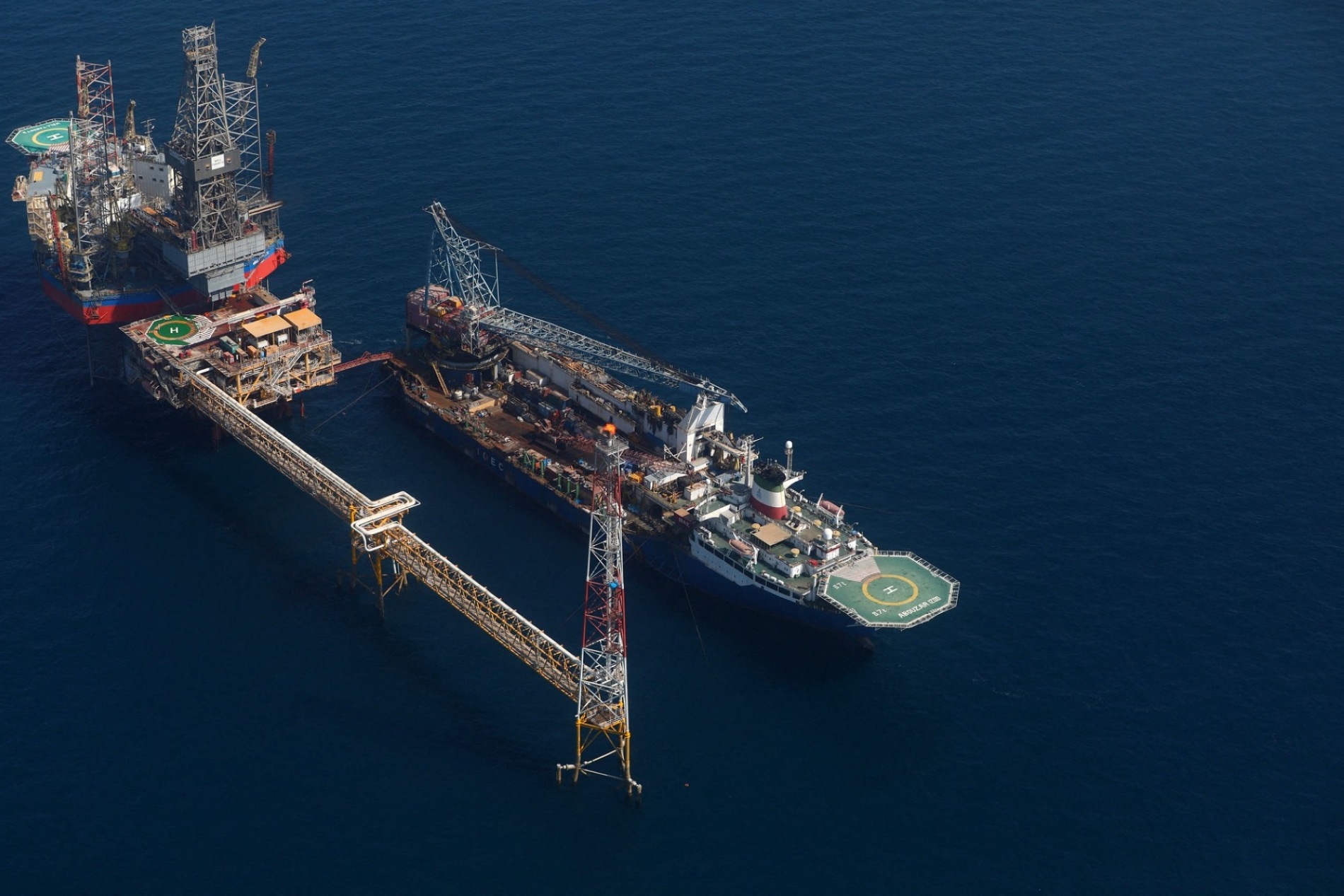
A general view of phase 11 of the South Pars gas field in Asaluyeh port in the southwestern Bushehr province ahead of its inauguration on 29 August 2023.
Iran also holds 33.9 trillion cubic metres of natural gas reserves, while annual gas exports amount to roughly 16 billion cubic metres. And its first lithium reserve was recently discovered in the Hamadan province, estimated at 8.5 million tonnes.
Iran also has confirmed deposits of cobalt and nickel in the provinces of Zanjan and Kerman—minerals that underpin modern technological and defence industries, including aircraft production, advanced weapons systems, semiconductor manufacturing, automotive batteries, construction materials, and medical applications. Iran also has abundant coal, ferrous metals, sand, gravel, chemical minerals, and salt.
And vital to its nuclear programme, Iran has uranium, some of which is enriched to levels exceeding 60%, which distantly approaches the technical threshold associated with weapons-grade material, generally placed at around 90%.
But the crown jewel of Iran's vast mineral wealth remains its oil reserves. Iran is the third-largest OPEC oil producer, behind Saudi Arabia and Iraq. According to OPEC's latest report, Iran's oil production reached approximately 3.3 million barrels per day in December 2025, while its proven oil reserves stand at 208.6 billion barrels, placing it among the top holders of the world's hydrocarbon wealth.
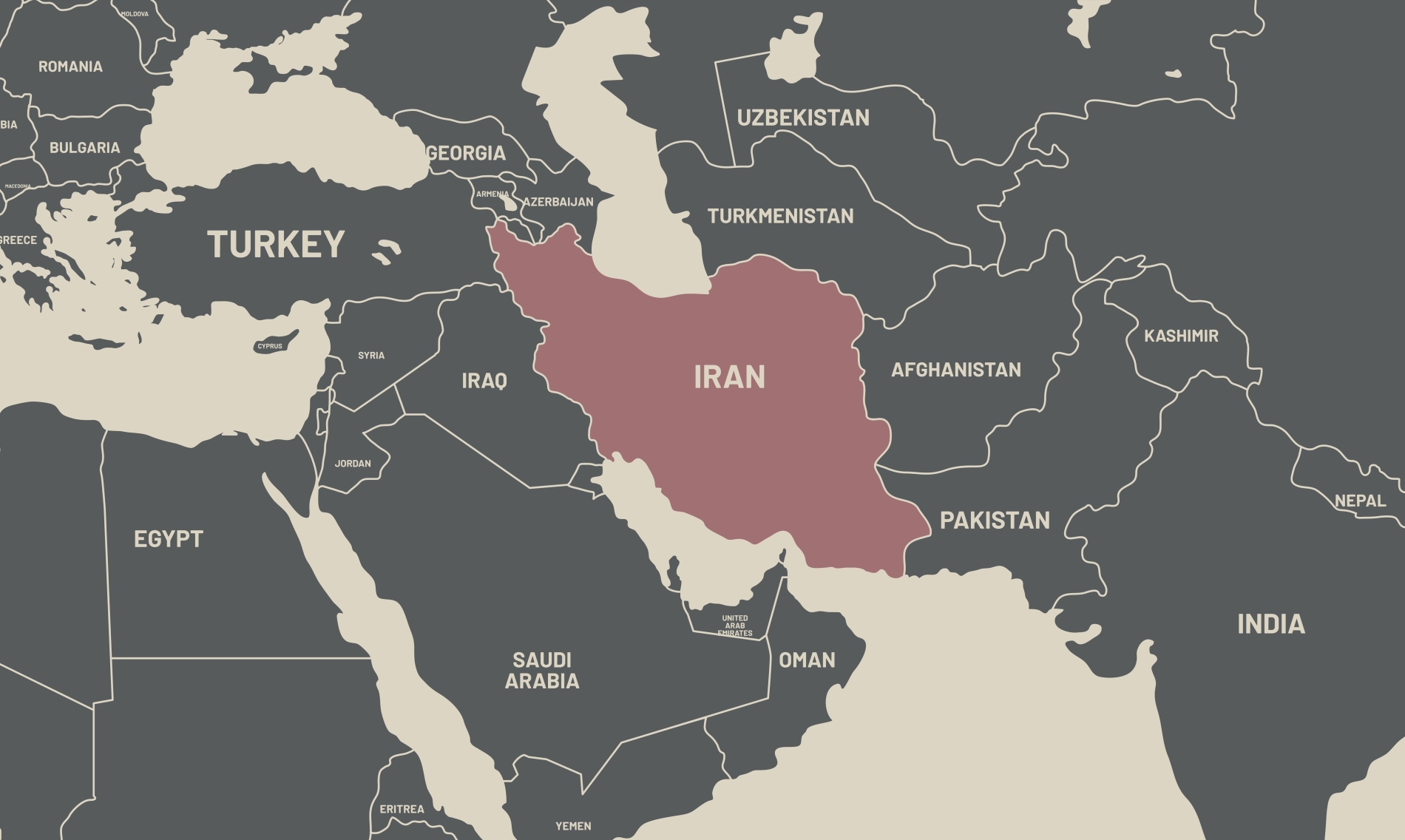
A map of Iran's strategic positioning in the region.
Strategic location
Additionally, Iran's geographical position endows it with exceptional strategic weight. At the crossroads of West Asia, it borders Afghanistan and Pakistan to the east; Iraq and Türkiye to the west; Azerbaijan, Armenia, and Turkmenistan to the north; and the Arabian Gulf and the Sea of Oman to the south, with access to the Indian Ocean.
This location makes Iran a natural conduit linking the Middle East, Central Asia, and the Caucasus. It also commands the northern shore of the Strait of Hormuz, a maritime artery through which roughly 20 million barrels of crude oil and condensates transit daily, representing about one-fifth of global oil trade.
The combination of Iran's strategic location and vast resource wealth makes it all the more vital to America's security strategy, which seeks to contain Russia and China by limiting their access to Iran's strategic oil, gas and mineral wealth. The fact that China is a key importer of Iranian energy is a reality that weighs heavily on US calculations. If Trump finds a way to draw Iran away from both China and Russia, he could very well sell this as a win to his base and leverage this as an off-ramp to avert war.
For its part, Iran understands the economic lens through which Trump sees the world and therefore will utilise it to its advantage in negotiations with the US. It will be seeking significant sanctions relief, and will not surrender its economic leverage so easily unless it secures said relief.
"Iran recognises the Trump administration pursues investments and profits wherever opportunities arise across the globe," Khodr Zaarour, a political science and international relations professor at North Carolina State University, tells Al Majalla. To this end, Iranian officials are centring discussions on this key point to avert war or limit the scope of a possible military confrontation. By dangling the prospect of lucrative investment and commercial cooperation, Iran is trying to convince Washington that economic cooperation is the better, more lucrative choice and could serve as a buffer against armed confrontation.