The Horn of Africa is being targeted for fragmentation

In Yemen, Somalia, and Sudan, the state has ceased to function as it should. This has led to problems not just on land but at sea, making this trio one big and urgent international issue.

Pete Reynolds

The Horn of Africa is being targeted for fragmentation

Along both shores of the Red Sea and the adjoining Gulf of Aden, several littoral states are in crisis. On the North African side, Sudan and Somalia both have huge problems, while on the Arabian Peninsula, Yemen is faring no better. These crises are not separate. They amount to one much bigger crisis playing out in three forms.

At its core, this is a crisis of the state, or rather, the absence of the state. In each of the three countries, the authority of the state has been eroded to the point that there is no longer any meaningful control of the territory, either in part or in whole. Combined, their coastlines along these most sensitive waterways measure around 5,300km, which is only slightly less than the distance between Moscow and Beijing.

These sovereignty vacuums give an opening to opportunists keen to interfere for leverage and gain. Unless this danger is challenged, the region will remain trapped in a cycle of denial and destruction, with instability from Bab al-Mandab to the Suez Canal.

The Red Sea is no longer just a global shipping route enabling the passage of goods and energy between Europe, Asia, and the Gulf. Today, it has become a reflection of state collapse along its shores. When the state falls or fractures, the sea no longer serves as a natural boundary or border that protects sovereignty; it becomes an instrument of pressure, a tool of blackmail, and an arena for a black-market economy.

Today’s problems are no geographical coincidence. Rather, they are a direct political outcome of efforts by actors with agendas. That outcome is long coastlines with no central authority to police them, no state institutions with a monopoly over the use of force, and war economies that feed on chaos and disorder.
AFP
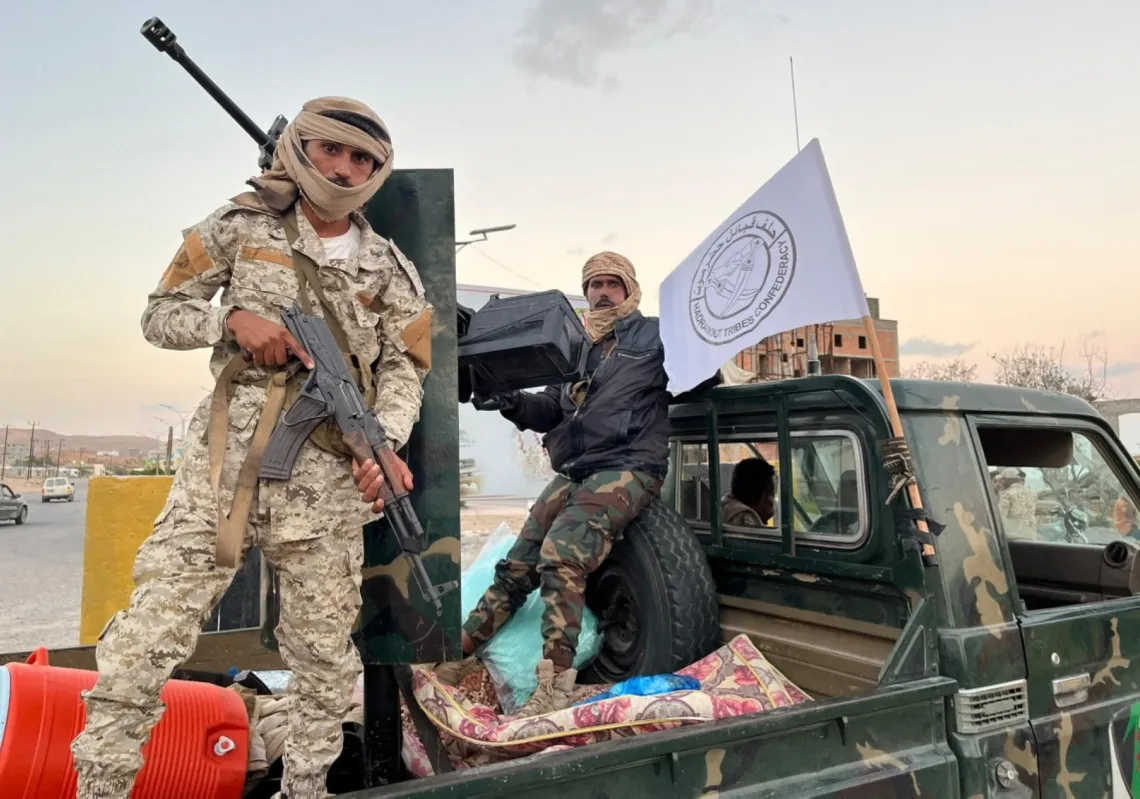
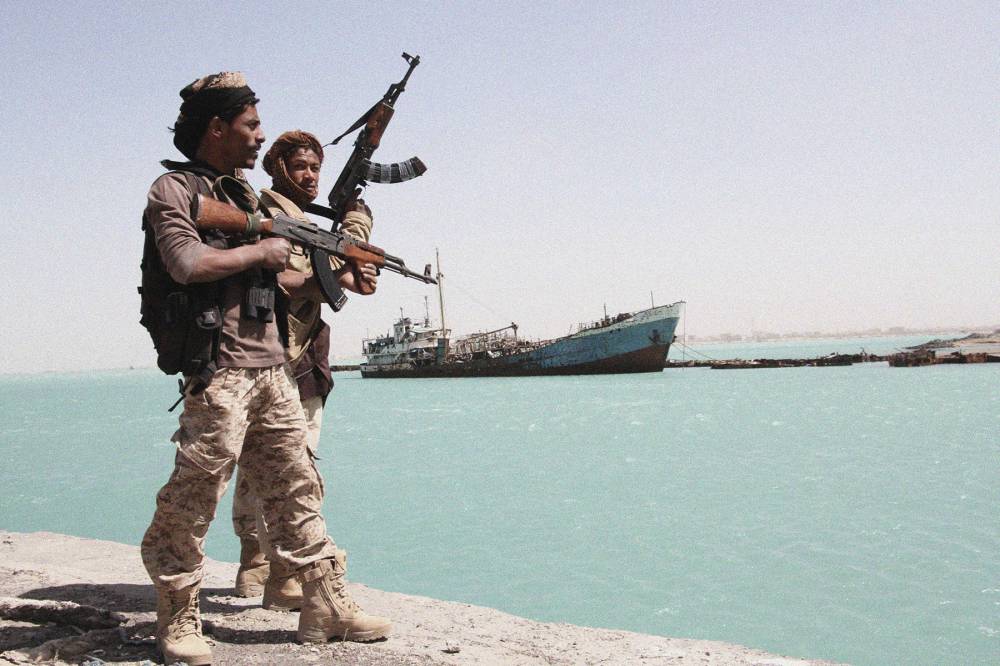
Pro-government forces walk in the port of the western Yemeni coastal town of Mokha on 9 February 2017, as part of a major offensive to recapture the coastline overlooking the Bab al-Mandab strait.

A splintered Yemen

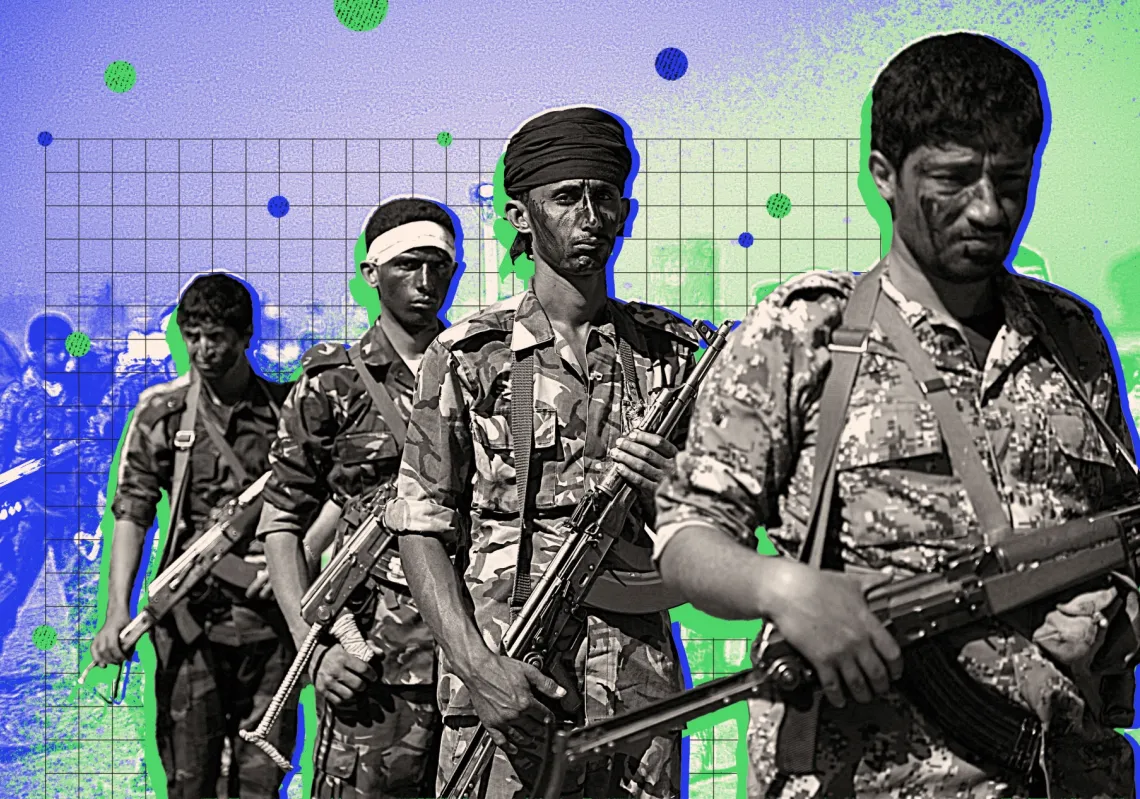
In Yemen, the sea is no longer on the margins of the conflict; it is part of it. Bab al-Mandab, a narrow chokepoint controlling one of the world’s most vital trade arteries, has been held hostage by the Yemen-based Houthi militia, which currently controls the Yemeni capital, Sanaa. More broadly, the Strait is held to ransom by armed non-state actors taking advantage of internal disputes and political fragmentation. In essence, they have put a chokehold on the maritime chokepoint.

The Houthis are not Yemen’s only problem. In the south, secessionists have been greatly encouraged by foreign assistance, to the point late last year that Aidarous al-Zubaidi, the former head of the Southern Transitional Council (STC), ordered his forces to seize several strategic governorates controlled by the internationally legitimate state authority, whose representatives were simultaneously forces out of Aden.

Yemen’s problems are therefore no longer confined to missiles or boats; they stem from the collapse of the very idea of the state, which in turn endangers navigation and prolongs the suffering of millions. The confrontation waged by the legitimate government (represented by the Presidential Leadership Council) and its National Shield Forces against the secessionists cannot be read outside this context. The swift action to contain the STC signalled a new alignment against the militias.

Somalia and Sudan

In Somalia, the same equation reappears in another form. The country has one of Africa’s longest coastlines, a weak central state based in Mogadishu, competing authorities, and armed groups who engage in smuggling and piracy. This leaves the coast ungoverned, the law unenforced, and the ports a target for militias.

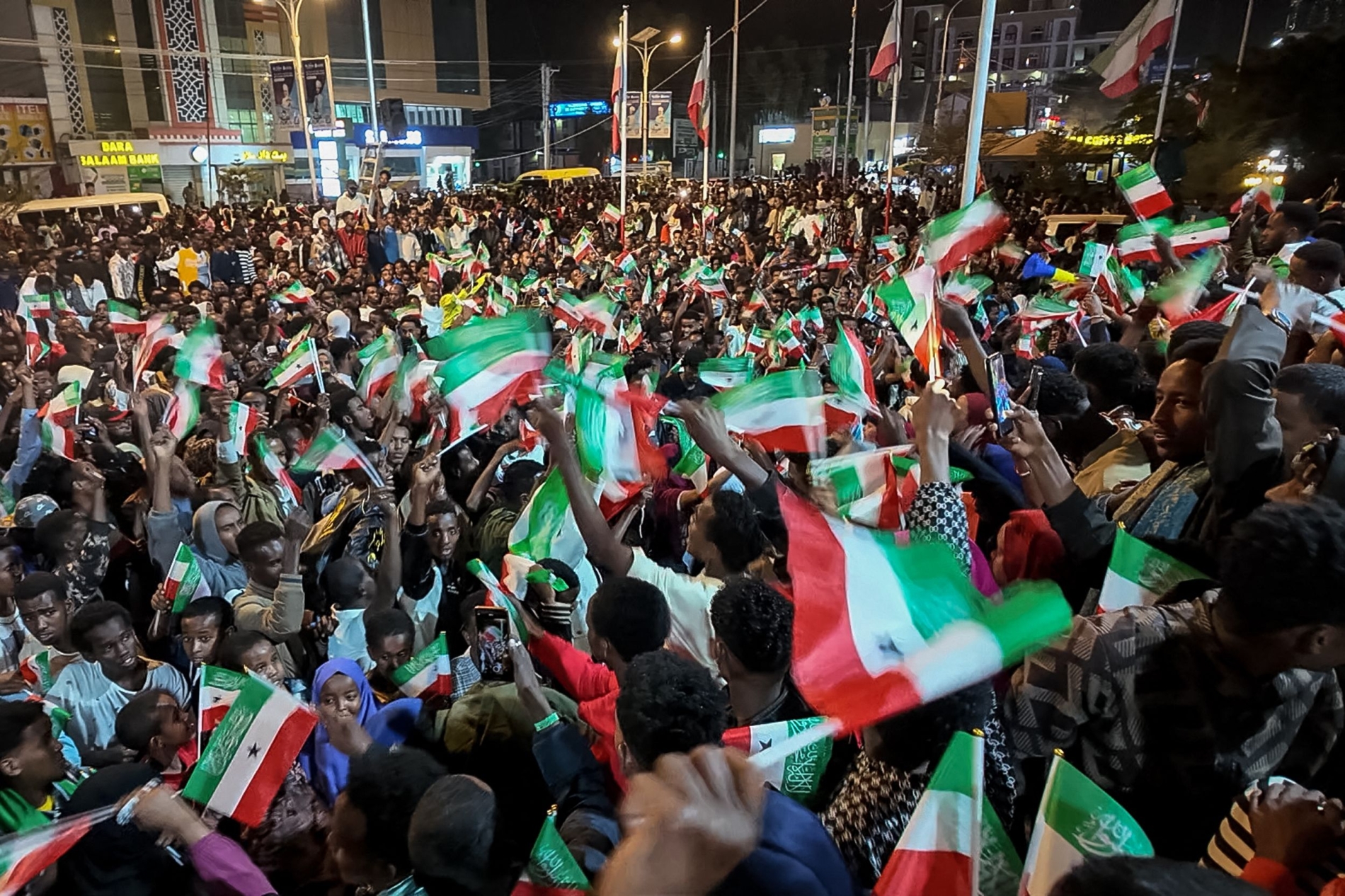
Just as in Yemen, Somalia is dealing with a secessionist entity that claims control of the territory known as Somaliland. This entity has declared itself a state and was recently recognised as such by Israel, the first UN member state to do so. This rang alarm bells for other states in the region, not least Egypt. Why, Cairo asked, was a Somali secessionist entity being supported both diplomatically and practically?
Reuters
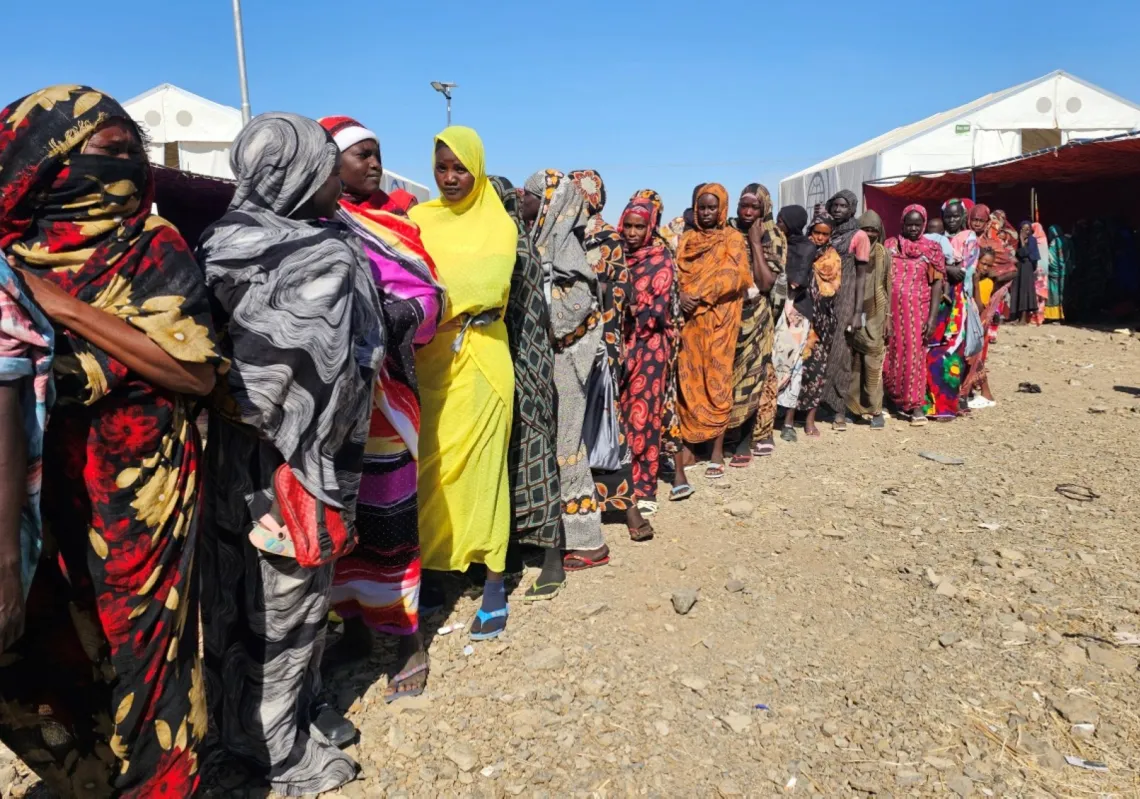
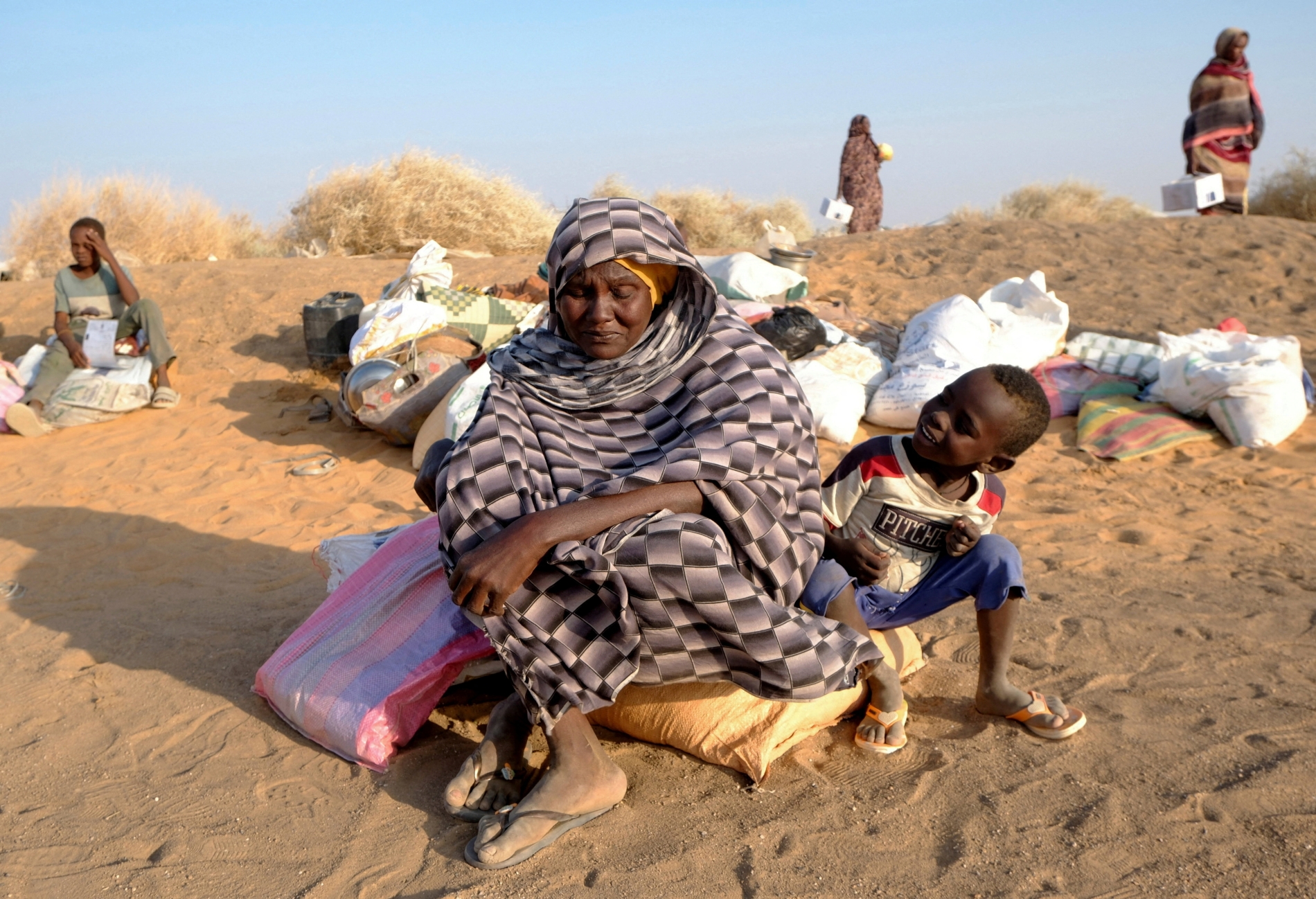
A displaced woman from el-Fasher sits with her child while they wait for permission to enter a camp in Ad-Dabba, Sudan, on 13 November 2025.

In Sudan, a brutal civil war approaching its third year has led to a crisis that now reaches beyond its borders. Africa’s third-largest country (and the 16th-largest country in the world), Sudan’s size, history, and strategic location mean that when it begins to break apart, the consequences are not contained domestically. In this case, they spill across the entire African shore of the Red Sea.

A state with no authoritative centre means porous borders, weapons smuggling, looting, and coastlines that become launchpads for aggressive action. In short, when the state collapses on land, stability at sea also collapses.
Unless threats to the state are addressed, the region will be stuck in a cycle of destruction, with instability from Bab al-Mandab to the Suez Canal

States within states

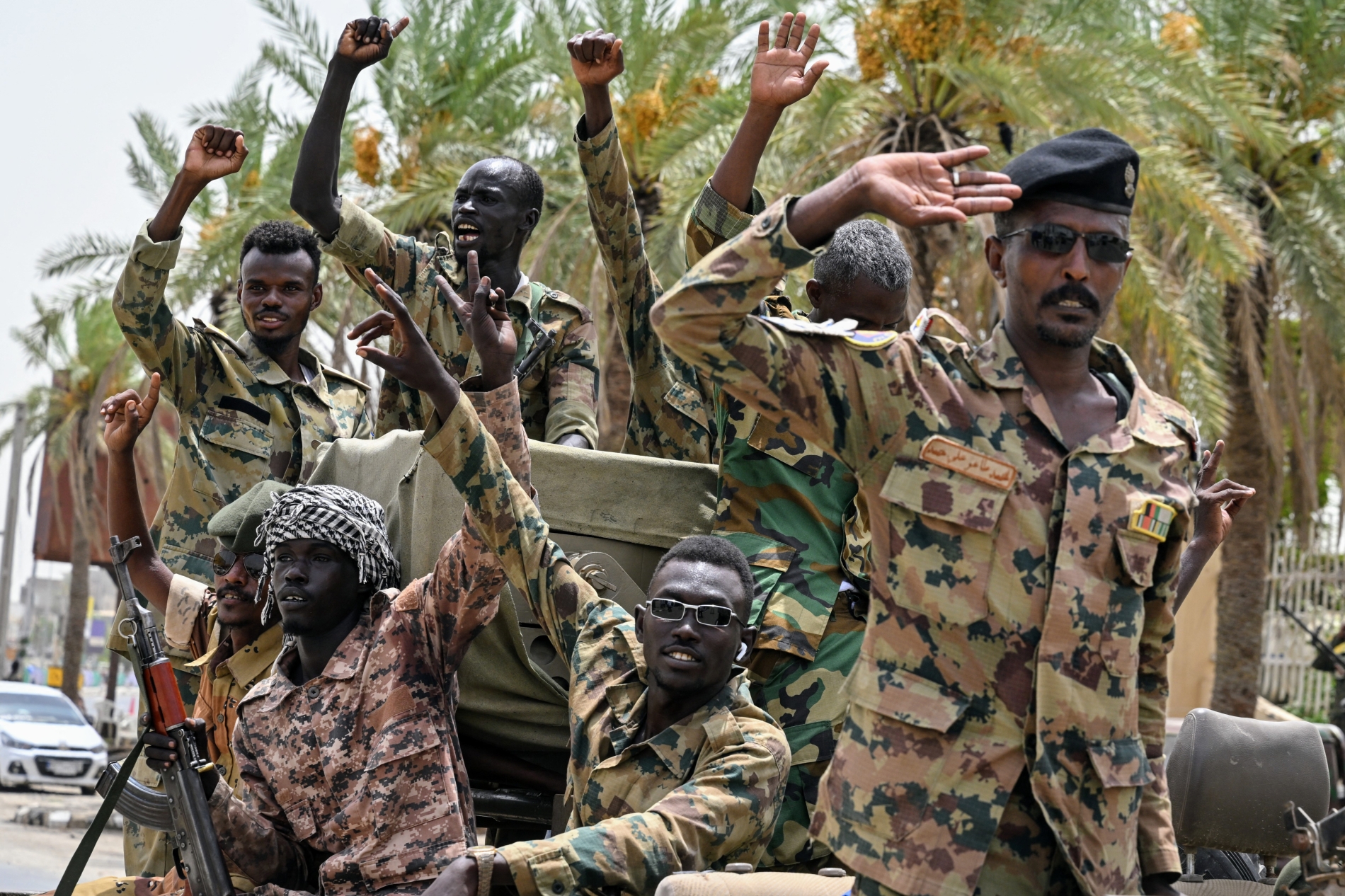
In Sudan, the fight is between the country's armed forces (based in Port Sudan) and the western Darfur-based Rapid Support Forces (RSF), a powerful paramilitary organisation. The military, political, and logistical support the Sudanese army has received in its fight against the RSF points to a reconfigured set of alliances. This conflict is between the state and the militias.

A state-within-a-state in Sudan, supported with weapons and money, would replicate the Somaliland model. That is why support for the central government and its army is tied not only to preserving territorial unity, but to rejecting that 'Somalisation' of Sudan, and refusing to accept that fragmentation is inevitable.

AFP
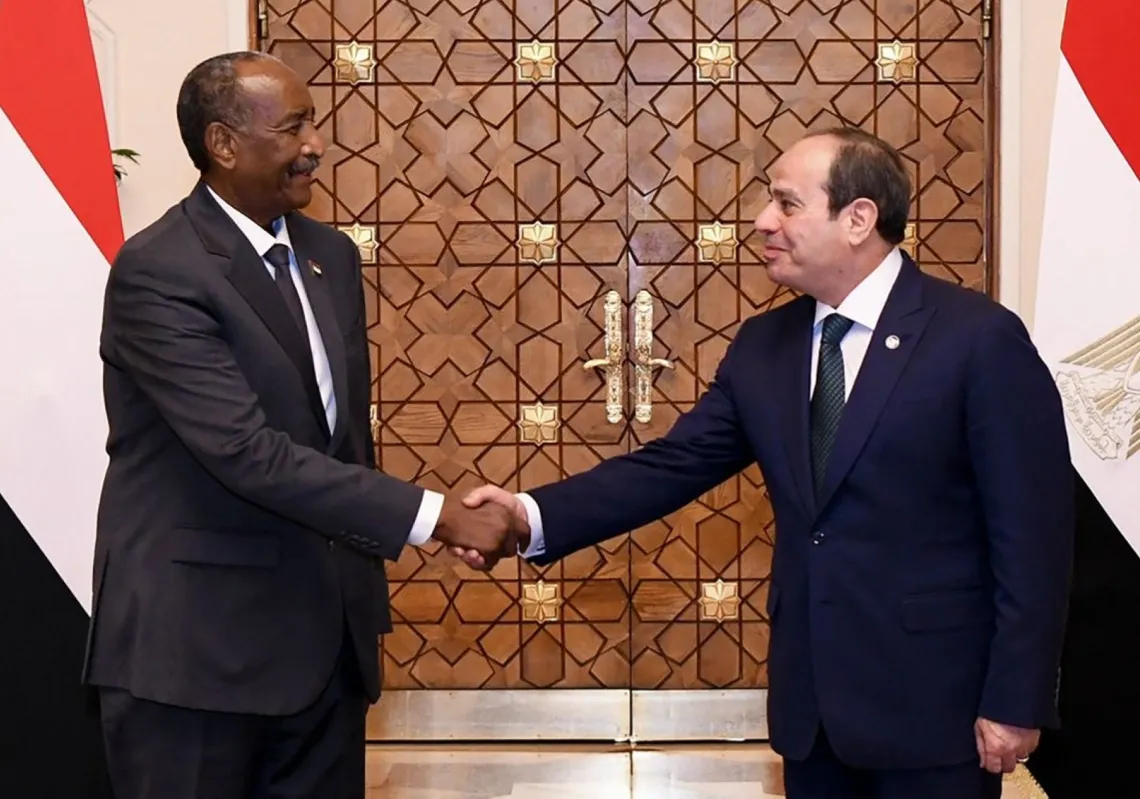
Military parade of the Sudanese army on Army Day, on 14 August 2024.

Read more: Egypt stiffens its resolve to stop Sudan fragmentation

The most dangerous aspect of war in these three countries is its endurance. Fragmentation does more than just prolong the fighting; it turns the conflict into an economic system in its own right. More militias mean more interests, while a weak centre means an absence of decision-making. In this void, opportunists thrive on the chaos, making handsome profits in war economies, such that peace itself soon becomes the threat.

That war causes untold human misery is secondary where there is money to be made and leverage to be won. Worse, the impacts and effects of war  become instruments to be wielded in the fight against peace. Starvation, displacement, disrupted education, and the destruction of public services are all ways to sustain control and push would-be solutions further beyond the horizon.

The time for grey diplomatic euphemisms is at an end—this is a crisis that requires plain speaking. There can be no solution to this regional problem without restoring the central state. This is no ideological slogan, nor is it nostalgia for past authoritarianism. It is, simply, the minimum needed to avoid a catastrophic collapse.

Red Sea security does not begin at sea, but on land. Warships can protect civilian vessels only temporarily; they do not restore the state.

A state can be defined as a collective unit with a monopoly on the legitimate use of force, unity of sovereign decision making, a single treasury that gathers resources, such as through taxes, and a single army subject to the constitution and to the government, not to sub-state, identity-based loyalties. Without this in place, the best any political settlement can do is manage the crisis, not resolve it.

A recipe for chaos

The experience of Yemen, Somalia, and Sudan shows that dismantling the state in the name of local ambitions or a supposed "balance of realities" delivers neither peace nor justice. Rather, it delivers warlords with political façades. Administrative decentralisation can serve development, but dismantling sovereignty has always been recipe for chaos. A strong, fair, and capable state is needed to protect diversity, rights, and development.

In the absence of such a state, resources are looted, ports are used for illicit activities, and wealth goes untaxed, quickly disappearing across borders. This is no minor defect; it is the direct result of an absent centre. When those resources (that should be adding to the nation's coffers) in fact become fuel for war, the people become a footnote, and humanitarian aid becomes a palliative treatment, rather than a cure. Relief without a state does not build peace. It is managed within an economy of chaos.

The message that must be understood regionally and internationally is simple but pointed: Red Sea security does not begin at sea, but on land. Warships can protect civilian vessels only temporarily; they do not restore the state, and do not prevent the threat. Only cohesive states can turn the sea from a source of blackmail to a space for development, commerce, transit, and integration.

Farhan Aleli / AFP
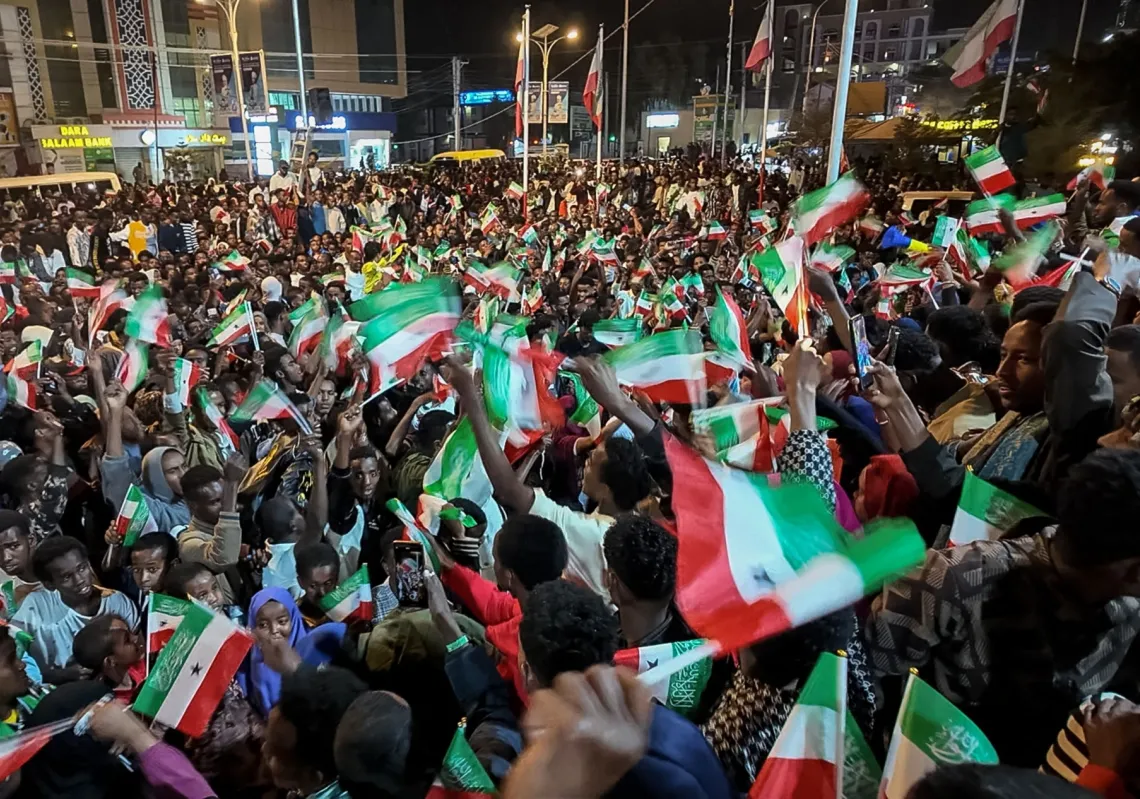
This aerial view shows residents waving Somaliland flags as they gather to celebrate Israel's announcement recognising Somaliland's statehood in downtown Hargeisa, on 26 December 2025.

Read more: Israel scores strategic win with Somaliland deal, but it comes with risk

Victims of a vacuum

Sudan, Somalia, and Yemen are not a burden on the region; they are victims of a vacuum with no evident end or solution. Treating them as humanitarian crises or as separate security issues is to miss the point. For the international community to do nothing is to accept torn maps, coastlines without sovereignty, and a Red Sea living on the edge of permanent danger.

The other option is to seriously invest in rebuilding the state not as political decoration, but as the backbone of stability. Restoring these countries to being states that safeguard their borders, exercising unity, authority, and control over the state's territory, is not a theoretical demand or a political luxury; it is essential to the region's survival. Delayed action only assists those who feed on chaos.

Strengthening the central state does not necessarily mean a repressive state, or a centrality that erases diversity. Rather, it refers to the principle of sovereignty. A sovereign state is one that makes its own decisions and enforces them, commands one army subject to the constitution and laws of the land, one police force that applies the law, and one treasury that collects revenues then spends them transparently.

The restoration of the state's legitimate power and economic decision-making does not deny local plurality but protects it. This can then be administratively decentralised in services and municipalities, while retaining centralised sovereignly in areas such as security, borders, foreign policy, and strategic resources. It is a recipe that has worked for hundreds of years. And for hundreds of years, a state's failure has wrought havoc. It is time to apply the lessons of old and lift up what should never have been left to fall.

font change