Former Médecins Sans Frontières president Rony Brauman explains to Al Majalla how Israel's war on Gaza has produced unprecedented suffering and exposed the collapse of international law
Israel’s war on Gaza has shattered every known benchmark of modern conflict, says Rony Brauman, former president of Médecins Sans Frontières (MSF). Unlike other wars he has witnessed across Africa, Asia, and Latin America, Gaza combines total military domination with international acquiescence.
A population of 2.3 million people, unable to flee, has been subjected to bombardment of an intensity comparable to the Allied attacks of 1945, while the West has largely accepted the campaign as an act of legitimate self-defence. The result, Brauman argues, is a conflict that has broken every record: an unprecedented proportion of civilian casualties, the systematic targeting of medical infrastructure, and the killing of journalists and humanitarian workers on a scale unseen in contemporary war.
Brauman speaks with the authority of a physician who has been immersed in humanitarian work for nearly five decades. His career has taken him to some of the harshest crises of displacement and armed conflict in the past 50 years, including in Ethiopia, Sudan, Pakistan, Honduras, Cambodia, Rwanda, Chad, and Uganda.
More than a humanitarian catastrophe, asserts Brauman, Gaza represents a profound rupture in international law—one in which the rules governing civilian protection, occupation, and humanitarian access are applied selectively, hollowing out the very legal and moral framework they were meant to uphold.
Below is his interview with Al Majalla in full:
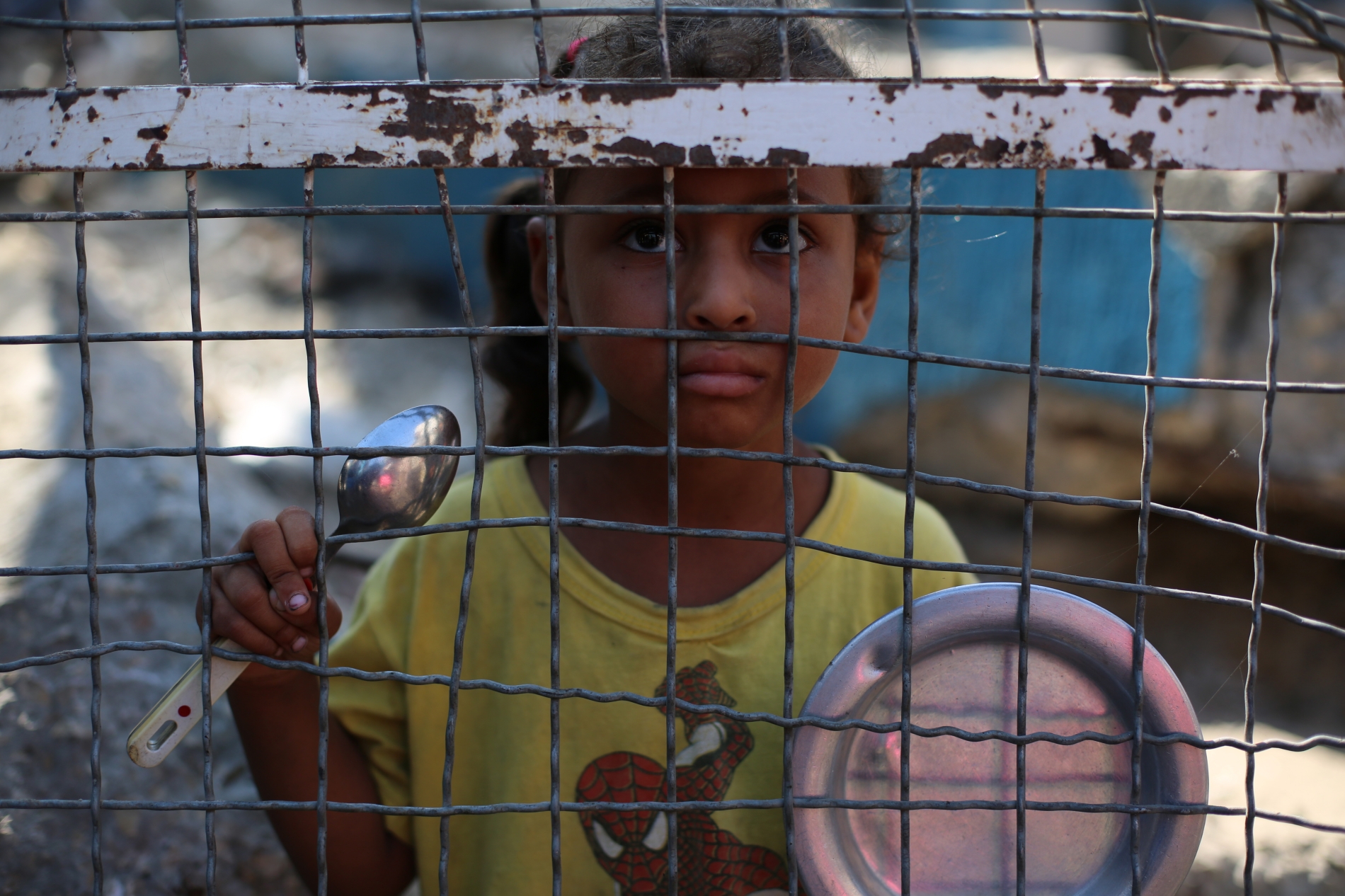
Displaced Palestinians sheltering at the UNRWA-affiliated Girls' Middle School held a protest against hunger, calling for an immediate end to the ongoing attacks and urgent delivery of humanitarian aid in Gaza, on 20 July 2025.
Israel recently announced its ban on 37 international NGOs. How did you receive this news, and what is your reaction?
Many of us had long assumed our days in Gaza and the West Bank were numbered. That moment has now arrived, and it is no surprise. The Israelis had repeatedly threatened to bar us from working there, and they have killed hundreds of our colleagues in the humanitarian field in Gaza. So while the decision is not unexpected, it is unquestionably disgraceful and scandalous.
It means that Israel will only tolerate humanitarian workers if they implement its policies, remain silent about what they witness, and operate solely where Israeli authorities allow them. In other words, Israel wants humanitarian action in the Palestinian territories to be subordinated to its political logic, a logic intended to exhaust and suffocate the Palestinian people. This stands in direct opposition to the purpose of humanitarian work.
Equally troubling is the weak international response to this appalling decision by Israel. There has been barely any serious reaction from Europe, where most of the targeted humanitarian organisations are based, nor from the Arab world, which has consistently failed to provide adequate support to the Palestinian people.
Are there any ways to circumvent this decision?
Unfortunately, no. Israel exercises full military control over the occupied Palestinian territories, which means any movement within these areas requires Israeli authorisation. Israel actively obstructs humanitarian and relief operations. There is simply no possibility of continuing humanitarian work under these conditions.
What will be the result?
The result will be more suffering and more victims among the Palestinian population. Israel has consistently downplayed the role of an organisation like MSF in Gaza, claiming that it provides only 1% of the needed assistance and services. The truth is far different. MSF delivers a quarter of all hospital care, a third of all childbirth services, and half of the water-related support. Its role has been vital for the Palestinian population. Now all of this will disappear, with no means of replacing it. Israel is likely to bring in American organisations, particularly evangelical ones, which are fully aligned with its policies.
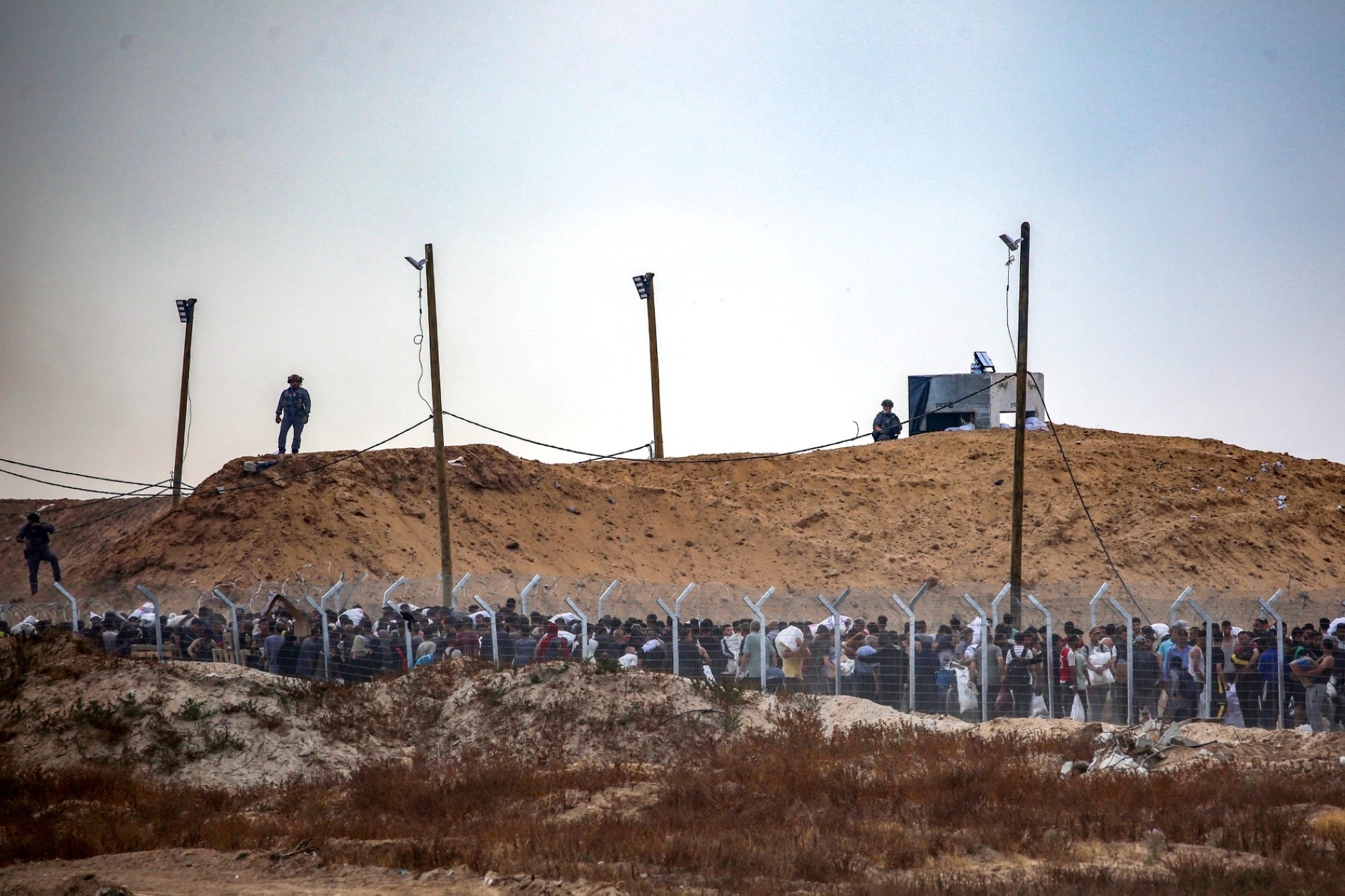
Private US security forces, contracted by the GHF, a private US-backed group which the UN refuses to work with over neutrality concerns, direct hungry Palestinians who came to collect aid in the central Gaza Strip on 8 June 2025.
You have witnessed many conflicts and humanitarian crises in Africa, Asia, and Latin America. What makes Gaza different from all these other conflicts?
The first and most fundamental difference—and there are at least one or two others—lies in the implicit approval granted by the West. The West, which claims to uphold democracy and sees itself as a defender of the law, or at least as the architect of international law, has in one way or another acquiesced to a war of extermination. This is certainly not the first genocide. One might recall, for example, the genocide of the Tutsi in Rwanda, which was both a war and a genocide simultaneously. Yet that genocide, although not endorsed internationally, was never presented as an act of self-defence, as has been the case in Gaza. This, in my view, has serious consequences for the credibility and legitimacy of international law, for we now observe its application shifting and, at times, contradicting itself depending on the context.
Israel wants humanitarian action in Palestine to be subordinated to its political logic, a logic intended to exhaust and suffocate the Palestinian people
Rony Brauman, former MSF president
Take Russia's occupation of Ukraine. It is condemned, and rightly so. But when another state occupies the land of another people, as Israel does in Palestine, the reaction is markedly different. Even if the occupation itself is not explicitly endorsed, the way Israel conducts its occupation is implicitly accepted. The war of extermination has been framed as a legitimate response to an attack, a supposed right of self-defence. This, politically speaking, is the first essential difference.
From a practical standpoint, the people of Gaza are prisoners. They have no means of escape. Israel has long sealed the Gaza Strip, effectively turning 2.3 million Palestinians into captives. The length and intensity of this confinement are horrifying in themselves, and the situation becomes even more appalling when this population is subjected to relentless bombardment. These bombings are comparable in scale and ferocity to the Allied attacks of 1945, events that are exceedingly rare in modern history.
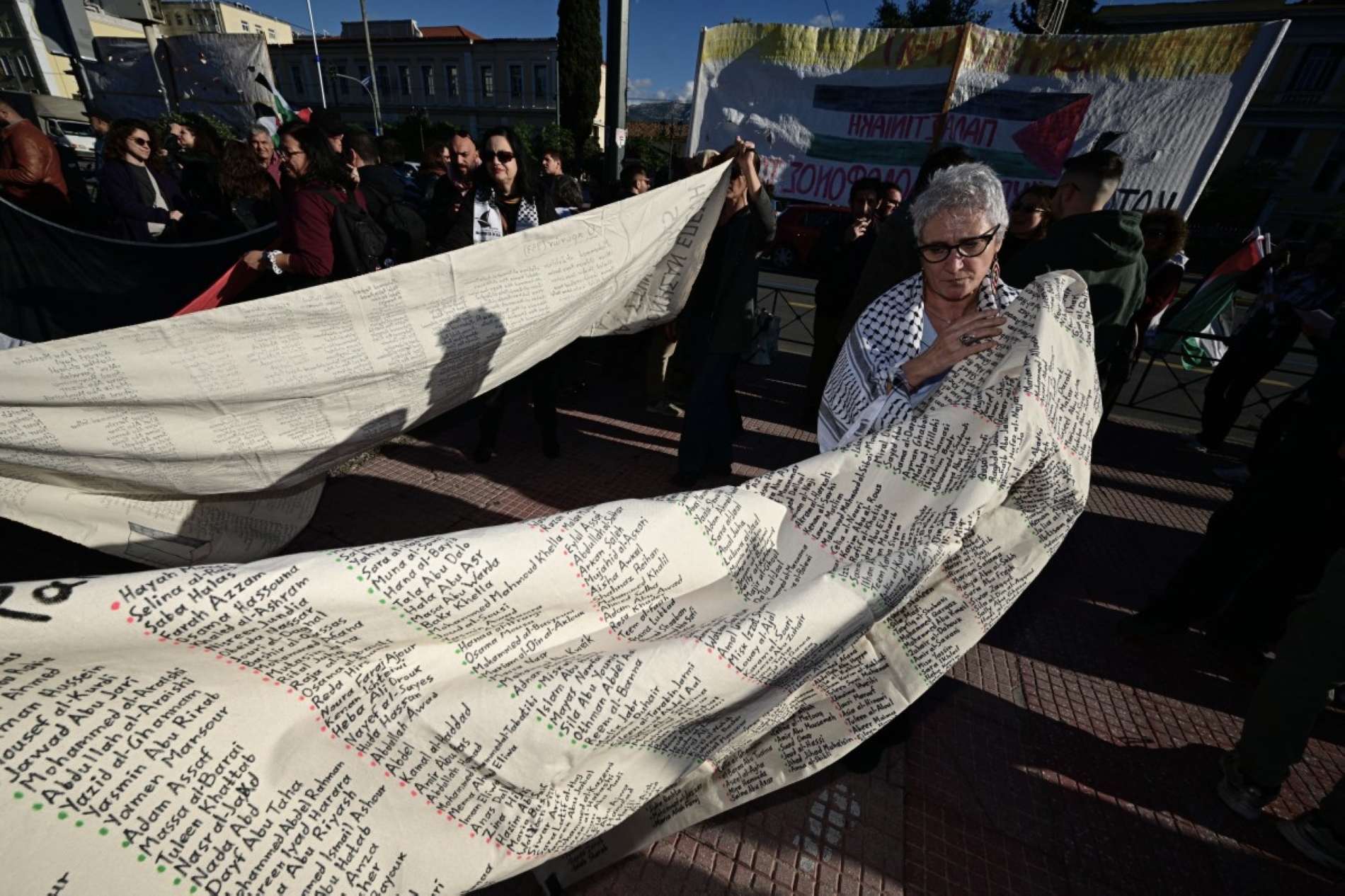
A protestor unfolds a scroll banner bearing the names of Palestinians killed in Israel's latest war on Gaza during a demonstration in solidarity with Palestinians, in Athens on 29 November 2025.
This is why Israel's war on Gaza is a war of broken records. The proportion of civilian casualties is among the highest ever recorded, estimated at around 80 to 85% of the dead. According to Israeli military intelligence, around 9,000 Hamas fighters have been killed. This suggests that between 70,000 and 100,000 of the victims are civilians. It is for this reason that I compare the Gaza war to the 1994 genocide in Rwanda.
How do you assess the humanitarian response in Gaza, given the scale of civilian casualties and the famine?
In one sense, humanitarian work has been carried out effectively. Organisations, whether UN agencies or NGOs, have managed to operate. From the outset, Israel deliberately weakened the capacity of local actors to provide assistance. Hundreds of medical personnel have been killed, deported, or imprisoned. Even now, around 100 doctors are being held in Israeli prisons, subjected to horrific treatment that often amounts to torture. Imprisonment itself is a form of torture, particularly in the absence of any legal justification.
Despite these brutal conditions, some organisations, including MSF, have continued their work. Even if humanitarian efforts have not matched the scale of need—which is often the case in conflicts such as Sudan, where resources are also lacking—they remain vital. Tens of thousands of injured and ill people depend on these operations for access to medical care.
Israel also controls certain entry points, such as Kerem Shalom, and occasionally withholds humanitarian supplies. The criteria used to block essential equipment, including delivery tables and oxygen generators, remain unclear. Many metal instruments necessary for surgery and sterilisation are banned on the grounds of potential dual use for civilian and military purposes.
These daily restrictions add to the internal pressures faced by humanitarian teams, who are also suffering from exhaustion and food shortages. Yet they continue their work, and the people of Gaza continue to benefit from their efforts, despite the scale of aid falling far short of the overwhelming need.
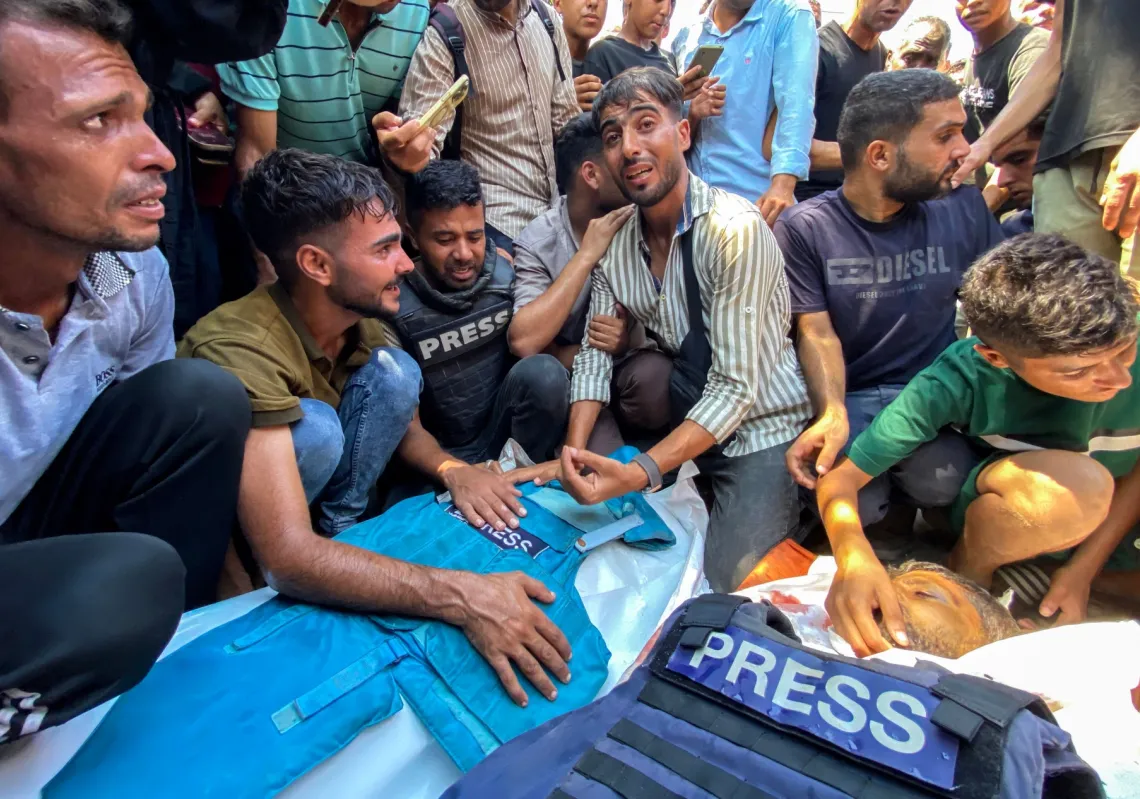
It is important to emphasise that we are dealing with an exceptional war—a conflict that has broken every conceivable record. No previous war has seen such a number of journalists killed. It is also a record-setting conflict in terms of the number of humanitarian and medical workers killed.
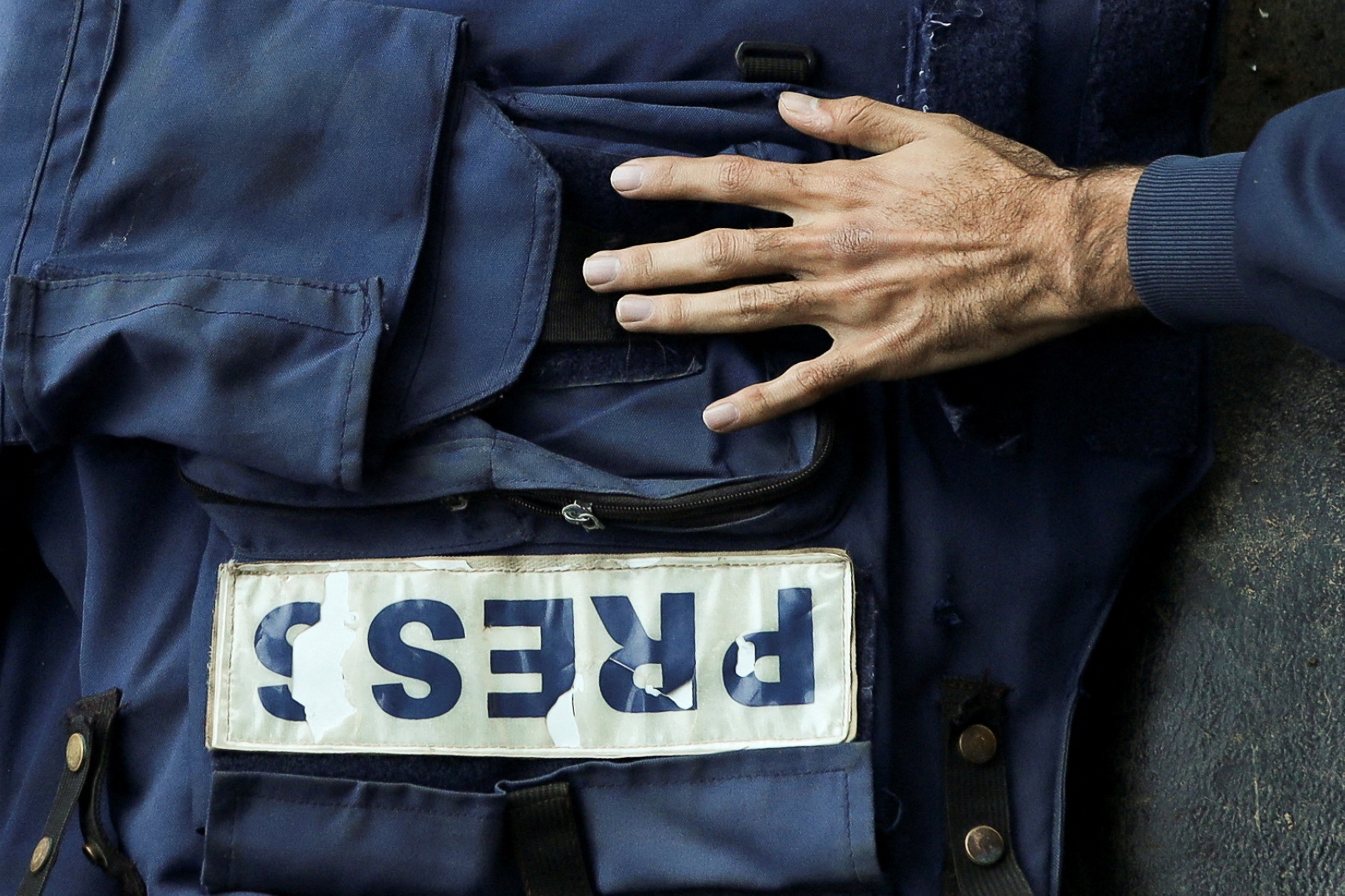
A man touches the flack jacket of journalist Omar Al-Derawi as mourners gather around the bodies of Palestinians who were killed in Israeli strikes at Al-Aqsa Martyrs Hospital in Deir Al-Balah, on 3 January 2024.
Will the testimonies of humanitarian workers in Gaza be formally documented for potential legal use?
MSF has been among the most outspoken organisations in documenting the facts, along with Doctors of the World and Save the Children. All have described the situation in Gaza as they experienced it on the ground. These testimonies, along with those from several UN agencies, are now part of the public record. This means they can be used as evidence before the International Criminal Court, whether to initiate investigations or to issue arrest warrants for soldiers, military officials, and political leaders, including figures within Hamas.
Humanitarian workers and UN bodies have spoken with striking clarity, which explains the restrictions now placed upon them, including the denial of visas, attacks on staff, and pressure on their operations. Even so, these testimonies will retain their value and may serve as concrete evidence in any future pursuit of legal accountability for those responsible for the massacre.
What is the relationship between humanitarian work and international law?
The connection is very strong during times of war. International humanitarian law, in principle, provides legal protection for humanitarian workers and affirms that aid must not be made conditional or used as a bargaining tool. It is both a legal and moral obligation. For instance, international law grants MSF the right to import medical supplies and to move as freely as security conditions allow.
Outside periods of war, humanitarian work is governed by national laws, and international law plays no direct role. But in conflict zones, humanitarian organisations rely on international humanitarian law, and they experience deep frustration when those responsible for enforcing it choose to disregard their obligations.
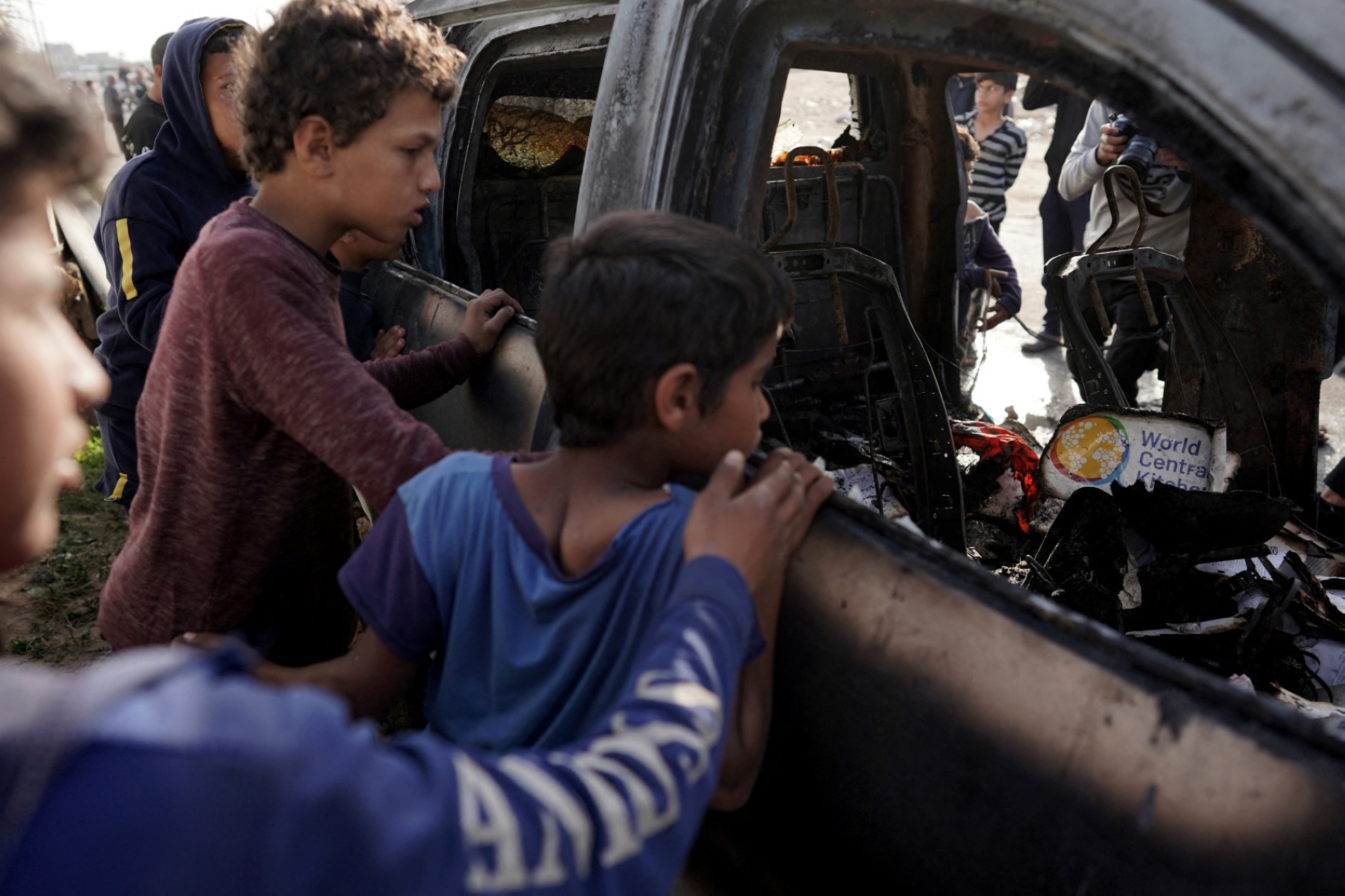
People gather around the carcass of a car used by US-based aid group World Central Kitchen, that was hit by an Israeli strike the previous day in Deir al-Balah in the central Gaza Strip on 2 April 2024.
How are humanitarian workers affected by the weakening of international law?
The attacks on humanitarian workers and the killing of many among them reflect the contempt shown by Israeli authorities for international law. More generally, the law is often flouted by the powerful and observed by the weak, because it offers at least a limited counterbalance. Humanitarian workers are, by definition, vulnerable in the face of armed actors, and humanitarian law is designed to protect them. Yet in reality, this protection is rarely enforced, especially in Gaza.
What conclusions do you draw regarding the relationship between humanitarian action and politics?
I have always defended the independence of humanitarian work, although in truth that independence is highly relative. In practice, when we operate in any country, we are subject to the local authorities and dependent on their authorisation to carry out our work. It is therefore impossible to escape entirely from political dynamics, since authorities, by definition, act politically.
In Gaza, there are two authorities. On one side is Hamas. On the other is Israel, the occupying power. In reality, we cannot function without a certain degree of subordination to the Israeli military command, which oversees the activities of international organisations and NGOs in Gaza and the West Bank. We are often sharply criticised for what some perceive as a lack of neutrality, particularly when we speak of massacres or extermination. Such language, it is argued, implies deliberate intent to kill, rather than simply drawing attention to the human cost of war.
Our relationship with these authorities is therefore political to a certain extent, because Israel has an interest in the presence of humanitarian organisations in Gaza. In this sense, we may indirectly serve certain Israeli interests, and this must be acknowledged. The same is true elsewhere, whether in Congo, Sudan, or Myanmar. Regardless of the context, this is the reality we work within.
At the same time, the responsibility to speak out, and to publicly denounce the facts we witness—mass killings, obstruction of humanitarian aid, the use of indiscriminate weapons, attacks on civilians and medical infrastructure—inevitably brings us into tension with those in power. Condemning ongoing violations of international humanitarian law, and documenting the targeting of hospitals and civilians, naturally leads to friction with the Israeli authorities.
We therefore operate with a relative independence, both in our decisions and in our public statements. What we do is political, but it is the politics of the victims of war, not the politics of those who wage it. This is why the relationship between humanitarian action and politics remains deeply ambiguous. Even so, our aim is always to distance ourselves as far as possible from government agendas, and to manage our work according to humanitarian priorities, while adapting to the pace and constraints imposed by the local context.
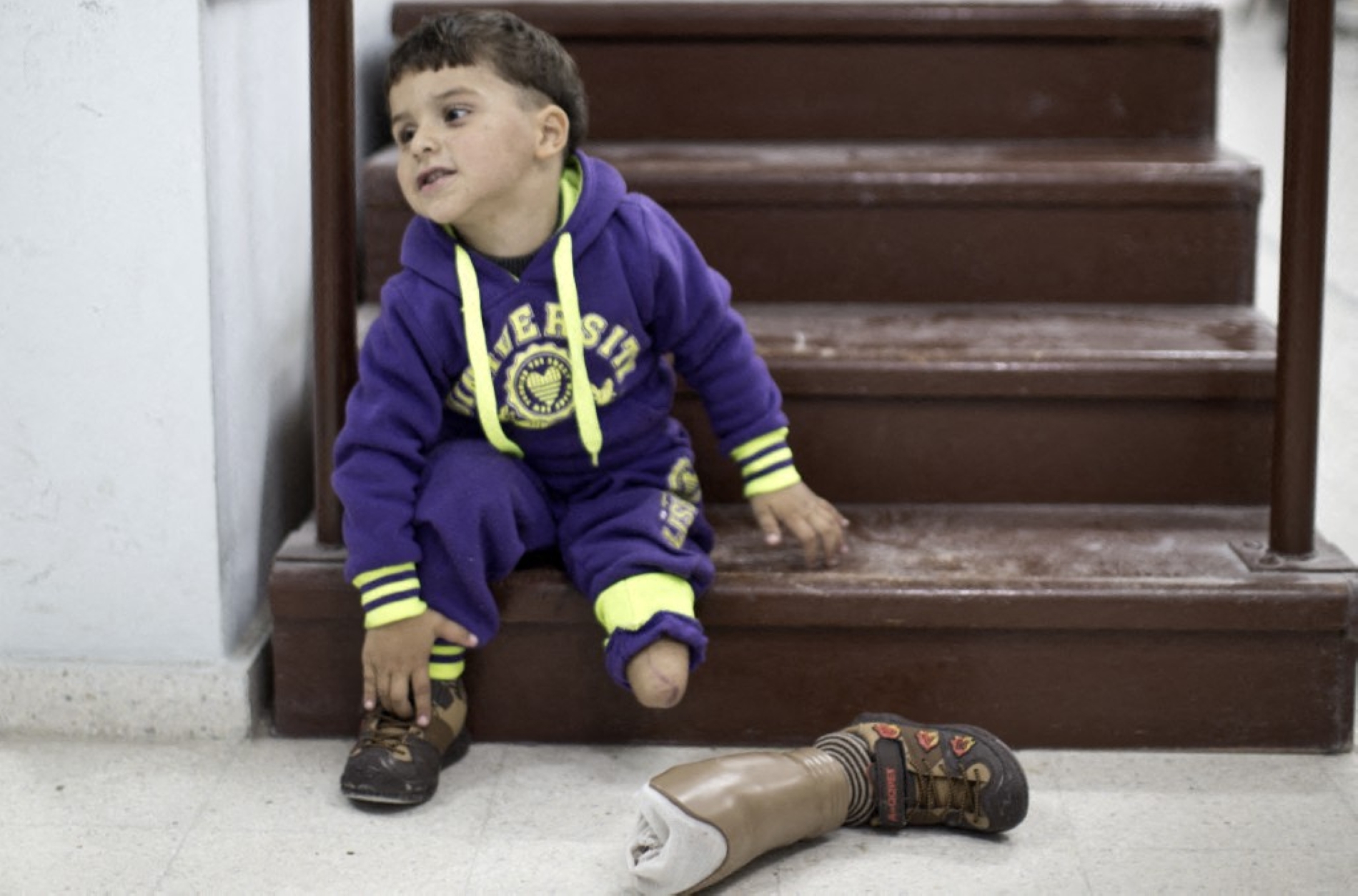
A three-year-old boy who lost his leg after an Israeli strike. Israel's war on Gaza has created the "largest cohort of child amputees in modern history".
Should humanitarian actors take positions during conflicts, or remain neutral?
It is important first to clarify what is meant by neutrality. I am a strong advocate for a very strict understanding of the term. Broadly speaking, there are two kinds of neutrality, though this distinction is often overlooked: neutrality in wartime, and a broader, more general neutrality that extends even into times of peace.
Neutrality in wartime means refraining from offering any material support to the belligerents, no matter where we operate. It means not supplying information, equipment, or assistance of any kind to any party involved in the conflict. This principle is essential, and it must be reiterated to ensure it is fully understood.
There is, however, a broader conception of neutrality, which calls for abstaining from public commentary on political, religious, ethnic, or philosophical disputes. This form of neutrality I reject. Silence usually allows those in power to dominate the narrative. Neutrality based on silence, in effect, serves the stronger side.
The proportion of civilian casualties in Israel's war on Gaza is among the highest ever recorded in modern history, estimated at around 80 to 85% of the dead
Rony Brauman, former MSF president
Take, for example, the crimes against humanity committed in Gaza or the West Bank. If we remain silent, we allow Israel to justify its actions with terms such as 'legitimate self-defence', 'precision strikes', or 'responding to an existential threat'. This silence gives the dominant side every justification to continue exerting its power at the expense of the weaker. In this sense, such neutrality is not a humanitarian position. It is a diplomatic stance. Some states adopt neutrality in order to act as mediators between warring parties, and the International Committee of the Red Cross functions under its legal mandate as a neutral intermediary. Their discretion is understandable. But as civil society actors, we have every right to speak out, to express our outrage and anger, and to attempt to restore some balance or make space for a humanitarian reading of the conflict.
In Gaza, this responsibility is even more critical, because we are the only foreigners on the ground, apart from UN staff. No journalists or other visitors are present. If we choose not to speak, we effectively allow the stronger party—Israel—to speak on our behalf.
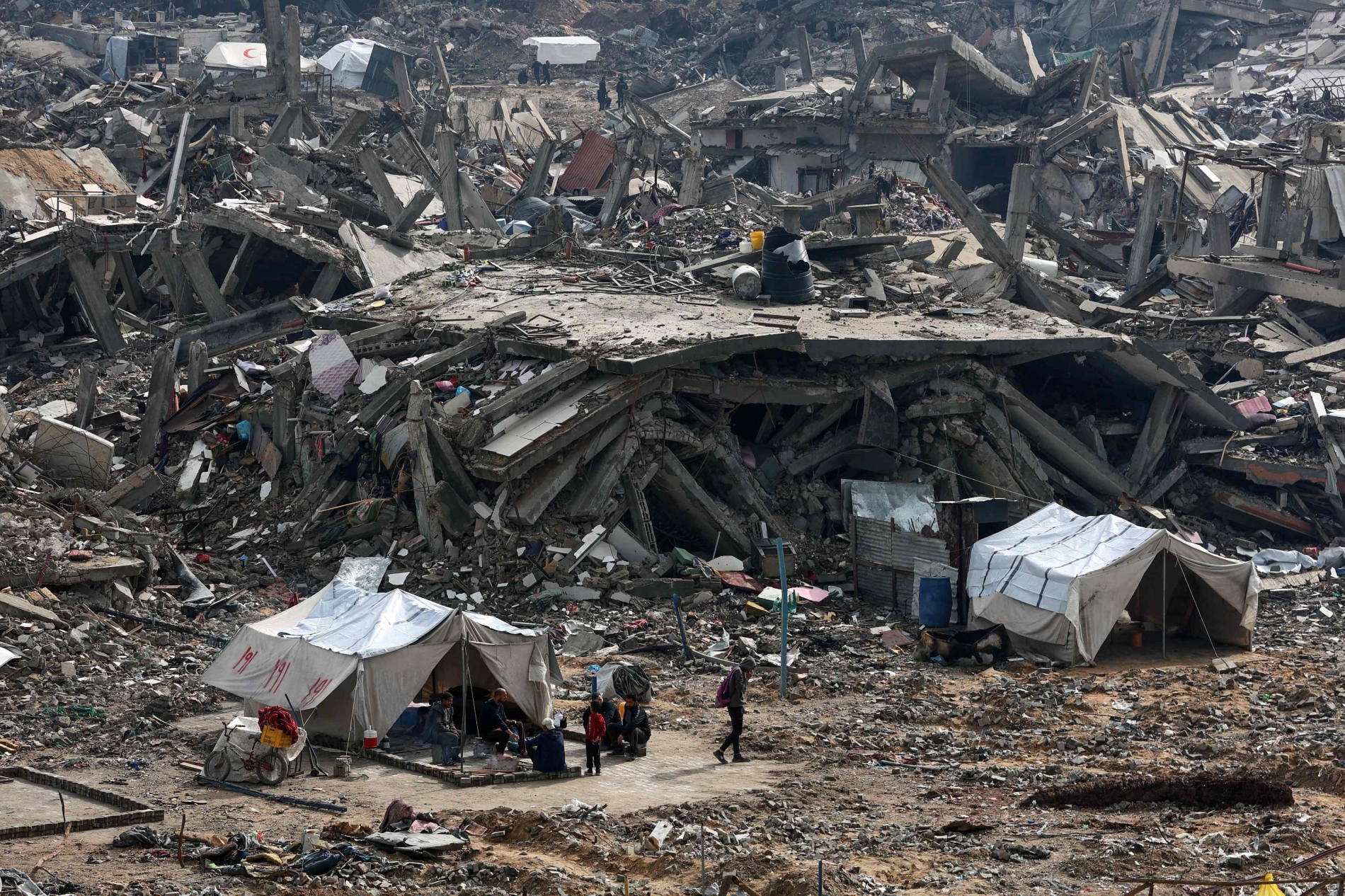
People erect tents amidst the rubble of destroyed buildings as displaced Palestinians return to the northern areas of the Gaza Strip in Jabalia in 2025.
Do you see Gaza as marking the end of international law?
I would not frame it in quite those terms. The notion that international law has come to an end remains a possibility, but only the future can confirm or deny that, which is why I remain cautious. However, to speak merely of the 'failure' of the international community underplays the gravity of what has taken place.
Consider, for example, the European Union's refusal to suspend Article 2 of the EU-Israel Association Agreement. This clause explicitly links the agreement to respect for democratic principles and human rights. The agreement itself is a free-trade pact between Israel and the European Union—its largest trading partner and the world's biggest single market. The fact that this agreement has been maintained, and that any serious discussion of it was postponed for so long despite recent minor shifts, reflects a persistent reluctance to adopt a meaningful political stance.
Another factor is the consistent conflation of calls for sanctions with antisemitism, which has led to the moral criminalisation of sanctions as a concept, even when the situation has clearly warranted them. Alongside many other dynamics, this reveals a broader process of normalising Israel's status within European frameworks—culturally, commercially, and politically—while exempting it from the human rights standards applied to other states within the European sphere.
Yet Israel remains an occupying, colonising, and destructive power. None of this aligns with the post-colonial foundations of the contemporary international order. Europe has not simply failed to act; it has been actively complicit. In my view, international law is dying in Europe. The question now is whether it can be revived. Only time will provide the answer.
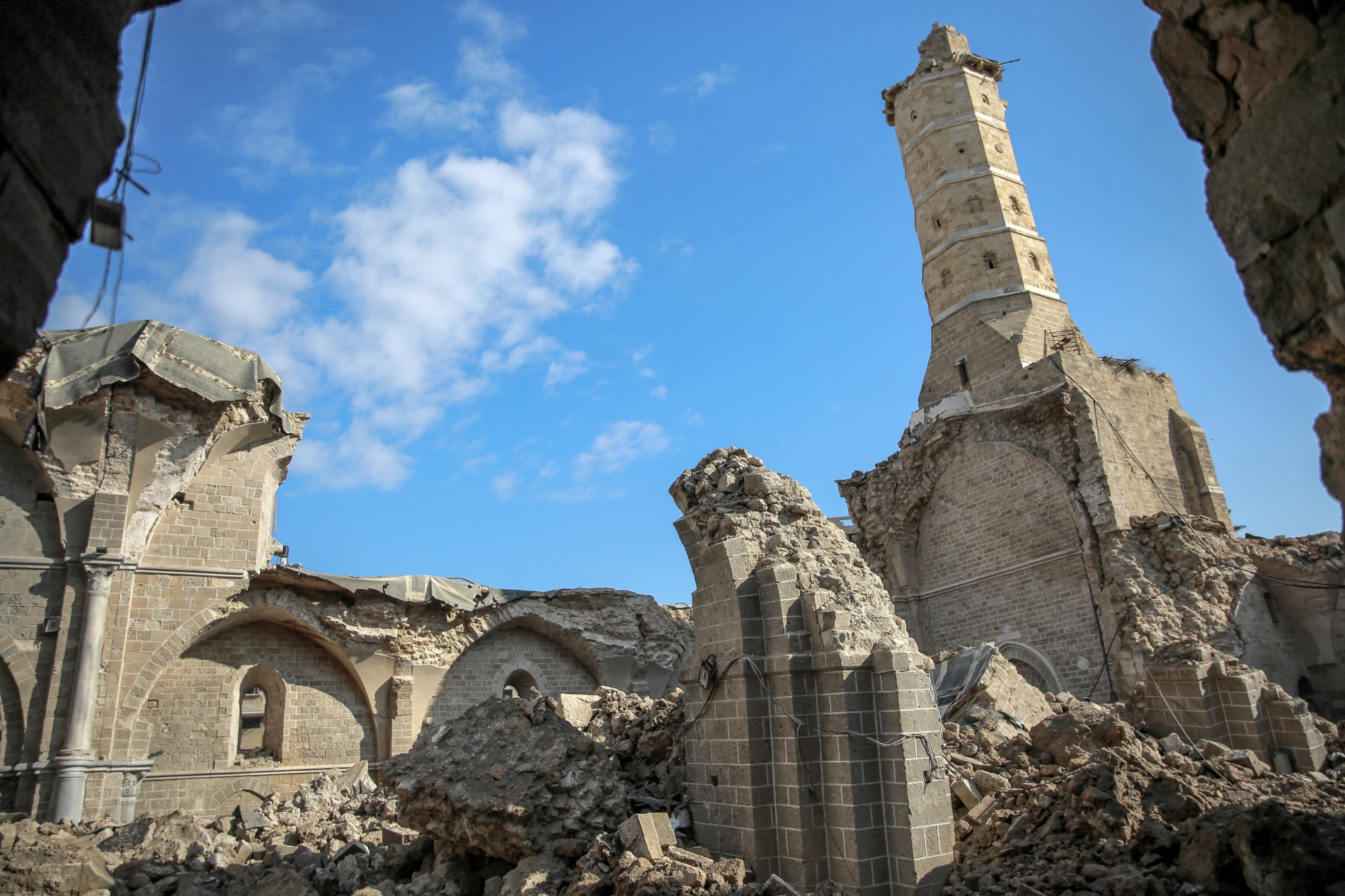
It is vital to note that this phenomenon is not exclusive to Gaza. What we are witnessing is a broader collapse of international law, particularly in Europe, where the law is being suffocated by the indifference of powerful states. The world has witnessed other brutal conflicts, but rarely—if ever—have we seen a situation where every standard for destruction and mass killing has been broken simultaneously. Civil registries, public buildings, places of worship, cultural heritage, educational institutions, infrastructure, and farmland—every element that allows a society to function has been targeted.
This picture taken on 5 January 2024, shows Gaza City's Omari Mosque, the oldest mosque in Gaza, damaged in Israeli bombardment.
The scale and thoroughness of the devastation are unprecedented. Europe accepted it and continues to accept it. This has inflicted lasting damage on Europe's political and moral standing, which was already fragile but retained at least a symbolic presence. Even that limited credibility is now in steep decline.
You describe a form of humanitarian action you call 'colonial humanitarianism'. Is it always present, and how can it be overcome?
The war in Gaza has once again brought to light a colonial mindset that remains deeply embedded in the post-imperial West. This mentality is not new. It became clearly visible in the early 21st century, particularly during the 2003 invasion of Iraq, when the US fabricated a pretext to topple a regime. At that time, there was still resistance to such imperial reasoning, even from within certain Western governments.
By contrast, this mindset appeared almost unchecked during the 2011 war in Libya, justified by claims of an imminent genocide in Benghazi. A similar logic resurfaced in the so-called 'peace plan' proposed under US President Donald Trump, drafted without any engagement with the primary stakeholders, namely the Palestinians. The same pattern was evident in 1947, when the UN created Israel without Palestinian consent. More recently, events in Venezuela have again confirmed this enduring imperial logic.
This sense of entitlement to shape the world is not always present, but it re-emerges under specific conditions and remains powerful. It also affects the humanitarian sector. For example, when aid organisations launch campaigns intended to change social or cultural behaviours, even with the best of intentions, such efforts may lack political, social, or cultural legitimacy because they originate from external actors. I have described this elsewhere as the 'preaching impulse' of humanitarian action—an extension of the imperial mindset that played a role in shaping modern humanitarianism itself.
There are two essential ways to resist this. The first is a deep, critical reflection on the origins, methods, and limitations of humanitarian work. The second is the internationalisation of humanitarian organisations, a process already underway. Today, the general assemblies and conferences of organisations such as MSF bear no resemblance to what they were in the 1980s. One now finds a remarkable diversity of origins, languages, accents, and perspectives. This cosmopolitan character is, in my view, the best response to the persistence of the colonial mindset.
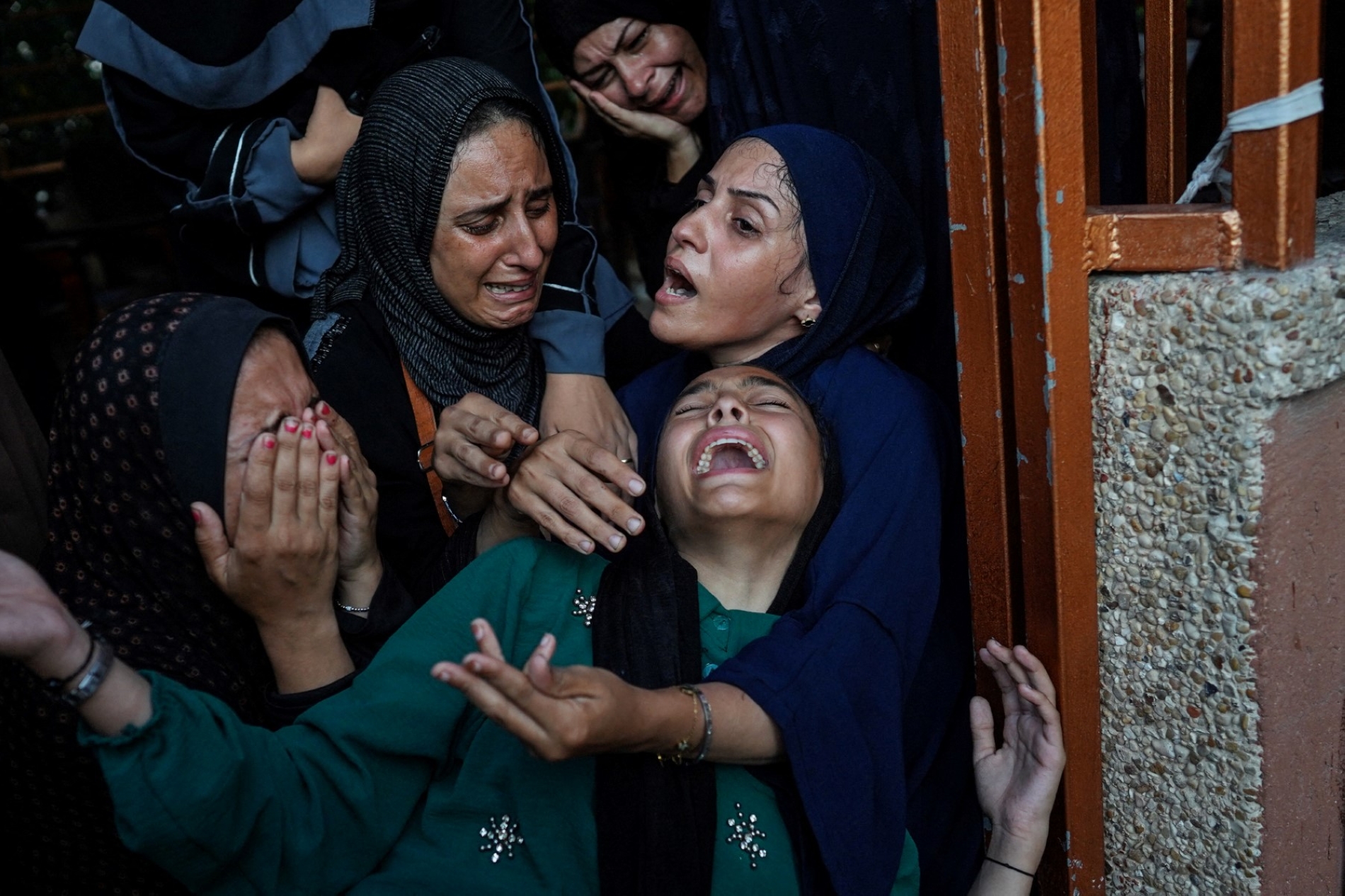
Palestinian women cry as killed members of the Abu Taha family are brought for burial outside Nasser Hospital in Khan Yunis following Israeli bombardment east of the city in the southern Gaza Strip on 22 July 2024.
Is the mental health of Gaza's population being taken seriously?
Yes, this issue is now receiving considerable attention. Mental health, particularly in contexts of extreme violence, has become a central concern in humanitarian work, especially in relation to post-traumatic stress and its wider effects. These matters now occupy a significant place within international assistance frameworks.
But we are speaking of a population of nearly two million people who have endured more than two years of sustained psychological trauma and violence—an intensity unmatched anywhere else in recent memory. What proportion of them will ultimately require specialised psychological care remains unknown. Nor can we even begin to assess this question within what is commonly called the post-conflict phase, although I do not believe we are yet in such a phase.
We are still in the midst of the conflict. Hundreds have been killed or wounded since the ceasefire of 11 October. At best, what we are witnessing is a temporary truce or partial suspension of violence. There is no indication of a true de-escalation, because the root causes of the war—occupation, settlement expansion, and a system that resembles apartheid—have not been addressed.
Recent developments around UNRWA raise broader questions about the future financing of humanitarian organisations, including UN agencies and NGOs…
Certainly. And I must admit that I fault myself for not having spoken out earlier about the lack of European support for UNRWA, which I consider one of the gravest errors. Most states accepted Israeli accusations without proof, driven by a desire not to upset the US or Israel. The funding crisis is likely to become extremely serious.
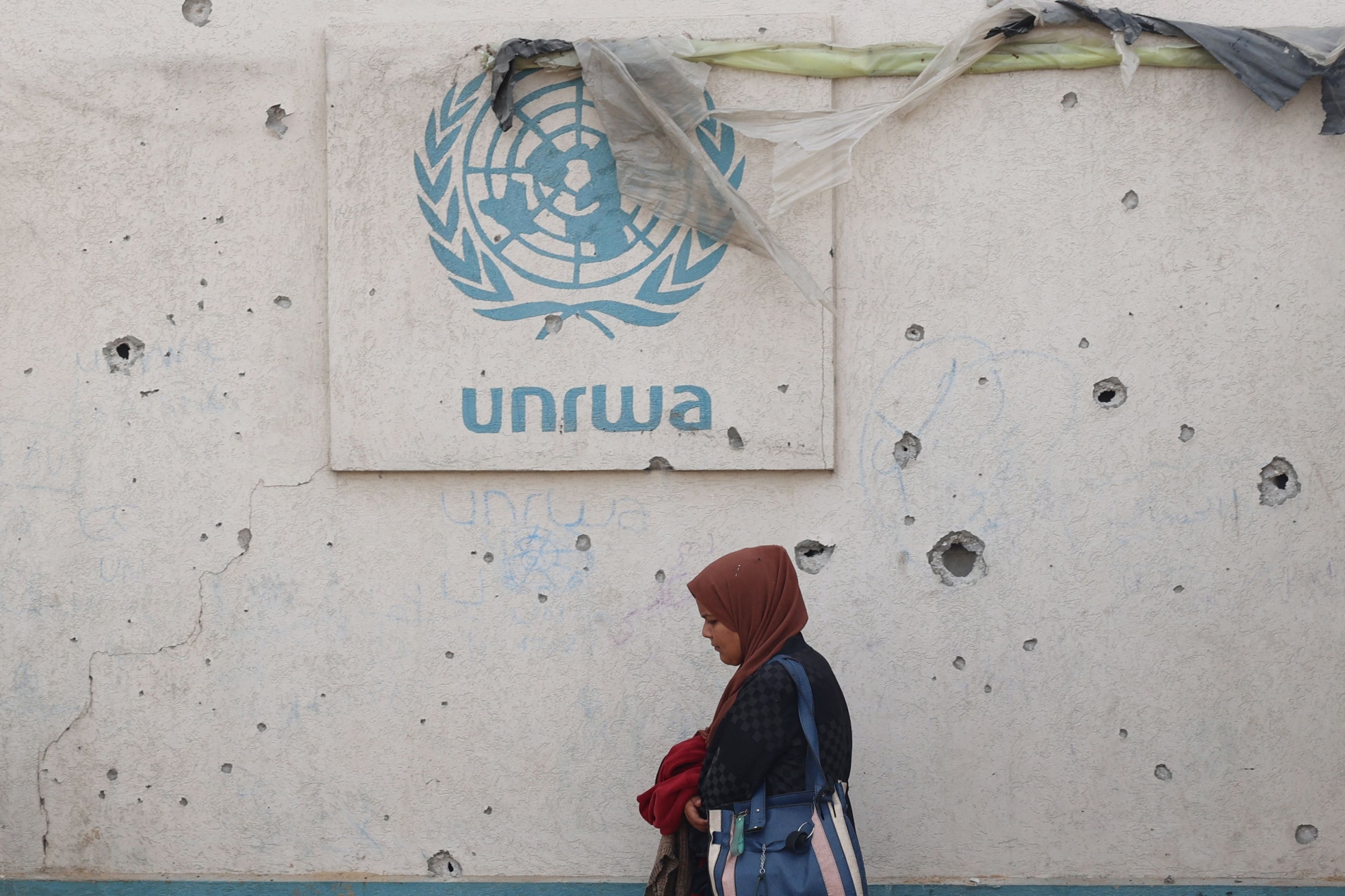
A Palestinian woman walks past a damaged wall bearing the UNRWA logo at a camp for internally displaced people in Rafah in the southern Gaza Strip on 28 May 2024.
At MSF, we are not directly affected, as we rely exclusively on individual donations and accept no government funding in order to maintain our independence. But most of our partners—the World Health Organisation, the UN High Commissioner for Refugees, the World Food Programme, as well as many NGOs such as Action Against Hunger and Solidarités—are deeply affected by these financial cuts.
This means that many essential operations, such as water distribution and the provision of psychological care in refugee camps and conflict zones, are now at risk. These tasks have traditionally been carried out through a collective effort, with responsibilities shared among different organisations. When some actors are forced to withdraw due to lack of funds, others, like MSF, must try to fill the gap. But there are limits. The work becomes more costly, resources shrink and challenges increase.
Beyond the material implications, this also affects the legitimacy of humanitarian action. When funding is cut, people begin looking for someone to blame. Humanitarian work then suffers a gradual erosion of legitimacy as a result of these financial constraints. This opens the door for violent rhetoric and identity-based narratives to gain ground. The same dynamic is visible in debates around migration.
Across Europe, we are seeing this trend everywhere. Policies are becoming more restrictive, and the decline in humanitarian funding is part of the same ideological movement as the tightening of anti-migration measures. The two may not be identical, but they stem from the same intellectual framework.
For this reason, I believe humanitarian workers are facing a very difficult period. And the cause of this, if I may say so, is not Gaza per se, but the broader political shift embodied by figures such as Donald Trump.