The SDF: from chosen US security partner to liability
How a regional and international climate increasingly aligned with Damascus is placing pressure on the Syrian Democratic Forces to prioritise Syrian unity
Delil Souleiman/AFP
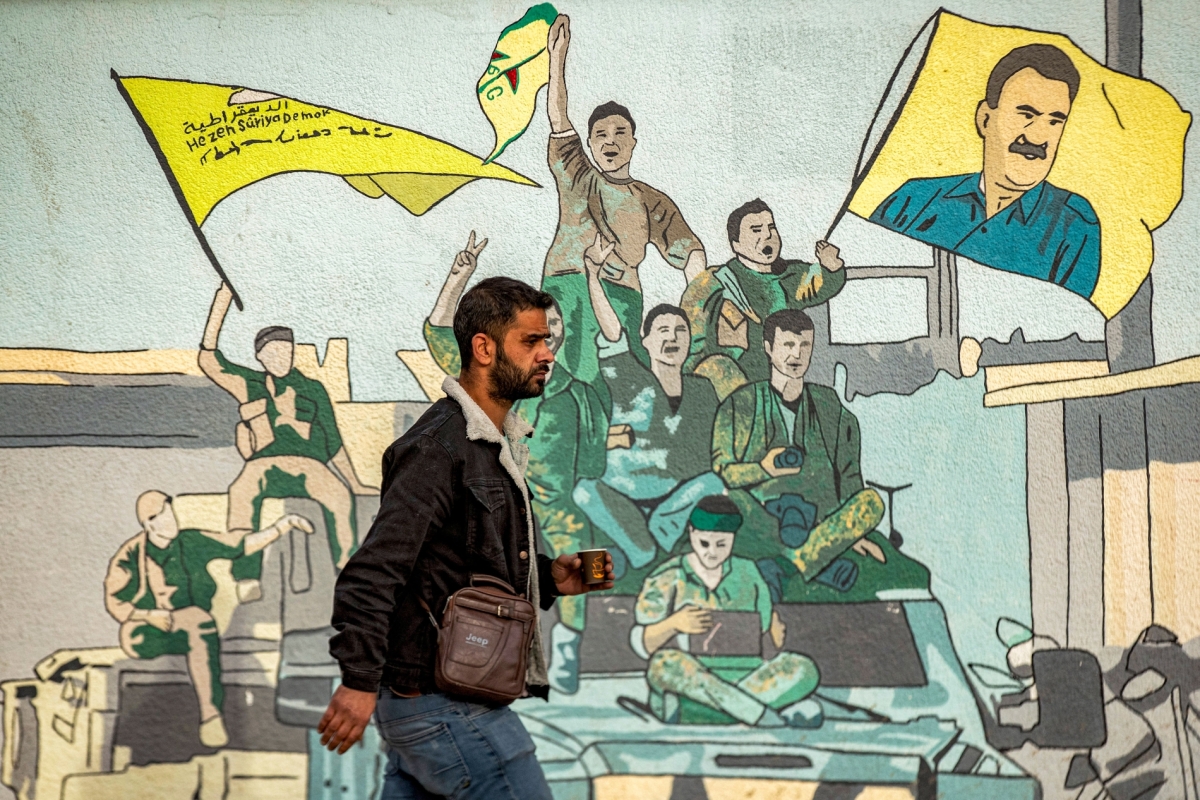
A man walks past a mural depicting SDF supporters raising a flag showing the face of Abdullah Öcalan, the founding leader of the PKK, in Syria's northeastern city of Qamishli on December 16, 2024.
The SDF: from chosen US security partner to liability
Since its inception under American auspices, the Syrian Democratic Forces (SDF) has served as the US-led Global Coalition to Defeat the Islamic State's local partner and Washington’s chosen ground force. The current climate, however, suggests the SDF has become a liability to US strategy, particularly in light of US President Donald Trump’s declared vision for regional peace and stability.
The Kurdish group now faces a moment of strategic consequence; its decisions could define its trajectory amid shifting regional and global dynamics.
Origins and formation
The SDF, led by Mazloum Abdi, was officially established on 10 October 2015, just over a year after the international coalition against IS was formed in September 2014. The US played a pivotal role in shaping both its formation and its name, particularly after failed negotiations with the Free Syrian Army (FSA), a coalition of various rebel factions. At the time, elements within the FSA declined to fight IS or suspend operations against the Syrian government—a refusal that clashed with Washington’s insistence that any armed support be used solely against IS.
A former American official involved in the early coordination noted that Washington had, from the outset, favoured a military structure built around Kurdish forces in eastern Syria. Several factors informed this orientation. Empowering the FSA risked shifting the balance of the conflict against Damascus. In parallel, a current within Washington's political establishment advocated supporting a group at odds with Ankara, creating leverage in Washington’s dealings with Türkiye.
At its launch, the SDF drew primarily from groups affiliated with the Euphrates Volcano joint operations room, founded in September 2014 with the express purpose of combating IS. Operational authority rested with the People's Defence Units (YPG) and the Women's Defence Units (YPJ), later joined by Arab and Syriac factions, including the Syriac Military Council.
The Sanadid Forces—composed of fighters from the Shammar tribe under the leadership of Manaa Hamidi Daham al-Jarba—also joined, bringing with them the Raqqa Revolutionaries Brigade, which together represented the most prominent Arab presence in the SDF. US estimates at the time placed the total number of fighters at approximately 45,000.
In the years that followed, the SDF sought to reduce the influence of Arab factions within its structure. It created a series of military councils in Deir ez-Zor, Raqqa, Manbij, and Tabqa, redistributing Arab fighters among these bodies. In 2018, the SDF dismantled the Raqqa Revolutionaries Brigade, detaining its commander, Abu Issa Al-Raqqawi, along with several of his companions, in June of that year.
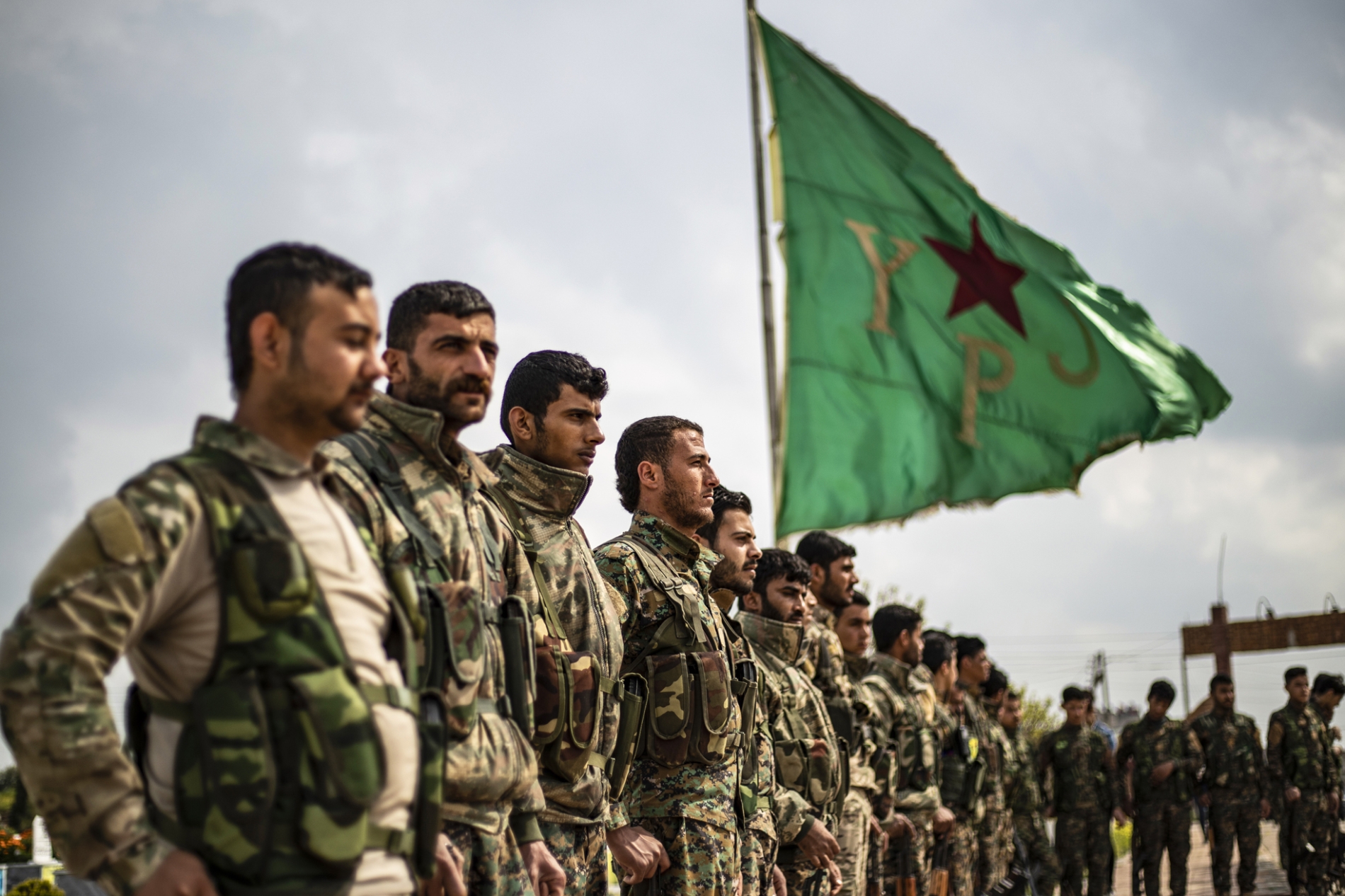
Members of the Kurdish-led Syrian Democratic Forces attend the funeral of an Arab SDF fighter who was killed in the eastern Deir ez-Zor province, in the northeastern Syrian Kurdish-majority city of Qamishli.
The Sanadid Forces, however, remained intact. The SDF leadership recognised that any direct confrontation with this group would sever ties with key tribal networks in the region. To contain tensions and preserve the precarious balance east of the Euphrates, the US intervened through repeated mediation. Russia, sensing a strategic opening, also moved to reestablish its relationships with tribal sheikhs.
The restructuring effort extended beyond Arab factions. The SDF also worked to marginalise Kurdish figures and movements that resisted its direction, including the Kurdish National Council. This campaign reflected a broader drive to consolidate control over both military and political life.
The Syrian Democratic Forces now face a moment of strategic consequence; its decisions may define its trajectory amid shifting regional dynamics
From militia to political project
Alongside its military organisation, the SDF began building a political structure. On 10 December 2015, in the city of Al-Malikiyah, Al-Hasakah province, the Syrian Democratic Council was established. From the outset, the council adopted administrative decentralisation as its governing vision for Syria. Its founding charter affirmed national unity and recognised the Syrian army as the sole armed institution of the state, one that must remain separate from political life.
Functioning as the political and diplomatic front of the SDF, the council operated under a leadership system comprising cochairs and deputies, appointed as needed. Nonetheless, it did not emerge as an independent authority. That role remained with the Democratic Union Party, which effectively led the Autonomous Administration of North and East Syria, declared in 2018.
Geographically, the SDF holds most of the territory east of the Euphrates, stretching from the border triangle connecting Syria, Iraq, and Türkiye. It controls the majority of Al-Hasakah province, aside from areas seized by the Syrian National Army (SNA) in 2019 with Turkish backing. Its presence extends across the northern and eastern countryside of Deir ez-Zor and encompasses most of Raqqa province. Estimates suggest that nearly a quarter of Syrian territory lies under its administration.
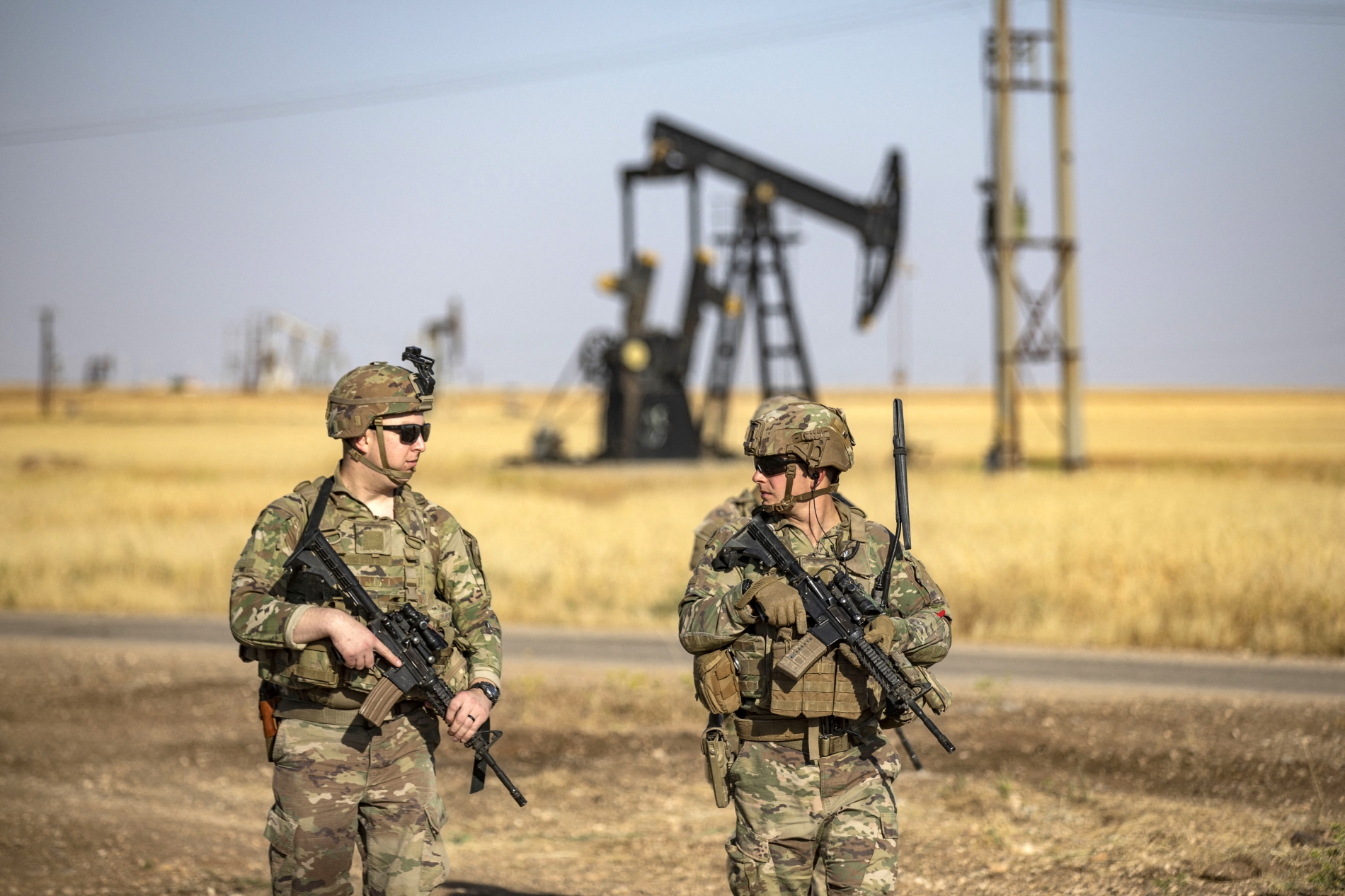
US troops patrol near an oil well in al-Qahtaniyah in Syria's northeastern Hasakah province, close to the border with Türkiye, on 14 June 2023.
This area includes vital infrastructure and natural resources. The Tishrin and Tabqa dams fall within its bounds, along with all oil fields east of the Euphrates. The region also represents Syria's primary agricultural zone. Unofficial figures indicate that the SDF oversees around 26 detention centres housing 12,000 individuals. Many were captured during operations against IS and include detainees of Syrian, Arab, and foreign origin. The al-Hol and Roj camps also fell under SDF control, sheltering the families of IS fighters and civilians displaced during campaigns conducted in coordination with the international coalition. Al-Hol camp is now under the control of the Syrian army.
The anti-IS coalition
From its inception under US sponsorship, the SDF became a central pillar in the campaign against IS. Washington, while offering sustained support, imposed clear boundaries on the partnership. It treated the SDF as an operational ally, not a political one. For the SDF, the alliance was existential. Its legitimacy across the territories it governed relied heavily on the continued presence of the US and the coalition. Any shift in that dynamic risked weakening the international backing that anchored its position east of the Euphrates.
The SDF carried out ground offensives, while coalition aircraft provided air support. On 20 October 2017, it announced the capture of Raqqa, once IS's most prominent Syrian stronghold. Over the next two years, operations continued across the eastern Euphrates. On 22 March 2019, President Trump declared the full territorial defeat of IS, following the collapse of its final enclave in Baghouz, in the Deir ez-Zor countryside.
Since its creation, the SDF has received extensive backing from the US and the coalition. This included salaries for fighters and, later, for the internal security force known as the Asayish. Support extended to training for combat units, logistical and military assistance, and instruction for police and prison staff. Coalition support also helped secure vital oil fields, limiting IS's access to critical resources.
US financial support peaked in 2018 at close to half a billion dollars. Following the group's defeat, annual funding declined. By 2023, Washington allocated $542mn dollars to support partner forces in both Syria and Iraq. In 2026, the budget earmarked for the SDF and the Revolutionary Commando Army was reduced to $130mn, with approximately half allocated to salaries.
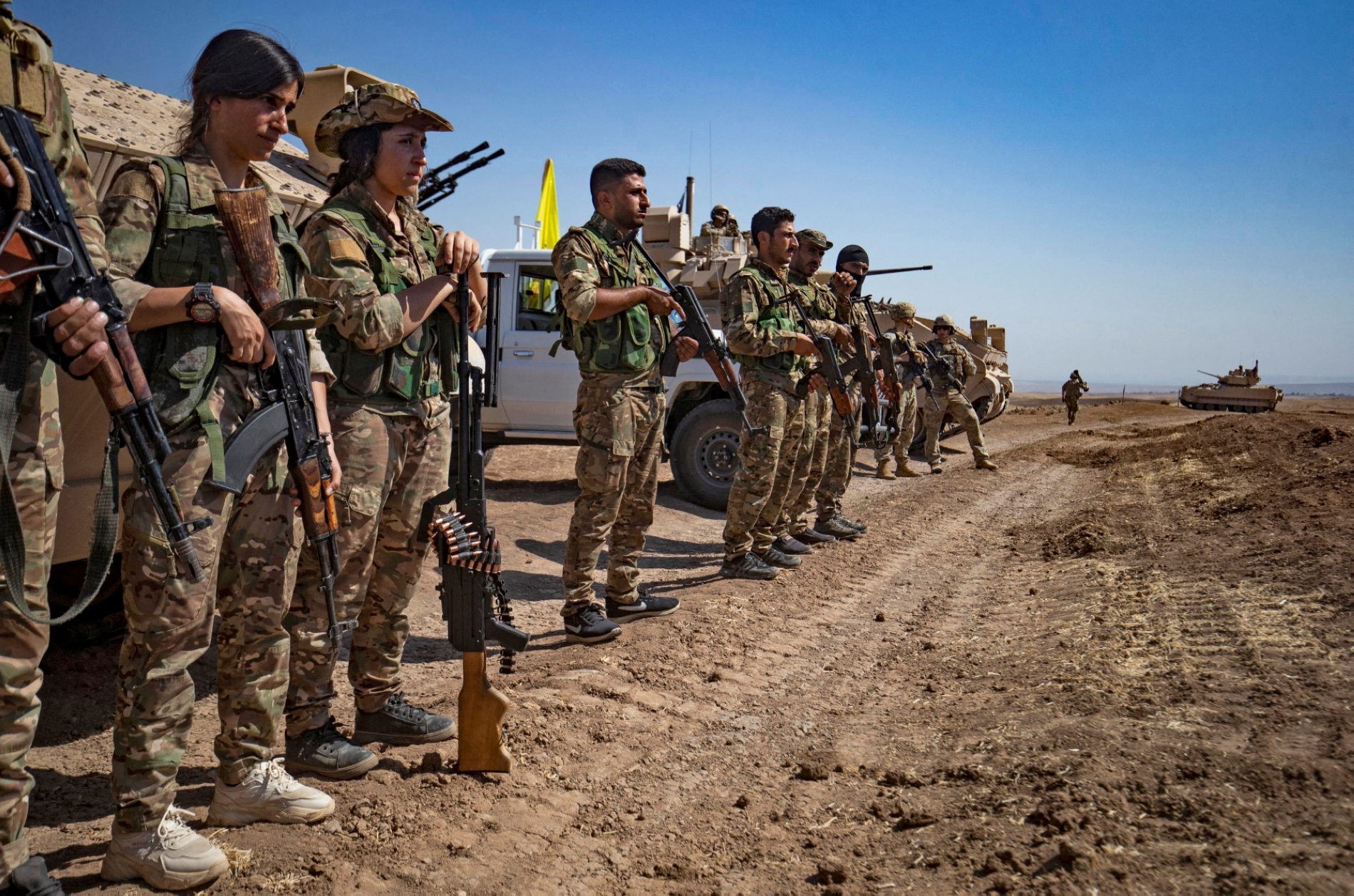
SDF forces participate in a joint military exercise with the US-led Operation Inherent Resolve coalition against the Islamic State (IS) in Syria's northeastern Hasakah province on 7 September 2022.
Strained alliances and new patrons
After 2019, Washington shifted its focus to reinforcing units capable of tracking remaining IS cells and preventing their resurgence. Two core SDF formations received the bulk of this support: the Anti-Terror Units (YAT) and the Special Forces (HAT). The scale of arms provided to the SDF decreased accordingly. US officials argued that the group no longer held territory, and the emerging threat came from mobile cells rather than organised military fronts. As a result, priorities shifted to prison security, internal stability, and precision operations, with reduced reliance on heavy weaponry.
Relations between the SDF and Washington grew strained during Turkish military operations in 2018 and 2019. The SDF viewed the US response to Operation Olive Branch and Operation Peace Spring, two major Turkish cross-border military interventions in northern Syria, as tacit approval of the offensives that forced it from Afrin, Ras al-Ayn, and Tell Abyad.
This climate of mistrust created space for Russia to expand its role. Moscow positioned itself as a mediator between the SDF and the former Syrian government and presented itself as capable of restraining Turkish action in the event of a US withdrawal. This relationship has since developed, with regular meetings held at Qamishli Airport, where Russia maintains a military and logistical presence.
Oil revenues provided another key pillar of SDF financing. The SDF extracted and sold oil, with unofficial estimates suggesting that the former Syrian government received up to 30% of total output. The Qaterji militia facilitated the transport of oil to government-held areas. Alongside this, the SDF relied on wheat and other agricultural products to support its internal budget. These combined resources allowed it to sustain salary payments while continuing to receive coalition assistance for reconstruction and essential services across the devastated areas under its control.
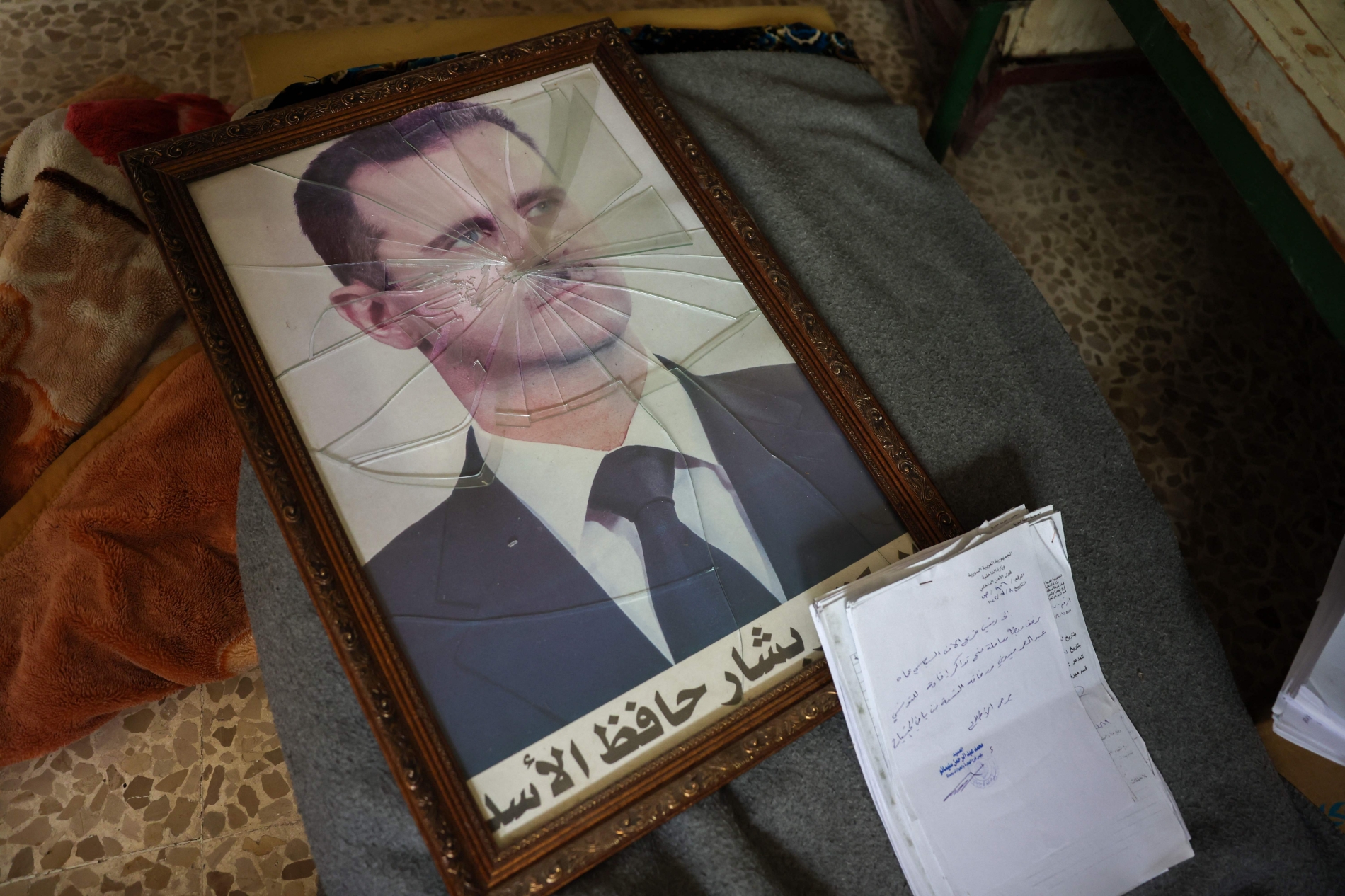
A portrait of Syrian President Bashar al-Assad is pictured with its frame broken in a Syrian regime's Political Security Branch facility on the outskirts of the central city of Hama following its capture.
Assad's fall
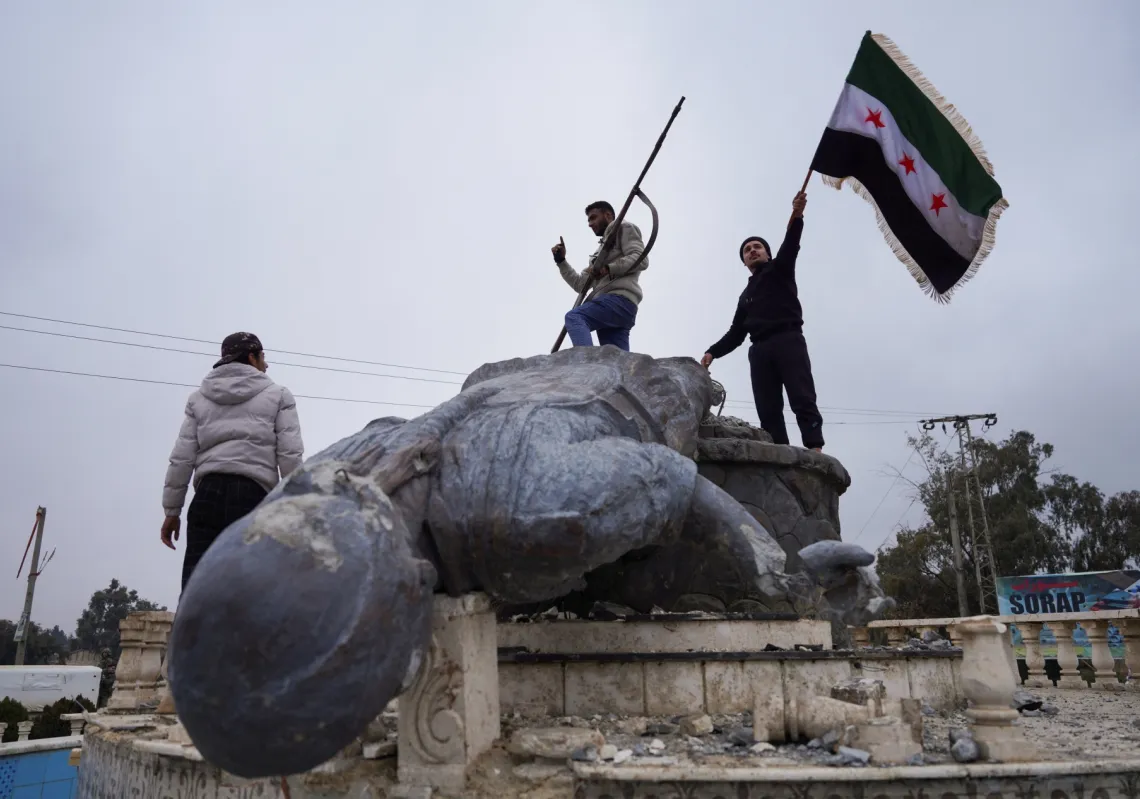
In late November 2024, the 'Deterring the Aggression' operation set out from Idlib toward Syrian government forces with the aim of seizing Aleppo. As regime units collapsed and the former government's allies became absorbed in conflicts outside Syria, Hayat Tahrir al-Sham advanced across Syrian territory in coordination with factions of the SNA and groups from the south. Their advance culminated in the fall of the Syrian regime and the flight of Bashar al-Assad to Russia on 8 December 2024.
The SDF did not take part in the battles against Assad's forces. According to al-Sharaa, the SDF even attempted to obstruct the advance of the operation's forces in Aleppo. Once the regime fell, the SDF moved into Deir Hafar and parts of rural Aleppo, and entered major cities in Deir ez-Zor province that had been under the control of Iranian-backed militias, which withdrew shortly before the collapse.
From its inception under American sponsorship, the SDF became a central pillar in the anti-IS fight, but the US placed clear boundaries on the partnership
The 'Deterring the Aggression' forces pushed the SDF back to its traditional areas within days. Even so, the SDF remained in Deir Hafar, Maskanah, and the surrounding villages. The geography under its control, the size of its forces, the presence of prisons holding IS detainees, and the American military presence in its territory all underscored the need for a political settlement between the Syrian government and the SDF. Attempts at negotiation continued until the signing of the 10 March agreement in 2025.
The agreement contained eight provisions. It affirmed the right of all Syrians to representation and participation in political life and in state institutions on the basis of competence, regardless of religious or ethnic background. It recognised the Kurdish community as an integral part of the Syrian state and guaranteed its full constitutional rights. It called for a nationwide ceasefire. It mandated the integration of all civilian and military institutions in northeastern Syria into the administration of the Syrian state, including border crossings, the airport, and oil and gas fields.
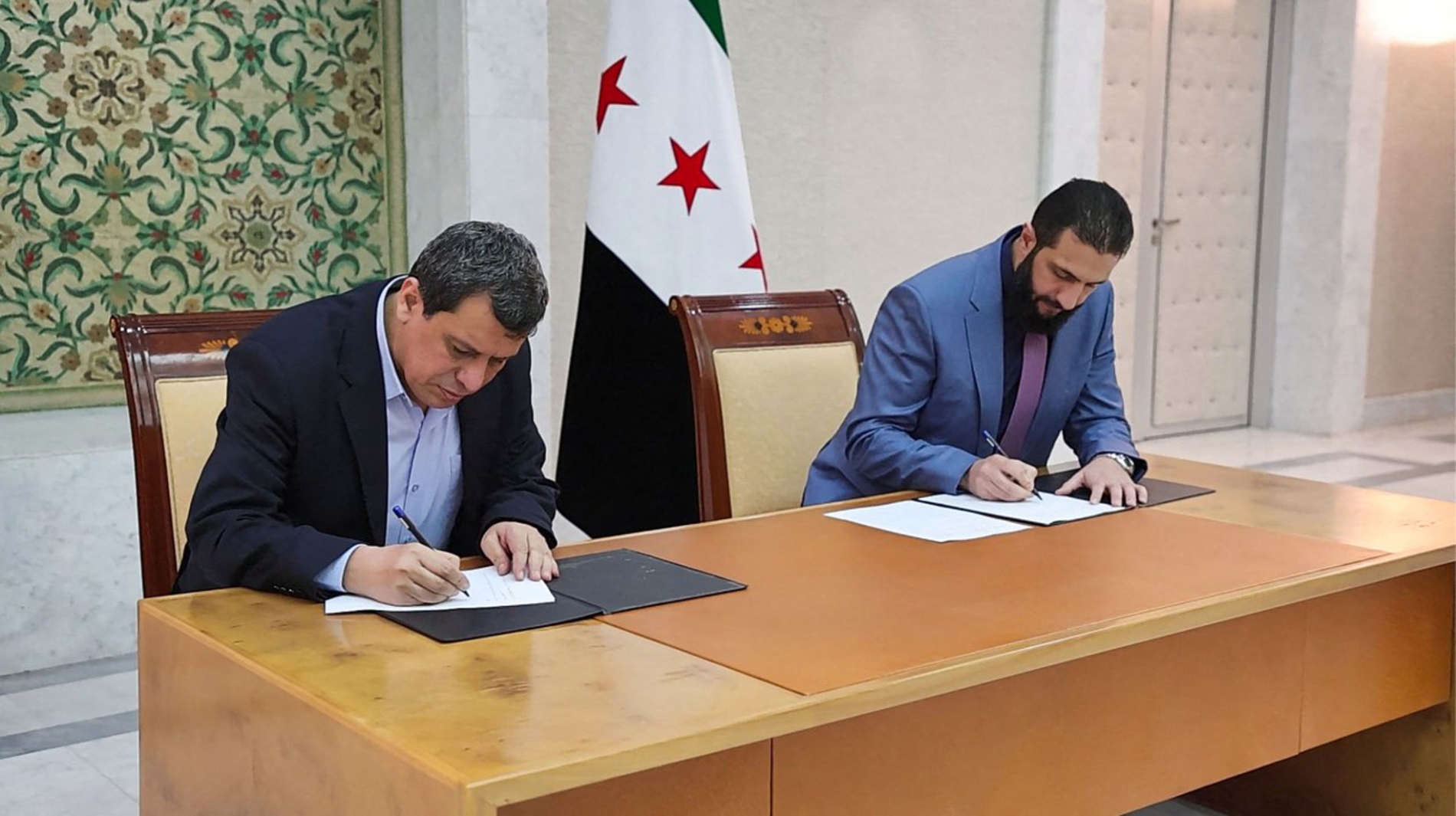
Ahmed al-Sharaa and SDF leader Mazloum Abdi during the signing of the agreement to integrate the SDF into state institutions on 10 March 2025.
It also guaranteed the return of displaced Syrians to their towns and villages, and committed the state to confronting remnants of Assad's forces and all threats to national security and unity. It rejected calls for partition, incitement, and efforts to sow discord among Syrian communities. It tasked executive committees with implementing the agreement before the end of the year.
From March until early 2026, the two sides achieved no meaningful breakthrough toward implementation. Negotiation rounds exceeded six sessions, yet the process remained stalled. The SDF continued to uphold decentralisation and sought to maintain its forces east of the Euphrates as a unified bloc or as multiple formations, without Syrian army units present. It also pressed for the incorporation of its fighters into the Syrian army's structure, including more than 3,000 men who had served in the former regime's forces and were admitted into the SDF in 2025, even though the agreement called on the SDF to support Damascus in confronting remnants of the old regime.
Internal dvisions
The SDF now faces internal divisions over the nature of the arrangements required with Damascus and its future in the new Syria. With Syria's entry into the Global Coalition to Defeat IS, the SDF's anxiety grew. Future support would no longer flow its way, and its principal source of legitimacy was eroded.
During this period, the Syrian government advanced its understanding with Moscow through intensive military and political meetings. In Damascus's view, this reduced the likelihood that the SDF could rely on Russia east of the Euphrates as an alternative patron if it sensed a loss of US backing.
Tensions between the two sides continued, and several military clashes unfolded in Aleppo, the Tishrin Dam area, Deir ez-Zor, and parts of rural Raqqa. These tensions reached a peak on 8 January, when the Syrian government launched an operation in the Ashrafieh and Sheikh Maqsoud districts of Aleppo after provocations by the SDF.
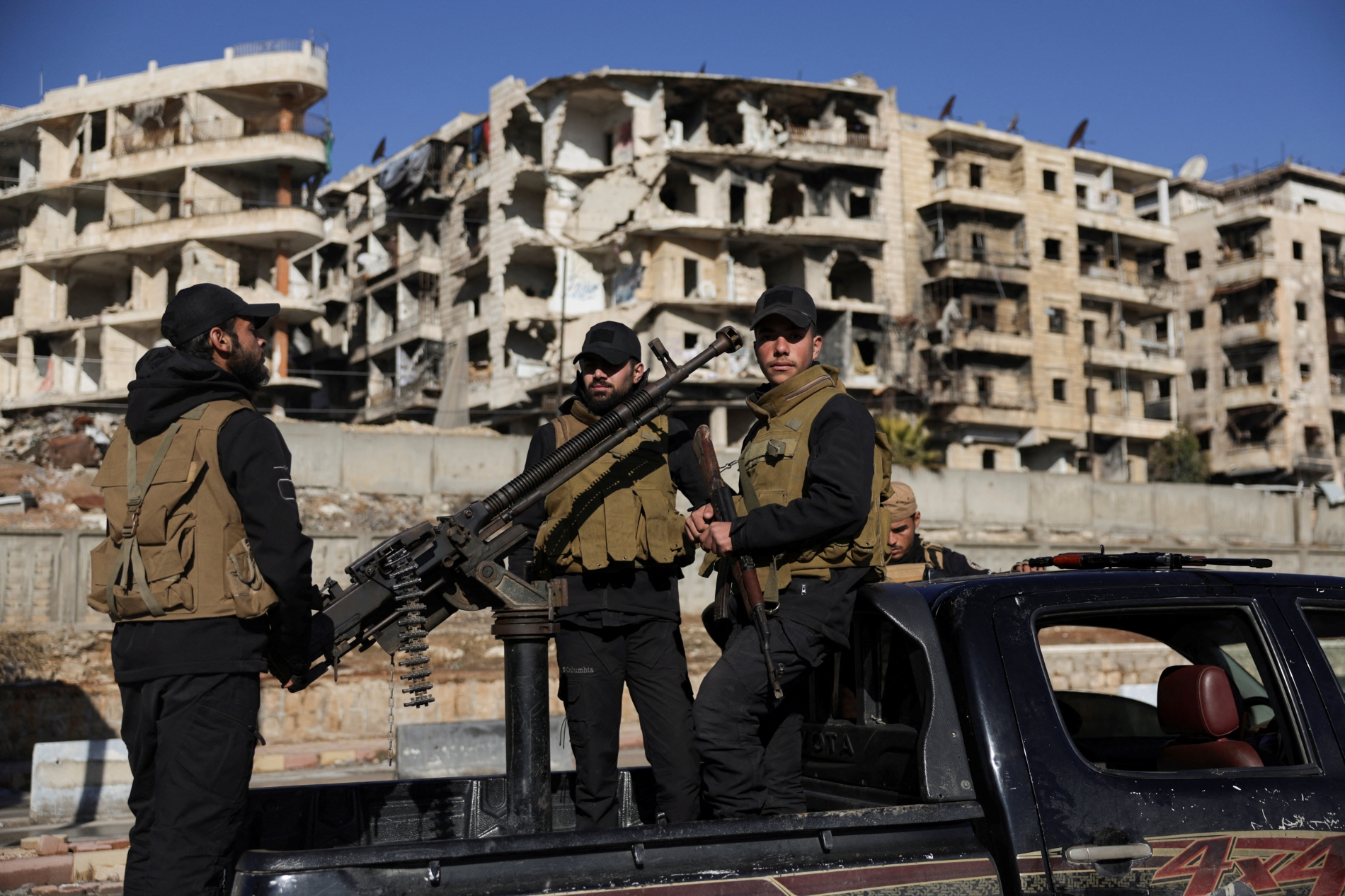
Government forces patrol the Sheikh Maqsoud neighbourhood after taking control of the area, following the collapse of an agreement between the Syrian government and the SDF, in Aleppo, Syria, on 10 January 2026.
Government forces secured the two districts before moving toward Tel Hafar and Maskanah, west of the Euphrates. According to several sources, Damascus warned Washington that the next phase would require tangible progress in negotiations, with all options remaining on the table, including military action east of the Euphrates. It argued that public pressure had intensified and that resolving the eastern Euphrates issue was central to regional stability, limiting space for actors such as Iran and IS, which exploit uncertainty.
Seeking to preempt the SDF's narrative and contain the fallout from the Aleppo clashes—which risked reverberating elsewhere and further straining Syria's social fabric—the government accelerated measures to guarantee Kurdish rights. In the absence of a functioning parliament to oversee constitutional procedures, al-Sharaa issued Decree No.13 on 16 January. The decree affirmed a set of rights for Kurds as a foundational component of the nation.
While these provisions were expected to appear in a new constitution, the government moved to enshrine them early to prevent the SDF from positioning itself as the sole guardian of Kurdish rights—a claim al-Sharaa has repeatedly insisted is secure within Syria's future. He is also expected to meet representatives of Syrian tribes and notable figures from the eastern region, a move aimed at increasing pressure on the SDF and undermining its claim to speak on behalf of the communities of the east.
According to available information, Tom Barrack, the US ambassador to Türkiye and Special Envoy for Syria, is working to defuse tensions and press the SDF towards progress in negotiations. His team is also assessing the risks of escalation should the situation slide into open confrontation.
Washington is seeking an agreement reached without violence, fearing that armed conflict would create conditions for an IS resurgence. The group has long targeted the prisons in SDF-held areas, which hold thousands of its former fighters, and any chaos would provide an opportunity to reorganise.
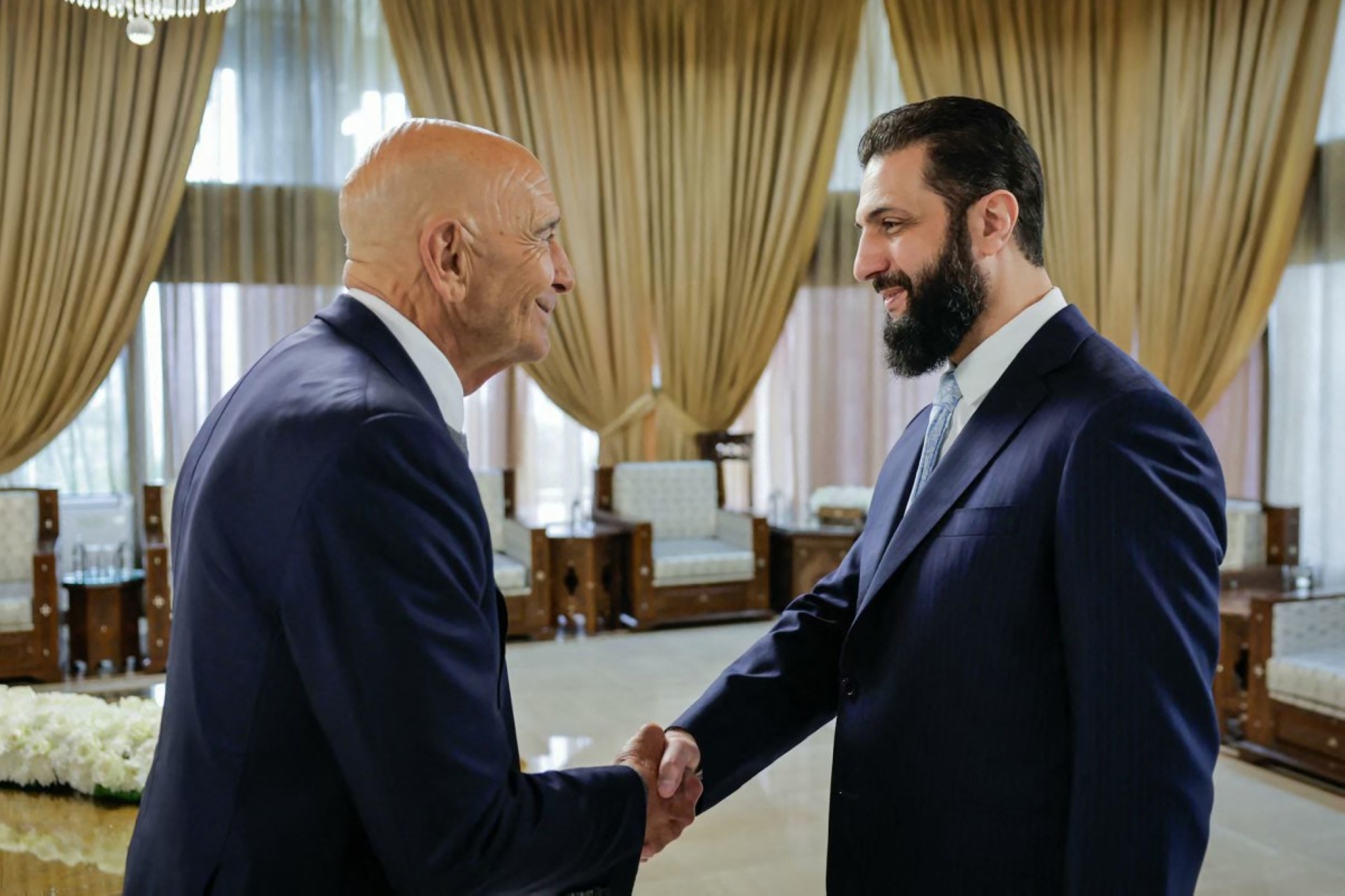
Syria's President Ahmed al-Sharaa shakes hands with US envoy Tom Barrack at the Presidential Palacein Damascus on 18 January 2026.
US efforts became visible on the ground on 16 January, during a meeting in Tel Hafar between representatives of the international coalition and the SDF, at which the latter was urged to withdraw from areas west of the Euphrates and avoid clashes with Damascus that would derail de-escalation and a return to political dialogue.
The period ahead presents a range of scenarios. Washington is seeking to reduce risk and limit fallout should negotiations stall and Damascus move towards military action east of the Euphrates. Any confrontation would have repercussions beyond Syria's borders, affecting the wider region. Türkiye, in particular, would not remain passive in the face of any SDF advance, which it views as a direct threat to national security and its fragile engagement with the Kurdistan Workers' Party (PKK).
The SDF now faces a decisive moment. It recognises that Washington increasingly views Damascus as a more strategically valuable partner. While the SDF once served as the US's primary local force against IS, its territorial role ended years ago, and Washington now calls for its integration into the Syrian army.
At the same time, the SDF senses growing discontent among communities under its control—Arab, Kurdish, and Assyrian—after years of policies that strained relations. The tribal uprising in Deir ez- Zor in 2023 nearly stripped the SDF of its Arab base until US intervention stabilised the situation, and fighters once considered a source of strength now represent a potential fault line.
By contrast, the Syrian government has cultivated constructive ties with tribal leaders and community representatives east of the Euphrates. All of this is unfolding within a regional and international climate that has shifted away from backing the SDF and towards supporting Damascus, the unity of Syrian territory, and regional stability.