How Israel's war on Gaza helped the Arab world rediscover its agency

In response to events since October 2023, Middle East nations have found that they are strong when acting in concert. This has the power to fundamentally change the game.

Lina Jaradat

How Israel's war on Gaza helped the Arab world rediscover its agency

The Gaza war has shattered illusions of regional stability and exposed the limits of Israeli and American dominance, but most importantly, it has hinted at what appears to be a rediscovery of Arab agency after decades of accumulated pressures, through the end of the Cold War and the Arab Spring 20 years later. What began as a regional response to Gaza two years ago has rapidly evolved into something much more profound, forcing a historically passive Arab world to reclaim a measure of strategic autonomy. The effects could be huge.

This story incorporates the unravelling of an old order, the catalytic role of death and destruction in Gaza, the failures of hegemony, the rediscovery of Arab diplomacy, and the rise of middle powers, with issues such as Palestinian statehood and Israel’s strategic dilemmas offering key lessons amid the region’s changing contours. Already an undoubted tragedy, Gaza may yet become the catalyst for seismic change.

Old order unravels

Since the early 1990s, the Middle East has been a largely US-managed system. Washington’s security umbrella, underwritten by regional alliances, ensured a rough stability that prioritised containment over genuine resolution. The 1991 Gulf War, in which a US-led 30-nation coalition expelled Iraqi forces from Kuwait, confirmed American primacy in the region, establishing a precedent for intervention by international coalitions.

The 1991 war, which culminated in a swift victory, reinforced the notion that the US could dictate terms in the Arab world, from sanctions to no-fly zones. Yet the war left Saddam Hussein’s Iraqi regime intact, sowing the seeds of future instability. Just over a decade later, the Americans were back. The 2003 invasion of Iraq, though disastrous in its execution and aftermath, initially reinforced US dominance.

Framed as a mission to get rid of Iraq’s weapons of mass destruction (which later proved to be non-existent) and promote democracy, it got rid of Saddam but unleashed sectarian chaos and insurgency, paving the way for extremist groups like Islamic State (IS) to emerge years later. The human cost was staggering—hundreds of thousands dead, millions displaced. Financially, all told, it has cost the US more than $1tn.

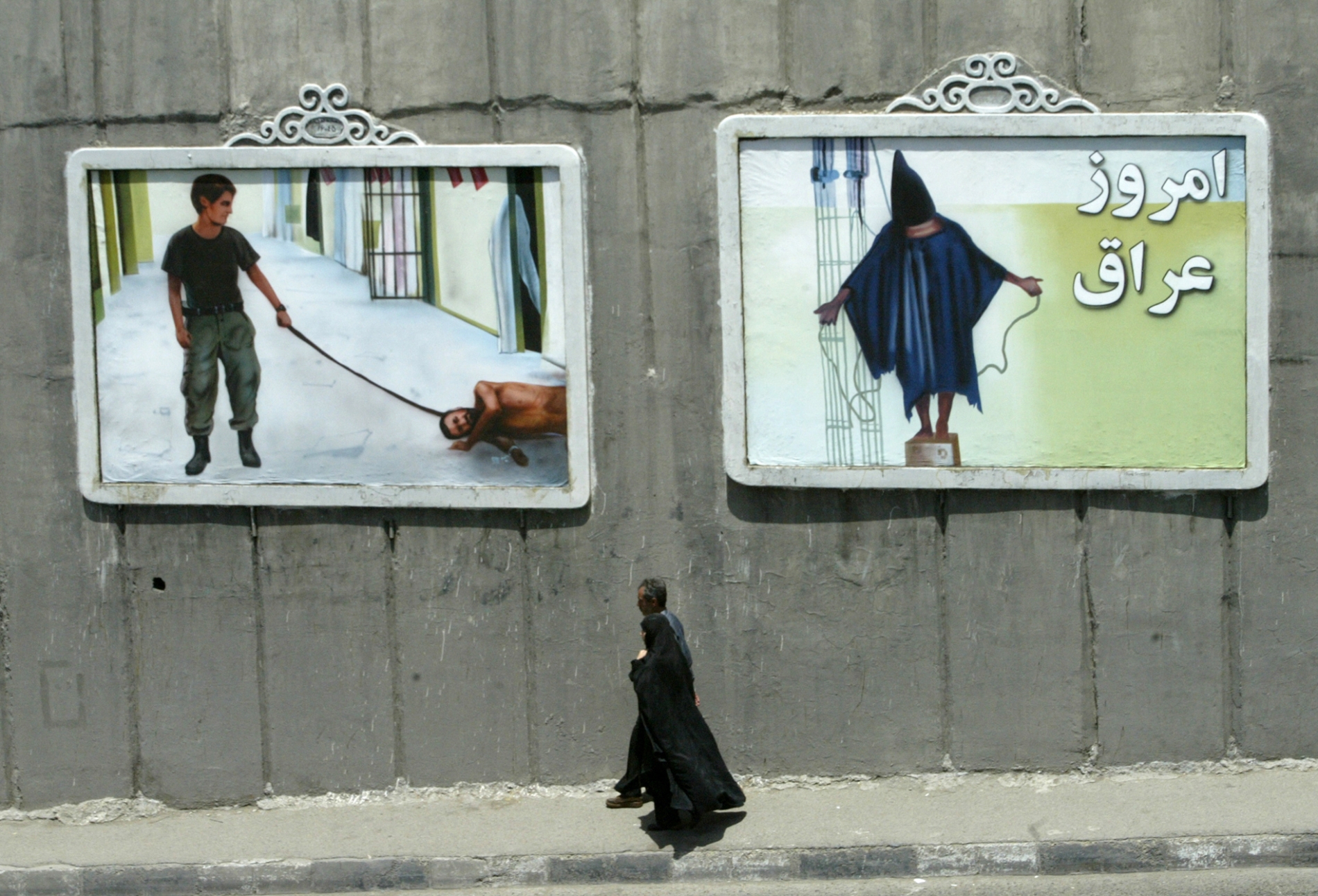
In the Arab psyche, this invasion symbolised the perils of external imposition: a superpower’s hubris leading to regional fracture. It also eroded trust in American intentions, as promises of liberation gave way to occupation and the abuse of detainees in prisons such as Abu Ghraib. By the late 2000s, the unipolar facade was cracking.
AFP
An Iranian couple walk past mural paintings depicting scenes from the torture of Iraqi prisoners by US soldiers at the Abu Ghraib prison near Baghdad, on a major highway in the Iranian capital Tehran on June 1, 2004.

The global financial crisis of 2008 exposed vulnerabilities in the neoliberal model that the West had exported to the region via structural adjustment programmes and trade agreements. Arab economies, heavily reliant on oil exports and remittances, suffered unemployment, particularly among the young. This fuelled the discontent that eventually erupted in 2011 in countries such as Tunisia, Egypt, Yemen, Libya, and Syria.

The Arab uprisings of that year exposed the fragility of regional regimes and the bankruptcy of the old social contracts. From Tunisia’s Jasmine Revolution to Egypt’s Tahrir Square, millions demanded bread, freedom, and social justice. These movements were not imported ideologies but organic responses to decades of authoritarianism, corruption, and economic inequality.

What followed highlighted the limits of people-powered change without institutional safeguards. Syrian protests against Bashar al-Assad morphed into a regional and international war by proxy, drawing in Russia, Iran (via Hezbollah), Türkiye (supporting opposition factions), and the US (supporting the Kurds and others).
In the Arab psyche, the 2003 invasion of Iraq symbolised the perils of external imposition: a superpower's hubris leading to regional fracture

In Yemen, a Saudi-led coalition fought the Iran-backed Houthis for years, devastating the peninsula's poorest nation and creating one of the world's worst humanitarian crises. In Libya, longtime dictator Muammar Gaddafi was kicked out, heralding the primacy of militias, dividing the country into two, allowing it to become a proxy battleground.

These conflicts introduced new actors, diluting American exclusivity. Russia projected influence through Syria and the OPEC+ group of oil-producing nations, coordinating production to stabilise prices and wield leverage. Through its Belt and Road Initiative, China expanded its economic presence, Chinese money and skills building ports in Djibouti and Oman, railways in Egypt, and infrastructure in the Gulf.

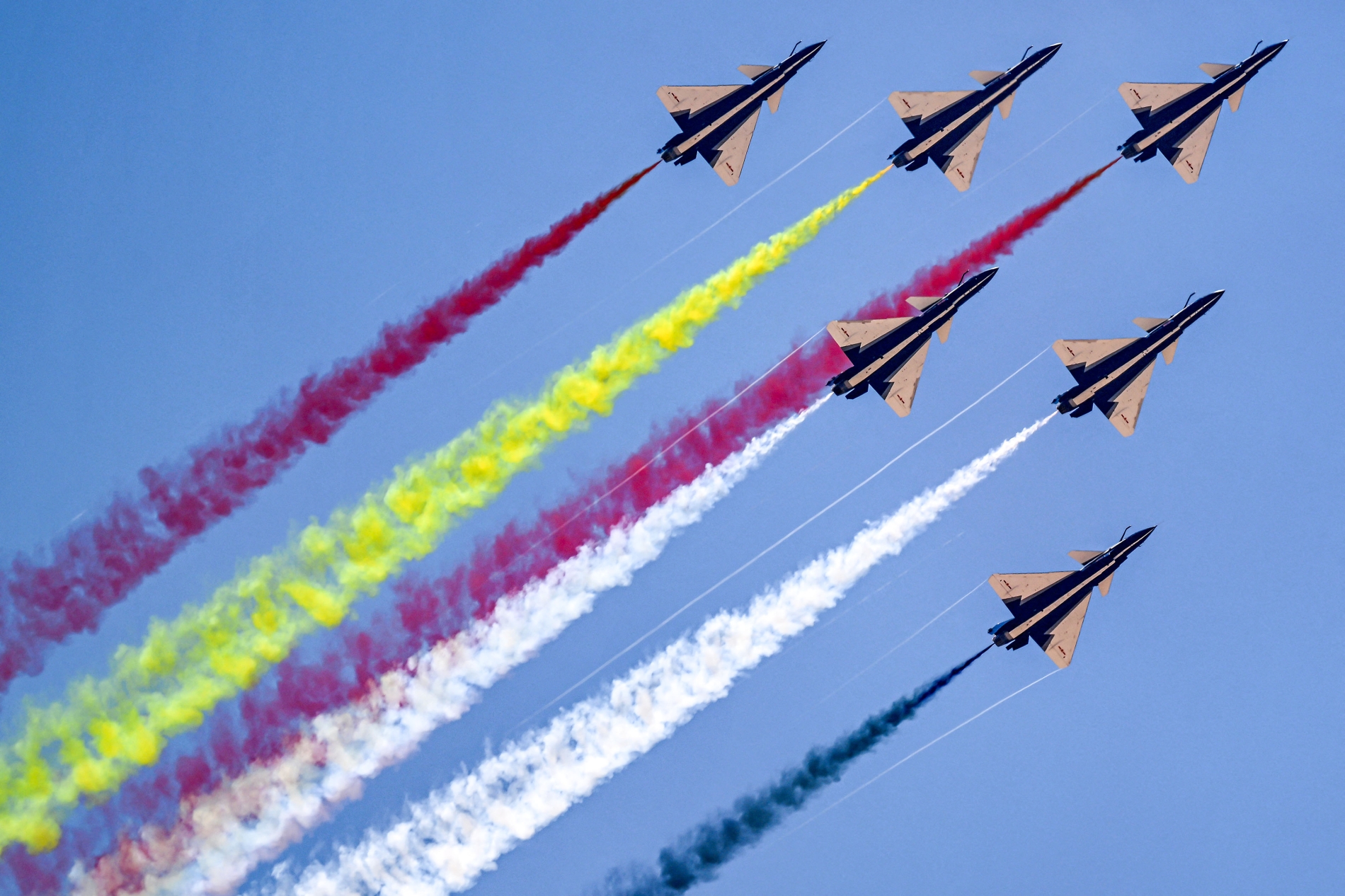
By the 2020s, the Middle East was no longer a unipolar space. Washington was still a major power, but not the only one. The Gulf states diversified their security and investment partnerships, buying weapons from Russia and China while maintaining US bases. Egypt, Saudi Arabia, and Türkiye all sought to balance, rather than align.

Khaled Desouki / AFP
China's Ba Yi Aerobatics Team releases smoke while performing manoeuvres during the first Egypt International Airshow at Alamein International Airport in Alamein in northern Egypt on 4 September 2024.

Rise of the middle

The era of tutelage was over. In its place came a system of 'regional middle powers'. These states have enough agency to shape outcomes and hedge among rivals. This may yet evolve into the Arab world's quiet revolution: an awakening of strategic autonomy. There are already signs that it is underway. It was notable, for instance, that so many Arab countries refused to tow the American line on Ukraine.  

In recent years, Arab states have been navigating a world in which the superpowers (the US and China, principally) are distracted by domestic polarisation and great-power competition. Then came the catastrophic war in Gaza, a strip of land barely 365 sq. km. yet pivotal in regional consciousness.

The last two years have been unprecedented in the scope and consequences of Israel's destruction, with 70,000 dead and the land now rendered all but uninhabitable. Israel said it was a war for security. For the Arab world, however, it felt more like a war of subjugation, evoking memories of 1948's Nakba and the 1967 occupation. Satellite images shows entire neighbourhoods erased, cultural heritage sites destroyed, and agricultural land reduced to cratered, barren scrub.

The Arab reaction was multifaceted and sustained. Egypt firmly rejected any Israeli plan to expel Gazans into Sinai, which would have violated sovereignty, reopened historic wounds of displacement, and destabilised the region. It fortified its border, deployed troops, and declared its "red lines", drawing on its role as a guarantor in past ceasefires.

Saudi Arabia suspended normalisation talks with Israel (which both Tel Aviv and Washington had desperately pushed) and declared that there would be no resumption without justice for Palestinians. Central to this was the establishment of a Palestinian state. This aligned Saudi Arabia's Crown Prince Mohammed bin Salman with the Saudi public, as polls showed more than 90% saw Palestine as a core issue. 

AFP
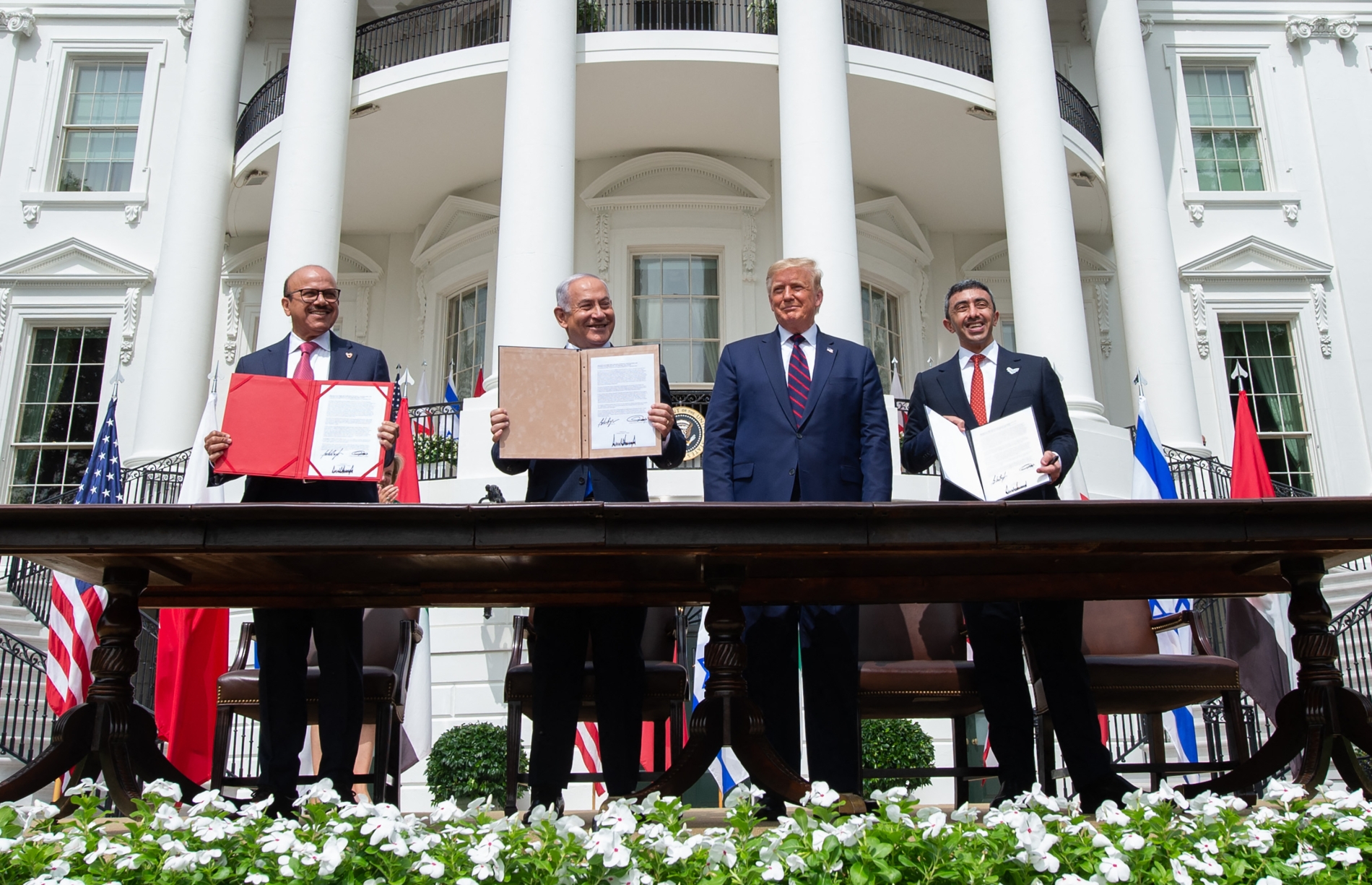
(L-R)Bahrain Foreign Minister Abdullatif al-Zayani, Israeli Prime Minister Benjamin Netanyahu, US President Donald Trump, and UAE Foreign Minister Abdullah bin Zayed Al-Nahyan after signing the Abraham Accords on 15 September 2020.

The United Arab Emirates, which had already normalised relations with Israel in 2020, issued public criticism of it and supported UN resolutions calling for a ceasefire. Jordan faced mass protests demanding the suspension of its 1994 peace treaty with Israel, forcing King Abdullah II to navigate domestic fury while maintaining security coordination, expelling Israeli diplomats temporarily, and recalling Jordan's ambassador.

In Iraq, militias launched drone attacks on Israeli targets, albeit with little effect. In Lebanon, Hezbollah also fired on Israel, opening a northern front. In Yemen, the Houthis launched missiles and attacked ships heading to or from Israeli ports. Across the region, the Palestinian issue returned to the centre of Arab consciousness. As social media showed images of suffering, diaspora communities mobilised, joining the many solidarity movements around the world. Boycotts targeted brands associated with Israel. Culturally, there were expressions of resistance in several fields.

Revising assumptions

For Israel, the Gaza war was meant to restore deterrence after it was attacked on 7 October 2023. Instead, it exposed the limits of Israel's military dominance and its complete dependence on the US, shattering the myth of strategic autonomy. The Israel Defence Forces, with cutting-edge technology, achieved tactical success but strategic stalemates. After two years, it still had not found and freed many of the hostages, which was a central war aim (in the end, this was only done through US-led negotiations).

Since the Abraham Accords in 2020, Israel has tried to rebrand. Far from an occupying power, it has portrayed itself instead as a 'normal' Middle Eastern state—technologically advanced, economically dynamic, and a partner to pragmatic Arab regimes. Deals with the UAE, Bahrain, Morocco, and Sudan promised trade, tourism, and technology, bypassing Palestine. This assumed that the Palestinian issue could be boxed off and that Arab states would prioritise modernisation over solidarity.

Both assumptions collapsed in Gaza. The unprecedented civilian death-toll and the wholescale devastation now seen as genocide makes normalisation politically toxic. Indeed, rare protests in Manama and Rabat have forced 'normalising' governments to reconsider their agreements. Even the UAE condemned Israel's "collective punishment" of Palestinians in Gaza, as Israel found itself facing moral isolation.

Reuters
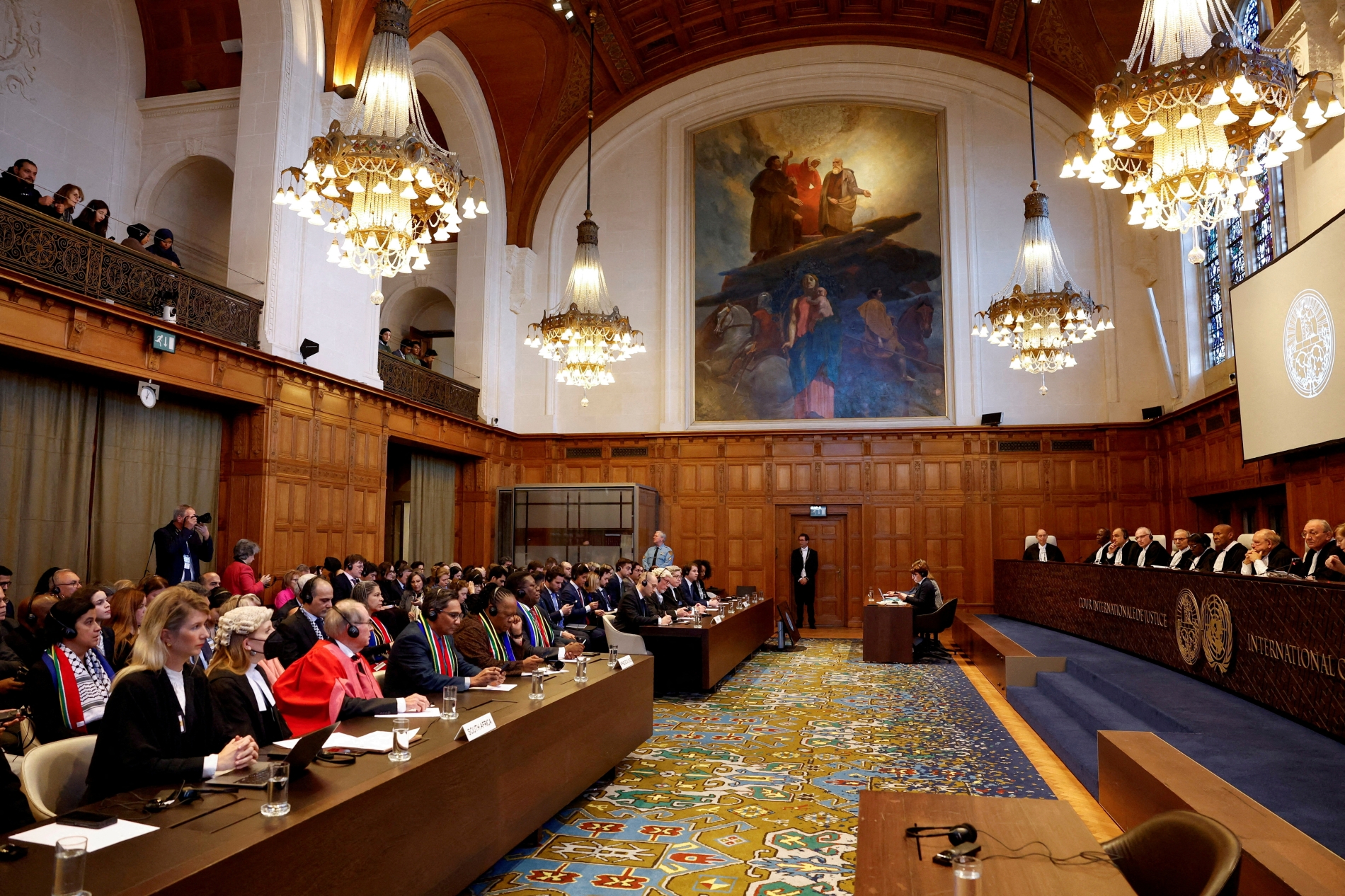
South Africa's case put forth to the ICJ accused Israel of genocide in The Hague, Netherlands, on January 26, 2024.

Global courts, including the International Court of Justice, issued provisional measures against Israel, citing genocide risks in a case brought by South Africa, while the International Criminal Court issued arrest warrants for Israel's prime minister and defence minister. For decades, the United States has been Israel's diplomatic shield and military benefactor, and was again forced to veto more than a dozen UN Security Council resolutions. This merely served to accelerate the erosion of US moral authority in the Arab world.

Washington's actions stood in sharp contrast to its professed commitment to international law, echoing hypocrisies exposed in Iraq. The harsh treatment of protesting students on American campuses coincided with defining shifts in US public opinion on Israel and Palestine, particularly among the young. It revealed the contradiction of a fading hegemony: the more power is needed, the more legitimacy wanes. This directly mirrored Israel's flailing bid for regional dominance and the failure of its military to translate superiority into influence.

For Israel, the Gaza war was meant to restore deterrence after October 7, 2023. Instead, it exposed the limits of its military dominance.

Back on the scene

If Gaza exposed the failure of hegemony, it also demonstrated the return of Arab diplomacy in tangible, innovative ways. Egypt, Saudi Arabia, and Qatar led mediation efforts between Israel, Hamas, and the US. Cairo's proximity to Gaza, security channels via Rafah, and intelligence ties all facilitated hostage negotiations. Doha's hosting of Hamas political leaders and financial support enabled back-channel talks, while Riyadh's global influence added vital pressure for de-escalation.

Leveraging the advantages available to each, the process became Arab-led, culminating in the February 2025 Cairo Framework and the June 2025 Saudi-French two-state initiative. The latter increased recognition of the State of Palestine at the UN, including from the UK, while the former established a phased ceasefire, prisoner swaps, humanitarian pauses, and the early mechanisms for reconstruction.

Yoan Valat / REUTERS
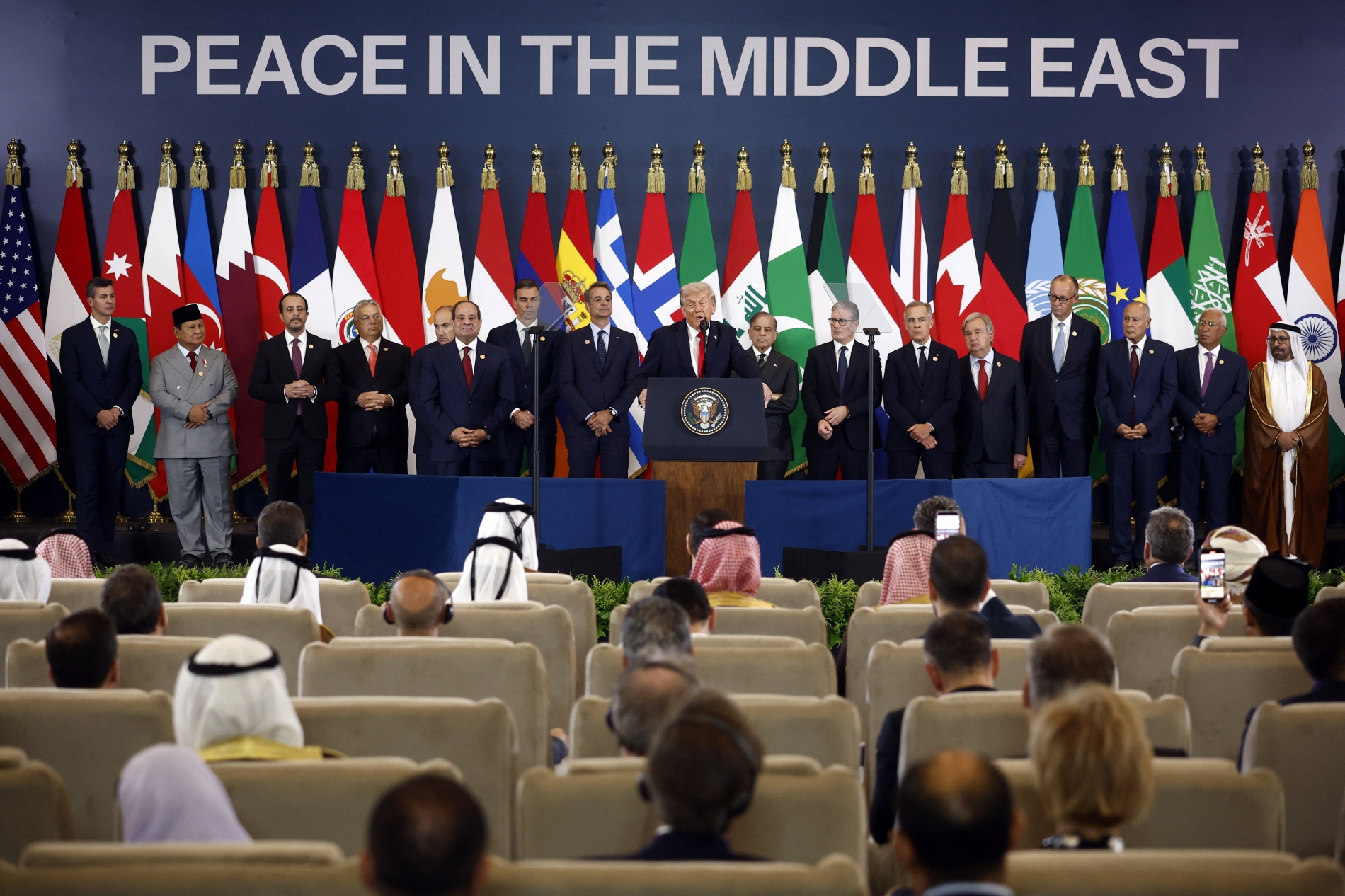
US President Donald Trump speaks during a world leaders' summit on ending the Gaza war, amid a US-brokered detainee swap and ceasefire deal between Israel and Hamas, in Sharm el-Sheikh, Egypt, on 13 October 2025.

Both served as catalysts for the 20-point Trump Plan that was announced in September, and which appears to have led to a ceasefire. For the first time in decades, Arab states were shaping—not merely endorsing—the parameters of a major regional crisis. Their coordination was pragmatic rather than ideological, with joint statements at the Arab League, coordinated votes at the UN General Assembly, and parallel tracks with Türkiye and Iran. It represents a psychological shift; a recognition, finally, that regional stability need not depend on external patrons with their own interests.

This realisation comes at a time of deeper structural shifts in the international order. The old binary of superpower dominance and regional dependency has been replaced by a more pluralistic and transactional order, where Arab states engage multiple poles to enhance leverage. Egypt is a prime example, balancing relations with Washington (military aid), Moscow (nuclear power), and Beijing (Suez Canal investments) while also acting as a mediator over Gaza.

Playing to strengths

Saudi Arabia has redefined its global identity through Vision 2030, using economic diversification to assert autonomy. Its growing partnerships with China in energy transition (solar projects) and technology (Huawei 5G) run alongside its US security ties and coordination with Russia in OPEC+, exemplifying a new multipolar diplomacy. It is within this new set-up that China brokered a thaw between Iran and Saudi Arabia, freeing up Riyadh's resources over Yemen.

The United Arab Emirates and Qatar have been utilising their vast networks of financial and economic ties around the world, and Qatari mediation has been invaluable over recent years. Türkiye takes a similar approach, balancing its NATO commitments with regional assertiveness in Syria, Libya, and Somalia. Its drone exports and mediation over Ukraine (especially involving grain export deals) have extended Ankara's influence.

Even Iran may yet play a role in this multipolar dynamic, after its thaw with Saudi Arabia and having joined the bigger BRICS grouping. After the 12-day war in June, which pitted Israel and the United States against Iran, Tehran may now be revising its policy of using non-state actors (such as Hezbollah) as a deterrent against Israel. This would be welcomed by many Arab countries, reinforcing the positive trajectory. 

ABIR SULTAN / AFP
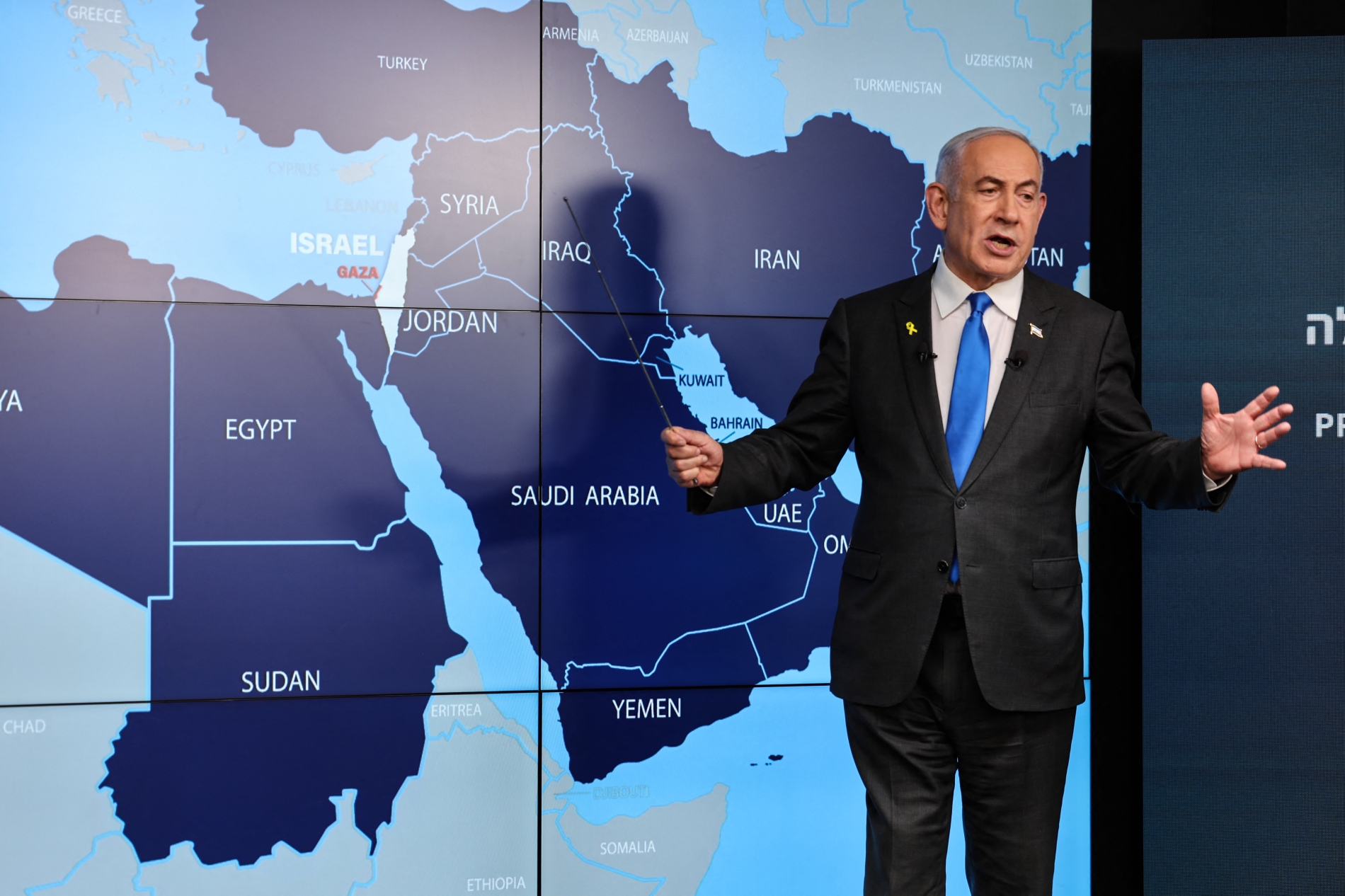
Israel's Prime Minister Benjamin Netanyahu speaks in front of a map of the Middle East during a press conference at the Government Press Office (GPO) in Jerusalem on September 4, 2024.

This rediscovery of Arab agency and its continued application may yet lead Israel to revise its hegemonic aspirations over the future of the Middle East, where Arab states, Iran, and Türkiye are increasingly doing more to reshape the landscape. Unlike Israel, none seeks domination; all pursue sovereign manoeuvrability. The result could be a less polarised, more pragmatic, and more self-determined region. Israel can either choose to join this endeavour, or chase the mirage of dominance, without learning its lessons.

The Arab world may sense an opportunity, given that the international system is in flux, moving from unipolarity to either a contested multipolarity or a system of spheres of influence if great power competition prevails. Groupings such as BRICS, the Shanghai Cooperation Organisation, and ASEAN let the Global South shape the international agenda, steadily eroding the West's monopoly on global governance.

This rediscovery of Arab agency and its continued application may yet lead Israel to revise its hegemonic aspirations in the Middle East

The time is now

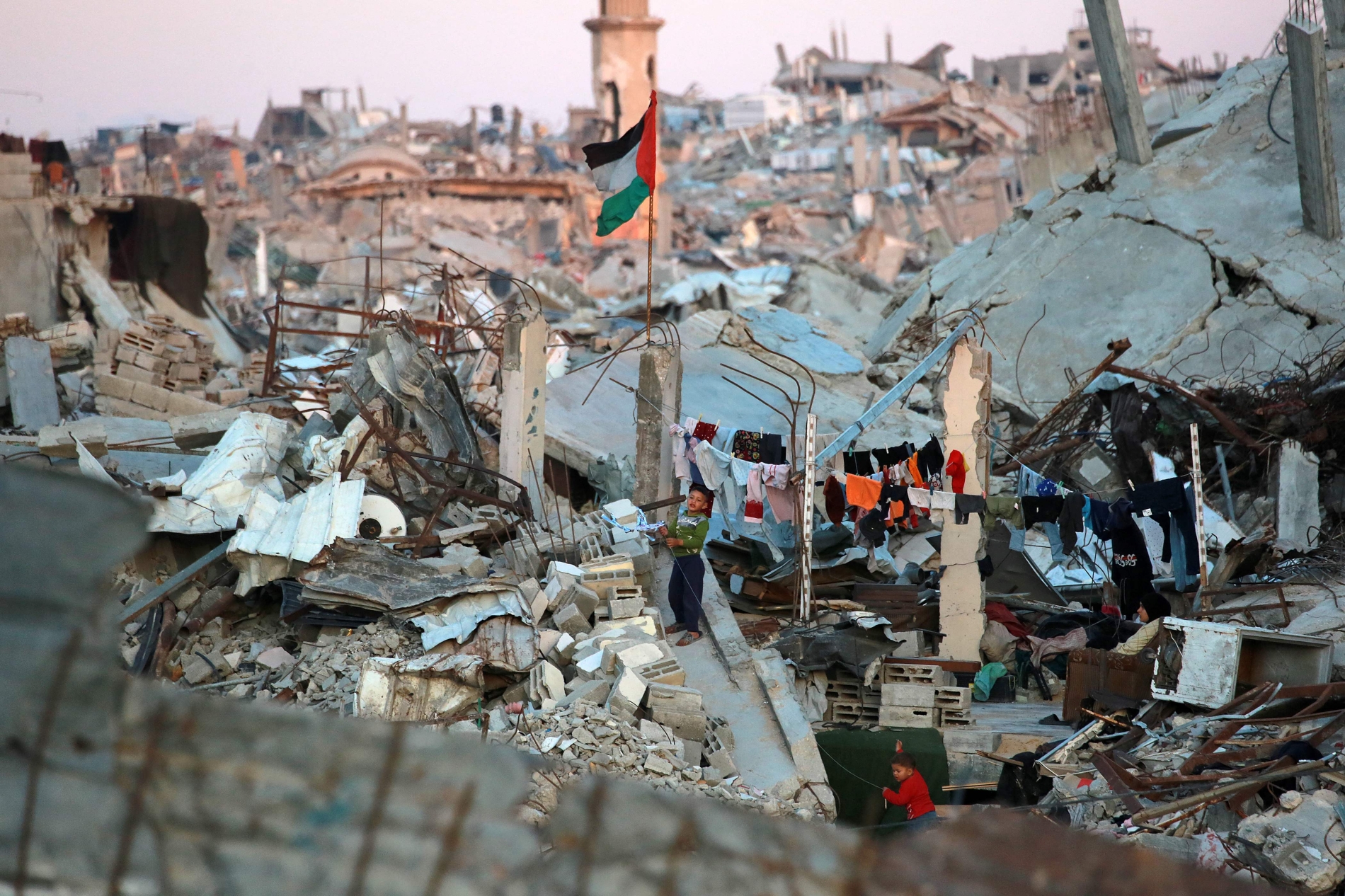
In this milieu, Arab middle powers seek autonomy. Most know that the Palestinian nettle must now be grabbed. For a decade, 'normalisation' with Israel advanced, assuming that the Israeli-Palestinian conflict could be managed via economic carrots such as West Bank technology zones and Gaza industrial parks. Images of children under rubble, hospitals bombed, and aid convoys blocked have changed things.

Bashar TALEB / AFP
A boy stands by laundry hanging on lines amidst the rubble of collapsed buildings in Jabalia in the northern Gaza Strip on April 14, 2025.

For Arab leaders, backing a Palestinian state is strategic. For Arab publics, Palestine resonates deeply. Reasserting peace requires justice: two states, the 1967 lines, shared Jerusalem, and restored Gaza. Any 'stability' based on injustice cannot endure. Tackling this most thorny of issues leads to others, including youth employment and the role of women in Arab society.

For Israel, this is a testing time. Its military remains unmatched, its economy strong, and its technology pioneering, yet it is isolated. Its European allies have distanced themselves from Tel Aviv, and even Washington has been publicly angered by some Israeli operations, not least its bombing of a Hamas delegation in Qatar, a key US ally. Leading technology is no substitute for legitimacy, and deterrence fails without peace, as 7 October 2023 proved.

The rediscovery of Arab agency must now translate into a future vision for the Middle East. This will require institutional cooperation, meaning that it will be important to revive the Arab League. Forums such as this will help foster collective security and economic integration. But leadership requires legitimacy, so those who feel disenfranchised and underemployed (particularly the young) must be prioritised. Finally, any Arab awakening must be anchored in values, with Gaza justice top of the list.

The next few months will test whether the Arab world is up to the challenge. Its newly discovered agency needs to translate into the articulation of a common vision for the future of the Middle East, one that relates to aspirations of the Arab people for freedoms, economic progress, and social justice, and one based on regional autonomy no longer dependent on foreign powers, but rather working in partnership with them.

Finally, this vision needs to incorporate a regional security architecture that takes account not only of Arab interests and concerns but also of non- Arab countries such as Türkiye and Iran, and ultimately those of Israel when (and if) it reverses it quest for regional hegemony and accepts its destiny of living side-by-side with a Palestinian state.

font change