

Before it invaded Iraq in 2003, the US was trying to reassure Iran that it would not be targeted next. In part 3 of a 7-part series, Al Majalla publishes private discussions held in Damascus.
With an economy in decline, a growing population and a growing refugee community, Egypt can be the source of the next migration wave into Europe. This package aims to stave off this 'threat'.
The Kurdish leader was party to secret talks with the Americans in the run-up to the US invasion of Iraq. In part 2 of a 7-part series, Al Majalla reveals for the first time what he told the Syrians.
The Egyptian series premiered on the first day of Ramadan and tells the story of the 11th-century cult leader Hasan i-Sabbah, whose followers were credited as pioneers of organised assassinations
Criticism of Netanyahu from a US senator and staunch supporter of Israel is important. But Democrats are increasingly opposing Israel's war on Gaza and want to see actions, not just talk.
In 2002, the CIA informed Iraqi Kurds of its plan for regime change. In part 1 of a 7-part series, Al Majalla publishes first-hand accounts of the conversations that would change the Middle East.
Ageing structures, war, the port explosion, and severe weather are all factors that contributed to building decay in Lebanon. But there is no plan for alternative housing should a perfect storm hit.
Regional and international factors create conducive conditions for ending the decades-long conflict between Baku and Yerevan. Al Majalla explains why, this time, it's different.
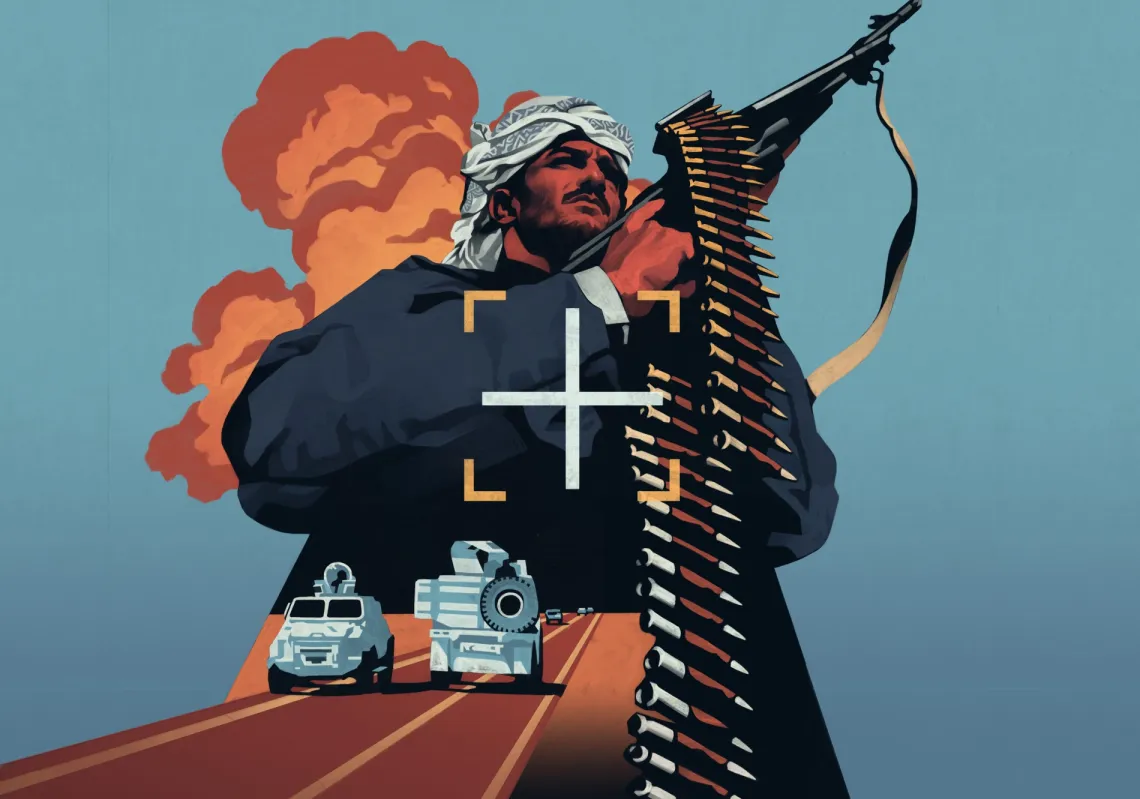
Damascus and Tehran wanted invading US troops to get stuck in a 'new Vietnam' and set up an operations room headed by their top lieutenants to cause havoc, never-before-published documents show.
From Hitler and Mussolini to South American dictators, world leaders have long seen in football's biggest tournament an opportunity to further an agenda
From 3D players to data-transmitting balls, the sport's biggest tournament is awash with technology to help with everything from offside decisions to viewer angles, but does this come at a cost?
Netanyahu continues to defy calls from Washington to pump the brakes on Israel's offensive in Lebanon, something Iran has linked to a future peace deal
While it could be tied to military calculations related to the current US-Iran war, it also reflects a deeper struggle between two opposing regional visions
