The Syrian president knows that war between Israel and Hezbollah will send diplomats hurriedly calling Damascus. After more than a decade in the diplomatic naughty corner, this is his moment
Muhammad Shia al-Sudani is hoping to help Turkey's Recep Tayyip Erdogan and Syria's Bashar al-Assad mend fences, yet it is precisely the issue of fence security that means he will struggle.
Analysts have accused the Lebanese government of exploiting the issue of Syrian prisoners to secure additional funding from the international community
On the eve of America's invasion of Iraq in March 2003, Syrian and Iranian leaders met to consider their options. In part 6 of a seven-part series, Al Majalla reveals their shared concerns and hopes.
While the majority of Syrians grapple with a worsening economic crisis and can barely get by, a shrinking group of regime loyalists are profiting at the expense of others
Al Majalla exclusively reveals the various stages of the initiatives which include the dismantling of the Al-Tanf base, the withdrawal of foreign forces, reconstruction, and the lifting of sanctions
The economic devastation wrought on Syria by war is outmatched by a horrendous human cost. Changing its trajectory will be harder while those responsible for the plight remain in power.
Ömer Önhon, Turkey's last ambassador to Syria, gives a first-hand account of what he saw in Hama, recounting the stories people had shared with him of the atrocities they experienced.
The Arab world now has a chance to remake itself on a deeper level, writes Ramzy Ezzeldin Ramzy, who was involved in the process as a deputy UN envoy to Syria, which is now back in the Arab fold.
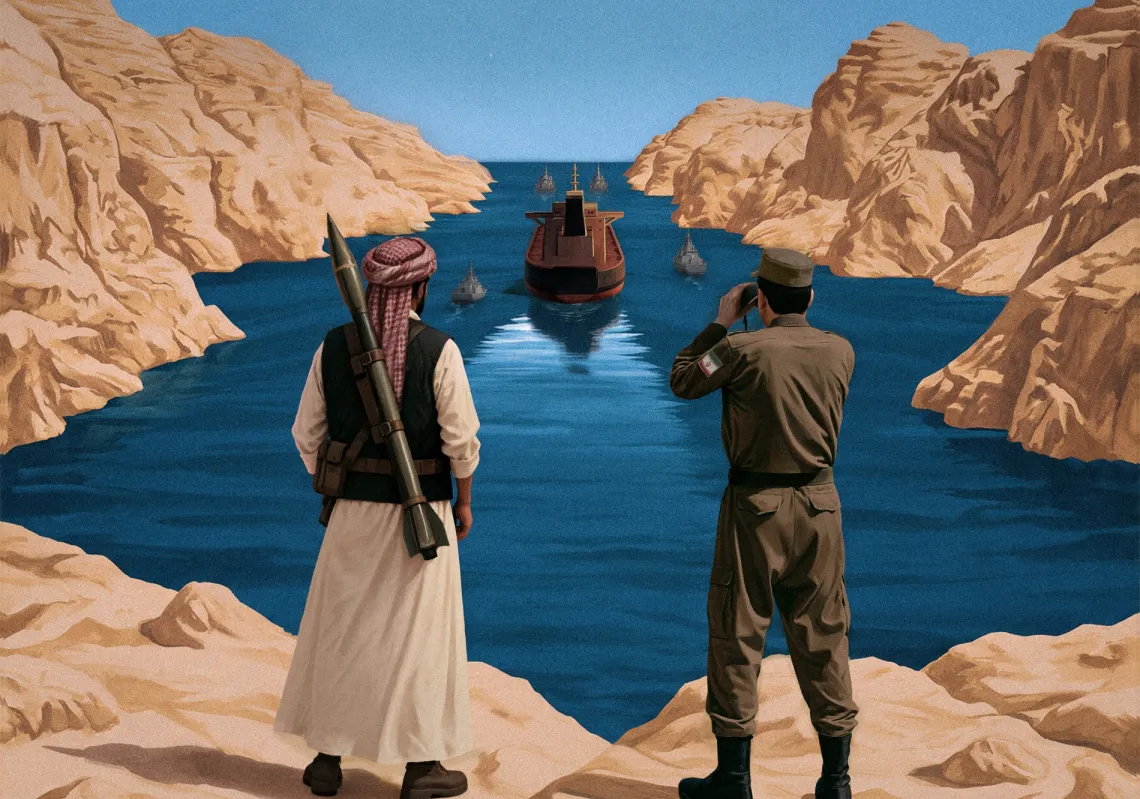
Any disruption in the Hormuz has cascading knock-on effects that extend far beyond energy markets, impacting international trade. Al Majalla explores all this and more.
The current conflict is unlikely to go global for now, but the speed at which it has spread regionally is alarming. A look at history shows the geopolitical factors that led to world wars.