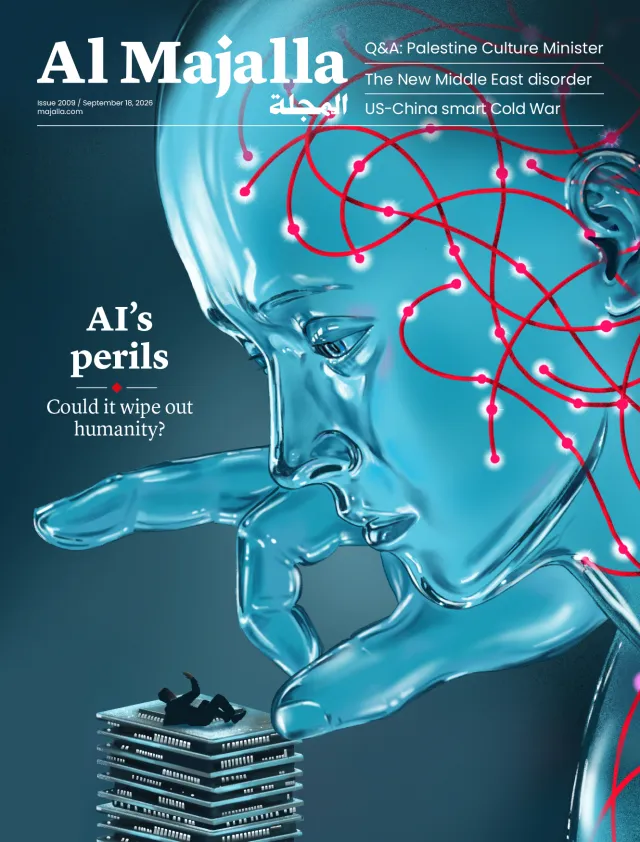
Artificial intelligence has consequences for humanity on the scale of Columbus' discovery of America. But how will this powerful new technology impact the Arab world? Al Majalla explains.
There are promising signs of a national readiness to embrace the technological revolution sweeping the world, but will Egyptian youth be able to find jobs in the field? Al Majalla explains.
Many computer engineers and startup founders are leaving Tunisia in search of infrastructure that supports them, as a delayed response to AI and modern technology plagues their home country
Global investment in AI has risen from about $800mn in 2010 to $78bn in 2021. Estimates suggest the technology will contribute up to $15.7tn to the global economy in 2030, of which $6.6tn will be in…
AI's rapid development poses a threat to democracy, privacy, security, employment, data protection and human rights. So, what are the world's nations doing to regulate it? Al Majalla explains.
Al Majalla delves into how AI is being received and implemented in the Arab world while highlighting the benefits and dangers that come along with this revolutionary technology
Al Majalla takes a look at the economic implications of AI as the technology is unlocked. Humans must maintain control or risk losing out to machines that have the ability to learn.
Artificial Intelligence is changing the world. In Saudi Arabia, there is a dedicated agency to harness its power. Al Majalla talks to one of its leading figures about what's next.
Artificial intelligence could be used by terrorists to significantly enhance violent attacks through automation, increased precision, and pre-determined targeting.
As support for Israel weakens across the US political spectrum, once-taboo questions about military aid, lobbying influence, and US backing are moving into the mainstream
Algeria is one of Africa's largest producers of hydrocarbons, and its proximity to customers in Europe makes it of growing interest as importers fret over a prolonged supply crisis from countries
Through extravagant processions led by palace women, the Mamluk state projected a message of power and prestige at home and abroad, turning the Hajj obligation into a soft-power tool