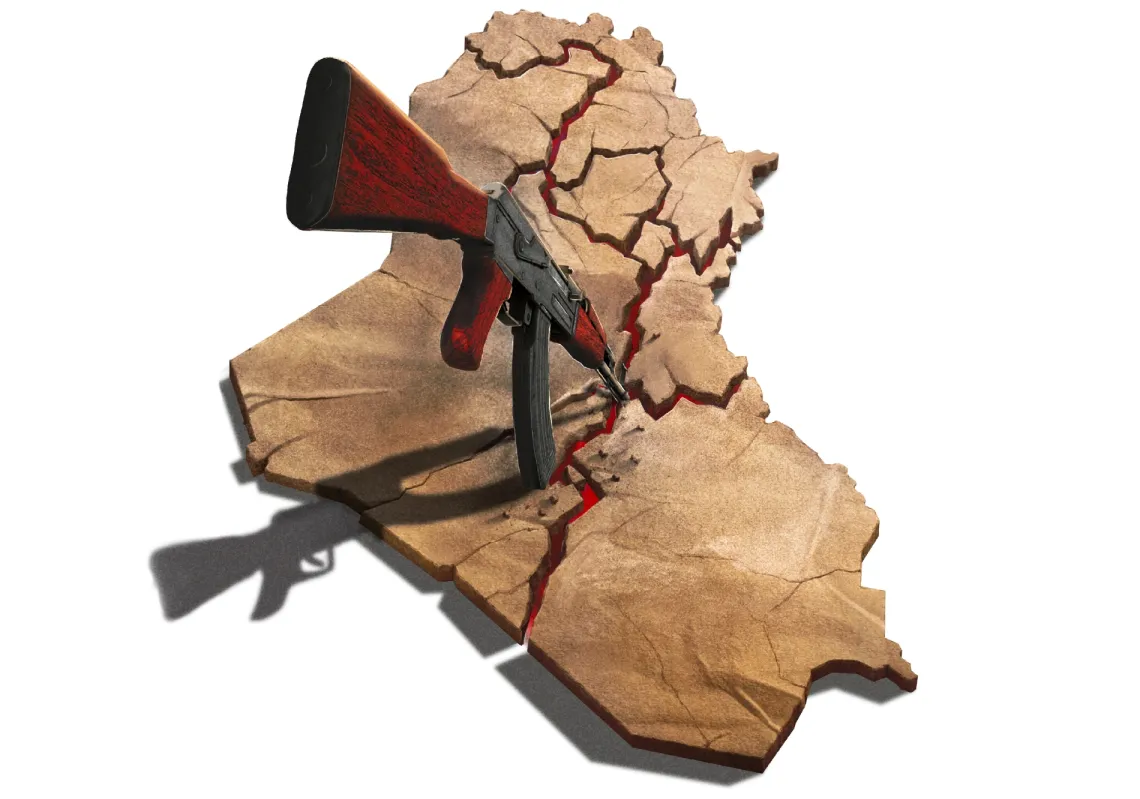
The Arab Summit is taking place in Baghdad amidst exceptional regional and international circumstances. Can individual and collective Arab security be secured?
Israel, Türkiye, and Iran all have a plan for the region. Arab leaders met in Riyadh to come up with their own. Meanwhile, Trump walks back his plan for Gaza, saying he 'won't force it'.
With millions of Palestinians under threat from the far-right Israeli government, now is not the time to disagree on representation. Arab states need to step in, just like they did before.
Gaza is a top priority, but a confluence of factors means that now is the time to set up durable systems, including a regional security architecture. It all starts with having a collective Arab vision
The 110th anniversary of the first Arab Congress in Paris sheds light on a tumultuous era in Arab history as its people battled for reform under the Ottoman Empire. However, it had a tragic ending.
In the final instalment of the two-part series, Sami Moubayed gives a historical review of key Arab summits over the years as Arab leaders grappled with consecutive wars, conflicts and uprisings
In part one of a two-part series, Sami Moubayed gives a historical review of key Arab summits over the years as Arab leaders grappled with consecutive wars, conflicts and uprisings
The announcement of the delay of the Arab summit scheduled to be held in Algeria in March has revealed the depth of the fundamental political differences that afflict inter-Arab relations.
It…
In an interview with Al Majalla, the prominent French jurist discusses Israeli and Western duplicity, their violation of international law, and why Israel bears the cost of Gaza's reconstruction
Tehran's elite have few friends, but regional states fear the consequences of a disorderly transition. If Iran's 92 million people turn on one another, it could cause millions to flee abroad.
Going forward, the international community needs to reduce dependence on the US without upsetting the world's largest military and economic power. It will be a shaky tightrope to walk.
Scrapping foreign ownership caps and qualifying criteria will bring in more capital, with markets reacting positively to the latest reforms that build towards a more open country