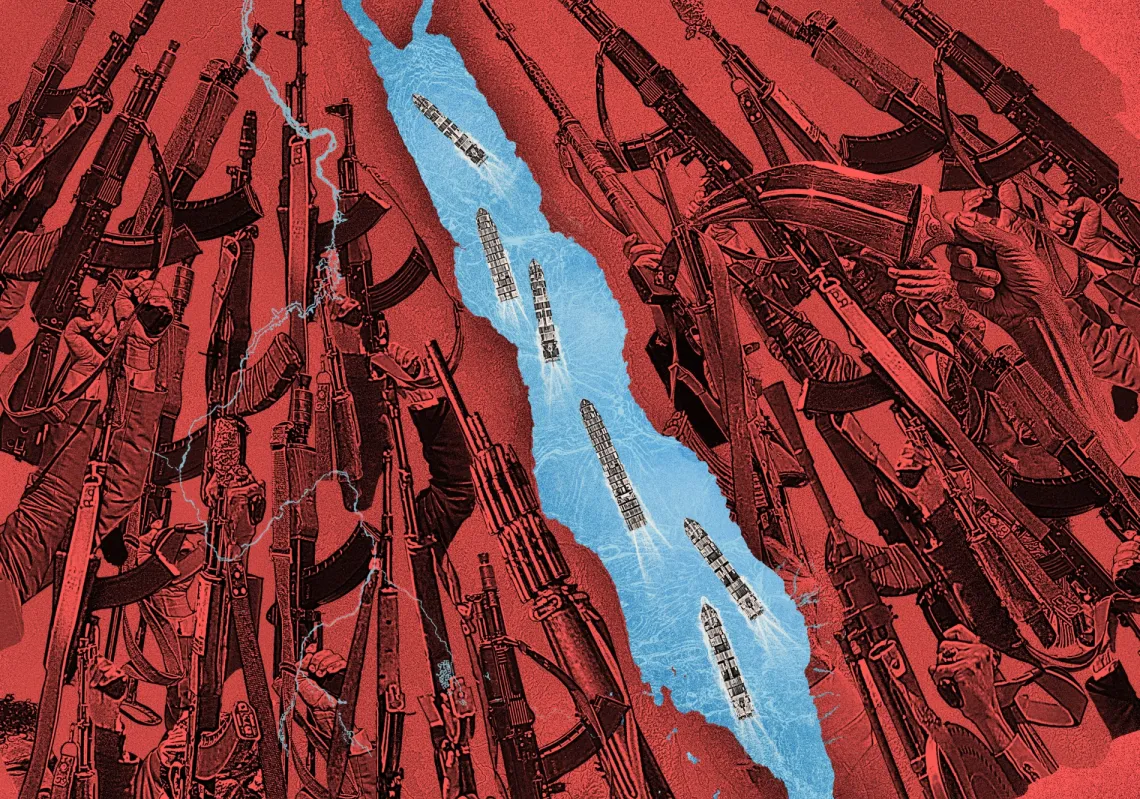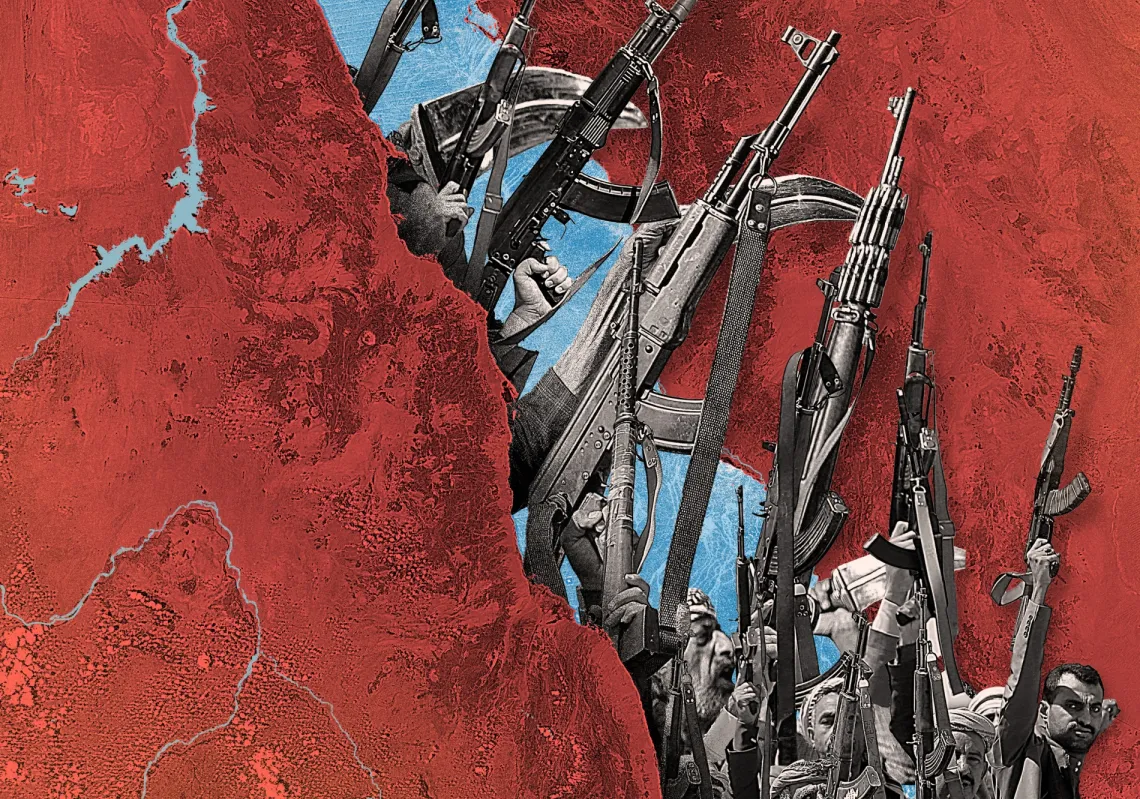
Overcoming Yemen's fragmentation requires more support for the Riyadh-led path—one that rejects secession, all militias and institutionalises the state
In Moscow, Syria's new president said he wants to restore and redefine relations with Russia—a former foe. But is this a genuine olive branch or a message to Washington?
The flare-up is no isolated episode. Rather, it is the most dangerous chapter in a fraught, decades-long relationship that began during the Soviet-Afghan War in the 1980s.
A rapid chain of events led to the president fleeing for his life following deadly clashes with citizens. But what happened is not uncommon for Africa. Al Majalla explains why.
Afghanistan's ancient town of Bagram once sat on the Silk Road, along a key passage from India. Today, it is sought by America, Russia, and China for different reasons that are no less strategic.
While Cairo felt that the Hamas attacks on Israel were a response to occupation, it does not see eye-to-eye with the group. It also has practical worries, not least of which are economic.
Overcoming Yemen's fragmentation requires more support for the Riyadh-led path—one that rejects secession, all militias and institutionalises the state
Recently declassified meeting minutes between the two leaders show how Washington was well aware of Moscow's grievances over NATO expansion, but went ahead anyway
More than 160 years after the first tram was inaugurated in the Egyptian city, the pace of life has forced change, replacing the much-loved old carriages holding memories of a bygone age