Xi-Trump-Putin meet: why Shenzhen won't be a Yalta 2.0
On the Crimean Peninsula in 1945, wartime allies Stalin, Churchill and Roosevelt met to carve up Europe and plan the defeat of Japan. But in 2026, times have drastically changed
Jason Lyon
Xi-Trump-Putin meet: why Shenzhen won't be a Yalta 2.0
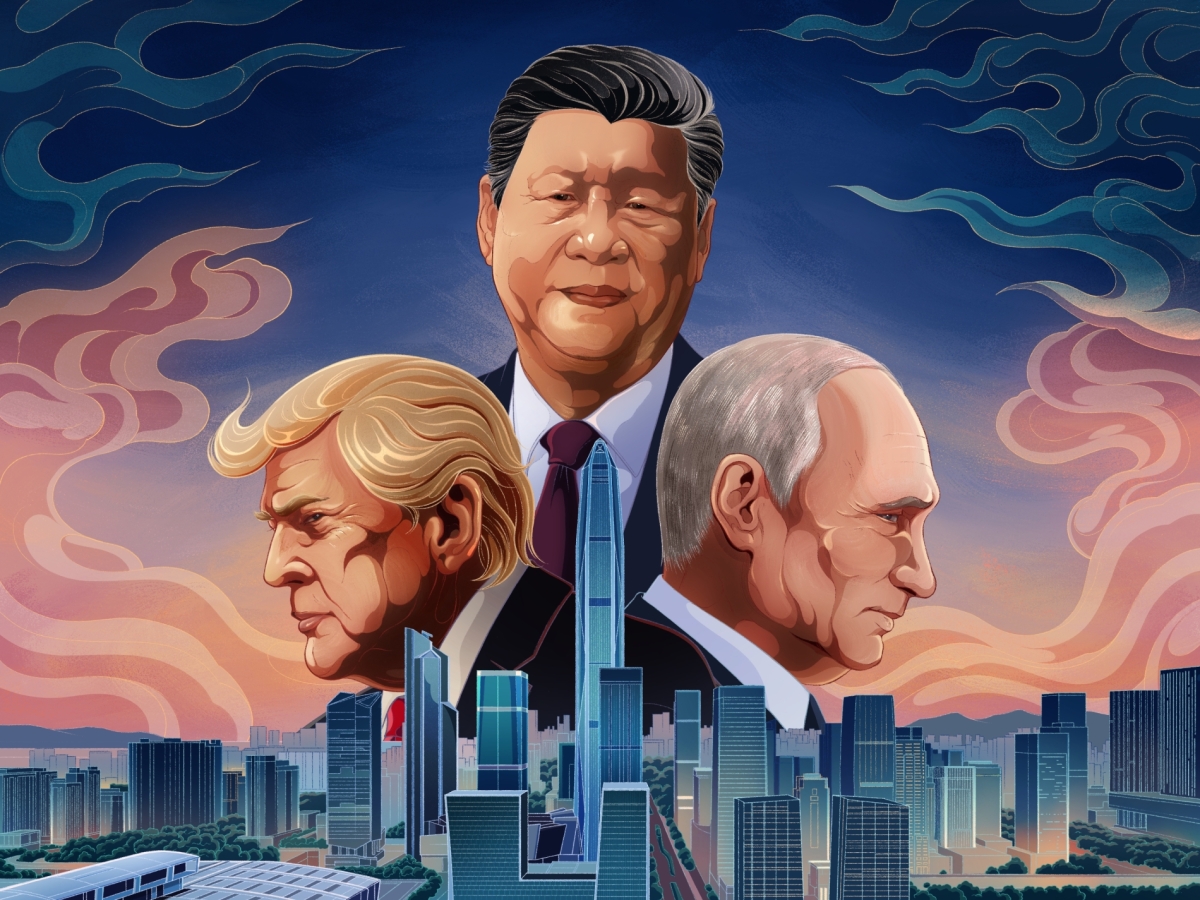
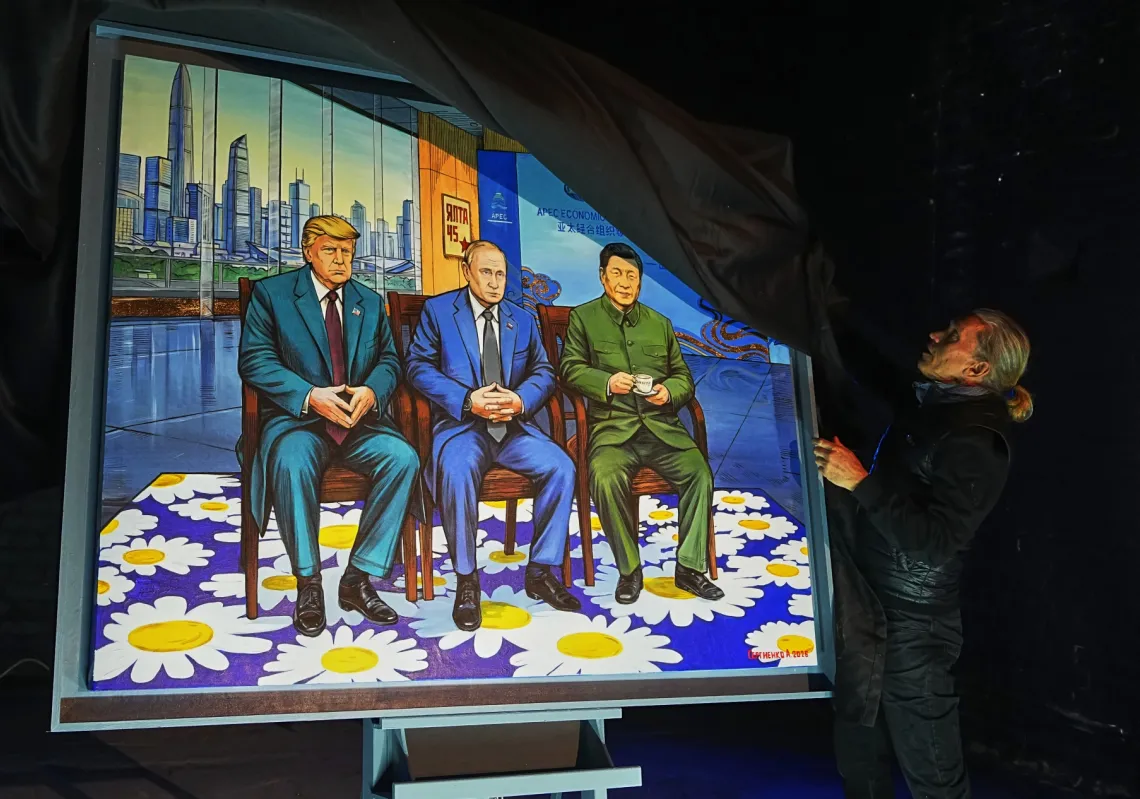
In the Chinese city of Shenzhen, President Xi Jinping is hosting US President Donald Trump and Russian President Vladimir Putin for a trilateral summit. Some analysts are likening the 19 November 2026 meeting to the Yalta Conference of 1945, when the leaders of America, Britain and the Soviet Union agreed how to carve up Europe after the Second World War.
Xi, Trump, and Putin meet on the sidelines of the APEC Leaders’ Summit, an idea that formed in September in Washington during Xi’s visit. The Yalta comparisons soon followed, given the prospect that the world’s three great-power leaders would meet at a time of flux in the international order to agree the contours of the next.
Trump had hoped to use his relationship with Putin to draw Moscow away from Beijing, reversing a manoeuvre that legendary US diplomat Henry Kissinger successfully employed in the 1970s when he exploited the rift between the Chinese and Soviet leaderships to distance Beijing from Moscow. Trump’s efforts, however, ran up against the resilience of the deepening Sino-Russian partnership.
The US president failed to end Russia’s war in Ukraine within 24 hours, as he had boasted that he could do. Kyiv, backed by strong European support, resisted a settlement on Russian terms that Trump officials (notably his son-in-law Jared Kushner and special envoy Steve Witkoff) were pushing for. Trump’s efforts to press China through tariffs also backfired when Beijing withheld critical minerals in response.
These setbacks have prompted a rethink in the Trump administration, abandoning its earlier approach in favour of easing tensions with China, while continuing its efforts to draw Moscow closer. Traditional European partners have been sidelined in favour of political and security understandings with Putin, as well as lucrative economic agreements.
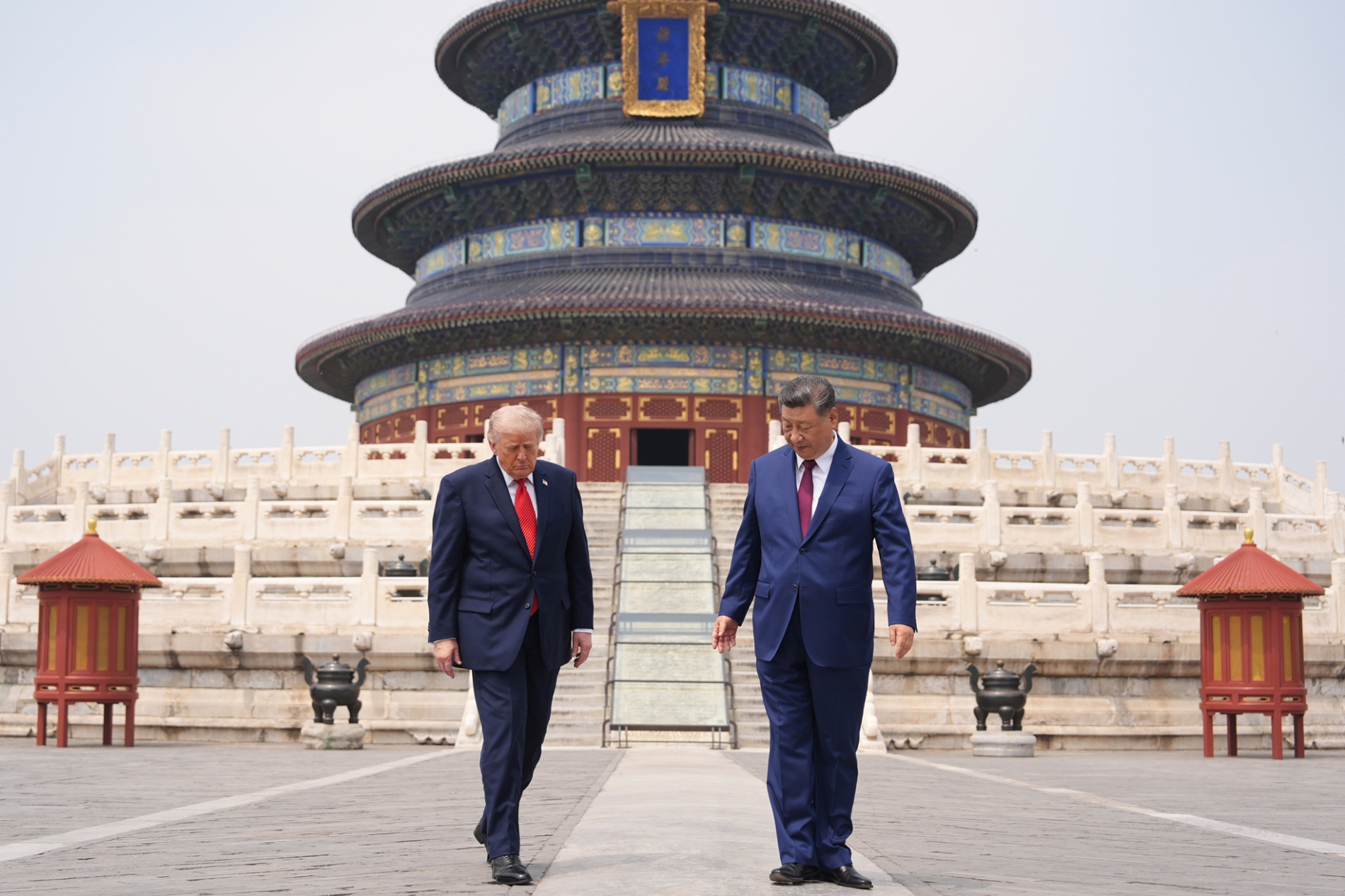
Donald Trump walks alongside Xi Jinping at the Temple of Heaven in Beijing, on 14 May 2026.
The two recent meetings between Trump and Xi, first in Beijing, then in Washington, produced a détente that spared the world’s two largest economies a costly trade war. They played down their political disagreements, including over Taiwan, and kept their relationship within a framework of “constructive strategic stability”. Over issues like Iran and the Strait of Hormuz, they realised that they had shared interests.
Neither Trump nor Xi think it wise that Iran be allowed to build a nuclear weapon or to impose charges on shipping through international waterways like the Strait of Hormuz, the gateway to the Arabian Gulf. Ships’ safety was effectively used as a bargaining chip by Tehran during talks to end the US-Iran war earlier this year, and when America responded by blockading Iranian ports, it led to a stalemate.
Still, working together on Iran showed Beijing and Washington's mutual desire to build on common ground and minimise differences. At the same time, Trump continued to bring Putin ‘in from the cold’ by agreeing a deal to buy Russian diesel last month (suspending the sanctions package that prohibited this) and by limiting Ukraine’s use of Starshield, a military-grade satellite communications system owned by Elon Musk but wielded by the Pentagon. Starshield helps Ukraine defend against Russian missiles.
Trump had hoped to use his relationship with Putin to draw Moscow away from Beijing, but ran up against the resilience of the deepening Sino-Russian partnership
Trump's team also invited the Russian finance minister to a G20 finance ministers' meeting in North Carolina in September, then invited Russian Foreign Minister Sergei Lavrov to Atlanta to attend a G20 foreign ministers' meeting. Putin is now likely to be invited to the G20 summit in Miami, scheduled for December. Trump has spoken of major investment opportunities with Russia, including in energy, and there are now discussions to allow US companies back into the Russian market.
Lame-duck Trump
The political pounding Trump and the Republican Party suffered in the midterm elections earlier this month has complicated his calculations. Congress (both the Senate and the House of Representatives) will now be fully controlled by the Democrats from January. Analysts say this renders Trump a 'lame duck' domestically, but on foreign policy, the president still has plenty of leeway to act without Congressional sign-off.
Historically, American presidents intensify their diplomatic efforts abroad if they suffer electoral setbacks at home. After the Republicans lost their majority in 1986, Ronald Reagan negotiated with Moscow and signed the Intermediate-Range Nuclear Forces Treaty of 1987. After the Democrats lost the 1994 midterm elections, Bill Clinton prioritised mediation efforts that ended the Bosnian war in 1995, then helped bring about peace in Northern Ireland in 1998.
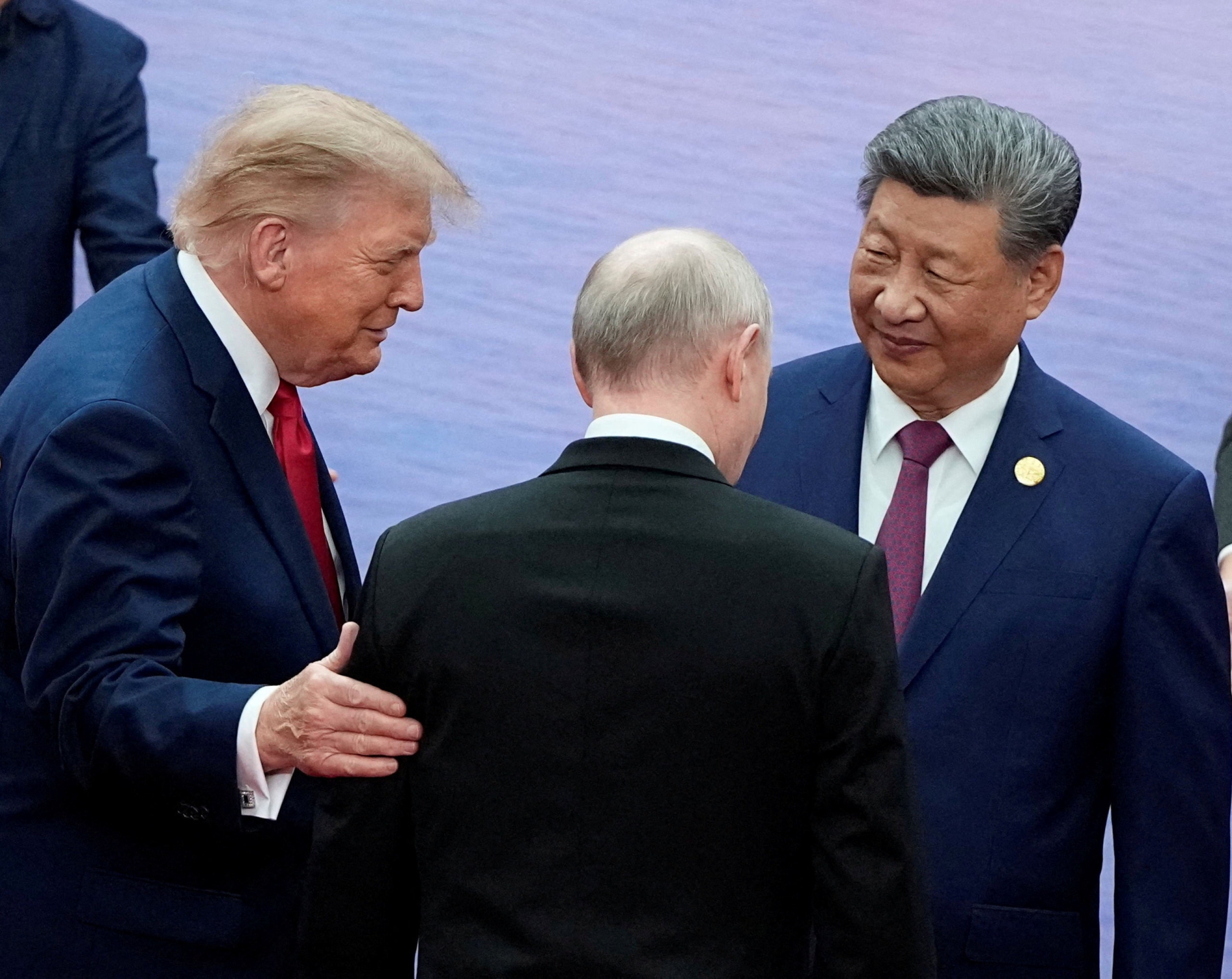
US President Donald Trump, Russian President Vladimir Putin and China's President Xi Jinping meet at the Asia-Pacific Economic Cooperation (APEC) summit in Shenzhen, Guangdong province, on 18 November 2026.
The Shenzhen summit therefore represents a key test of Trump's ability to achieve a diplomatic breakthrough following his midterm disappointment, but much of what this meeting achieves will depend on China's calculations. Xi faces none of the political pressures weighing on Trump, who still needs to end his war with Iran, or Putin, who still has not achieved his objectives in Ukraine.
The leaders' three-way meeting comes just weeks after the Chinese Communist Party's Central Committee concluded its fifth plenary session, setting preparations in motion for the 21st National Congress in 2027, at which Xi will be re-elected as general-secretary. While Beijing can take some comfort from its relative political stability, the economic picture is more complicated. China can ill afford a bruising trade war with Washington as it struggles to stimulate domestic consumption and reduce dependence on exports.
Several prominent Chinese academics and analysts warn that the Democrats' victory in the midterms could constrain Trump's ability to offer diplomatic or commercial concessions. Wu Xinbo, dean of the Institute of International Studies at Fudan University, also expects the Democrats to use their Congressional majority to press Trump harder on Taiwan, particularly over the resumption of suspended arms sales, including a $14bn package that Trump froze as a bargaining chip.
Sun Chenghao, from the Centre for International Security and Strategy at Tsinghua University, anticipates Congressional demands for tighter controls on exports of semiconductors and AI technology, along with greater scrutiny of the licences and exemptions granted to companies by the White House.
Such considerations may give China an incentive to help Trump counterbalance pressure from Congress. Even if it does, the broader US-China rivalry will continue. Much will also depend on whether Beijing can offer Trump what he wants, particularly over Iran, and on what Trump can offer China in return.
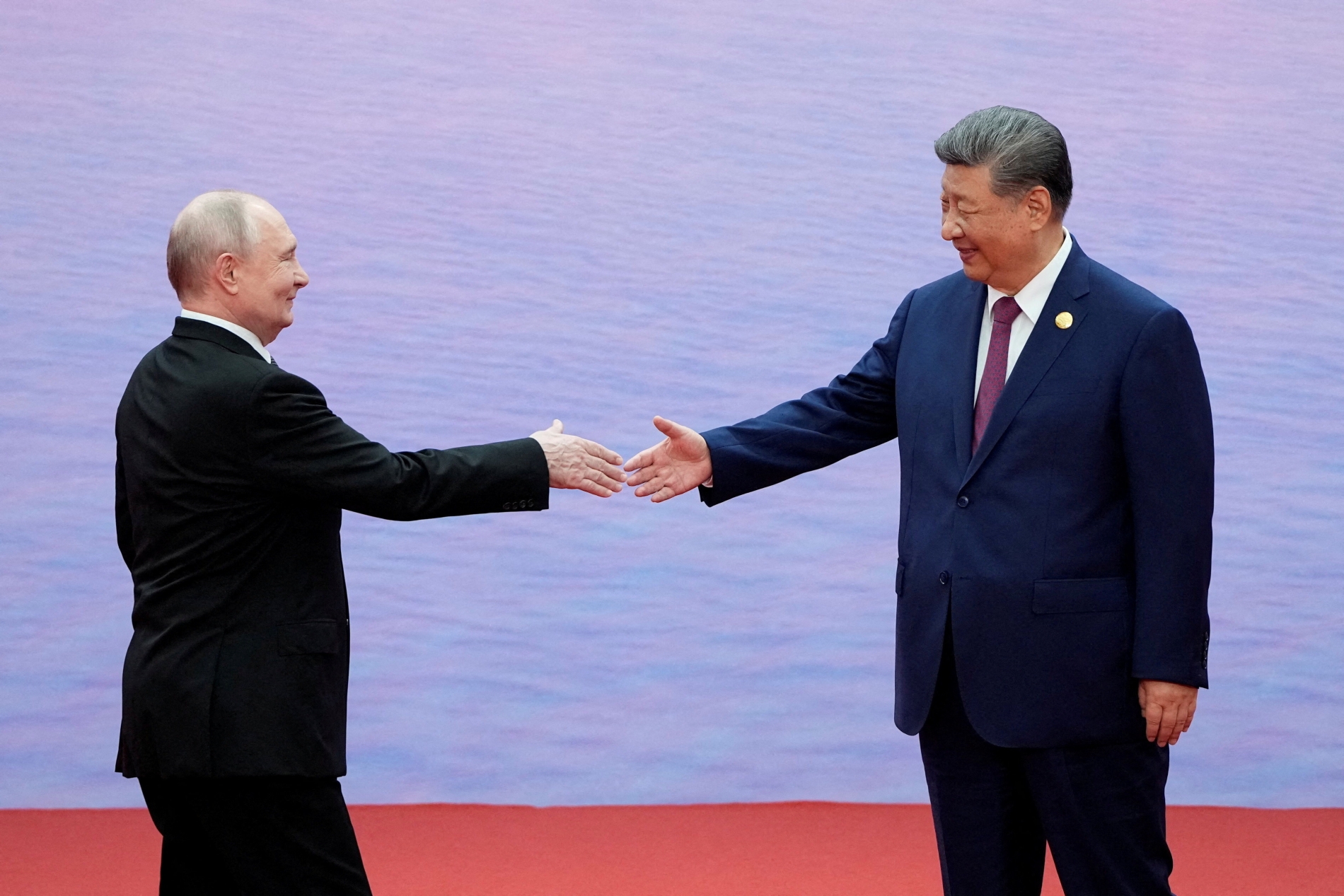
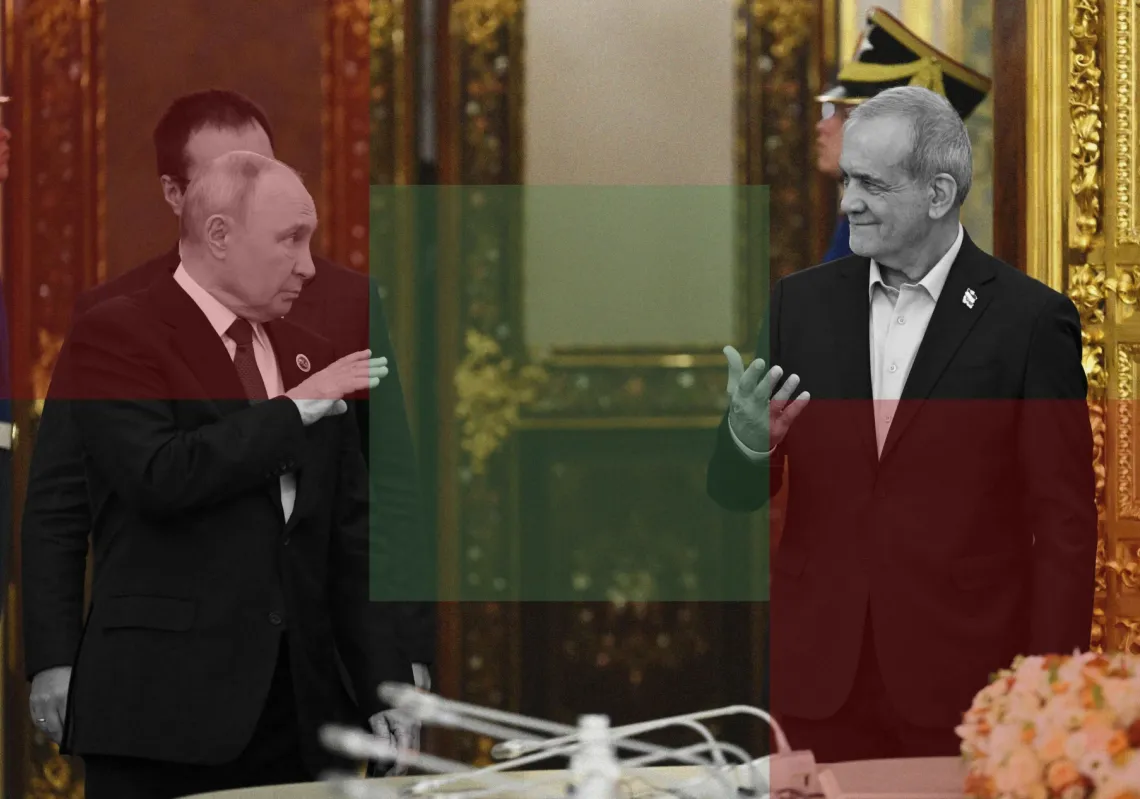
China's President Xi Jinping meets Russian President Vladimir Putin before the welcome banquet at the Asia-Pacific Economic Cooperation (APEC) summit in Shenzhen, Guangdong province, China, on 18 November 2026.
Xi's calculations
So far, Beijing has kept the conflict in Ukraine off the trilateral summit's agenda. As host, China has no wish to provide cover for a US-Russia deal reached at the expense of Kyiv or European governments, nor does it want to become party to a settlement that it lacks the means either to impose or to guarantee.
China also wants to retain the initiative in its relationship with Russia. Historical sensitivities, overlapping spheres of influence in Central Asia, and differing calculations over North Korea are obstacles to navigate. Although Beijing does not regard Moscow as a rival (particularly since it is increasingly dependent on Chinese technology), it still approaches the relationship with caution, to avoid any miscalculation.
Some analysts believe that Moscow's failure to defeat Ukraine or even meet its objectives there could deepen its dependence on China, which would widen the imbalance between them. Such an asymmetry might reduce the likelihood of confrontation. Beijing may thus prefer an outcome in which Putin emerges from Ukraine with neither a clear victory nor a clear defeat. This would leave a weakened, more dependent Russia, but one sufficiently stable to avoid a descent into chaos.
As for the war with Iran, Beijing's ability to persuade Tehran to make concessions will depend on Moscow's willingness to support such an effort. Yet their calculations are far from identical. As Iran's two principal partners, they compete for influence in Tehran. For Russia, Iran and Ukraine are linked. Moscow has no desire to see Beijing secure a diplomatic breakthrough in Iran and offer Trump concessions without receiving something in return over Ukraine. Moscow may even use its influence with Iran to restrict Beijing's room for manoeuvre.
Xi therefore lacks the freedom to offer Trump what he couldn't deliver during their previous meetings, even if he would like to. Beijing will push back against Trump's renewed call for China to join US-Russia nuclear arms negotiations, and against his idea for a joint maritime patrol aircraft exercise, which he voiced on the sidelines of the ASEAN summit in Manila. Still, it can be useful in other ways, such as by arranging a meeting between Trump and North Korean leader Kim Jong Un, which the American president wants.
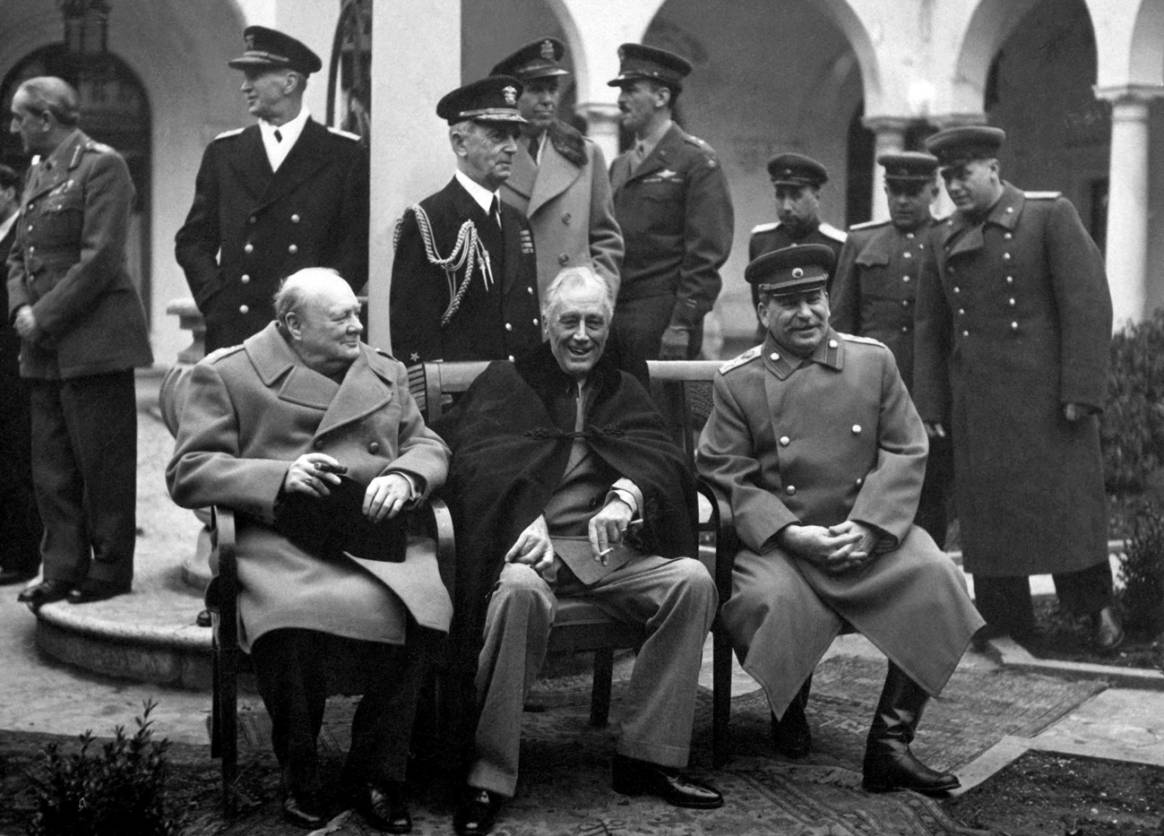
British wartime Prime Minister Sir Winston Leonard Spencer Churchill, left, US President Franklin Delano Roosevelt, centre, and Soviet leader Joseph Stalin sit in the grounds of the Livadia Palace, Yalta in 1945.
Yalta comparison temptation
There is a temptation to compare the Shenzhen summit with the Yalta Conference, given the status of the three leaders, but the differences between 2026 and 1945 far outweigh their similarities. At Yalta, Franklin D. Roosevelt, Winston Churchill, and Joseph Stalin represented three countries on their way to victory in a world war, bound together by a military alliance, and met to discuss their spheres of influence and the shape of the postwar international order. In Shenzhen, the leaders are not in a formal alliance, and their priorities and calculations differ.
For Xi, the summit may amount to little more than a political courtesy extended to two embattled friends, allowing Beijing to claim a diplomatic success by bringing Washington and Moscow together at the table. The Chinese leader will not want to shoulder the burden of settlements that do not clearly serve China's interests, nor make concessions on issues where his calculations are entangled with those of Trump and Putin. For him, the summit's greatest achievement may simply be that it took place.