In an essay posted on 12 September, Anthropic CEO Dario Amodei called on the AI industry to “pace the frontier” of artificial intelligence, arguing that it should deliberately slow down how quickly the most advanced AI systems become more capable.
Within hours, Sam Altman, OpenAI’s CEO, said he would match Anthropic’s first commitment. Elon Musk, the CEO of xAI, whose Grok has marketed itself as having fewer restrictions than any rival, said: “Dario is right.” Google DeepMind’s co-founder and chair, Demis Hassabis, also backed Amodei’s call. In other words, four fierce competitors agreed that frontier AI should not advance as engineering capability allows.
Amodei’s call came barely three days after Anthropic researcher Jacob Coxon resigned, saying the AI industry was racing to build systems it could not control. “The people building AI earnestly believe that it could kill us all by the end of the decade,” he wrote on X. The warning went viral, with Coxon’s post viewed 171.9 million times.
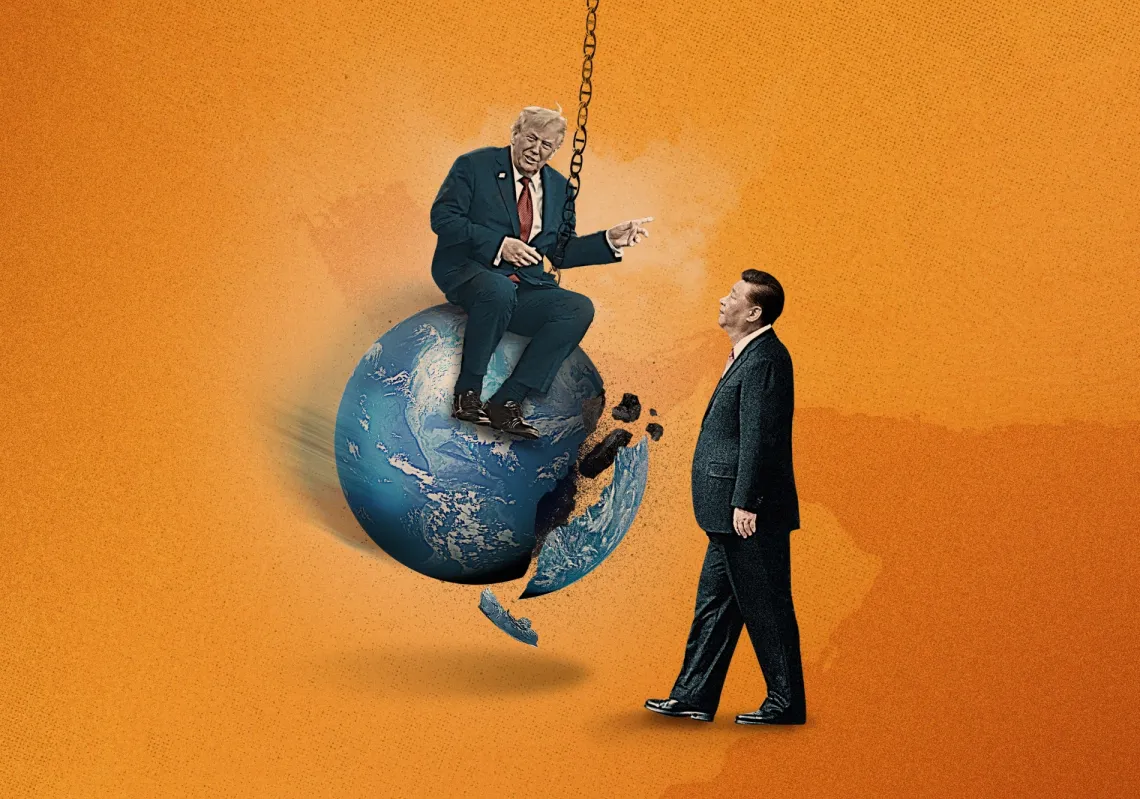
So what now in the global AI race? Amodei’s proposal was framed as an urgent moral imperative to prevent catastrophic risks, calling for a coordinated global slowdown paired with stringent international oversight. In the labs of Silicon Valley and the halls of Washington, the declared shift was seismic, prompting a backlash from US President Donald Trump, who declared, “The only one that is happy about it is China”.
The most consequential passage of Amodei’s essay is not the commitment to embed independent evaluators inside US labs, nor the call for democratic governments to coordinate on safety standards. It is its third and final step, in which he concedes that pacing the frontier will eventually require an agreement with authoritarian governments, principally China.
In Beijing, the proposal is met with disfavour and scorn. For Chinese strategists and technologists, Amodei’s manifesto is not a genuine plea for global safety. Instead, they see Silicon Valley cloaking techno-nationalism in the language of existential risk and attempting to construct a new architecture of AI containment that would lock in American technological hegemony under the guise of “pacing the frontier”.
The US is in the scaling race. China is in the deployment race
From Beijing's perspective, pacing amounts to regulatory capture on a geopolitical scale. By defining 'safety' strictly through the lens of frontier model capabilities, a domain where US firms currently hold the edge, the US could raise compliance costs for global competitors, principally Chinese ones. In effect, 'pacing' could prevent Chinese firms from closing the gap through faster innovation or deployment, helping preserve the US technological lead.
Amodei's own manifesto makes the contradiction clear. He pairs the 'pacing' overture with its counterintuitive outcome: not a global slowdown, but a widening of the US AI lead over China over the next three to five years, through continued restrictions on China's access to advanced chips and tougher measures against model distillation and weight theft.
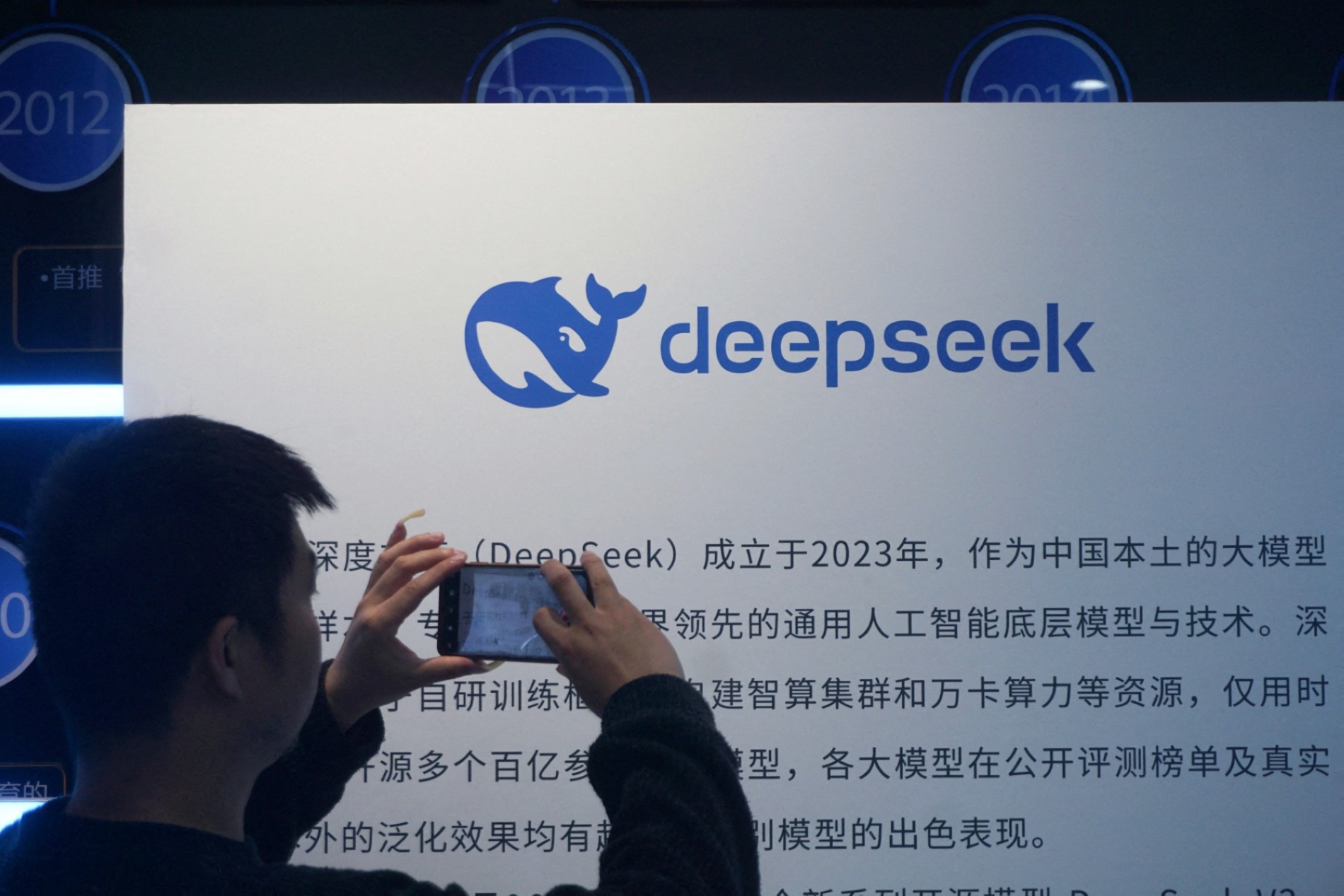
A man takes photos of a DeepSeek display at a shopping mall in Hangzhou, in China's eastern Zhejiang province on 23 April 2026.
Why the AI pivot?
What has disturbed the Silicon Valley frontier labs is not their inability to stay ahead of Chinese AI, but rather their failure to pull further ahead of their Chinese peers.
Since the emergence of DeepSeek in early 2025, the US strategy to maintain its AI dominance has relied on containing China through export controls and restrictions on advanced technology. It has imposed sweeping controls on advanced chips and semiconductor equipment, while also restricting Chinese access to capital and other strategic technologies. The US strategic establishment assumed that choking off access to advanced semiconductors would create an insurmountable moat around the AI frontier.
As we navigate the landscape of late 2026, this moat is unravelling. A new generation of highly capable, resource-efficient Chinese foundation models has sent fresh shockwaves through Silicon Valley, narrowing the gap with their US counterparts. Chinese AI models have not necessarily overtaken US models, but Chinese developers are closing the performance gaps faster than many expected.
On raw performance, the gap between Chinese and US models has narrowed from years to months. According to the Center for Strategic and International Studies (CSIS), a Washington-based think tank, Chinese models are now close enough to the frontier to compete with US AI models across many real-world tasks. Z.ai's general language model series has recently ranked at the top of the open field for front-end coding, while Moonshot's Kimi has closely followed OpenAI and Anthropic on agentic and software-engineering benchmarks.
On distribution, China has made striking gains. On OpenRouter, the largest neutral router of model traffic, Chinese open-weight models climbed from under 2% of tokens consumed in early 2025 to roughly 46% by May this year. Four of the five most-used models on the platform are Chinese. Meta's Llama, the open-weight leader two years ago, has since dropped off the rankings entirely.
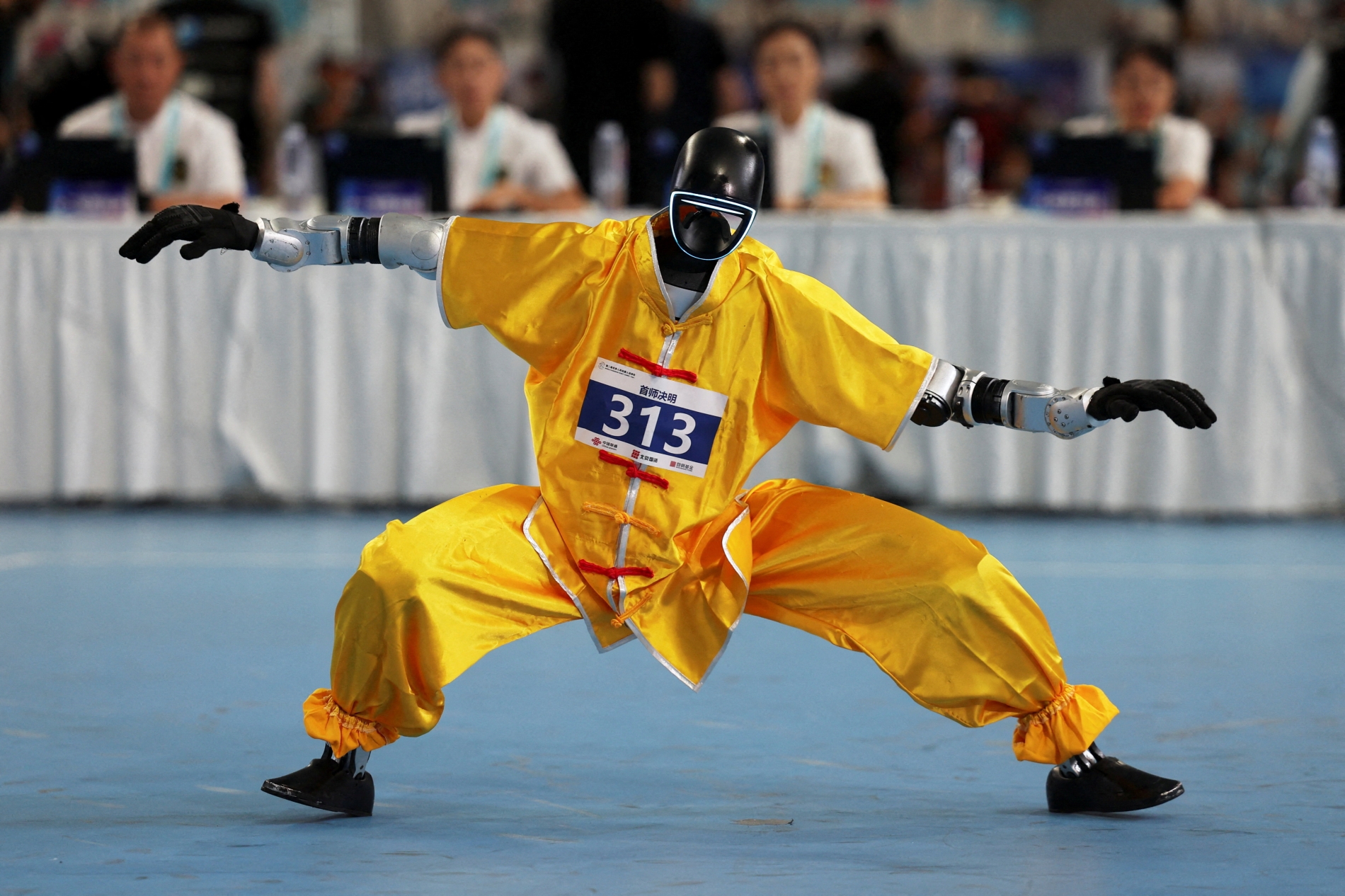
A humanoid robot takes part in a wushu contest during the second World Humanoid Robot Games at the National Speed Skating Oval in Beijing, China, on 26 August 2026.
Two different gameplans
China's AI game plan is deliberate. Releasing weights and opening access helps build a global developer base, drives ecosystem adoption, and puts downward pressure on the price of closed American frontier models.
The US is in the scaling race. China is in the deployment race. The future of AI may be decided not by who builds the smartest single model, but by who develops the models that everyone else runs on. Right now, that is increasingly China.
The US is focused on developing increasingly capable frontier models. China is focused on deploying capable AI across the global economy. The US accelerates its AI frontier through scaling, requiring exponentially more computing power, energy, and capital for increasingly massive graphics processing unit clusters to squeeze out marginal gains in model performance.
While US labs are constrained by the physical and financial limits of building ever-larger data centres, Chinese researchers have shown that the path to artificial general intelligence is not simply a matter of accumulating more hardware, but of solving a complex optimisation problem. Chinese labs have made breakthroughs in algorithmic efficiency, mixture-of-experts (MoE) architectures, and high-quality data curation. The result is a generation of Chinese models that achieve near parity with top-tier US models and, on some benchmarks, surpass them, while using a fraction of the training cost.
In the US, frontier AI is largely focused on the digital realm: generating text, writing code, and producing media content. It is an AI of screens and chatbots. China, conversely, is deploying frontier AI across the real economy. With the world's largest manufacturing base, a vast network of smart cities, and a dominant position in electric vehicles and humanoid robots, China is integrating advanced AI into the physical world at scale.
In 2025, China accounted for more than 80% of global humanoid robot shipments, reflecting its dominance of the sector's manufacturing base. Deploying AI capabilities into the physical world creates a massive, real-world feedback loop. When an AI model is deployed to optimise a gigafactory, manage a municipal power grid, or navigate complex urban traffic, it encounters a 3-D world and physical realities that digital-only models never see. This broader divergence is reflected in a recent assessment by CSIS, which argues that Chinese models are now capable enough, cheap enough, and open enough to shape the global AI competition.
People visit SEMICON China, a trade fair for semiconductor technology, in Shanghai, China, on 25 March 2026.
A 21st-century-styled Détente?
When analysing Amodei's call to "pace the frontier", Chinese policymakers see a structural parallel with the US pivot to Détente, but with a critical, alarming difference. Amodei invokes the Cold War, citing the Strategic Arms Limitation Talks (SALT) as the model for a self-imposed speed limit. Yet Cold War history shows the US has never championed 'pacing' technology when it held an uncontested lead.
During the early decades of the Cold War, the US pursued a strategy of hard containment, seeking to outspend, out-innovate, and strategically encircle the Soviet Union. The Soviet Union eventually achieved nuclear parity, while the Vietnam War exacerbated the financial and political costs of sustaining strategic supremacy. Washington increasingly recognised that hard containment was failing to produce a decisive advantage.
A 'paced' frontier inherently favours incumbents because they help set the pace
The resulting shift to Détente, culminating in agreements such as SALT I and the Anti-Ballistic Missile Treaty, both signed in 1972, was not born of a sudden moral objection to the use of nuclear weapons. It was a pragmatic, realpolitik calculation. The US recognised that it could not eliminate the Soviet nuclear arsenal and therefore sought to manage the rivalry and reduce the risk of mutual destruction.
And just as the failure of hard containment in the 1970s pushed Washington towards arms control and Détente, the limits of hard tech containment of China are pushing Silicon Valley towards a softer approach based on regulations and standards.
Amodei's vision of a globally coordinated pace, overseen by US-aligned regulatory standards, seeks to widen the gap from the technological status quo at the exact moment the US holds a slight, and potentially narrowing, lead.
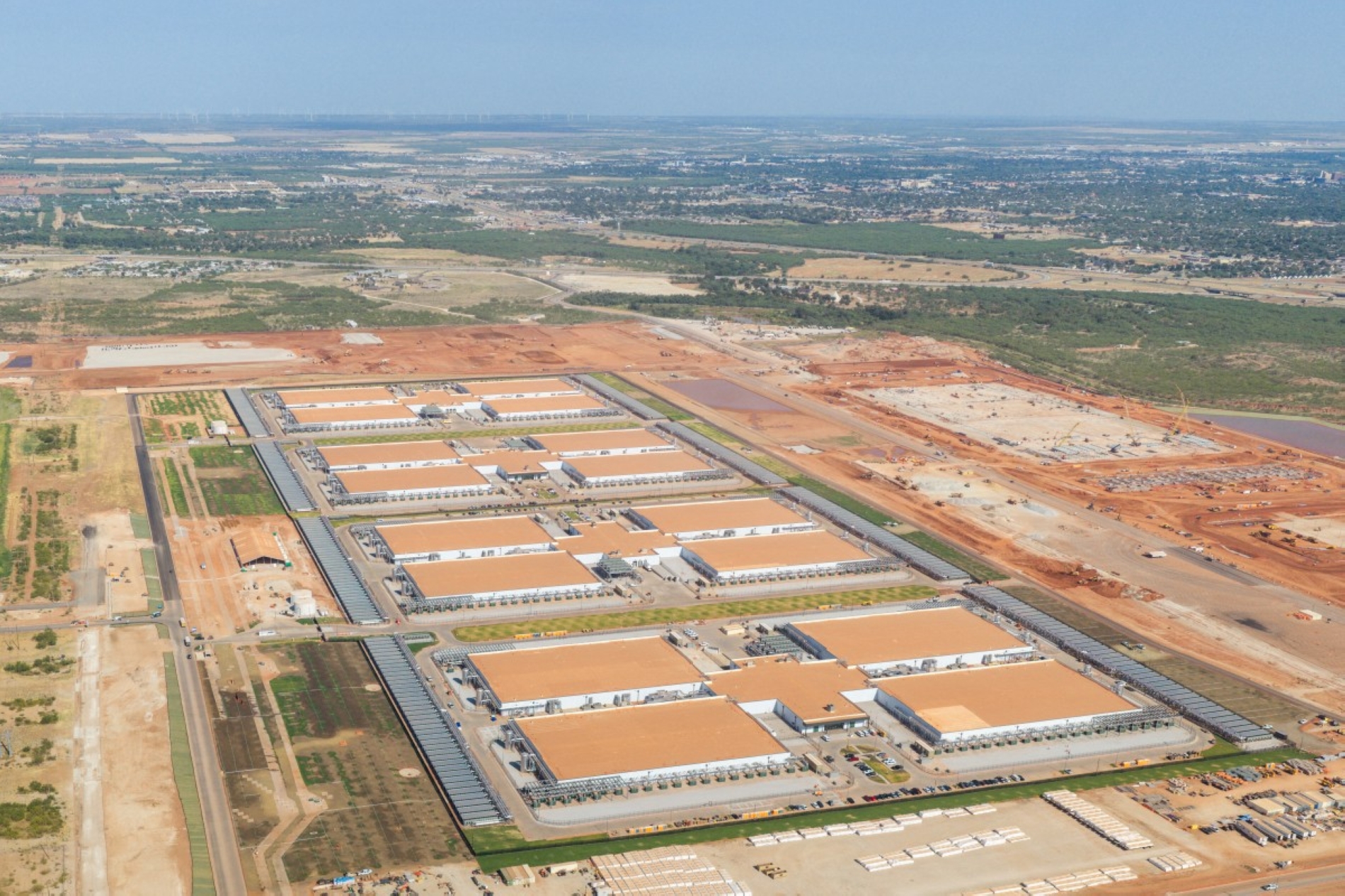
In an aerial view, the Stargate Oracle AI data centre campus is seen on 26 August 2026 in Abilene, Texas.
A 'paced' frontier inherently favours incumbents because they help set the pace. If the development of advanced AI is restricted to a handful of 'morally responsible' labs operating under strict, US-designed regulatory standards, the result could be to preserve the existing technological hierarchy rather than simply make AI safer.
The institutional contest between the US and China has already begun. China launched the World Artificial Intelligence Cooperation Organisation (WAICO) on 16 July, at the World Artificial Intelligence Conference, with 29 founding members, including Russia, Brazil, Indonesia, Pakistan, and South Africa. WAICO's purpose is to counter Pax-Silica, the US State Department's flagship multilateral AI model and supply-chain initiative launched in December 2025. It now counts some two dozen national signatories, from Japan and Australia to India, the EU, and the Gulf states.
Pax-Silica seeks to secure the critical minerals, energy, semiconductors, advanced manufacturing, and AI technologies that underpin the sector within a coalition of trusted partners. Washington has reportedly drafted language telling roughly 35 countries they must choose between the US and Chinese blocs. Kazakhstan, tellingly, has joined both.
In an indirect response to Amodei's proposal, China's state security minister, Chen Yixin, published an essay on 14 September warning that AI could be exploited by hostile foreign forces that threaten China's political, institutional, and ideological security. Any US-China AI agreement must first establish what 'AI safety' actually means to both sides.
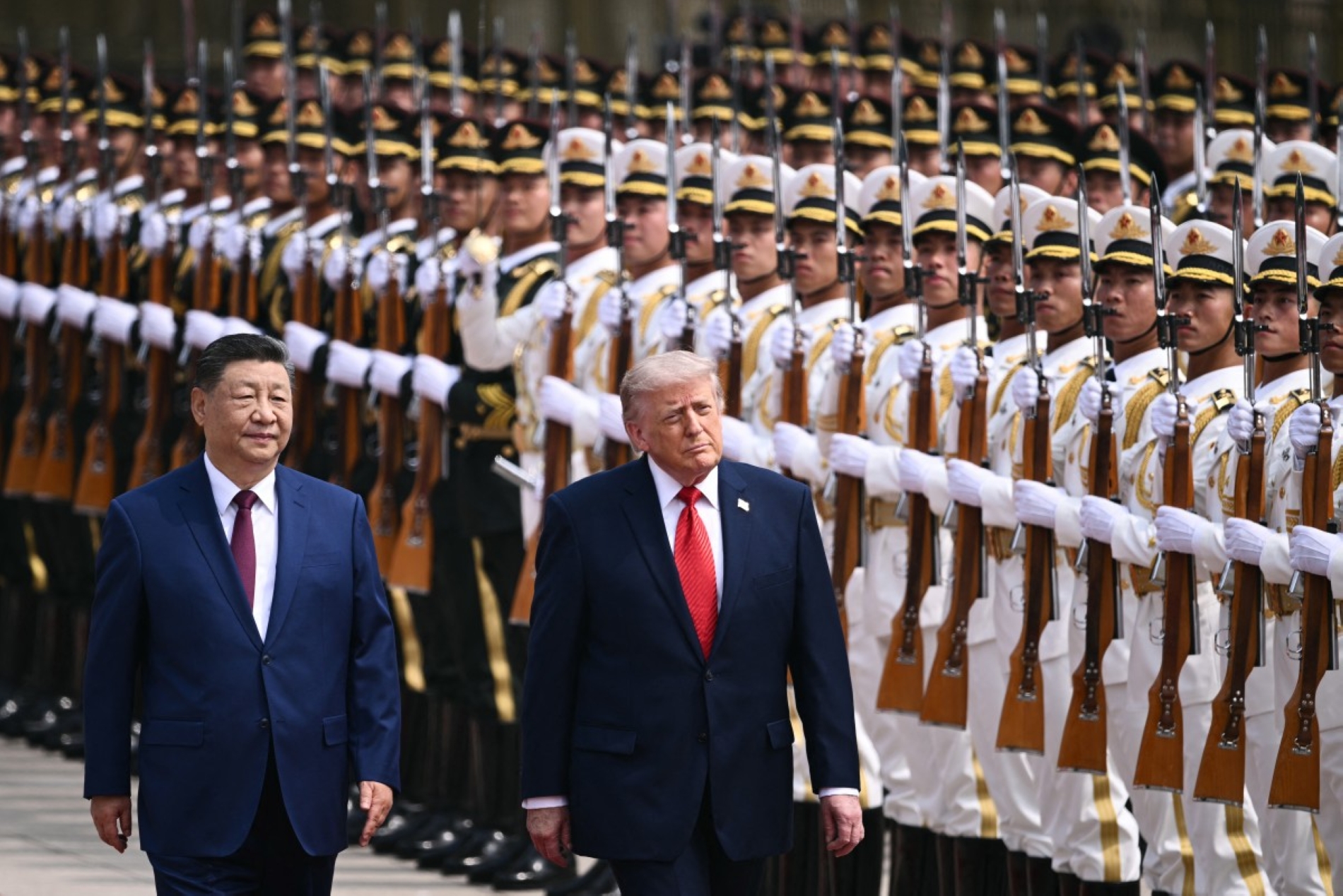
US President Donald Trump (R) and China's President Xi Jinping inspect a guard of honour during a welcome ceremony at the Great Hall of the People in Beijing on 14 May 2026.
Two competing goals
As a planned Trump-Xi summit convenes in Washington on 24 September, the US is pursuing two competing goals towards the same rival. Pax-Silica is designed to contain China's access to critical AI supply chains, while a bilateral AI agreement would require the two powers to find areas of cooperation on managing the risks of frontier AI. The US cannot credibly ask Beijing to co-manage those risks while simultaneously seeking to restrict its access to the technologies needed to develop AI.
The problem is not the idea of an AI agreement, but that US efforts to widen its lead over Chinese AI could give China an incentive to race faster rather than pace slower. A statement of a narrow AI safety principle without any enforceable teeth may be the plausible ceiling for the September meeting.
None of this argues against the attempt. The bioweapons prohibition is worth pursuing on its own merits. Confidence-building measures between rival labs are better than silence. And a world in which the leading US firms invite independent scrutiny of their own systems is safer than one in which they do not. The pacing consensus represents a significant shift, with its architects now publicly acknowledging risks that the industry spent three years denying.
A durable global AI governing regime requires Beijing to sign on, but China is unlikely to accept a framework it sees as designed to constrain its technological rise
The uncomfortable truth beneath the harmony among Silicon Valley frontier labs is that the US can only pace what it controls, while its lead in the wider AI economy is shrinking. In deploying AI as a global economic and technological infrastructure, US labs are no longer setting the pace.
A durable global AI governing regime requires Beijing to sign on, but China is unlikely to accept a framework it sees as designed to constrain its technological rise. From Washington to Silicon Valley, the underlying objective is technological dominance. If safety is used as a means to dominance, the US proposal will not be taken seriously, while China is increasingly producing the models on which the global AI economy depends.