The war exposed how divided Iran's right has always been and handed each faction a new weapon to wield against the other
ATTA KENARE / AFP
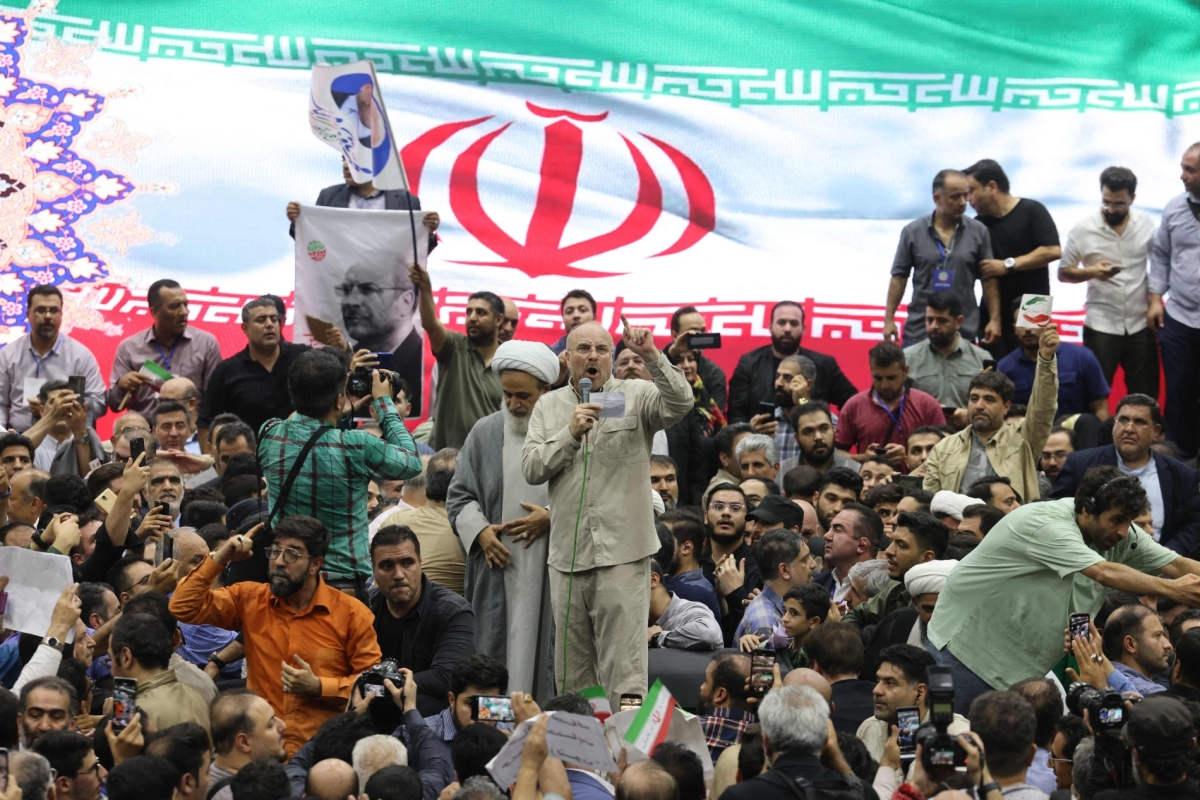
Iran's conservative Parliament Speaker Mohammad Bagher Ghalibaf addresses supporters in the Iranian capital, Tehran, on June 26, 2024, during his election campaign ahead of a presidential vote to replace the late president.
The deal to end Iran's war with the United States was made by one part of the hardline establishment and might be savaged by another. To judge whether the peace holds, watch the fight among the hardliners and not the reformists.
In the nights after Iran and the United States agreed to end their war, crowds gathered in Tehran. The rallies were organised, and their target was strikingly precise: not the agreement's terms but two men: Foreign Minister Abbas Araghchi and the parliament speaker, Mohammad Bagher Ghalibaf, who led Iran's negotiating team. The demonstrators called them traitors who had struck a bargain with America while forgetting the killing of the country's supreme leader, Ali Khamenei.
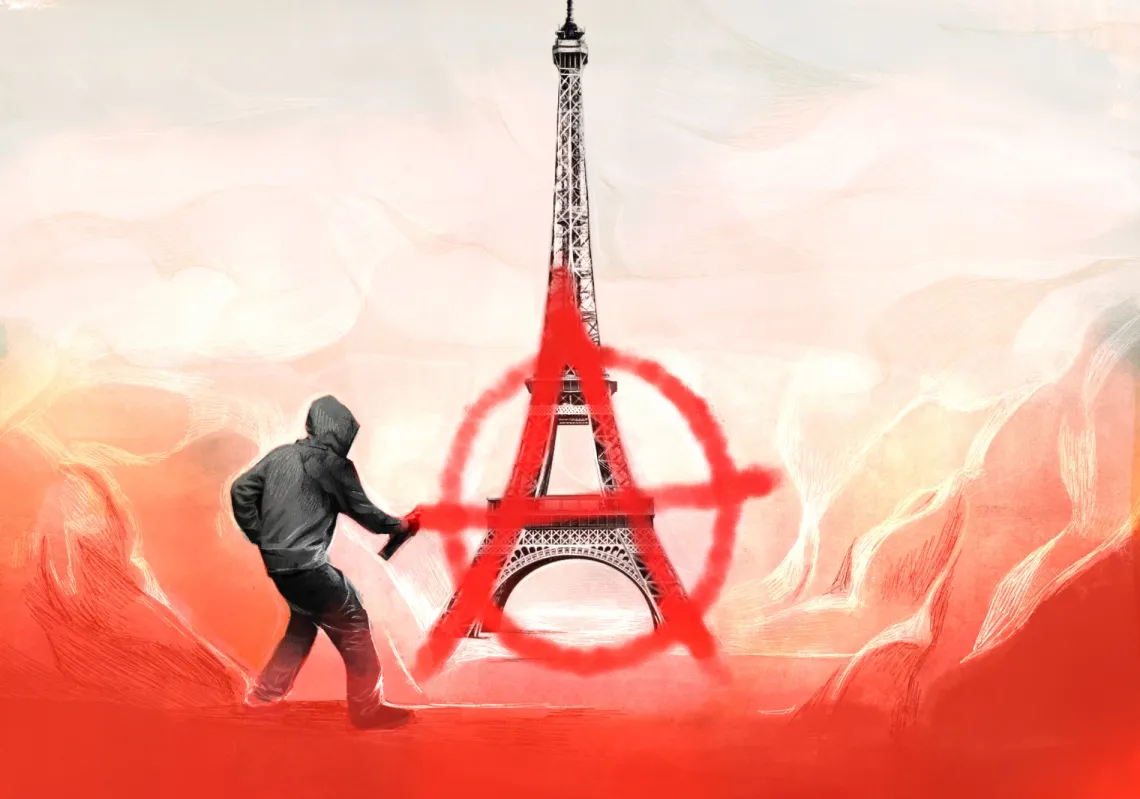
What makes the scene revealing is who stood behind it: The loudest opponents of this deal are part of the hardline camp, denouncing a deal that men like Araghchi and Ghalibaf, who are also basically from the traditional hardline camp, supported. The agreement could therefore touch off a civil war of sorts inside the Iranian political right.
Outside Iran, the reflex is to assume that hardliners block diplomatic deals and pragmatists make them. This one inverts the rule. It was produced by the security-backed establishment. Ghalibaf, who rose through the Revolutionary Guards, ran the talks; and an agreement of this scale would not have been possible without the assent of the Guards themselves, who emerged from the war as the system's dominant force. Yet a rival hardline faction is treating the whole enterprise as a sellout.
The assault is led by the Paydari (Steadfastness) Front and its allies in the Majlis. Mahmoud Nabavian, who had actually travelled to Islamabad with the negotiating team, came home to take the most radical line of all, demanding that the "architects of the disgraceful JCPOA" be purged from the delegation—a barely veiled jab at Araghchi, who a decade ago was deputy to the chief negotiator of the 2015 nuclear accord. A deal cooked by such hands, Nabavian declared, is pure loss.
Amir-Hossein Sabeti, another rebel hardliner, likened the fourteen-point understanding to both the JCPOA and the Treaty of Turkmenchay—the 1828 loss of territory to Russia that is Iran's enduring shorthand for national humiliation—and insisted the negotiators had moved without the new supreme leader's blessing. Kamran Ghazanfari accused President Masoud Pezeshkian of halting the war without permission and "saving Israel," and charged the team with hiding the English text of the deal from the public. Ali Khezrian, a Paydari deputy turned fixture of state television, wanted even the back channels shut—Araghchi's contacts with his American interlocutor cut off entirely. Abolfazl Abutorabi catalogued American betrayals stretching back to the 1981 Algiers Accords and asked how many times Iran must be stung "from the same hole."
The charges rhyme: secrecy, capitulation, allegedly crossing the new leader's red lines, repeating the blunders of 2015. What unites them is not a coherent alternative—none of these figures explains how Iran ends the war otherwise—but a shared determination to deny their rivals a victory.
The Iranian right has been at war with itself for two decades, and the present quarrel is only the newest round.
Longstanding feud
None of this is improvised, and that is the heart of the matter. The Iranian right has been at war with itself for two decades, and the present quarrel is only the newest round. In memoirs published this spring, Mohsen Rafiqdoost—a founder of the Revolutionary Guards and its former minister—trained his fire on exactly this faction. The Paydari Front, he wrote, is "the continuation of Ahmadinejad-ism," and he rejects anyone who belongs to it. He portrayed Ahmadinejad as a clever tightrope-walker who rode a populist wave to power, never believing in clerical rule, claiming to govern through a private line to— and using that mysticism to hollow out the authority of—the Supreme Leader. He called him "Iran's Anwar Sadat" and asked what had become of the roughly $700bn in oil money that poured in during Ahmadinejad's 8-year presidency (2005-2013).
Rafiqdoost is settling old scores. But the scores are the point, because they explain the present. The Paydari current grew out of the Ahmadinejad camp that the Guards' founding generation never trusted, and the establishment figures who made this deal with the Trump administration sit on the far side of that divide—Ghalibaf above all, whom Rafiqdoost pointedly praised as worth more in a single day at Tehran's city hall than Ahmadinejad in two years (both men were mayors of Tehran at different times). The monolithic "hardline camp" that foreign observers imagine has in reality long been two camps that despise each other, divided less by policy than by lineage, patronage, and a decades-old contest over who embodies the revolution.
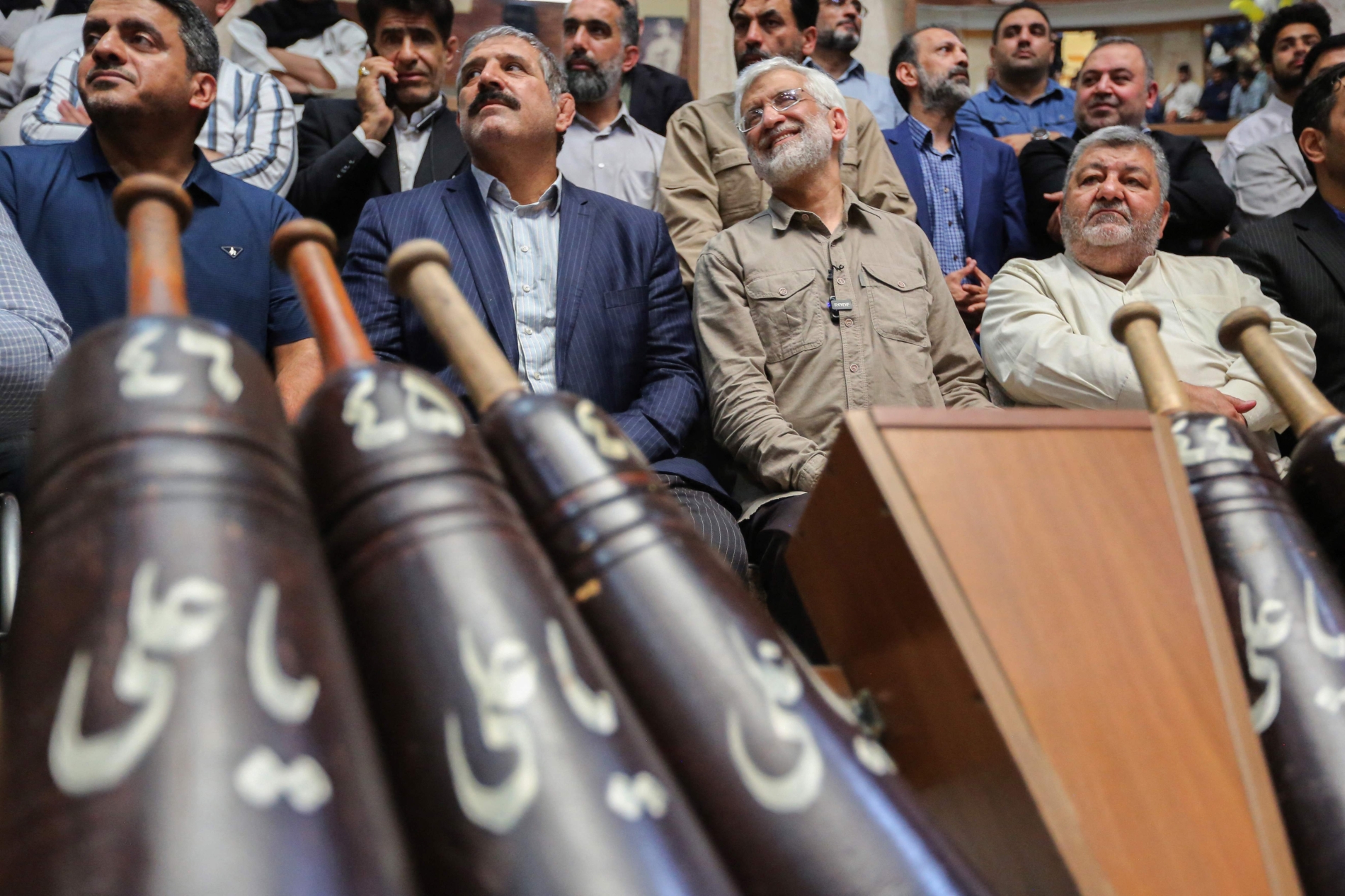
Iranian presidential candidate Saeed Jalili (2R) attends a campaign event at a Zurkhaneh, a traditional gymnasium, in Tehran on June 30, 2024.
The fracture runs in more than one direction, but it is a fight inside the right, not between the right and anyone else. Last spring, before the deal was sealed, it was the Paydari Front and the network around Saeed Jalili, not the Guards, that moved against Ghalibaf, pressing to unseat him as speaker at the most delicate moment of the diplomacy, an attempt to knock out one of the negotiating track's anchors. He held on. The Guards sat on the other side of that contest: the agreement could not have been reached without their assent, and Ghalibaf rose through their ranks. The appointed pillars of the system—the senior clergy, the Guardian Council—have stayed conspicuously silent, leaving the field to a parliamentary faction with little to show beyond its microphones.
That is the anxiety beneath the street theatre. The negotiators carry backing at the very top—the Guards' acquiescence, the new leader's office—while the Paydari current, locked out of a deal it could not stop, fights from the floor of the Majlis and the studios of state television. It is a faction whose standing depends on permanent confrontation, and it is loath to watch a negotiated peace hand the initiative to its rivals.
The currents diverge most sharply over the deal's terms, and here Tehran's posture toward its neighbours becomes the contested ground. The agreement is regional in its substance: a reopened Strait of Hormuz, the lifting of the US naval blockade, a clause binding Israel to end its war in Lebanon and, hanging over the second phase, the promise of foreign capital flowing back into a sealed-off economy.
According to Reuters, the framework envisions a $300bn private investment fund, a "Reconstruction and Development Fund" to channel money into Iranian energy, logistics, manufacturing, and transport, with more than half already pledged by companies in the United States, the Gulf Arab states, and Asia, among them firms from South Korea, Japan, Singapore, and Malaysia. The money is private, not American taxpayer funds; Trump has insisted Washington itself will invest nothing.
And it is conditional: the US vice president has said Iran will see none of it unless it dismantles its nuclear programme, surrenders its enriched stockpile, and "fully transforms" as a country. Tehran had first demanded $400bn in war reparations; when Washington refused, the fund became the workaround, earmarked, in the reporting, for war-battered plants like the giant Mobarakeh steelworks, refineries, and airports.
For the pragmatic-conservative current, this is the prize: the hard currency to rebuild a wrecked economy, on the wager that recovery, not endless siege, is what secures the state and the Islamist regime. The economist Saeed Leilaz captured the mood by turning the hardliners' favourite slur against them, noting that even Turkmenchay, after all, was a treaty and not a deed of surrender.
For the Paydari rejectionists, Gulf and Western money is a Trojan horse. Nabavian fastened on exactly this, warning that under the deal the United States and its regional partners would have a say in how reconstruction funds are spent. Sovereignty, in his telling, mortgaged for cash. The same neighbours who would bankroll Iran's recovery are, to one camp, the road out of catastrophe and, to the other, the instrument of a new dependency.
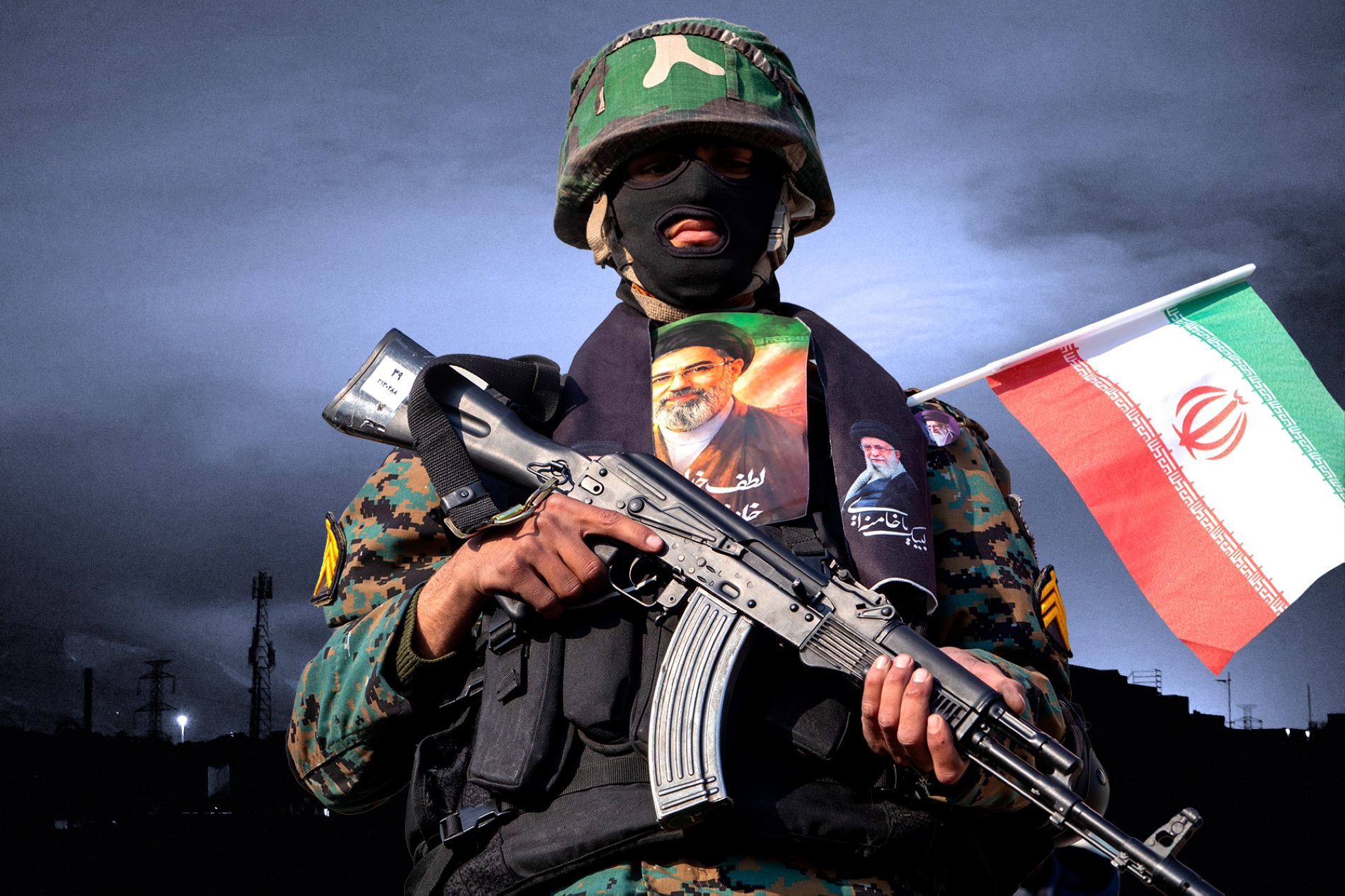
A member of the security forces, holding a picture of Iran's new Supreme Leader Mojtaba Khamenei, observes protesters as they gather for a rally in support of the new Supreme Leader in Enghelab Square in Tehran, on 9 March 2026.
Who holds the upper hand?
For now, the establishment does. It made the deal, and the office of the new supreme leader has signalled its assent. But the Paydari current retains what it needs to make compromise expensive: seats in parliament, microphones on state television, and a gift for recasting any agreement as a test of loyalty to the leader. The decisive variable is whether Mojtaba Khamenei—untested and elevated with the backing of one faction rather than the whole system—can referee the right's fratricide the way his father did for more than three decades. There is little evidence yet that he can.
The economic emergency sharpens every blade. By the government's own numbers, some two million jobs disappeared during the war, much of the damage inflicted by a months-long internet shutdown rather than by missiles; food inflation surged past 100%; output may contract by a tenth this year. That ruin is the pragmatists' strongest case for the deal and the rejectionists' deepest fear, because a recovery that actually works would entrench the faction that delivered it.
The war did not unite the Iranian right. It exposed how divided that right has always been and handed each faction a fresh weapon to wield against the other. The reformists and the Iranian exiles are spectators to this contest. To see where Iran is heading, toward a durable peace or back toward the brink, watch and see how badly the hardliners turn on one another.