Kenan Orhan tackles themes of exile, fear and memory

The Turkish-American author is a short story writer whose debut novel has been longlisted for the 2026 Booker Prize

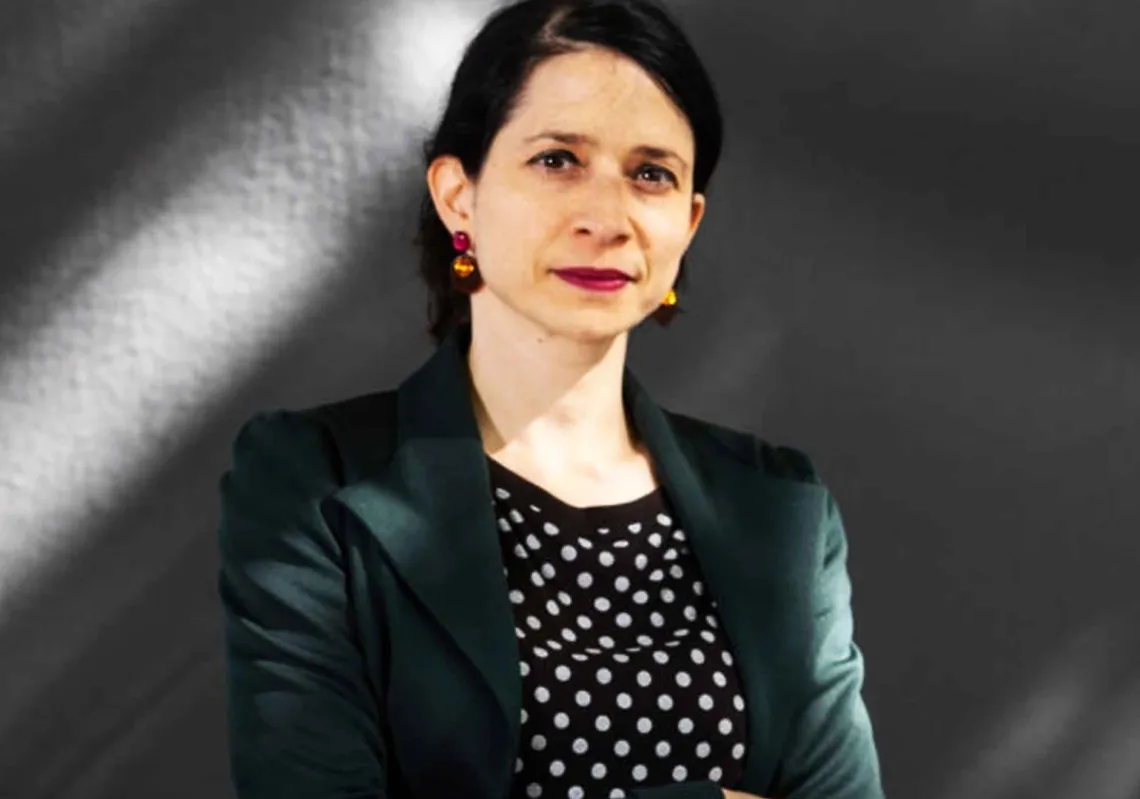
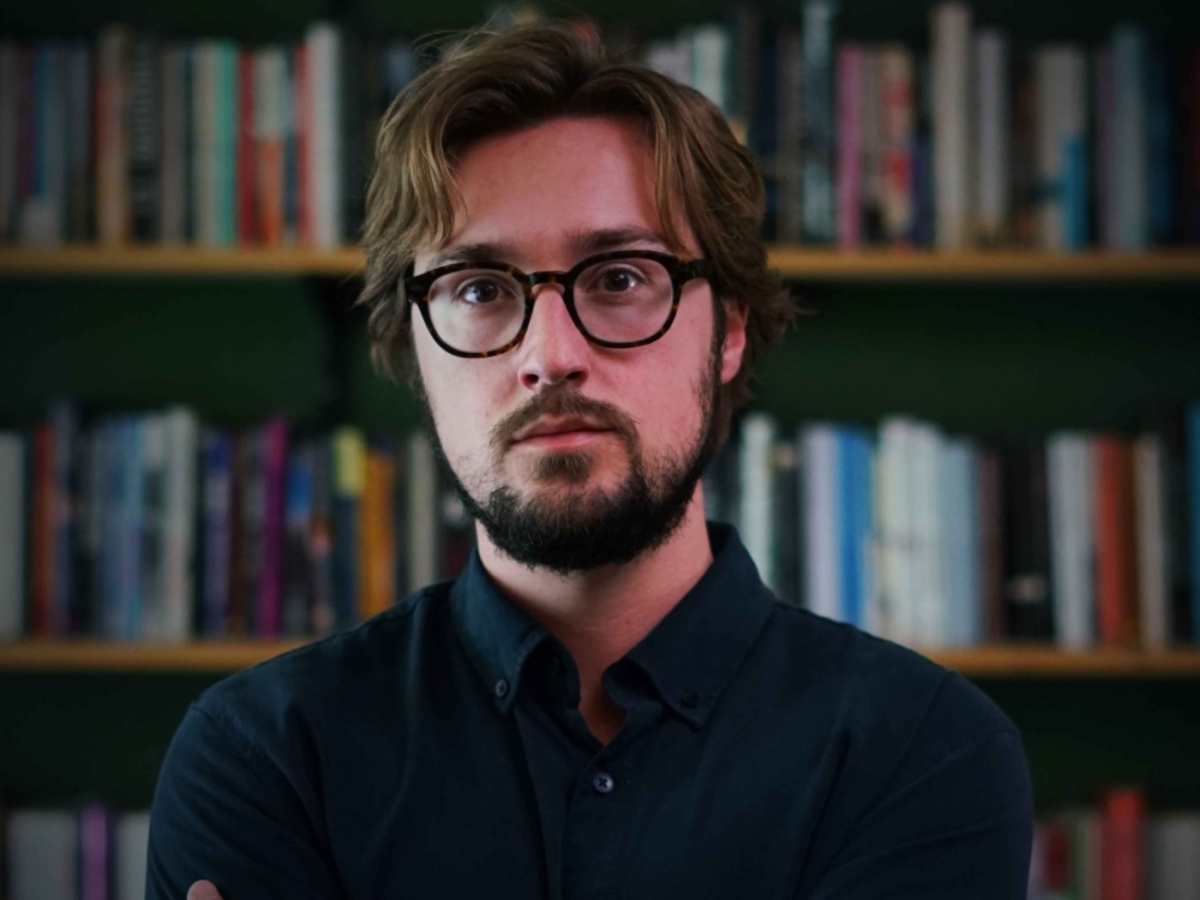
Turkish-American writer Kenan Orhan
Supplied
Turkish-American writer Kenan Orhan

Kenan Orhan tackles themes of exile, fear and memory

Turkish-American writer Kenan Orhan is a literary voice deeply engaged with the complex interplay of place, memory, identity, and exile. He holds a Master of Fine Arts (MFA) degree from Emerson College and has taught literature and creative writing at the Kansas City Art Institute.

Orhan received the O. Henry Award—presented annually to 20 writers from the United States and Canada—for his story Soma, which was published in the 2019 anthology The Best American Short Stories. His debut short story collection, I Am My Country and Other Stories (2023), established his presence in the American literary landscape; the book was shortlisted for the PEN/Robert W. Bingham Prize.

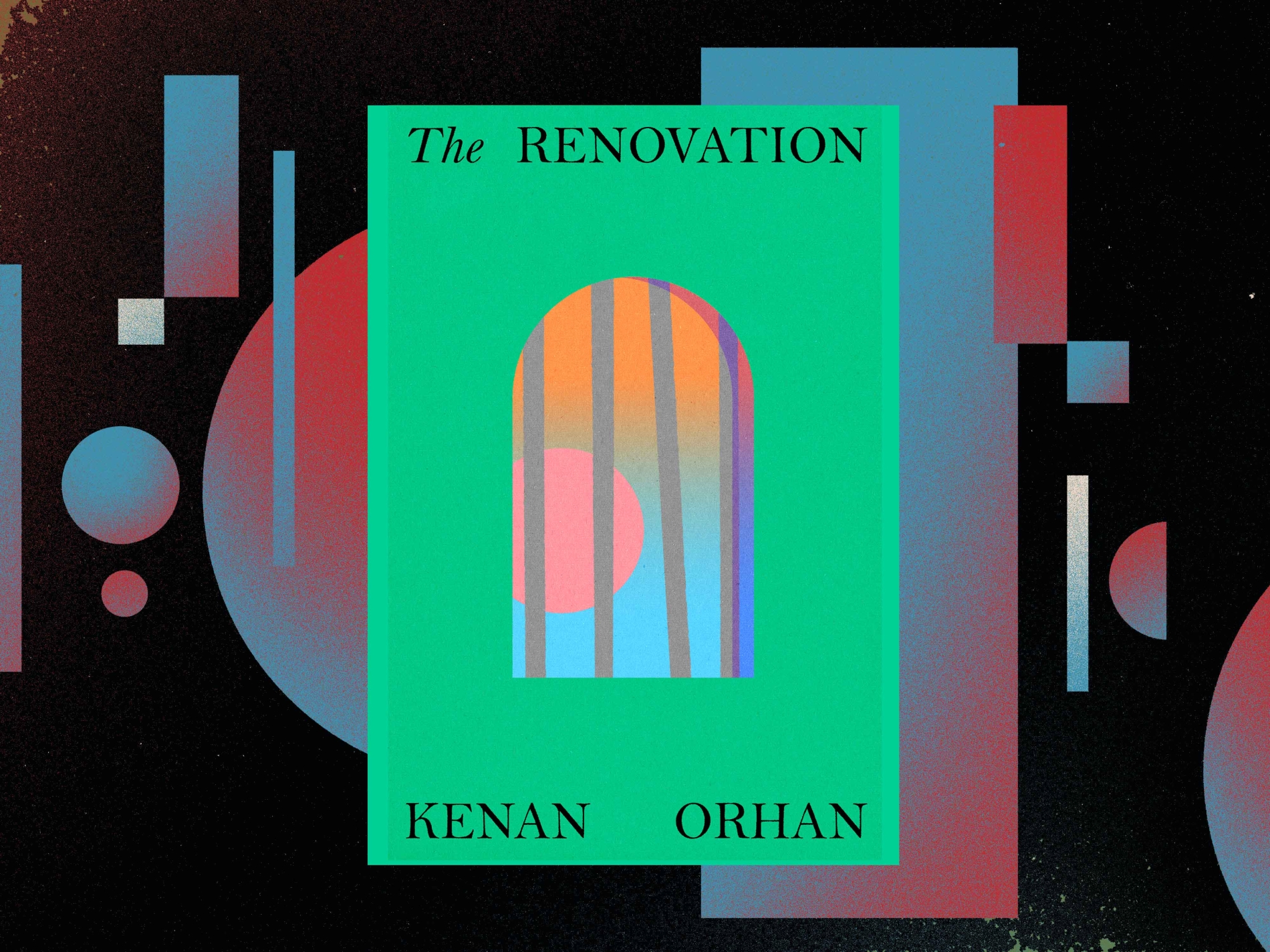
His first novel, The Renovation, was longlisted for the 2026 Booker Prize. Through this work, Orhan continues to explore themes of place—as it shifts within memory—and the homeland, which, over time, can become a place that is impossible to reclaim in its original form. Here is Al Majalla’s interview with him.


What does writing offer you that no other form of belonging can?

Writing requires a good deal of concentration. Half of the job is just sitting quietly, either ruminating on a few recurring obsessions and strong voices of your characters, or else focusing deeply on the sentences, rewriting them until the words each feel necessary. It’s a very deliberate art; it requires careful intentionality. It also has enormous freedom compared to other arts—fiction is quite inventive, but that creative freedom requires attention to detail to create authentic characters and speak to larger truths.

Writing for me has very much been a sort of stepping into or a putting on. My goal as a writer is to remain very open and empathetic to the characters as they reveal themselves to me. It is a bit like an actor stepping into the role, but you’re doing it for each and every character; you’re doing it with the scenery and the locales. Fiction is incredibly open-ended, but creating a story with emotional weight takes so much consideration that you really have to understand and appreciate your material. When the author is successful in this, the reader feels as if they’ve lived dozens of other lives.

In a previous interview, you mentioned that writing has become your way of staying connected to Türkiye and understanding your roots. Can you elaborate?

My writing about Türkiye requires me to keep invested in its struggles, its achievements, its heartaches. Writing about Turks, about people very much like my relatives in Istanbul, requires me to imagine life as them, and in doing so, it feels like I am keeping the bond to a beloved place and people alive. I hope I do them justice; I hope I do the country justice.
REUTERS/Umit Bektas
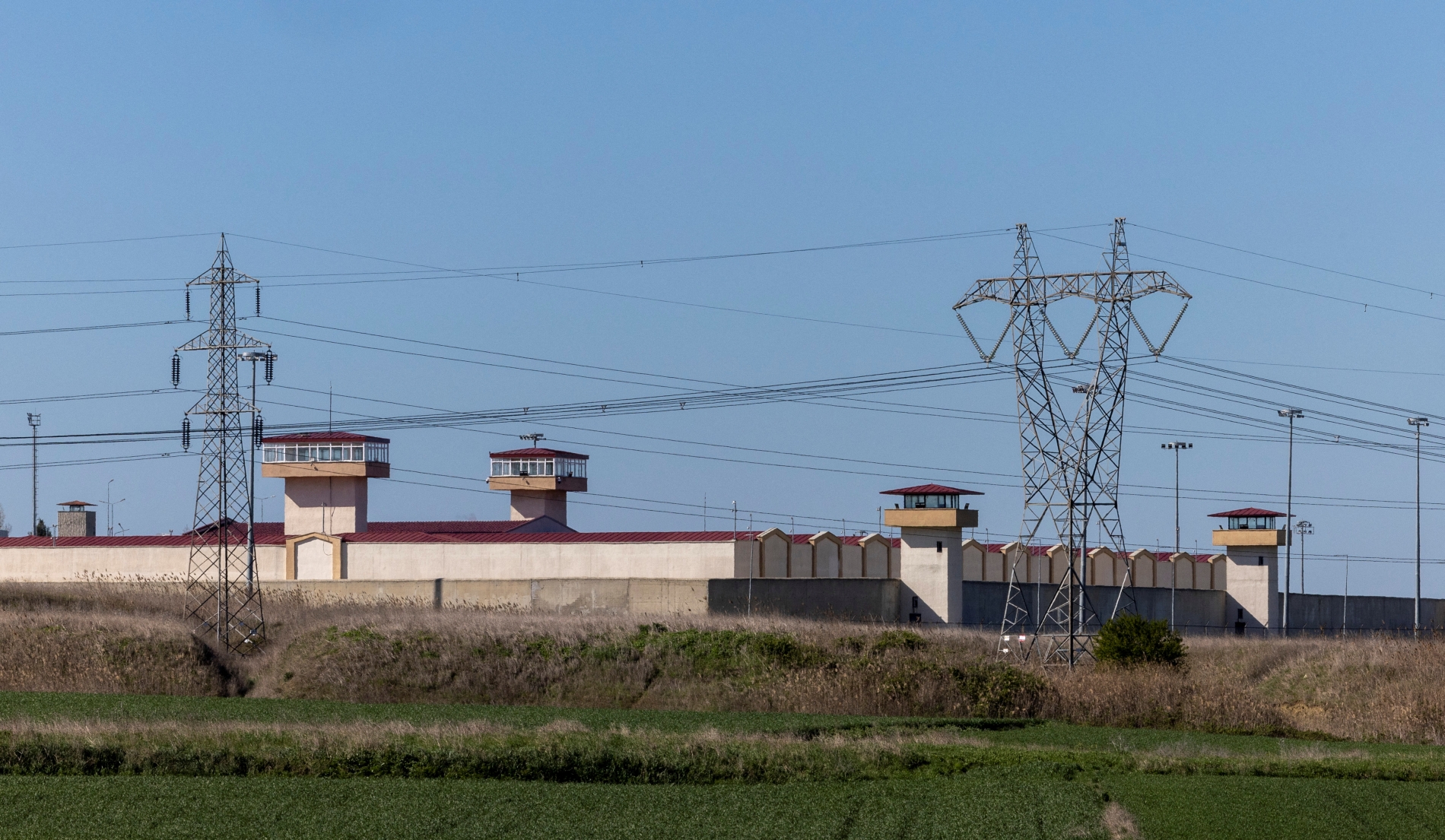
A general view of Marmara Prison—formerly known as Silivri Prison—and its adjoining courthouse complex in Istanbul.

You connected exile in Italy with the “Silivri prison”. What was your reasoning?

It jumped out of my dreams in the middle of the night. I’m not usually that way. I don’t believe too many stories come to people in their dreams, but for me Dilara kept repeating the opening sentence over and over in my head; I couldn’t go back to sleep until I’d written it down. It seemed very natural to me. I knew at once it would be a portal. Maybe it is the influence of a number of fabulist authors I admire, but there is something very surreal about the life my characters live; there is something odd and surreal about exile.

Fabulism, surrealism, and magical realism are all forms of writing that seem exceptionally suited to describe life under oppressive states. I think of authors like Milan Kundera, Octavia E. Butler, Mircea Cărtărescu, and Yoko Ogawa who, in order to reach kernels of truth, cover their work over with a patina of magic, a dream-like rendering of life. I think a shortcoming of realism is its tendency to speak in ways that resonate only with people who can relate to the real experience, or who can easily see these situations in themselves.

It’s not fair, perhaps, to say that, and of course there are many generous readers who put themselves into the shoes of realist characters with whom they share no commonalities, but I think the way it operates leaves it prone to form a sort of complacency in the reader. It risks leaving behind the reader who is not already familiar with the story’s situation. That’s why I love fabulism/surrealism so much. It bridges these gaps of experience by presenting an off-kilter world to which everyone is a stranger.

Maybe some of my readers know what it is like to be an immigrant and maybe many don’t, but none of us has ever had a prison cell installed instead of a bathroom, so the premise dissolves life down to a universally absurd place. All readers start on the same uneven footing, which I think helps trick them into being open-minded to experiences beyond those they recognise. That might sound a little cruel, but I think good literature is, at the end of the day, just a trick.

Your protagonist, Dilara, grapples with a dual struggle: the erosion of her father's memory due to Alzheimer's, and her own loss of identity in exile. But the gateway connected her with female prisoners in “Silivri”. How did this unexpected connection reshape her perspective on isolation, companionship, and being seen?

I think Dilara first sees the other prisons through a very egotistical lens. They start as useful conduits for her; they are in their cells at her leisure, to provide her with the information she desires from them. Part of that is because of the nature of her relationship with her father, it’s become a sort of usefulness relationship instead of a familial one. She provides care for him; he provides memories, but when he starts to falter on his end of the relationship, these prisoners step in. And then, when the emotional weight of maintaining her relationships with the inmates becomes too great for her, she rather selfishly abandons them, hiding back in her home in Italy for a while.

It’s quite callous of her at first; she is being self-centred, but I think over time, as she comes to learn more individually about the prisoners and builds up trust with one in particular, she finds herself sort of thrust into the real role of prisoner. She becomes an inmate when before she was more like a tourist to the prison cell. It’s terrifying for her, but I think it's deeply rewarding, too. It must be rewarding for her, given how I ended the novel.

I think the camaraderie, trust, and care she finds with the other inmates is so intoxicating for her because of the stark contrast with her isolation in Italy. I think her relationships with the prisoners are probably the first time since her exile that Dilara is presented with the possibility that leaving was worse than staying, and I hope I’ve convincingly portrayed that paradigm shift.
I think the trick to absurdist elements in my fiction is to play it very straight, much like the best slapstick and comedies; the more seriously you take it, the better it is

Turkish-American writer Kenan Orhan

Throughout the novel, the father's memory seems to erode, while the prison cell tries to preserve an entire nation's memory. In your view, was dementia a loss of individual memory, or a metaphor for a collective memory threatened with oblivion?

I was interested in both, and in the places they intersect. The amount of the past, the amount of ourselves that exists in our forefathers, is a very sudden realisation when they begin to lose their minds in front of us, or at least it was for me personally, to see the amount of my own history sort of crumbling in an erasure of the past as all those moments of my youth, all the memories of childhood held by my last remaining grandparent, all started to fray and unwind and shift. But more than that, a state is made up of its people's ideals and hopes and memories.

I think what is most interesting to me about authoritarian regimes is the way they try to adjust the past, the ways they rewrite their histories. There are, of course, the obvious methods, and the state apparatuses that facilitate this are usually self-evident, but there are more insidious methods too: the way a lie repeated to the people over and over eventually drowns out the memory of the truth. We exist as narrative creatures, organising our personal histories into a sort of linearity, and so we are very much beholden to memory; yet memory is constantly in flux, it is difficult to pin down, and it is susceptible to corrosion.

Our identities are in this constant struggle of ossifying our past and renovating the idea of ourselves, and this is inextricably linked to the states we find ourselves under. The more susceptible we are to revisions of the past, the more pliable we are as a people under the authoritarian's thumb.

Dilara receives news of her homeland through foreign media. Were you exploring the fragility of truth, or the difficulty of seeing one's homeland from both within and without at the same time?

I think in countries with compromised news outlets, it is hard to take reportage at face value. Dilara has three ways she interacts with the politics of home, and those are the inmates, her aunts that call now and again, and the impersonal news that filters through television and the internet, and they all offer slightly different views of truth, or perhaps a good way to say it is each of them offers a two-dimensional view of a three-dimensional object from different vantage points. By piecing them together, Dilara can reconstruct the "truth" of events, but her own personal connection to the news is missing, so it remains an impersonal truth rather than a lived one.

The closest she gets is during the earthquake, while she's in prison, keeping herself there to experience things exactly as she would have if she'd stayed in Türkiye and been arrested. But simultaneously, it is difficult to capture the scale of grief in disasters when viewing them from foreign shores; it is difficult to imagine the mood of a city in the wake of catastrophe without being there.

It is painful to see a grand tragedy take place in a homeland thousands of miles from your home and not knowing the appropriate amount of grief to experience, not knowing if it is improper to ignore that distance, not knowing if instead it is callous to shield yourself. The duality of being an émigré feels almost as absurd to me as this novel, and I think that's what this book is trying to show: the instability, absurdity, flux, and fragility of a straddled existence.

It is painful to see a grand tragedy take place in a homeland thousands of miles from your home and not knowing the appropriate amount of grief to experience

Turkish-American writer Kenan Orhan

In the novel, the boundary between home and prison, between freedom and confinement, collapses. To what extent was this blurring intentional, serving as an expression of the impact of tyranny that transcends physical boundaries?

It's always a good idea for a writer to say it was intentional when a clever reader notices something smart. Of course, part of this novel is very interested in the panopticon-like world we live in, from hyper-surveillance and the long arm of the state reaching everyone, to how we participate in our own imprisonment by posting everything about ourselves online for data-hungry corporations to collect.

New technologies we're churning out erode our privacy and keep many impoverished all while seeming to be in service of a police state that seeks to turn all of its citizens into prisoners. But for me, the novel started with a more basic human condition. I wanted to explore the collapse of these boundaries—home and prison, freedom and confinement—in relationship to caregiving and Alzheimer's. How much is love itself a prison? Is the past an escape, or does it end up swallowing us, too? Is home the soil you grew up in, the place where the people you love reside, or is it where you most feel peace, most feel alive?

You began your literary career writing short stories, then moved to novels. How did this shift affect your writing tools? Did the novel impose a different rhythm on you when addressing complex themes like memory and exile?

I was very aware of how much digging a novel requires. I see novels as accumulation and interrogation, while short stories are tension and lightness. For me, there was a dramatic shift from the realm of hints and suggestions my stories tend to come from to this dig site I was meant to excavate—or at least that is a good analogy for how my process changed. I tried to sit longer inside my scenes, or else present a series of scenes each shining a slightly different light on a now more nuanced subject.

I found myself inspired by authors of digression, particularly W. G. Sebald, and I enjoyed the room to do so. But I missed the freedom of writing short stories while working on the novel. To me there is an electric charge almost to writing a short story. It comes out of you much faster, and so are products of a person who is not themselves going through a change. They are more focused that way. A novel takes months or years, and in that time the writer's mood toward the work changes, the ideas bend a little, the seasons march on. A short story feels encapsulated to me. I have felt I have finished a short story (though maybe I've never actually written an ending), but I've never felt finished with a novel. Eventually the work just ends.

I have felt I have finished a short story, but I've never felt finished with a novel.

Turkish-American writer Kenan Orhan

In the novel, a completely realistic event coexists with an impossible one without the reader perceiving a break in the rhythm. How did you maintain this balance so both feel like part of the same world?

For a simple, if somewhat bumbling, explanation: I think the trick to absurdist elements in my fiction is to play it very straight, much like the best slapstick and comedies; the more seriously you take it, the better it is. And indeed, much like a good joke, I think good fables, good fairy tales operate best when they aren't trying to explain their contents. I love fables and fairy tales. I used to teach a sort of retrospective on the fable from One Thousand and One Nights to today. One thing I'm so charmed by is the fable's ability to quickly introduce new rules to an otherwise mundane world.

It asks a lot of its reader to trust it, but I think quite cleverly most fables introduce strangeness and the patterns to understand them quite early. They move swiftly from point to point to point on their axis of narrative, leaving you very little time to question things. If you pause in your set-up of the absurd, even for a moment, you risk a gap into which a bit of the reader's doubt can enter.

I think it's easier with a shorter form. But that's why we start with the absurd. The novel's first line tells us a cell in Silivri Prison was installed in a bathroom by mistake. If the reader can get over that first line, they're open to almost anything.

Political fantasy, dark realism, and exile literature intersect in your texts. Which literary figures have most shaped your taste and narrative structure? And which writers do you feel you owe your worldview and your portrayal of human suffering to?

Probably Kafka is the most influential, because he taught me the most lessons. I think I could blame Milan Kundera for my penchant for the lopsided structure of this novel and its insistence on presenting political history in rather expository ways. But I think Kundera has a bit too much chauvinism and not enough fun. Authors like Nikolai Gogol, Italo Calvino, Dino Buzzati, Tommaso Landolfi, Kelly Link, and Aimee Bender have greatly shaped my ideas of fun, the tricks a writer ought to play, and the lightness necessary when broaching rather heavy subjects. But voice and style I tried to learn from authors like Elena Ferrante, Anne Carson, Bilge Karasu, Tezer Özlü, Maria Reva, W. G. Sebald, Michael Ondaatje, Angela Carter, and Rajesh Parameswaran.

I don't think, looking at those names, any sort of connecting tissue holds them all together, but they have, in their own ways, each written things that have impressed upon me the need to face human suffering with a bit of empathy and gallows humour, an appreciation for finely-tuned sentences, and the importance of a bit of mischief and disobedience in fiction.

After finishing your first novel, The Renovation, what question kept haunting you that the novel itself couldn't answer?

What a marvellous question. Not to sound too flippant, but the question that's really haunting me is: what the hell am I supposed to do now? I don't mean what I should write next; I mean what my career looks like now. This book is a product of a lot of fear and grief and anger at the realities facing Türkiye. This book was a vessel into which I could sink so much exhaustion and disappointment and outsized hope. I knew writing this book would not change Türkiye's course, and I was never deluded into thinking it might, but having written this story, having excavated not just the political fear but the human fears I have regarding my family, my relatives in Istanbul, I don't know what the novel does, how it functions.

Nothing comes back to me: not the ten years I spent away from Istanbul and my relatives, not the memories I am losing of them, not the country I feel like I'm mourning. I wanted to create this thing almost as a conduit for my thoughts and emotions, but now that I've done so, I'm not sure what it adds up to. Fortunately, I think that is where my job as the writer ends anyway. It is up to the reader now; that is the function of novels as I see them. Literature is a tandem act. I hope this novel asks a few questions of readers that they (like seeds already planted) can answer.

font change