Paula Erizanu: reclaiming Moldova’s history, one story at a timehttps://en.majalla.com/node/332264/culture-social-affairs/paula-erizanu-reclaiming-moldova%E2%80%99s-history-one-story-time
The writer and journalist Paula Erizanu came to the world’s attention with her creative non-fiction account of the 2009 pro-democracy protests in Moldova. She has since built an enviable career, publishing a volume of poetry, co-editing a three-part anthology of Romanian poetry by women, and writing two acclaimed books.
A graduate of City University London, Erizanu’s latest book, Both Heaven and Hell Are Here: Moldova, a Century of Lived History, is a polyphonic, oral history account of her home country. She spoke to Al Majalla about memory, revolution, storytelling, and reclaiming history.
You published your first book, This Is My First Revolution. Steal It, when you were just 18, documenting the 2009 protests in Chișinău, Moldova. Could you tell us more about the moment you decided to turn the streets into a literary document?
I was 16 when I took part in the protests. It was the first time I felt part of a political community sharing the same aspirations for democracy and freedom, protesting what we thought were rigged elections. My parents had taken me to protests before as a child, but this time I went of my own volition. I already knew I wanted to be a writer by then. I looked around and saw older, established writers at the demonstration. What distinguished me from them, I thought, was that this was my first big protest, my first ‘revolution’. They had already been through several mass demonstrations by that point.
I think this is why the book attracted national and international attention. These demonstrations were formative for my generation. Although they led to a change of government, many of us, like myself, later left the country. Some never returned—among them, people who were tortured or raped by the police. Others, like me, did come back. It was also the last mass demonstration in Moldova in which young people had such a visible presence. During the anti-corruption protests of 2015-18, older generations were more prominent.
When the book appeared in 2011, the Arab Spring was already unfolding. I remember following the events closely, feeling I recognised my own experience in the aspirations of young people across the Arab world. The situations were, however, very different, and not only in their outcomes.
In your debut novel, The Woods Are Burning, you explore the early Soviet feminist movement through figures such as Alexandra Kollontai and Inessa Armand in a non-linear, intertwined narrative. Do you believe that historical traumas experienced by women resist a straightforward, chronological telling?
This is an interesting way of thinking about it but I have to admit it’s not what I had in mind. If anything, I wanted to write a more classic Russian novel, with characters that have rarely taken centre stage in Russian literature: women who seemed like French feminists of the 1960s but were advancing many of the same ideas half a century earlier.
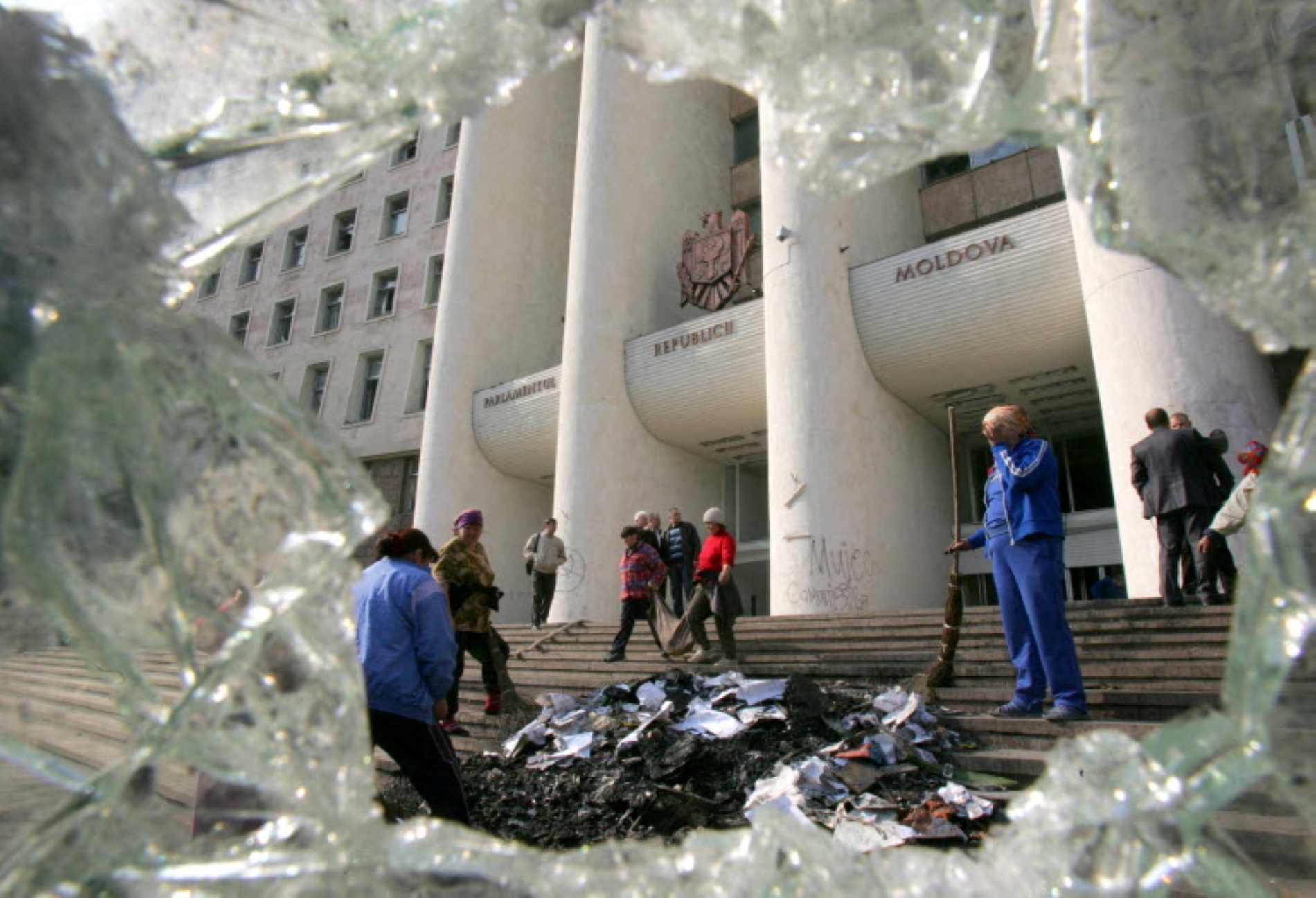
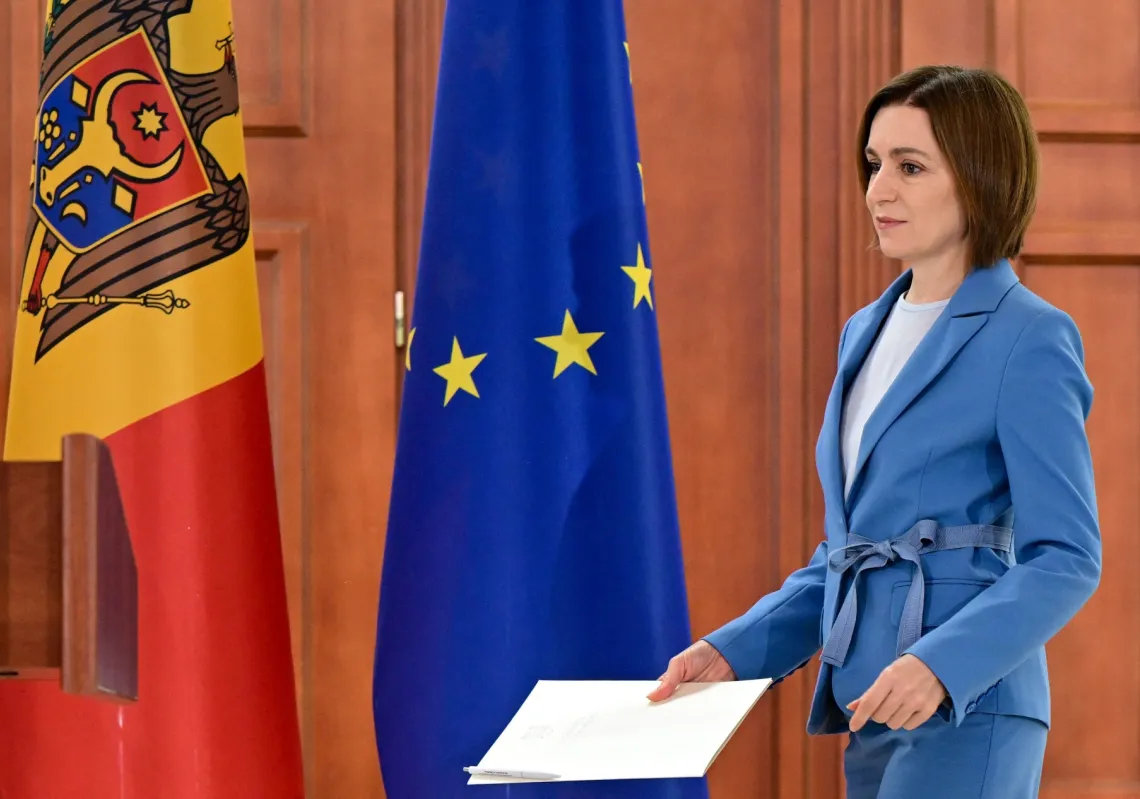
Moldovan women clean up debris left by protesters in front of the parliament building in Chisinau on 8 April 2009.
I discovered them when I asked myself what role women had played in the Russian revolution on its centenary. In a country that claims to be the pinnacle of conservative values, these women represent another Russia, one of resistance and progressive ideals. Thanks to them, the Soviet Union was the first country to legalise abortion. It also legalised homosexuality, recognised children born out of wedlock, simplified divorce, and extended state kindergartens and factory canteens. Some of these policies survived Stalin; others did not.
Thanks to these women, the Soviet Union was the first country to legalise abortion. It also legalised homosexuality, recognised children born out of wedlock, simplified divorce, and extended state kindergartens
Although elements of classic Russian literature can be felt in the novel, it is also contemporary, because I am. I can't, for example, know how these women thought about sexuality, even though I was struck to learn they both had younger lovers. So I had to imagine. I also wrote knowing that the revolution they joined as underground activists would initially succeed, bringing them to power, but ultimately fail by perpetuating autocratic rule and repression instead of the freedom they seemed to aspire to.
The title The Woods Are Burning carries powerful symbolism, with the forest evoking both sanctuary and identity, and fire suggesting war and ideology. How did you develop this metaphor?
Environmental concern for forests can already be found in Chekhov, and I remember being struck, when I first read him, that many of the political ideas we discuss today were already being debated more than a century ago. As a child, I was also struck by the wild Siberian fires I saw on the news during the summer. I can't remember whether the metaphor was already present in Armand's writings or whether I came to see it as a way of exploring conflicting solutions to the same ills, perhaps partly in dialogue with Amos Oz's little spoon metaphor in How To Cure a Fanatic.
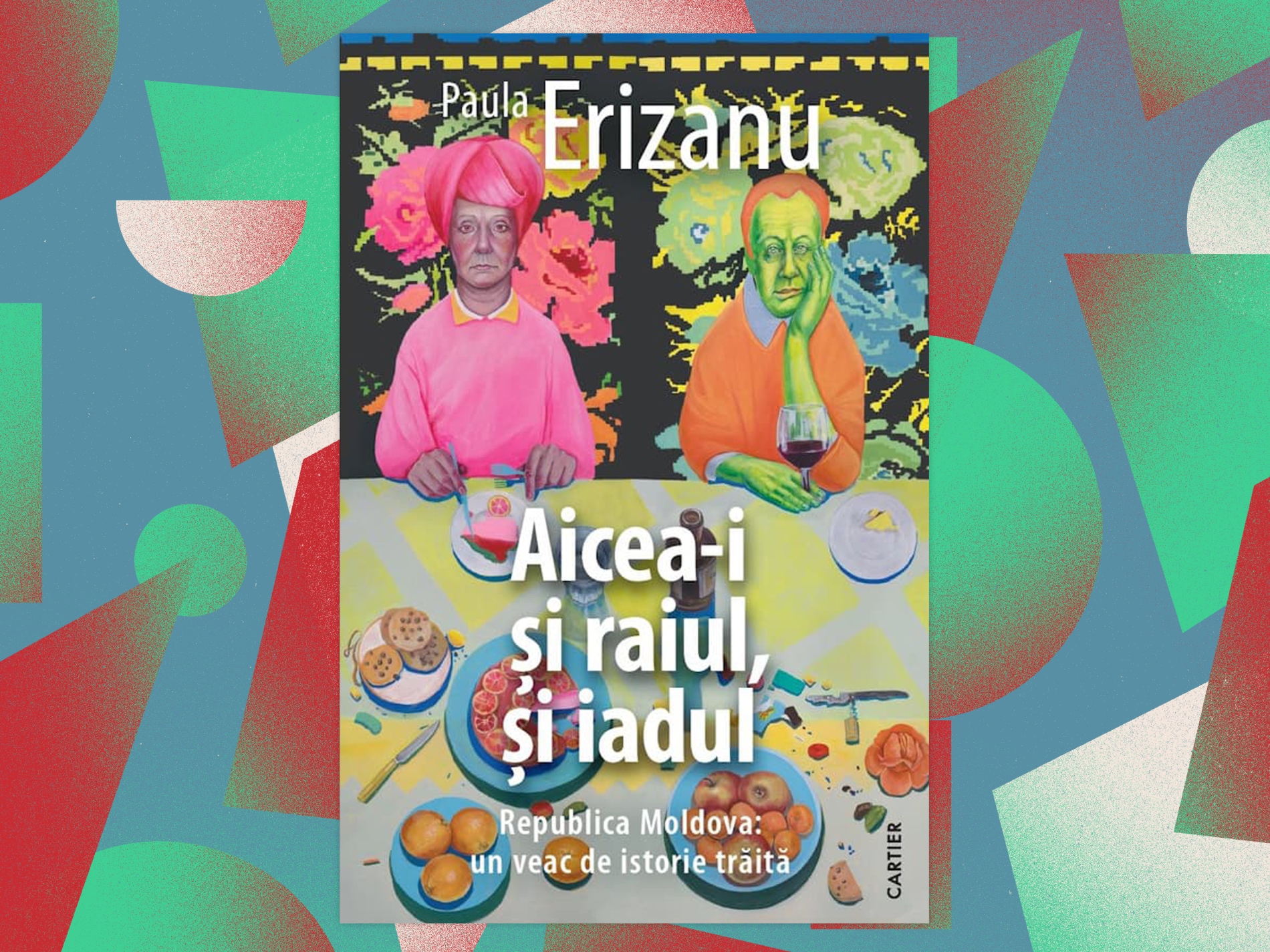
'Both Heaven and Hell Are Here: Moldova, a Century of Lived History' by Paula Erizanu
Beyond this image, the tension was already there in the biographies I read and fictionalised based on Kollontai and Armand's lives and writings. In my novel, the two women struggle to reconcile their domestic lives, charitable activities, and political aspirations with the increasingly repressive Tsarist regime. In Kollontai's case, her husband became more and more controlling. For Armand, the choice was between her quiet, loving husband, the father of their four children, and his younger brother, who was still a student. Not something I expected to find in an early 20th century Russian life.
Some compare Svetlana Alexievich's Secondhand Time: The Last of the Soviets to your latest work. How do you view that comparison, and what distinguishes the Moldovan experience from the broader Soviet experience documented by Alexievich?
I absolutely loved Secondhand Time, a monument to the common people who lived through the Soviet and post-Soviet eras, with all their contradictions. On a trivial level, I recognised some of my experience in the book. For instance, I didn't realise until reading Alexievich that the shops my mum and I visited in the 90s, called 'gumanitarka', actually sold second-hand clothes from humanitarian aid. I'd simply assumed that was what clothing shops were called.
My book is more novelistic, more personal, and contains elements of fiction. Beyond Alexievich, Rachel Cusk also inspired me through the first-person listener in her Outline trilogy, while Gabriel Garcia Marquez influenced the way I thought about telling the story of a nation through different generations of the same village. I began with my grandparents' village before expanding the geography of the book to all of Moldova because of the extraordinary real-life stories I encountered during my research.
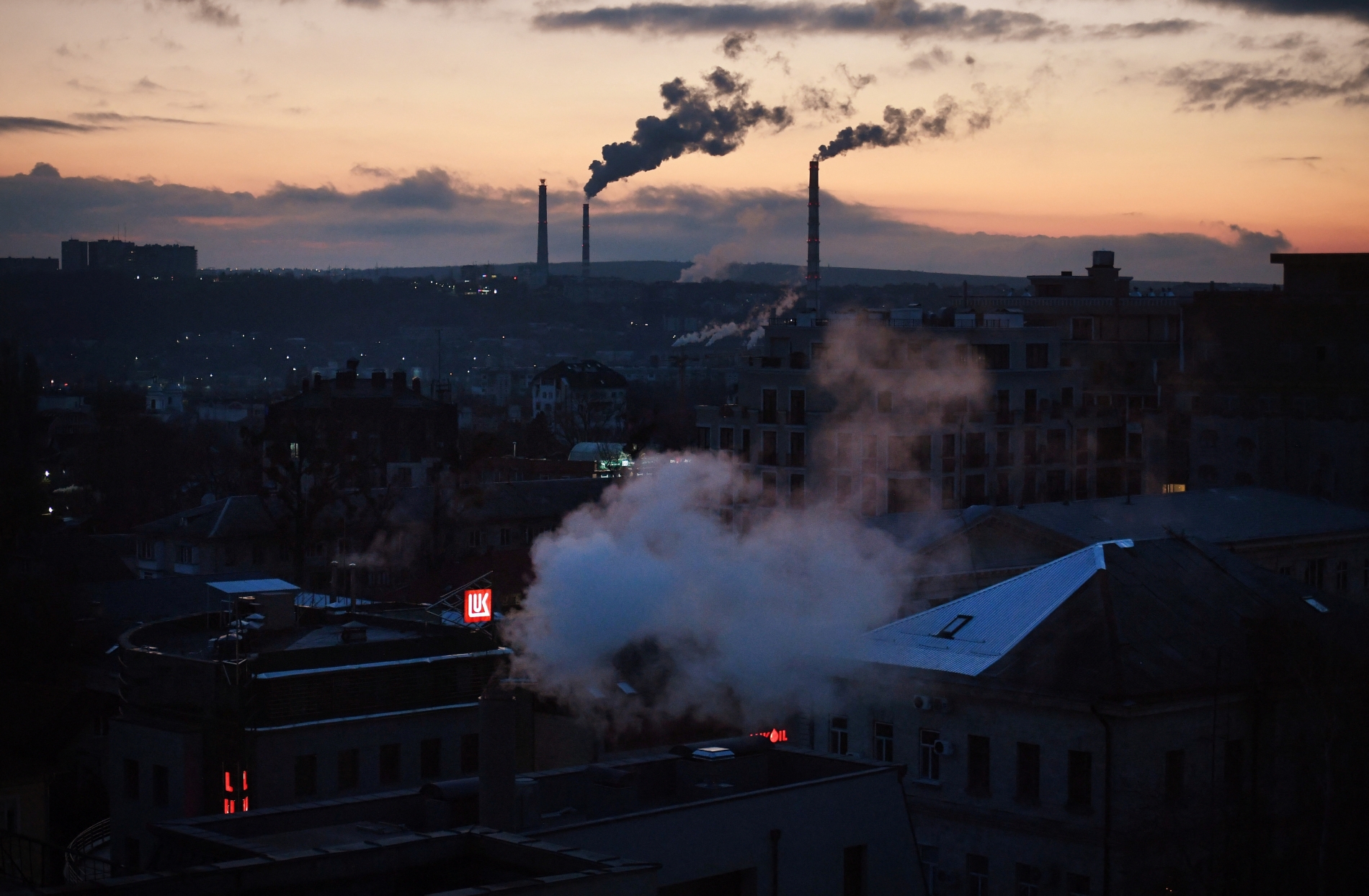
General view of Chisinau, Moldova, on 6 March 2022.
Beyond form, the story of Moldova I tell is also different from Secondhand Time because it covers the pre-Soviet period. My country is one of the few in Europe to have experienced such a tumultuous 20th century. To illustrate this point, my great grandma lived in the same village but in four different countries.
Both Heaven and Hell Are Here spans more than a century of Moldova's history, blending first-person accounts, fiction, and your own family's memoirs. How did you bring these different voices together, and why was it important to include minority perspectives?
I started off thinking I would write a novel, a One Hundred Years of Solitude based on my grandma's village in northern Moldova, where I spent my summers as a child. I wanted to write each chapter from the perspective of a different villager, representing a different ethnicity, generation, and so on. But after a few pages, I started reading the memoirs my grandma wrote during Covid and realised she knew far more about the history of her village that I could ever imagine. So I asked if I could incorporate fragments of her memoirs into my book, while referencing her as their author. She agreed. I also entered into dialogue with parts of what she wrote. That is how the book veered towards non-fiction.
Then I met a Jewish man whose family story included the 1903 Chișinău pogrom and spanned the entire century, from that event to the theft of $1bn from three of Moldova's leading banks in 2013. His story was strongly linked to the capital, and it prompted me to drop the rural setting and expand the book's geography. Because of Soviet censorship, we have so many untold stories of how history was actually lived. I included Roma stories of the pogroms and the Holocaust, alongside Armenian perspectives and more recent testimonies from Ukrainian and Gaza refugees. I also included a Congolese economic migrant who pursued his European dream only to find himself in my grandma's neighbouring village, working as an IT, PE, and football teacher. In the end, my book ended up containing more non-fictional first-person accounts than fiction.
My message is cosmopolitan: we all have a place under the sun. Our political choices and beliefs may be different, but we should at least listen to one another's stories, because they are rooted in lived experience and are all valid.
How does the book connect Moldova's imperial Russian, Soviet, and Romanian past with the war in neighbouring Ukraine?
What a lot of us felt on 24 February 2022 was that our grandparents' stories and our history textbooks became the news. The claim that Russians had 'liberated' parts of eastern Ukraine they occupied, for many of us, echoed the Soviet rhetoric about the Second World War and the so-called 'liberation' of Moldova.
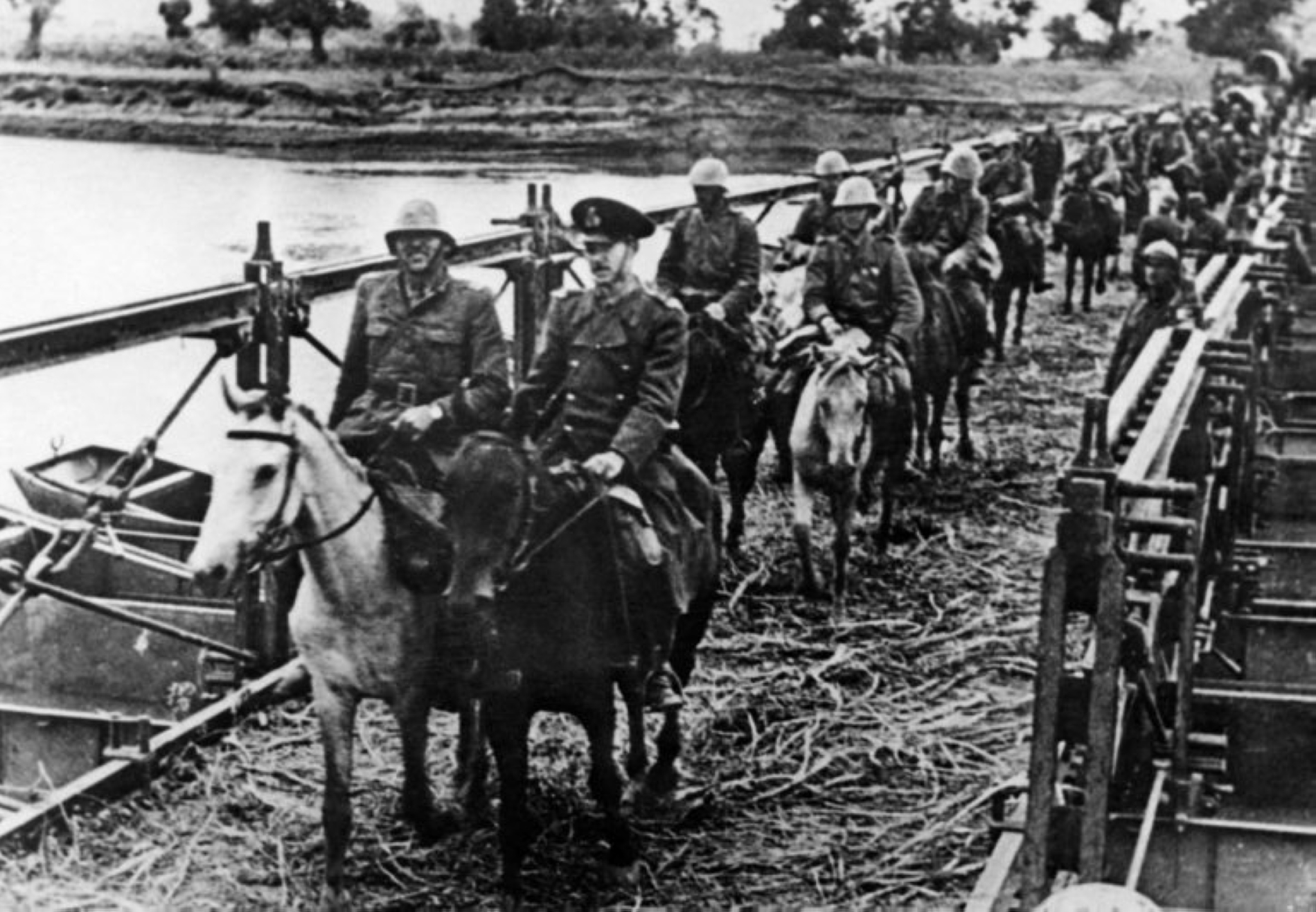
Romanian cavalry is seen crossing the river Pruth, Romania's border with Moldova and Ukraine, in September 1941, during World War II on the eastern frontline.
I divided the book into four parts. The first covers the first half of the 20th century; the second draws on my grandma's memoirs of the Soviet era; in the third, I place her memoirs in dialogue with my own reflections; and the fourth focuses on the fall of the Soviet Union, the national liberation movement, and the independence era, with its own challenges. Beyond this chronology, family stories spiral across several eras and regimes.
In the second edition of the book, you added the story of Lucia Elekr, a Moldovan woman who lived in Gaza for 20 years. How did you come across her story, and why was it important to include?
A friend in Moldova who works for a community centre told me there were several refugee families from Gaza in our country. She gave me Lucia's contact. I went to her flat and she gave me an interview. She returned to Moldova in the first month of the (new) war, but had already witnessed famine. Her house in Gaza is now destroyed. She had met her husband in the 2000s, when he was a student in Moldova. I thought it was important to include her story because I learned that some of the Jewish people I spoke to had children or grandchildren in the Israeli army. As one reader commented, no group has only ever been a victim or a perpetrator in our history. There were also parallels with our own history, particularly between the famine in Gaza, caused by the war and Israel's blockage of humanitarian aid, and the Soviet-engineered famine of 1946-7 in Moldova.
From The Woods Are Burning to Both Heaven and Hell Are Here, your work connects historical violence with the war in Ukraine and the genocide in Gaza. How can literature help preserve those voices and build resilience?
Ukrainian writer Oksana Zabuzhko once told me, on a dark, cold evening in Kyiv, just before curfew, that to win is to survive and tell your story. I included her words as one of the mottos of my latest book.
Despite Soviet censorship, my grandma learned about the real experiences of people in her village from her mother, who was a talented storyteller. She then passed those stories on to my mother and me. This was my first encounter with history. Truth was first preserved through oral storytelling, and now through the written word, even as Russia once again tries to impose its own narrative by force. If we focus on lived experience, our communities, and listening to one another's stories, we may be better equipped to resist the propaganda that seeks to divide us and define who we are.
It was important for me not to present the people I spoke to as passive victims, but to pay homage to their agency, resilience, and capacity to not only to endure, but to thrive against all odds. I hope that this can inspire strength. Perhaps the only good thing to come out of war is that people around the world learn about places they previously knew little or nothing about. But the cost of that knowledge is far too high.