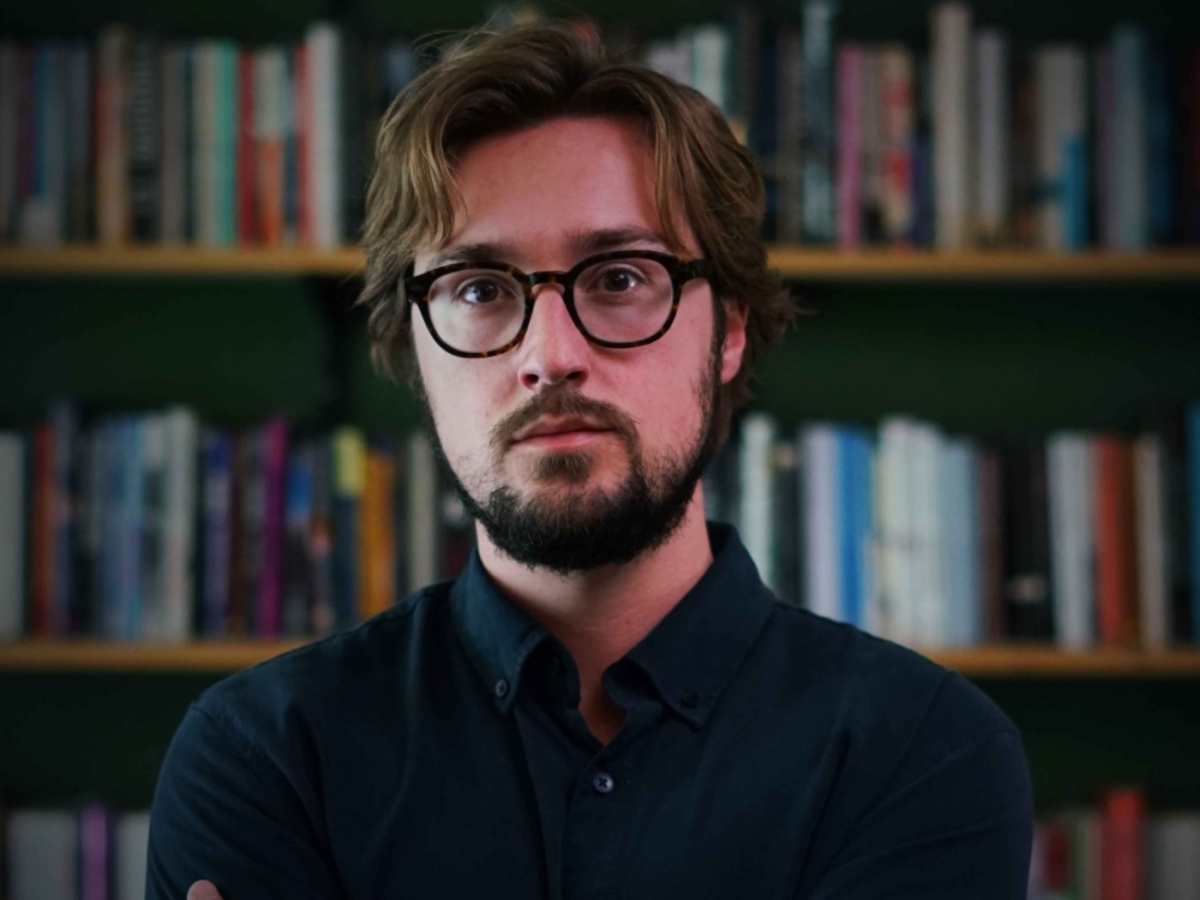

Turkish-American writer Kenan Orhan is a literary voice deeply engaged with the complex interplay of place, memory, identity, and exile. He holds a Master of Fine Arts (MFA) degree from Emerson College and has taught literature and creative writing at the Kansas City Art Institute.
Orhan received the O. Henry Award—presented annually to 20 writers from the United States and Canada—for his story Soma, which was published in the 2019 anthology The Best American Short Stories. His debut short story collection, I Am My Country and Other Stories (2023), established his presence in the American literary landscape; the book was shortlisted for the PEN/Robert W. Bingham Prize.
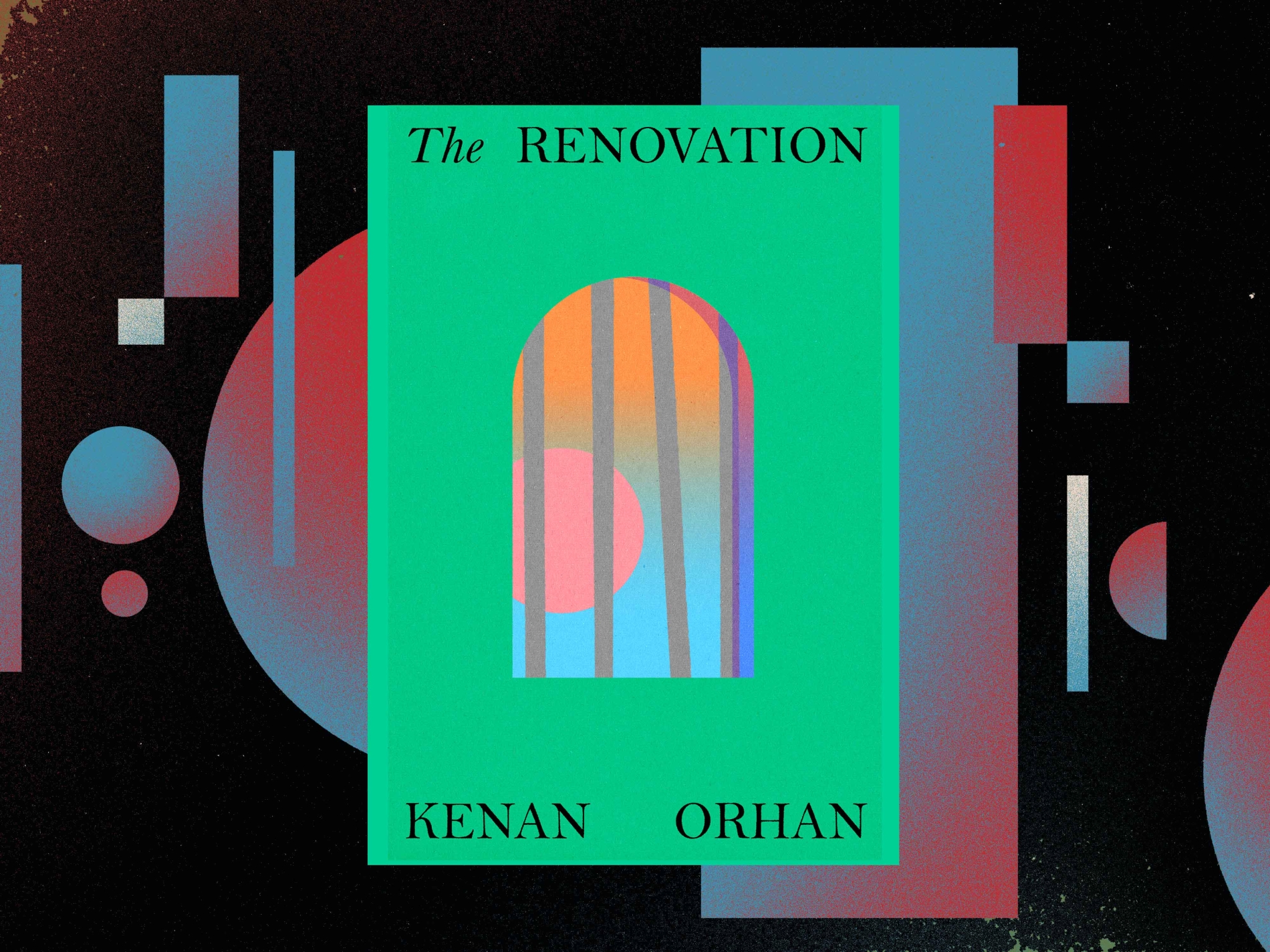
His first novel, The Renovation, was longlisted for the 2026 Booker Prize. Through this work, Orhan continues to explore themes of place—as it shifts within memory—and the homeland, which, over time, can become a place that is impossible to reclaim in its original form. Here is Al Majalla’s interview with him.
What does writing offer you that no other form of belonging can?
Writing requires a good deal of concentration. Half of the job is just sitting quietly, either ruminating on a few recurring obsessions and strong voices of your characters, or else focusing deeply on the sentences, rewriting them until the words each feel necessary. It’s a very deliberate art; it requires careful intentionality. It also has enormous freedom compared to other arts—fiction is quite inventive, but that creative freedom requires attention to detail to create authentic characters and speak to larger truths.
Writing for me has very much been a sort of stepping into or a putting on. My goal as a writer is to remain very open and empathetic to the characters as they reveal themselves to me. It is a bit like an actor stepping into the role, but you’re doing it for each and every character; you’re doing it with the scenery and the locales. Fiction is incredibly open-ended, but creating a story with emotional weight takes so much consideration that you really have to understand and appreciate your material. When the author is successful in this, the reader feels as if they’ve lived dozens of other lives.
In a previous interview, you mentioned that writing has become your way of staying connected to Türkiye and understanding your roots. Can you elaborate?
My writing about Türkiye requires me to keep invested in its struggles, its achievements, its heartaches. Writing about Turks, about people very much like my relatives in Istanbul, requires me to imagine life as them, and in doing so, it feels like I am keeping the bond to a beloved place and people alive. I hope I do them justice; I hope I do the country justice.
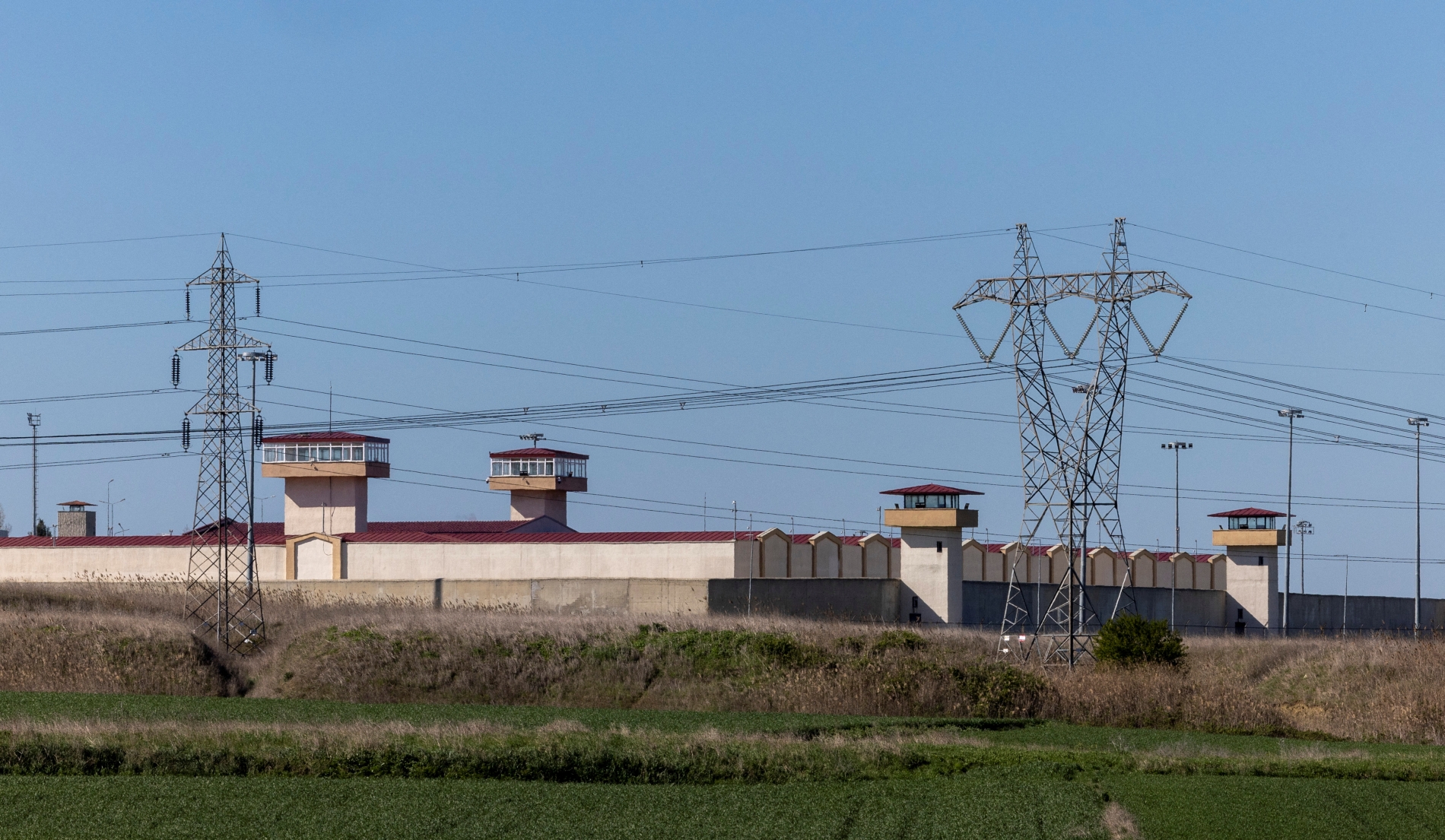
You connected exile in Italy with the “Silivri prison”. What was your reasoning?
It jumped out of my dreams in the middle of the night. I’m not usually that way. I don’t believe too many stories come to people in their dreams, but for me Dilara kept repeating the opening sentence over and over in my head; I couldn’t go back to sleep until I’d written it down. It seemed very natural to me. I knew at once it would be a portal. Maybe it is the influence of a number of fabulist authors I admire, but there is something very surreal about the life my characters live; there is something odd and surreal about exile.
Fabulism, surrealism, and magical realism are all forms of writing that seem exceptionally suited to describe life under oppressive states. I think of authors like Milan Kundera, Octavia E. Butler, Mircea Cărtărescu, and Yoko Ogawa who, in order to reach kernels of truth, cover their work over with a patina of magic, a dream-like rendering of life. I think a shortcoming of realism is its tendency to speak in ways that resonate only with people who can relate to the real experience, or who can easily see these situations in themselves.
It’s not fair, perhaps, to say that, and of course there are many generous readers who put themselves into the shoes of realist characters with whom they share no commonalities, but I think the way it operates leaves it prone to form a sort of complacency in the reader. It risks leaving behind the reader who is not already familiar with the story’s situation. That’s why I love fabulism/surrealism so much. It bridges these gaps of experience by presenting an off-kilter world to which everyone is a stranger.
Maybe some of my readers know what it is like to be an immigrant and maybe many don’t, but none of us has ever had a prison cell installed instead of a bathroom, so the premise dissolves life down to a universally absurd place. All readers start on the same uneven footing, which I think helps trick them into being open-minded to experiences beyond those they recognise. That might sound a little cruel, but I think good literature is, at the end of the day, just a trick.
Your protagonist, Dilara, grapples with a dual struggle: the erosion of her father's memory due to Alzheimer's, and her own loss of identity in exile. But the gateway connected her with female prisoners in “Silivri”. How did this unexpected connection reshape her perspective on isolation, companionship, and being seen?
I think Dilara first sees the other prisons through a very egotistical lens. They start as useful conduits for her; they are in their cells at her leisure, to provide her with the information she desires from them. Part of that is because of the nature of her relationship with her father, it’s become a sort of usefulness relationship instead of a familial one. She provides care for him; he provides memories, but when he starts to falter on his end of the relationship, these prisoners step in. And then, when the emotional weight of maintaining her relationships with the inmates becomes too great for her, she rather selfishly abandons them, hiding back in her home in Italy for a while.
It’s quite callous of her at first; she is being self-centred, but I think over time, as she comes to learn more individually about the prisoners and builds up trust with one in particular, she finds herself sort of thrust into the real role of prisoner. She becomes an inmate when before she was more like a tourist to the prison cell. It’s terrifying for her, but I think it's deeply rewarding, too. It must be rewarding for her, given how I ended the novel.
I think the camaraderie, trust, and care she finds with the other inmates is so intoxicating for her because of the stark contrast with her isolation in Italy. I think her relationships with the prisoners are probably the first time since her exile that Dilara is presented with the possibility that leaving was worse than staying, and I hope I’ve convincingly portrayed that paradigm shift.