Algeria looks to grow its influence in Africa through energy

Infrastructure projects are opening new ways for the country to strengthen its economic presence across the continent

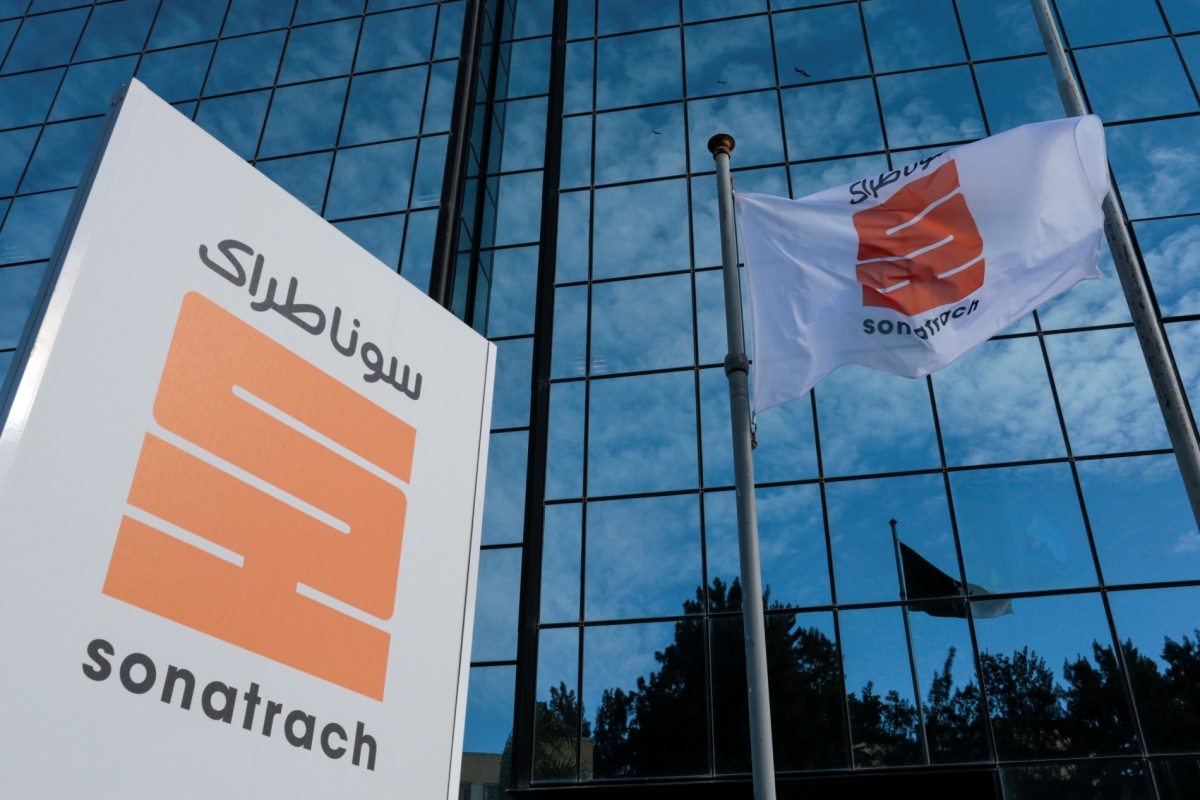
The logo of the state energy company Sonatrach is pictured at the headquarters in Algiers, Algeria, on 25 November 2019.
REUTERS/Ramzi Boudina
The logo of the state energy company Sonatrach is pictured at the headquarters in Algiers, Algeria, on 25 November 2019.

Algeria looks to grow its influence in Africa through energy

Recent energy agreements between Algeria and Niger have become part of a broader Algerian strategy of rebuilding its influence in the Sahel and across Africa, to fill a geopolitical vacuum and establish a new model of development across an increasingly complex regional landscape.

Beyond political and security cooperation, Algeria’s proposition is a multi-layered economic partnership focused on energy. Most recently came the start of Algerian aviation fuel exports to Niger from the Adrar refinery, under a sale-and-purchase agreement between Algeria’s energy giant Sonatrach and Niger’s national petroleum company SONIDEP.

The partnership also extends to exploration and production, as shown by the start of drilling at the Kafra South-East 1 well in the Agadez region of northern Niger. The Kafra sedimentary basin covers 23,737 sq. km. and lies just 85km from Algeria. Drilling is expected to reach a depth of almost 4km. Official Nigerien estimates put Kafra reserves at 260 million barrels. The production-sharing agreement for the project dates back to 2015 and was renewed in 2022.

ENAFOR is Algeria’s national drilling company and a subsidiary of the state-owned Sonatrach. It demonstrated its engineering and operational capability by transporting heavy drilling equipment and support facilities more than 2,000km across difficult desert terrain, from the Hassi Messaoud fields in south-eastern Algeria to the heart of Agadez.

Sonatrach’s role in developing Niger’s oil sector is strategically significant. Boubakr Mustapha, an economist at the University of Bouira, told Al Majalla that the partnership “offers a practical model of balanced South-South cooperation, presenting a genuinely African-to-African option based on technology transfer, knowledge localisation, and the export of Algerian expertise accumulated over decades”.

He added that Algeria “does not approach its neighbours through the logic of Western tutelage or the onerous conditions imposed by multinational companies,” but rather to “safeguard their energy sovereignty through a clear institutional commitment to training and the technical development of local personnel... This gives the economic partnership a sustainable dimension and lays the foundations for genuine regional integration based on equality, mutual respect, and the safeguarding of national capabilities”.

Mustapha estimates that the project could generate $2.3bn in annual revenues, assuming a price of $70 per barrel (or $2.63bn at $80), based on a projected production of 90,000 barrels per day (bpd).
REUTERS/Louafi Larbi
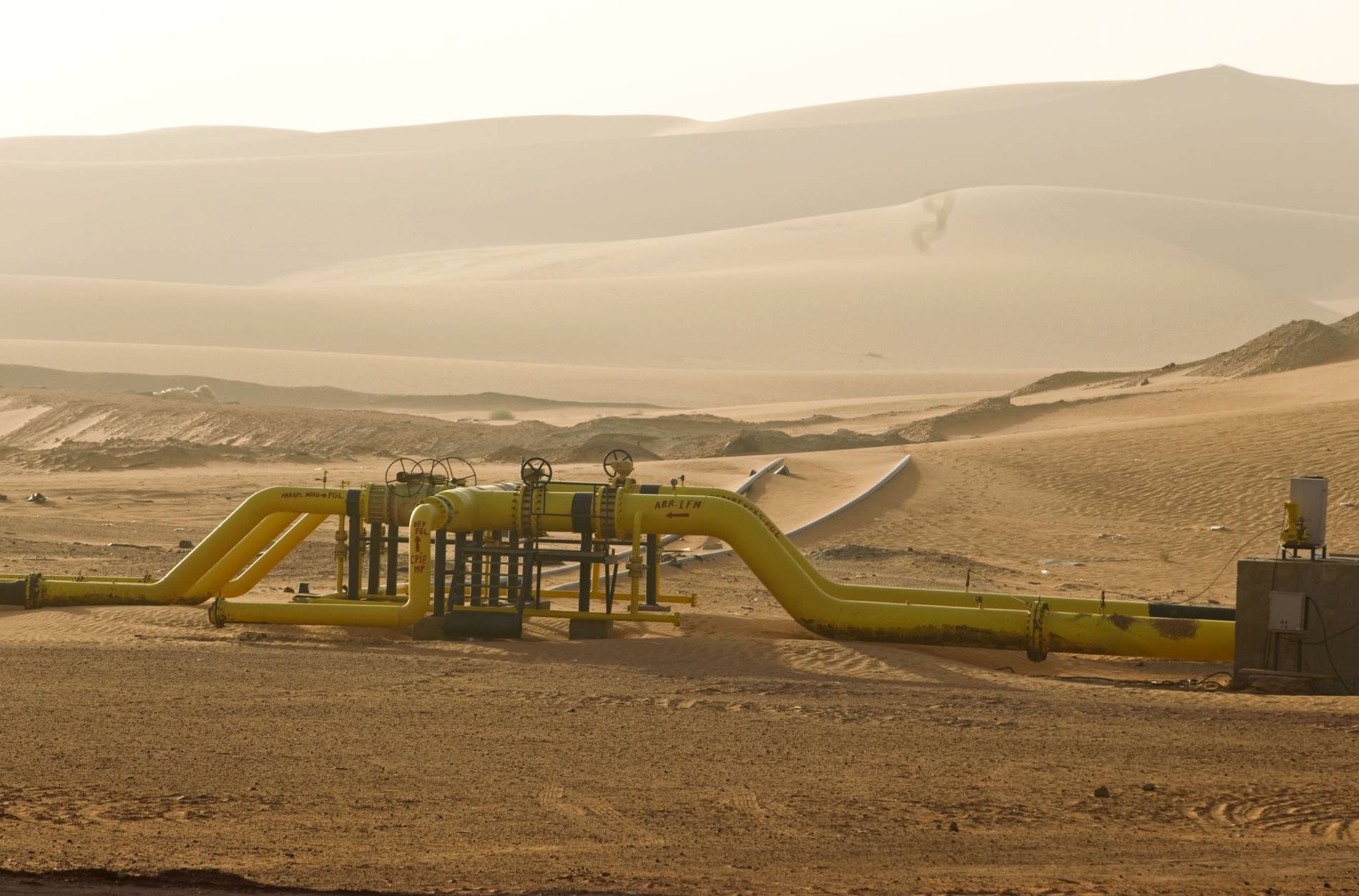
A gas pipe is seen near Zarzaitine in In Amenas, 1,600km southeast of Algiers, 22 January 2013.

Energy routes

Another major project through which Algeria wants to expand its reach is the Trans-Saharan Gas Pipeline (TSGP), which would begin in Nigeria before passing through Niger to reach Algeria’s energy hub at Hassi R’Mel, a huge gas field that accounts for 57% of Algeria’s gas reserves and ranks fourth globally in production. From there, the pipeline would connect into Algeria’s existing network serving Europe, including the Medgaz pipeline (to Spain) and the TransMed pipeline (to Italy via Tunisia). It could also reactivate a pipeline sending gas to cities in Algeria’s west.

In operational terms, the TSGP would be a continental energy artery with a capacity of around 30 billion cubic metres per year. It would deepen energy cooperation among African countries and give Nigeria secure commercial access to the European Union, which needs to replace its previous gas supplies from Russia. Nigeria was the world’s sixth-biggest gas exporter in 2024, providing 18.4 billion cubic metres.
The Trans-Saharan Gas Pipeline would begin in Nigeria, pass through Niger, then to Algeria, from where it would connect into an existing network serving Europe

For Algeria, the TSGP would strengthen the competitiveness of its economy by enhancing its role in managing secure energy supply chains to Europe. Algeria's combined export capacity could exceed 60 billion cubic metres a year, including 30 billion cubic metres of Algerian pipeline gas exports. The country is currently Europe's second largest gas supplier after Norway.

Researchers talk about the Trans-Saharan Gas Pipeline as being "a strategic corridor capable of adapting to the hydrogen economy and the coming transformations in energy markets". Increasingly, influence will depend on control of these corridors and the infrastructure through which energy, goods, and data move between continents. Algeria would also benefit directly from gas transit fees, whilst reinforcing its role in securing the energy needs of neighbouring African states. 

REUTERS/Jon Nazca
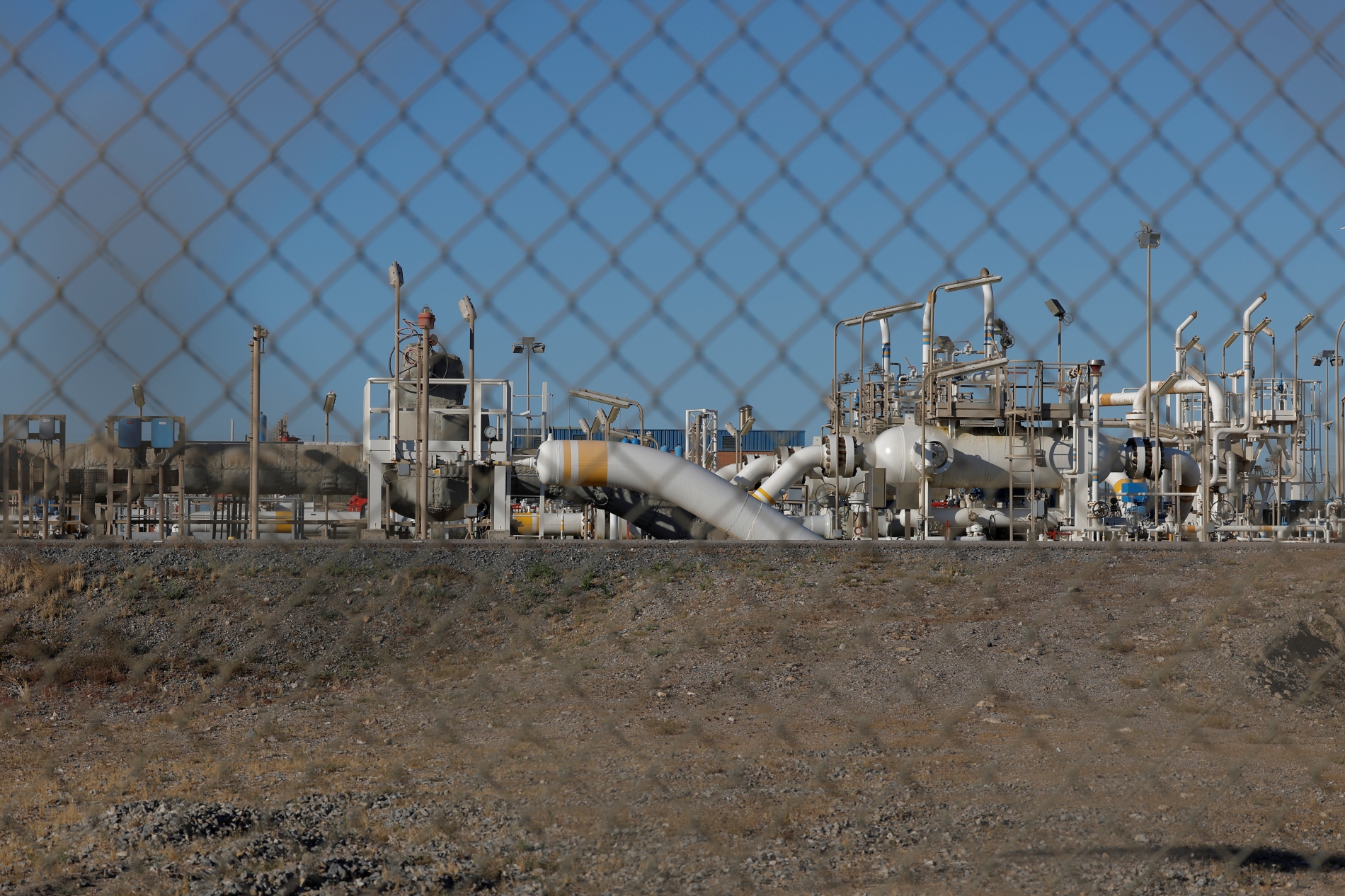
A landfall site of Medgaz, an underwater natural gas pipeline between Algeria and Spain, is pictured in Almeria, Spain, on 10 June 2022.

A corridor state

These major energy projects are closely linked to Algeria's hope of restoring its historical influence and geopolitical weight across Africa. Analysts say there is an opportunity for the state "to move beyond the role of an energy exporter and become a corridor state linking Africa and Europe, using its geography and energy networks to reshape its role within the international system". Algeria's new focus would be on managing the flows of energy, turning its geography into a source of influence.

In recent months, Algerian energy diplomacy has been particularly active in Libya and across the Sahel. Libya's National Oil Corporation and the Libyan branch of Sonatrach Petroleum Exploration and Production Corporation (SIPEX) recently confirmed a significant new oil and gas discovery in the Ghadames Basin, a 350,000 sq. km. sedimentary basin that stretches across Tunisia, Algeria, and north-west Libya.

Sonatrach's drilling success shows how the Algerian company has evolved from a conventional energy operator into a source of soft power across the region. In this way, it is part of Algeria's geoeconomic strategy, capitalising on its position both as a gateway into Europe and a gateway into the Sahel.

The Algeria-Niger axis is the basis for a web of interconnected cross-border interests. The energy network running through Niger intersects with parallel supply routes stretching west from Algeria towards Mauritania. The Tindouf-Zouérat road project helps position Mauritania as a commercial and logistics platform from which Algerian exports can reach West African markets, including members of the Economic Community of West African States (ECOWAS).

This logistical expansion is accompanied by a financial and banking strategy. Algeria is increasing the presence of its national banks in Mauritania and Senegal while establishing free-trade zones in southern Algeria. Together, they could help build a cross-border trading network and provide Algerian goods and services with the banking and logistics channels needed to reach West African markets. 

Diana Estefanía Rubio

Intensifying competition

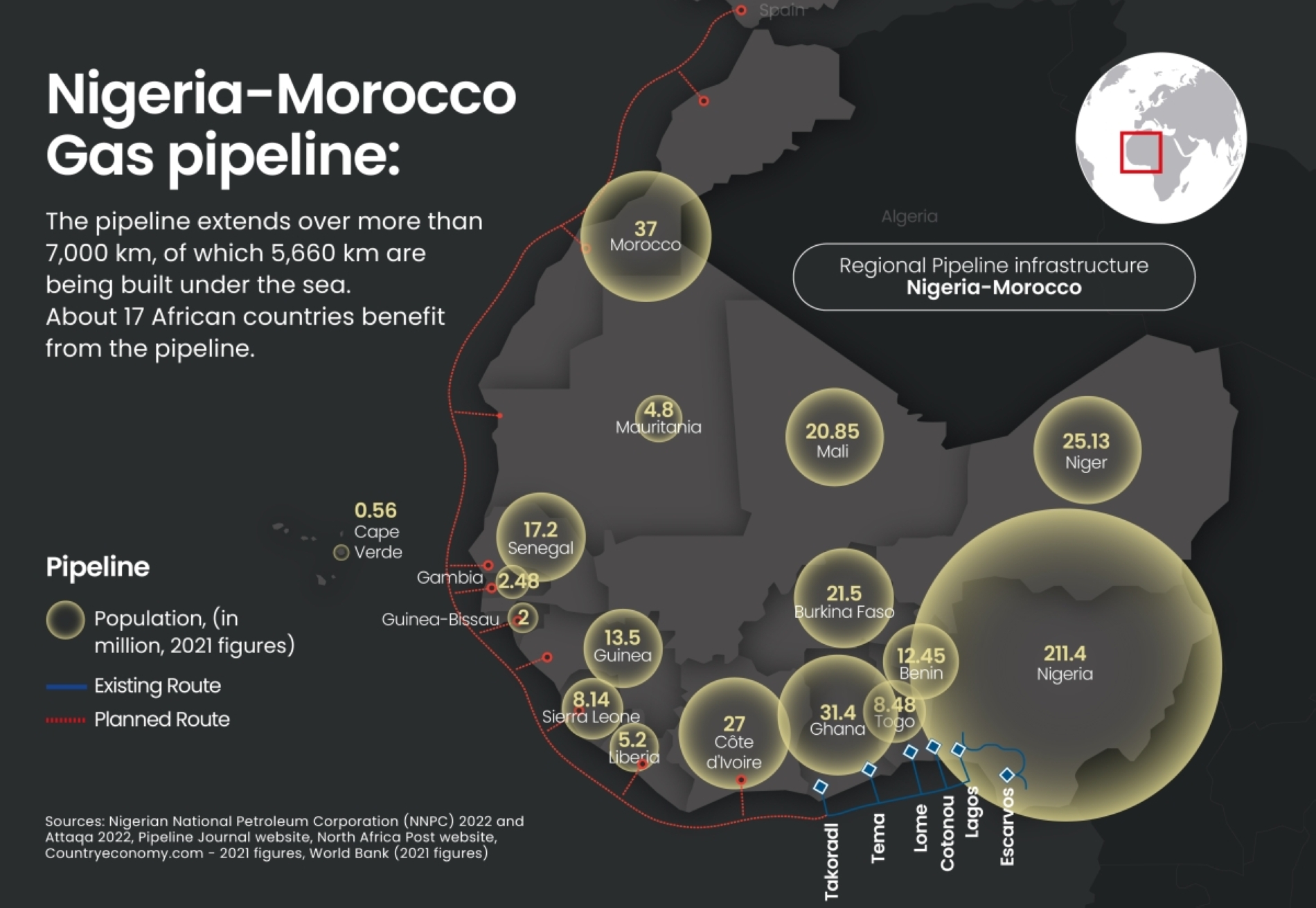
Algeria's geoeconomic drive is unfolding against a continental backdrop of growing competition. Algeria's neighbour and rival, Morocco, is advancing the African Atlantic Gas Pipeline alongside an initiative to give landlocked Sahel countries Atlantic access through its infrastructure and ports. Türkiye and the Gulf states are also expanding their influence through investment and infrastructure projects, while Russia remains active in security, China finances infrastructure, transport, energy and mining projects, and Egypt also wants a presence.

There is competition to develop African ports, transport networks, energy corridors, subsea cables, data centres, and other forms of infrastructure, say analysts. Within this context, Algeria aims to convert its energy and logistical influence into something more sustainable. Sonatrach's expertise in hydrocarbons, Algeria's geographic position, and its history of defending African sovereignty all count in its favour, but it is not immune to the age-old African problems of political instability, coups, and armed non-state actors threatening the security of supply corridors and projects on the ground.

Financing poses another major obstacle. Large trans-Saharan projects require immense capital, greater legislative and banking flexibility, and a substantial expansion of Algerian investment abroad if the country is to compete against sovereign wealth funds and multinational companies already active across this space. In this way and others, Algeria will need to assess both the risks and the rewards of its plans.

font change