Houthis seek expansion after reaching Bab al-Mandab

After rapid advances, the Yemeni rebel group is fortifying its positions along the vital maritime chokepoint, while intensifying pressure in southwestern Taiz, northern Lahj, and Marib

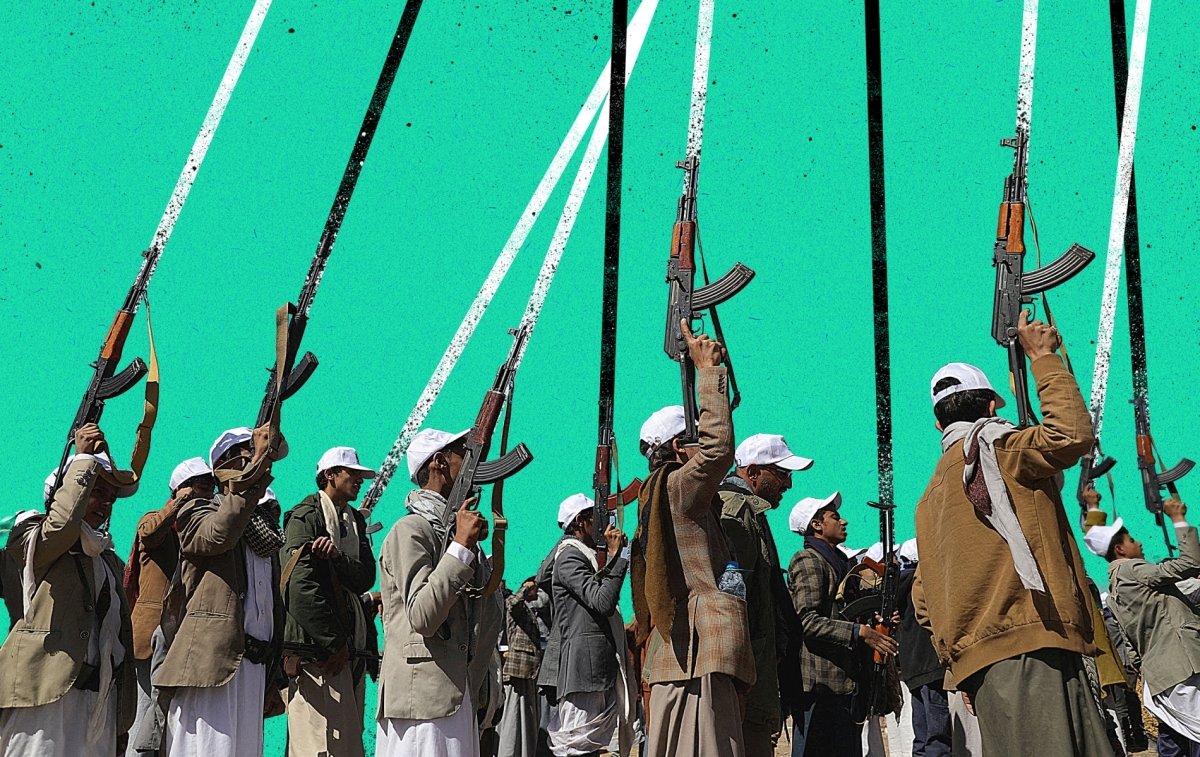
Al Majalla/Reuters

Houthis seek expansion after reaching Bab al-Mandab

Between 9 and 11 September, the Iran-backed Houthi rebels seized Hays, al-Khokha, al-Mokha and Dhubab, advanced onto Zuqar and Hunaish islands, and reached Mayyun/Perim in the middle of Bab al-Mandab. Within days, the Houthis moved from holding northern Red Sea frontage to occupying most of Yemen's southwestern coastline and one of the world's critical maritime chokepoints amid the US-Iran war. The Houthi campaign on this front started on 9 August, with ground operations starting on 3 September.

The fall of Mocha and forces led by Tareq Saleh was not a result of combat defeat. Instead, Houthi intelligence penetration, inadequate coordination across government-aligned formations, mediocre leadership, lack of withdrawal order authentication, and insufficient air support exploited the collapsed command and control at Jabal al-Nar, 18 kilometres from active frontlines, all of which reflect command failure. Mocha, as a result, was eventually handed over at a moment of panic and chaos, and the Houthis advanced a total of 120 kilometres within two days.

The latest Houthi gains boost their mobilisation capacity and military morale, increase pressure on the government’s defences, and challenge the narrative of improving cohesion of the Yemeni Armed Forces as well as the ability to wage an effective offensive, although they can.

Clearly, the Islamic Republican Guard Corps (IRGC) now controls the Bab al-Mandab Strait—a strategic goal it has pursued for decades, complementing its coercive capability around the Strait of Hormuz. As a result, distributed maritime pressure at both entrances to the Arabian Peninsula puts both global energy flows and Gulf exports hostage. The celebratory statements of Iranian officials reflect how Iranian the Houthi battle for Bab al-Mandab is. Iran’s supreme leader adviser Mohammad Mokhber, for instance, declared the recent gains a “victory” and that security cannot be bought through external guarantees, while IRGC spokesman Hossein Mohebbi called it a "divine triumph."

Since mid June, the IRGC has signalled expanding pressure points, deployed additional arms, electronic warfare equipment and experts, not least through the US-sanctioned Mahan flights to Yemen on 3 and 13 July, despite the Yemeni government’s opposition. Hence, IRGC and Hezbollah experts have continued to support Houthi military operations, including along the Red Sea, Marib and al-Jawf frontlines. The campaign is therefore Iranian-instructed, IRGC-overseen, and consistent with Tehran’s strategic objectives amid diminishing leverage at Hormuz.

With diplomacy stalled, Iran is bidding on its most and last resilient proxy to improve its bargaining position and leverage, while the Houthis now seek to consolidate gains and expand territorially, as well as intensify attacks into Saudi Arabia, to redraw the rules of the game.
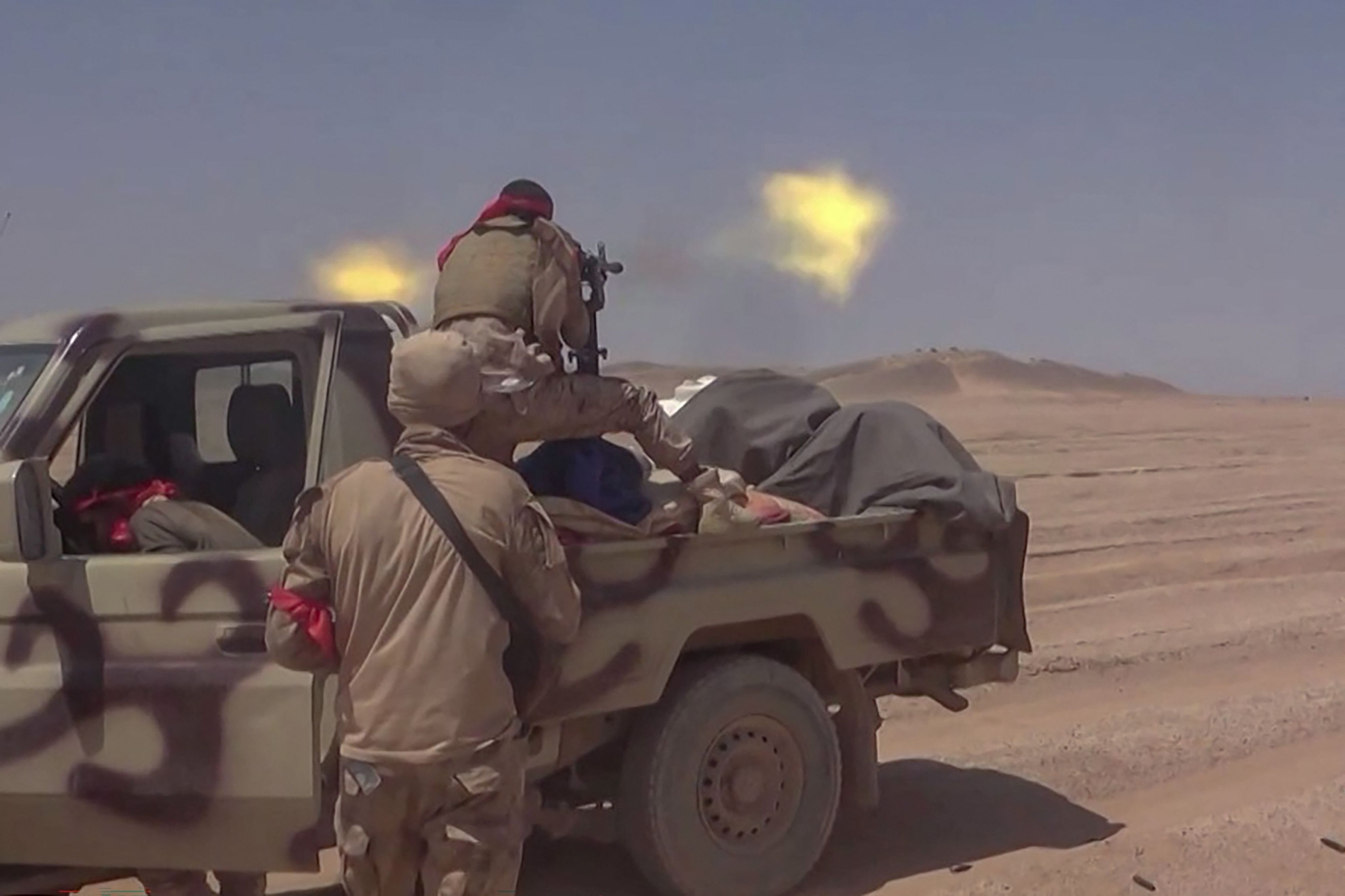
 AFPTV / AFP
This frame grab from AFPTV video footage shows fighters affiliated with the Yemeni government clashing with Houthi authorities in Al-Jawf province on 15 September 2026.

Consolidating new gains

The recent Houthi Red Sea gains, from Hays, Mocha and al-Khokha to the approaches of Bab al-Mandab Strait, form a strategic salient that has yet to be consolidated. Consolidation requires commitment to holding the ground amid intensifying air strikes, fortification, trench-digging, dispersal, mine laying, surveillance, and protected logistics.

If achieved and militarised, proximity to ships offers the Houthis reduced engagement distances against shipping, shorter attack and warning timelines, and the freedom to deploy direct-fire arms, including RPGs, heavy machine guns, anti-tank guided missiles, booby-trapped boats, and naval mines, in addition to short-range drones and anti-ship ballistic missiles, if necessary.

Despite the quick loss of 5,400 square kilometres over 48 hours, government-aligned forces have halted Houthi advances eastward around al-Aradi and the strategic mountain of Kahbub, which overlooks the Gulf of Aden and expanded the militia’s ability to surveil, track and target shipping for a week.
If the Houthis expand in southern Taiz, they could have better chances to intensify pressure in al-Madharbah in northern Lahj and on Giants and Nation Shield forces

Inland highlands matter because they shield the coastline from above. To this end, the Houthis' use of the mountainous approaches around Kahbub, such as al-Omari mountain, seeks to protect the Red Sea coastline, reduce exposure to artillery and aerial observation, and complicate efforts to sever Dhubab and al-Mokha from inland reinforcements. The broader fighting near the coast of Taiz and the approaches of Lajh over strategic mountains reflects an attempt to outflank government forces, cut supply lines, and isolate cities gradually.

Isolate, consolidate and stretch

The second effort likely centres on the connectivity roads sustaining Taiz. The Houthi rebels will likely continue to push east from al-Wazi'iyah into al-Shamayatayn and west from Haifan approaches toward Bani Ghazi and al-Turbah, with al-Kadha remaining active further west, where government forces were still striking Houthi positions as of 16 September. These movements could likely put pressure on the Hayjat al-Abd road, Taiz's southern access and gateway into Aden. A direct campaign against the city of Taiz would face high resistance and impose high urban-combat costs and is therefore unlikely as an immediate goal.

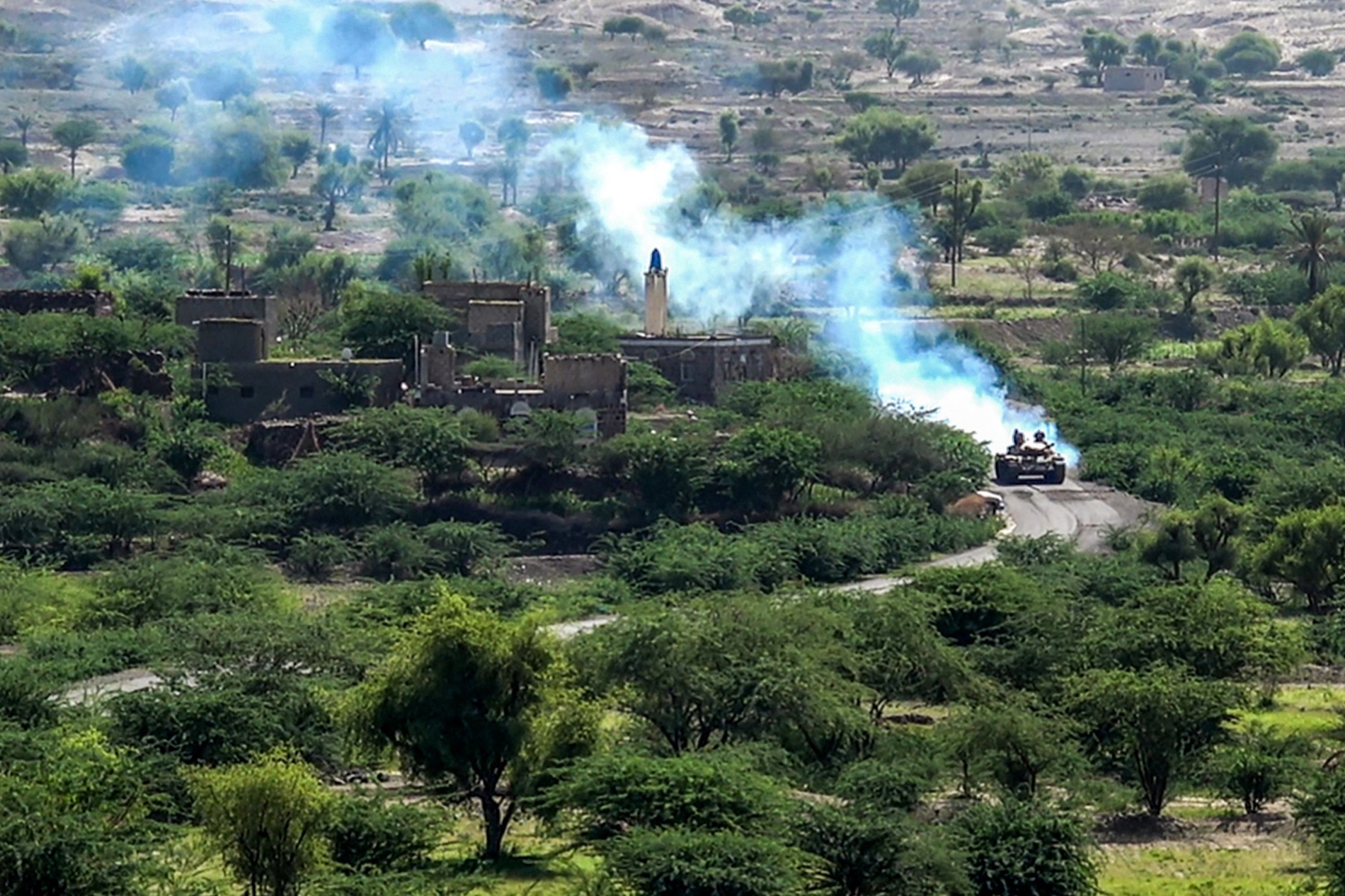
Ahmad AL-BASHA / AFP
A battle tank advances during ongoing fighting between Houthi and Yemeni government forces along the frontlines in al-Kadha, west of Taiz in western Yemen, on 16 September 2026.

The Houthis do not need to control the city of Taiz; they need to narrow the corridors through which it breathes and is sustained, having denied it Red Sea access through Mocha. Constricting external supply lines achieves greater effect far more economically, while forcing the government of Yemen to defend positions along southern Taiz, the road to Aden, and northern Lahj, as it rebuilds the Red Sea Front. If the Houthis expand in southern Taiz, they could better intensify pressure in al-Madharbah in northern Lahj and on Giants and Nation Shield forces, as well as tribal resistance.

Marib presents a different challenge. The Houthis have not abandoned their objective to capture this resource-rich governorate since their last failed attempt in 2020-2021. Current levels of Houthi tribal mobilisation and troop reinforcements, particularly around Harib and al-Jubah fronts or frontlines north of those in al-Balaq and Raghwan, and continuing missile and drone employment warrant attention. The near-term motive likely combines probing, dispersing forces and preserving options. However, the Harib-Jawbah axis merits particular scrutiny, mindful that sustained military pressure could develop through the desert toward the approaches of the SAFER oil and gas complex, which heavily anchors Marib's hydrocarbon system and a share of public revenue. A sustained concentration or movement toward SAFER from any direction would indicate Houthi intent to encircle the city, avoid a high-cost war, and control the vital economic pipeline supporting the governorate.

The inverse dilemma

The Yemeni Armed Forces is attempting the same logic in reverse. Its has made limited territorial advances in al-Yatama and lower al-Labanat in a bid to advance toward al-Hazm and Bir al-Marazeeq in a bid to cut Houthi supply lines, leverage public discontent against the rebels and increase the security of Marib from the north. Parallel operations, though limited, in al-Bayda, Hajjah and al-Dhale'a, could serve comparable tactical logics.

With a strategy and sufficient air cover, credible multi-front pressure could force the Houthis to rethink their military plans and concentration of forces; however, the Houthis need to cause enough problems to prevent the government and its aligned forces from concentrating troops against the one gain that matters, through targeting command and control structures, logistical supplies, civilian infrastructure, military bases, or high-value targets.

Recent Houthi behaviour indicates compartmentalisation. Internal territorial expansion paired with tactical assurance to Washington over not disrupting commercial navigation, and sustained coercive pressure targeting vital Saudi energy, aviation and maritime assets, sporadically with Iraqi militias. This strategy seeks to sideline some ideological adversaries diplomatically while linking the three theatres militarily (Red Sea under Saudi embargo slogan, Saudi depth and internal Yemeni fronts), isolating Riyadh, expanding Tehran's leverage, reshaping the map of territorial control in Yemen, and denying the international community a common threat to coalesce around for now.

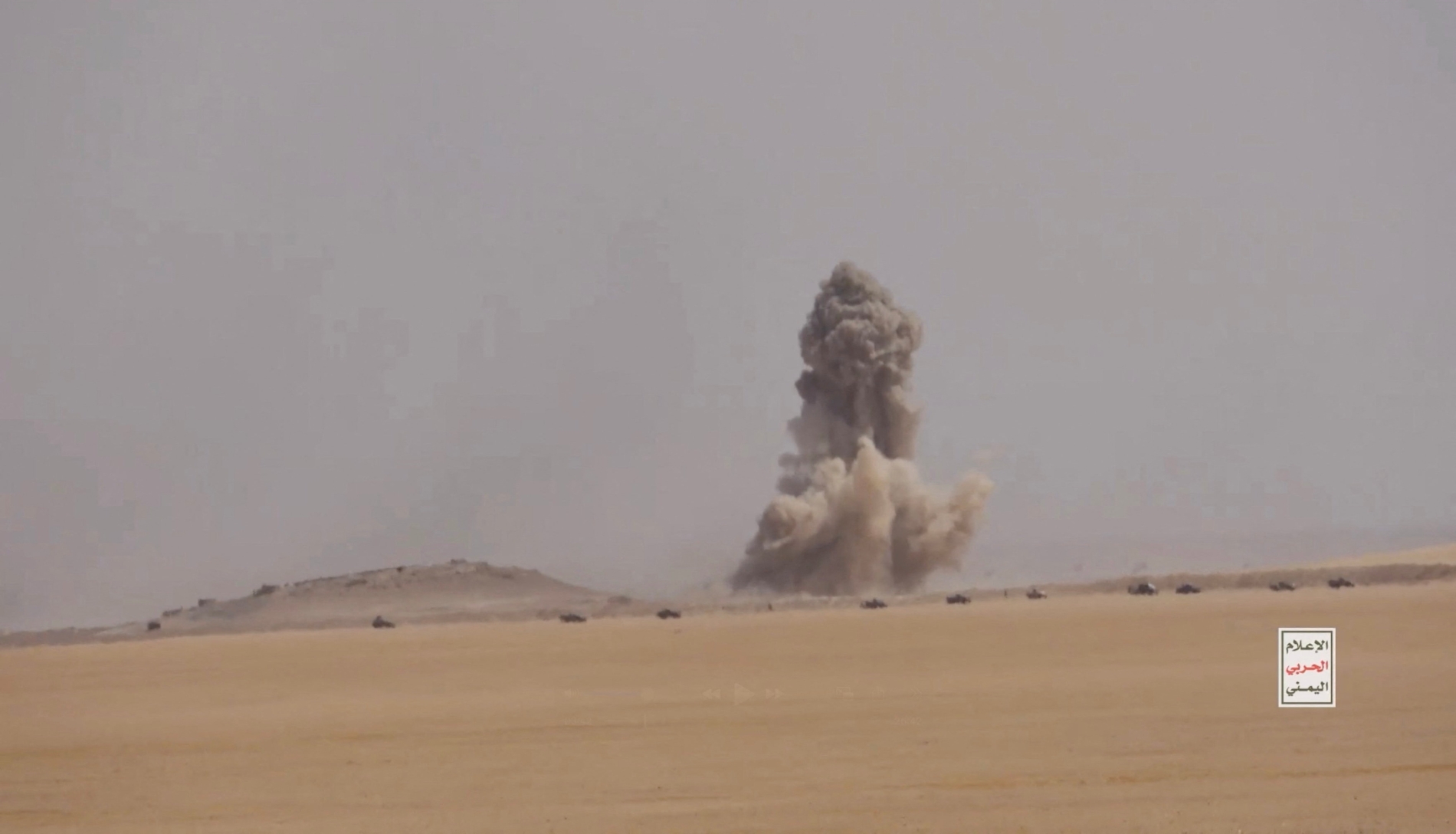
Reuters
Smoke billows into the sky in a screengrab from a video said to show Houthi fighters attacking Yemeni government forces in the Jawf governorate on 15 September, 2026.

A shrinking window

An early reversal of Houthi coastal gains would exploit the window before fortifications, minefields and command structures mature, but heavily demands unified command and control, protected communications and cyber protocols, sustained air support, mine-clearing and counter-drone capability, and quick reorganisation of local forces, most notably the Tihmai Resistance and Giants Brigades. Executed through the arrangements and mechanisms that produced the collapse, it would compound losses.

Containment and battlefield shaping would focus on prioritising the Taiz-Lahj-Aden axis, blocking Houthi expansion through Kahbub and al-Madharbah, and interdicting logistics and reinforcements beyond the kill zone. This would trade the risks of a premature reversal campaign for the costs of time, which highly likely favours the Houthis, who seek to consolidate gains and expand further.

A nationwide multi-front government pressure would deliberately and simultaneously expand operations across al-Jawf, Marib, al-Bayda, Lahj, and Taiz to partly force Houthi forces to disperse, move to defence, and reveal which region they perceive as non-negotiable. The risk, however, is that the government of Yemen, whose command has been improving, disperses itself faster than its adversary. The test for each front may thus be whether it quickly moves Houthi reserves or merely consumes deployed government forces.

Airpower can delay consolidation and destroy exposed assets and logistical supplies, but cannot reverse territorial control without coherent ground operations

Internationalised maritime containment, ISR operations, counter-drone and demining operations, as well as sustained interdiction of Iranian illicit arms supplies would lower pressure on the Houthis, although their control of key islands allows them to conduct remote warfare to secure illicit arms shipments, as Yemeni government forces reconstitute.

These options share one prerequisite. Cohesive command and control precede manoeuvre and air cover because no quantity of additional fronts would compensate for incoherence. The military economy of force requires drawing a clear distinction between axes that must be held, those where cheap pressure inflicts disproportionate cost, and the primary effort.

Airpower can delay consolidation and destroy exposed assets and logistical supplies; it cannot, however, reverse territorial control without coherent ground operations. It remains to be seen how and when the government of Yemen will restore initiative in deciding the time and location of the battlefield rather than reacting to Houthi battle-shaping.

font change