
In Gaza’s altered reality, a familiar question returns with renewed force: is a city an architectural construct whose solidity can still be relied upon, or is it, rather, the distilled essence of human presence shaped gradually over time?
War—alongside the violent transformations it has wrought—has profoundly reshaped the Palestinian relationship with place. Belonging now appears more firmly anchored in memory than in physical presence within the city itself.
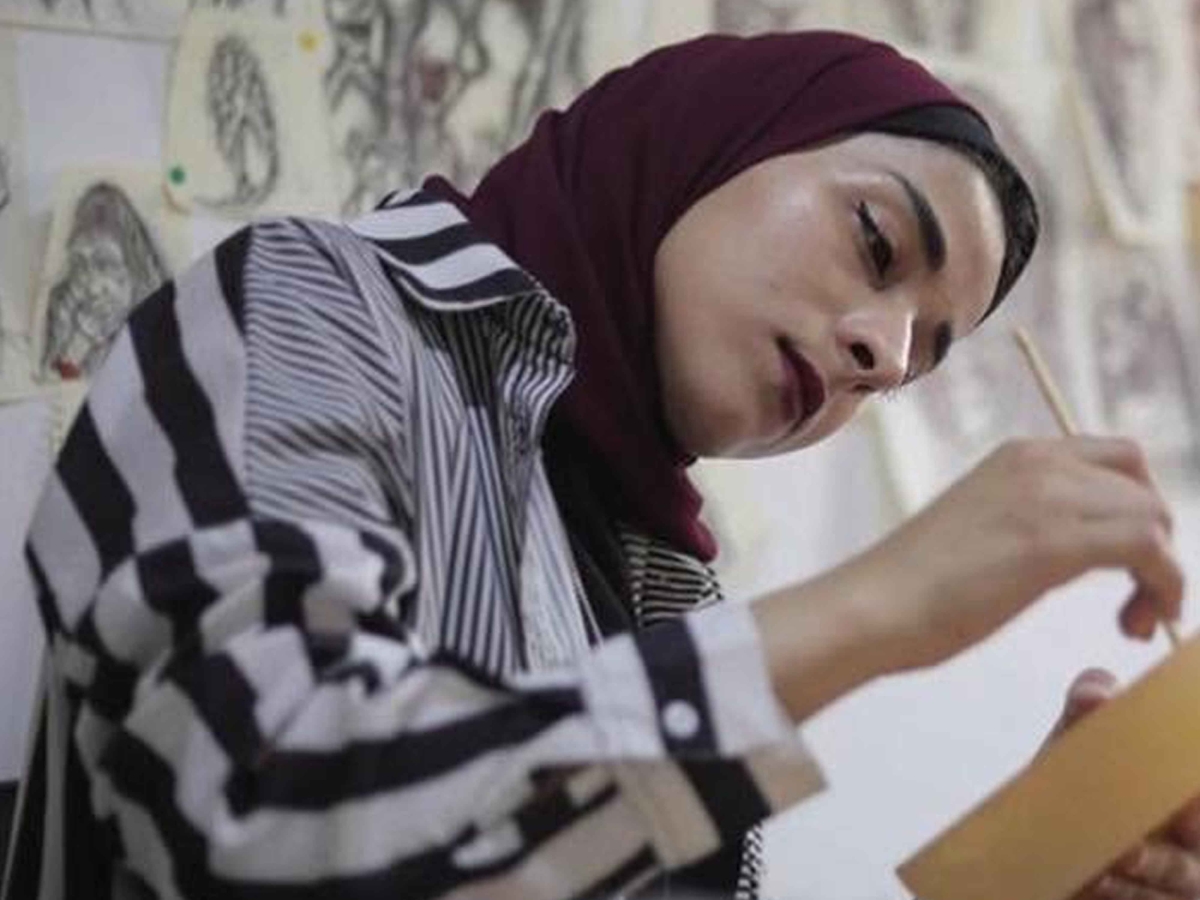
From this premise emerges The Face of the City by Palestinian artist and architect Shereen Abdel Karim. She approaches place as something that exceeds its built form, becoming a layered repository of accumulated memory and human experience. In her conception, place is not merely a constellation of buildings and streets; it is a web of stories, relationships and moments woven across time.
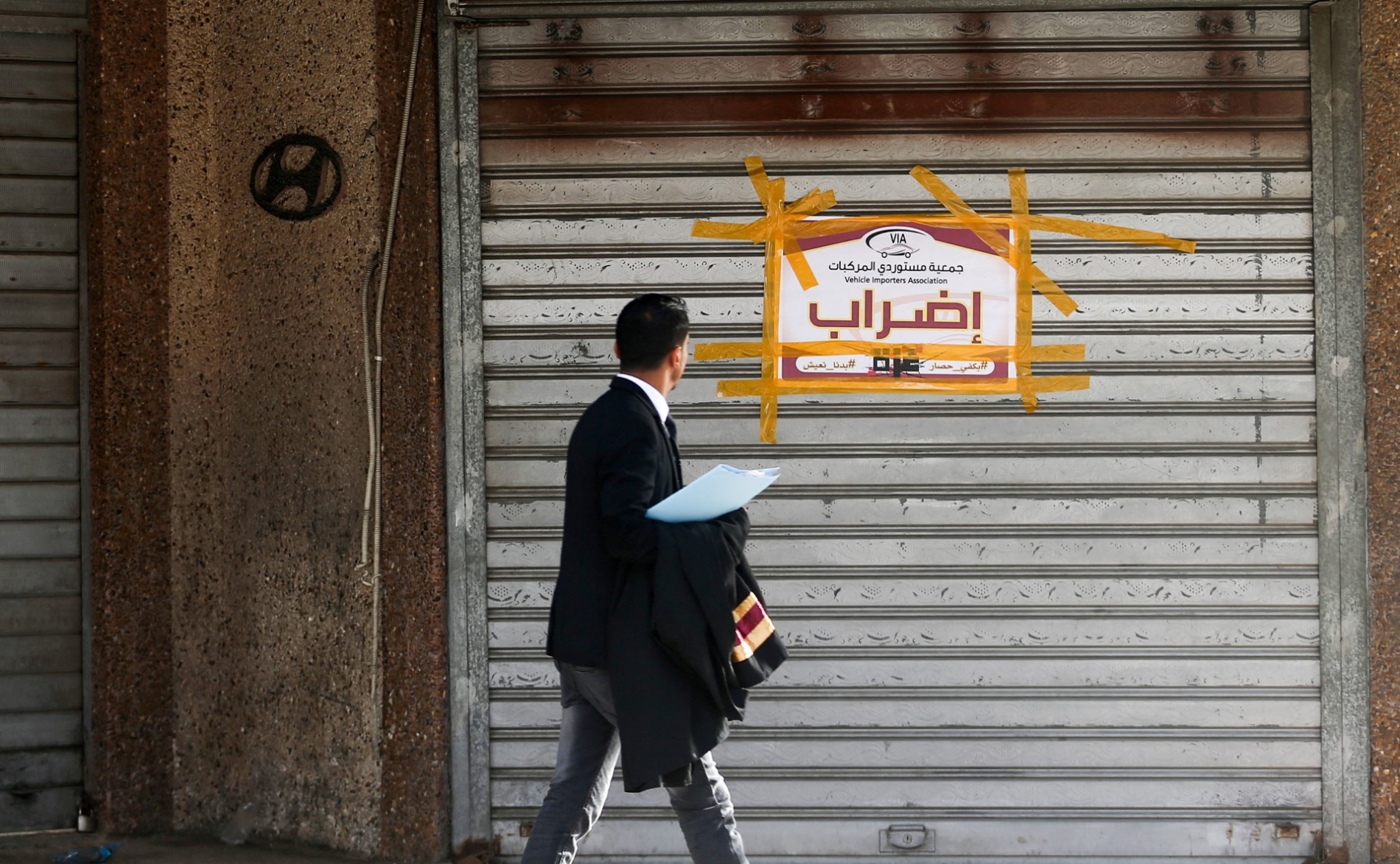
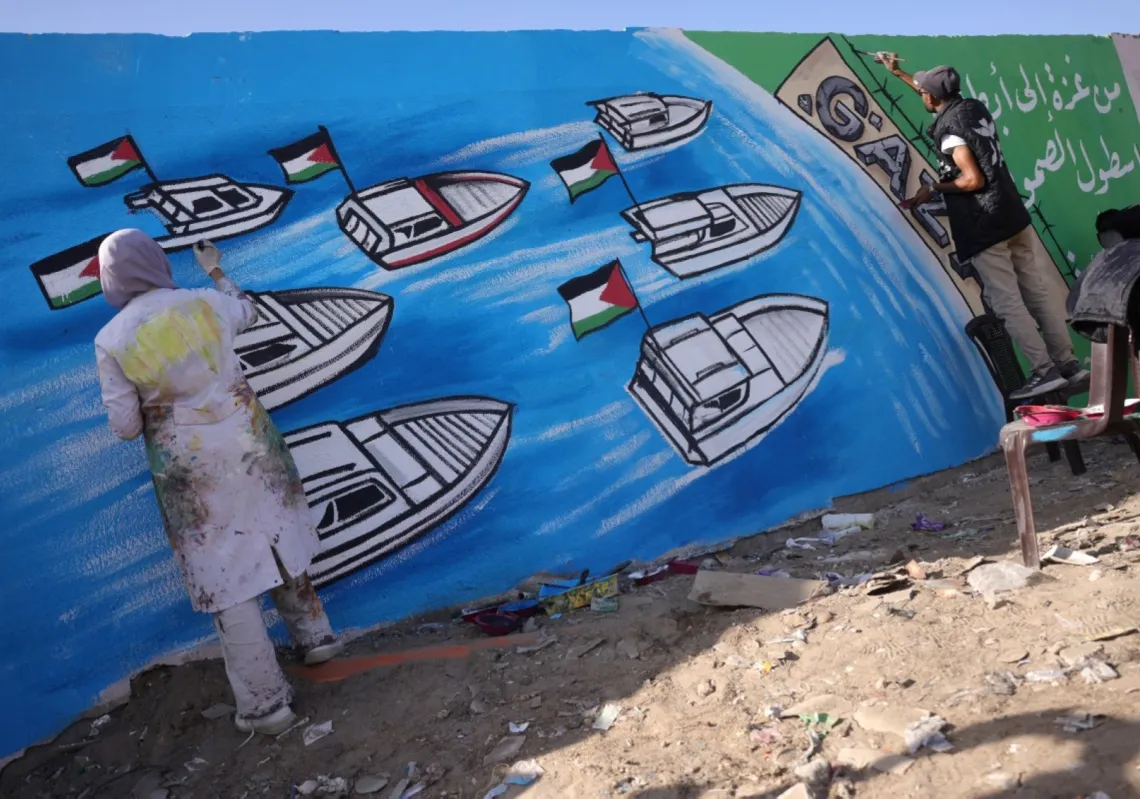
Funded by the A. M. Qattan Foundation, the project gathers old photographs of Gaza from its visual archive and reassembles them within an artistic frame that offers an alternative to the present image of devastation. It restores the memory of Gazans and their daily encounters with the city’s structures: the slogans once written on its walls, the shop signs, the painted façades, the commercial storefronts, and institutions that shaped everyday life. Through these fragments, Abdel Karim seeks to reinsert the human trace into the city’s fabric.
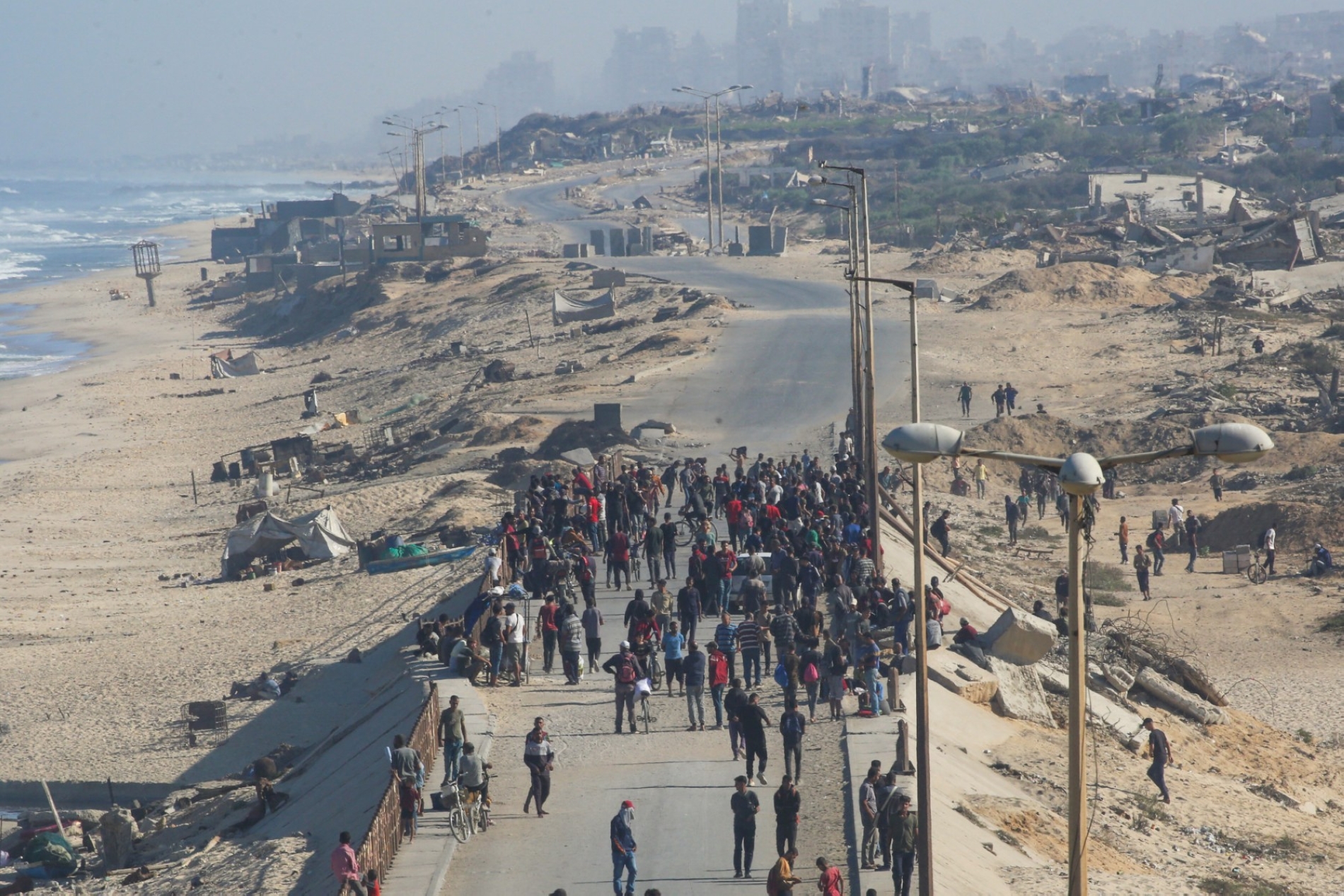
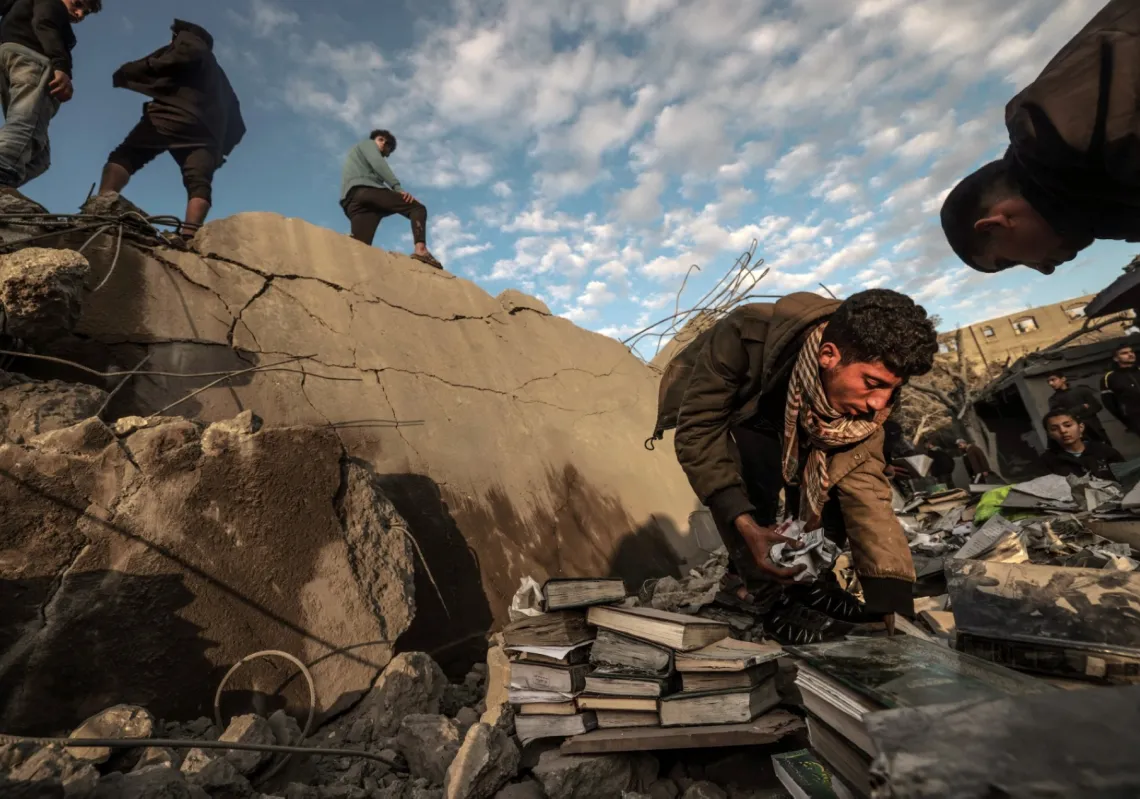
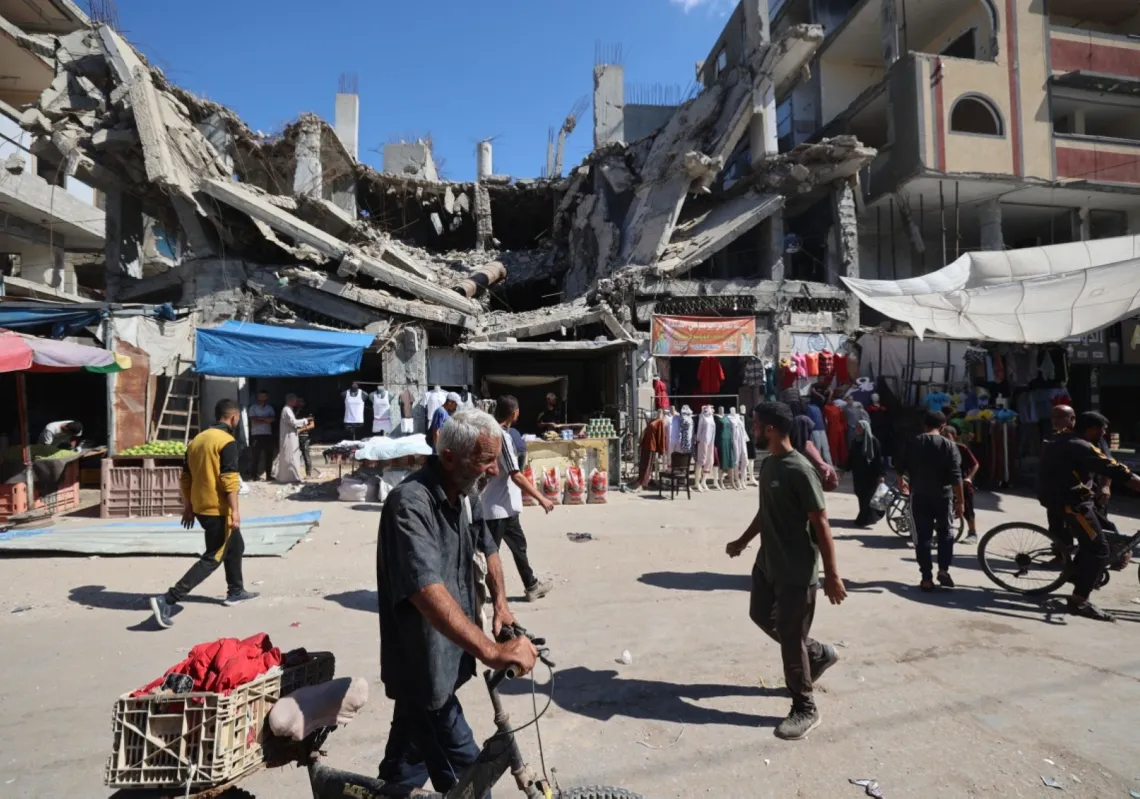
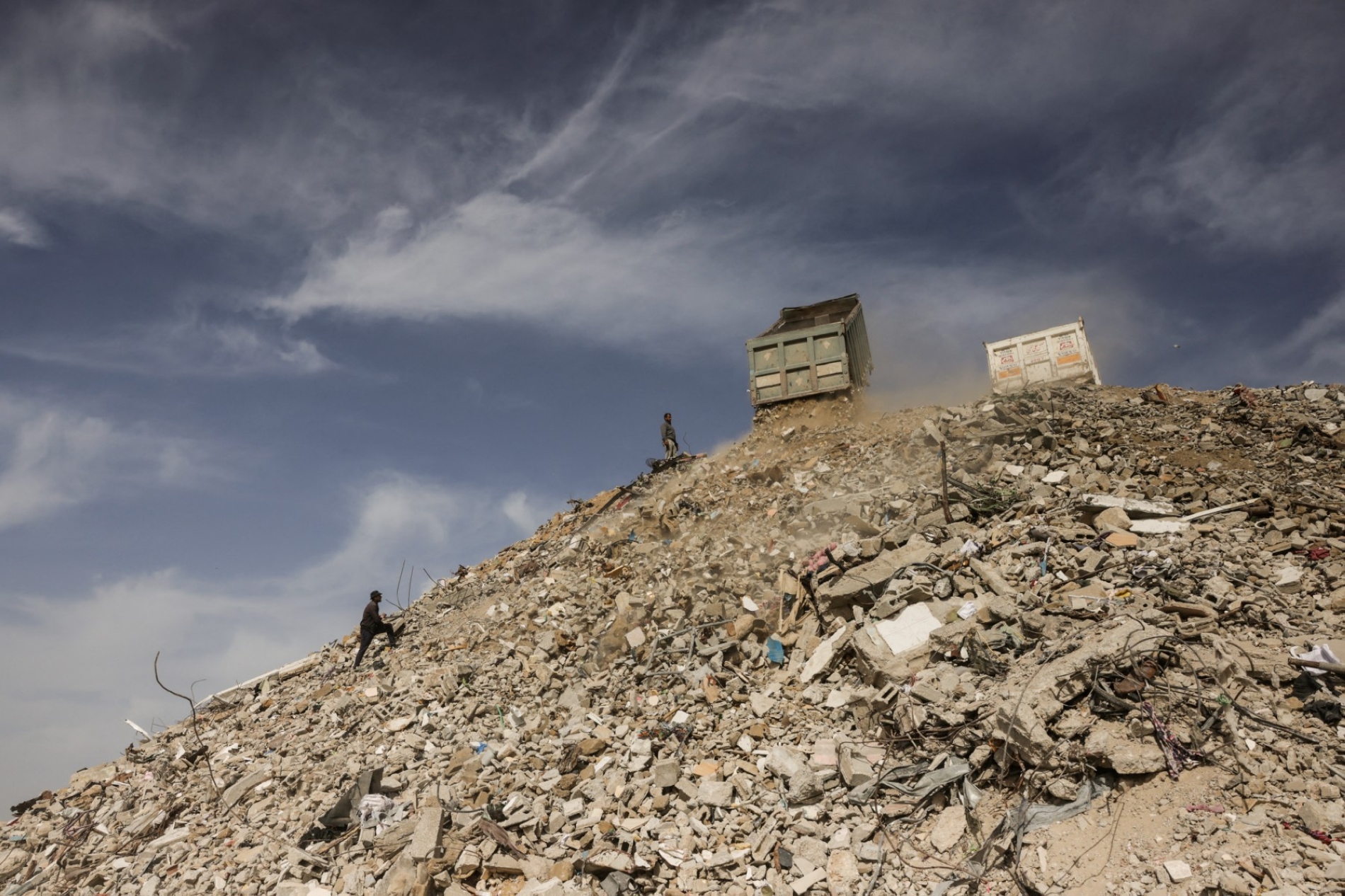
At least 73,066 Palestinians have been killed in Gaza since 7 October 2023. According to the UN, approximately 81% of all structures in the strip have been damaged, including 123,464 that have been destroyed. More than 76% of the enclave’s housing has been reduced to ruins, leaving an estimated 61 million tonnes of rubble.
The question of place
“The war radically changed my relationship with the city,” says Abdel Karim, whose interdisciplinary practice explores the relationship between urban space, memory, and visual storytelling. “The city is no longer the fixed reference to which I always returned. It has become something in constant flux. Perhaps my sense of belonging is now attached to the memory of the place more than to the place itself.”
In this transformation, the city has come to resemble a labyrinth, where everything invites bewilderment and a sombre kind of reflection. A bitter awareness of memory’s collapse has deepened, leaving the individual in a ceaseless attempt to hold on to what slips away, as though the fragility of place intensifies the need to anchor it to the walls of memory.
In The Face of the City, the photographic image acquires a function beyond conventional documentation. It is no longer simply a record of a moment; it becomes an attempt to secure what may disappear. “For me, the image is not merely documentation. It is an attempt to fix a moment that may later be lost. I know that this place and this moment may vanish with time, as though the image were resisting forgetting.”
To understand the image in this way is to raise a broader question about the very possibility of preserving the city. Can place truly be held, or is only its trace preserved? “There is a strange contradiction within me,” she explains. “Are we truly able to preserve the place, or do we only preserve its shadow and its memory?
“My physical presence in Gaza is no longer enough to prove my relationship with it. I find myself in a constant attempt to preserve my memory within this place, where what I fear is not so much the loss of the location as the loss of the stories, feelings, and experiences that bind me to it.”
What goes unnoticed
Abdel Karim’s approach is rooted in an architectural background that has shaped how she sees the city. Her training gave her a particular sensitivity to space, to the relationships between urban masses and materials, and the formation of the urban fabric.
“When I walk down the street,” she says, “I notice details that others may not see, and I think about how the place was formed, about its structure, and about the many events that connect me to it.”
Yet this perspective, for all its importance, is no longer sufficient on its own to understand the city. Architecture, as she suggests, opens questions that move in different directions—between place as a material condition and the artistic gaze as a human narrative.
“The architectural gaze used to make me ask: how was this place built? What is the relationship between its elements? The artistic gaze made me ask: how did people live in it? How many years did they spend here? Why did they cling to it for so long?”
The project focuses on details that do not appear in geometric formations, yet speak to the way life inhabits place and to the emotional bond that forms between human beings and their surroundings.
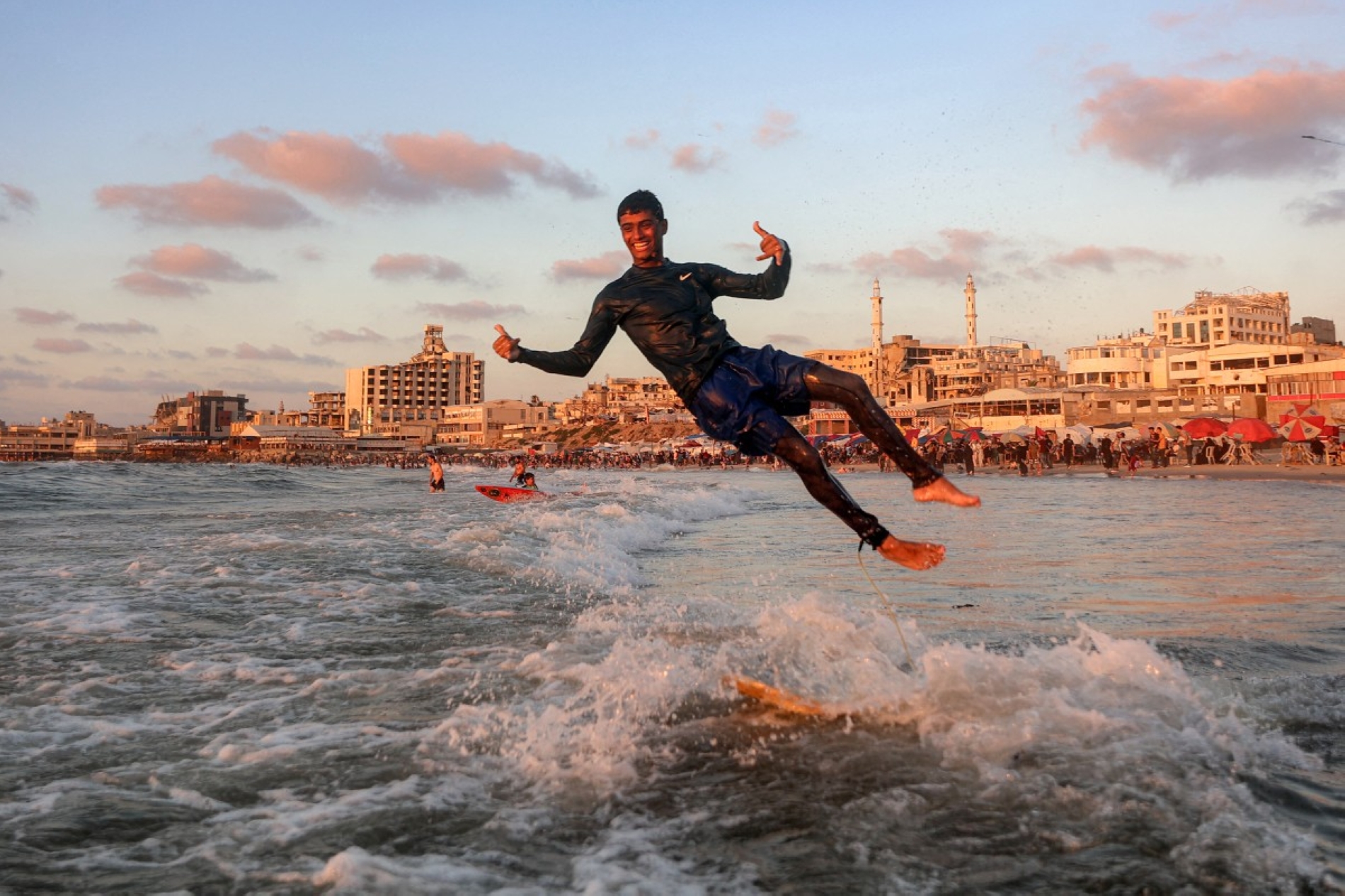
“There are small particulars that do not appear in architectural plans,” she explains. “You find them in the light on the wall, in the trace of use, and in people’s relationship with their homes. These are the elements that give a place its soul.”
Thus, place ceases to be merely a material structure; it becomes the residue of an entire life lived within it.
Different experiences
Yet the city Abdel Karim works on is not a single city. By collecting testimonies from residents who had lived in the same places, she found that each person carries a city of their own, and that the same place can hold an inexhaustible number of images and memories.
“What captivated me most was the multiplicity of narratives. Each person lived a different experience, even in the same place. Each carried a distinct memory and a different view of the place.”
This multiplicity led her to reject the idea of a single narrative or definitive truth about the city. Instead, she came to see these accounts as fragments that, when layered together, begin to form a portrait of the city.
“I did not try to choose one narrative and consider it the truth,” she says. “On the contrary, I worked with the accumulation between them, as though they were layers.”