Ankara’s high-stakes NATO summit: what is on the agenda?

Support for Ukraine is expected to be reaffirmed in the Turkish capital, where Zelensky will attend. Talks with Gulf states are also scheduled.

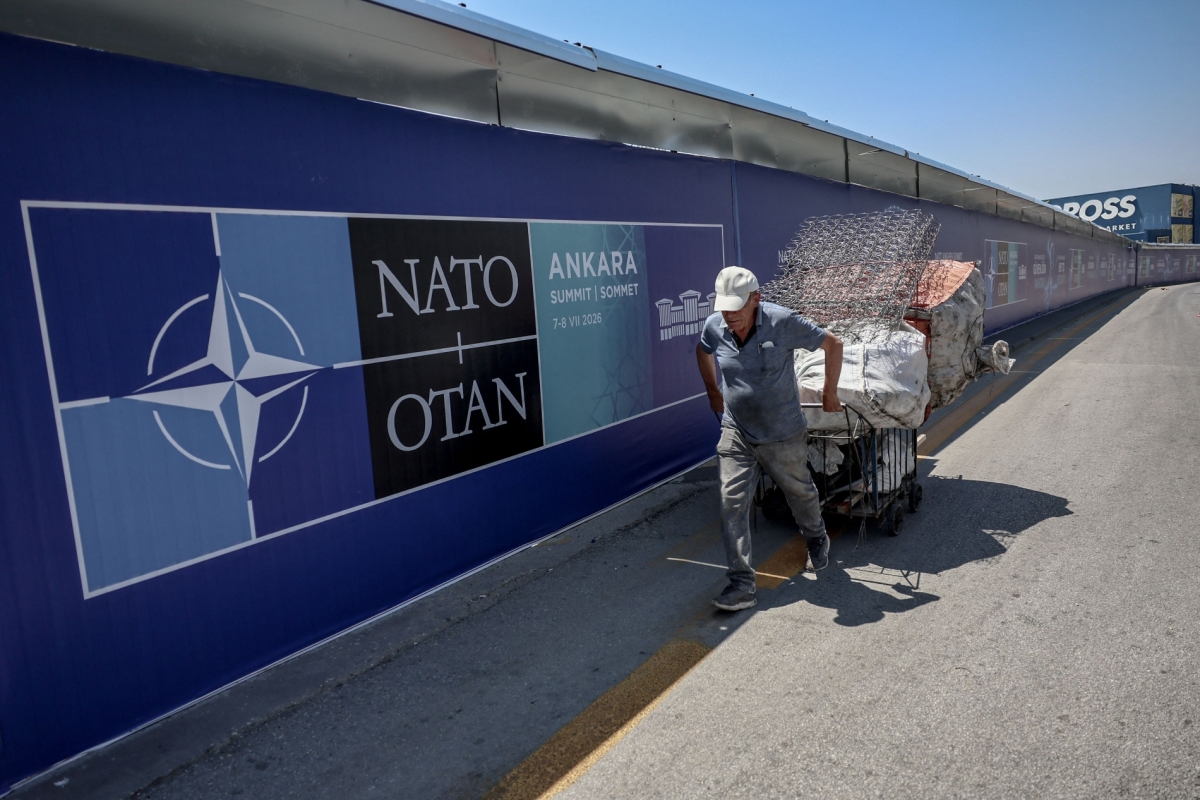
A paper collector pulls his handcart past billboards lining the boulevard along the protocol route ahead of the NATO Summit in Ankara on 2 July 2026.
Adem ALTAN / AFP
A paper collector pulls his handcart past billboards lining the boulevard along the protocol route ahead of the NATO Summit in Ankara on 2 July 2026.

Ankara’s high-stakes NATO summit: what is on the agenda?

The 36th NATO Summit, being held in Ankara this week on 7-8 July, takes place at a time of major geostrategic developments and crunch decisions about the future of the North Atlantic alliance. War in Ukraine, the Gulf, the Middle East and North Africa, alongside military operations in South America, has shattered any sense of international security, just as European security architecture is being restructured, the Middle East is being reshaped, and transatlantic relations are strained.

US President Donald Trump’s views, style, and comments have alienated many allies, both in Europe and beyond, raising doubts as to whether the United States would support them if they were attacked by a more powerful foe, such as Russia or China, two countries whose leaders Trump appears to prefer. In a social media post just days before the summit, Trump said it was “ridiculous for the US to continue along this one-sided path when the relationship is not reciprocal,” before referencing Iran by saying: “They were not there for us!!!”

Trump has not explicitly abandoned NATO, but considers America’s alliance commitments to be a burden, and has criticised fellow treaty members for failing to help reopen the Strait of Hormuz, after US-Israeli attacks against Iran. Such is the ill will that he said he would not have attended the NATO Summit in person had he not been specifically asked by Türkiye’s President Erdoğan.

Optimists hope that the summit will be a demonstration of unity and implement steps to reform NATO for a third time, creating a kind of NATO 3.0. Others say it will be a success if it simply ‘survives Trump’. A priority for NATO chief Mark Rutte is to ease tensions between the United States and Europe. Erdoğan, who has a good relationship with Trump, will help Rutte with this task. Given Trump’s style and politics, possible friendly gestures in Ankara would not necessarily be a sign that all problems have been overcome.

No big announcements are expected, but participants may reaffirm their commitment to Article 5, the common defence pact at the core of the 1949 treaty, which states that an attack on one is an attack on all. The focus for observers has fallen on NATO 3.0, a concept used to describe the transformation of the alliance (the NATO of the Cold War gave way to NATO 2.0 in the post-Cold War era). Rutte describes it as a new path in which the alliance is less dependent on the US yet remains firmly rooted.
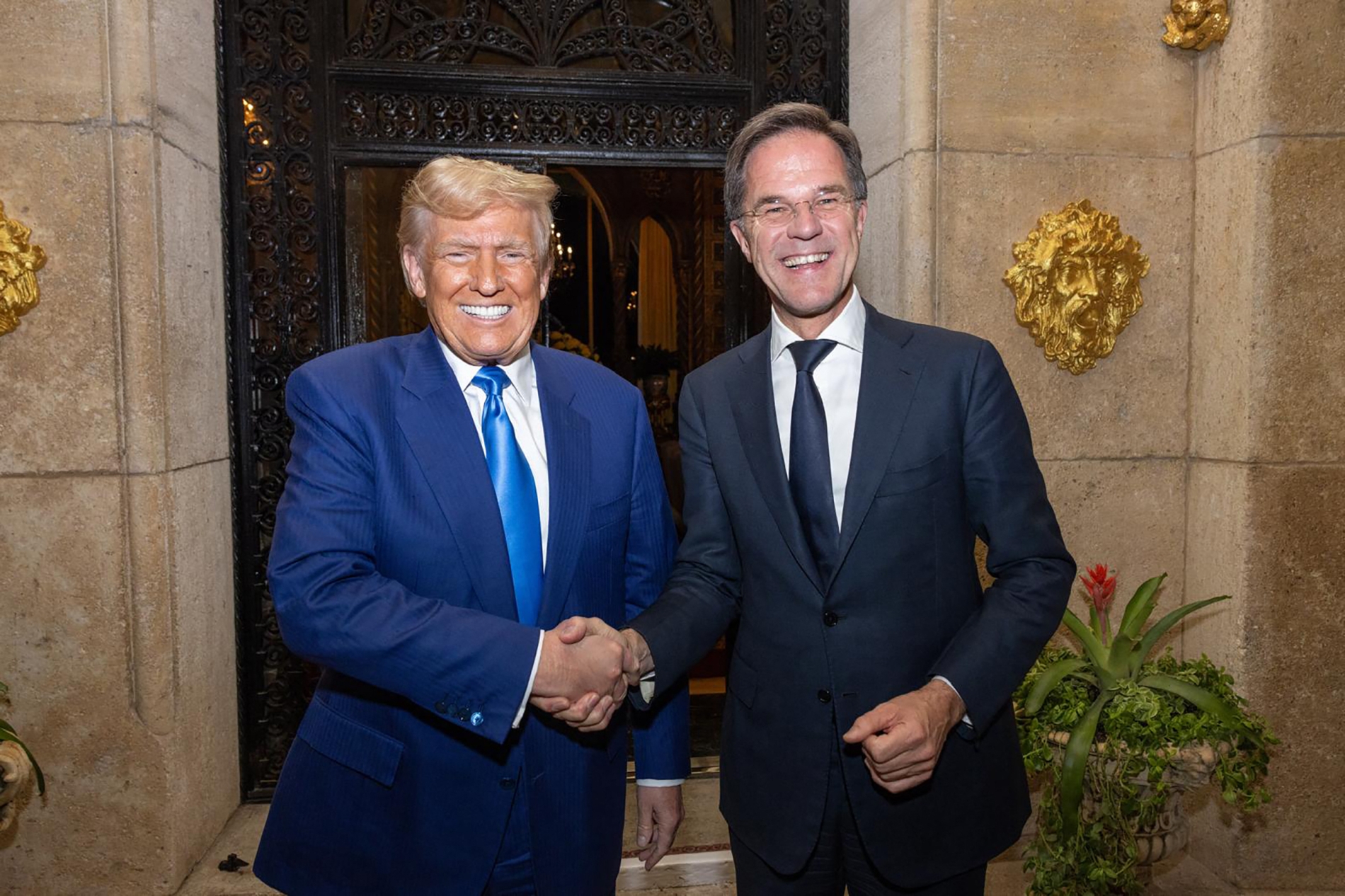
 Erik Luntang / AFP
US President-elect Donald Trump (L) shaking hands with NATO Secretary General Mark Rutte as they meet in Palm Beach, Florida, on 22 November 2024.

Support for Ukraine is expected to be reaffirmed in Ankara. NATO has been coordinating the delivery of military assistance, training and other critical support to Ukraine from Allied nations and partners. Trump’s goal is to reduce America’s burden of European security, pushing Europe to take on more responsibility.

At the 2025 NATO Summit in the Hague, Trump got NATO allies to agree to increase their defence spending to 5% of GDP (gross domestic product) by 2035, but has recently ordered the withdrawal of 5,000 US troops stationed in Germany and cancelled new troop deployments in both Germany and Poland.
No big announcements are expected, but participants may reaffirm their commitment to Article 5, which stipulates that an attack on one is an attack on all.

Funding defence

The European Union faces an acute problem: whether its most crucial ally would 'be there' in the event that it was attacked. France, in particular, has historically been uncomfortable with a US-dominated NATO and opted for an autonomous European security structure. Trump has helped its argument. The EU has taken some initial steps, establishing the European Defence Fund and developing financial support and credit programmes, such as the Security Assistance for Europe (SAFE). Early-stage work is also underway on an independent European nuclear deterrent.

Strengthening NATO members' defence industries and boosting investment in arms production have been European priorities ever since Russia invaded Ukraine in 2022. In Ankara, a Defence Industry Forum will be held on 7 July, bringing together senior officials and defence industry leaders. The Turkish defence industry has been transformed over the past 20 years, and Türkiye is now one of the leading producers and exporters of defence equipment.

Rutte expects contracts worth tens of billions of dollars to be signed in the coming days. Some of it may relate to Ukraine, whose President Zelensky will be in Ankara to attend an official dinner hosted by President Erdoğan and to meet allies. He will make a speech at the Defence Industry Forum. There will also be a NATO-Ukraine Council meeting.

AFP
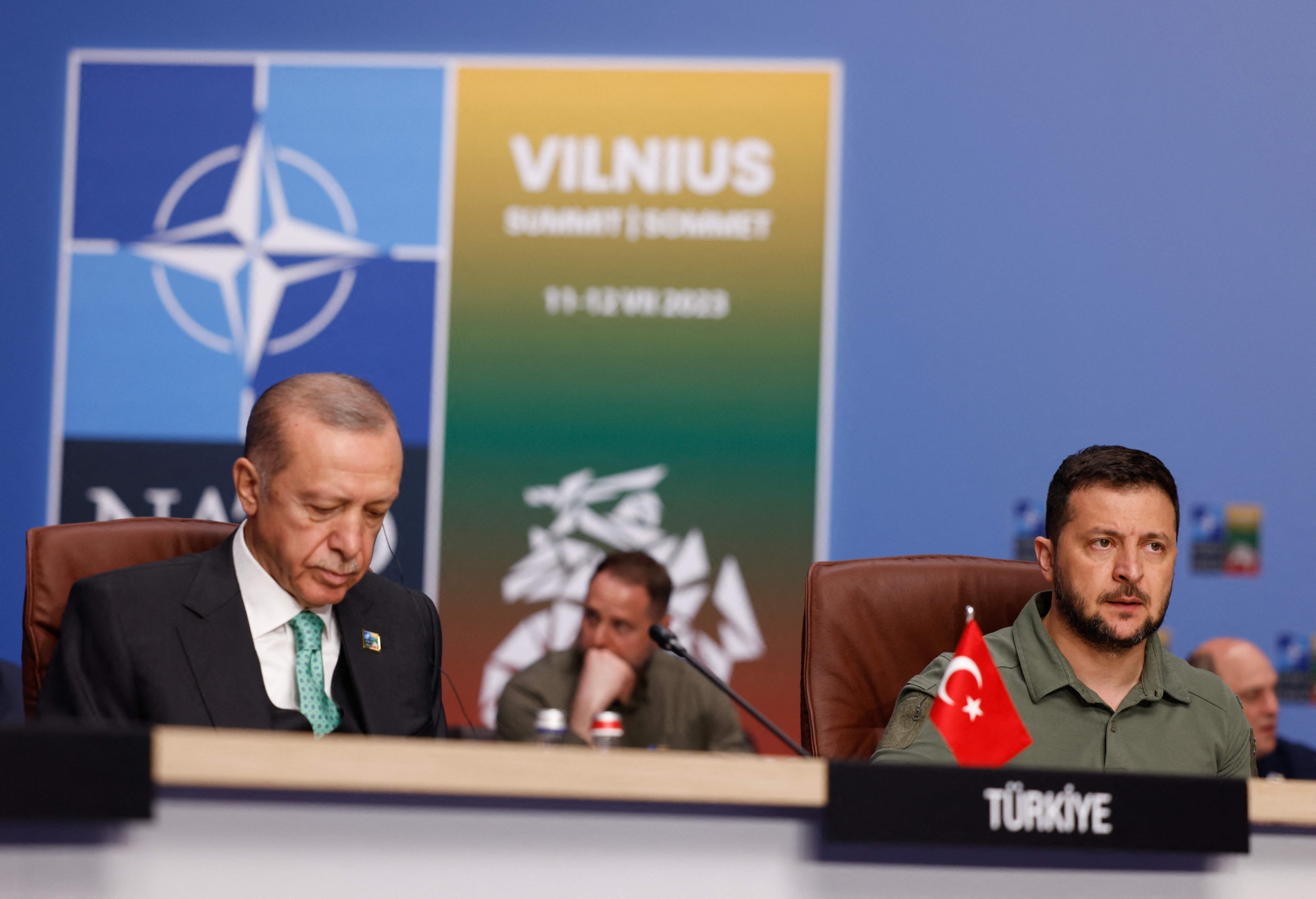
Türkiye's President Recep Tayyip Erdogan (L) and Ukraine's President Volodymyr Zelenskyy attend a meeting of the NATO-Ukraine Council during the Nato Summit in Vilnius on 12 July 2023.

The invite list

The summit begins on 7 July with a meeting of the foreign ministers of the İstanbul Cooperation Initiative, a partnership programme launched by NATO in 2004 to promote security cooperation with Qatar, Bahrain, Kuwait, and the United Arab Emirates. The Gulf countries have been targeted by Iran since March 2026. Article 5 does not cover partners, but the initiative provides a platform for exchanging views and potential future cooperation. NATO's Indo-Pacific region partners, including Australia, Japan, Korea and New Zealand, will also be in Ankara, having attended other recent NATO summits.

Some unverified reports suggest that Ahmed al-Sharaa, Syria's transitional president, may also be there, not as an invitee to the official NATO Summit but on a bilateral invitation from Türkiye. This will allow al-Sharaa to hold bilateral talks with Western leaders who are in town for the Summit. Sources say this is still under discussion, and no decision on al-Sharaa's attendance has been made yet. Trump sees al-Sharaa as a partner in combating terrorism in the Middle East, particularly organisations such as Islamic State (IS), while the US president even mooted the idea of sending the Syrian army into Lebanon to disarm Hezbollah.

REUTERS/Efekan Akyuz
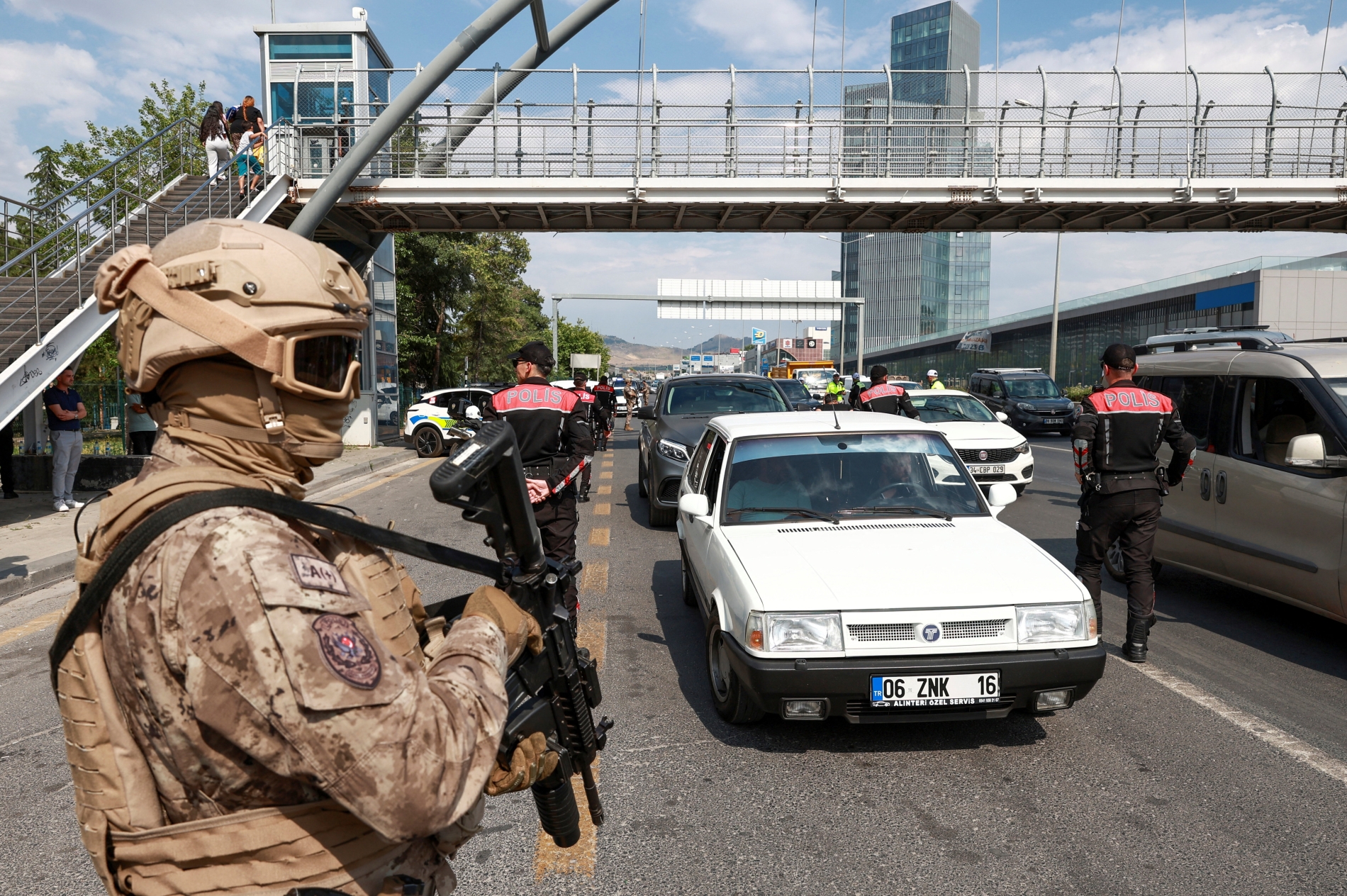
Police officers perform security checks on a main road ahead of the NATO summit in Ankara, Türkiye, on 3 July 2026.

The extent of the logistical and security planning in the Turkish capital ahead of the summit is unprecedented. It is almost as if a state of emergency had been declared in Ankara, with almost all major roads closed to the public and mass gatherings (even entertainment events) banned. Government employees, except for essential personnel, have been granted administrative leave. Roads have been repaved, runways refurbished, and panels have been erected to cover anything unsightly along some routes.

Anti-NATO or anti-Trump demonstrators will not be tolerated, with 70,000 police and gendarmerie scheduled for duty across the two-day summit (security forces have recently killed someone alleged to be an IS militant during a raid in Ankara), while some prominent Turkish foreign policy journalists, all known for not being pro-government, have been denied accreditation for the event. Nothing is being left to chance. The same, however, cannot be said about Mr Trump.

font change