The art of Taqāsīm: dividing time and charging silence

Al Majalla traces the evolution of the solo improvisation musical form indigenous to the Middle East region

Nesma Moharam

The art of Taqāsīm: dividing time and charging silence

Some scholars of Turkish music argue that taqāsīm, understood in its early sense as unmeasured vocal and instrumental improvisation, emerged at the Ottoman court in the second half of the 16th century and had not previously been mentioned in the region's musical traditions.

Yet Ibn al-Tahhan, the 11th-century Fatimid scholar of Cairo, refers in his Hāwī al-Funūn wa-Salwat al-Mahzūn to taqsīm as instrumental performance on strings, pipes and drums. He does not indicate whether such performance was composed or improvised. We do know, however, that improvisation was regarded as less accomplished a craft than carefully wrought composition. In the mid-15th century, Fathallah al-Shirwani even described it as “the lightest of the forms of composition”, meaning musical composition. This coincided with the considerable importance accorded to rhythmic cycles, as may be inferred from al-Silakuni’s treatise at the beginning of the 16th century.

The Kitāb al-Aghānī suggests that improvisation was originally a form of composition, albeit a less elaborate one. The improviser was the musician who composed and sang rājilan, meaning while standing, marking the rhythm with a rod held in his hand. The ḍārib, by contrast, played the oud, which opened wider melodic possibilities and allowed for greater refinement in musical craft.

Improvisation and composition

In Mikhail Mishaqa’s 1840 Risāla Shihābiyya, instrumental music falls into two categories. Measured instrumental music he calls bashraf. Among Arabs, however, the bashraf had been a vocal form until the end of the 18th century, whereas among the Turks the term denoted a specific instrumental composition. Unmeasured instrumental playing, without rhythm, Mishaqa calls taqsīm. Yet our musical heritage contains numerous examples of measured taqāsīm. Whether this reflects an error on Mishaqa’s part or simply his own terminology is impossible to know. Nor does he clarify whether the instrumental performance he describes was composed or improvised.

The development of instrumental taqsīm in Istanbul coincided with a narrowing of the space available for instrumental improvisation in Egypt and the Levant, particularly after the fall of the Mamluk state and the collapse of the patron class that had sustained the older musical tradition. One indication is the disappearance, from the 16th to the 19th century, of the names of professional men and women who practised the art. Another is the extraordinary scarcity of specialised writing on music theory in Egypt and the Levant during the same period. Across three and a half centuries, such works can almost be counted on the fingers of one hand.

By the middle of the 19th century, the Cairo author of Safīnat al-Falak wa-Nafīsat al-Mulk could conceive of music only as something “bound to the words of its people”, effectively treating music and song as one. This situation in Egypt, and the subordinate place accorded to instrumental performance, would not change until around the 1870s, when the Khedive brought musicians from Istanbul and asked them to teach Egyptian musicians.

The picture was different in a country that had never come under Ottoman rule, such as Morocco. There, a number of the old nūbas, or musical suites, have survived to the present day. They include instrumental preludes known as bughyāt and tawshiyāt, together with distinctive, fixed instrumental passages that give the instruments a prominent role in the tradition known as tarab al-āla, vocal suites accompanied by musical instruments. The term taqsīm is also used there for solo improvisations within these suites.

It remains unclear whether this terminology arose through cultural exchange with the Ottomans, whether it is a relatively modern designation that spread after the term became common in Egypt, or whether it preserves a much older Arabic usage dating back to Fatimid times. It is worth noting that a comparable form of improvisation in the Tunisian ma’lūf tradition is known as istikhbār.

If istikhbār carries the sense of seeking or eliciting information, perhaps suggesting that the performer draws a response from the ṭab‘, the Maghrebi term for the modes, taqsīm may likewise be understood as instrumental playing that divides a sequence of composed pieces, serving as an interlude between them. Conversely, it may refer to bringing together the constituent sections of a complex maqam.

Both interpretations, however, belong to a period far later than that of the Fatimid Ibn al-Tahhan. A more plausible explanation, and the one we favour, is that taqsīm refers more broadly to the division of instrumental performance into successive phrases, each separated from the next by an interval of silence. Composed music, by comparison, unfolds through a continuous and interconnected melodic line without such breaks.
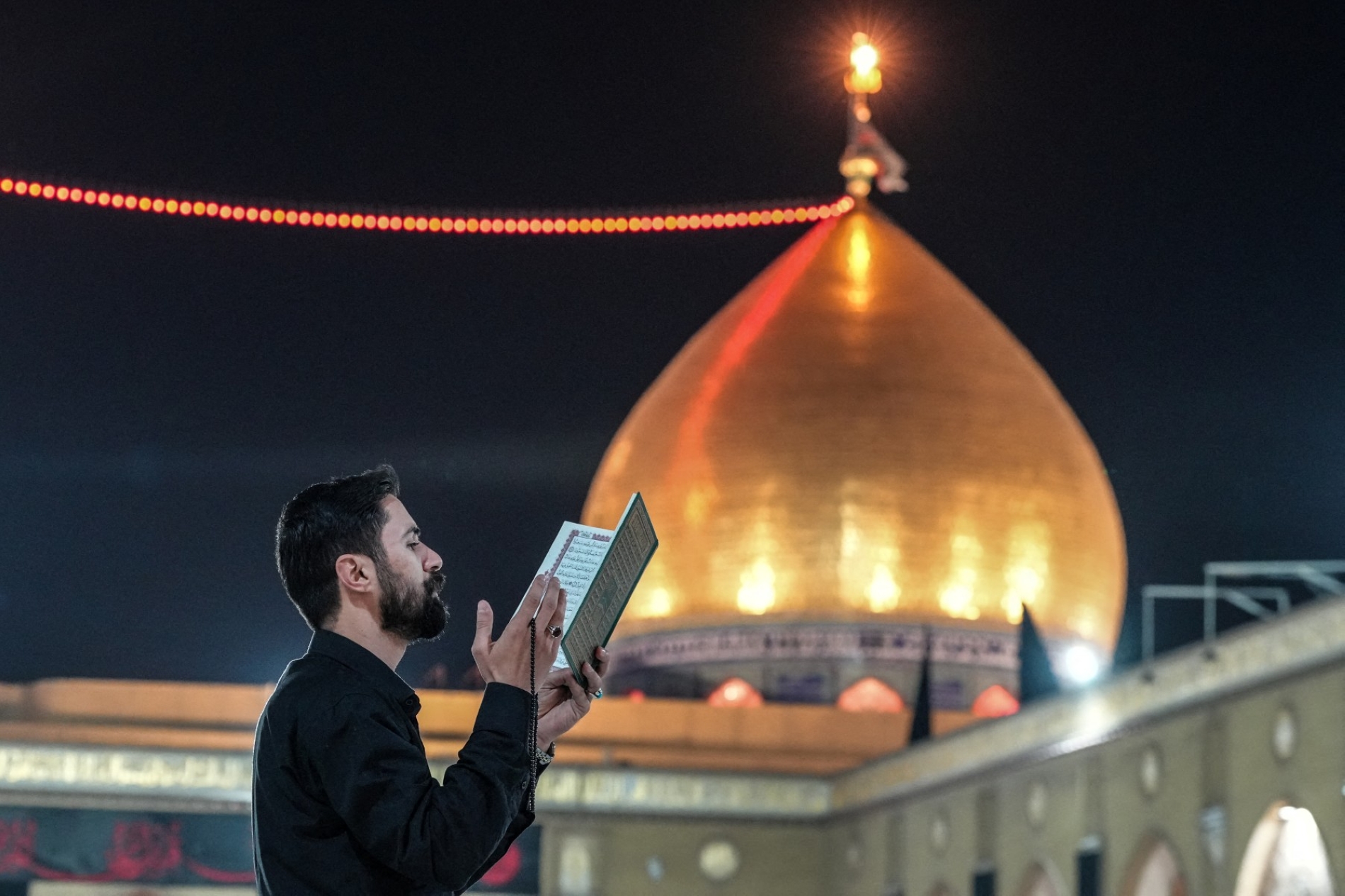
Qassem al-KAABI / AFP
A worshiper recites from the Koran at the Kufa Mosque south of Baghdad, on 12 March 2026.

Space for improvisation

We have little reason to suppose that improvisation itself was ever absent from the Arab region, even if it was regarded as a lesser craft than elaborate composition. Alongside the art of Koranic recitation, one of whose conditions is that the reciter improvise so as to prevent the Koran from being set to a composed melody and made to resemble secular song, we find numerous references to improvisation during the Mamluk period.

One example is al-Mazuni in Mamluk Cairo, who was renowned for reciting poems to ḍurūb, or rhythmic cycles. This suggests that his distinction lay in improvising within a rhythmic framework while reciting poetry, rather than in performing in free rhythm. Something comparable appears in Villoteau’s account of an evening of religious chanting by sheikhs that he attended during Napoleon’s expedition to Egypt and later described in the Description de l’Égypte.

The space given to improvisation in Egypt appears to have expanded most markedly during the final quarter of the 19th century, as the older nūba, centred largely on intricately composed muwashshaḥāt, began to break apart. It was during this period that Abdu al-Hamuli rose to prominence, becoming celebrated for the variations he introduced and for his ability to blend several styles in his singing. His emergence signalled a transition from an age of collective chanting in the manner of the sheikhs to the era of the concert and the virtuoso star, performing before audiences eager to hear the singular inventions of his fertile musical imagination.

This school also spread through the Levant, encouraged by travel, migration and cultural exchange between Egyptians and Levantines, as well as by the increasing openness of these societies to one another from the age of Muhammad Ali onwards, and later by the era of recorded discs.

The widening scope of improvisation, together with the declining importance of complex muwashshaḥāt, which allowed little room for improvisation or vocal display, gave rise to new forms that gradually displaced them. Foremost among these was the expanded qaṣīda. It could be performed freely, without a fixed rhythm, or improvised within metre over a simple four-beat cycle, most often the waḥda. A similar rhythmic basis was used for the dawr, and together these became the two principal forms of the waṣla.

The dawr itself developed through numerous additions to its second section, also specifically called the dawr. This section allowed the singer a range of measured improvisations, ornamental elaboration around the āhāt, and vocal exchanges with the accompanying chorus.

By the end of the 19th century, alongside the transformation of secular music, Egypt also witnessed the development of a new style of Koranic recitation associated with Sheikh Hanafi Barai and Sheikh Ahmad Nada. Nada is said to have competed with al-Hamuli in the performance of devotional invocations from the minarets of al-Hussein Mosque. New forms of religious tawāshīḥ also developed, having previously belonged to the same broad tradition as the muwashshaḥāt, along with the narrative of the Prophet’s birth and the ta‘ṭīra sharīfa. All provided greater room for improvisation and for exchanges between the sheikh and his accompanying chorus.

The rhythm could also be suspended altogether, giving the sheikh the freedom to continue his improvisations for as long as he wished. This became a fundamental distinction between the Egyptian school and traditions of collective religious chanting in the Levant, for example, where solo passages remained rhythmically measured.

A comparable development probably occurred in the performance of the mawwāl. Earlier forms may have been closer to the recitation of zajal, given their connection to its metre and to an underlying melody upon which both mawwāl and zajal were fashioned, much as the ‘atāba is ornamented around a simple and familiar melodic pattern.

The form eventually reached the highly sophisticated treatment given to it by Mohammed Abdel Wahab, whose approach carried it from improvisation into composition. With other singers, however, the mawwāl remained closer to improvisation and was often interwoven with the layālī.

Solo performance

From the beginning of the 20th century until shortly before the Second World War, taqāsīm enjoyed a period of particular flourishing, as did certain instrumental forms such as the taḥmīla, which generally incorporates several short improvisations within a framework of recurring composed phrases.

This was also an era in which a number of instrumentalists rose to prominence. Some acquired enough stature to lead their own takht ensembles and to record taqāsīm and other non-vocal instrumental pieces on disc. Among them was the ney player Amin al-Buzri, mentioned earlier, followed by a large number of distinguished musicians: Ibrahim Sahlun and Sami al-Shawwa on violin; Mohammed al-Qasabgi, Amin al-Mahdi, Dawud Husni and Shahada Saada on oud; Ibrahim al-Aryan and the elder Mohammed al-Aqqad on qanun; and many others.

These musicians recorded both measured and unmeasured taqāsīm, as well as taḥmīlas in which improvised passages alternate with recurring composed phrases. Some also recorded celebrated adwār, rendering them instrumentally in place of the singer’s voice.

Their collaborations were equally varied. They accompanied male and female singers, as well as religious performers such as Sheikh Ali Mahmoud, and played an acknowledged role in musical response and in what was known as “translation”, or muḥāsaba, whereby the instruments echo or restate what has been sung. Together, these practices created an extensive and richly varied heritage of improvisation, ornamentation, musical dialogue and contrasting approaches to performance, shaped both by the individuality of the musicians and by the distinctive character of their instruments.

They also established the singing voice as an aesthetic model for instrumental performance, since musicians generally sought to make their instruments “sing”. All this naturally supplied the improviser with a reservoir of melodic and rhythmic material drawn from composed instrumental works, interactions with singers and chanters, and the heritage of the adwār and muwashshaḥāt, material that could then be recast in the performer’s own musical idiom.
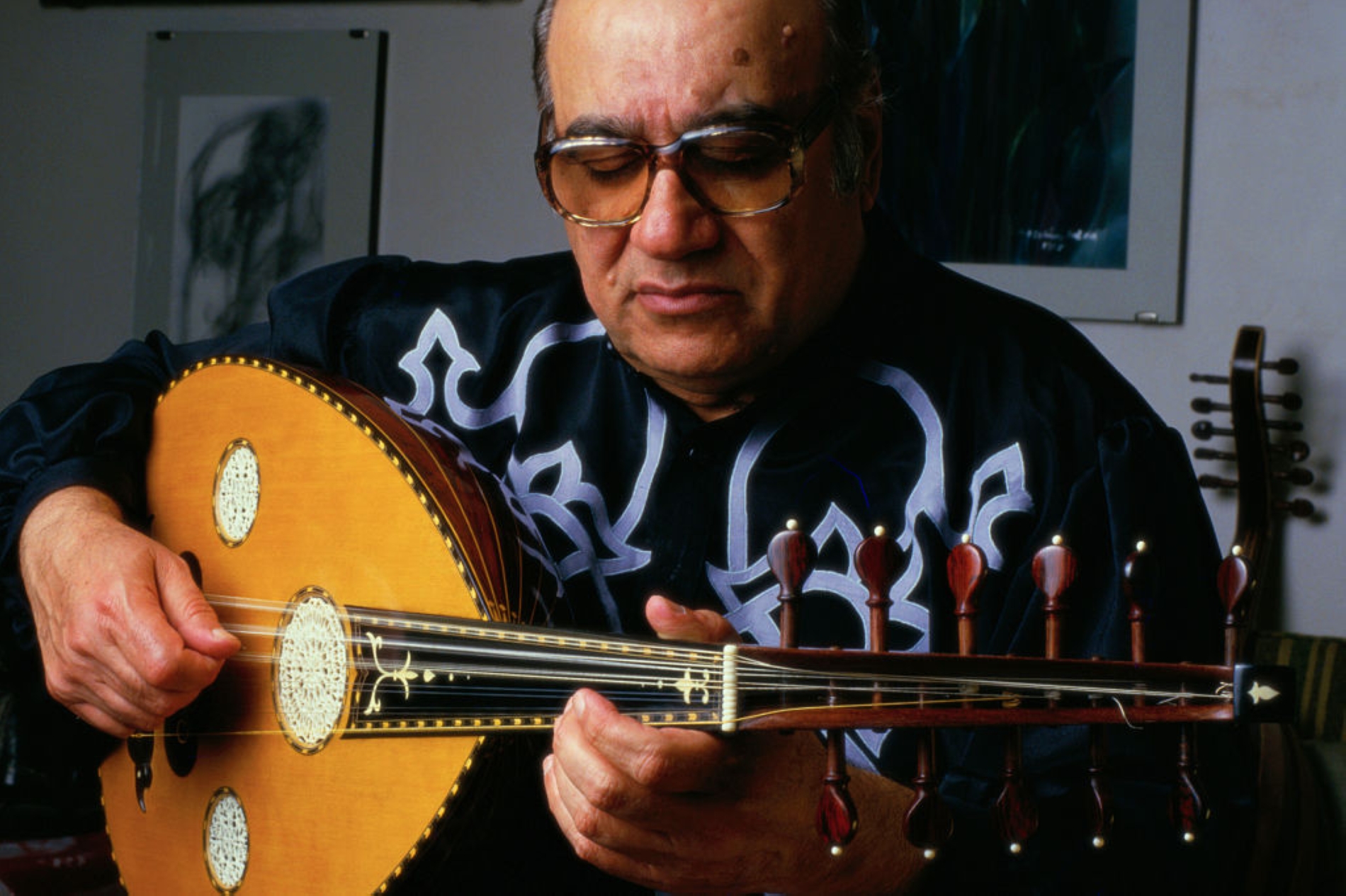
19th-century Egyptian performer Abdu al-Hamuli was credited with transforming the collective chanting of sheikhs into the era of the musical concert.

Some of what these musicians recorded may, to some degree, have been prepared in advance. One might think of certain opening phrases in al-Sunbati's early taqāsīm, or of al-Qasabgi preparing a single taqsīm for recording across both sides of a disc. Such a recording required some advance calculation of the point at which the performance should pause halfway through, since the second side was recorded separately and technical preparations had to be made before recording could resume.

This degree of preparation raises a broader question about the fixing of improvisation, whether instrumental or vocal. Consider the opening of Arāka 'Aṣiyya al-Dam, attributed to Abdu al-Hamuli, and its recurrence in later recordings, together with the broad trajectory of the qaṣīda despite the considerable differences among performances by Umm Kulthum, Fathiyya Ahmad and Abdel Hay Hilmi. A similar process can be heard in the persistence of certain semi-improvised phrases in the dawr "Sharibt al-Sabr" across performances by different singers.

What emerges is a tendency for some improvisations gradually to become fixed and then reused in recognisable form. Traces of "composition in the moment", once they have crystallised and proved successful, may become a kind of recalled composition, stored and repeated thereafter.

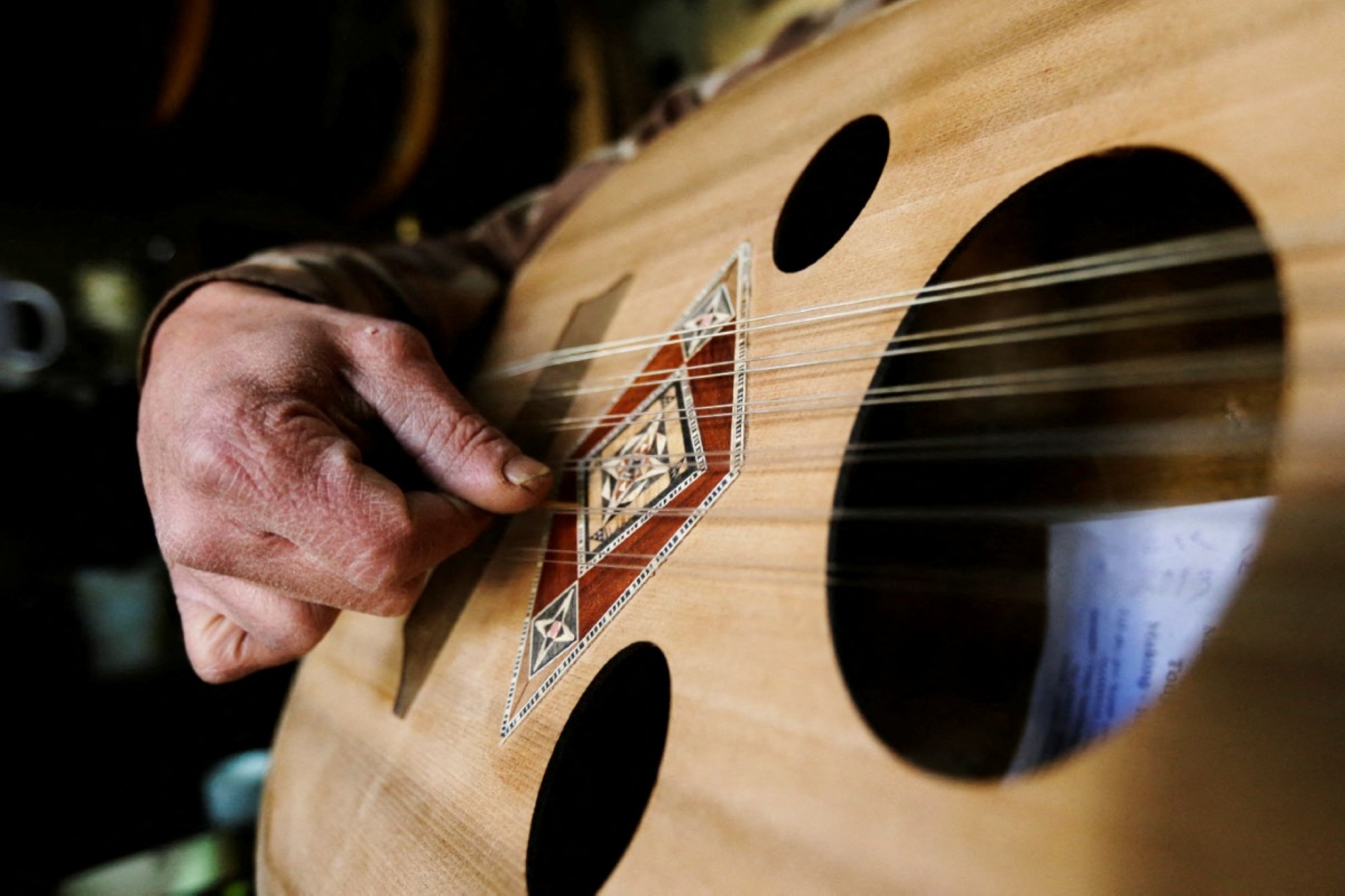
 LOUAI BESHARA / AFP
Anton Al-Tawil tests an oud he crafted in his workshop in Damascus's Old City.

The age of the record

The development of musical education and transmission, together with the spread of schools training ever larger numbers of musicians and the growing circulation of records themselves, appears to have encouraged the accumulation of these inherited formulas and gradually hardened them into recurring clichés. The differences are far more pronounced, for example, between the oud styles of al-Sunbati, al-Qasabgi and al-Mahdi, or between the violin playing of al-Shawwa and Sahlun, than in the much more homogeneous character that taqsīm on these instruments would later assume.

Another factor may have been the decline of competition and individual creativity as the practice of recording taqāsīm on disc receded after roughly the mid-1930s. Commercial logic came to dominate the industry completely, while the success of romantic song became a force that crushed much of the remarkable diversity that had existed before. Composers increasingly moved away from entrusting instrumentalists with improvised passages and towards writing "solos" to be performed independently and reproduced exactly as composed.

Elsewhere in the Arab world, however, the 20th century later saw the emergence of many instrumentalists, particularly oud players, capable of improvising and performing taqāsīm in distinct local styles. The list is by no means exhaustive. Among them was the Moroccan Said Chraibi, shaped by tarab al-āla and Morocco's venerable nūba tradition, evident in his distinctive use of the plectrum and in the construction and ornamentation of his phrases.

There was also the Tripolitan Lebanese musician Saliba al-Qatrib, whose plectrum technique combined later Turkish and Egyptian influences; the Algerian Abdelaziz Abdallah, known as "Ala", who came from the desert city of Béchar carrying the Algerian, African and European resonances that had mingled there; and the Tunisian Fawzi al-Sayeb, who appears deeply influenced by the Egyptian Hamuli period and the legacy of Dawud Husni, among many others.

Iraq, too, naturally had a prominent place. Earlier recorded taqāsīm, including those preserved from the first Congress of Arab Music in Cairo in 1932, remained relatively obscure despite featuring musicians such as Azouri Haroun on oud, Yusuf Bato on santur, Yusuf Za'rur on qanun and Salih Shamil on violin. Sharif Muhyiddin Haydar's fame, and above all his influence on his oud students, helped produce a generation of instrumentalists capable of taking centre stage rather than remaining content with accompanying singers.

Among the most notable of that generation was Jamil Bashir, perhaps the closest in temperament to the Iraqi maqam tradition, and his brother Munir Bashir, unquestionably the most famous. Munir was also perhaps among those who most deliberately sought to distinguish between improvisation, marked by silence, fragmentation, repetition, exploration and acts of musical recall, and taqsīm, which he seems to have regarded as a more conventional form oriented towards ṭarab. In doing so, he may have diminished taqsīm somewhat unfairly by treating ṭarab as though it occupied a lower plane than contemplation.

 Shepard Sherbell/Corbis via Getty Images
The Iraqi musician Munir Bashir

Ali al-Imam should also be included. He was a student of Ruhi al-Khammash rather than Haydar and may therefore have stood closer to the sensibility of the eastern Arab oud. The story beyond the 20th century would require an article of its own, one capable of giving newer elements and contemporary experiments the critical attention they deserve.

Listening to improvisation

Early 20th-century recordings suggest that taqāsīm were once far more varied and individual, before inherited formulas hardened into convention and seeped into sometimes hurried methods of instruction, and before the spread of composed solos or the repeated use of the same phrases in concert taqāsīm.

These diverse and highly individual taqāsīm, understood as forms of "composition in the moment", probably ask us to listen by different criteria from those we apply to fixed, composed works, whether performed by a solo instrument, an ensemble, or even something that outwardly resembles taqāsīm. This does not mean that taqāsīm never contain phrases prepared in advance, familiar modulations to which a musician habitually returns, or rhythms and patterns that a performer particularly favours. The distinction nevertheless remains substantial between such material and a composition prepared in full, given ample time to mature and to develop a closer relationship between its solo passages and the work as a whole.

The reason repeated solos tend to lose esteem while recorded taqāsīm often retain theirs may therefore lie less in repetition itself than in what that repetition reveals: that the solo had been prepared beforehand. We judge composition in the moment differently from composition fashioned deliberately and at leisure.

Listening to a composed work in our musical tradition generally involves a number of criteria: its overall architecture; the coherence of its ideas and sections; the logic of their succession, with each part conceived in relation to the others; the tonal territory it explores and the preparation of modal transitions; the distribution of material among instruments and the differences in their roles, which often means that the individuality of each instrument receives less attention; and questions of rhythm, including the ideas governing its treatment and its relationship to the melodic phrase.

Composed music in our tradition is also most often placed in the service of some external purpose, whether a text, a scene or an occasion. We judge such music partly by how well it serves that purpose: how closely it responds to the words, how effectively it evokes an image, or how successfully it creates the atmosphere required to heighten the effect of a cinematic scene, among other considerations.

Listening to improvisation in Arab music, by contrast, and judging its quality are inseparable from an appreciation of its immediacy and of the role that immediacy plays in our experience of it. They are equally bound up with our response to the individual performer, as though a direct and private relationship were taking shape before us.

One of the qualities we assess in improvisation is the performer's melodic quick-wittedness. This becomes especially important in measured improvisation, where the improviser, whether instrumentalist or singer, must play with the rhythm, tease it and elude it. We also listen for the ability to create an internal pulse within the musical phrase that compensates for the absence of an external rhythmic framework in free improvisation. This is especially evident in the taqāsīm of Abdu Saleh and al-Qasabgi, while al-Sunbati, for example, sometimes introduces a measured rhythmic passage into his phrases even in the absence of a percussion instrument.

Improvisation also offers the rare opportunity to hear the performer alone and, with that, to attend closely to the technical command of voice or instrument: the ability to vary ornaments and melismatic turns, the movements of plectrum or bow, the colouring of vocal or instrumental timbre, and the instinctive command of melodic pathways between ajnas. At its highest level, improvisation may even allow the performer to surprise himself first, as in accounts of Umm Kulthum's astonishment when she later listened back to some of her own improvised solo passages.

AFP
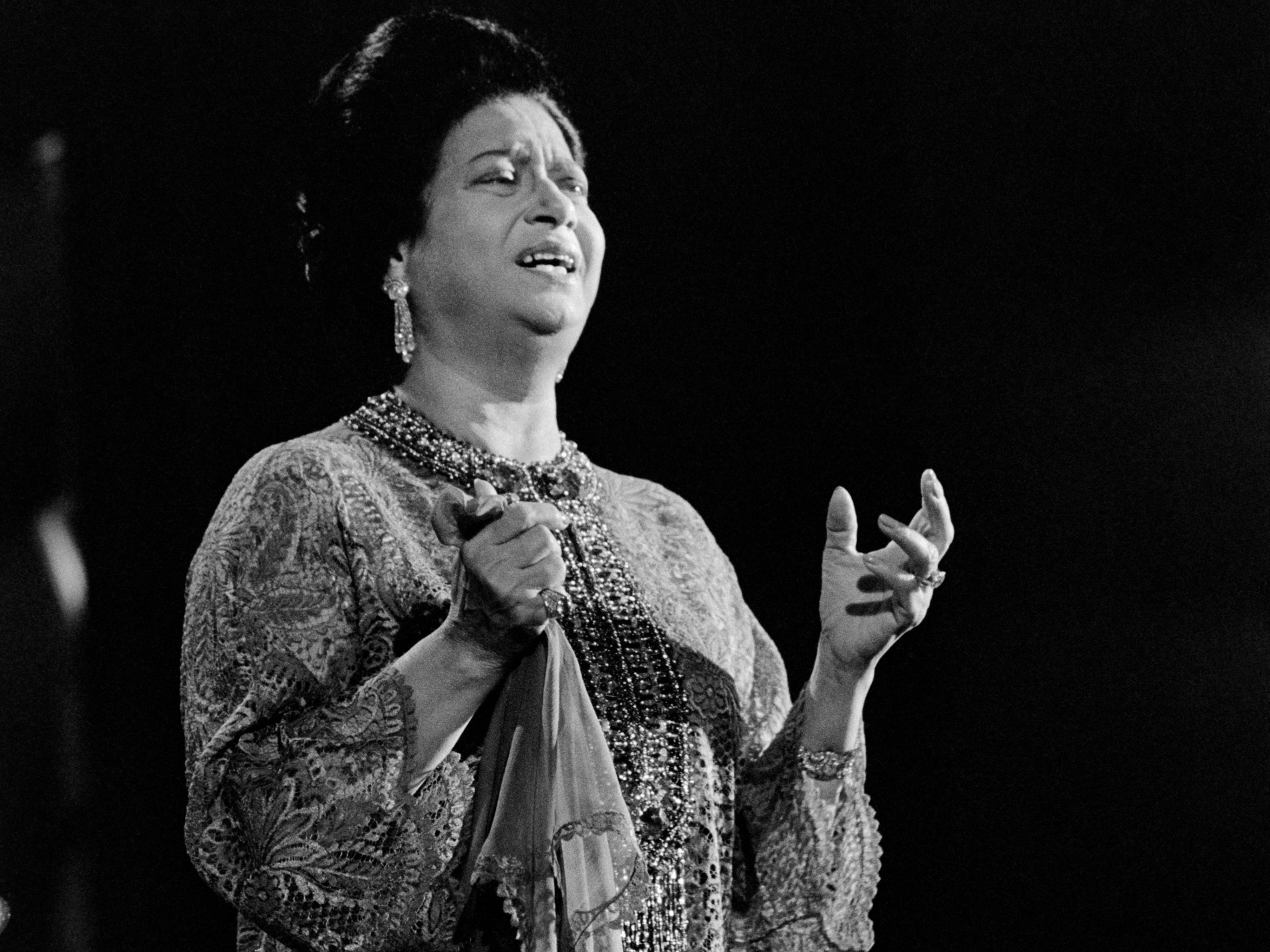
Egyptian singer Umm Kulthum performs on 14 November 1967, at the Olympia concert hall in Paris.

Charged silence

Finally, improvisation, especially when unmeasured, opens a far wider space for charged silence whose duration is not fixed in advance. Silence performs several functions. It divides the improvisation itself into sections, giving the listener time to absorb what has come before, respond to it and, in a sense, retune his emotional state in readiness for what comes next. It also creates an expectation of what may follow, an expectation the improviser is then free to confound. Silence may leave the listener suspended on the edge of an unresolved tension, or offer repose after a turbulent interim climax.

Most taqāsīm appear to be shaped around such ideas: statement and response within a passage, the ascent towards a rhythmic or melodic climax, then relaxation and a renewed affirmation of repose at the end of the journey. The overall form of a taqsīm, its duration, the number of its sections and the length of its individual passages are not determined in advance. All remain subject to the choices of the instrumentalist or singer.

When we listen to composed works in their fixed sections, ṭarab is generally not their principal aim. The notable exception is the muwashshaḥāt, which perhaps provide the most prominent, if not the only, example in our tradition of ṭarab achieved without improvisation. Most composed works, though certainly not all, serve some purpose beyond themselves. Instrumental improvisation can free itself entirely from such obligations.

Vocal improvisation ranges across a broad spectrum. At one end, it may devote itself wholly to the service of the text, as in Koranic recitation. Elsewhere, it may fragment the text and ornament the melody, playing with both, as in the improvised passages of the adwār or Umm Kulthum's solo elaborations. At the other extreme, forms such as the layālī and āhāt, like instrumental improvisation, may free themselves entirely from any external content and seek nothing beyond the creation of a purely aesthetic experience.

Improvisation is never wholly detached from preparation and composition, just as composition itself naturally begins with some form of improvisation, exploration and istikhbār. Yet we experience the two differently. Repeated listening inevitably diminishes the element of surprise. A great improviser, however, can create works of composition in the moment so rich that what is lost in surprise is replaced by other and more varied pleasures.

This is what allows the great improvisers to escape the confines of imitation and enter a realm of freedom that expands with their singular command of instrument or voice, their melodic imagination, their rhythmic instinct and their command of our very breath in those seconds of silence. They give us fragments of time that somehow remain present, compressed into blocks of melody and separated by silence, granting us moments that neither recording nor repetition diminishes, and that even the passage of time cannot erase.

A great improviser is a singer who can create a pulse within the musical phrase that compensates for the absence of an external rhythmic framework.

Composed music in our tradition is also most often placed in the service of some external purpose, whether a text, a scene or an occasion. We judge such music partly by how well it serves that purpose: how closely it responds to the words, how effectively it evokes an image, or how successfully it creates the atmosphere required to heighten the effect of a cinematic scene, among other considerations.

Listening to improvisation in Arab music, by contrast, and judging its quality are inseparable from an appreciation of its immediacy and of the role that immediacy plays in our experience of it. They are equally bound up with our response to the individual performer, as though a direct and private relationship were taking shape before us.

One of the qualities we assess in improvisation is the performer's melodic quick-wittedness. This becomes especially important in measured improvisation, where the improviser, whether instrumentalist or singer, must play with the rhythm, tease it and elude it. We also listen for the ability to create an internal pulse within the musical phrase that compensates for the absence of an external rhythmic framework in free improvisation. This is especially evident in the taqāsīm of Abdu Saleh and al-Qasabgi, while al-Sunbati, for example, sometimes introduces a measured rhythmic passage into his phrases even in the absence of a percussion instrument.

Improvisation also offers the rare opportunity to hear the performer alone and, with that, to attend closely to the technical command of voice or instrument: the ability to vary ornaments and melismatic turns, the movements of plectrum or bow, the colouring of vocal or instrumental timbre, and the instinctive command of melodic pathways between ajnas. At its highest level, improvisation may even allow the performer to surprise himself first, as in accounts of Umm Kulthum's astonishment when she later listened back to some of her own improvised solo passages.

AFP
Egyptian singer Umm Kulthum performs on 14 November 1967, at the Olympia concert hall in Paris.

Charged silence

Finally, improvisation, especially when unmeasured, opens a far wider space for charged silence whose duration is not fixed in advance. Silence performs several functions. It divides the improvisation itself into sections, giving the listener time to absorb what has come before, respond to it and, in a sense, retune his emotional state in readiness for what comes next. It also creates an expectation of what may follow, an expectation the improviser is then free to confound. Silence may leave the listener suspended on the edge of an unresolved tension, or offer repose after a turbulent interim climax.

Most taqāsīm appear to be shaped around such ideas: statement and response within a passage, the ascent towards a rhythmic or melodic climax, then relaxation and a renewed affirmation of repose at the end of the journey. The overall form of a taqsīm, its duration, the number of its sections and the length of its individual passages are not determined in advance. All remain subject to the choices of the instrumentalist or singer.

When we listen to composed works in their fixed sections, ṭarab is generally not their principal aim. The notable exception is the muwashshaḥāt, which perhaps provide the most prominent, if not the only, example in our tradition of ṭarab achieved without improvisation. Most composed works, though certainly not all, serve some purpose beyond themselves. Instrumental improvisation can free itself entirely from such obligations.

Vocal improvisation ranges across a broad spectrum. At one end, it may devote itself wholly to the service of the text, as in Koranic recitation. Elsewhere, it may fragment the text and ornament the melody, playing with both, as in the improvised passages of the adwār or Umm Kulthum's solo elaborations. At the other extreme, forms such as the layālī and āhāt, like instrumental improvisation, may free themselves entirely from any external content and seek nothing beyond the creation of a purely aesthetic experience.

Improvisation is never wholly detached from preparation and composition, just as composition itself naturally begins with some form of improvisation, exploration and istikhbār. Yet we experience the two differently. Repeated listening inevitably diminishes the element of surprise. A great improviser, however, can create works of composition in the moment so rich that what is lost in surprise is replaced by other and more varied pleasures.

This is what allows the great improvisers to escape the confines of imitation and enter a realm of freedom that expands with their singular command of instrument or voice, their melodic imagination, their rhythmic instinct and their command of our very breath in those seconds of silence. They give us fragments of time that somehow remain present, compressed into blocks of melody and separated by silence, granting us moments that neither recording nor repetition diminishes, and that even the passage of time cannot erase.

Great improvisers give us fragments of time that somehow remain present, compressed into blocks of melody and separated by silence.

Broad spectrum

Vocal improvisation ranges across a broad spectrum. At one end, it may devote itself wholly to the service of the text, as in Koranic recitation. Elsewhere, it may fragment the text and ornament the melody, playing with both, as in the improvised passages of the adwār or Umm Kulthum's solo elaborations. At the other extreme, forms such as the layālī and āhāt, like instrumental improvisation, may free themselves entirely from any external content and seek nothing beyond the creation of a purely aesthetic experience.

Improvisation is never wholly detached from preparation and composition, just as composition itself naturally begins with some form of improvisation, exploration and istikhbār. Yet we experience the two differently. Repeated listening inevitably diminishes the element of surprise. A great improviser, however, can create works of composition in the moment so rich that what is lost in surprise is replaced by other and more varied pleasures.

This is what allows the great improvisers to escape the confines of imitation and enter a realm of freedom that expands with their singular command of instrument or voice, their melodic imagination, their rhythmic instinct and their command of our very breath in those seconds of silence. They give us fragments of time that somehow remain present, compressed into blocks of melody and separated by silence, granting us moments that neither recording nor repetition diminishes, and that even the passage of time cannot erase.

font change