Europe’s secret Plan B to replace NATO

What happens if America quits

Al Majalla

Europe’s secret Plan B to replace NATO

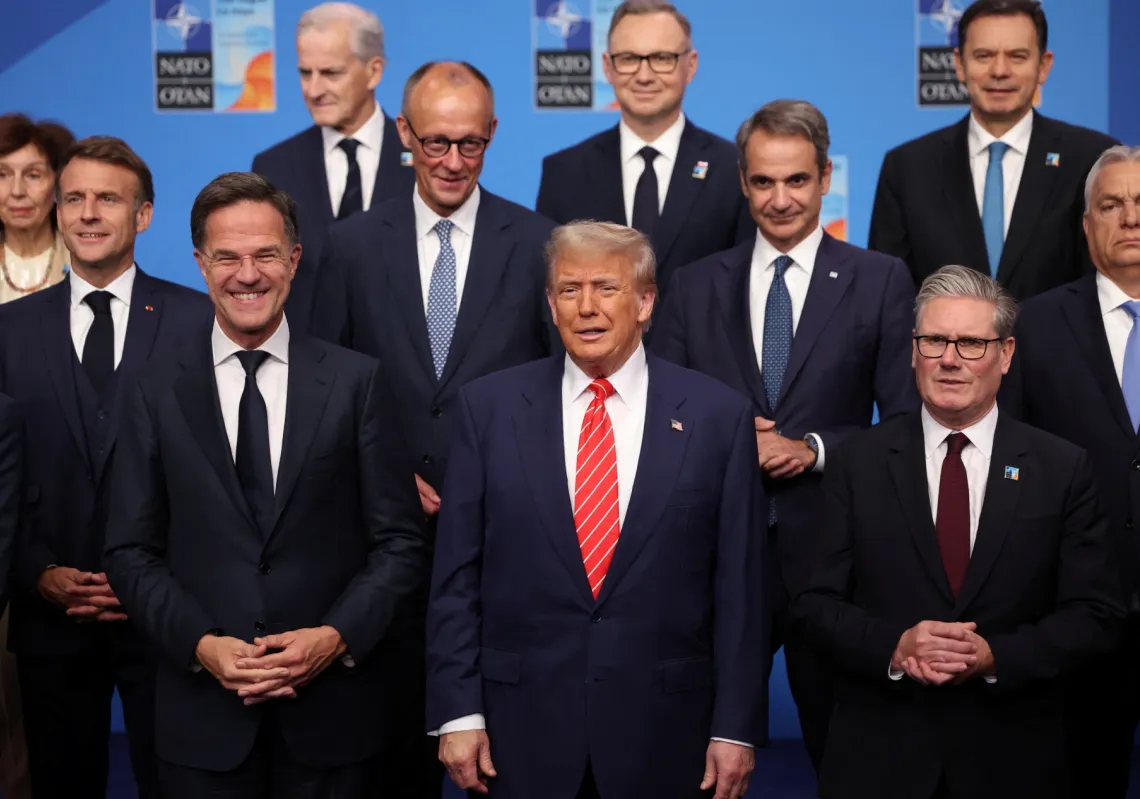
Soldiers of the “Black Jack” brigade ritually furled and packed their unit’s colours in Fort Hood, Texas, in early May, as the tank unit’s 4,000 troops prepared to deploy to Poland to help defend NATO against the Russian threat. “When an armoured brigade combat team deploys forward, it sends a clear and unmistakable signal,” said General Thomas Feltey, the division’s commander, at the ceremony. Less than two weeks later America sent the opposite signal: the deployment was scrapped. It was the second time this month that Donald Trump had announced cuts to America’s military presence in Europe, reflecting his anger at the lack of European support for his war in Iran. America is soon expected to announce a reduction in the forces it pledges in the event of an attack, Reuters reports.

Mr Trump has been casting doubt on his commitment to NATO and its Article 5 mutual-defence clause since the start of his second term. That has prompted a long-overdue increase in European defence spending. Yet in recent months he has gone further, announcing unexpected troop reductions and cancelling the deployment to Germany of a cruise-missile unit that was to plug an important gap in Europe’s defence. The rapid drawdown has upended Europeans’ assumption that they would have time to build up their own forces and replace vital American “enablers”, such as intelligence and surveillance assets. America’s huge expenditure of missiles in Iran is delaying shipments to European allies and Ukraine, as it restocks.

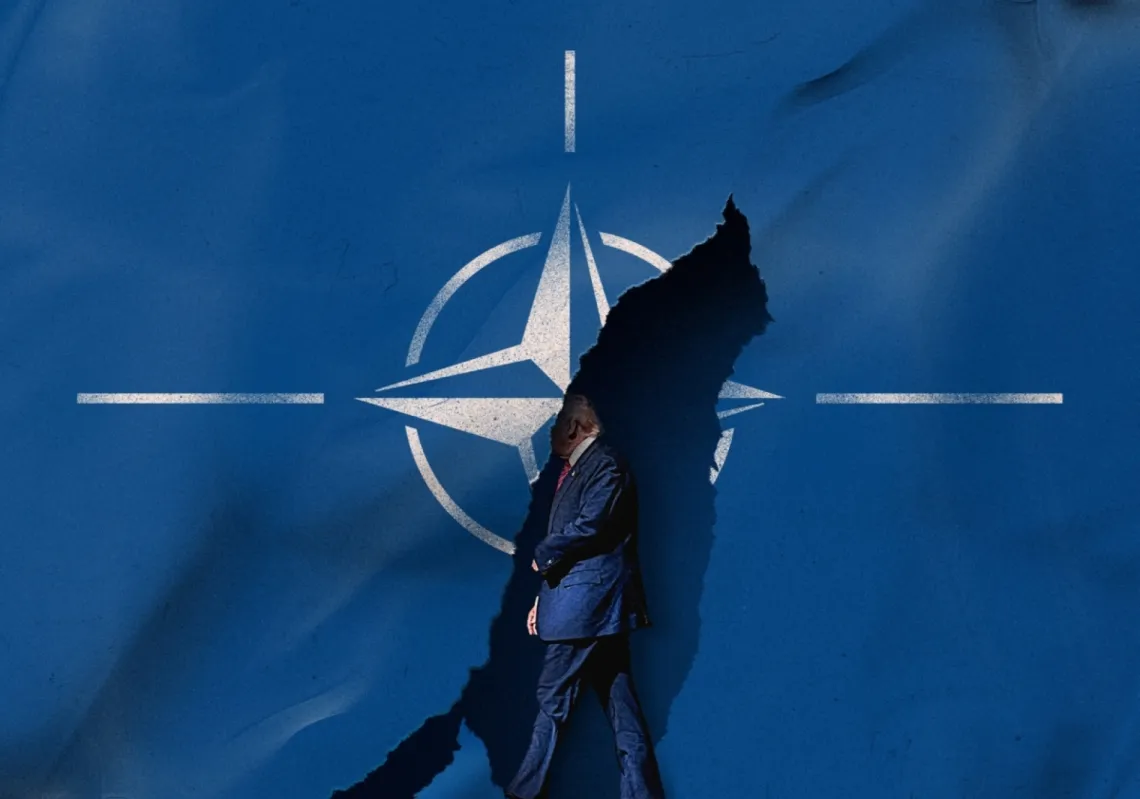
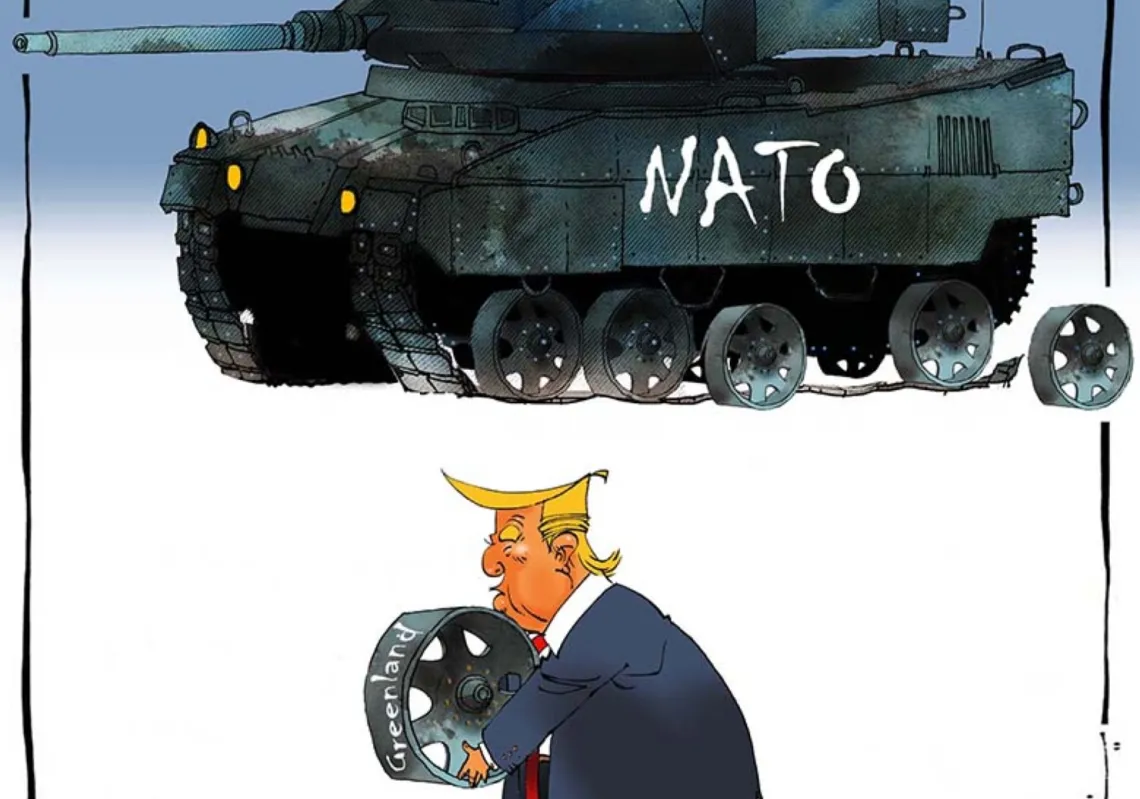
Some in NATO, shocked by Mr Trump’s threat in January to seize Greenland from Denmark, worry not only that America might sit out a war with Russia, but that it could actively thwart other members’ responses. The possibility is seen as remote. But interviews with senior officers and defence officials from several NATO countries reveal for the first time how seriously they take the risk. Some European armed forces are making secret plans to fight not just without America’s help, but without much of NATO’s command-and-control infrastructure. “The Greenland crisis was a wake-up call,” says a Swedish defence official. “We realised we need a Plan B.”
AFP
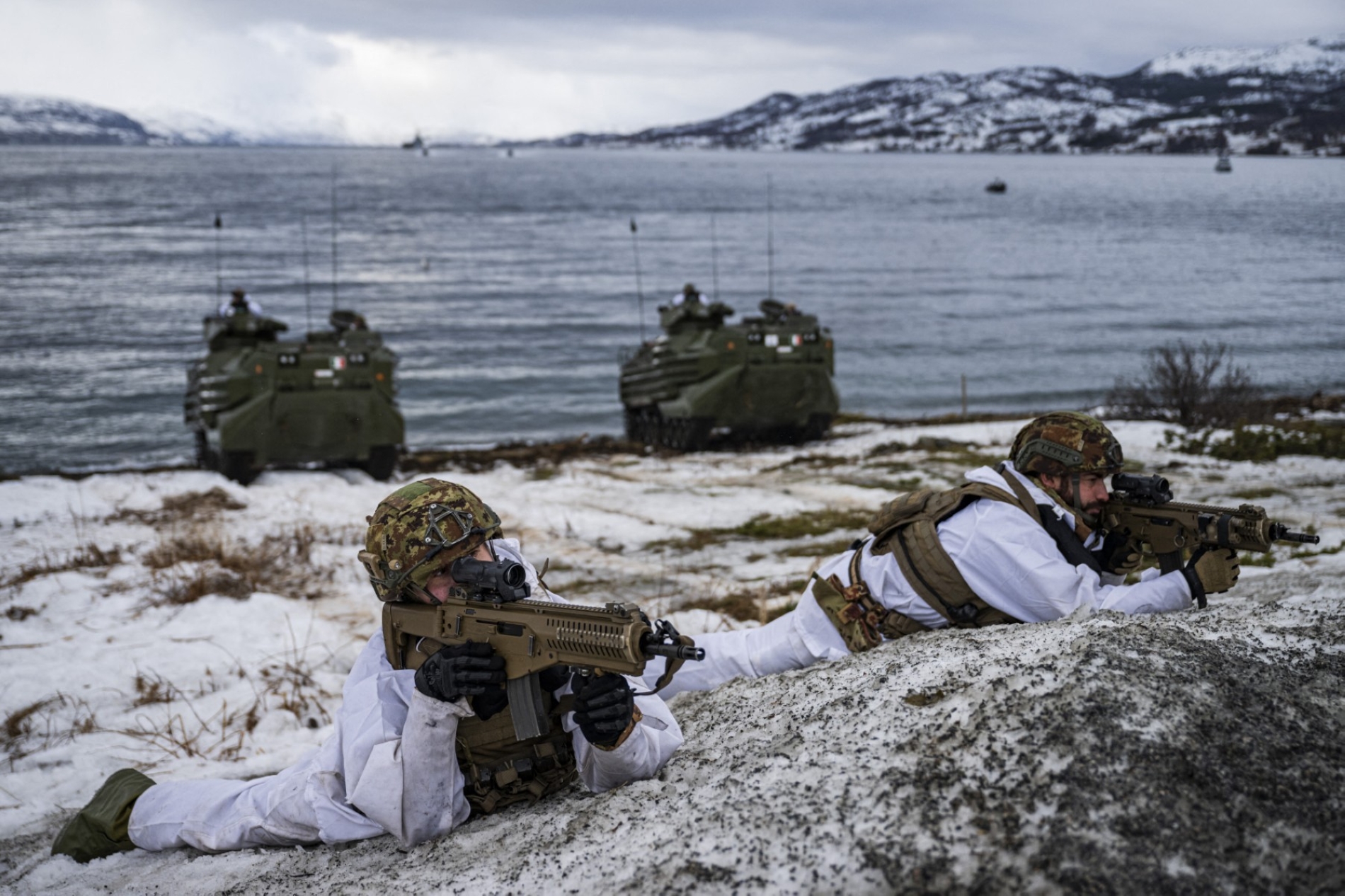
Italian soldiers during a demonstration as part of the "Nordic Response 24" exercises, in the sea near Sørstromen, north of the Arctic Circle in Norway, on 10 March 2024.

the record because of concerns that doing so could accelerate America’s departure. Mark Rutte, NATO’s secretary-general, “has literally banned talking about it because he believes it can add fuel to the fire”, says one insider. When Matti Pesu of the Finnish Institute of International Affairs (FIIA) co-authored a paper last year arguing for a Plan B, Finnish officials denied one would be considered. But the urgency of the threat has led several countries to start thinking about how, and under whose command, Europe would fight if NATO were to “malfunction”, as one official put it. “What chain of command can you use if America is blocking NATO?” asks another defence official.
US leadership is the glue that holds the alliance together. Without it, we would see a fragmentation of the deterrence ecosystem.

Luis Simón, director of the Centre for Security, Diplomacy and Strategy

The question cuts to the core of the alliance's success. Most military coalitions look like a primary-school music practice: each country turns up, bangs its drum roughly in time with the others, and leaves. NATO, by contrast, was set up as a symphony orchestra controlled by a single conductor, the Supreme Allied Commander Europe (SACEUR), an American general who also commands America's forces in Europe. To conduct this orchestra, SACEUR has secure communications links to a network of permanent subordinate headquarters (see map), staffed with thousands of personnel ready to respond the moment a war starts. "US leadership is the glue that holds the alliance together," says Luis Simón, the director of the Centre for Security, Diplomacy and Strategy at the Free University of Brussels. "Without them, we would see a fragmentation, probably, of the deterrence ecosystem."

Thus, a Plan B requires more than acquiring weapons; it means creating a structure under which Europeans would fight. The core, at least in northern Europe, would probably be a coalition of Baltic and Nordic countries, plus Poland. These countries mostly share common values, and all fear Russia. Several of NATO's bigger European members, such as Britain, France and Germany, have "tripwire" forces in the Baltics, and are thus very likely to be drawn into any conflict. Perhaps one-third of NATO members would "fight on day one" irrespective of whether Article 5 is triggered, says Edward Arnold of RUSI, a think-tank in London. "No one would be waiting for the Portuguese to turn up at the North Atlantic Council (NATO's highest decision-making body) to debate," he says.

AFP
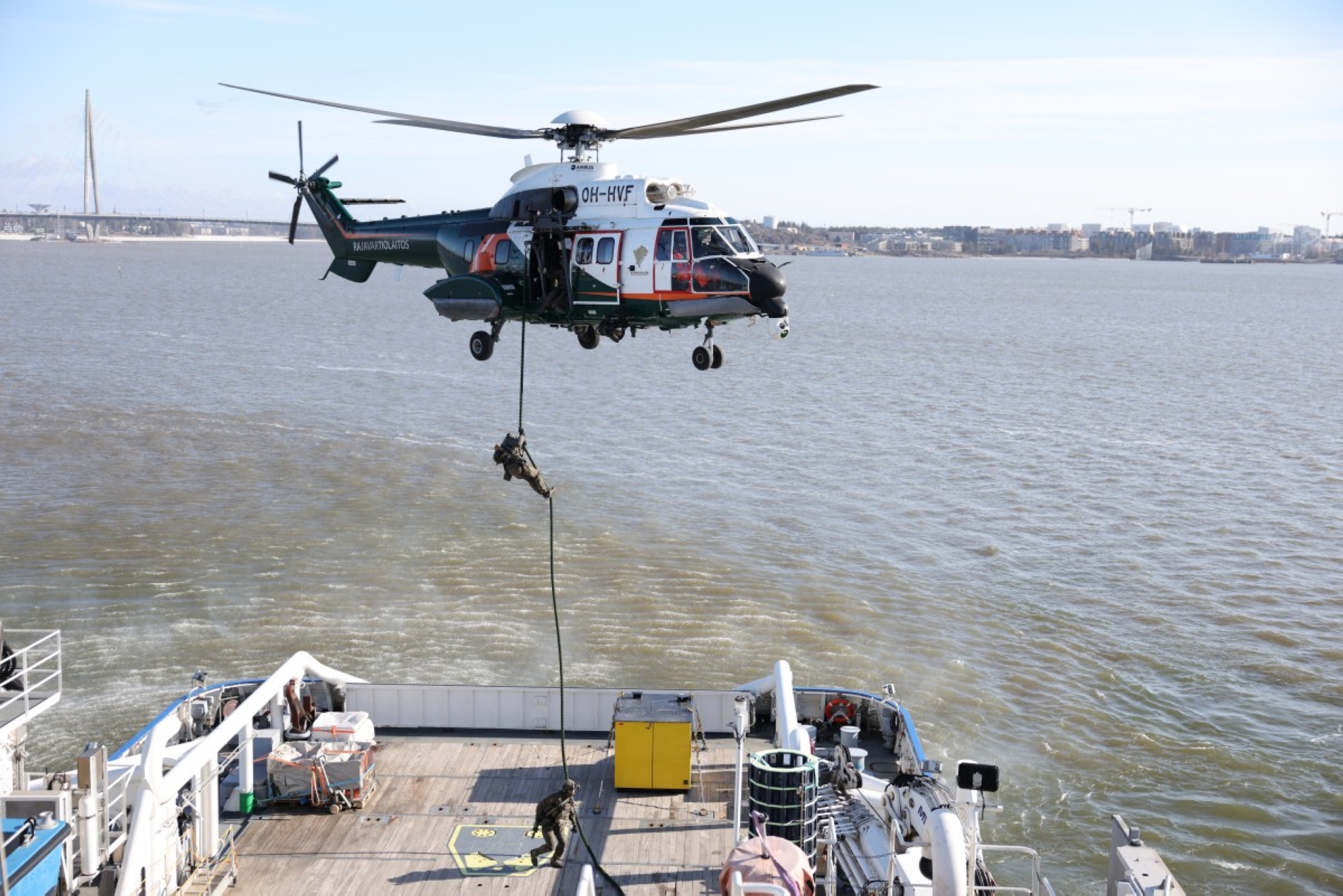
Finnish border guards during training exercises aboard the patrol vessel "Torva", on 26 March 2026.

One often-mentioned alternative command structure is a British-led coalition of ten mostly Baltic and Nordic countries known as the Joint Expeditionary Force (JEF), with a headquarters near London. Established by Britain and six other NATO members in 2014, the JEF was originally seen as a complement to the larger body that could provide high-readiness forces on short notice for circumstances that did not meet the Article 5 threshold. Its remit expanded when Sweden and Finland joined the coalition in 2017, several years before they applied for membership in NATO. It is now seen as a way to sidestep one of NATO's weaknesses: any member can block the triggering of Article 5, which requires a unanimous decision. The JEF, as its then commander, British Major General Jim Morris, said in 2023, "can react to situations on a non-consensus basis". It has already been activated several times for exercises and naval patrols.

"The JEF is the most established of the alternatives," says Mr Arnold. Its headquarters already has capabilities in intelligence, planning and logistics, he notes. It has its own secure communications networks that, although limited, do not rely on NATO. Britain's membership offers a degree of nuclear deterrence.

The JEF was designed to provide high-readiness forces on short notice in circumstances that do not meet the Article 5 threshold.

Yet the JEF focuses primarily on the Nordic and Baltic regions. It lacks major powers such as France, Germany and Poland. Some officials are anxious about Britain's defence preparedness: underfunding has left it with few ships, submarines and army units ready to deploy at short notice. "England is everyone's favourite uncle," says one official. "But it is suffering from Downton Abbey syndrome. It keeps up the pretence, but it doesn't have the funds."

Such problems might be mitigated if the group brought in Germany, which is enormously increasing its defence budget. For all its drawbacks, the JEF seems the best solution if European members are unable to take over the existing NATO framework. But Europe will find some form of defence framework to replace the Americans. A deterrent based on someone who may not show up is no deterrent at all.

font change