Is Libya entering a gas golden age?

New discoveries and multibillion-dollar investments are redrawing the country’s energy map

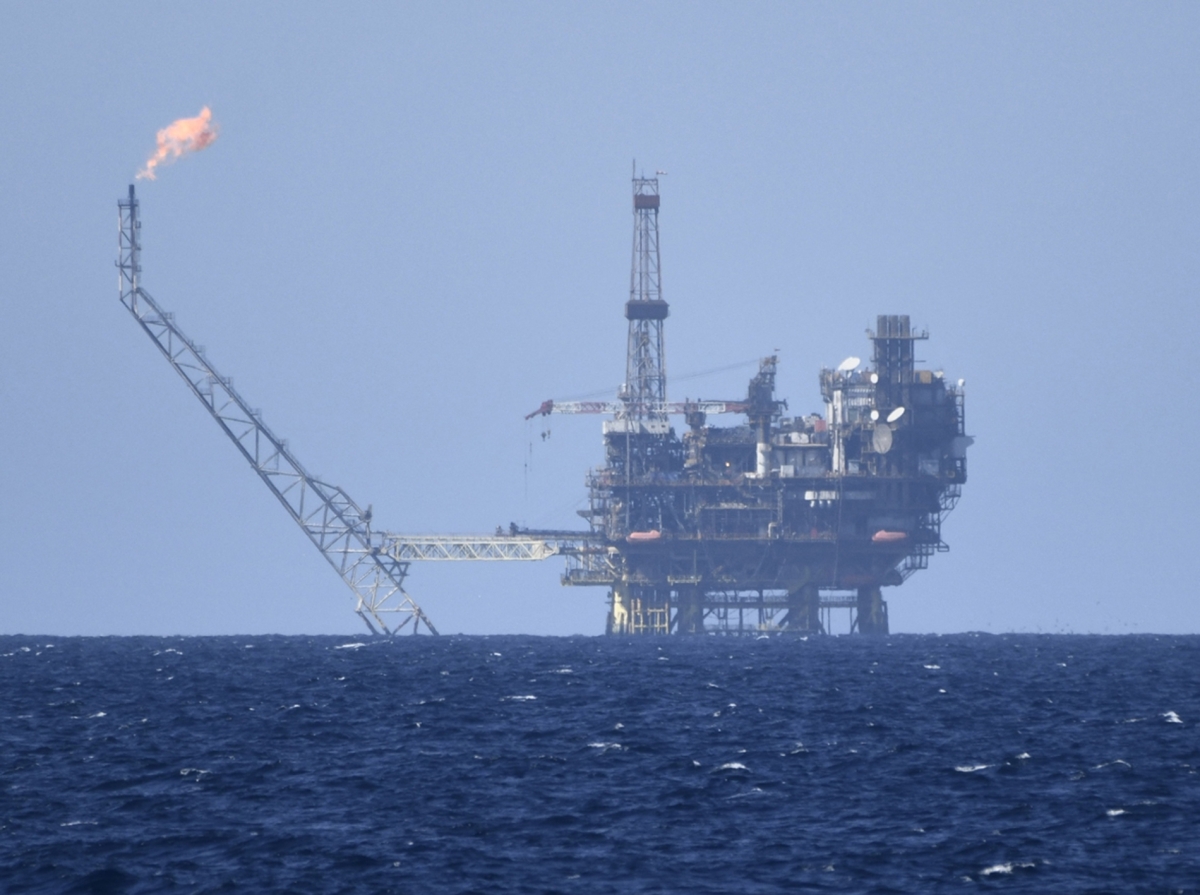
An oil and gas platform off the coast of Libya on February 25, 2022. Türkiye and Greece are at loggerheads over a Turkish-Libyan agreement on maritime boundaries in the Mediterranean Sea.
Getty Images
An oil and gas platform off the coast of Libya on February 25, 2022. Türkiye and Greece are at loggerheads over a Turkish-Libyan agreement on maritime boundaries in the Mediterranean Sea.

Is Libya entering a gas golden age?

Libya has long been known for its oil. Since the first oil fields were discovered in the late 1950s, this “black gold” has underpinned the country’s economy, accounting for more than 95% of export earnings and public revenue.

On 21 June, Masoud Suleiman, chairman of the National Oil Corporation (NOC), announced that crude output had reached 1.44 million barrels per day, Libya’s highest level since 2013. The figure brought production close to the NOC’s strategic target of 1.5 million barrels per day.

As part of efforts to reopen the energy sector to foreign investment, Libya launched its first oil and gas exploration licensing round in March 2025 since 2007. In February 2026, it awarded contracts to several major international companies, including Chevron, Eni, QatarEnergy, Repsol, Hungary’s MOL, the Turkish Petroleum Corporation (TPOC), and Nigeria’s Aiteo. Earlier, in January, Libya signed a 25‑year agreement with TotalEnergies and ConocoPhillips to develop its oil sector. These developments signalled renewed confidence in Libya’s hydrocarbon potential despite persistent political divisions.

Washington’s renewed interest is also evident. Massad Boulos, the United States President’s adviser for Middle East and African affairs, told the Financial Times that the administration is pushing for Libya’s institutions to be unified under a single government while encouraging American companies to invest. “Our plan is to form a unified government and unify all Libyan institutions,” he said.

Despite rival governments and divided institutions, the NOC and oil revenues have remained the economic anchor on which all sides rely. Energy has effectively become Libya’s unwritten economic bond, helping prevent state collapse even as political actors fail to agree on almost everything else. And while Libya possesses Africa’s largest proven oil reserves (estimated at 48 billion barrels), there are signs that its largely untapped gas reserves could be just as competitive.
AFP
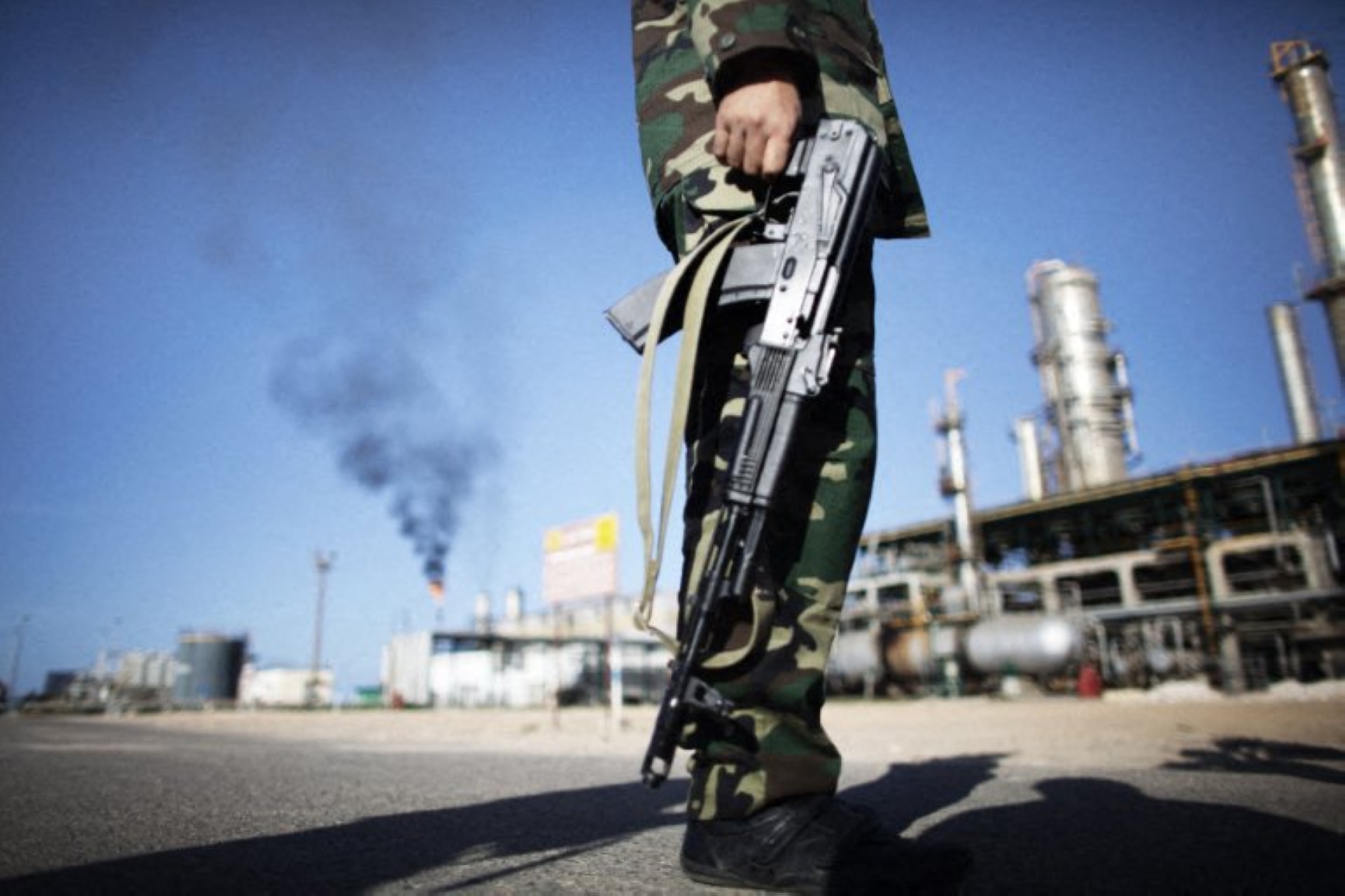
A fighter from the National Transitional Council guards the Zawiya oil refinery, 40 kilometres west of Tripoli, on 27 October 2011.

Untapped reserves

For decades, natural gas in Libya was treated largely as a secondary product used to power domestic electricity stations, while oil remained the country’s main source of revenue. But that began to change after Russia’s war in Ukraine reshaped global energy flows. Europe started seeking gas supplies that were closer, more secure and less exposed to geopolitical pressure, bringing Libya back onto the continent’s energy radar thanks to its location, its direct pipeline to Italy and its large untapped reserves.

Libya’s gas industry developed in stages, marked by three milestones: the production of associated gas from oilfields, the country’s entry into the ranks of gas exporters, and the rise of offshore gas and pipeline exports. The first stage began with the start of commercial oil production in 1961, when associated gas was extracted from oilfields. Most of it was used domestically or flared due to limited infrastructure and the absence of export markets.

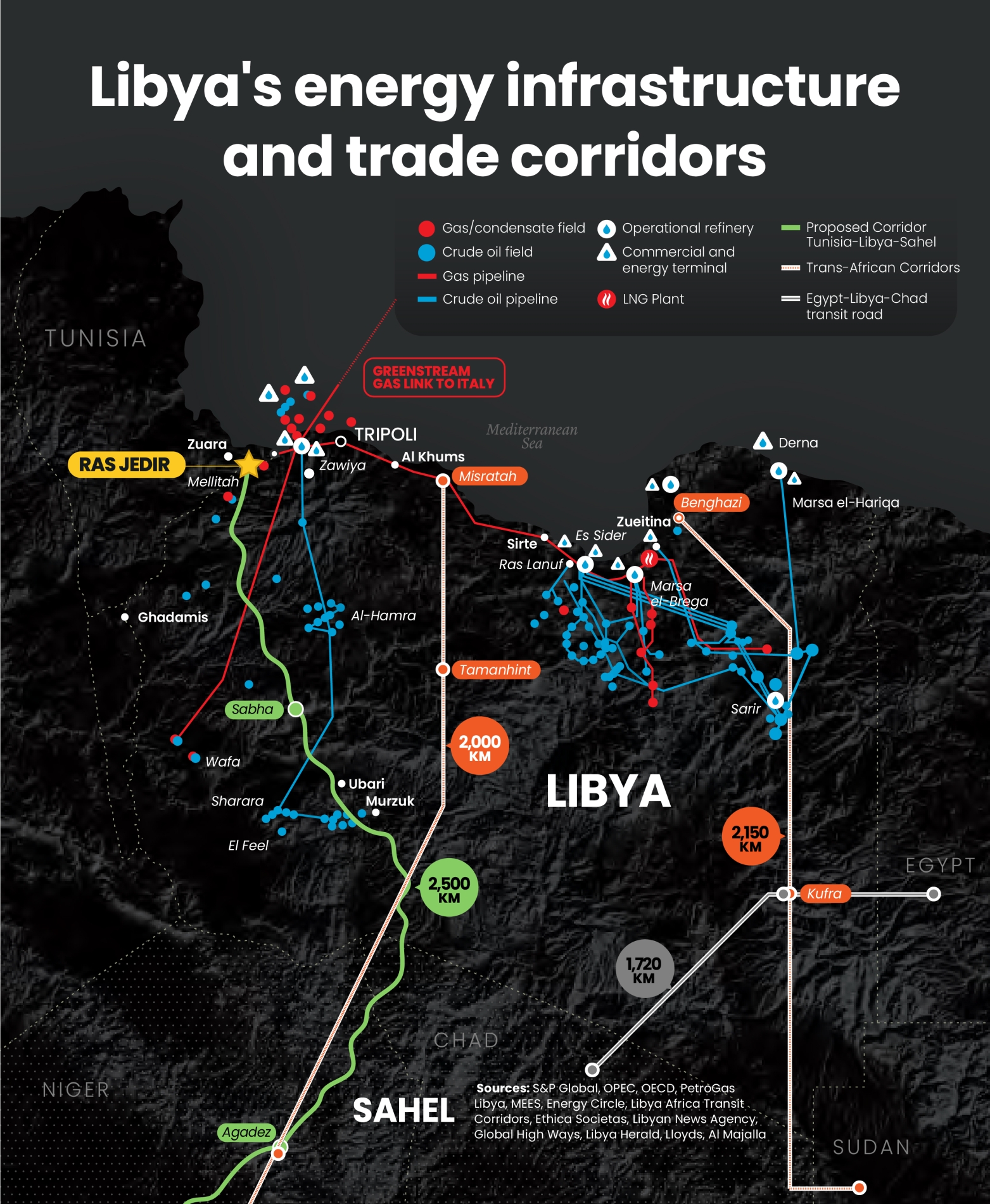
A major milestone followed in the 1970s, when Libya built one of the world’s earliest liquefied natural gas plants at Marsa Brega, following similar ventures in Algeria and the United States. The plant processes associated gas from the Zelten, al‑Aqila, Laheeb and al‑Jabal fields, transported through a 170‑kilometre pipeline.

The decisive shift came in 2004, when the Western Libya Gas Project, developed by Eni in partnership with the NOC, entered commercial operation. The project included developing the offshore Bahr Essalam field and the onshore Wafa field, establishing the Mellitah processing and compression complex, and launching the Greenstream pipeline, which began delivering gas to Italy in October 2004. With an initial capacity of around 8 billion cubic metres per year, Greenstream made Libya a direct supplier of natural gas to Europe for the first time.
Getty Images
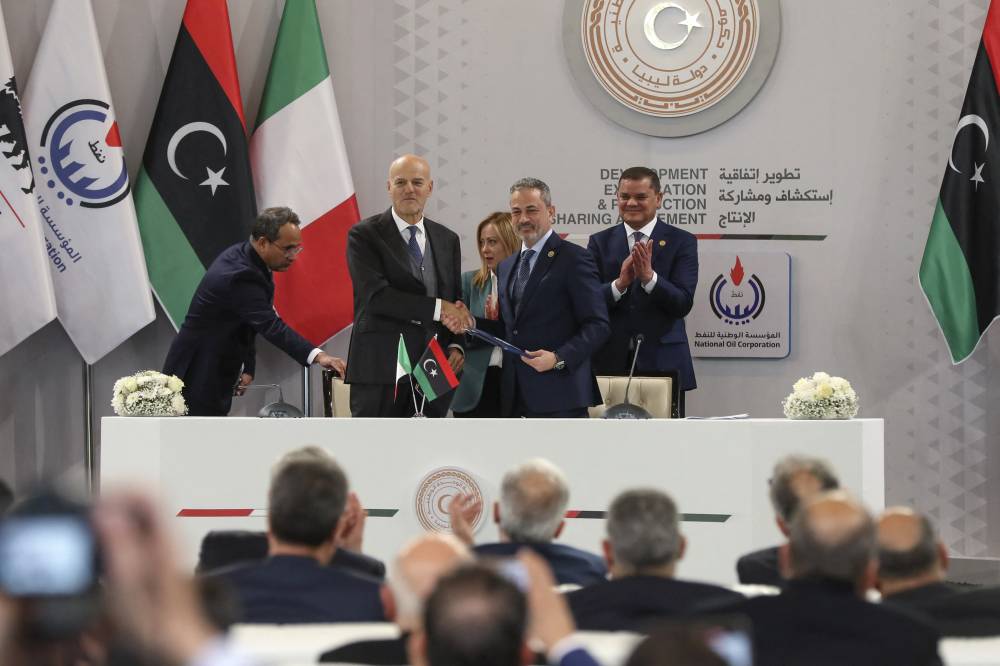
Italian multinational oil and gas company ENI's CEO Claudio Descalzi and Libyan National Oil Corporation chief Farhat Bengdara sign a bilateral agreement during a ceremony.

Libya’s proven natural gas reserves are estimated at 53 trillion cubic feet (1.5 trillion cubic metres), the fifth‑largest in Africa. Yet much of this resource remains underdeveloped due to years of political division, weak investment, and delayed exploration projects.

Another turning point

The year 2026 is now seen as another potential turning point, as a series of developments push Libya’s energy agenda more decisively towards gas. On 29 June, Eni, through its joint venture with the NOC, Mellitah Oil and Gas, announced the successful start of production, supported by the Sabratha Compression Project. The offshore project is designed to sustain and increase output from the Bahr Essalam field, located about 100 kilometres off the Libyan coast.
Libya aims to increase gas output to around one billion cubic feet per day in the coming years, with the goal of boosting exports to Europe by the early 2030s.

The project includes installing a new 1,600‑tonne compression unit on the Sabratha platform, equipped with advanced systems that provide a total capacity of around 440 million standard cubic feet per day. It is expected to offset Bahr Essalam's natural decline by boosting recovery from low‑pressure reservoirs, adding roughly 800 million cubic metres of gas annually and increasing condensate output. Libya is counting on this supply to meet rising domestic electricity demand and expand exports to Italy, strengthening its role as a regional gas supplier.

Two other major projects are also underway: the Bouri Gas Utilisation Project, now in the hook‑up and commissioning phase, and the Structures A&E project, which aims to develop two offshore gas fields. For its part, Eni, active in Libya since 1959, remains the country's largest international energy operator. Its average equity production reached around 162,000 barrels of oil equivalent per day in 2025, and it is currently pursuing three development projects with investments nearing $10bn.

Al Majalla

Libya's gas production is concentrated in three main fields, foremost among them Bahr Essalam—the country's largest offshore field—which feeds the Mellitah complex and the Greenstream pipeline. The field began commercial production in 2005 and is undergoing successive expansions.

In March, Eni announced two new discoveries—BESS 2 and BESS 3—following successful drilling in adjacent geological structures. Preliminary estimates suggest the two contain more than one trillion cubic feet of gas in place. Their proximity to Bahr Essalam enables rapid development by linking them to existing offshore facilities.

The Wafa field, located in the Ghadames Basin near the Algerian border, is one of Libya's most important onshore gas fields. Alongside Bahr Essalam, it forms a principal source for the Western Libya Gas Project. Gas from both fields is processed at Mellitah before being supplied domestically or exported to Italy.

Exploration activity in Ghadames is also ramping up. In April 2026, the NOC announced a new discovery with Algeria's Sonatrach at the A1‑69/02 well, which tested at around 13 million cubic feet of gas per day and 327 barrels of condensate. 

AFP
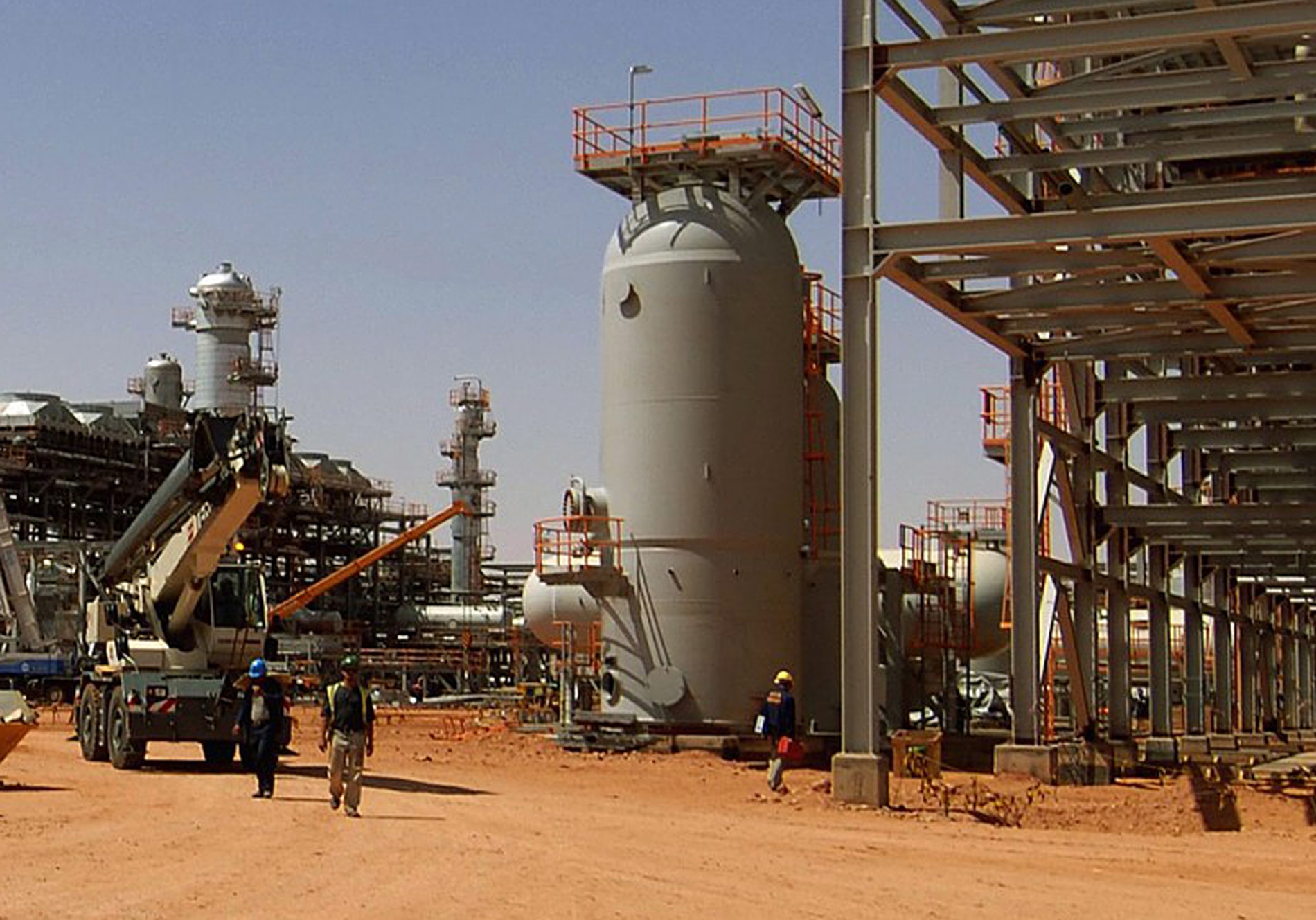
The In Amenas gas field, jointly operated by British oil giant BP and Norway's Statoil in eastern Algeria near the Libyan border. Hydrocarbons have kept the dollars coming in.

European demand

After the war in Ukraine, diversifying gas supplies became a European priority. The continent has reduced its reliance on Russian gas and is seeking alternatives through Norway, Algeria, Azerbaijan and liquefied natural gas. In this shifting landscape, Libya stands out as a nearby source whose supplies could be increased through existing infrastructure.

Greenstream, running from Mellitah to Sicily, is Libya's most important strategic asset. Its design capacity is 8 to 11 billion cubic metres per year, yet exports remain well below that level due to limited production, domestic demand and recurring disruptions.

Italy is the main European beneficiary of Libyan gas. Libya also supplies roughly one‑fifth of Rome's crude imports. Yet gas exports to Italy fell to around one billion cubic metres in 2025, down from 1.4 billion in 2024, largely due to domestic constraints and political instability.

Higher gas production would add fresh volumes to global markets and help ease pressure during periods of geopolitical tension.

During a meeting in May 2026, Italian Prime Minister Giorgia Meloni and Libyan Prime Minister Abdul Hamid Dbeibeh reaffirmed the importance of strengthening energy cooperation. Rome stressed the need for greater investment to raise Libyan gas production and stabilise supplies.

The NOC says Libya aims to increase gas output to around one billion cubic feet per day in the coming years, with the goal of boosting exports to Europe by the early 2030s. Higher production would add fresh volumes to global markets and help ease pressure during periods of geopolitical tension. That outlook is reinforced by forecasts from the Gas Exporting Countries Forum (GECF), which expects global demand to continue rising, especially in Asia.

font change