Libya’s intransigent factions test US push for unity

Power-sharing between east and west should be possible, but negotiations get tricky when it comes to dividing revenues and remits. Will the two rival families agree to compromise?

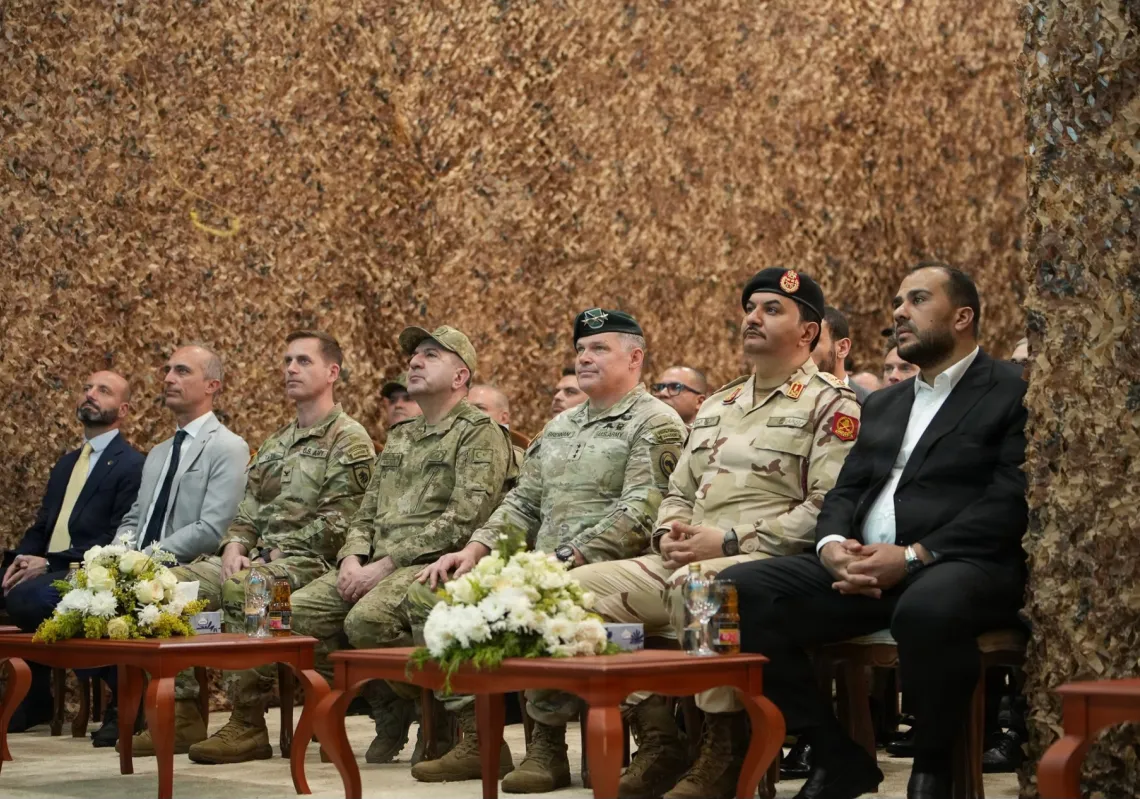
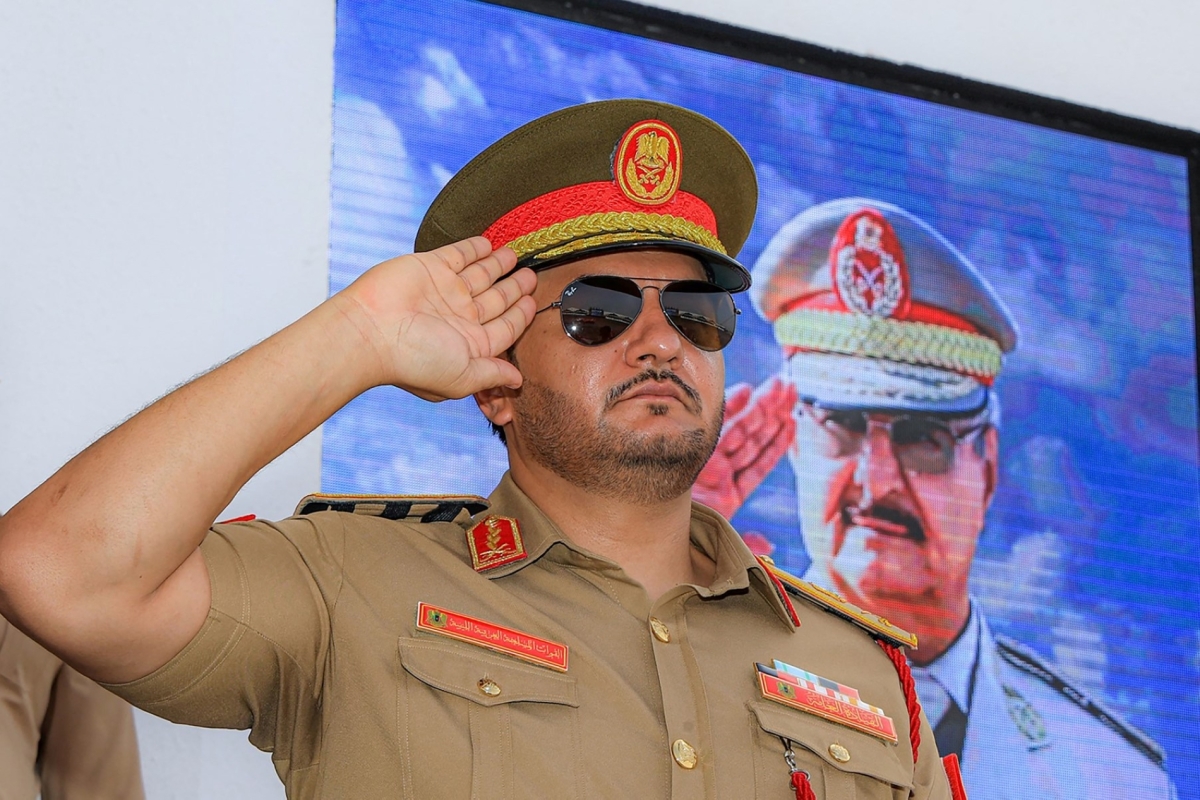
Saddam Haftar attends a military parade in Benghazi.
AFP
Saddam Haftar attends a military parade in Benghazi.

Libya’s intransigent factions test US push for unity

Donald Trump lauds himself on his dealmaking. “Deals are my art form,” he writes in his appropriately named 1987 book, The Art of the Deal. “Other people paint beautifully on canvas or write wonderful poetry. I like making deals, preferably big deals. That’s how I get my kicks.”

Since taking up office for his second term as US President, Trump’s dealmaking has been prodigiously applied worldwide. From the Democratic Republic of Congo to the Islamic Republic of Iran, from Lebanon to Venezuela, Gaza to Kashmir, Trump has sought to reach a deal to end conflicts. Now, it seems his gaze has fallen on Libya.

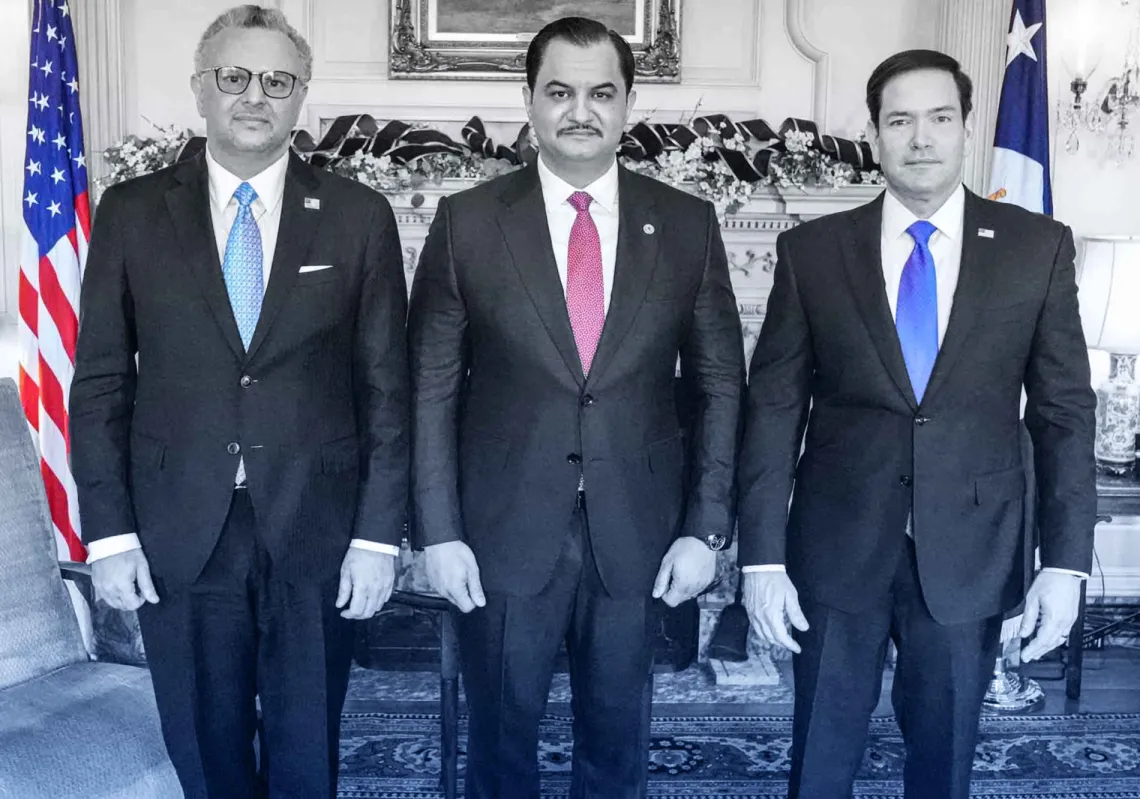
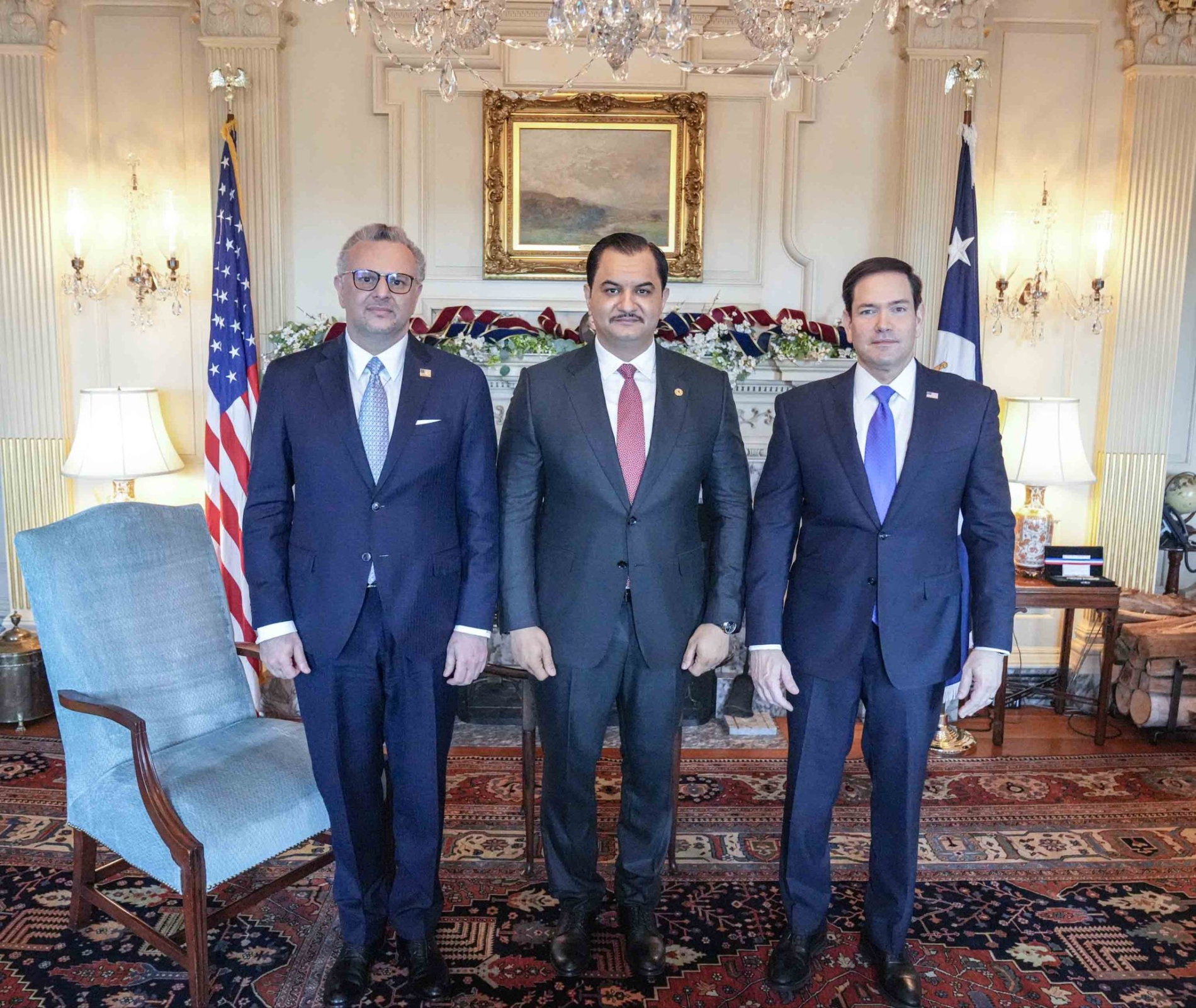
On 29 June, Trump’s Secretary of State Marco Rubio met Saddam Haftar, the deputy commander and heir-apparent of the Libyan Arab Armed Forces (LAAF), a militia that controls Libya’s oil-rich east and south. This official meeting comes after Trump’s advisor Massad Boulos had laid the groundwork for power-sharing in Libya, which has been torn between east and west for well over a decade.

Libya has huge oil reserves, so, like Trump’s Congo deal, natural resources are at the heart of his interest, whilst in Gaza, the president’s comment about its potential to be a “Riviera” appeared to show more interest in the Mediterranean real estate opportunity, despite being home to two million Palestinians.

The 'Boulos deal'

What is now known in Libya as the ‘Boulos deal’ is based on a simple equation. It seeks to build a durable peace through a power-sharing agreement between the two families that grabbed power in recent years. In Tripoli, there is the Dbeibeh family, while the Haftars (led by father, Khalifa) are in the east. With backing from abroad, the Haftars have created an oil-funded statelet with their own government.

A power-sharing arrangement would take the form of a new unity government involving both families (or their appointees). The profits from developing Libya’s offshore gas fields are being used as an incentive to keep the peace. The nub of the idea has been knocking around for years, but it has never found a way through the factionalism. However, this US administration prioritises the resolution of ‘forever wars’ through commercialism, so there is every chance Trump may succeed.

The economic environment that makes the unofficial elements of the deal possible has been gradually manufactured since the ‘Abu Dhabi oil deal’ of 2022 between Saddam Haftar and Ibrahim Dbeibeh, the latter being the special advisor (and relative) to Prime Minister Abdul Hamid Dbeibeh. Haftar agreed to lift Libya’s oil blockade; in exchange, the chairman of Libya’s National Oil Company (NOC) was replaced, and the east received a guaranteed share of Libya’s oil revenue.

In practice, this meant opening up the NOC, allowing the two families to take control of subsidiaries, and re-routing Libya’s oil revenues. Its final form was a new company, Arkenu, that broke the NOC's monopoly on selling Libyan oil, took ownership of roughly half of Libya’s oil exports, and divided the profits between the two families (through their international backers).
AFP
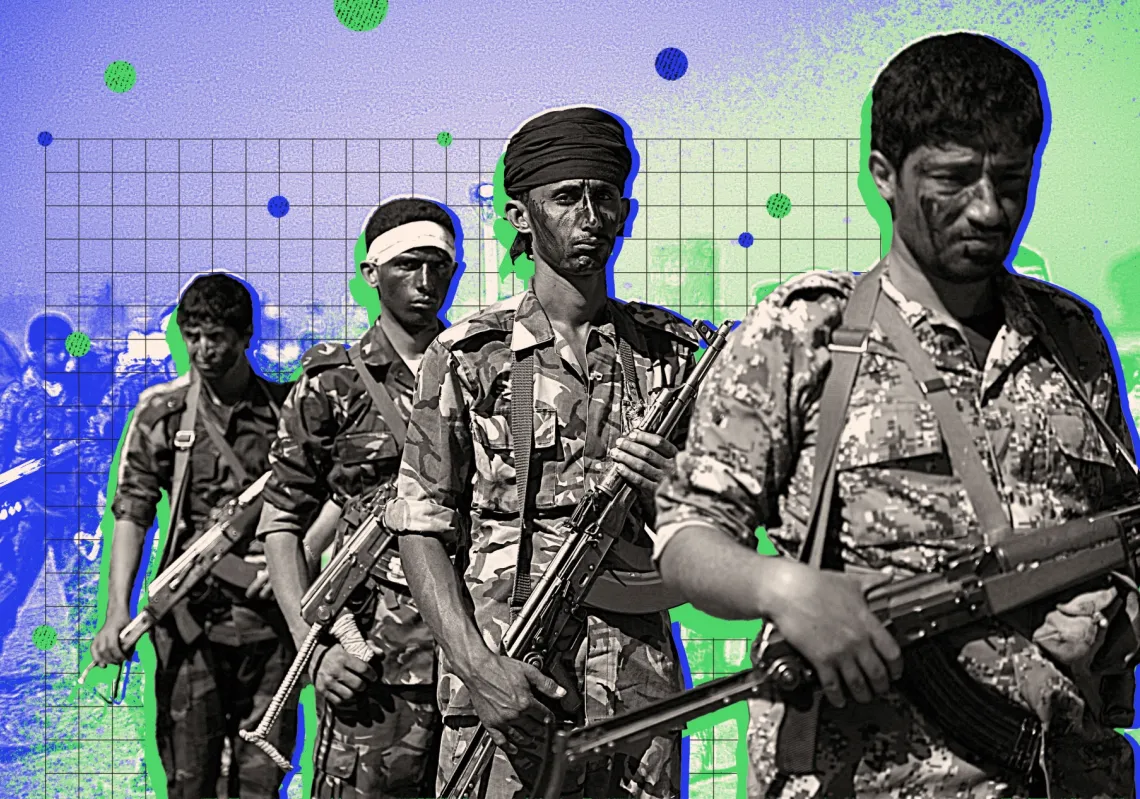
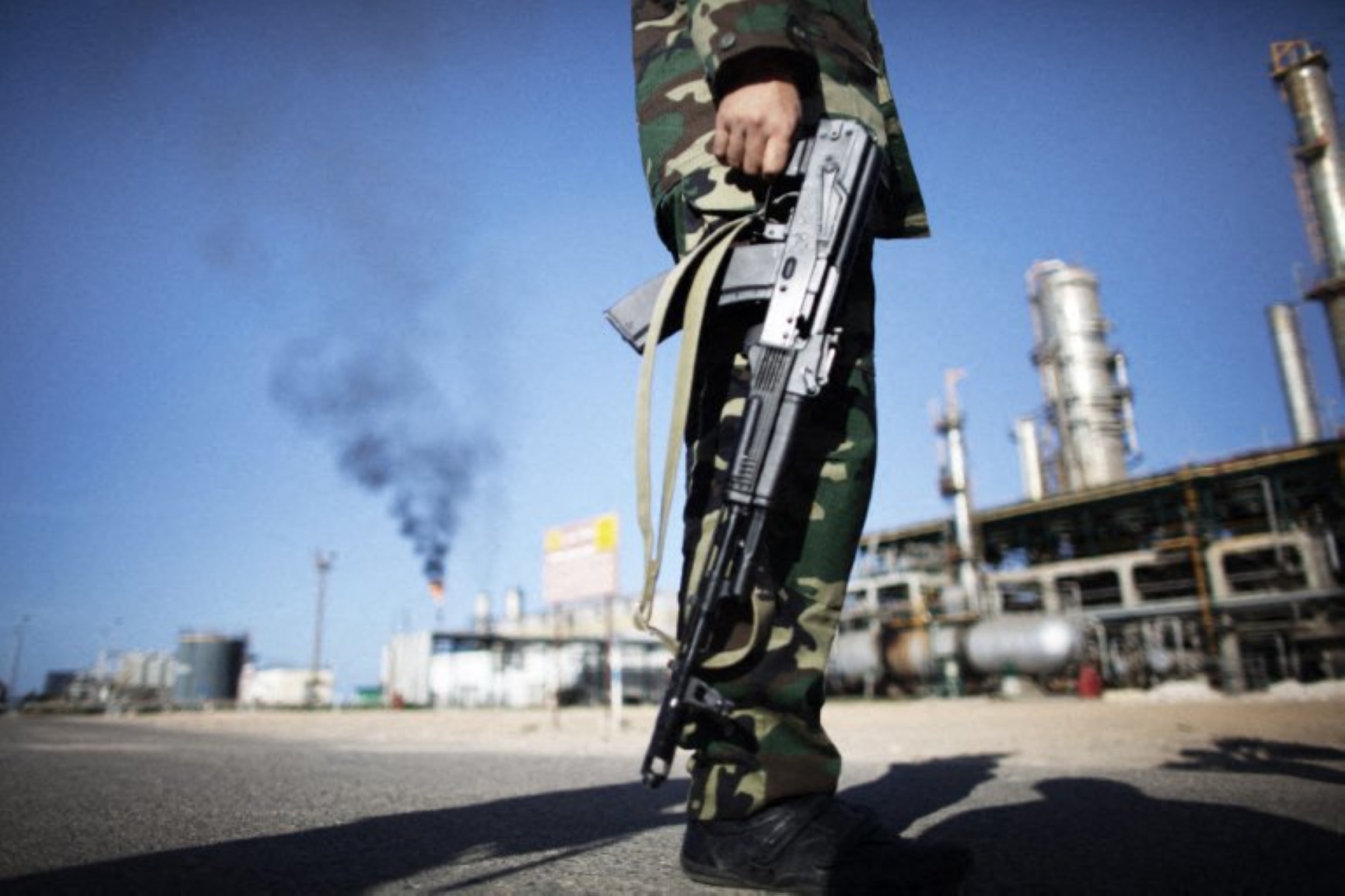
A fighter from the National Transitional Council guards the Zawiya oil refinery, 40 kilometres west of Tripoli, on 27 October 2011.

Foreign influence

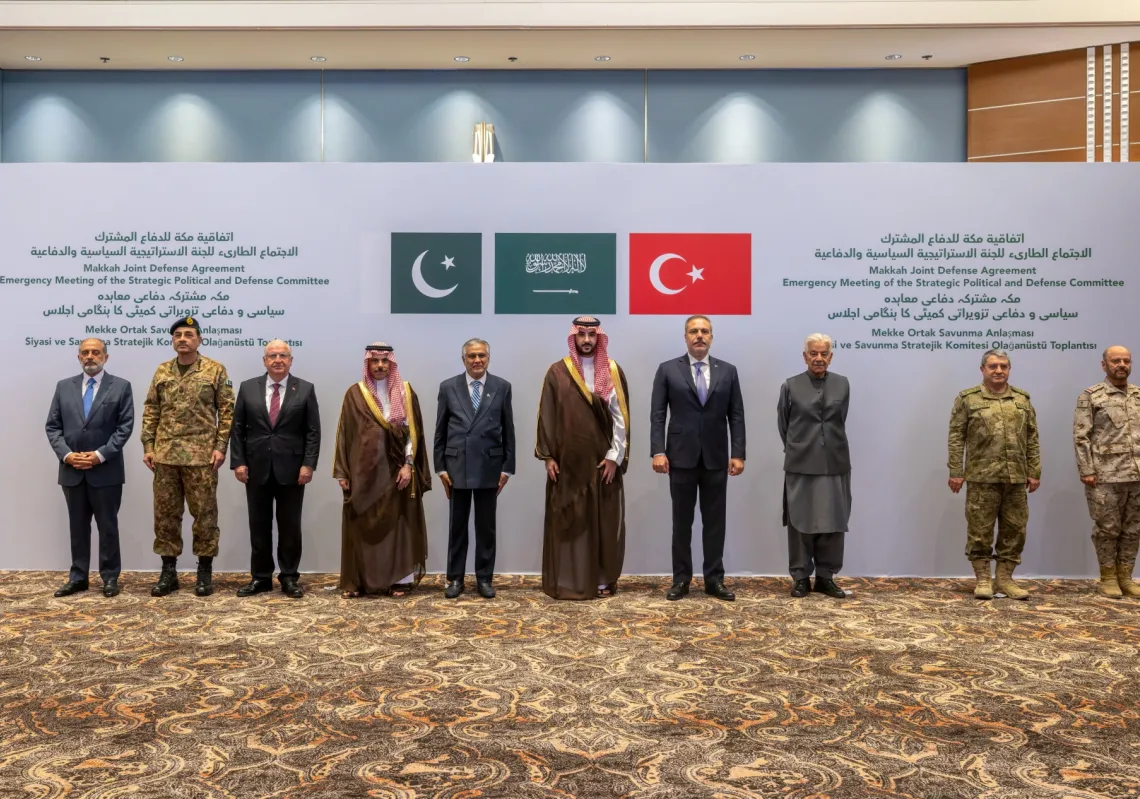
The political environment for the deal has been carefully forged by Türkiye over the past few years, using ‘economic diplomacy’ to engage both families and their territories with energy, construction, and other commercial projects. There has also been ‘military diplomacy,’ exercised through bases in western Libya. Haftar was recently hosted at a Turkish arms fair.

Türkiye’s influence is now being wielded to try to solidify a status quo that has been immensely profitable to them. Ankara wants to finalise an agreement on maritime borders that is crucial to the country’s Mediterranean strategy. To this end, the support of the Italians and the Americans has been sought for a power-sharing deal, with Boulos shuttling between Tripoli, Benghazi, Rome, and Paris. The idea being mooted in these capitals is to appoint Saddam Haftar as Libyan president.
American energy companies like Hill International, ConocoPhillips, and Exxon Mobil have agreed deals in Libya and will invest in the event of a political deal

American energy companies like Hill International, ConocoPhillips, and Exxon Mobil have agreed to deals in Libya and will invest in the event of a political agreement, adding another layer of incentives. There are signs of promise: the rival factions agreed on Libya's first official budget in years, for April 2026, formally appropriating 'development' funds for both governments and contributing to a joint military exercise between their rival forces.

Still, Boulos has his work cut out, with unverified reports that Saddam wants a greater revenue share and that the Dbeibehs have said he would not be welcome in Tripoli. In many ways, a deal remains a distant prospect, and Boulos is believed to feel aggrieved and misled, with military cooperation and budgetary agreements not translating into further engagement on power-sharing.


@US_SrAdvisorAF/X
US Secretary of State Marco Rubio, Libyan National Army Deputy Commander Saddam Haftar, and Trump advisor Massad Boulos in Washington on 29 June, 2026.

A lust for power

At its heart is a battle for dominance. The factions do not seek cohabitation, but domination. Moreover, Libya's broader political environment does not need a deal that concentrates power and resources in the hands of two families, as the country falls into ruin. Pushing through a deal, Boulos may make things worse. The Haftar family's ambition has always been to rule all of Libya, with Khalifa Haftar having begun his first military campaign in 2014.

Various initiatives have tried to bring him into national power-sharing deals, including one led by France in 2017, but that ended with an oil blockade and a military campaign to seize Libya's south. The UN's national conference process in 2019 was again aimed at power-sharing and elections, but Haftar's forces soon laid siege to Tripoli, just as the UN Secretary-General, António Guterres, was there to finalise the deal. Haftar later boycotted Dbeibeh's government and launched a fresh oil blockade.

Recent history suggests that any Haftar gains are simply pocketed before the next push for power. If Saddam Haftar is made president and thus becomes Libya's commander-in-chief, he could launch a military coup against the Dbeibeh family. Ever wary, Ibrahim Dbeibeh is hesitant to reach a deal with Saddam and the Americans, fearing that this could splinter his support. The reason Saddam could not be safely invited to Tripoli is that he and his family are considered war criminals in much of Libya. This explains the repeated public protests in Tripoli against a deal.

Risk vs reward

Those concerns are mirrored in eastern Libya. Haftar, 82, is believed to have six sons, with two—Saddam and Khalid—serving in the LNA. Another son acts as his father's political advisor. As the ruling families squabble and jostle, Libyans grow increasingly impoverished. Libya is still threatened by a patchwork of armed groups, many of them tribal.

Despite Boulos's and others' efforts to unify Libya's warring factions, some fear there is no real political process and that there will be no change.

Prevailing scepticism

Despite Boulos's and others' efforts, some fear there is no real political process and that there will be no change. Still, there is a US president who loves the art of the deal and who is keen to claim that he has ended another conflict. There remains the chance that his administration can adjust to Libya's changing dynamics with enough incentives to bring the rival factions together in a power-sharing agreement, with oil revenues crucial to the discussions. Success would rewire Libyan politics.

The US Treasury Department already has oversight of Libya's central bank, whose total foreign assets (including foreign currency reserves and gold) were valued at $99.4bn at the end of 2025. A legitimate, national government would therefore begin from a sound financial footing. Will one be created?

The art of any deal lies in how well it mitigates against unexpected calamity. Boulos can either pivot towards a new format that exemplifies US commercialism and creates a mutually beneficial future, or preside over an event most likely to cause a new complex war that neither the region nor the US can afford to deal with.  

font change