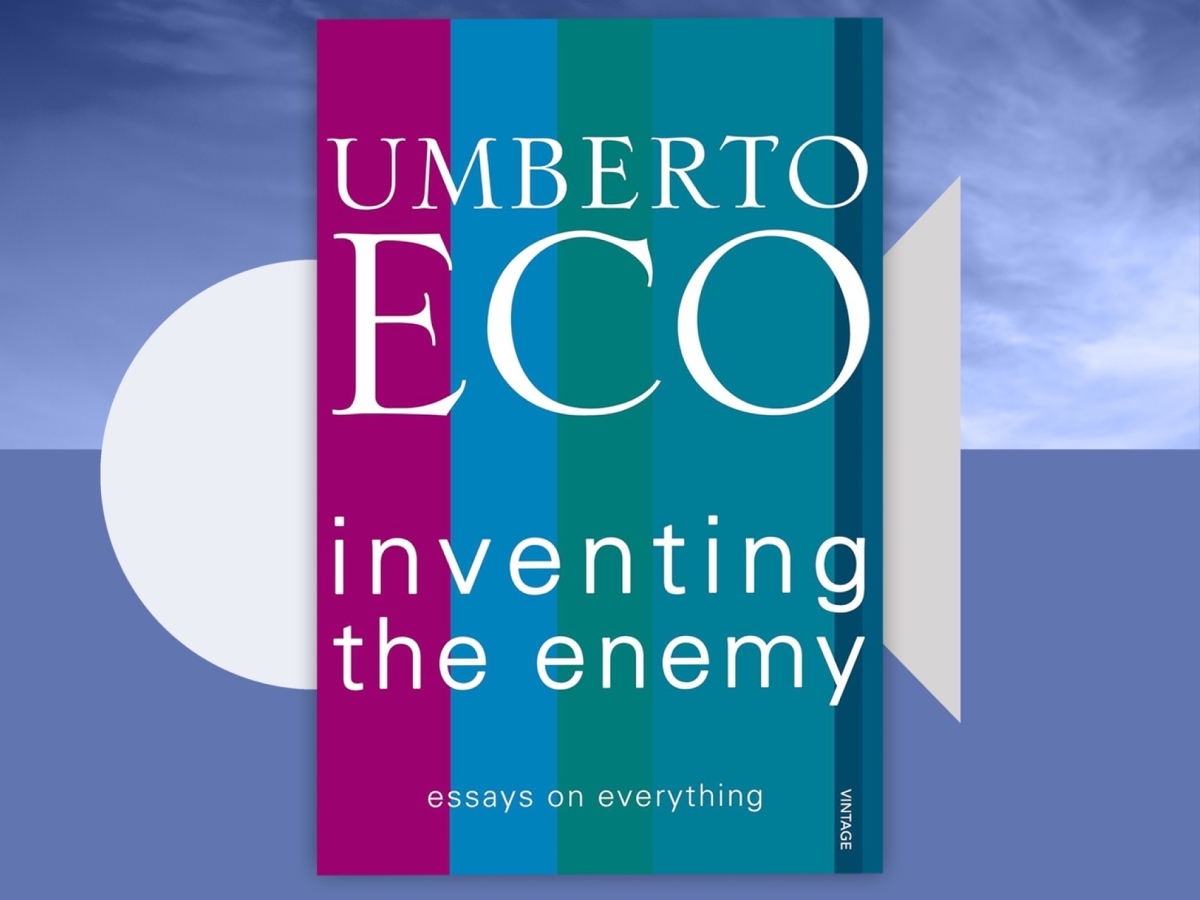
When the Italian writer Umberto Eco delivered a lecture at the University of Bologna in 2008, he was not offering a passing moral reflection on war and hatred. He was dissecting one of the most deeply embedded mechanisms in human history: the abiding need to invent an enemy.
Now, with the publication of the French translation of that lecture in a slim volume titled Inventing the Enemy, issued by Grasset, the text seems more urgent than ever. The world Eco described almost 20 years ago has become more fractured, more suspicious, and more willing to manufacture its daily enemies.
Eco begins with an apparently simple incident. A Pakistani taxi driver in New York asks him who the Italians' enemies are. The writer is taken aback, for the question rests on an implicit premise: that every people must have a historical adversary through whom it recognises itself. Eco first tells the driver that Italians have no fixed enemy. He then revises his answer, observing that Italy has long lived through internal wars: between north and south, fascists and partisans, the state and the mafia, and even between governments themselves.
This opening anecdote soon becomes the threshold to a larger philosophical question: can any human community build an identity without an enemy against whom it defines itself? Eco’s answer is profoundly pessimistic. History, in his view, shows that human groups repeatedly require an ‘other’ onto whom they can project their fears, contradictions, and anxieties. The enemy, in this sense, is more than a military opponent. He is a symbolic instrument of collective cohesion. In the absence of a real enemy, societies hasten to invent one.
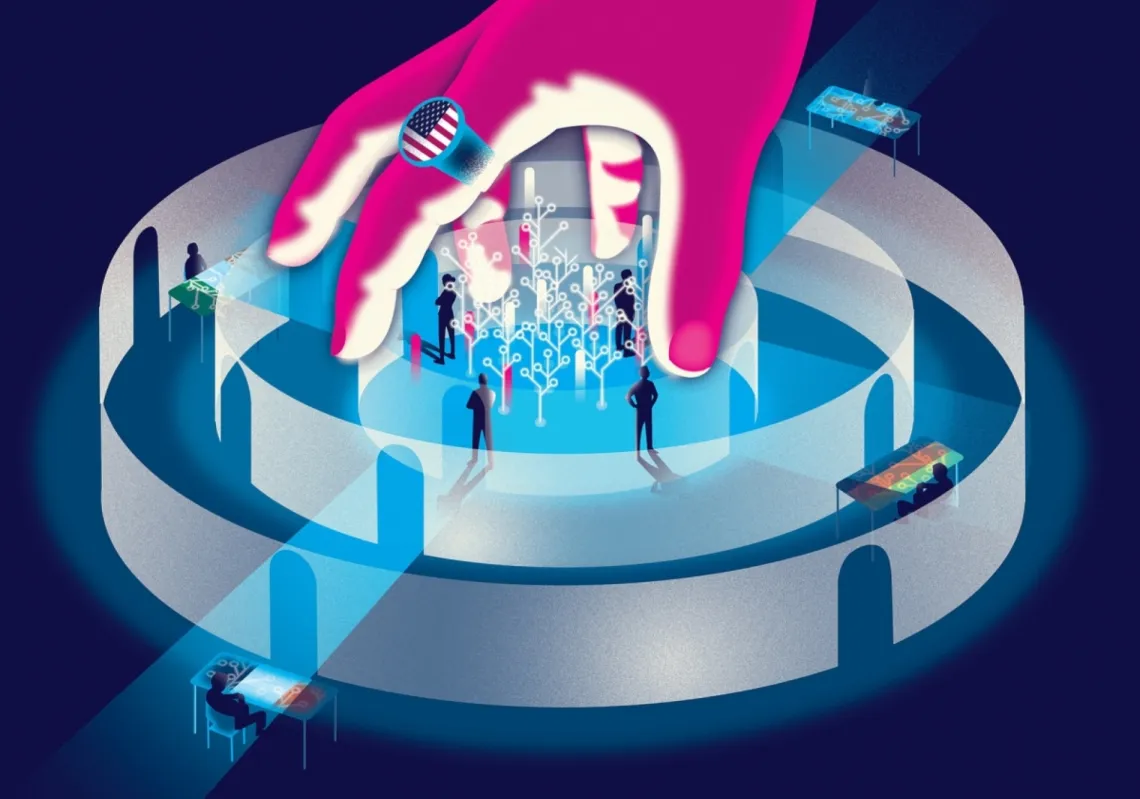
Eco cites, for instance, the way the US, after the collapse of the Soviet Union, moved in search of a new enemy, a trajectory that culminated in the ‘war on terror’ after the attacks of 11 September 2001.
Italian writer and scholar Umberto Eco, during the signing of his novel "Numero Zero" in Paris, in 2015.
The architecture of prejudice
The importance of Eco’s text, however, lies beyond this general proposition. It resides above all in the encyclopaedic breadth with which he traces the manufacture of the enemy across the centuries. Eco, the semiotician, novelist, and historian fascinated by ancient texts, summons a vast body of literary, religious, and political evidence to show that the image of the enemy recurs according to a remarkably stable structure, however much eras and cultures may differ.
In ancient Rome, the enemy appears as a figure of moral and physical difference. Eco invokes Cicero’s speeches against his fellow citizen Catiline, in which political opponents are recast as decadent, luxurious, corrupt beings, steeped in appetite and excess. The process rests on the construction of a moral image that casts the adversary as a disease, a deformity, a deviation from the proper order of things. From that moment, as Eco explains, difference itself becomes a sign of danger.
This mechanism, in his view, repeats itself without end. To the Romans, the ‘barbarians’ were people deficient in language and reason. In the Middle Ages, those marked by religious or ethnic difference became the object of a long sequence of bodily and moral distortions.
The process rests on the construction of a moral image that casts the adversary as a disease, a deformity, a deviation from the proper order of things.
Eco devotes many pages to tracing the ways in which the figure of the heretic, the Gypsy, the foreigner, or the witch was fashioned through a dense accumulation of stereotypes: foul smell, deformed body, unbridled desire, secret conspiracy, the poisoning of wells, the murder of children, and the profanation of sacred things.
Within this context, he dwells at length on the image of the Jew in the Christian European imagination, seeking to expose the mechanism of racist invention itself rather than merely assemble a cold historical record. The texts he retrieves, from the writings of the Church Fathers to 19th-century literature, show how religious or cultural difference is transformed into a diabolical sign. These texts also provide him with precious material through which to demonstrate that the enemy is produced through language, discourse, myth, and repetition.
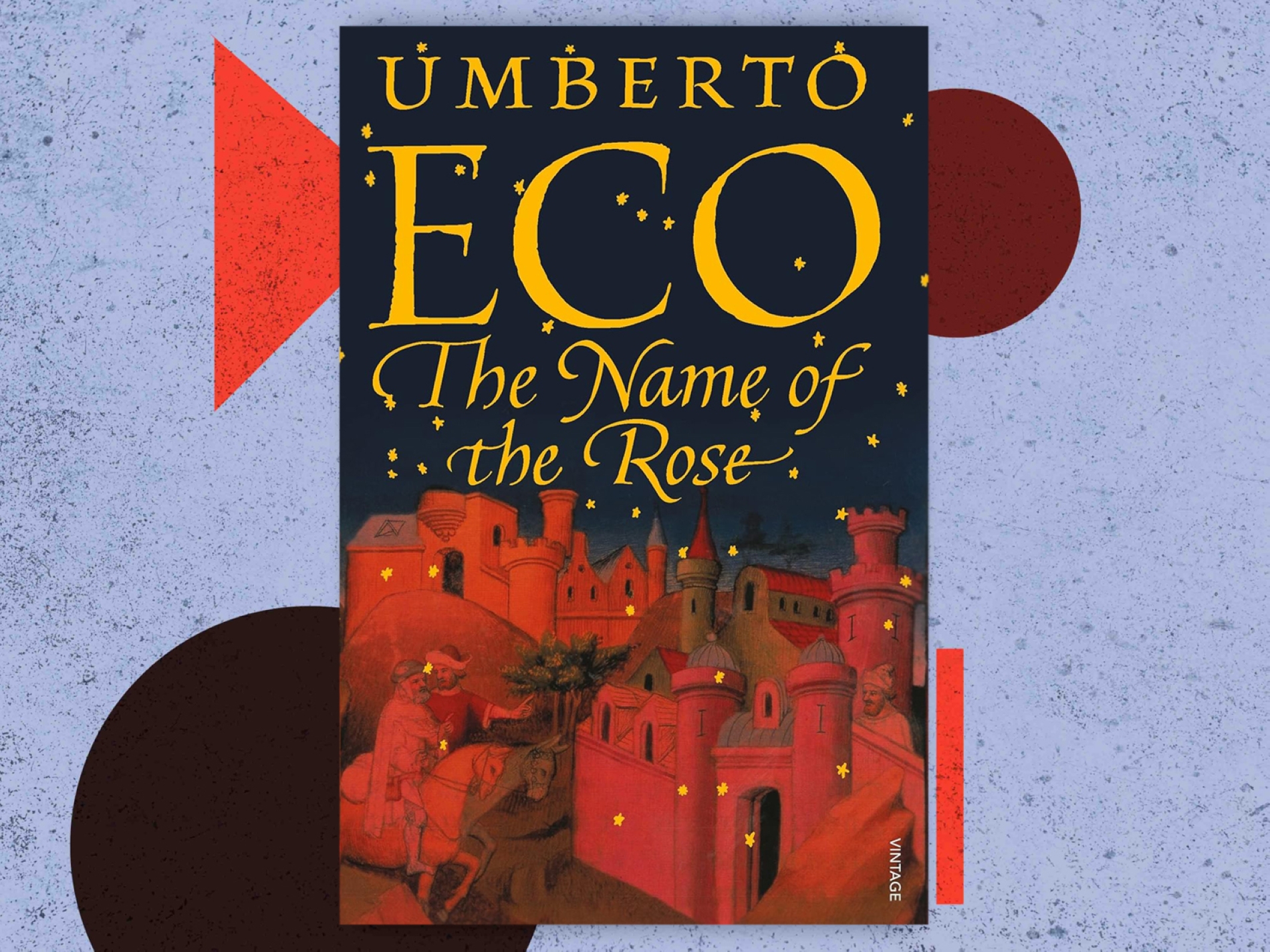
Herein lies both the force and the danger of his text. The author of The Name of the Rose reveals the workshop in which hatred is made, far from the abstractions of theory. He observes that the description of the enemy remains almost identical from one age to another: he is always ugly, foul-smelling, deviant, speaking a corrupted language, and practising obscure rites.
Even the body itself becomes evidence for the prosecution. The nose, skin, hair, voice, and smell are all summoned to prove that the other does not belong to "natural humanity". This mechanism grows sharper when Eco turns to the Middle Ages, where the pages devoted to European witches are among the most striking in the text. There, he shows how poor and marginalised women were transformed into an "internal enemy" threatening Christian society.
He also reveals how, during the Inquisition, confessions extracted under torture, and theological treatises, helped produce the image of the witch as a creature allied with the devil, flying by night, profaning sacred objects, and taking part in satanic sexual rites. Most important of all, the victim herself would often come to believe the image imposed upon her.
Identifying with the enemy
This brings Eco to a central idea: the manufacture of the enemy reaches beyond the defamation of the other. It can push that other into identifying with the very image imposed upon them. To illustrate this, he cites Shakespeare's Richard III, who becomes a villain when he sees himself through society's gaze on his deformed body. It is a complex psychological and political mechanism: society produces the image of the monster, then compels the victim to wear the mask.
Perhaps the text's sharpest contemporary relevance lies in its passage from ancient history to the modern world. Eco argues that modern societies, far from freeing themselves of the need for an enemy, have reproduced that need through more sophisticated means.
In totalitarian regimes, as in George Orwell's 1984, the enemy becomes a daily necessity for the stability of power, and collective hatred is transformed into a permanent political ritual. The media, meanwhile, assumes a decisive role in keeping the image of the adversary alive, vivid, and terrifying. The enemy is produced through language, discourse, myth, and repetition.
Eco goes further still when he links the manufacture of the enemy to the fear of social transformation. The immigrant, the stranger, or the member of an ethnic minority is swiftly turned into a scapegoat whenever societies feel that they are losing their identity or stability. Here, the enemy ceases to be a real danger and becomes a screen onto which the community projects its deepest anxieties.
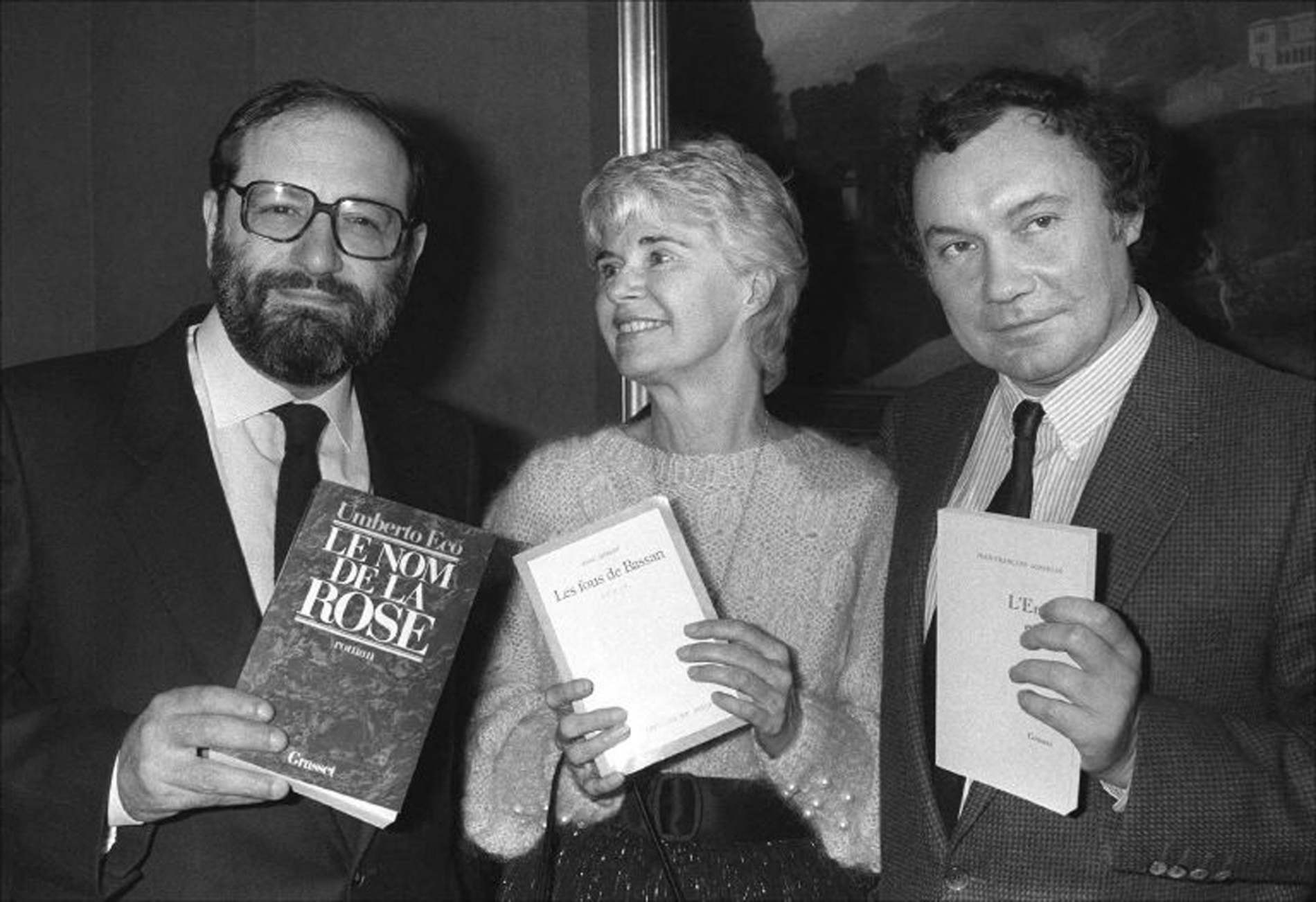
Umberto Eco, after winning the Renaudot Prize for the novel "The Name of the Rose", alongside Anne Hébert and Jean-François Josselin, Paris, in 1982.
Dilemmas of method and outlook
For all its intellectual richness, the text is not without its difficulties. Eco, driven by his archival passion, piles up long and similar examples, leaving some passages closer to a vast documentary exhibition than to a sustained argument.
The abundance of quotations, especially those concerning hostile images of Jews, women, or strangers, gives the text documentary force. At times, however, it disrupts the intellectual rhythm and weakens the argument's cohesion. Some examples could have been compressed without diminishing the central idea.
Despite his evident humanism, Eco at times appears captive to a deep cultural pessimism. He comes close to treating the need for an enemy as a structural feature of human nature, rather than as the product of political or economic conditions that can be altered. Even when he speaks of the possibility of "understanding the other", he presents it as a rare exception reserved for poets, saints, and traitors, rather than as a viable social rule.
Even so, the text retains its profound importance in the way it exposes the mental structure that allows hatred to spread. Eco reminds his readers that racism begins with language, before it reaches killing. It begins with the joke, the mocking adjective, the caricature, and the obsessive insistence on differences of smell, food, or pronunciation. What first appears as a passing symbolic discourse may, with time, harden into actual violence.
Italian writer Umberto Eco participating in the World of Books forum organised by the newspaper Le Monde in Paris, in 2010.
Argument still relevant
From this angle, his argument acquires particular relevance in an age of resurgent populisms. Many contemporary political discourses, in Europe and beyond, still rely on the very mechanisms he describes: inventing a permanent threat, magnifying collective fear, and reducing entire communities to a narrow and dangerous image. Media and technology have changed, yet the same political imagination continues to reproduce itself with unsettling persistence.
The most beautiful aspect of this text lies in its call to listen to difference rather than erase it, and therefore to resist the instinctive urge to demonise difference. For that reason, Eco recalls examples from Aeschylus, Tacitus, and others, where the human adversary appears as a being who can be approached and understood.
At the close of this work, the author of Foucault's Pendulum invokes Sartre's play No Exit, where the other becomes an abiding hell. Yet this hell, as the text suggests, is not an inescapable fate. It is the result of the way we build our relationship with differences. When we fail to understand the other, we feel compelled to reduce them to the image of an enemy. Once we do so, we become prisoners of the fear we have fashioned with our own hands.
Ultimately, Inventing the Enemy is a text about a present that repeats itself without end. It reminds us that the most dangerous lies are those which, over time, become self-evident images in the collective imagination. Here, precisely, lies Eco's genius: in revealing that the enemy, before being a person or a people, is a story a society tells itself so that it may feel more cohesive and less fragile.