
From the moment the referee blew the opening whistle of the FIFA World Cup 2026, the players were not the only ones competing. During the 39-day competition, billions of dollars will be wagered across smartphone apps, betting platforms, and data centres scattered across the globe. In London, a fan may place a wager on England to win. In New York, another may bet on the number of goals the match will produce. In Singapore, a third may stake money on the first player to receive a yellow card.
As crowds follow the games, algorithms will be following a different drama altogether: the shifting probabilities of profit and loss, recalculated with every pass, every shot, and every refereeing decision. Welcome to the World Cup in the 21st century. The tournament remains the greatest football spectacle on Earth, yet it has also become one of the largest global arenas for the sports betting industry, a parallel economy pulsing to the rhythm of the matches themselves.
Investment banks and specialised research firms expect global wagers to exceed $50bn, up from roughly $35bn during the 2022 tournament. This could make it the largest single sports betting event in history by the volume of money in circulation.
Yet the story of these billions is not merely a sporting story. It is a story of technology, data, artificial intelligence, regulation, and the digital economy. Above all, it is the story of an increasingly entangled relationship between a popular game watched by billions and a global industry racing to convert every moment of suspense into an opportunity for profit.
With wagers expected to exceed $50bn (roughly equivalent to Jordan’s GDP), it may appear at first glance that betting companies will reap profits of the same magnitude. The reality is more complex. That figure refers to the total amount staked by bettors across the various matches and events linked to the tournament. In industry parlance, it is known as ‘betting volume’ or ‘handle’.
Betting volume is the total amount wagered by participants across different outcomes. If one person bets $100 and another places $100 on a separate event, both sums are added to the handle, bringing it to $200, regardless of whether either bettor wins or loses. Platform operators retain only a limited portion of these funds after paying winnings to successful bettors.
In industry jargon, this is known as the ‘margin’ or ‘hold rate’. Operators typically keep between 5 and 10% of the total amount wagered, meaning the sector’s actual profits are far smaller than the betting volumes often cited in the media, although they remain enormous by the standards of most economic sectors.
An entire ecosystem
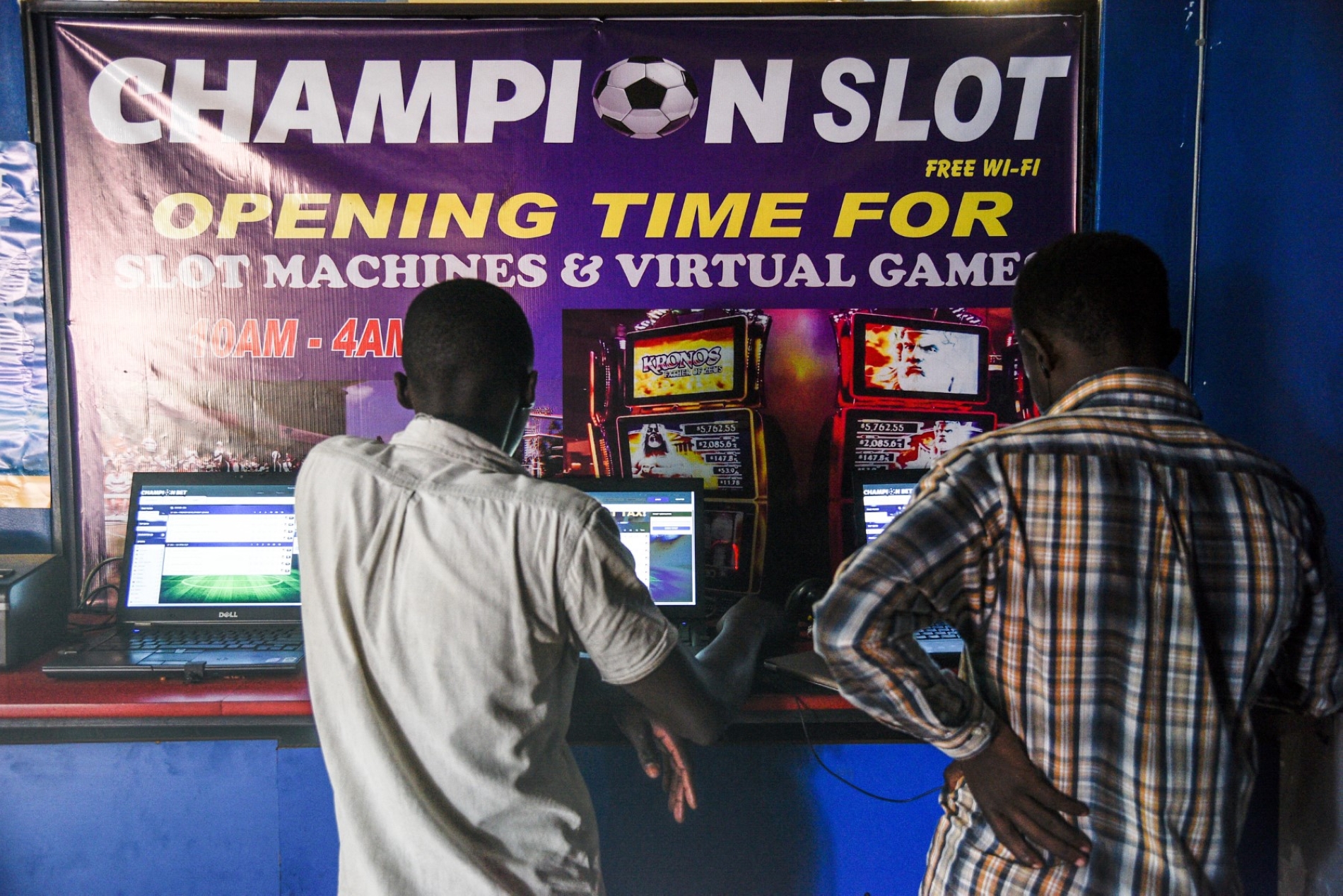
Betting companies, however, are far from the only beneficiaries of this expanding activity. An entire ecosystem stands to profit from its growth: sports data companies that supply platforms with real-time information, technology firms that develop algorithms, electronic payment providers, sports broadcasters, and even some sports federations and clubs that receive direct or indirect returns from sponsorship and advertising. Betting has thus become part of a much wider sports economy, extending well beyond a fan’s simple wager on the outcome of a match.
Until recently, sports betting revolved around a simple question: who will win? Today, that question is one among hundreds. A user can bet on the first player to score, the number of corners, the number of yellow cards, the number of shots taken by a particular player, the timing of the next goal, or whether the referee will award a penalty within a specific passage of play. Some platforms even offer highly granular wagers tied to the smallest details inside the match, a practice known globally as micro betting.