Almir Bašović: the essence of theatre is that the other is not an enemyhttps://en.majalla.com/node/331204/culture-social-affairs/almir-ba%C5%A1ovi%C4%87-essence-theatre-other-not-enemy
Almir Bašović: the essence of theatre is that the other is not an enemy
In an interview with Al Majalla, the renowned Bosnian playwright discusses the relationship between art and memory and the role of the intellectual in the public sphere
FACEBOOK
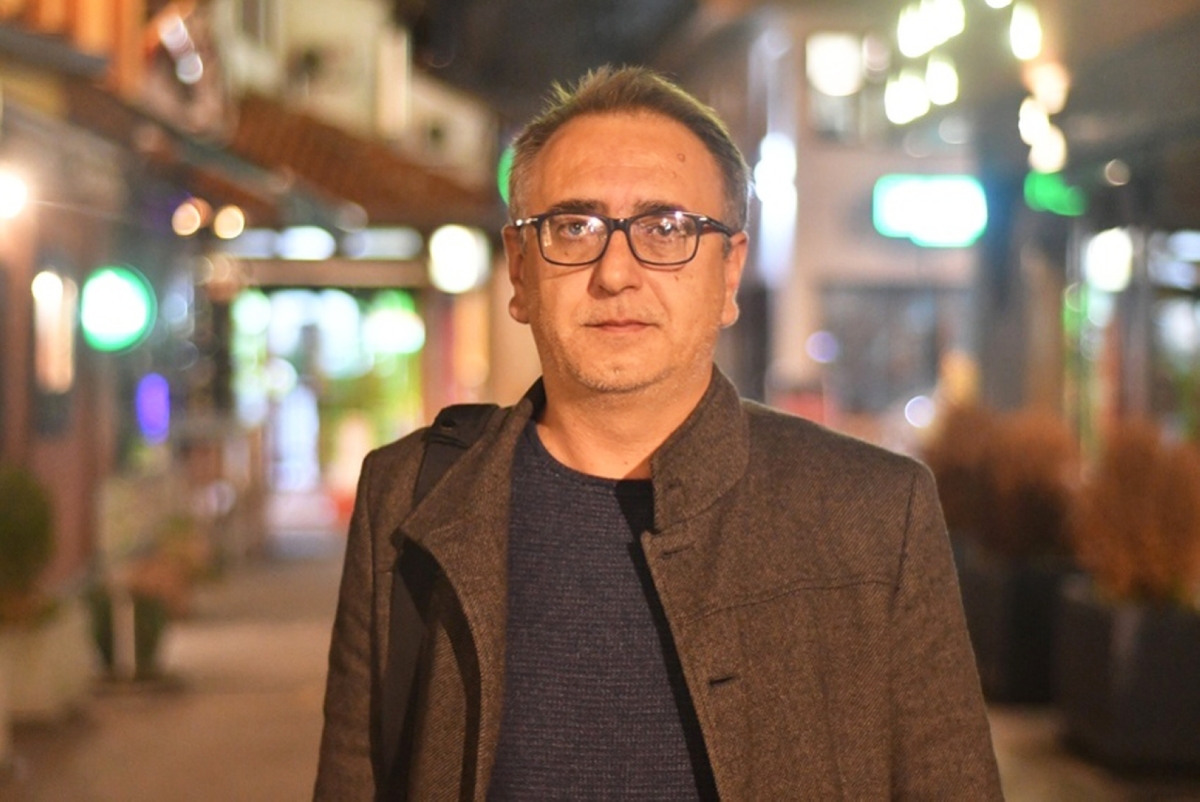
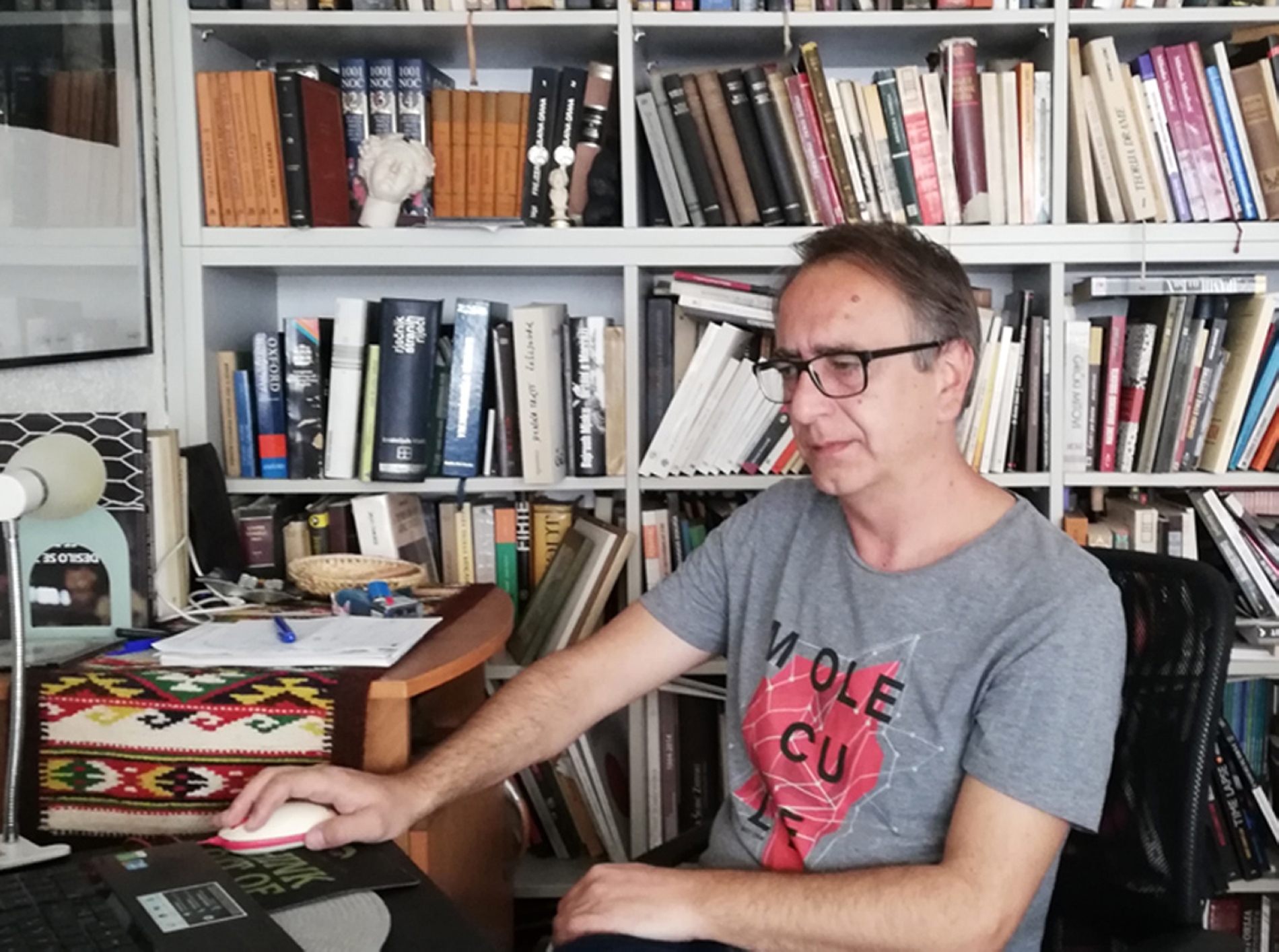
Almir Bašović
Almir Bašović: the essence of theatre is that the other is not an enemy
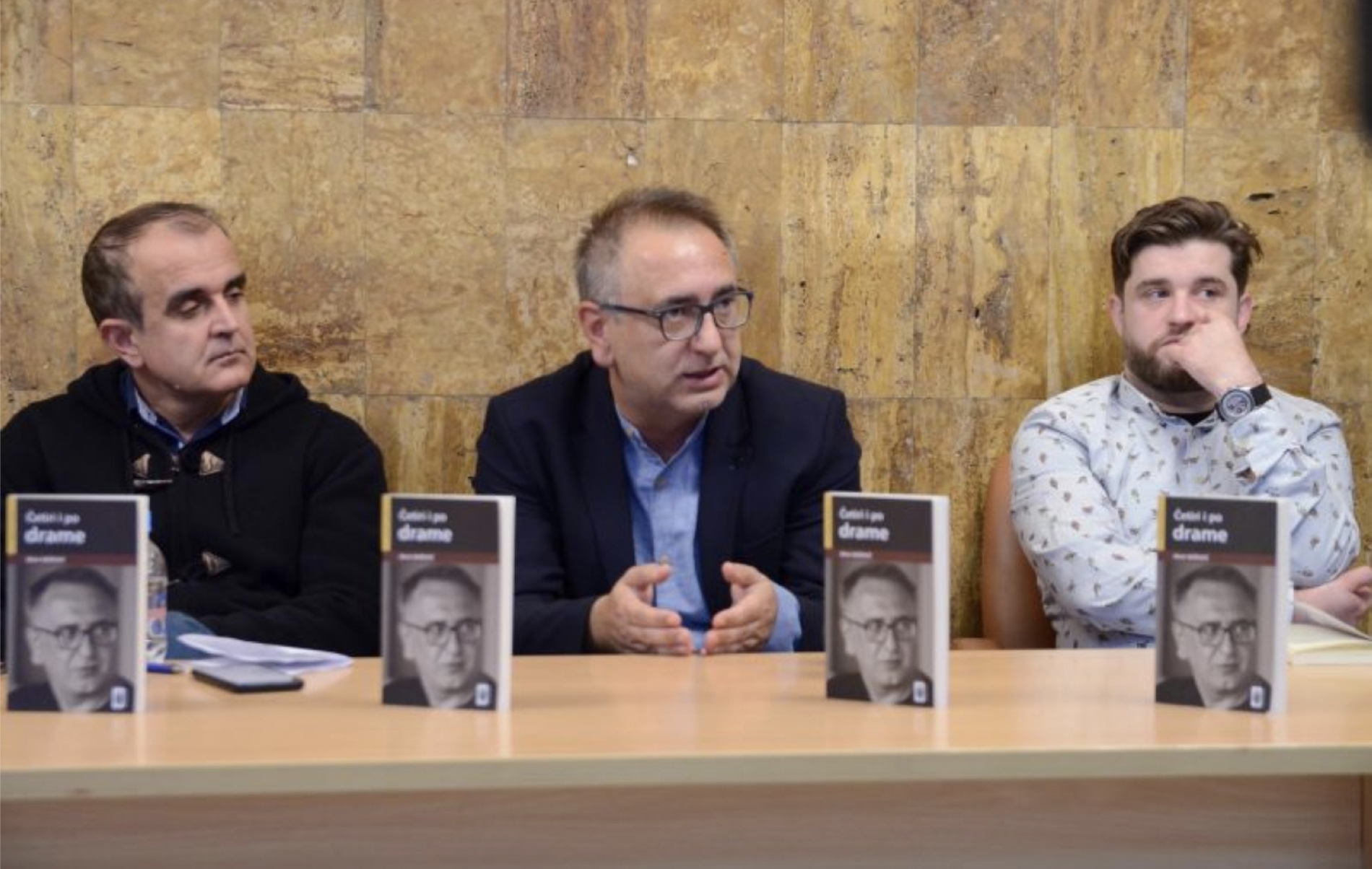
Almir Bašović is among the leading literary theorists and playwrights in Bosnia and Herzegovina, and a professor of comparative literature at the University of Sarajevo. His academic and cultural presence extends across Europe, where he has published dozens of studies and articles, and where his plays have been staged and translated in several European countries. His play Visions from the Silver Age was recognised as one of the 120 best contemporary European theatrical works. In this interview with Al Majalla, he discusses the relationship between art and memory, as well as the role of the intellectual in the public sphere.
Your work emerges from a cultural environment rich in its plurality: Bosnian, Islamic, European, Ottoman, and Yugoslav. How do these layers interact in your writing, and how do you view the concept of “national theatre” in light of such diversity?
In everything I do, I try to preserve that plurality and the layered strata of identity. I was born a Muslim, yet my reading, intellectual formation, and education have remained, first and foremost, rooted in a European frame of reference. One might even say that Islam, at least since the time of the poet Johann Wolfgang von Goethe (1749-1832), has come to be understood as a contributing element to the Europeanisation of consciousness, rather than its opposite.
The Ottoman state also brought highly influential civilisational achievements into Bosnian culture and the cultures of neighbouring regions in Yugoslavia, the country in which I was raised and to which I remain deeply connected as a living cultural space. It is important to recognise that our actual identity is not simply the sum of our affiliations to collective identities, but rather what remains of them after they have been tested and reassessed: that residual trace which does not dissolve entirely into any collective belonging.
As for the concept of “national theatre” in Bosnia and the region, it has a particular historical specificity. It took shape during the Austro-Hungarian period and, at its core, meant that performances should be presented in the “language of the people” rather than in German.
Art and traumatic memory
One of your central concerns is examining the relationship between art, memory, and identity. How can theatre, in particular, engage with collective traumatic memory without falling into the traps of simplification or reproducing conflict?
Theatre is a central institution in cultural memory, and it may well be the art form that speaks most precisely about our conception of identity. What gives theatre its distinctive depth is that a performance is born as a collective act, and the individual receives and experiences it as part of a group, not as an isolated self.
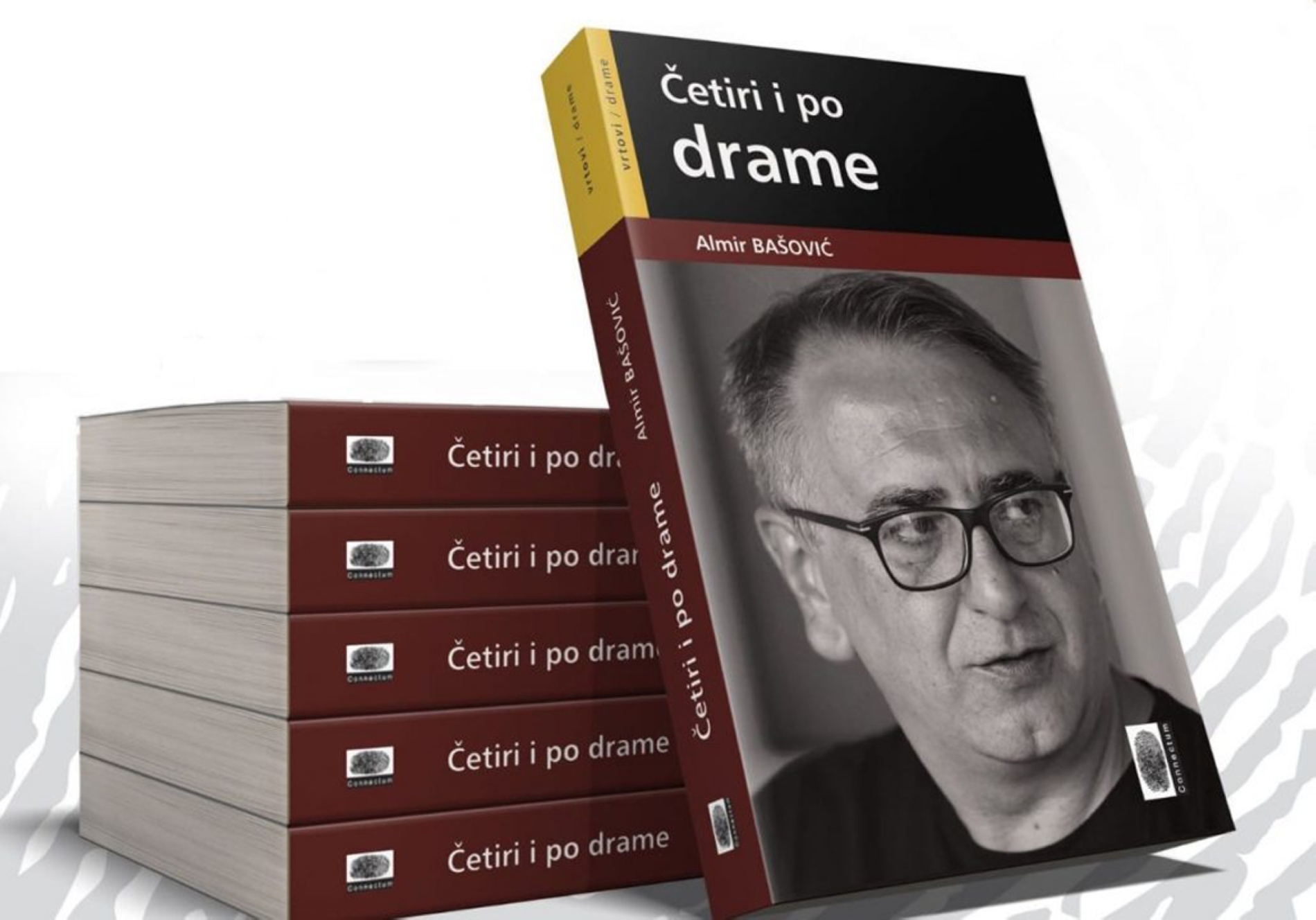
As a playwright and dramaturg, I have had the opportunity to work on painful and shocking subjects related to the Bosnian War. This has reinforced my conviction that it is essential to articulate collective trauma on stage in an artistic language capable of transforming pain into meaning. This allows us to confront the tendency to view the past as a self-sufficient collective “victory”. In this context, one must not lose sight of a fundamental idea inherent in the nature of theatre and its ethical logic: the other is not an enemy to be eradicated from the world, but an interlocutor, one of our possible forms, another version of ourselves.
I try to preserve a layered strata of identity. I was born a Muslim, yet my intellectual formation is rooted in a European frame of reference.
Bosnian playwright Almir Bašović
Your plays, such as Visions from the Silver Age and RE Pinocchio, have been translated and staged in several European capitals. Do you consider your theatre to carry a broader European message, or is it your local Bosnian rootedness that makes it translatable and of global interest?
Critics and scholars such as Svetislav Jovanov, who have written seriously about my plays, have noted that one of their defining features is their deep engagement in dialogue with the European dramatic tradition. The staging of some of my works in Europe has convinced me that my attempt to mediate the Bosnian experience through dialogue with major European playwrights, such as Georg Büchner, Shakespeare, and Beckett, is meaningful and worthwhile, not only at the level of cultural adaptation, but also in terms of producing a broader aesthetic and intellectual horizon through which that experience may be read.
For instance, when Visions from the Silver Age was staged in Vienna, it received enthusiastic critical acclaim and excellent reviews. The Srebrenica genocide was not treated as a local event, but as an urgent, dramatic question concerning the European present itself, placing it before a test of memory, ethics, and politics all at once.
Almir Bašović
Translation and reception
Your works have been translated into many languages. How do you view the experience of your texts reaching other cultures? Is there a difference in how Arab readers or audiences receive your work compared with European ones?
Translators are often the best readers. I have been truly fortunate that my plays have been translated by remarkable individuals, the kind of readers a writer hopes for while writing. One of the greatest compliments I received as a playwright came from a talented actor from East Germany who performed the role of the "killer" in my play Faces. He thanked me for the text and told me that, while portraying a man who had participated in mass executions in the Balkans, he came to understand how someone in his own family could have been a member of the notorious secret police, the Stasi.
For me, that statement was more than artistic praise. It was an acknowledgement that theatre, through embodiment, can open a window onto understanding the mechanisms of evil, not to justify it, but to dismantle it and grasp the conditions that make it possible.
As for how Arab readers and audiences receive these works, we hope to have the opportunity to test this soon. I have several plays translated into Arabic, and we hope to find a publisher in the Arab world willing to publish them and bring them to readers and audiences there.
Do your works engage with Arab or Islamic heritage, such as philosophy, literature, or Sufism? And how do you view contemporary theatre in the Arab world?
I learned from my teacher, the great European writer Dževad Karahasan, the importance of understanding European culture through its relationship with Islamic culture, a point that is especially true of Bosnian culture. Fortunately, diligent researchers today, such as Munir Drkić and Munir Mujić, are bringing to light Bosnian writers who, during the Ottoman period, wrote in Arabic and enjoyed global relevance.
In most of my plays, I have also sought inspiration in the Sufi tradition. In my play Croaking—an adaptation of Aristophanes' comedy The Frogs that deals with a journey to the afterlife—I drew greatly on The Epistle of Forgiveness by Abu al-Ala al-Ma'arri.
Mahmoud Darwish also taught me, through his poetry, just how stubborn human beings are, and how resilient and vital culture is in the broadest sense of the word. What might be called the "surplus of history" can sometimes become a necessary testimony, one that confronts repeated proclamations of the "end of the world" with subtle irony and delicate paradox.
Theatre and Europe's mass graves
Much of your work addresses issues of collective memory, trauma, and the post-war condition. How do you artistically engage with the burdens of history in Bosnia and Herzegovina? Do you see theatre as having a particular role in healing and societal debate that other art forms do not?
In his study Triumph and Trauma, Bernhard Giesen argues that heroes and victims are twins standing at opposite ends of social life, and that the relationship between triumph and trauma decisively shapes both individual perception and the construction of collective identity. European theatre, in its earliest origins, emerges from the ritual of sacrifice, and thus still retains the memory of its genesis. The problem, however, is that contemporary European culture no longer knows what to do with victims.
Sigmund Freud, as one of the philosophers of the West, suggested that the victim, in some sense, desires to be a victim. Moreover, the West's absolute faith in reason has led to a harsh paradox: the victim is burdened with a measure of blame for being a victim, as it is implicitly suggested that had they been "rational enough", they would not have ended up in that position. Perhaps they might even have been in the position of the perpetrator.
Theatre, more than any other art form, is fundamentally a social phenomenon, and therefore bears the greatest social responsibilities. The enormous number of missing persons from the Balkan wars raises an urgent question about the spiritual climate in which we Europeans live today. The Iliad, as a foundational epic of European culture, ends with the calming of Achilles' rage, the central force of the epic, and with Achilles allowing his enemy to bury his slain son. European drama, as an art form, emerges only after the epic, at the moment when Greek culture reveals its maturity and a high degree of confidence in its values.
So how are we to explain that today, in the heart of Europe, we live with such a large number of hidden mass graves and so many bodies that remain unburied? Does this mean that Europe has reverted to a "pre-European" and "pre-dramatic" era?
Almir Bašović
Your work is often described as critical, engaging with some of the defining questions of the contemporary world. How do you define the public intellectual in post-conflict societies, and what responsibilities, in your view, does such a figure bear?
I must admit that the misuse of what is called "commitment" in literature, especially in theatre, is deeply problematic for me. Too often, "committed" writing is confused with good writing, and "committed" theatre with good theatre. Perhaps the role of the intellectual and the artist has never been more important than it is today, because at its core it demands a rebellion against superficiality, and against the tendency to reduce art to the rhetoric of pamphlets and the language of declarations. Post-conflict societies may be among the most truthful mirrors of our world, because in them realities grow more concentrated and contradictions sharper.
What may reveal the human being as a moral entity, in the most devastating way, is the silence in the face of the genocide in Gaza, which is unfolding today, literally before our eyes.
I learned from my teacher the importance of understanding European culture through its relationship with Islamic culture
Bosnian playwright Almir Bašović
The intellectual between East and West
How do you see the position of intellectuals and researchers from the Balkans within broader European cultural institutions? Is there genuine dialogue, or do margins still persist?
Cultures that are confident in their values can afford to adopt a critical stance towards themselves. They can even fund and invest in such critique. As for my broader experience of living in Western Europe, it resembles a warning that may be considered one of the most important legacies of the great Palestinian-American thinker Edward Said: one must be careful not to begin speaking and writing according to what the West expects.
Said warned that the "colonised" may actively participate in the very process of colonisation, not merely as a silent victim, but as an agent who, sometimes unknowingly, helps reproduce the logic of domination by conforming to its images and expectations.
Cultures that are confident in their values can afford to adopt a critical stance towards themselves
Bosnian playwright Almir Bašović
What are the main challenges facing theatre in Bosnia and Herzegovina today, and how can theatre remain a vital space in an age of digital flux and contemporary platforms?
In Bosnia and Herzegovina, theatre collides with the same obstacles that confront society itself: the chaos of public life, the inability to agree on a minimum set of shared values, ideological fragmentation, political and non-political arrogance, short-sighted pragmatism, and a narrowly regional, self-absorbed mindset. All of this manifests with striking clarity in theatre, as though the stage concentrates society's ailments and displays them without a curtain.
Yet when a major writer was asked whether he believed theatre was in crisis, he replied that the question itself was flawed, and then added: theatre is the crisis.