The G7 grapples with the politics of AI access

As advanced AI models become strategic assets, the G7 is confronting difficult questions of access, dependence, and control

Neil Webb

The G7 grapples with the politics of AI access

The G7 summit held in the French town of Évian-les-Bains was far more than another routine gathering of the leaders of the West’s major economies. It offered a glimpse of how artificial intelligence is reshaping power itself, bringing the executives of the companies building the world’s most advanced models into discussions traditionally reserved for heads of state.

Sam Altman of OpenAI, Dario Amodei of Anthropic, Demis Hassabis of Google DeepMind, Arthur Mensch of Mistral AI, and other leading figures from the technology sector sat alongside the elected leaders of some of the world’s major powers. Their presence was not a ceremonial flourish. It was a clear signal that artificial intelligence has become part of the grammar of power among nations, no longer a commercial race confined to technology firms.

The summit is not starting from scratch. Since 2023, the G7 has pursued what became known as the Hiroshima AI Process, an effort to establish guiding principles and a voluntary code of conduct for the development of advanced AI models. Yet the discussions in Évian appeared to shift the debate from broad principles into more sensitive and consequential territory: who should be granted access to the most powerful artificial intelligence models? Who determines which states and companies can be trusted? And can governments genuinely regulate a technology whose most capable systems remain under the control of private firms that own the models, the data, and the infrastructure?

At the G7 summit, confrontation over artificial intelligence began with the Trump administration’s decision to bar non-Americans from accessing Anthropic’s latest models, Fable 5 and Mythos 5, citing national security concerns. Anthropic said the order had forced it to disable the two models for a broad range of foreign users, as the measure specifically targeted access from outside the US. In that moment, Washington ceased treating artificial intelligence as an ordinary digital service and began treating it as a sensitive strategic capability—one that could become a powerful security or cyber instrument if it slipped beyond its control.

The significance of the decision lay in its failure to distinguish between adversary and ally. French President Emmanuel Macron called for broader access to the Mythos model, arguing that Europe should not be denied access to tools that can strengthen cyber defence and protect critical infrastructure. For Paris, the danger lay not only in the potential offensive use of these models, but also in denying them to allies at a time when governments require more powerful instruments to protect energy, water, communications, and health networks.
REUTERS/Evelyn Hockstein
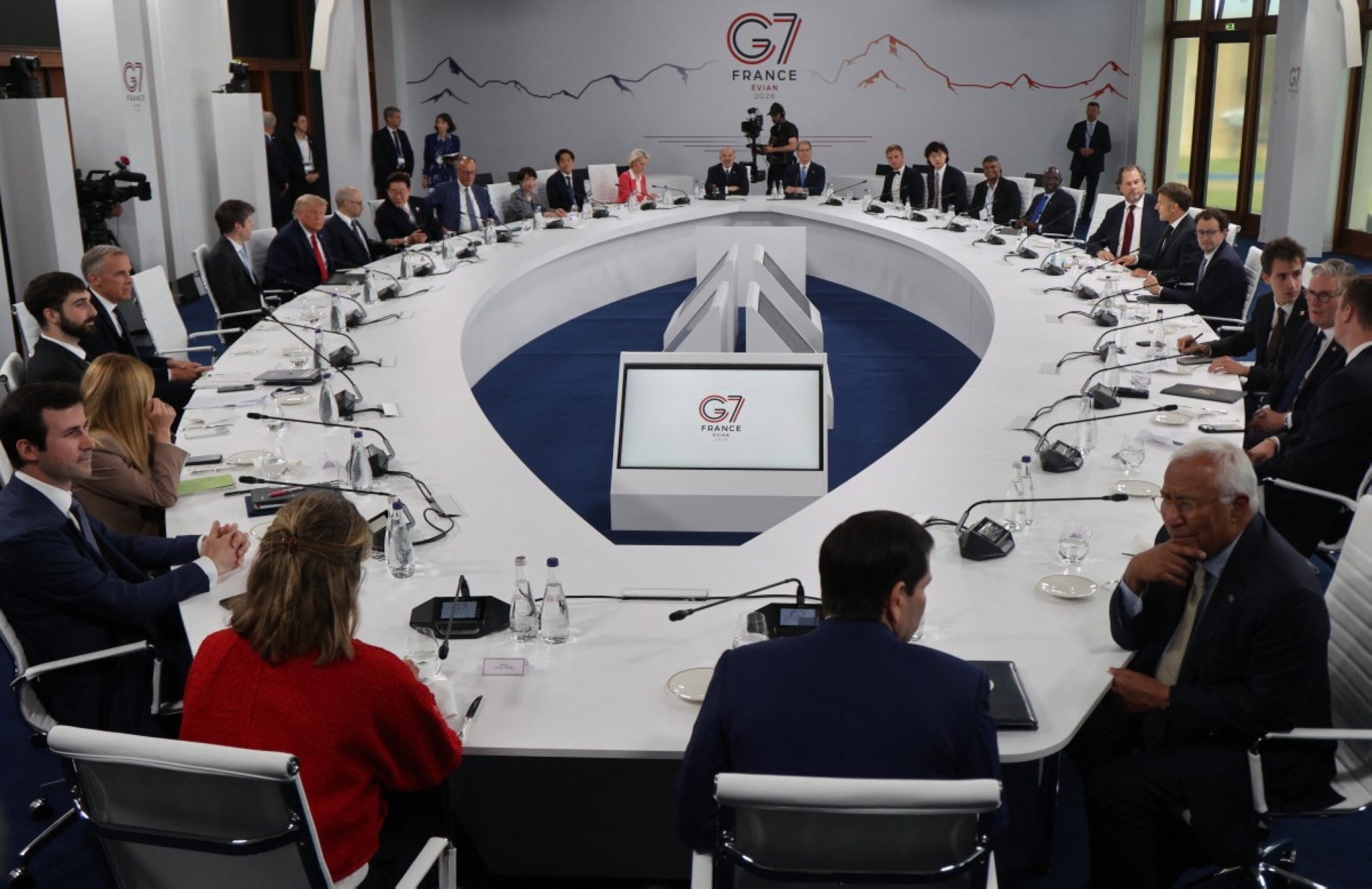
US President Donald Trump, OpenAI CEO Sam Altman, Google DeepMind CEO Demis Hassabis and South Korea's President Lee Jae Myung at a G7 meeting on innovation and AI in Evian-les-Bains, France, on 17 June 2026.

Emerging compromise

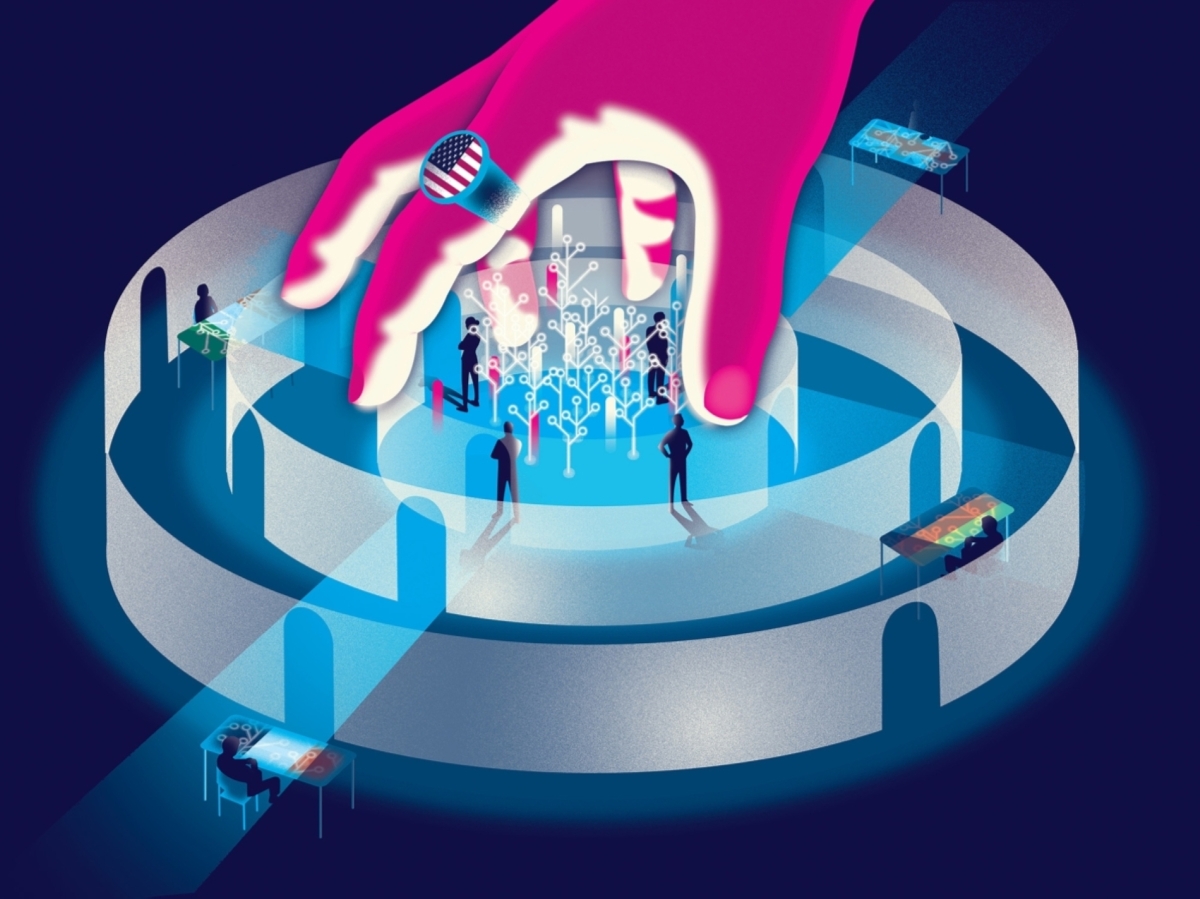
From this tension emerged the formula of ‘trusted partners’, which was presented as a summit compromise. Neither purely French nor a ready-made US concession, it sought to reconcile American restrictions with European pressure. Washington has no desire to open access to advanced AI models to everyone, yet it cannot entirely close the door on its allies. The proposal, therefore, rests on granting specific states or companies access to these models, provided they belong to a clearly defined circle of trust and accept conditions of use and oversight deemed acceptable by the US.

Yet this formula reveals something deeper than a dispute over Anthropic. It suggests that the West itself has become stratified beneath US technology. One ally receives broad access, another receives limited access, and a state may remain outside the circle even though it belongs politically to the Western camp. The issue is no longer confined to the West’s contest with China. It has become an internal Western question: which ally is trusted enough to use the most powerful models? And which will remain an ordinary consumer of technology, denied access to its most sensitive capabilities?

Washington has no desire to open access to advanced AI models to everyone, yet it cannot entirely close the door on its allies.

This dynamic grants the US new leverage. It possesses not only the largest companies and the strongest models, but also the authority to determine who may use those models, in which fields, and under what conditions. Europe has long depended on US cloud services, chips, and technology platforms. Advanced models now add a more sensitive layer to that dependence. 

The question is not merely where data is stored or how applications are run. It concerns tools that may enter the realm of cybersecurity, institutional protection, risk analysis, and perhaps even decision support within governments.

Washington now faces the same dilemma that emerged in the contest over advanced chips. A total ban protects the technology in the short term, yet pushes allies to seek alternatives that reduce their dependence on the US. Full openness preserves the leadership of American companies, but also increases the risk that these capabilities reach actors Washington does not trust.

REUTERS/Shelby Tauber
Data centre buildings are under construction during a tour of the OpenAI data centre in Abilene, Texas, on 23 September 2025.

Conditional access

The US is therefore applying to advanced AI models a logic similar to the one it applied to chips: they are neither available to everyone nor prohibited to everyone. They are subject to a regime of conditional access, under which Washington decides who receives the capability, on what terms, and for which uses.

Europe's position at the G7 summit took shape within a difficult equation. It wants to reduce its dependence on US technology, yet for now, it cannot do without it. For that reason, Macron's request to expand access to Anthropic's Mythos model was more than a passing intervention. It expressed a deeper predicament: Europe speaks the language of digital sovereignty, yet it still needs advanced US models in sensitive fields such as cybersecurity and the protection of critical infrastructure.

This paradox lies at the heart of the European position. France and the European Union do not want the continent to become a permanent user of models built by American companies, governed by access conditions set in Washington. But building a European alternative takes time. Europe is therefore pressing for access to US models today while investing in initiatives that could reduce that dependence tomorrow.

This is where European initiatives such as AI factories and AI gigafactories become significant. The former rely on Europe's supercomputers to provide computing power for startups, researchers, and industry. The latter represent a larger ambition: to build vast computing centres capable of training and operating advanced models on European soil. These are not publicity projects. They are an attempt to build the very infrastructure the US already possesses: chips, computing capacity, data centres, energy, and a market capable of financing the continuous development of models.

Yet the European road remains arduous. Even if Europe succeeds in building massive computing centres, it will still need advanced chips, most likely from US companies such as Nvidia or from highly sensitive Asian manufacturing chains such as those in Taiwan. It will also need cheap and reliable energy, vast financing, and companies capable of competing globally, such as Mistral AI. Strong laws, including the AI Act, are therefore insufficient on their own. Real power in this field does not flow from regulation alone. It comes from the capacity to train, operate, and update models at speed. Europe, therefore, is not breaking with Washington. It is simply trying to ensure that its digital future is not left entirely in American hands.

REUTERS/Clodagh Kilcoyne
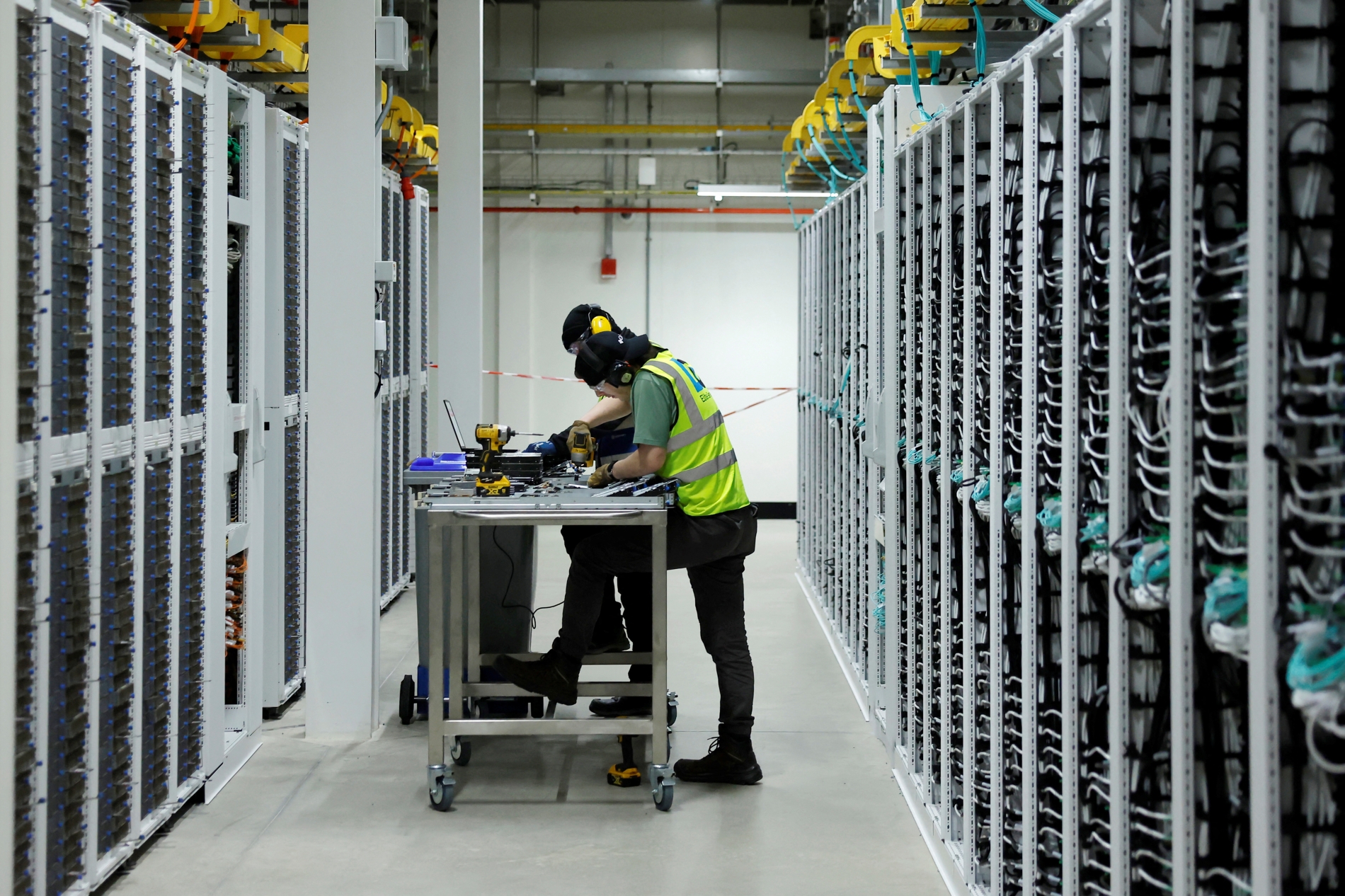
Microsoft employees work on decommissioning server racks in the Microsoft cloud data hall in the Microsoft data centre, in Dublin, Ireland, on 17 February 2026.

Central paradox

The G7 summit exposed a central paradox in the artificial intelligence race. The very companies developing the most advanced models are also the ones asking governments to regulate them. 

Amodei, Anthropic's chief executive, warns of the risks posed by advanced models, particularly in cybersecurity, where they may identify vulnerabilities or enable sensitive uses. Yet Anthropic itself is among the companies building these models and competing with them in the market. Altman, chief executive of OpenAI, calls on governments to assume responsibility for setting the rules, while leading a company whose influence depends on deploying these models and expanding their use. In this setting, the companies do not appear to be actors awaiting regulation from the outside. They appear to be actors seeking a seat inside the room where the rules are written.

This does not make their warnings false. On the contrary, these companies may understand the scale of the risks better than anyone else, because they see the models' capabilities before governments and the public do. At the same time, they have a direct interest in shaping the coming regulation.

When a company such as Anthropic says that some models may be dangerous, it is doing more than issuing a technical warning. It is helping shape the political decision over who may use these models, who may be denied access, and under what conditions. When OpenAI calls for standards to test models and assess their risks, it is defending safety while also seeking stable rules that allow it to operate globally without facing a different law in every market.

The summit exposed a central paradox in the AI race. The companies developing the most advanced models are the ones asking governments to regulate them.

Here, regulation itself becomes part of the competition. Strict rules may reduce risks, but they may also serve the largest companies. Safety testing, audits, legal compliance, and the technical infrastructure required to monitor models all carry costs that giant companies can bear more easily than smaller ones. If written in complex terms, regulation may therefore become a new barrier to entry, protecting the major players even as it raises the banner of safety.

This is where the importance of a framework led by the US and its allies becomes clear. Altman did not present the idea as a purely American project. He called for a clearer role for governments and for an international forum to test models and assess their risks, rather than leaving companies to set the rules alone. 

At the same time, a broader idea emerged in the summit's discussions: coordination among democracies led by Washington, so that artificial intelligence rules do not become a contradictory patchwork across America, Europe, and Asia. On the surface, this proposal appears to be a safety project. At its core, it is also a project of leadership. Whoever sets the standards for evaluating models, defines risk levels, and determines conditions of access will hold a significant share of artificial intelligence power in the years ahead.

In the end, the G7 summit revealed less a technical dispute over a model or a company than the beginning of a wider struggle over the governance of artificial intelligence. The question is therefore no longer only who owns the strongest model. It is who has the right to use it, who defines its risks, and who writes the rules of access. That is the real battle now taking shape within the West itself, before it becomes a direct confrontation with China or anyone else.

font change

Related Articles