Differing priorities, values, and interpretations have led to a trust deficiency on both sides of the Gulf for decades, but the US war on Iran brought those festering issues to the fore
Any attempt by an outside power to gain control of the Gulf region would be treated as an attack on the vital interests of the United States and repelled by any means necessary, including military force. That is the essence of the 1980 Carter Doctrine, which established the foundations for the Rapid Deployment Force, which later evolved into United States Central Command (CENTCOM).
It was issued in response to the Soviet invasion of Afghanistan in 1979, which Washington viewed as a strategic threat to its vital economic security in the Gulf. This coincided with the Iranian Revolution and the collapse of the Shah’s regime, creating a security vacuum that heightened American fears of expanding Soviet influence. This marked the beginning of America’s military presence in the region, which grew over time, particularly with the outbreak of the first Gulf War.
Gulf states at the time were increasingly uneasy about Iran’s security policy and its stated desire to “export the revolution,” fearing that this would translate into sectarian support within countries across the region. In 1981, Gulf leaders announced the establishment of the Gulf Cooperation Council (GCC), whose member states deepened their respective partnerships with the United States, based on the longstanding oil-for-security formula.
Some in the Gulf expressed concern that this might invite American hegemony and the militarisation of the region, and that it could be used to pressure Gulf states into political settlements that did not align with the Arab consensus, especially on Palestine. However, over time, those fears gradually receded. GCC leaders remained anchored in their own sources of strength, a reality reflected in their political positions.
Tehran regards GCC states as adversaries because they align with the US, a country that has fought Iran indirectly, and now directly, for decades
Independent policies
The sizeable American military presence in several GCC countries—as with Ali Al Salem Air Base in Kuwait and Al Udeid Air Base in Qatar—has not altered the political positions of either state, whether on Palestine or any other issue. Likewise, Saudi Arabia's strategic relations with the United States have not shaped the character of its decisions on pivotal issues.
For instance, Riyadh still insists on a Palestinian state. As a bulwark against Israeli power, Saudi Arabia has heard repeated American calls to join the Abraham Accords, which normalise Arab states' relations with Israel, but it has made this conditional on Israel's acceptance of a two-state solution, as set out in the Arab Peace Initiative adopted at the Beirut Summit in 2002.
Similarly, Saudi Arabia did not join American-led efforts to isolate Russia during the US presidency of Joe Biden, nor did it curtail its strategic relations with China, as US President Donald Trump might have preferred. It has also kept its distance from the US-Israeli war against Iran, both in 2025 and 2026, despite coming under attack from Iran and Iraq-based militias funded by Tehran.
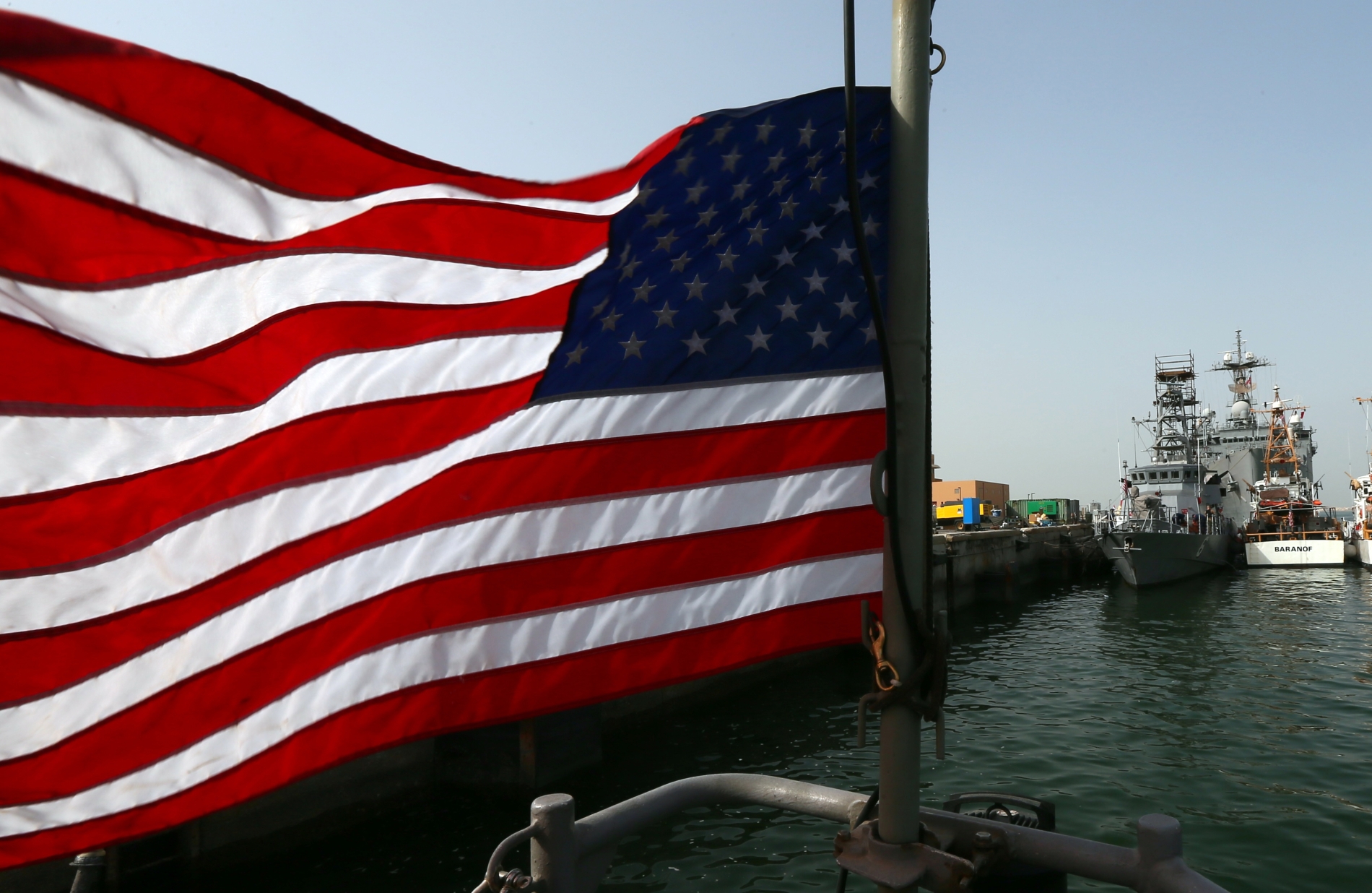
An American flag flies near US Navy boats docked at Bahrain's Salman port in the capital, Manama, on 12 May 2013.
This shows how an American military presence in several GCC states has no decisive bearing on the nature of those states' policies in international affairs, particularly in the cases of Saudi Arabia, Oman, Qatar, and Kuwait, which have all remained notably steadfast on Palestine—arguably the Middle East's key issue.
By contrast, the United Arab Emirates and Bahrain normalised relations with Israel and have been working closely together since 2020. This has had a negative impact on relations with other GCC states that chose not to do so, since it has opened the door for a state they see as hostile. To many, it was a breach of the moral consensus among GCC leaders, who nonetheless respect each state's sovereign right to make its own decisions.
On the other shore of the Gulf, Iran's revolutionary slogans continue to call for confrontation with the "Great Satan" (the United States) and the "Little Satan" (Israel). The tone hardens further when GCC states are mentioned, as Tehran regards them as adversaries because they align with the US—a country that has fought Iran indirectly, and now directly, for decades
Matters deteriorated when Shiite consciousness became intertwined with Iranian nationalism in opposition to Arab nationalism. Worse, this political contest was draped in sectarian symbolism, particularly during the Iran-Iraq war of 1980-88, when Iran's Islamic Revolutionary Guard Corps emerged with an uncompromising doctrine. For Iranian hardliners, there was the GCC plus Iraq on one side, and Iran on the other (even though Iraqi Shiites form the majority of the population).
This nationalist framing, which later grew into a sectarian framing, inflamed Arab-Iranian relations for decades, from the Shah's era to the Islamic Republic. Although something broadly comparable has at times existed within the Sunni Arab sphere, it has not produced the same levels of sustained negative mobilisation.
Arab and Gulf states have long been varied in composition, whether Sunni or Shiite, left or right, so their positions towards 'the other' have rarely been absolutist. Rather, they have been shaped by prevailing political circumstances, without becoming trapped in history and grievance. People are bound by their times, circumstances, and era. In broad terms, that is the Arab temperament.
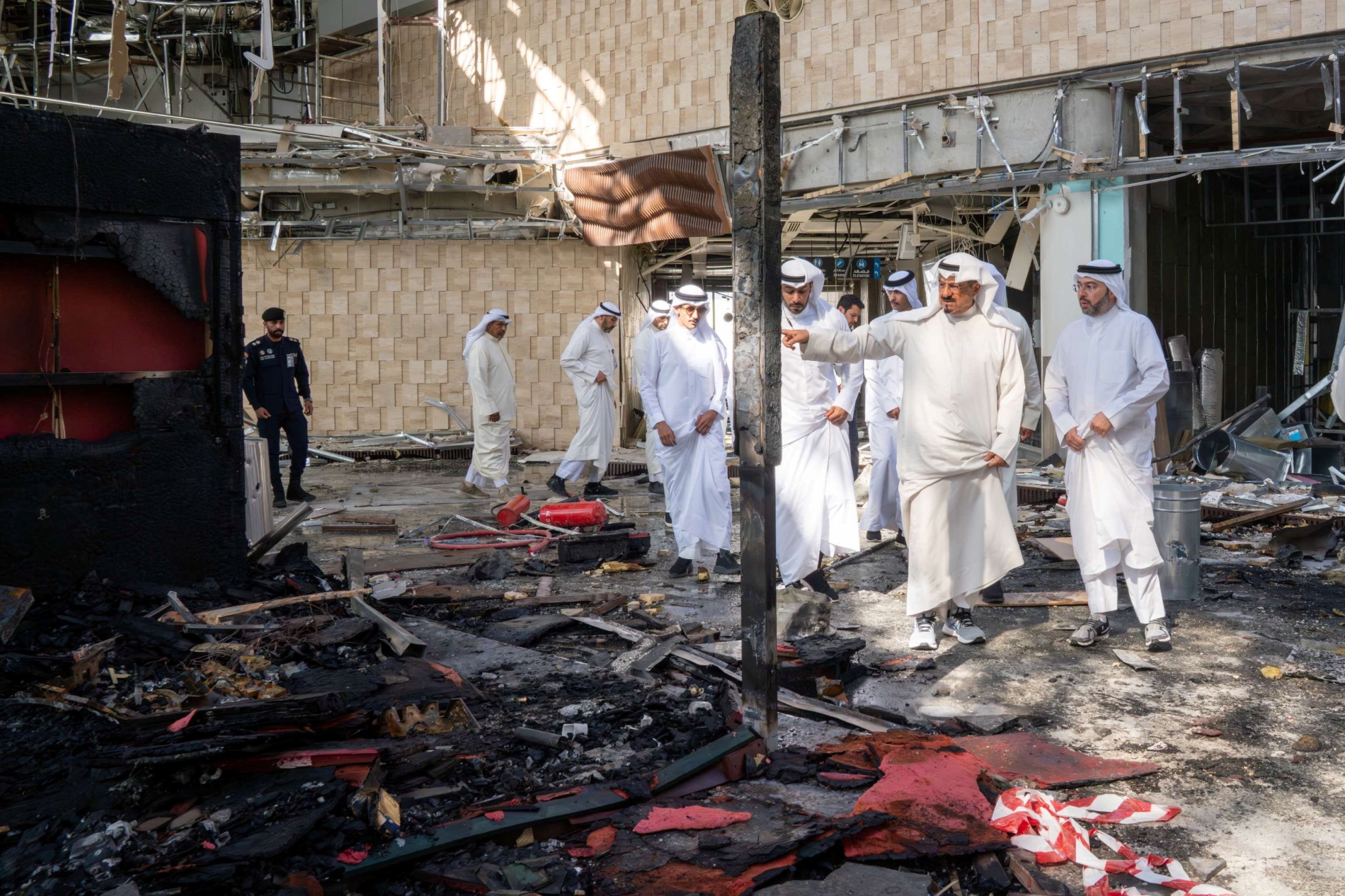
Understanding the different mindsets helps explain why Iran has targeted various GCC states in recent months. Despite their rejection of the US-Israeli war on Iran, their efforts to distance themselves from military escalation, and their official declarations that they do not approve the use of their airspace for the operation, Gulf states have still been targeted by Iranian drone and missile strikes at sites related to their civilian infrastructure, including airports, as happened recently in Kuwait.
Kuwaiti officials inspect damage inside a terminal at Kuwait International Airport following a drone and missile attack, in Kuwait City, Kuwait, on 3 June 2026.
Untenable justification
Iran's justification for this is legally and ethically untenable. Iran is striking economic facilities while using the pretext of targeting American military bases, even though the United States has withdrawn its forces from these bases, and any remaining American presence in the Gulf states is limited. Israel functions as the largest American base, since it was Tel Aviv that launched the war on Iran and killed its leaders, including Supreme Leader Ali Khamenei.
There would have been more understanding had Iran directed its attacks towards Israel and the US naval fleet, rather than towards its Arab Gulf neighbours who oppose the war against it and have responded with a measure of Arab prudence. How long this prudence will endure, no one knows. Similarly, no one knows whether Iran will ever free itself from its nationalist-sectarian complex and seek to co-exist with its Arab neighbours.
Hardline Iranian conservatives still control decision-making in Tehran through the Islamic Revolutionary Guard Corps' dominance of the Assembly of Experts, which selects the Supreme Leader, thereby facilitating the installation of Mojtaba Khamenei as successor to his late father. The Guards, shaped by ideology, now make both the political and military decisions, as the influence of moderate reformists wanes.
Had Tehran only directed its attacks towards Israel and the US naval fleet, the Gulf states may have been more understanding
A big 'if'
Indeed, some think the Guards only keep the reformists in place as a precaution against public anger if they were to be excluded entirely. The power balance was evident in the early weeks of the 2026 war, when Iranian President Masoud Pezeshkian pledged not to target Arab Gulf states—yet the Guards targeted them anyway.
War imposes its own logic. It has elevated Khatam al Anbiya Headquarters (which speaks in the name of the Guards' leadership) in Iranian decision-making, at the expense of the president of the Republic and members of his government. Some think there could be a major rupture within the Iranian regime once the war stops. If moderates take the helm, they could repair some of the damage the Guards have caused to relations between Iran and its Gulf neighbours. But that is a big 'if'.