Morocco is quietly becoming a drone manufacturing hubhttps://en.majalla.com/node/331483/business-economy/morocco-quietly-becoming-drone-manufacturing-hub
Morocco is quietly becoming a drone manufacturing hub
Working with Israeli, Turkish, and US firms, Rabat is also aiming to build its own domestic defence-industrial capacity using its expertise in aerospace manufacturing
Raven Jiang
Morocco is quietly becoming a drone manufacturing hub
The fallout from this year's US-Iran war has shown how important it is for states to secure critical infrastructure and safeguard economic assets, while keeping pace with scientific and technological advances, and deterring sophisticated cyber intrusions. In this new reality, national security increasingly requires substantial investment and far-reaching international cooperation. Working with others is no longer a luxury.
Instability and conflict mean that the world is spending more on defence. According to data from the Stockholm International Peace Research Institute (SIPRI), global military expenditure reached $2.88tn last year, equivalent to 2.5% of global GDP (gross domestic product), up 3% on 2024 and the highest level recorded since 2009. The US government has just increased the Pentagon’s budget by a whopping 50%, to $1.5tn.
SIPRI data show that the US, China and Russia together accounted for 51% of total global military expenditure in 2025. Germany’s military spending rose by 24% to $114bn. In France, it increased by 1.5% to $68bn. In the Middle East, military spending stood at $218bn, led by Saudi Arabia with $83.2bn, followed by Israel on $48.3bn. Africa’s total military expenditure was $58bn, up 8.5%. North African states spent $35bn on defence in 2025, up 9.3% on 2024. Algeria’s rose by 11% to $25.4bn, about 25% of total government spending—the second-highest share in the world after Ukraine.
Morocco, whose military spending reached $6.3bn in 2025, was up by 6.6%. The country’s drive towards a domestic defence industrial base advanced in 2025, with ten licensed projects and a total investment of $260mn, creating 2,500 jobs. Presenting the defence budget to parliament, head of the National Defence Administration, Abdellatif Loudiyi, said these initiatives would build a local defence industrial base to supply the Moroccan army and produce products for export.
Morocco's drive towards a domestic defence industrial base advanced in 2025, with ten licensed projects and a total investment of $260mn, creating 2,500 jobs
Existing expertise
For the Moroccan Royal Armed Forces' 70th anniversary last month, Rabat unveiled aspects of the strategic defence industrial projects on which it is staking its ambitions. Drones are a central pillar, drawing on the country's expertise in the aerospace sector, manufacturing dozens of components for commercial aircraft from Airbus and Boeing (it also manufactures one million vehicles annually).
A new-generation unmanned aerial vehicle (UAV) was recently tested on a reconnaissance mission over 3,000km from the far north of the country to the far south, crossing the Mediterranean, the Atlantic Ocean, and the Sahara. According to observers, one of the missions assigned to this class of advanced drone is to help secure the Strait of Gibraltar and protect international commercial navigation.
Morocco has begun manufacturing SpyX loitering munitions in the Benslimane industrial zone. A formidable UAV, SpyX is made by the Israeli company Bluebird Aero Systems. Israel Aerospace Industries (IAI), a state-owned company, holds a 50% stake in Bluebird. Morocco works with both Israel and Türkiye in drone manufacturing. Benslimane, east of Casablanca (where the largest football stadium is being built to host the 2030 World Cup), has become a drone manufacturing hub for both local and foreign firms.
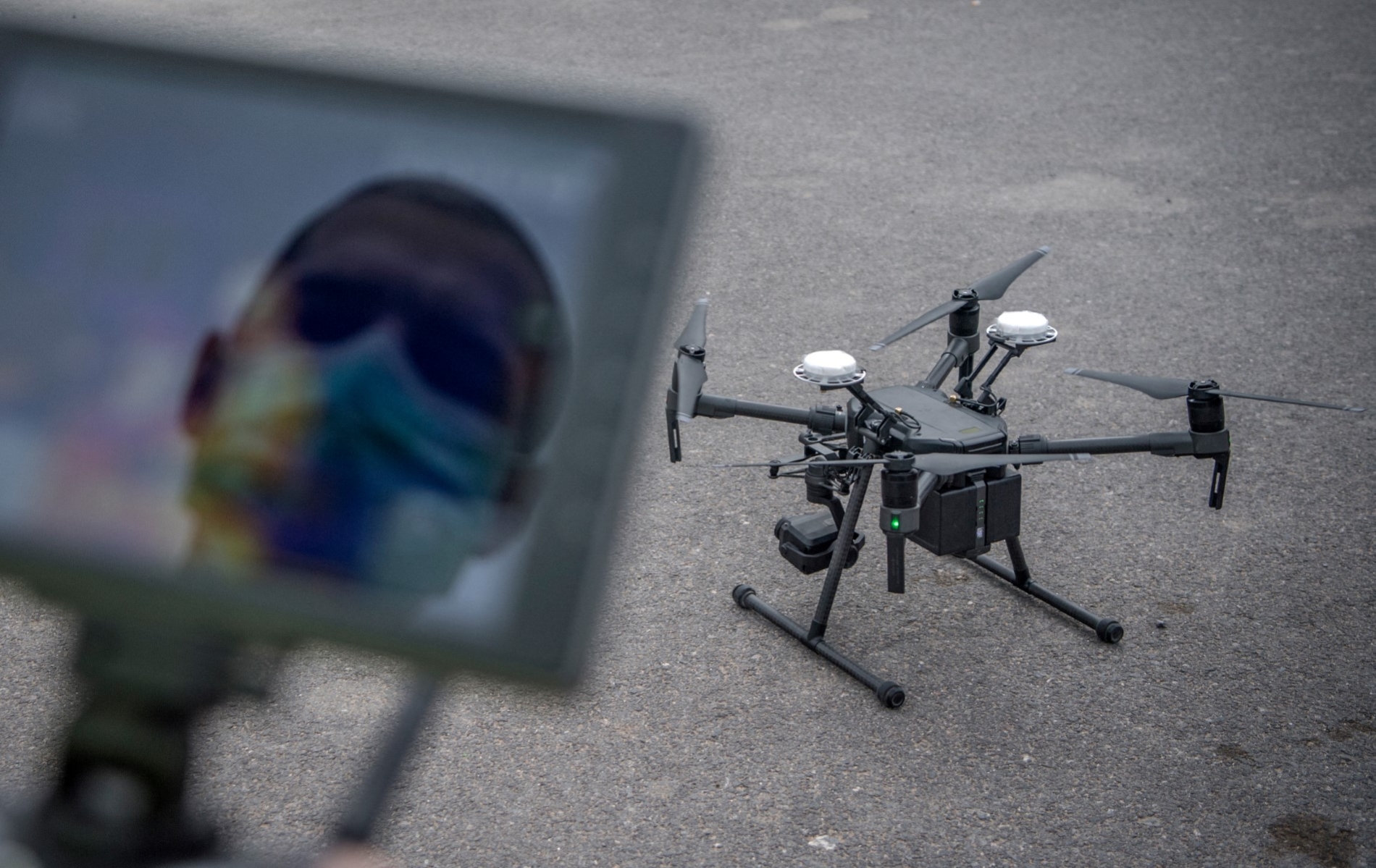
An employee of a Moroccan startup company pilots a drone equipped with a thermal camera in a street of Harhoura near the capital Rabat on 23 April 2020.
In 2024, the Moroccan engineering company Aero Drive successfully test-flew the Atlas ISTAR system, a Moroccan-made UAV. Since the end of last year, Morocco has licensed several international companies to manufacture multi-mission drones, including Türkiye's Bayraktar combat drones. Until now, only Azerbaijan, Ukraine and Mongolia have made the Bayraktar.
There is also cooperation between Morocco's Droneway and the Portuguese company Tekever. They are developing platforms for manufacturing, assembly, training, maintenance, logistical support, and after-sales services, strengthening Morocco's shift from procurement towards local industrialisation.
Morocco's 2026 budget allocated $15.7bn for defence. There is also a package of legislation and incentives to support defence industries, combining tax exemptions with investment facilities to attract international manufacturers and encourage the private sector to help develop military-industrial capabilities.
Reports suggest that Morocco has strengthened its air defence capabilities by deploying Israel's advanced SPYDER system, a short- and medium-range platform that relies on radar and interceptor missiles capable of engaging aircraft, drones, and missiles at varying distances. In 2024, Moroccan media reported plans to buy a reconnaissance satellite from IAI for around $1bn.
Morocco will hope to have achieved a qualitative leap in air defence by deploying the SPYDER system, which uses electronic jamming and other means of neutralising targets from long distances. Morocco's 2030 plan aims to achieve self-sufficiency in certain strategic defence industries, with air sovereignty a priority.
Cooperation between Rabat and Tel Aviv also includes the acquisition of two Ofek satellites for around $1bn, according to informed sources. The deal has caused concern in France, traditionally Morocco's sole supplier of satellites. Yet Paris and others have struggled to keep pace with the rapid development of the low-cost combat drone market compared with Türkiye and Israel.
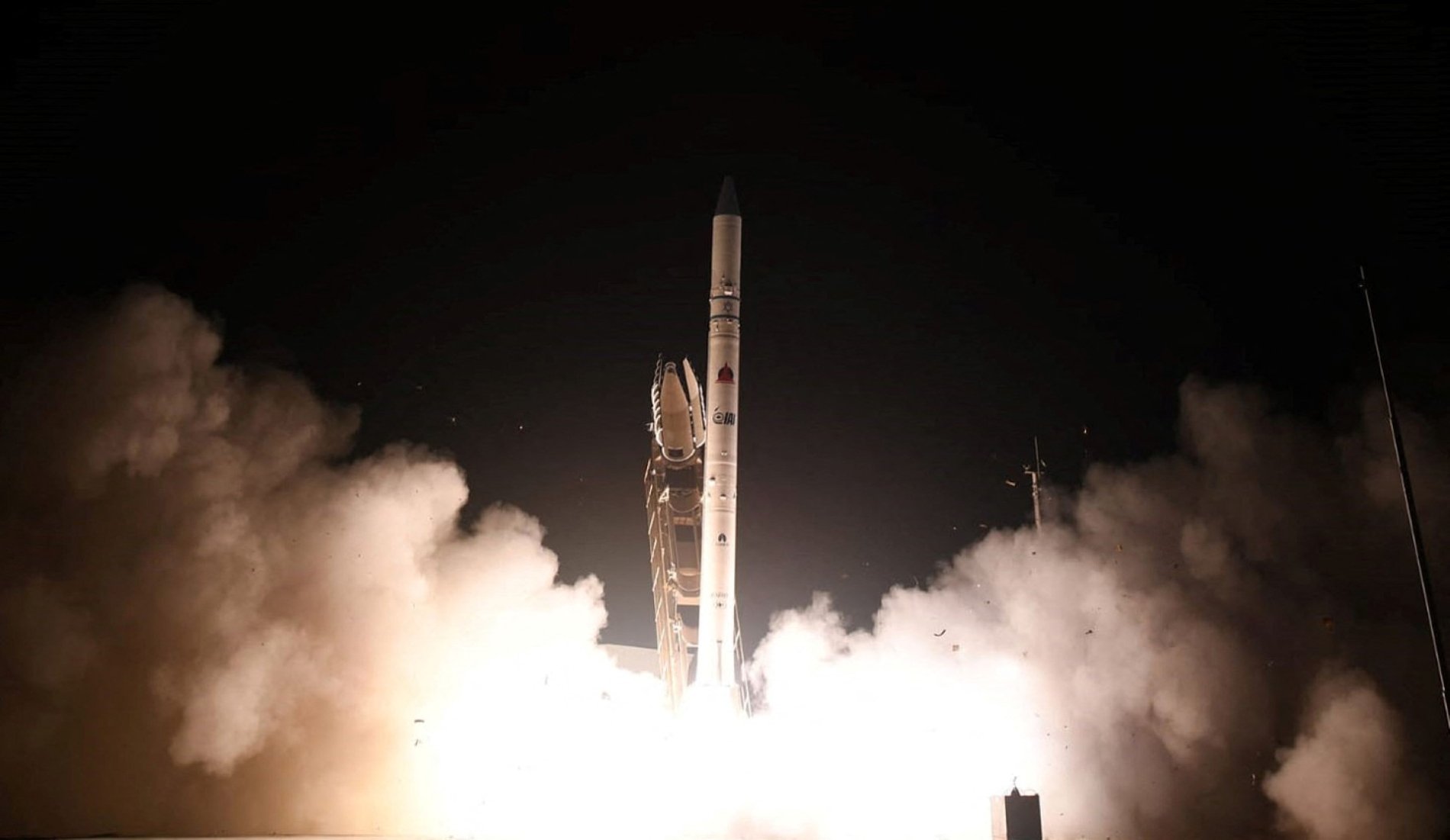
A handout picture released by the Israeli Ministry of Defence on 6 July 2020 shows the launching of the new reconnaissance satellite, Ofek (Horizon) 16.
Multi-billion dollar industry
The global UAV market is worth tens of billions of dollars, and some think it could be worth $180bn by 2030. This growth is being driven by expanding military, commercial and logistical uses. The range of applications for these unmanned aircraft allows them to benefit from the traditional vehicle industry, advances in communications systems technology, and software systems for military applications.
They can also be fitted with surveillance cameras, equipment to intercept hostile missiles, or aerial imaging systems for civilian purposes. Analysis by Fortune Business Insights points to growth in the market for hydrogen fuel cell-powered drones, driven by the need to extend flight range and improve energy efficiency compared with conventional batteries.
During the 13th African Land Forces Summit, held in Rome in March 2026 with the participation of dozens of countries from within and outside NATO, Morocco was chosen to host a regional centre for training UAV operators. This is within the framework of US-led military cooperation aimed at strengthening African armies' capabilities.
Drawing on its expertise in the aerospace sector, Rabat has expanded its drone manufacturing, amid growing industrial defence ambitions
The commander of US Army Europe and Africa, Gen. Christopher Donahue, said the new facility "aims to create sustainable and long-term military capabilities," adding that "Morocco's selection reflects its strategic location and its historic role as an ally".
The centre is expected to train for missions including the collection and analysis of operational data, the development of sensor-integration capabilities, and the enhancement of electronic warfare technologies. Lt. Gen. John W. Brennan Jr. said the technological revolution "requires deeper cooperation among allies, and a practical application that brings together private-sector innovation and military requirements".
Moroccan security and defence expert Abderrahmane Mekkaoui said that "any arms-producing state is able to defend itself independently and respond to the various external risks and challenges, especially amid the tensions the world is witnessing… Without that capacity, the task becomes far harder".
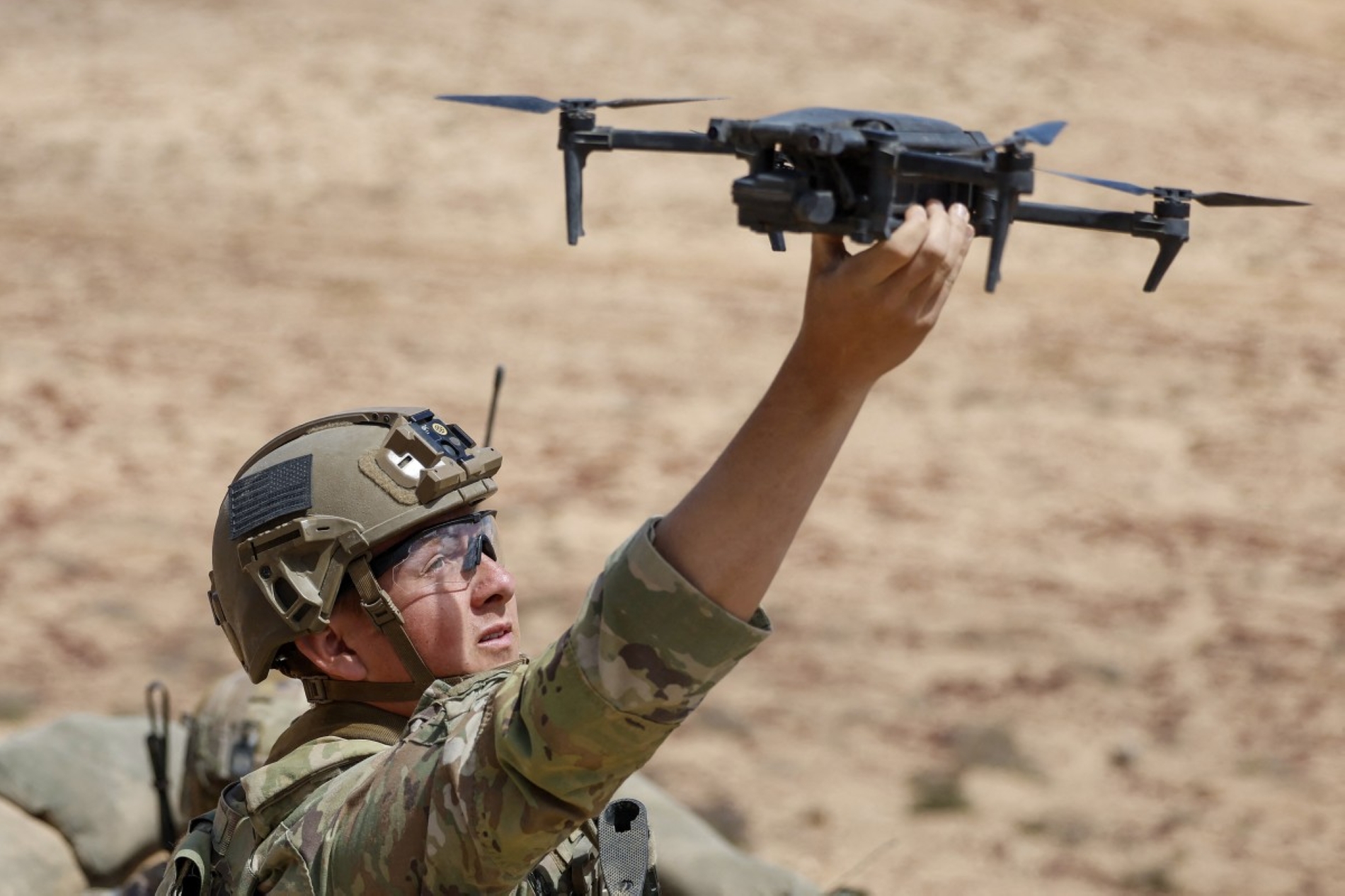
A US soldier releases a drone during the African Lion joint military exercise between US and Moroccan forces in the Tan-Tan region in southwestern Morocco on 8 May 2026.
American support
Washington supports the modernisation of Morocco's defence industries, particularly in military artificial intelligence (AI), satellite imagery analysis, electronic warfare, and drone technologies. The annual African Lion exercises, organised in partnership between Morocco and the US, have helped deepen military and technical cooperation between the two.
This has coincided with the launch of defence-industrial projects, including the establishment of a centre for the maintenance and modernisation of F-16 fighter jets and C-130 aircraft, in partnership with Lockheed Martin. Morocco's integration into global aviation manufacturing chains has also expanded, with Boeing receiving aircraft components and parts produced domestically.
Although there are no permanent US bases in Morocco, the countries recently renewed a military and intelligence cooperation agreement until 2036. US Secretary of War Pete Hegseth said Morocco "has been a friend and ally of America for 250 years" and was the first country to recognise the independence of the United States in 1777.
He described the African Lion military exercises as "a model for multi-domain cooperation". The United States did maintain military bases in Morocco from the Second World War until 1978, when they were transferred to Spain. Today, the US military works closely with the Royal Moroccan Armed Forces, conducts joint exercises and makes temporary use of Moroccan facilities.
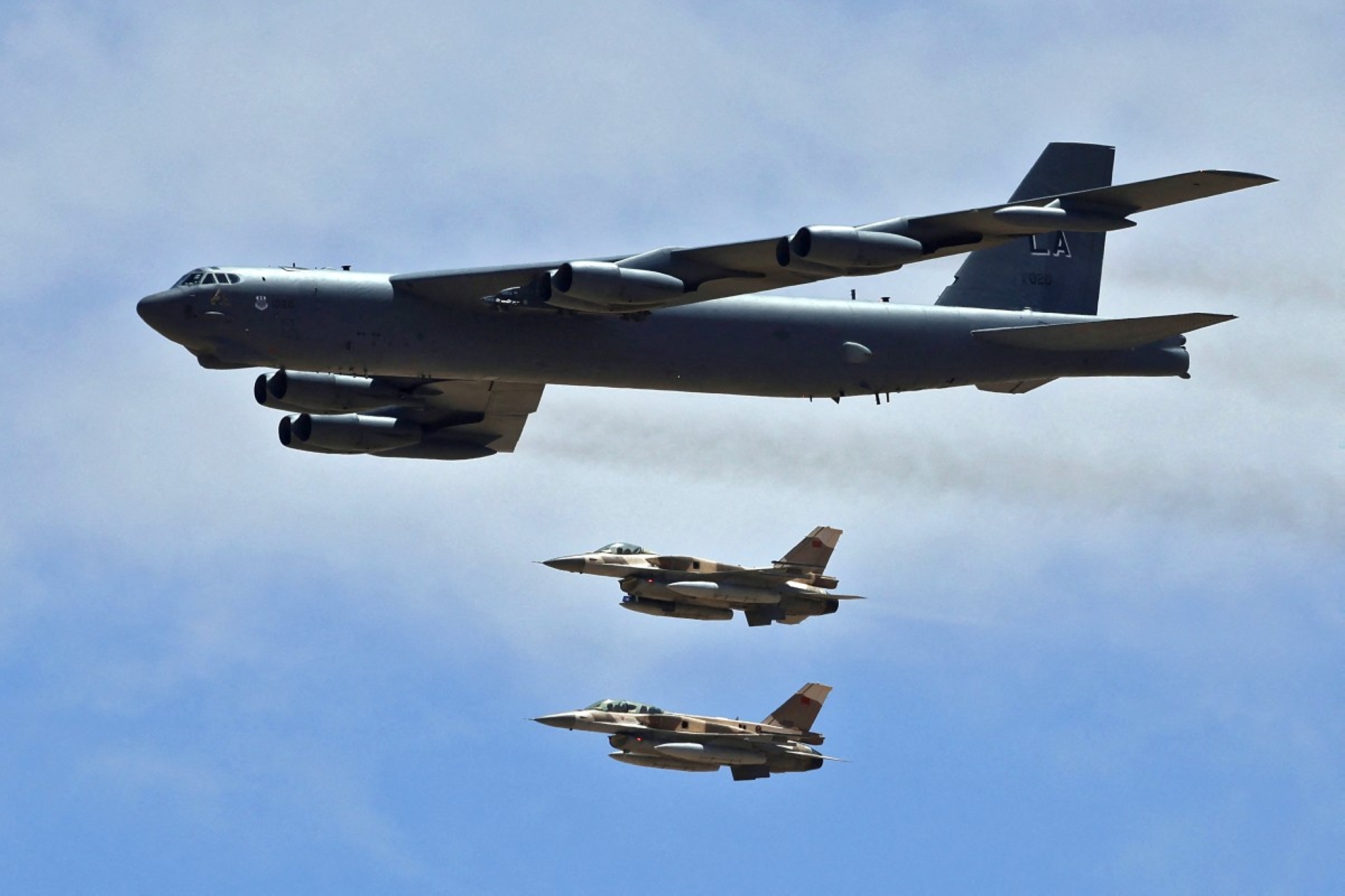
A US B-52H Stratofortress flies in formation with Moroccan F-16 fighters as they take part in the "African Lion" joint military exercise between US and Moroccan forces in the Tan-Tan region in southwestern Morocco on 8 May 2026.
India and France
India is also contributing to the development of Morocco's defence manufacturing through the production of WhAP amphibious eight-wheeled armoured vehicles, made by Indian firm Tata at a plant in Berrechid, near Casablanca, within the framework of a defence partnership between Rabat and New Delhi. The vehicle has multiple combat and amphibious capabilities, can be fitted with guns of up to 30mm calibre and is equipped with powerful engines suited to rugged operations. The plant will produce around 100 armoured vehicles annually once its production lines are fully operational.
The French newspaper Le Monde reported growing international interest in Morocco's defence industries, particularly in drones and communications systems. France wants to expand its involvement within Morocco's defence industrial ecosystem through long-term partnerships, as opposed to its old model of simply selling weapons.
According to Africa Intelligence, a delegation from France's Directorate General of Armaments recently visited Rabat to discuss Morocco's defence needs, particularly in radar systems and advanced military equipment. Le Monde considered that the key challenge is no longer commercial but industrial, given Rabat's move towards developing local assembly and manufacturing capabilities and transferring technology, rather than simply importing ready-made military equipment.
Spanish newspaper Atalayar noted that Morocco is "no longer a passive observer in the global arms market," adding: "It has succeeded in developing advanced technological capabilities that have placed it on a new roadmap in the field of unmanned systems, supported by a high-level defence industry."