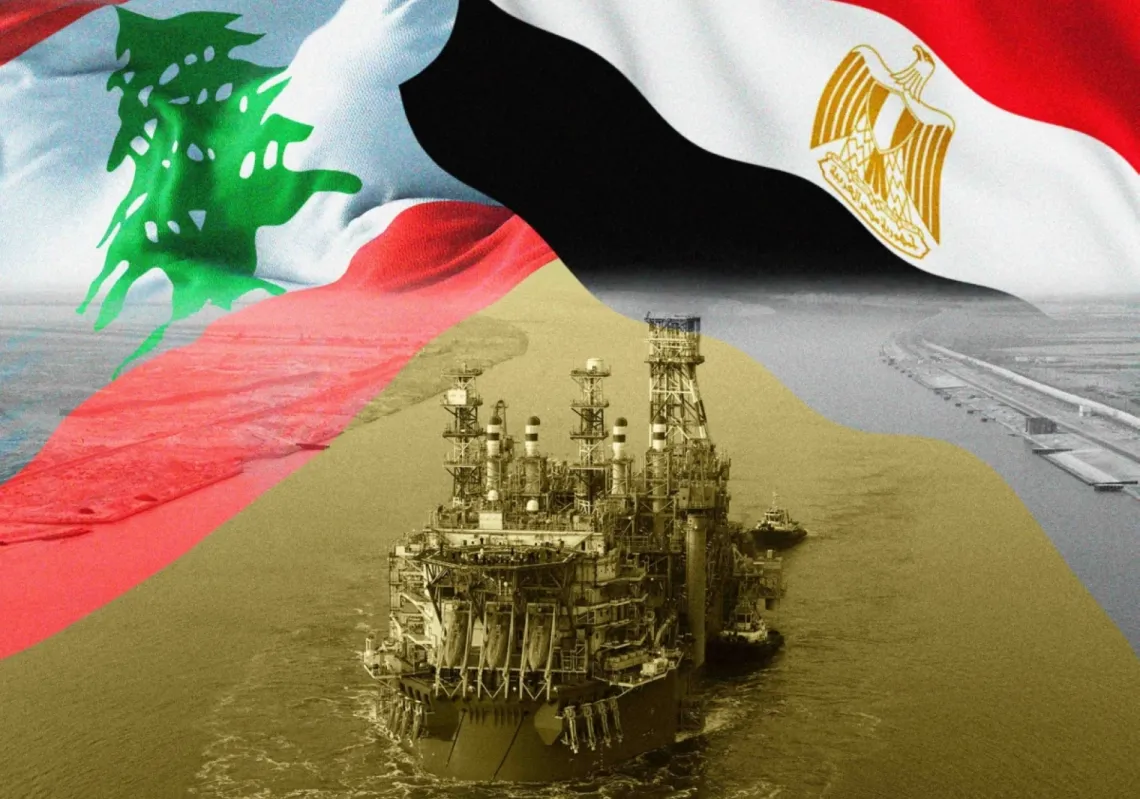
Egypt repays energy firms with an eye on gas sufficiency

Cairo hopes to gain the trust of partners through its regular payments to energy firms, so that they will be more inclined to invest in research and exploration activities

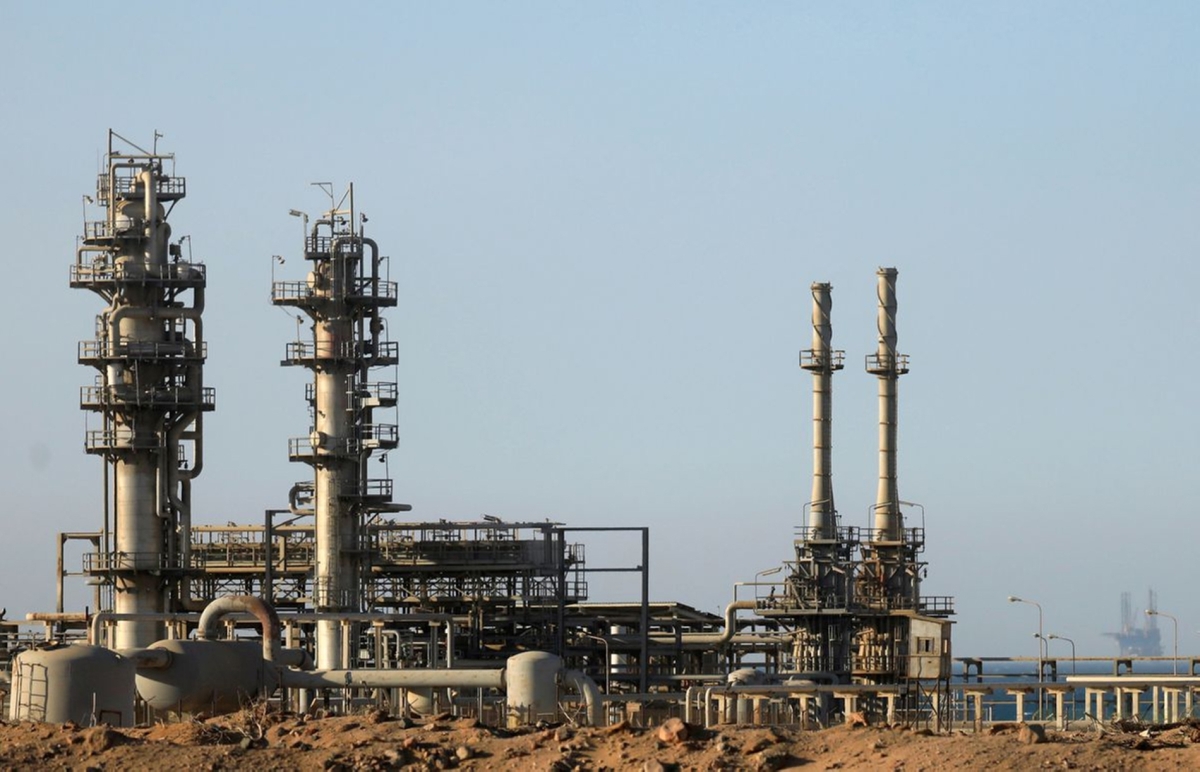
A gas facility off the Suez Desert Road outside Cairo, Egypt, on 1 September 2020.
Reuters
A gas facility off the Suez Desert Road outside Cairo, Egypt, on 1 September 2020.

Egypt repays energy firms with an eye on gas sufficiency

In less than two years, Egypt has slashed its arrears to international energy companies by over 88%, hoping to encourage exploration amid the Iran war spillover, which is making its gas deficit harder to sustain.

Drilling more wells is providing much-needed supply. But whether new gas discoveries could once again turn the country into a gas exporter is unclear. A chronic financial crunch, aggravated by Russia’s invasion of Ukraine in 2022 and ensuing supply chain disruptions, left Egypt struggling to pay its dues, which piled up and slowed much-needed energy investments in the country.

A $57bn global bailout, including a mammoth $35bn deal that saw Abu Dhabi sovereign wealth fund ADQ acquire development rights in a vast Mediterranean area, threw a lifeline to the Middle East’s most populous nation in early 2024 and enabled it to better fulfil its obligations. Later in the same year, the government implemented a system to repay arrears to foreign energy companies on a monthly basis, and it has evidently paid off.

The outstanding payments stood at $714mn by the end of April, down from $6.1bn in mid-2024, Egypt’s Minister of Petroleum and Mining Resources, Karim Badawi, said in early May. Egypt aims to completely wipe out this debt by the end of June, he added in a statement.

“Continuing to pay their debts to producers is likely the most important factor” for Egyptian authorities to increase gas production through more discoveries, JP Lacouture, a principal analyst specialising in natural gas and liquefied natural gas at commodities data and analytics firm Kpler, told Al Majalla.

Growing consumption

Fitch Solutions expects Egypt’s annual gas production to rise 8% year on year in 2026 to reach 46.6 billion cubic meters. Should it be achieved, the amount would still be considerably below the country’s domestic consumption, estimated at more than 60 bcm annually. Power generation accounts for the largest share of gas consumption in Egypt, at nearly 60%, but the plan to rely more on renewable sources of electricity has yet to bear fruit.

Boys swim in the Nile River amid a heatwave in El Qanater El Khairiyah, Al Qalyubia Governorate, Egypt August 4, 2023.

Alongside sprawling urban expansion and population growth, heatwaves have increased Egypt’s electricity demand over the past decade, with the rising use of air conditioners adding to the country’s gas import bills. As a result, Egypt has intermittently implemented power rationing measures in recent years, including dimming streetlights and cutting electricity supply periodically during the summer.

“Egypt imported a record volume of LNG in 2025, highlighting its growing energy needs as it faced a domestic gas production decline and less reliable supply from Israel amid its ongoing tensions with Hamas,” S&P Global said in January, referring to the Gaza war that erupted in October 2023.

“The country imported a total of 9.01 million metric tons of LNG last year, equivalent to 129 cargoes, data from Platts, part of S&P Global Energy, showed, with 90.9% of this from the US.”

Iran war impact

The Egyptian government has been further squeezed since the Strait of Hormuz, through which around a fifth of the world's oil and natural gas passes, was virtually blocked during the ongoing Iran war. The conflict, which broke out in late February after the US and Israel attacked the Islamic Republic, sent energy prices soaring and sent Egypt’s pound plummeting, compounding the country’s financial woes.

Khaled DESOUKI / AFP
People walk past a closed cinema as shops close early under a government-ordered curfew aimed at reducing energy costs in downtown Cairo on 2 April 2026.

For several weeks after the war, Egypt implemented early shop closures, even though the summer season was still months away, but this was later stopped because it saved only a negligible amount of power. The government also raised fuel pump prices by up to 17% and ramped up gas prices for some energy-intensive industries.

Egypt had previously implemented similar gas price increases for the industrial sector—its second-largest consumer of domestic gas, accounting for nearly 20% —while grappling with insufficient supplies and tight finances.

Such power-saving measures are widely seen as a double-edged sword: while they alleviate financial pressures, they take a toll on the wider economy by accelerating inflation, slowing down manufacturing, widening trade deficits, and hampering businesses across different sectors. To stave off these negative effects, the government is hoping that international energy companies’ drilling operations will restore higher gas production rates.
Since 2024, the Egyptian government has spent billions of dollars to secure LNG through 2028.

Building trust

Egypt's regular monthly payments to energy firms "contribute to bolstering the trust of partners and encourage them to increase their investments in research and exploration activities," petroleum minister Badawi said.

"This will boost the domestic output and limit the import bill" of gas and petroleum products, he added. The government hopes that settling the debt would help realise around $19bn worth of investment pledges from different companies in Egypt, including $8bn from Italy's Eni SpA; $5bn from the United Kingdom's BP Plc; $4bn from the American company Apache; and $2bn from Arcius Energy of the United Arab Emirates

"The ability for Egypt to pay down debt has been a consistently limiting factor in their efforts to offset production decline over the last several years," said Lacouture from Kpler. "Eni, BP, and other companies cancelled or postponed drilling projects in response to the lack of payments and resumed activities once remuneration began again," he added. 

"While production has continued to decline, the supply situation in Egypt would have undoubtedly been worse if the drilling activities last year had not taken place."

EGYPTIAN PRESIDENCY / AFP
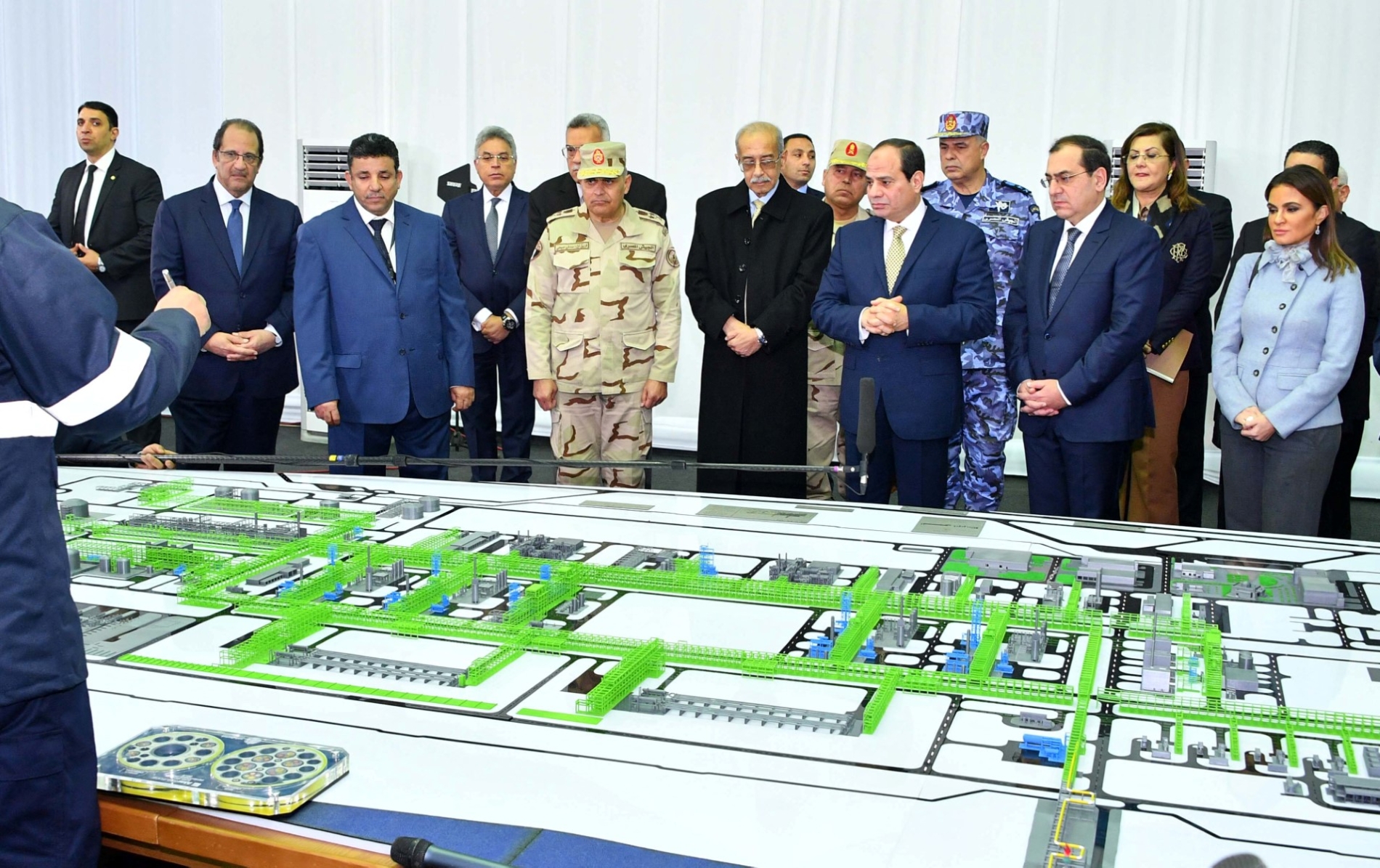
Egyptian President Abdel Fattah al-Sisi looks at mockups of natural gas extraction facilities during the inauguration of the offshore Zohr gas field in the northern Suez Canal city of Port Said, on 31 January 2018.

Fluctuating fortunes

Egypt has long alternated between being a gas importer and exporter, thanks to fluctuations in output and domestic demand over the past few years. The country became a net LNG exporter in 2019 following the discovery of the massive Zohr field by Eni, overcoming local shortages that had kept its liquefaction facilities at Damietta and Idku idle for years. 

Egypt's gas exports jumped in the following years, hitting $8.4bn in 2022—close to the average annual revenue of its Suez Canal. This, for a while, revived the country's ambition of becoming a regional gas-exporting hub. However, Zohr's production dipped soon after, and Egypt once again turned into a net gas importer two years later. Since 2024, the Egyptian government has spent billions of dollars to secure LNG through 2028.  A deal with Israel worth $35bn to supply natural gas to its neighbour from 2026 to 2040—announced late last year—is hoped to decrease Egypt's dependence on LNG cargos and slash its energy costs.

Some of Egypt's discoveries are to be reckoned with, including Denise in the eastern Mediterranean, where Eni unveiled in April an exploration well with about 2 trillion cubic feet of gas initially in place, according to preliminary estimates. 

Eni unveiled in April an exploration well in Denise off Egypt's Mediterranean coast with about 2 trillion cubic feet of gas initially in place

What's more, the state-run Egyptian Natural Gas Holding Company signed in April a 15‑year deal to buy the entire output of Cyprus' Aphrodite gas deposit when the field starts up in around six years, with the possibility of extending the pact for five more years. Another project will link Cyprus' Cronos field to Egypt's gas and liquefaction facilities.

When asked about the possibility that Egypt could once again turn into a net gas exporter, Lacouture said: "It's certainly possible, but the likelihood this could happen in this decade is slim."

"Large prospective projects like Aphrodite or Cronos are not expected online, if they achieve final investment decisions at all, until the early 2030's. Until then, most developments in Egypt will mostly serve to slow decline rather than meaningfully reverse it."

font change

Related Articles