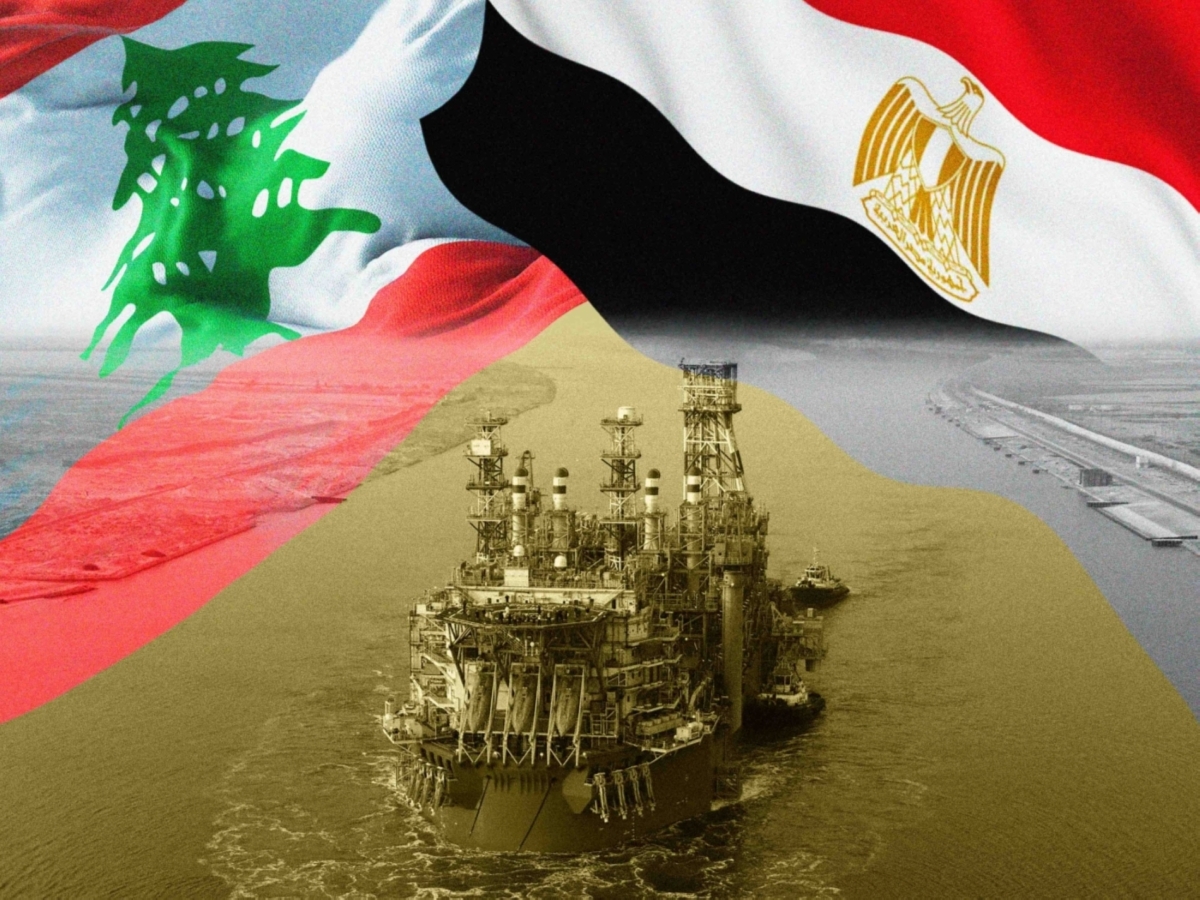
Lebanon's search for gas to supply its power plants via Egypt raises the awkward possibility that it could come from Israeli fields, essentially breaking a longstanding taboo
Egypt and Israel have concluded a $35bn agreement under which Israeli gas will be transferred to Egypt. Extracted from the Leviathan field, the gas will be delivered through a transaction framed as strictly commercial, grounded in investment logic and economic calculation, and detached from the surrounding political reality.
Diaa Rashwan, head of Egypt’s State Information Service, has described the agreement as serving a strategic Egyptian objective: to reinforce Cairo’s position as a central hub in the Eastern Mediterranean gas trade—an assessment that has been maintained despite the war in Gaza and the criticism it provoked.
The export agreement, initially signed in August, was approved by Israeli Prime Minister Benjamin Netanyahu in December. Not long after, Lebanon and Egypt concluded a memorandum of understanding to enable Lebanon to draw on Egyptian gas to supply its power plants—a need that has become increasingly urgent.
The close timing of the two agreements raised questions regarding the origin of the gas exported to Lebanon, which may—in whole or in part—come from Israel. The issue of origin thus entered the public debate, particularly in light of Egypt’s substantial domestic gas demand and the apparent difficulty of reconciling that need with exports to Lebanon.
Legal ambiguity, political reality
At its core, the controversy lies at the intersection of economics and politics. It is also embedded in a broader regional trajectory encouraged by the US, which has sought to promote normalisation with Israel. This trajectory intersects uneasily with Arab boycott laws, to which Lebanon remains formally committed. Economic incentives, however, remain the principal driver of such regional realignments.
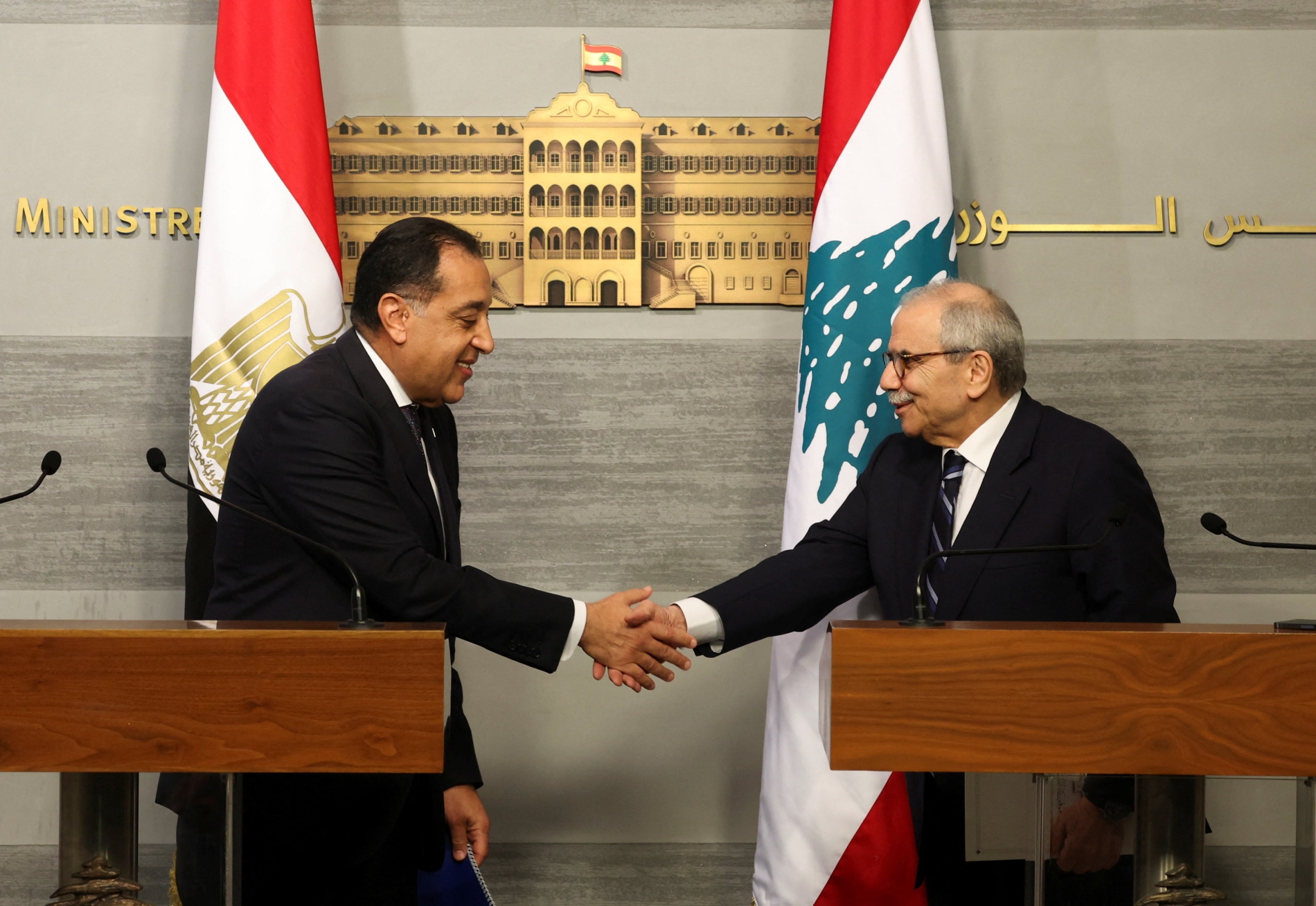
Lebanese Prime Minister Nawaf Salam shakes hands with his Egyptian counterpart, Mostafa Madbouly, in Beirut, on 19 December 2025.
Under its agreement with Egypt, Lebanon is not entering into a contractual relationship with Israel. The deal is concluded solely with the Egyptian state. Egypt markets the gas as part of its national network, without reference to its geological source. From a legal standpoint, Lebanon is therefore engaging with a third country that is not considered hostile—a formulation that preserves compliance with boycott legislation. Comparable arrangements have been applied in the past in relation to oil derivatives and electricity.
Should the contract itself, its annexes, or any accompanying official statements, payment documents, or certificates of origin indicate that the gas is of Israeli provenance, the agreement would become vulnerable to legal challenge. In such a scenario, ministers, officials, or Électricité du Liban could be held accountable under the law. For this reason, many observers argue in favour of maintaining a deliberately ambiguous framework.
At its core, the controversy over Israeli gas lies at the intersection of economics and politics
Egypt affirms that the gas exists within its network, while Lebanon refrains from formally questioning its origin. Lebanese law does not recognise indirect dealings unless they are substantiated by explicit documentation. The state may also invoke the imperative of securing electricity and averting systemic collapse as a matter of necessity, even if that category is not explicitly codified in law.
These concerns are sharpened by Israel's ongoing hostility towards Lebanon. Earlier this month, Lebanon's foreign ministry sent a letter to the UN Security Council, detailing over 2,000 violations of its sovereignty by Israel since October last year. On 25 January alone, 14 airstrikes were recorded in southern and eastern Lebanon. These concerns are further compounded by the strategic nature of gas as a resource, rather than a conventional commodity.
The contract is expected to be drafted in strictly commercial language, with objections most likely to surface in political and media arenas, rather than the courtroom. Indirect channels of engagement with Israel already exist through the ceasefire monitoring committee, and Lebanon has previously conducted indirect negotiations over maritime border demarcation.
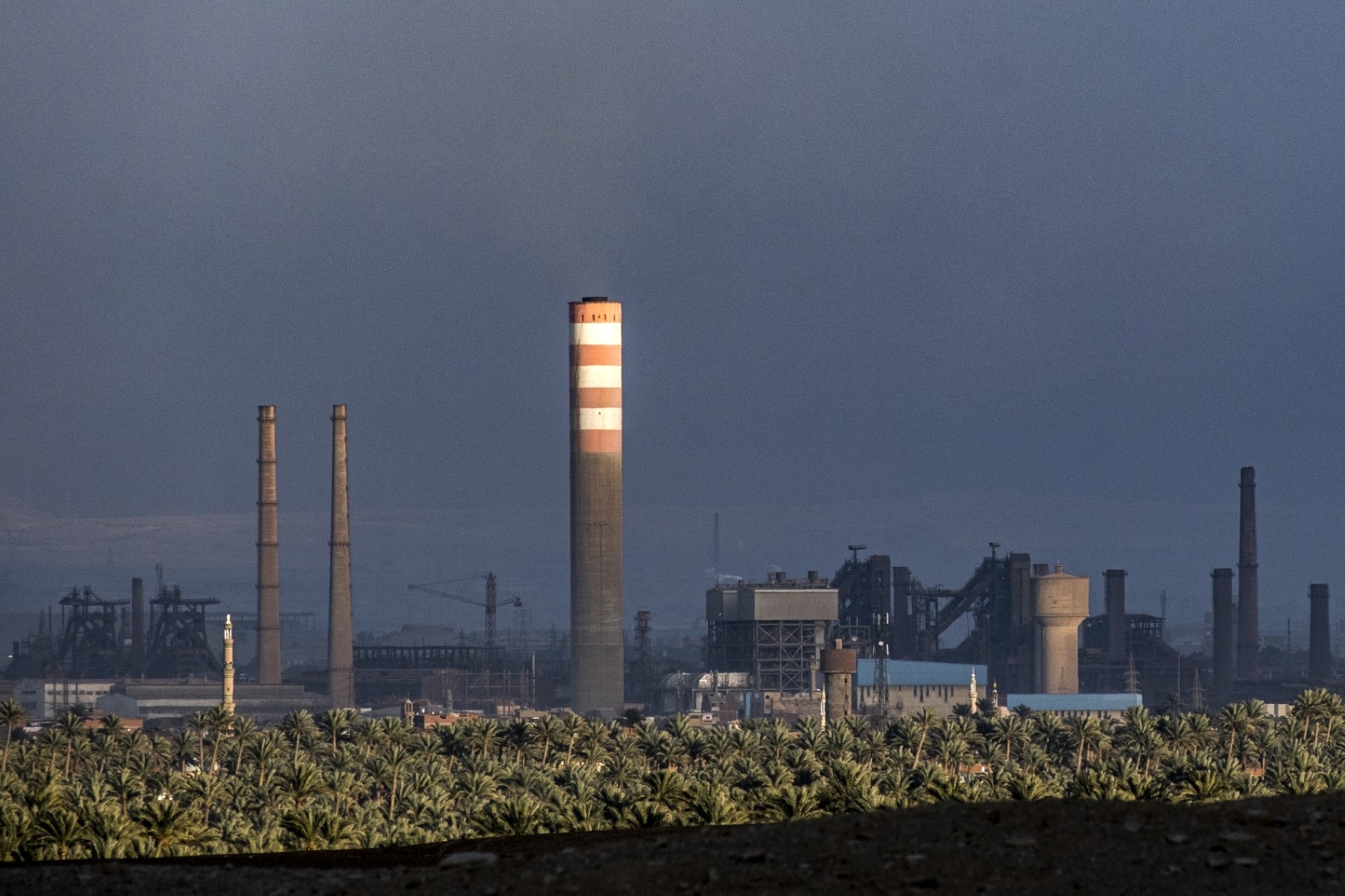
A gas station in the Helwan area of southern Egypt, on 6 February 2023.
Structural barriers to supply
Fadi Jawad, an energy expert, told Al Majalla that the import of Egyptian gas is unlikely to be activated in the near term due to a series of structural obstacles. Egypt's gas production has declined to approximately four billion cubic feet per day, while domestic demand approaches six billion. Under these conditions, exports remain impractical until tangible results emerge from the drilling of 34 new wells—a process expected to take at least two years.
Additional challenges include the condition of the pipeline crossing Syrian territory, which requires extensive rehabilitation and sustained protection against potential attacks by armed groups. A further complication lies in the absence of an operational link within the Arab Gas Pipeline connecting southern and northern Syria. At present, Syria cannot supply Lebanon with gas from its northern fields to reach the Deir Ammar power plant—a limitation that echoes difficulties encountered in prior attempts.
According to Jawad, possible alternatives include re-exporting gas imported from other countries, including Israel. This naturally raises the question of whether Egypt could channel Israeli gas to Lebanon and Syria. In Jawad's assessment, the answer is unambiguous: the Egyptian-Israeli agreement is dedicated entirely to covering Egypt's domestic requirements. Egypt's liquefaction facilities and re-export infrastructure are geared toward European markets, supported by capabilities that remain unparalleled in the region. Israel, for its part, directs its gas exports toward Europe, where it seeks to secure a position of strategic weight in the global gas market—a role that extends far beyond supplying neighbouring states.
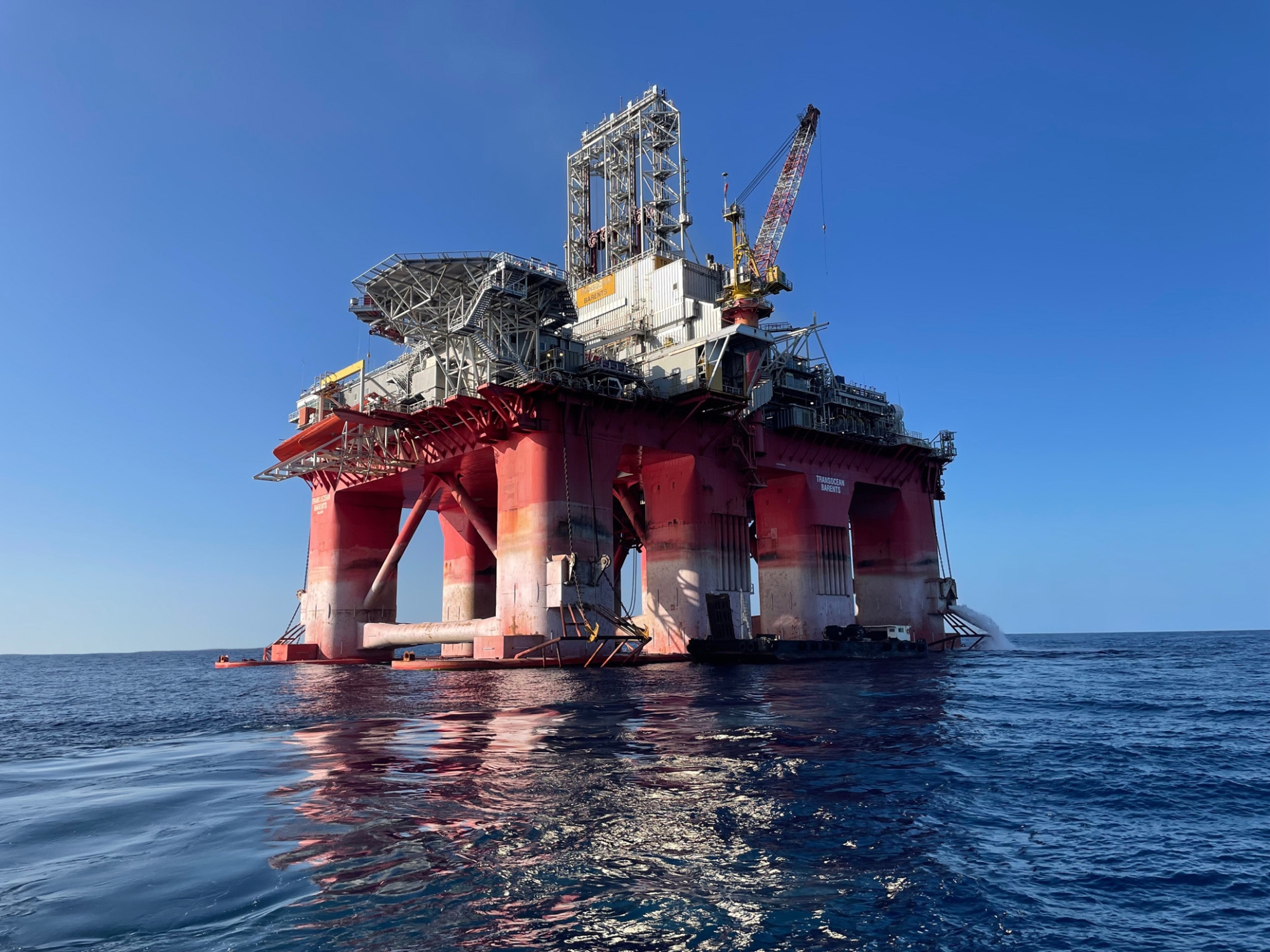
Lebanon, meanwhile, has its own gas fields, although tangible progress towards their development remains distant, despite the signing of an offshore exploration agreement for Block 8 of the Lebanese Exclusive Economic Zone, located 70km off the country's southern coast. A consortium comprising TotalEnergies, QatarEnergy, and Italy's ENI signed a contract with the Lebanese government on 9 January, granting the companies exploration and exploitation rights. The consortium has a three-year deadline to conduct and finalise a 3D seismic survey over the 1,200sq km of Block 8.
Jawad, however, argues that the entire file requires a comprehensive reordering. This would entail introducing new, shorter-term conditions and opening space for smaller companies. Blocks 4 and 9, which the consortium itself acknowledged as lacking promise, should be withdrawn and offered to firms eager to build a record of achievement. All nine blocks, he added, should be opened for tender without delay.
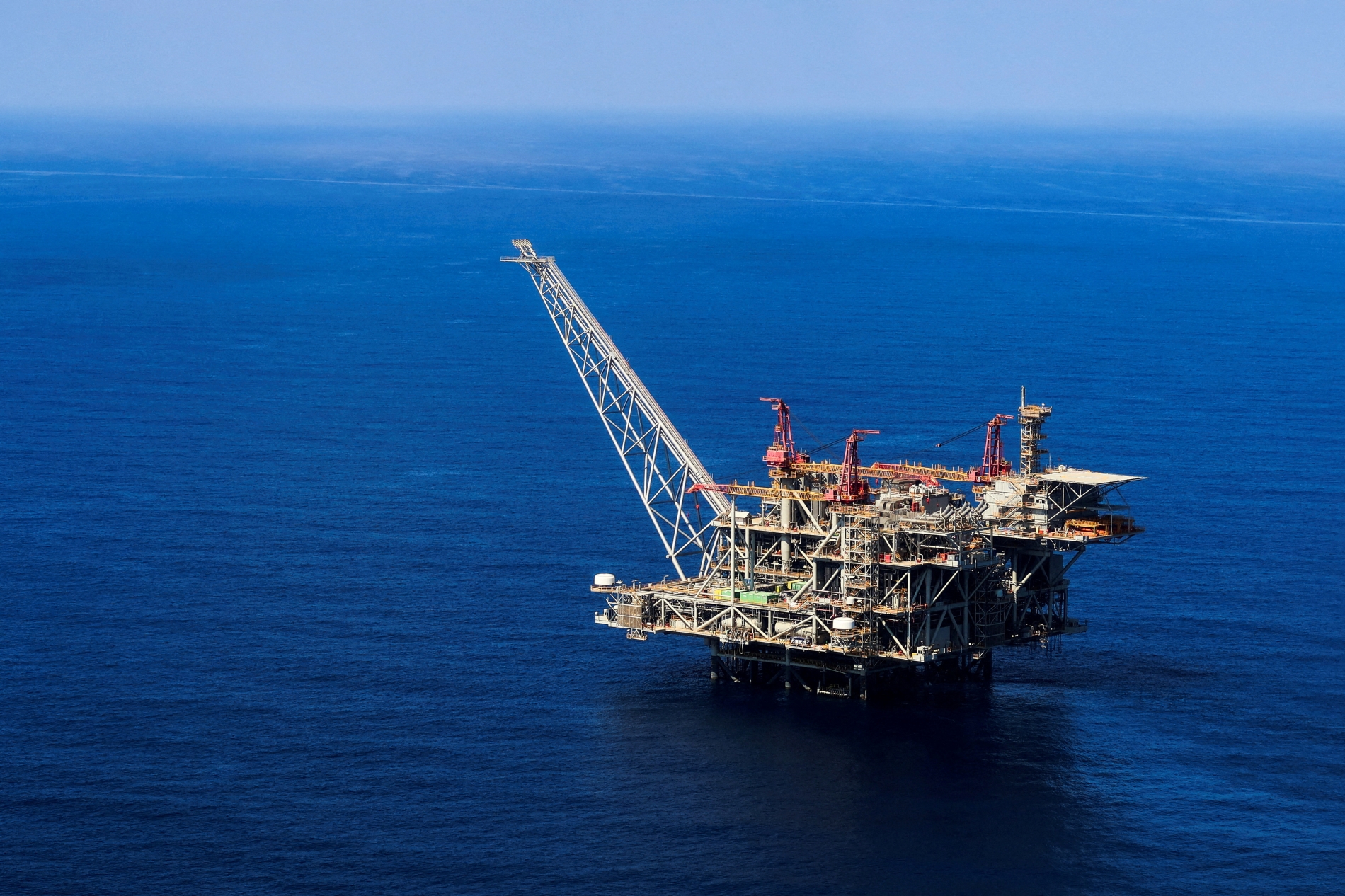
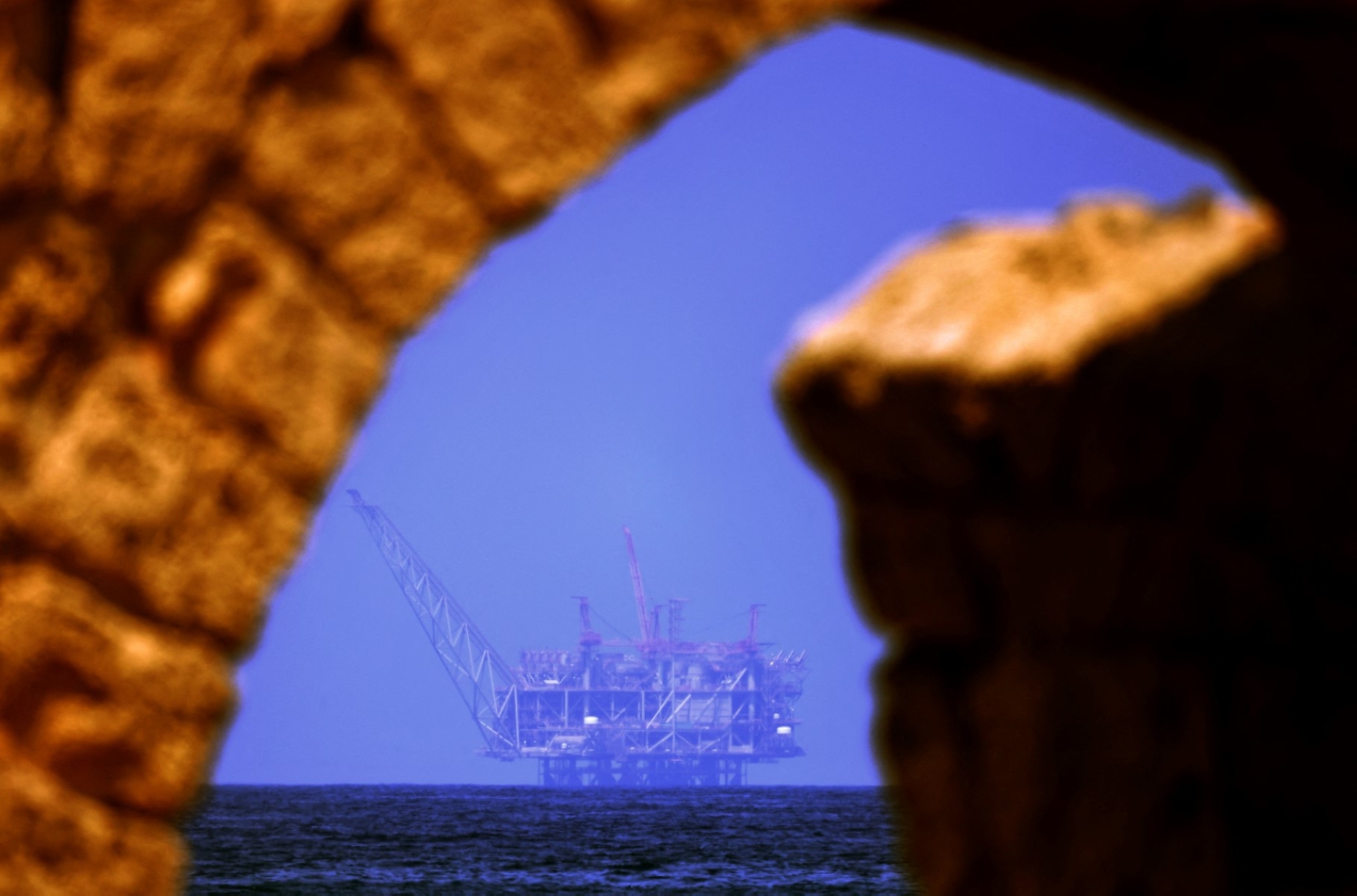
An Israeli gas field in the Mediterranean Sea, on 1 August 2023.
Technical limits and hard realities
Caution remains essential, believes the energy and gas specialist Rabih Yaghi. Egypt no longer occupies the position of a gas-exporting country. Its domestic market faces a persistent shortfall, and its 120 million population depends heavily on gas consumption. Fifteen years ago, Egypt exported gas through the Arish-Ashkelon pipeline to Israel, and for two decades it supplied Jordan with gas for electricity generation. Since then, the balance has shifted decisively.
If Egyptian gas were to be routed to Lebanon, it would pass through Jordan and Syria before reaching Lebanese territory. A previous attempt followed this route to the Deir Ammar power plant in northern Lebanon. At the time, Syria diverted the Egyptian gas, replacing it with Syrian gas, leading to differences in gas quality and operational failure.
If Egyptian gas were to be routed to Lebanon, it would pass through Jordan and Syria before reaching Lebanese territory
Transporting Egyptian gas to Lebanon requires extensive infrastructure rehabilitation, explains Yaghi, including pipelines, storage facilities, and receiving stations, in order to supply the Deir Ammar plant. Supplying the Zahrani plant in southern Lebanon would necessitate an additional transmission network extending from Tripoli to Zahrani. The operational and technical mechanisms required to implement such arrangements remain the most pressing constraint. The project is complex and costly, and none of the parties involved is currently able to attract the investment required to move it forward.
Yaghi further noted that identifying the original source of any gas reaching Lebanon would prove difficult. Egypt could supply gas from its own production or from imported Israeli volumes to meet Lebanese demand. The Deir Ammar and Zahrani power plants are designed to operate on gas that meets specific technical standards. While gas retains its advantage as a cleaner alternative to fuel oil, this alone does not resolve Lebanon's crisis. That threshold will be reached only when Lebanon becomes a producer in its own right and joins the community of gas-producing states.
This undated image, released by Total Energies, shows the Transocean Barents drilling rig, which arrived at its position in the Mediterranean Sea on 16 August 2023.
Years away from production
Where does Lebanon's exploration effort currently stand, and what obstacles continue to reinforce its dependence on external supplies? Under the terms of the agreement signed by the TotalEnergies-led consortium, the companies have three years to conduct seismic surveys to determine Block 8's geological potential. Should these surveys indicate a promising structure, the companies may then seek authorisation to proceed with exploratory drilling.
Lebanese oil and gas expert Laury Haytayan says earlier contracts followed a different logic. They required drilling to precede exploration—an approach applied to Blocks 4 and 9. The pace was faster, too, and decisions were made more quickly. The current framework is slower, with a decision on whether to proceed with drilling expected in 2028. Should that decision prove favourable, results would likely emerge by 2030.
In contrast, exploration and drilling in fields surrounding Lebanon (in Israel, Cyprus, and Egypt) continue at a noticeably quicker tempo. Haytayan notes that the third licensing round for Lebanon's offshore Exclusive Economic Zone concluded without any agreements, shifting attention toward an anticipated fourth round. The Lebanese government is now seeking to revise certain technical parameters to attract companies that may be smaller than established global majors but capable of operating with greater agility. Protracted procedures, she observed, lead primarily to surveys, rather than to drilling and exploration that follow automatically.
Discussions between Egypt and Lebanon have addressed the possibility of Egyptian companies participating in oil and gas extraction within Lebanon's Exclusive Economic Zone, adds Haytayan. Once Lebanon launches a new licensing round, Egyptian firms may submit bids within the cooperative framework established by the recent memorandum of understanding between the two countries.
Haytayan notes that discussions have included the possibility of Egyptian gas supplies to Lebanon, or Egyptian assistance in financing gas imports for electricity generation, either through a dedicated import project or via the Arab Gas Pipeline running through Jordan and Syria. Such arrangements were previously constrained by the Caesar Act sanctions on Syria. With the lifting of those sanctions, this constraint has receded.
She then raises two fundamental questions: whether Egypt could free up sufficient gas given its domestic requirements, and how Lebanon would finance imports without accumulating further debt, as occurred under its agreement with Iraq. She does not exclude the possibility that the gas reaching Lebanon could originate from Israeli fields.
The Leviathan natural gas platform in the Mediterranean Sea.
A post-2028 supply mix
From 2028 onwards, Cypriot gas is also expected to enter the Egyptian market. That gas will come from two projects currently under development—one operated by an American company and the other by Italy's ENI. Additional Israeli volumes would flow under the Egyptian-Israeli agreement. Expansion of production from Israel's Leviathan field is planned in two phases, the first in 2028 and the second in 2030.
The Egyptian market would thus comprise a mix of Egyptian, Israeli, and Cypriot gas, directed toward multiple destinations, including Lebanon.
Haytayan stresses that Lebanon's memorandum of understanding with Egypt does not amount to immediate or near-term sales contracts. Such contracts would be signed only when Egypt has sufficient gas availability, and they would operate under the framework established by the memorandum. At that point, Lebanon would be able to determine the original source of the gas supplied through Egyptian and Lebanese companies.
In earlier periods, when Hezbollah exercised decisive influence in Lebanon, similar questions rarely arose, as a pragmatic approach prevailed. Lebanon is therefore likely to prioritise securing supply over scrutinising origin, provided the transaction remains with Egypt and its companies. Once Lebanon signs a supply agreement with Egypt, the original source of the gas will then become apparent.