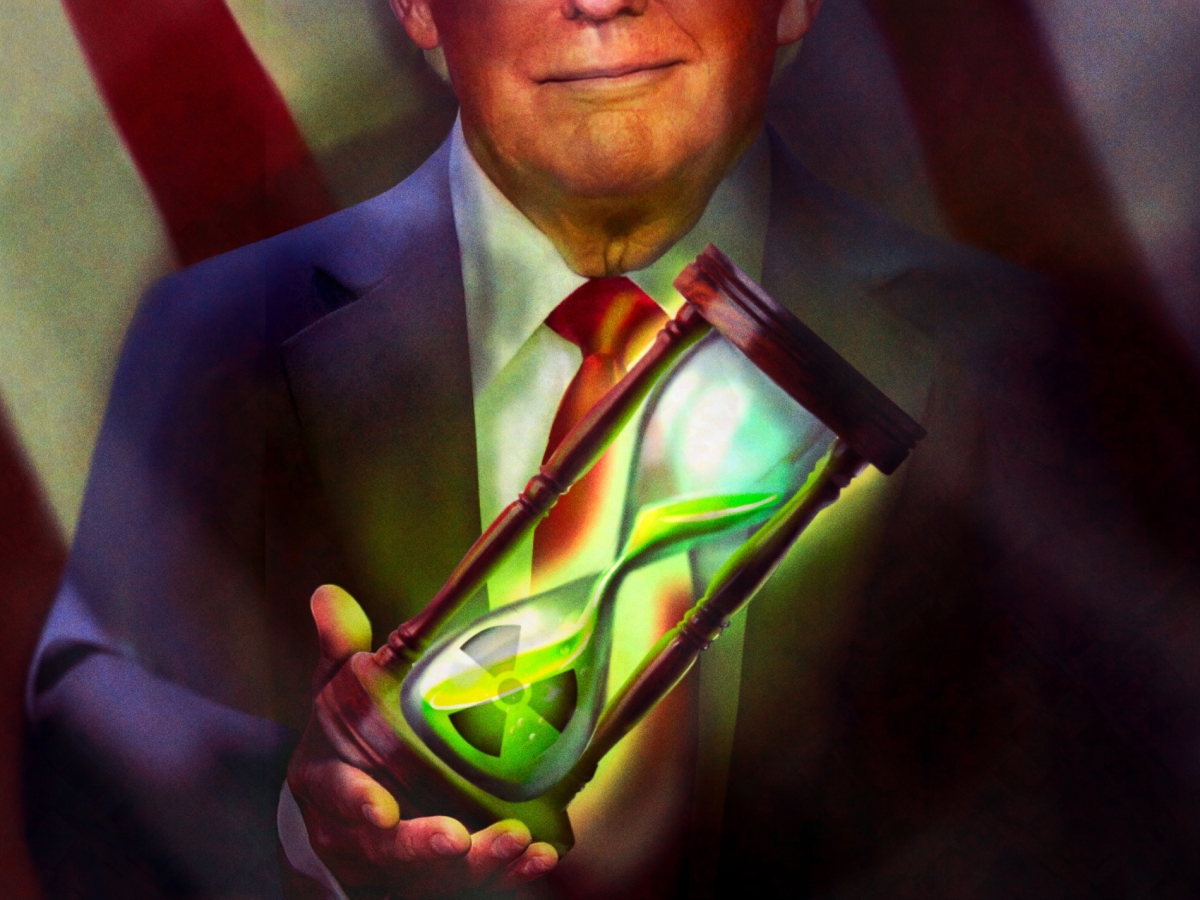
Did Trump's war on Iran make nuclear proliferation more likely?

Many US allies across the world are now questioning America's ability and will to protect them, making the prospect of a nuclear deterrent more appealing

Ewan White

Did Trump's war on Iran make nuclear proliferation more likely?

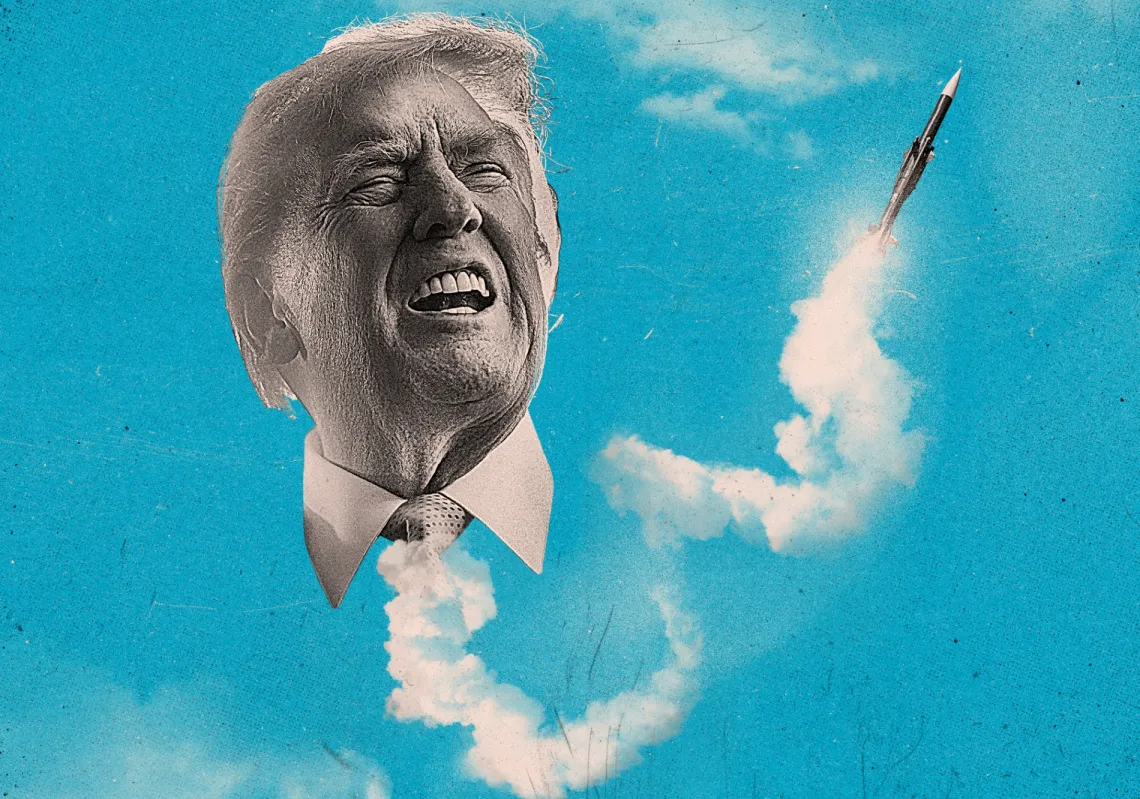
Among the many justifications given by Donald Trump for the US and Israel’s war on Iran was to prevent Tehran from developing a nuclear weapon. While Pakistan-brokered talks may yet see the Islamic Republic agree to some restraints on its programme, a permanent commitment to nuclear disarmament appears unlikely.

Iran’s leaders instead conclude that a nuclear weapon would deter its enemies from future attacks and push for a bomb. This is one reason why the director-general of the International Atomic Energy Agency (IAEA), Rafael Mariano Grossi, told The Economist in mid-April that he was really worried about increased nuclear proliferation. After all, if Iran does decide to go nuclear, its regional neighbours may well follow suit.

But Iran’s perceived nuclear ambitions are only part of the story. Trump’s behaviour during the conflict, building on his past comments, has made many US allies across the world question whether Washington would protect them in the case of a future nuclear attack. European and East Asian governments, many of which were once adamantly against nuclear armament, are having serious “discussions,” according to Grossi. Has the fallout of a war seemingly aimed at preventing nuclear proliferation, ironically, made it more likely?

A fraying non-proliferation order

In theory, nuclear proliferation is forbidden under the Nuclear Non-Proliferation Treaty (NPT) of 1970. This ruled that no one beyond the five states officially in possession of nuclear weapons at the time—the US, USSR, China, UK and France—should pursue nukes, though Israel was known to have its own bomb without admitting it. A total of 191 states have signed up to the NPT, with only India, Israel, Pakistan, South Sudan and (as of 2003) North Korea outside the framework. However, it is unclear whether this international consensus will last in the changing global climate.

In the immediate aftermath of the Cold War, when the US dominated the ‘unipolar moment’, the NPT order reached a high point when formerly nuclear states in the Soviet Union—Belarus, Ukraine and Kazakhstan —disarmed and joined the treaty, while a post-Apartheid South Africa did likewise. However, the limited punishments meted out to non-signatory Pakistan for going nuclear in 1998, and the failure of sanctions to halt North Korea’s nuclear programme, illustrated that, even in an era of US global hegemony, it was difficult to prevent determined states.
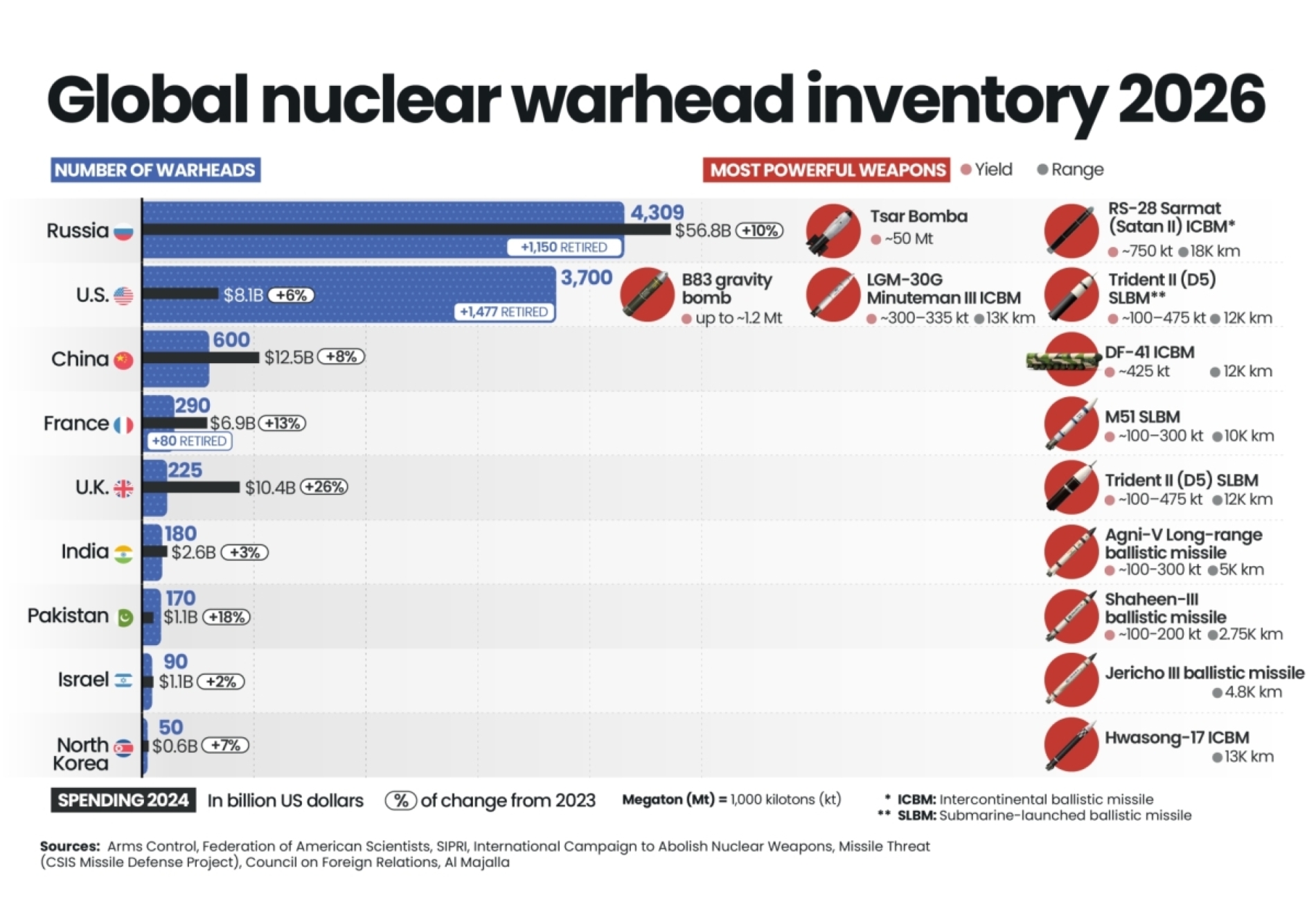
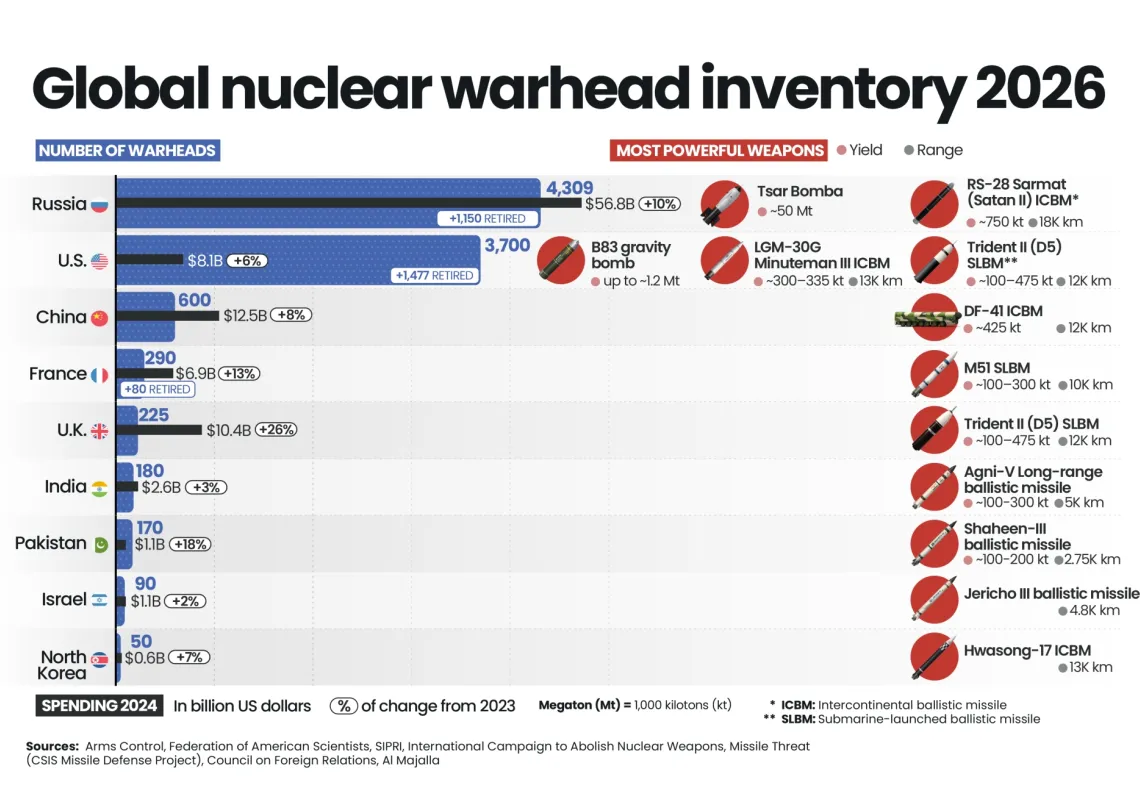
Al Majalla

Today, a more fractured international community in a multipolar world will make this task even harder. Yes, Iran has been subject to intense scrutiny, but this is primarily because of the nature of the regime, which powerful Western actors and their Middle Eastern allies have distrusted since the 1979 Revolution. Were a less controversial actor like Türkiye or South Korea to pursue nuclear weaponry, it may not face such a united wall of disapproval, especially if it came after Iran.

Possible contenders

Unsurprisingly, the states reportedly reconsidering their stance on nuclear weapons are in regions where nuclear weapons are already present. In the Middle East, Israel’s nuclear weapons and Iran’s possible pursuit of them prompted Türkiye’s president, Recep Tayyip Erdogan, to state in 2019 that it was “unacceptable” for Ankara not to be allowed the same.

This February, Foreign Minister Hakan Fidan added it would be “inevitable” for Ankara to join a nuclear arms race if Iran acquired nuclear weapons. Saudi Arabia’s leaders have similarly linked their nuclear status to Iran’s. And for his part, Saudi Crown Prince Mohammad Bin Salman told Fox News in 2023 that, “if they (Iran) get one, we have to get one.”
International Relations scholar John Mearsheimer famously argued in 2012 that a nuclear Iran could bring regional stability by deterring future wars

Meanwhile, Russia's repeated rhetoric around the use of nuclear weapons following the 2022 invasion of Ukraine has alarmed European states. Poland has expressed interest in a NATO nuclear-sharing programme, while Defence Minister Władysław Kosiniak-Kamysz has proposed increased nuclear research. Even Germany has seen increased political and intellectual debate around the issue of nuclear armament, something once unthinkable.

In East Asia, Japan and South Korea are the most likely proliferators, both already possessing civilian nuclear power programmes, and faced with a nuclear China and North Korea. Joshua Kurlantzick of the Council on Foreign Relations notes how a 2025 poll showed 76% of South Koreans favoured an "indigenous nuclear weapons capability." Disgraced former president Yoon Suk-yeol publicly mooted this possibility in 2023. Japan may also revise its position. According to Kurlantzick, Prime Minister Takaichi Sanae, "has left open the possibility that Tokyo will abandon its commitment to not obtaining nuclear weapons."

Losing faith

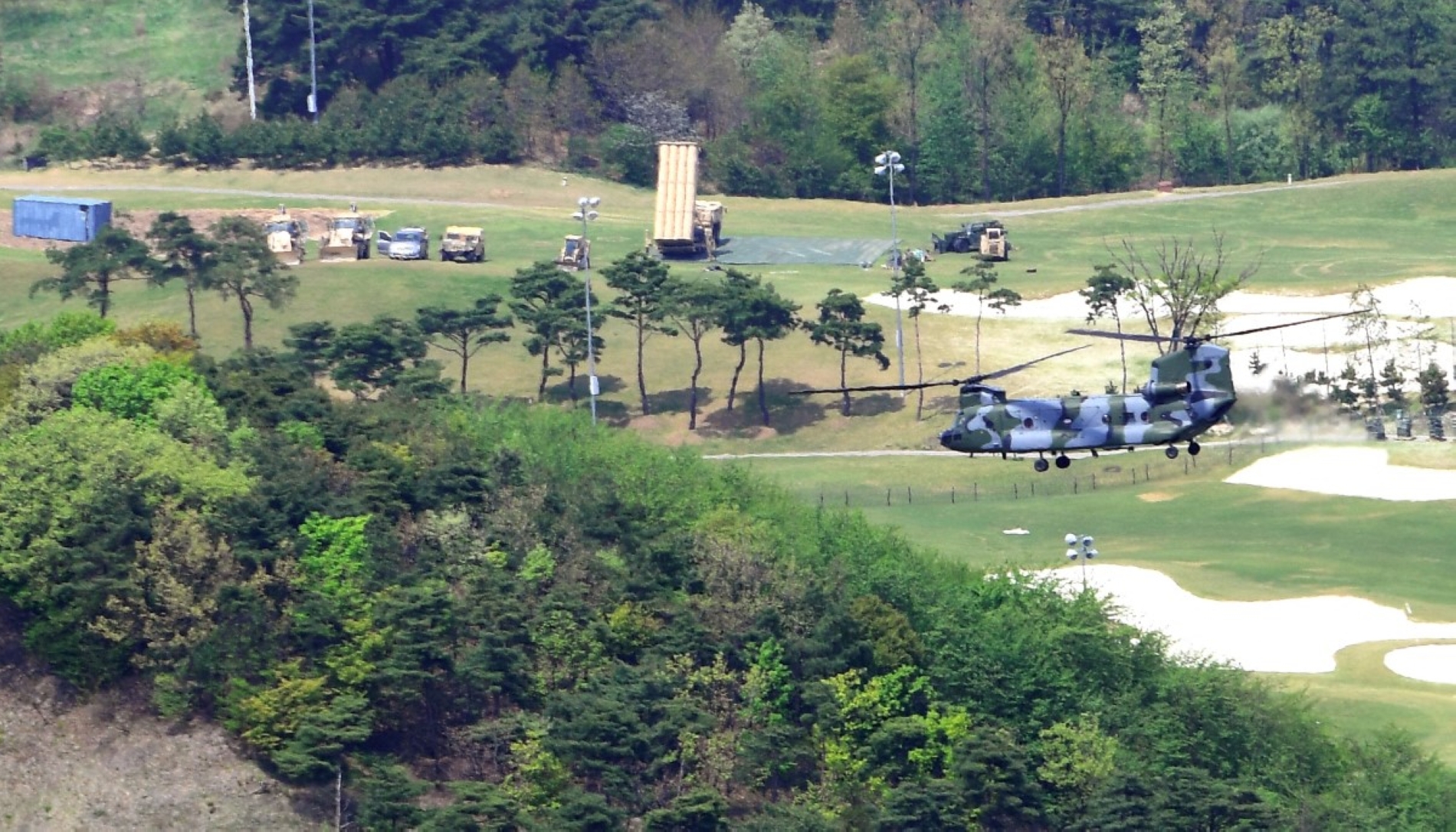
For many of these US allies, the key change has been a loss of faith in Washington. South Korea and Japan, for example, have been alarmed at Trump's recklessness in Iran, which damaged East Asian economies without consulting them beforehand. Trump even diverted part of the high-altitude missile interceptor system promised to South Korea to the Gulf during the conflict.

DAEGU ILBO / AFP
The US THAAD missile defence equipment at a former golf course in the southern county of Seongju on 26 April 2017.

Both Seoul and Tokyo fear the removal of the US nuclear umbrella they have long depended on and may conclude that pursuing their own weapons is a necessity. Given that Trump has said US military support is not guaranteed and even suggested in 2016 that Japan should develop its own nuclear weapons, a major shift from East Asian allies would be controversial but not wholly surprising.

Washington's allies in the Middle East and Europe are similarly concerned about US military support. French President Emanuel Macron proposed in March that France's nuclear weapons could form the keystone of an independent European nuclear deterrent. With Trump openly questioning the value and future of NATO following European reluctance to back him in Iran, the idea of a European deterrent made up of French and possibly British and future German and Polish nuclear weapons may gain momentum.

Likewise, in the Middle East, Türkiye and Saudi Arabia's interest in proliferation comes partly from a fear that it would shift the regional balance of power in Tehran's favour, but from an increased loss of faith in the US to protect it, with Trump's unpredictability during the Iran war underlining these fears.

Copernicus Sentinel-2/REUTERS
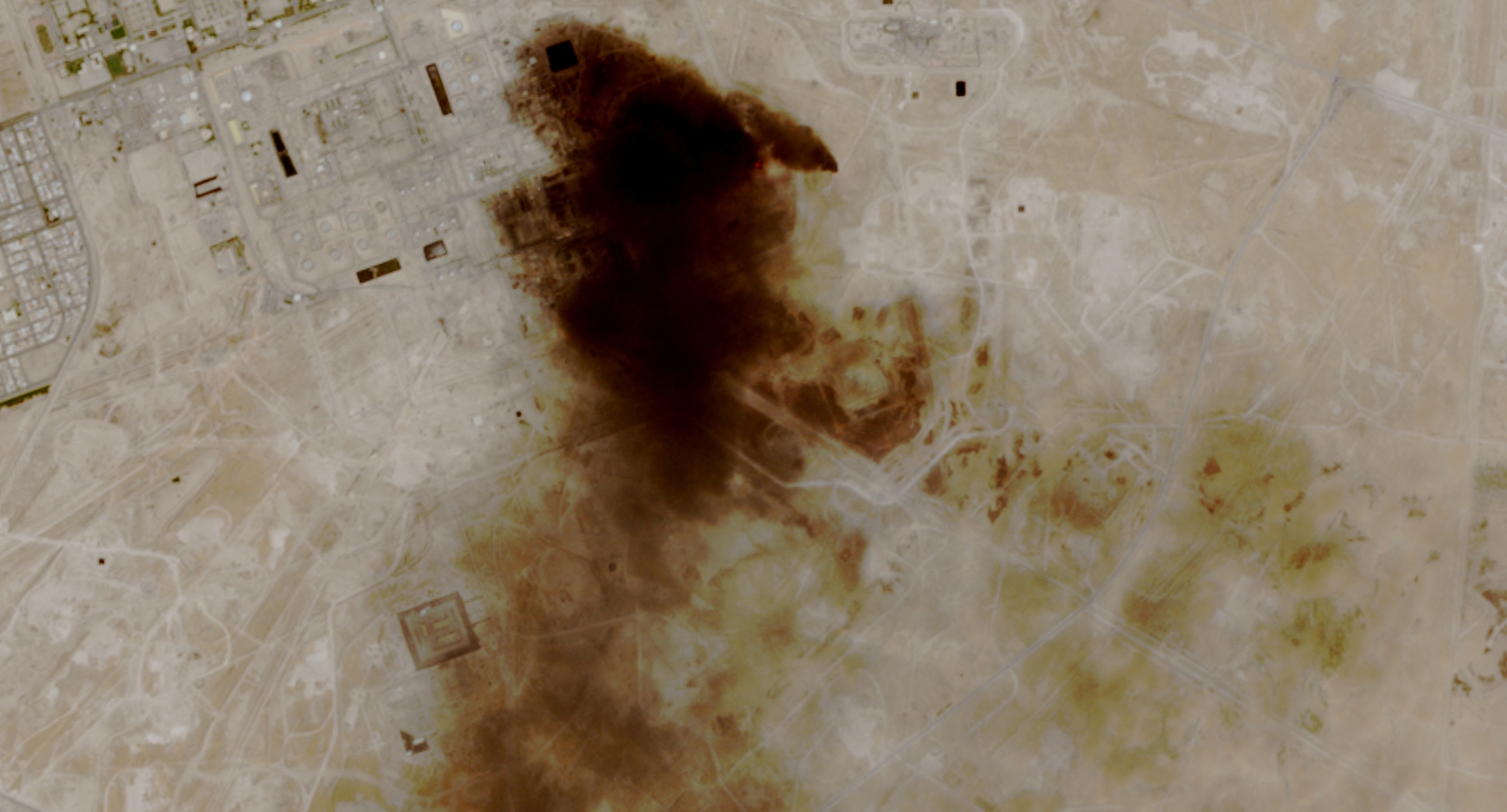
A satellite view of smoke billowing at a Saudi Aramco oil facility after a reported attack, following the announcement of a two-week ceasefire in the Iran war, in Abqaiq, Saudi Arabia, on 8 April 2026.

Weapons of peace?

While nuclear proliferation isn't guaranteed, the possibility of an Iranian weapon, the shift to multipolarity and a loss of faith in the US have made the pursuit of nuclear weapons increasingly attractive. Some commentators have controversially argued that this may not be such a bad thing. The International Relations scholar John Mearsheimer famously argued in 2012 that a nuclear Iran could bring regional stability by deterring future wars. He has described nuclear weapons as "weapons of peace," noting how, had Ukraine not given up its weapons in the early 1990s, Russia would have been less likely to invade in 2022.

A counterargument, of course, is that nuclear weapons serve to entrench and protect autocratic regimes. It is no coincidence that four countries without nuclear capabilities—Libya, Iraq, Iran and Syria—have seen major conflicts that toppled or severely threatened the ruling regime, while the one that developed nuclear weapons, North Korea, has not.

These are lessons that some of the states mulling proliferation will be well aware of. Whether they bring peace or entrench ruling regimes (or both), in today's dangerous and increasingly disordered geopolitical climate, nuclear weapons' appeal is growing, and the Iran war may well have acted as an accelerator in that trend.

font change

Related Articles