While its possible to degrade its nuclear programme, removing it entirely requires an open war that would be extremely costly for Israel and the region
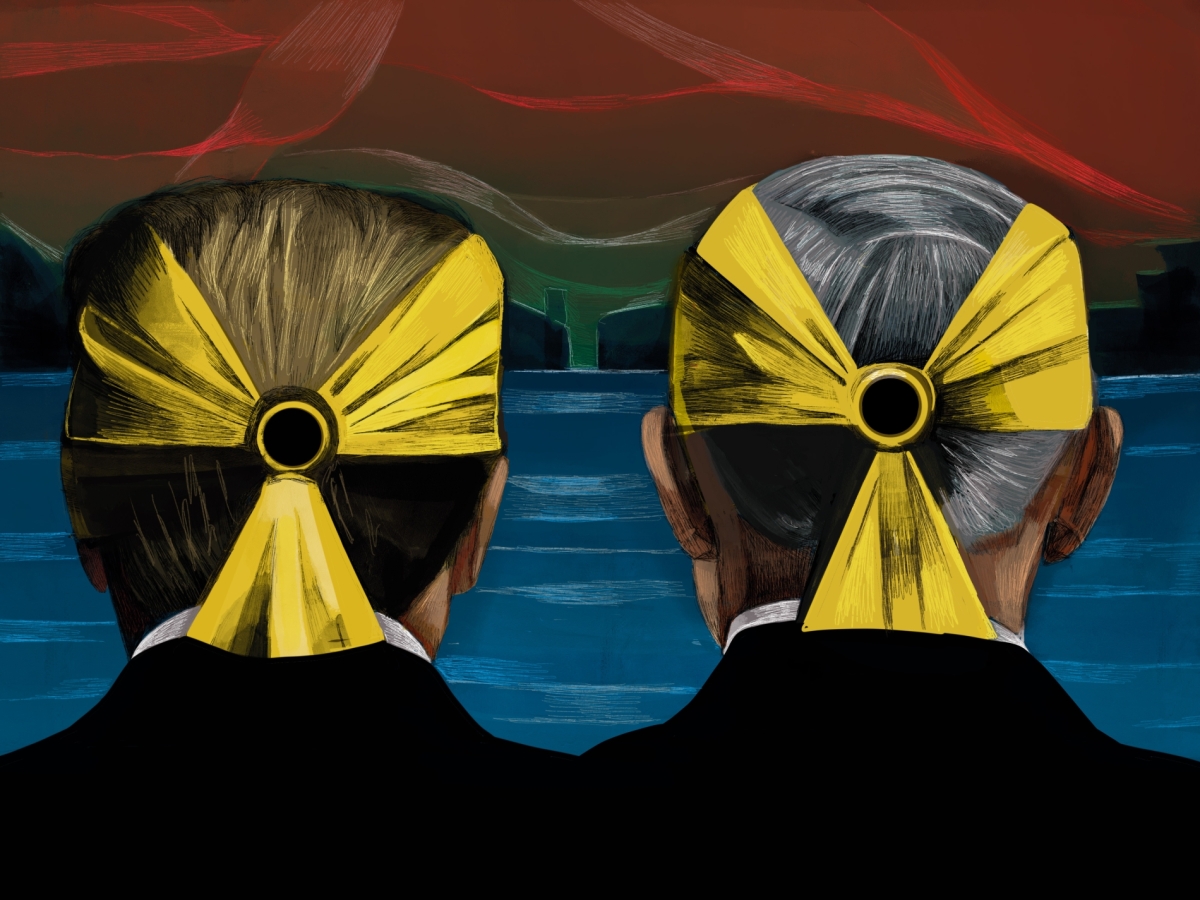
There is a concept in the philosophy of science called tacit knowledge: the unwritten, experiential understanding that cannot be fully captured in blueprints, equations, or instruction manuals. A centrifuge cascade diagram tells you what to build. Forty years of engineering judgment tells you why it keeps failing and how to fix it. To make this knowledge explicit would be akin to drafting a manual on how to bike, or thinking you can learn to drive simply by picking up a book.
In 1995, Edinburgh sociologists Donald MacKenzie and Graham Spinardi published a now-canonical paper in the American Journal of Sociology arguing that this kind of person-specific, embodied expertise is so central to nuclear weapons design that, if it ceased to flow from one generation of designers to the next, nuclear weapons could be uninvented. Their renewed development, MacKenzie and Spinardi wrote, "would have some of the characteristics of reinvention rather than simply copying."
Israel has been “exploring” this idea in a much less theoretical way, as its recent campaign to roll back the Iranian nuclear programme took aim not only at nuclear installations, but also nuclear know-how — and those with that knowledge. But can you really kill your way out of this particular kind of problem?
Israel's war on Iran's nuclear programme has run through three parallel efforts, targeting different “areas” where nuclear capability actually lives. The first effort targets actual nuclear facilities, with airstrikes, bombs or viruses. In the early 2010s, a jointly developed US-Israeli cyberweapon called Stuxnet destroyed roughly 1,000 centrifuges at Natanz by silently spinning them beyond their tolerances. Later on, several suspected Israeli operations hit different parts of Iran’s enrichment programme, which transforms mined uranium into nuclear-grade plutonium.
The second effort was the destruction of the most physical form of Iranian nuclear knowledge. In January 2018, Mossad operatives broke into a Tehran warehouse and removed 110,000 documents, Iran's entire nuclear weapons archive, in a single night. The archive heist was revealing in an unintended way: it confirmed that Iran had documented its weapons knowledge extensively, but documentation and knowledge are not the same thing.
The third layer targeted Iran’s nuclear scientists themselves. Between 2010 and 2012, Mossad assassinated five Iranian nuclear scientists using motorcycle-mounted gunmen and magnetic car bombs.
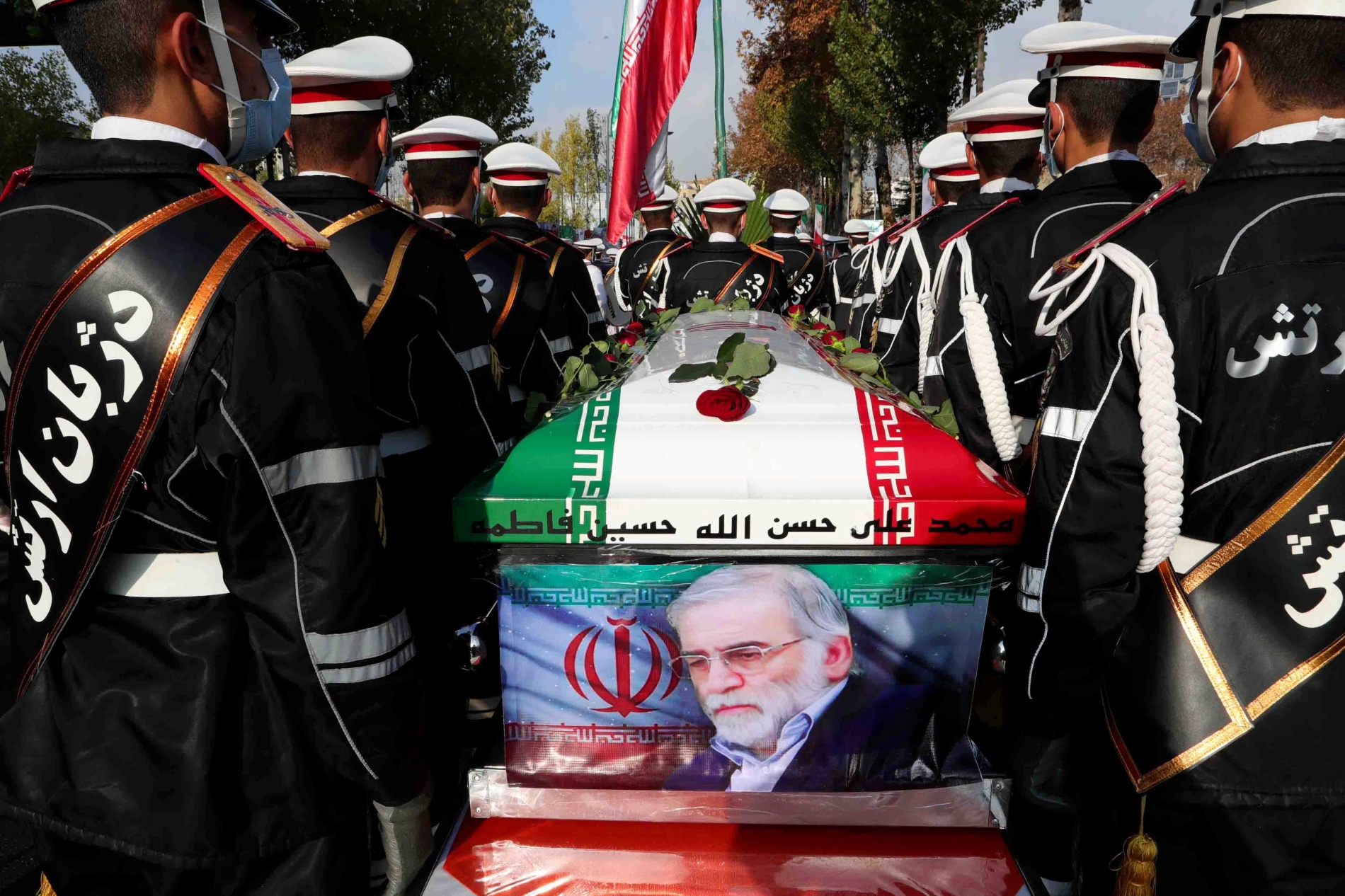
Members of Iranian forces carry the coffin of Iranian nuclear scientist Mohsen Fakhrizadeh during a funeral ceremony in Tehran, Iran, on 30 November 2020.
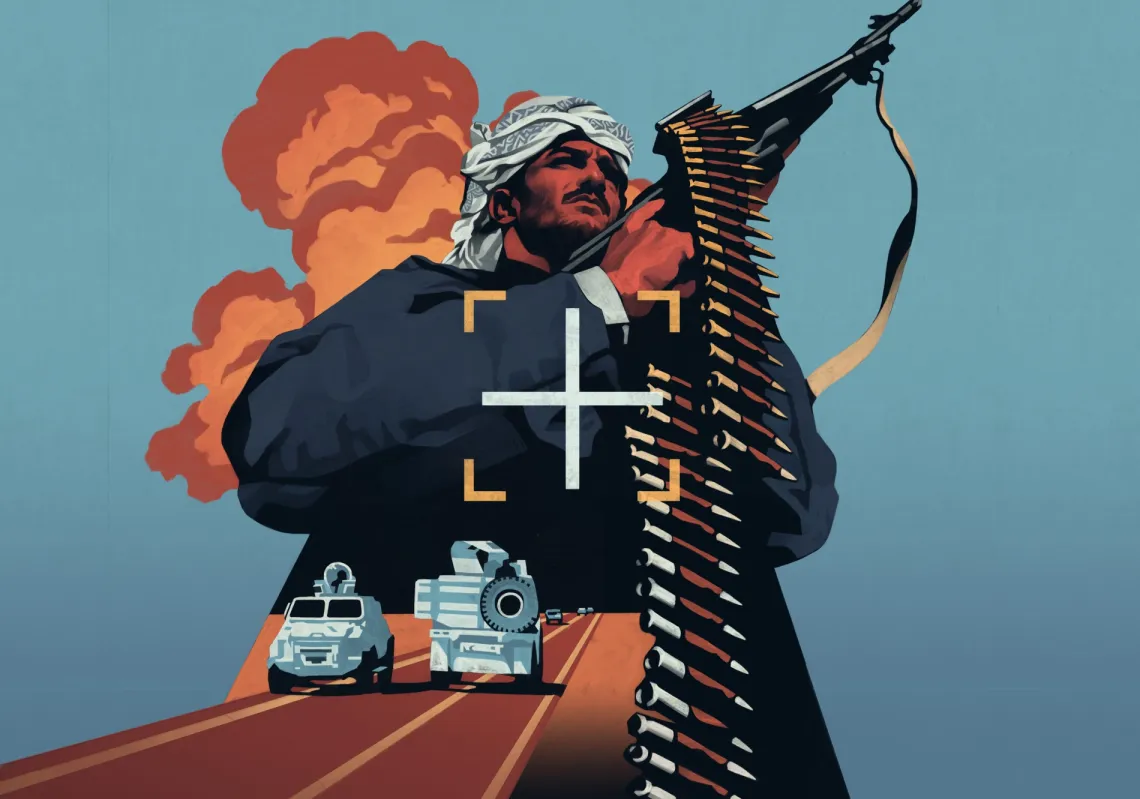
The campaign's most audacious single act, before the direct Iran-Israel wars, came in November 2020, when a satellite-operated autonomous machine gun, smuggled into Iran piece by piece and assembled on-site, killed Mohsen Fakhrizadeh, the scientist Western and Israeli intelligence had identified as the architect of Iran's nuclear weapons programme.
The latter two phases (the effort to destroy knowledge itself) pointed toward the same hard problem. Hardware can be rebuilt, but the people who know how to build it cannot easily be replaced. Then came 2025 and Israel’s most extensive effort to kill nuclear knowledge.
Iran has surviving scientists in hiding, a dispersed academic pipeline, Russia as an external reservoir of expertise, and a strategic logic for nuclearisation that has only grown stronger under attack.
Operation Narnia
On the night of 12–13 June, 2025, as hundreds of Israeli jets launched Operation Rising Lion against Iranian military infrastructure and the Natanz enrichment facility, a separate and quieter mission ran in parallel. Codenamed Operation Narnia (a name chosen to reflect how many Israeli security figures viewed it as impossible), Israeli operatives simultaneously killed nine of Iran's ten most senior nuclear scientists while they slept in their homes.
The tenth was killed hours later. A total of at least 14 scientists were assassinated during the 12-Day War, with some estimates approaching 20. The dead included Fereydoun Abbasi-Davani, former head of Iran's Atomic Energy Organisation and an expert in neutron initiators, the components that trigger a nuclear chain reaction, who had survived a car-bomb assassination attempt by Mossad in 2010. Also killed: Mohammad Mehdi Tehranchi, a theoretical physicist and president of Iran's Islamic Azad University; Abdolhamid Minouchehr, who headed the nuclear engineering department at Shahid Beheshti University; and Ahmadreza Zolfaghari Daryani, a distinguished professor of nuclear engineering and physics.
Computers, mobile telephones, cameras and other electronic equipment displayed at an unknown location in Iran, seized from agents linked to Israel's Mossad.
The deliberate simultaneity was not incidental. A senior Israeli official explained that scientists were killed at the same time to prevent any one of them from being tipped off. This time, Israeli intelligence had marked ten scientists for elimination as early as November 2024, tracking their home addresses and daily patterns for months. They apparently believed their homes were safe; previous Mossad operations had targeted scientists while they drove to work. The simultaneous home-strike concept exploited that false confidence entirely.
But Israel went further than targeting individuals. The June 2025 strikes also targeted the institutional memory of the programme itself, striking Shahid Beheshti University and Imam Hossein University, both deeply embedded in Iran's nuclear-military complex. In an apparent attempt to destroy a physical archive of weapons knowledge, Israel also struck a building that may have included a copy of the Iranian Nuclear Archive located in the basement of the SPND (an agency partly in charge of nuclear research) headquarters in Tehran.
This time, the killing was on a fundamentally different scale and was combined with explicit social-media warnings threatening death to any scientist who resumed nuclear weapons work, an effort designed to deter recruitment and self-continuation. Iran's response confirmed the pressure was real: surviving scientists were relocated to secure villas in Tehran and along the country's northern coast, their families moved with them; those who taught at universities were replaced.
Distributed knowledge
Of course, Iran has been aware of the threat and responded even before Operation Narnia. "Nuclear knowledge in our country is distributed across both the educational and research sectors," Iran's ex-atomic chief Fereydoun Abbasi stated in April 2025. "It is not confined to the Atomic Energy Organisation (AEOI) or limited to specific facilities and sites associated with it. We carry out nuclear education and research activities nationwide."
This is not simple bravado. Similar to the physical facilities, which are dispersed across Iran, the Iranian know-how is also distributed across multiple individuals. Iran's nuclear apparatus is split across the AEOI's public-facing sites, the IRGC's military-technical institutions, the SPND's classified research units, and a network of university departments with dual-use academic cover.
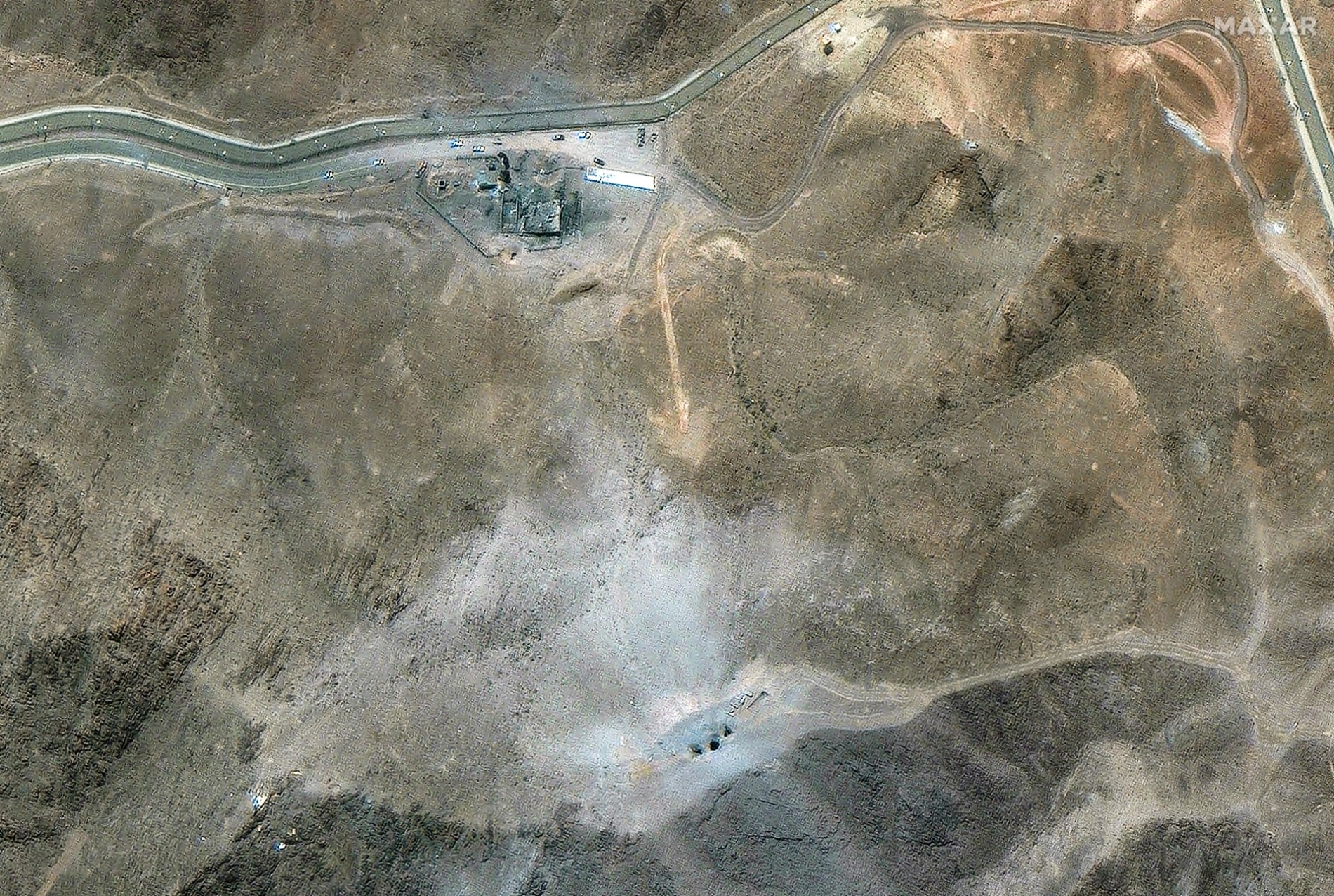
An aerial view of the Fordow Fuel Enrichment Plant (FFEP) dated June 27, 2025, one week after US strikes on three Iranian nuclear sites.
As a result, Israel has focused on a more specific part of the Iranian nuclear programme: Weaponisation. Tehran uranium enrichment programme, which creates the fissile material for one (or multiple) bombs, is now much harder to fully reverse. To be sure, the US strike against Fordow last year likely buried much of Iran's enriched uranium and destroyed part of its centrifuges. But it is a question of time before Iran can set up further centrifuges and get enough fissile material for a bomb.
The weaponisation part of the programme is still unfinished, on the other hand. It entails creating a small enough warhead, alongside complex efforts to design a nuclear detonator and test the weapon. Without it, any Iranian effort to acquire a bomb is incomplete.
The killing of a scientist working on weaponisation may have delayed the programme, but it doesn't appear to have stopped it. Worse for Israel's calculus, knowledge was flowing outward even before the strikes. Iranian scientists connected to the SPND made at least two covert visits to Russian military-scientific institutions in 2024, seeking laser technologies for simulating nuclear implosion dynamics without a physical test, a capability that would allow Iran to validate a weapon design without the telltale sign of a nuclear detonation.
Any attempt to gain knowledge through external players (be it Russia or North Korea) would likely be bolstered by Israel's campaign to kill Iran's domestic know-how, and risk further expanding the covert effort in unpredictable ways.
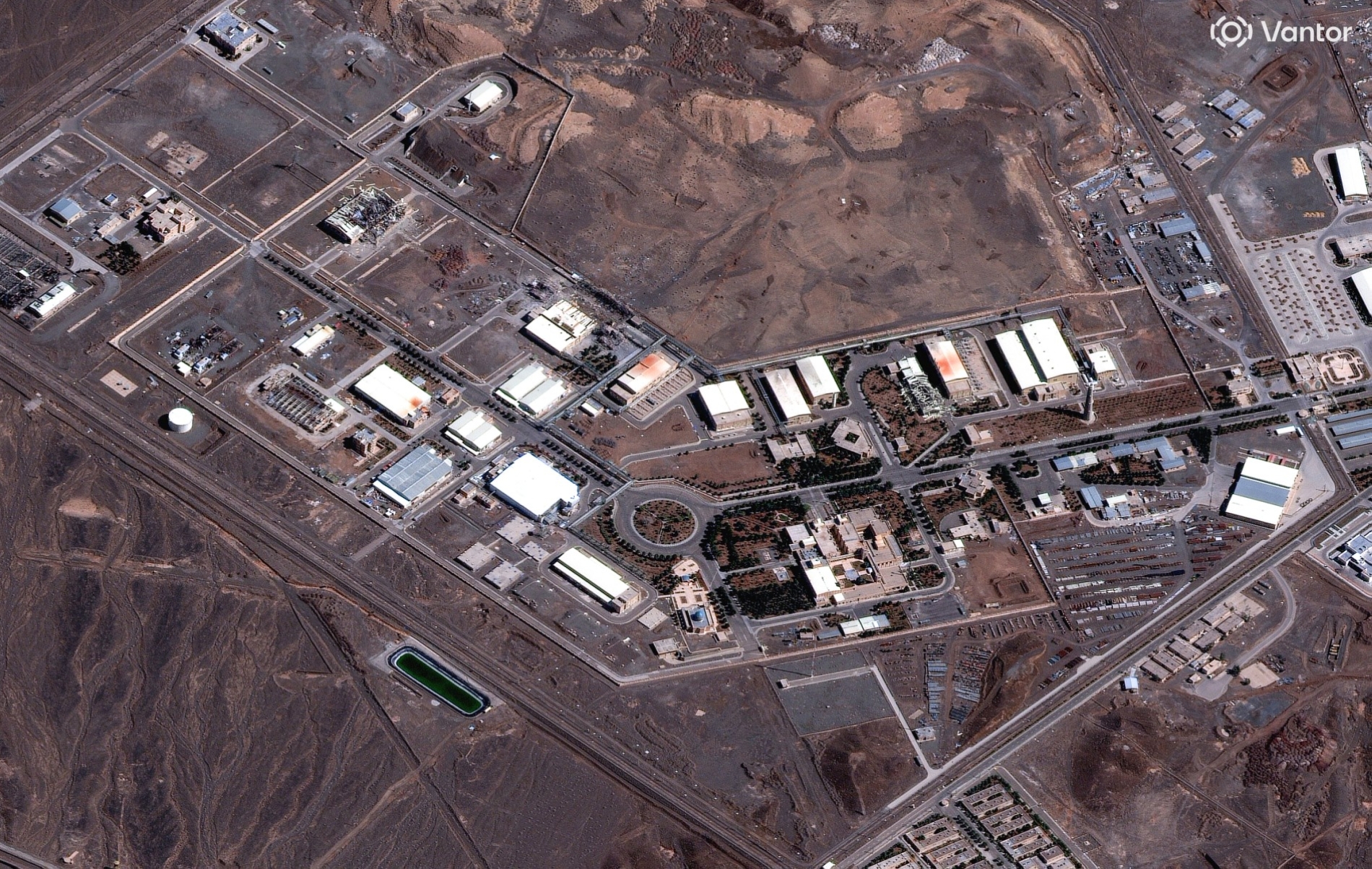
This handout satellite image, courtesy of Vantor, shows the Natanz Nuclear Facility near Natanz, Isfahan province, in central Iran on 7 March 2026.
Successes and limits
Where does this leave Israel? With a genuine, if bounded, accomplishment. The strikes killed a generation of scientists who carried four decades of accumulated weapons-grade expertise: people who cannot be replaced quickly or cheaply. This is real degradation, measured in years rather than something more permanent.
MacKenzie and Spinardi's uninvention thesis requires something stronger than that: not a setback, but a severing: a sufficiently long hiatus in active design work, across an entire generation, with no knowledge transfer to successors. Israel has shortened Iran's timeline. It may have disrupted a cohort. It has not, and perhaps cannot, achieve the full severing. Iran has surviving scientists in hiding, Russia as an external reservoir of expertise, a dispersed academic pipeline, and a strategic logic for nuclearisation that has only grown stronger under attack.
Bombing nuclear know-how is possible and works to delay Iran's nuclear programme. What it hasn't done is remove the programme entirely, which would require an even broader and constant campaign—an open war that would be extremely costly for Israel and the region. The corollary to this conclusion, for Israel, may be just as important: If know-how on how to produce a nuclear weapon cannot fully be eliminated, then the regime potentially wielding that weapon should.