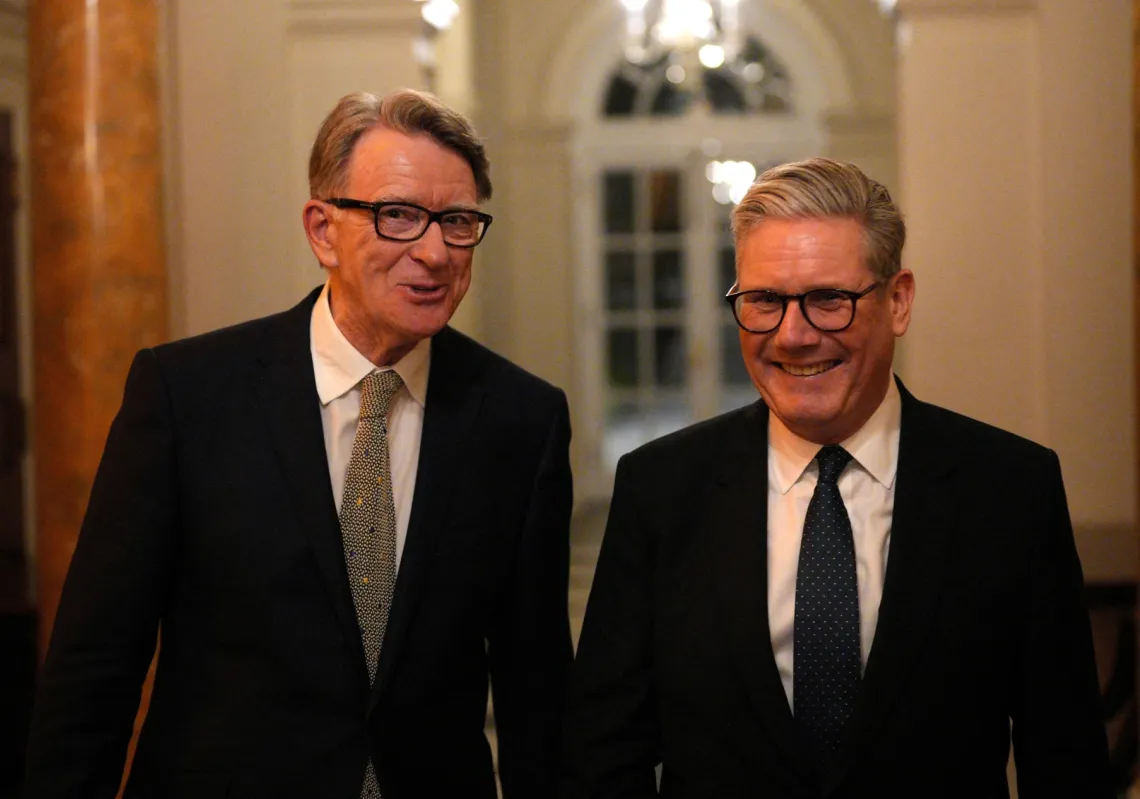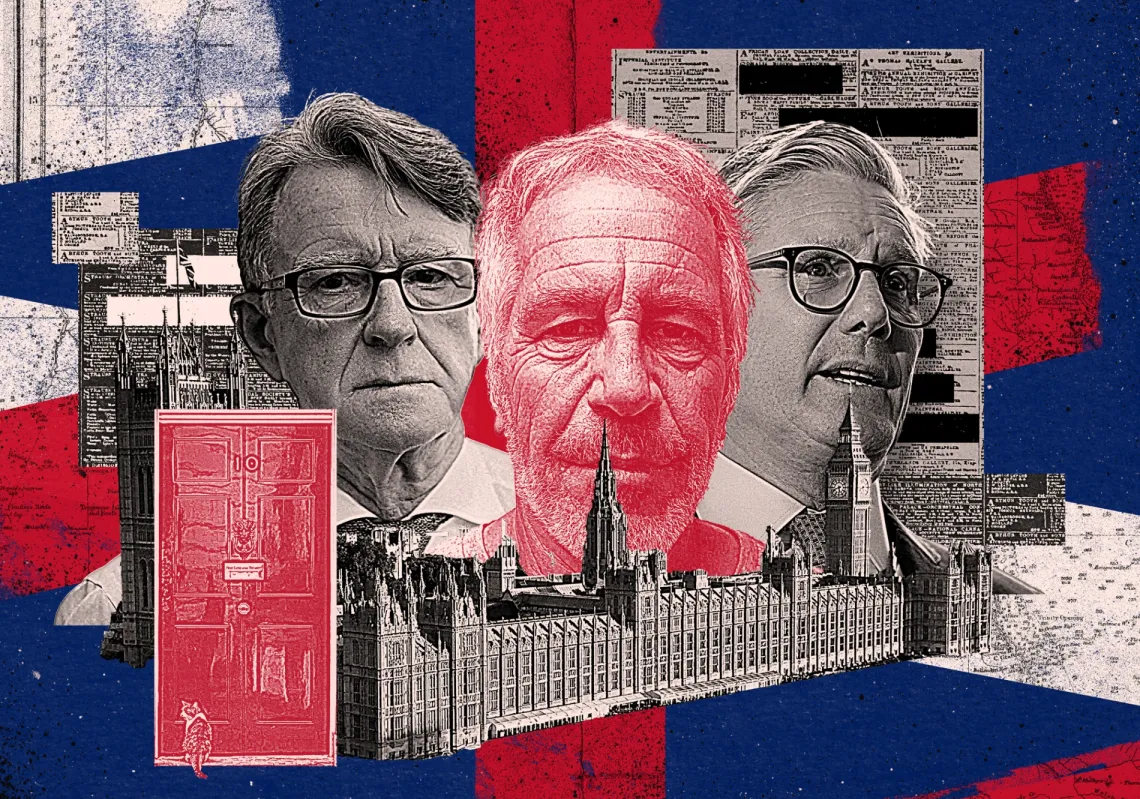

When British Prime Minister Sir Keir Starmer helped his Labour Party win a landslide victory in 2024, he did so on the basis that he would restore a sense of order and discipline to governing the country. After the chaos surrounding the previous Conservative governments of Boris Johnson and Liz Truss, Starmer, a former lawyer-turned-politician, was seen by many British voters as the perfect candidate to place the British political landscape on a more stable footing.
The fact, therefore, that Starmer now finds himself in a highly damaging political scandal over his handling of a key diplomatic appointment has not only inflicted severe damage on his own reputation for probity and conforming with the basic rules of governance, but it has raised serious questions about how long he can remain in office in Downing Street as the scandal caused by his decision to make Labour grandee Lord Peter Mandelson the UK’s Ambassador to Washington shows no sign of going away.
But despite the controversy over Starmer's appointment of Mandelson, the British premier insists he’ll won't step down , and he will lead the Labour Party into the next elections.
In a recent interview with the Sunday Times, he shrugged off rumours that he will be forced to resign or face a leadership challenge. He conceded that it was indeed a mistake to appoint Mandelson, but argued that the media was hyperfocusing on an issue at a time when his government faces more pressing issues.
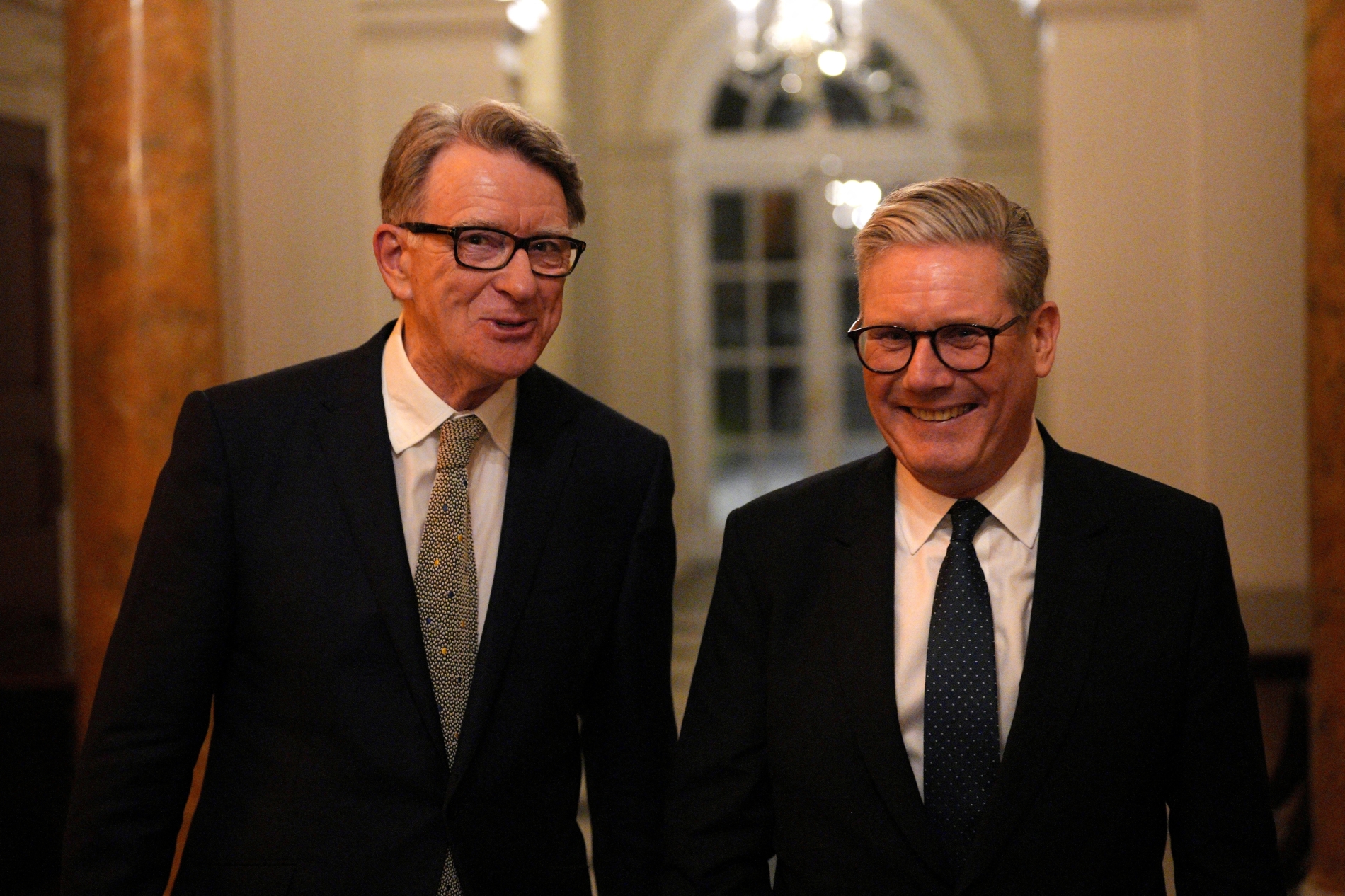
Mandelson, who first came to prominence as one of the architects of Tony Blair’s highly successful New Labour party in the 1990s, was widely seen as a controversial appointment from the moment Starmer announced he was to take up the prestigious position of UK Ambassador in December 2024. The primary concerns about his appointment concerned his previous close association with Jeffrey Epstein, the US financier and convicted child sex offender.
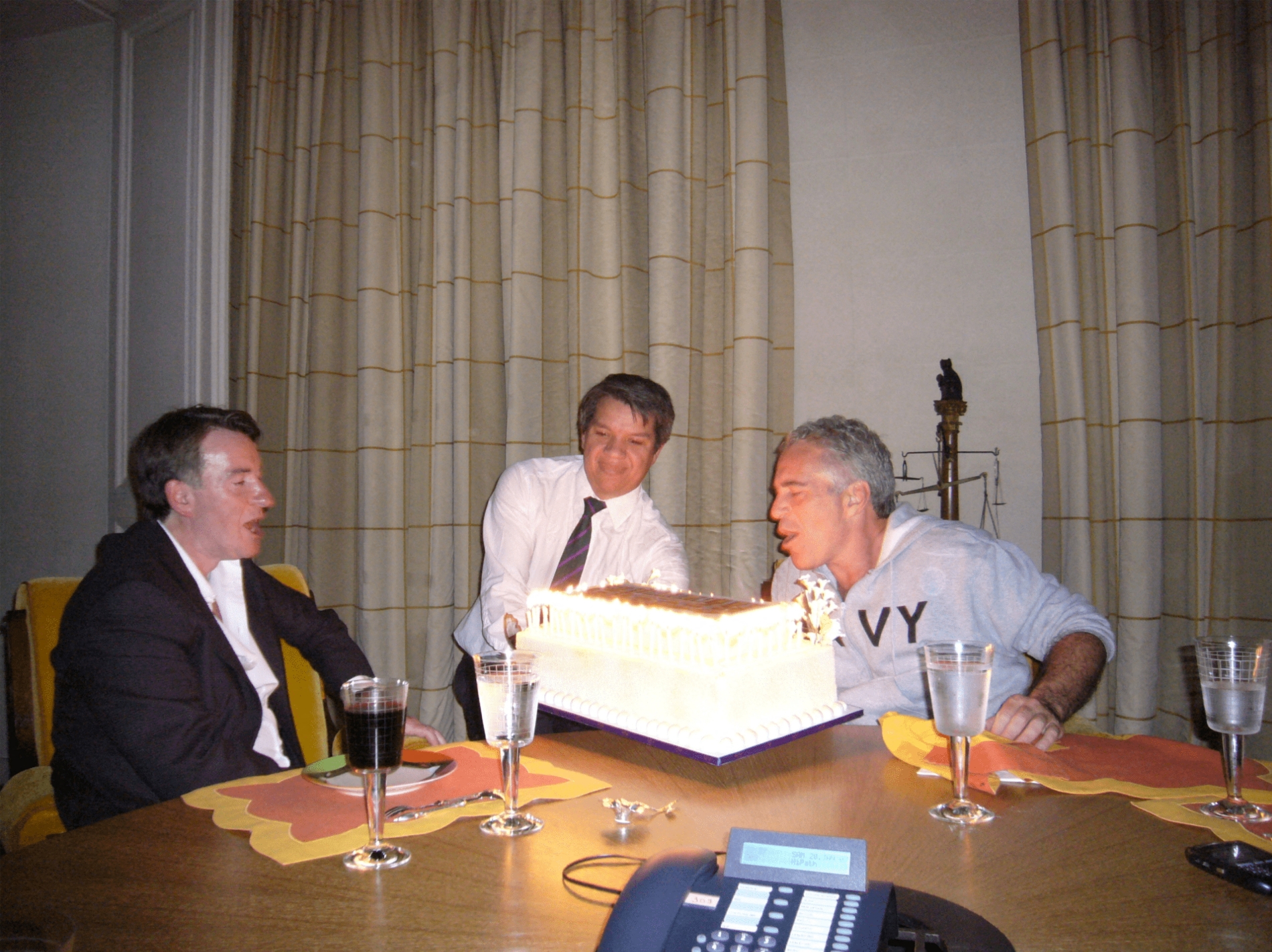
But it was his experience working as a trade commissioner for the European Commission that persuaded Starmer that Mandelson would be a strong candidate to fill the role of UK envoy in Washington once Donald Trump returned to the White House to begin his second term. With expectations running high that Trump would use his second term to negotiate a new trade deal with the UK, Mandelson was seen as the perfect candidate to ensure the UK secured a good deal.
Judgement questioned
But while Starmer believed his decision to appoint Mandelson to this key role was perfectly justified, he has subsequently come to regret it, as a succession of scandals has raised serious questions about his judgment. As a result, Starmer now finds himself in a desperate battle to survive as prime minister, less than two years after Labour's landslide election victory.
The first indication that Starmer had made a serious error in appointing Mandelson came last year with the release in the US of the Epstein files, which showed that the British envoy had maintained ties with the US financier long after he had been convicted of sex offences. Starmer managed to weather that storm by unceremoniously sacking Mandelson in September last year, claiming that the former ambassador had lied to him about the extent of his ties to Epstein.
Hoping to draw a line under the whole sorry affair, Starmer offered a public apology for making the appointment in the first place. In many respects, Starmer has only himself to blame for the mess he finds himself in, as Mandelson’s reputation as a controversial figure was well known from his time in Tony Blair’s New Labour government.
Mandelson was forced to resign twice from office following accusations of impropriety. In 1998, he was forced to resign from his government for the first time when it was revealed he had received a secret loan of £373,000 from his ministerial colleague, Geoffrey Robinson. Less than a year later, he was back in government, taking on the position of Northern Ireland secretary. He lasted in that job until January 2001, when he quit over allegations of misconduct in his handling of passport applications for Indian businessmen.
Push for transparency
Any hopes Starmer may have entertained that, by sacking Mandelson, he had brought the controversy to an end have been dashed by the publication of more damaging information relating to Mandelson’s appointment, which the British government has been forced to make public following pressure from opposition politicians for Downing Street to publish all the available information relating to Mandelson’s appointment.
Among the most damaging revelations to emerge this month has been the astonishing confirmation that Mandelson had failed the rigorous vetting procedure that is undertaken on any British official before taking up a high-profile role.
The problem for Starmer, a politician who likes to give the impression he rigorously follows the rules, is that Mandelson failed the vetting process after he had already taken up his new position as ambassador. This is despite the fact that Starmer himself had previously been advised by Downing Street’s then Cabinet Secretary, Simon Case, that if he wanted to make a political appointment for the Washington posting, he should ensure the vetting process was completed before the appointment was made.
“We will develop a plan for them to acquire the necessary security clearances and do due diligence on any potential Conflicts of Interest or other issues of which you should be aware before confirming your choice,” Case advised the prime minister.
Starmer chose to ignore this advice, as he wanted to have Mandelson in Washington before Trump’s inauguration in January 2025. As a result, when it emerged that Mandelson had failed the vetting process, the Foreign Office, the body ultimately responsible for overseeing the appointment, decided not to inform the prime minister about the problem.
Calls to resign
It was only after Mandelson’s vetting failure became public knowledge with the publication of further details of Starmer’s handling of the appointment that the prime minister found himself engulfed in yet another political scandal, with opposition politicians accusing him of deliberately misleading parliament over the affair and calling for his resignation.
Starmer’s initial response was to sack the head of the Foreign Office, Sir Olly Robbins, for not informing him that Mandelson had not passed the vetting process. Starmer claimed that if he had been told of the problems surrounding Mandelson’s appointment, he would not have proceeded with it.
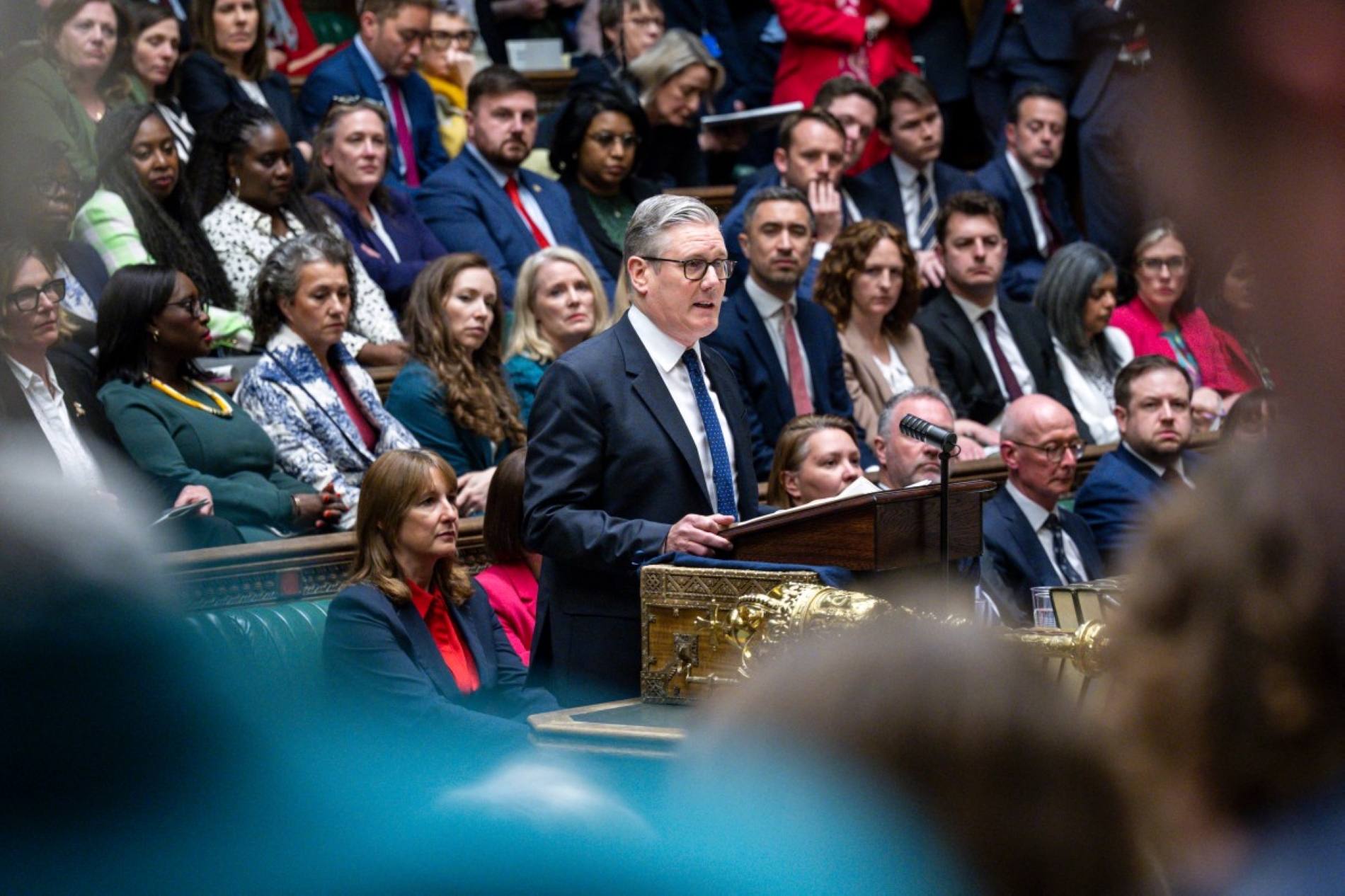
But when Starmer attempted to give a detailed account of his involvement in the affair to the House of Commons, he was greeted with a chorus of jeers, a clear sign that many MPs do not believe his version of events, and believe he is trying to use Robbins as a scapegoat to cover up his own incompetent handling of the saga.
Starmer’s position, moreover, has not been helped by the fact that the day after he addressed the Commons, Robbins gave his own account of events to the Commons’ Foreign Affairs Select Committee, during which he claimed he had come under enormous pressure from Downing Street to press ahead with Mandelson’s appointment to Washington, irrespective of whether he had passed the security vetting process.