Starmer's Epstein scandal defence falls on deaf ears

The publication of highly damaging files detailing Epstein's relationship with Lord Mandelson who Starmer appointed as UK ambassador to the US has sparked fierce backlash across the political spectrum

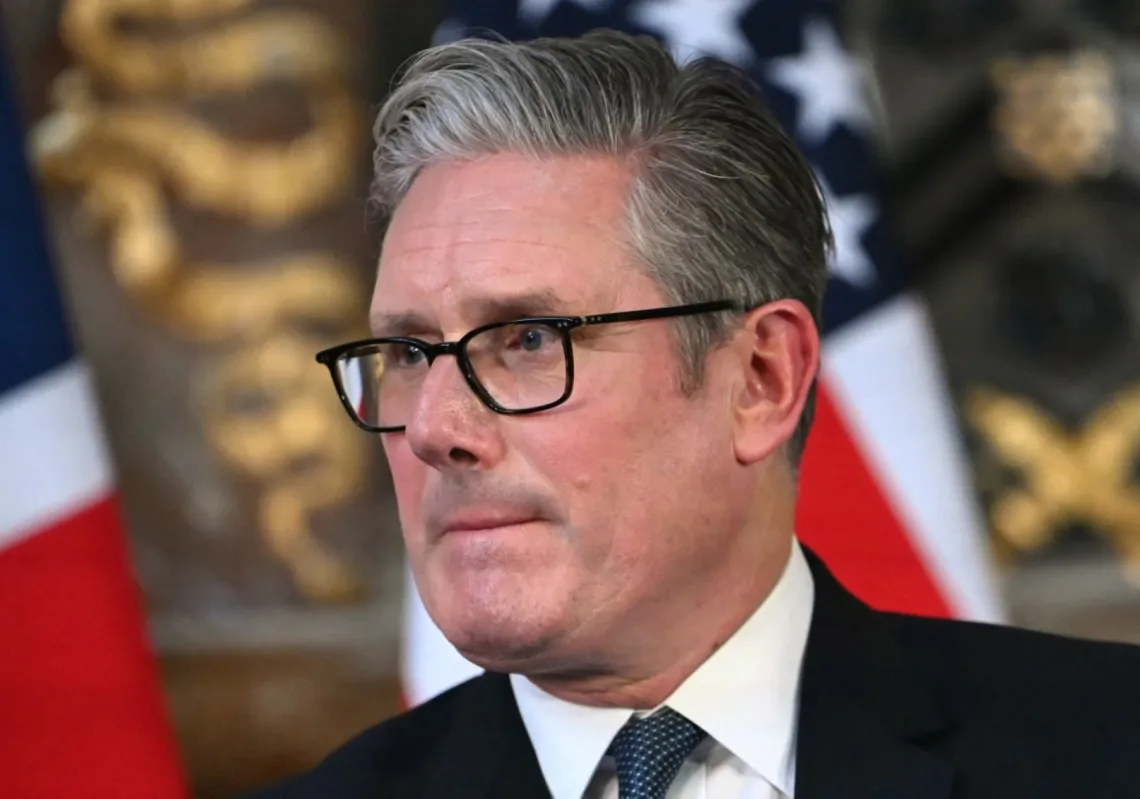
Britain's Prime Minister Keir Starmer speaks in the House of Commons at parliament in London on 4 February 2026, and says he regrets appointing Mandelson as US ambassador.
AFP
Britain's Prime Minister Keir Starmer speaks in the House of Commons at parliament in London on 4 February 2026, and says he regrets appointing Mandelson as US ambassador.

Starmer's Epstein scandal defence falls on deaf ears

The revelation that a high-profile member of the British government had close historic ties with the disgraced American financier Jeffrey Epstein has entrenched British Prime Minister Sir Keir Starmer in the worst political crisis he has faced since taking office.

Questions about his ability to survive in office less than two years after he led his Labour party to a historic landslide victory have been raised following the publication of highly damaging files detailing Epstein's relationship with Lord Mandelson, the veteran Labour politician appointed by Starmer as the UK’s ambassador to Washington.

Apart from revealing that Mandelson remained on friendly terms with Epstein after the American financier was jailed for sex crimes involving underage girls, they also suggest that the former British envoy provided Epstein with sensitive UK government trade documents.

Given Starmer’s role in appointing Mandelson in the first place, the subsequent scandal caused by the US government’s decision to release millions of documents relating to Epstein’s business dealings has led to calls for Starmer's resignation.

At one point, it appeared that Starmer would have no choice but to resign after Anas Sarwar, the Scottish Labour leader, called Sir Keir Starmer and told him it was time for him to resign as prime minister. “I spoke to the prime minister earlier today, and I think it’s safe to say he and I disagreed,” Sarwar said at a hastily arranged press conference. “We cannot allow the failures at the heart of Downing Street to mean that the failures continue here in Scotland.”

Sarwar made his intervention after the prime minister had just lost two of his most senior allies, Morgan McSweeney, his chief of staff, and Tim Allan, his director of communications, in the space of 24 hours due to the Mandelson scandal.

It was only after Downing Street quickly began to organise a rearguard action that Starmer managed to survive the demands for him to step down. As Sarwar started speaking, Downing Street issued a defiant statement making it clear that the prime minister was going nowhere.

Dubious defence

Starmer’s weak defence of his appointment of Mandelson as UK Ambassador to the US was that he had been lied to when making the appointment, and that he was unaware of the closeness of the relationship between the two men. This defence was believed by virtually no one on either side of parliament, as much of the evidence of the intense friendship had already been in the public domain.

Furthermore, Labour’s chaotic year and a half in government after a landslide victory over the Tories in the general election in the summer of 2024, with a number of policy U-turns on key issues, had rendered Starmer unpopular both with his own party and, increasingly, the country.

Even after Starmer, addressing calls for his resignation, made a speech aimed at placating Labour MPs, the mood in Westminster remained febrile, with an increasing number of ministers and backbenchers reaching the conclusion that it is now a question of not whether Starmer will be forced to resign, but when.

The departure of senior aides usually leads to the ousting of even the most successful prime ministers. Margaret Thatcher lasted barely a year after Alan Walters, her economics adviser, was forced to quit. Gordon Brown did not last long after his communications chief went. Theresa May and Boris Johnson were both forced out less than two years after the departure of their top aides.

Perilous position

Starmer’s perilous position was made abundantly clear at the weekly session of Prime Minister’s Questions in the House of Commons, as he faced questions over another possible misjudgement in making his former communications chief, Matthew Doyle, a peer despite claims that Doyle had actively campaigned for a sex offender. Starmer’s excuse, much as it was his excuse for appointing Mandelson, was that Doyle had “not given a full account of his actions”.

More and more ministers and backbenchers believe it's not a question of whether Starmer will be forced to resign, but when

If Starmer has had a stay of execution for now, many believe it is only a matter of time before he resigns or is forced to step down. Much depends on Mandelson himself and whether there are further revelations from the Epstein files. Starmer will also be concerned that the ongoing police investigation into Mandelson's activities will throw up further embarrassing revelations.

In addition, the Cabinet Office may finally publish the due diligence report into Mandelson's appointment, which will show exactly what Starmer was told about his links to Epstein. In the end, the prime minister— who is polling as the most unpopular in history—may want to fall on his sword to try to shore up Labour councillors in May's local elections.

Crucial test

A crucial test of Starmer's ability to survive the political storm surrounding him will come on 26 February with the crucial Gorton and Denton by-election, a safe Labour seat that few now believe the party will win.

Photo by OLI SCARFF / AFP
Green Party MP posters are pictured outside a convenience store in Gorton, Greater Manchester, on 12 February 2026, as parties begin to canvas voters ahead of the crucial Gorton and Denton by-election.

Labour won the Greater Manchester seat with more than half the vote at the last election, but now it faces being pushed into third place behind Reform UK and the Green Party. Starmer may try to dismiss the defeat as the inevitable result of being the party of government having to make difficult choices during a difficult economic period, but he will be blamed for his decision last month to block Andy Burnham, the Mayor of Greater Manchester, from standing as the party's candidate.

The prime minister wanted to keep Burnham out of parliament because he feared he would use it as a launchpad for a leadership bid. However, Burnham is seen as the only person who could have won the seat against such a strong challenge from Reform's leader, Nigel Farage and Zack Polanski, the leader of the Green Party.

By blocking the mayor, Starmer left Labour's chances of winning Gorton and Denton in the hands of Angeliki Stogia, a little-known councillor. When the bad news comes through in the early hours of 27 February, he may feel he has no choice but to go.

This year's local elections in May also look set to be disastrous for the prime minister. In Wales, Labour is on track to lose control of the Senedd for the first time since its establishment in 1999. In Scotland, the party will probably fall short of seizing back control of the Scottish Parliament, held by the SNP since 2007. In England, meanwhile, hundreds of Labour councillors are expected to lose their seats amid a surge in support for Reform. 

BEN STANSALL / AFP
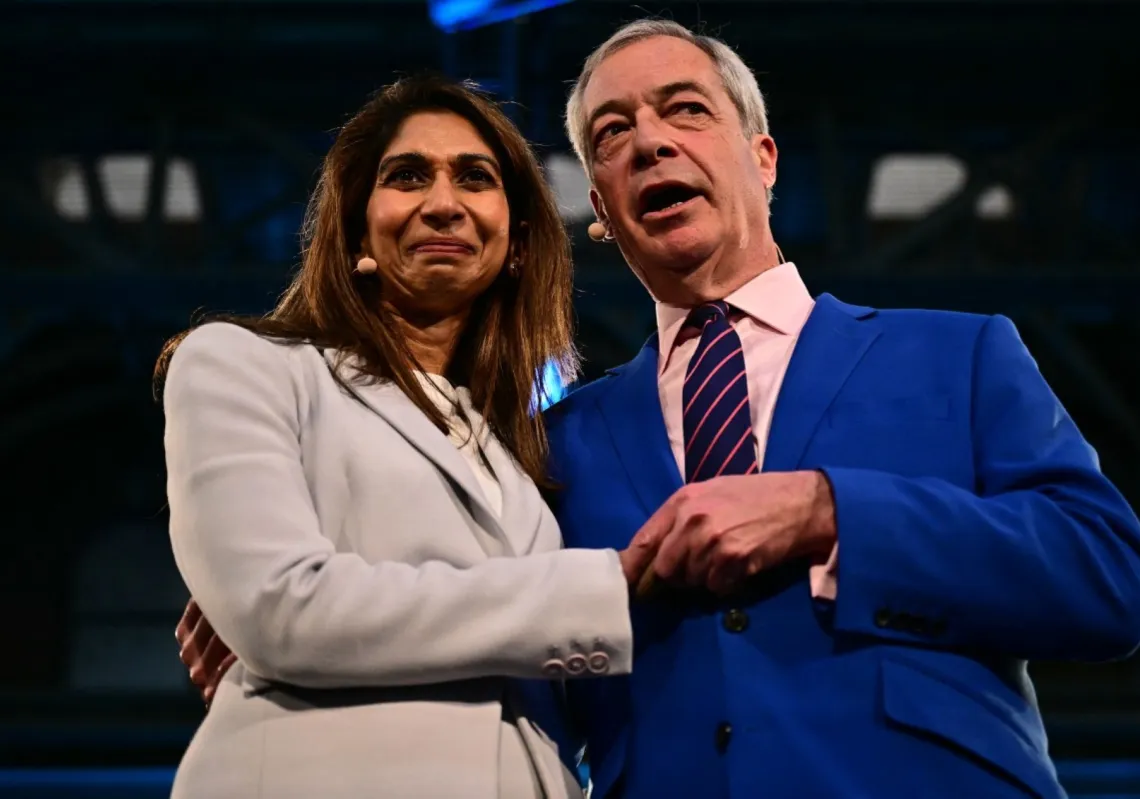
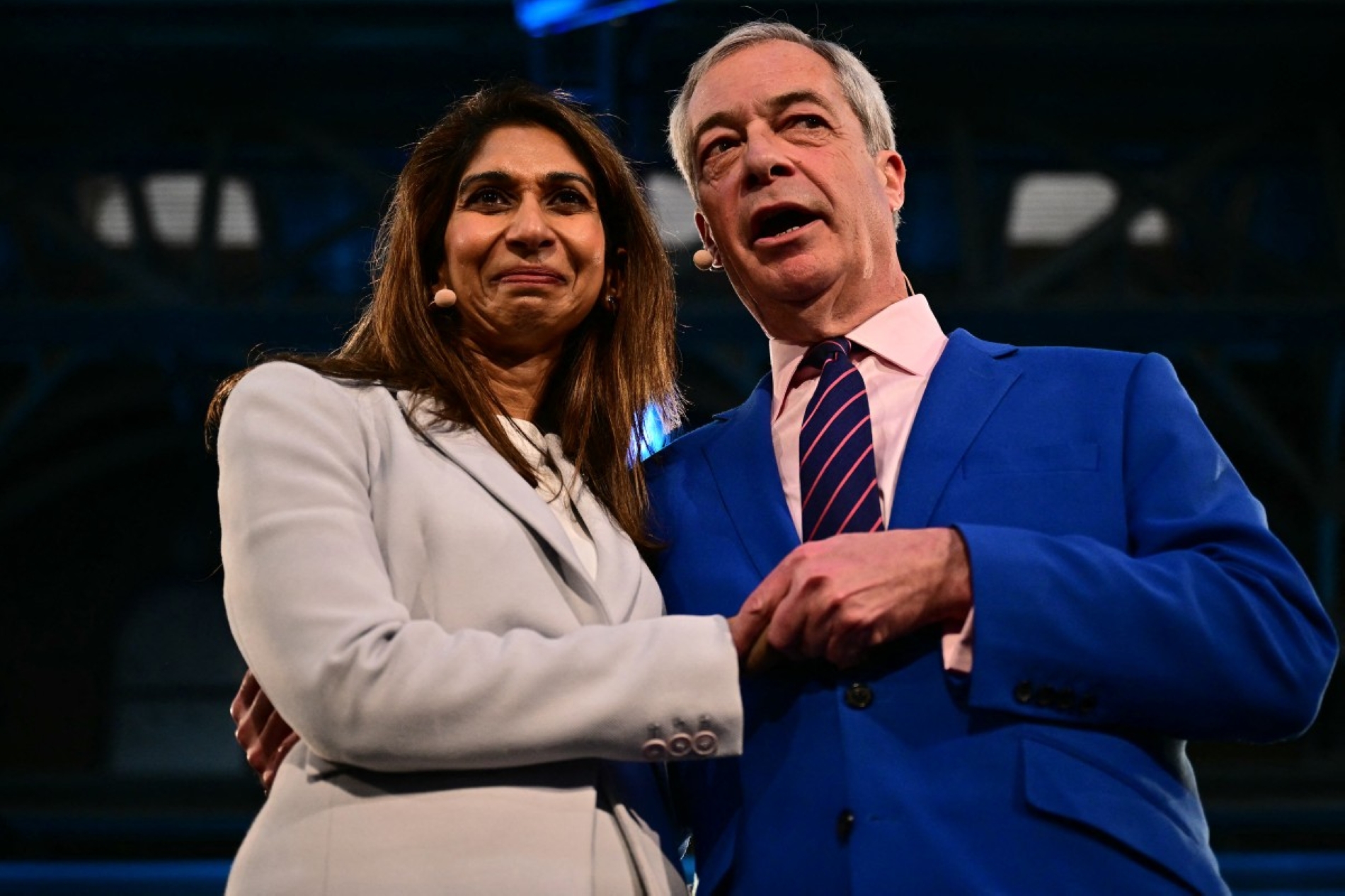
Reform UK leader Nigel Farage stands with former Conservative Party MP and former Home Secretary Suella Braverman during a Reform UK press conference in London on 26 January 2026, where she announced her defection to Reform.

The headlines will be monumentally bad for Labour, even after the government tried to soften the blow by allowing dozens of councils to cancel their elections as part of a local government reform. If Starmer chooses this moment to go, it will prompt the question: will he resign immediately, or will he hang around for weeks to allow a long campaign for his successor?

Examples of prime ministers remaining in office after announcing their intention to resign are not good, as they allow opposition parties to seize the initiative. Boris Johnson said he would quit on 7 July 2022, leaving his potential successors fighting like rats in a sack for two months before Liz Truss was elected on 5 September. Starmer may decide that a long resignation would not be in his party's best interests.

Perhaps, despite all the electoral setbacks, Starmer could manage to cling on. One problem for those on the Left of the party is that there is no ready-made successor. The PM successfully blocked a return route for Burnham by ordering his allies on Labour's ruling National Executive Committee to strike his name from the candidates' list for Gorton and Denton.

Wes Streeting, the Health Secretary and a potential leadership candidate of the centre, is tainted by his perceived closeness to McSweeney and Mandelson, despite releasing relatively harmless email exchanges with the peer.

Angela Rayner, supported by those on the Left, may not be able to run as she is still the subject of a lengthy investigation into her tax affairs.

AFP
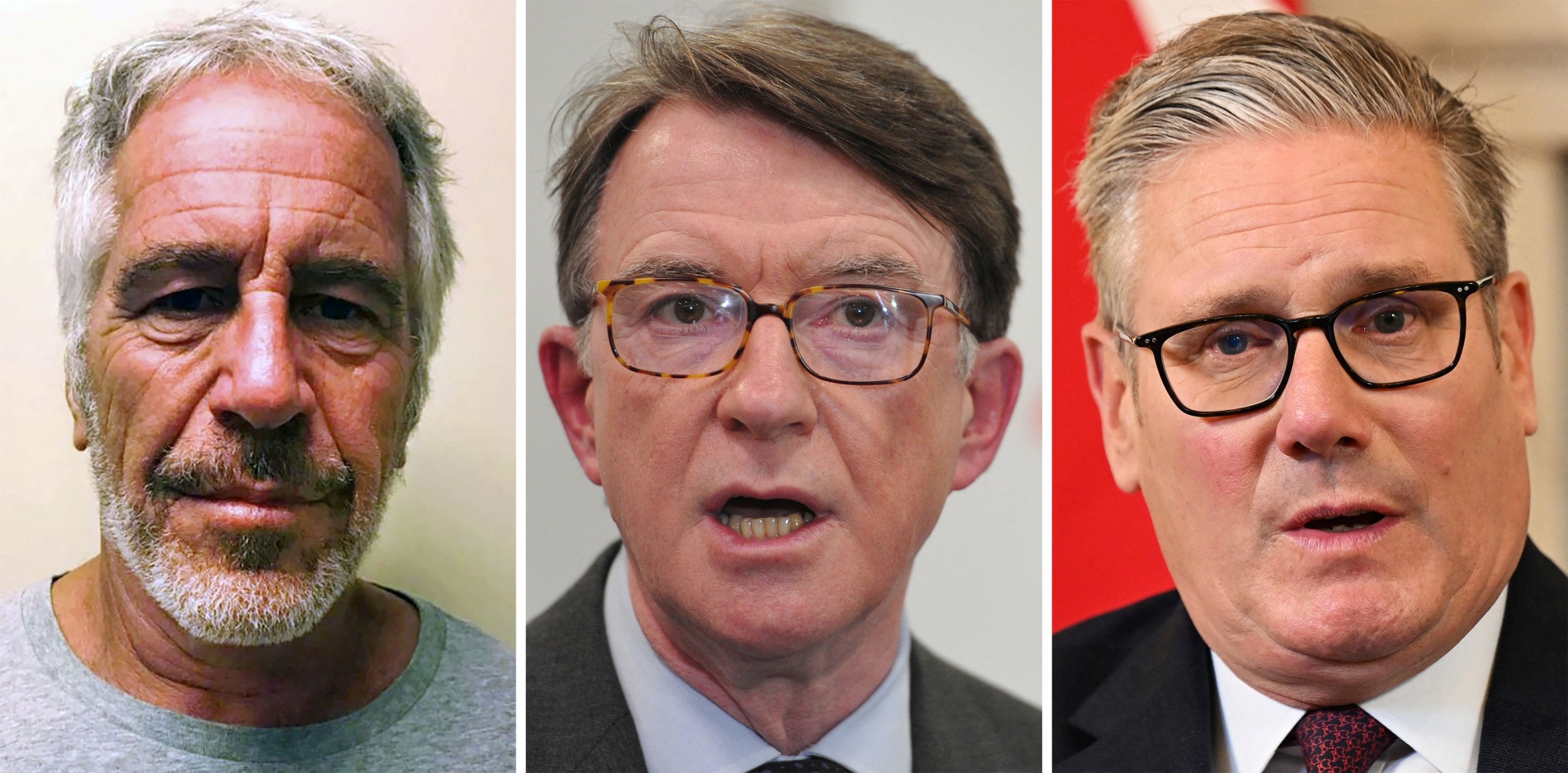
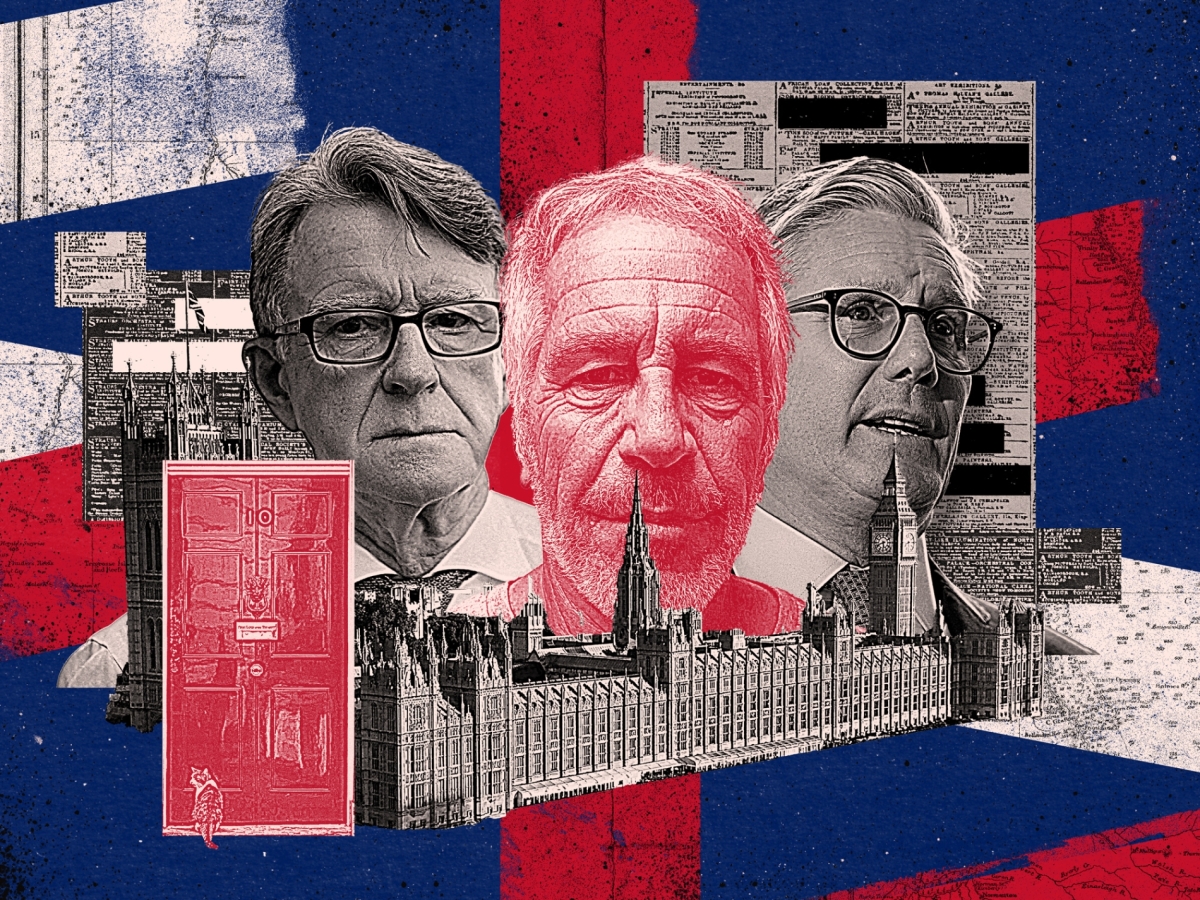
An undated handout photo obtained 11 July 2019, courtesy of the New York State Sex Offender Registry shows Jeffrey Epstein (L); British Labour MP Peter Mandelson (C) and Britain's Prime Minister Keir Starmer (R).

Home Secretary Shabana Mahmood, seen as the leading centre-right candidate, has raised her profile by adopting a tough stance on illegal migration, even though her policies have failed to stem the flow of illegal migrants crossing the English Channel.

Political precedents

Starmer's allies—and despite everything, he still has some on the Labour backbenches—will argue strongly that chopping and changing another prime minister yet could harm the country economically and the party electorally. It means the prime minister could limp on for months, in office but not in power.

There are precedents for this. Theresa May stayed on as prime minister for more than two years after her joint chiefs of staff, Nick Timothy and Fiona Hill, quit once she lost her majority in the disastrous 2017 election. But she was wounded and unable to regain her stature.

Boris Johnson remained in office for 1 year and 10 months after Dominic Cummings quit. But it left his government appearing directionless, and he eventually had to go over the Partygate scandal. The record suggests that while Starmer may be able to stay in Downing Street in the short term, he probably won't be there at the next election.

For anyone with leadership ambitions, the same reality suggests waiting until May at the earliest. The Labour Party is heading for defeat in the Gorton & Denton by-election, either at the hands of the Greens or Reform, and the local elections will be a bloodbath. Who wants to be the Labour Party's leader in those circumstances?

font change