Epstein-Mandelson files rock Starmer's government

It is hard to overstate the scandal engulfing the UK government

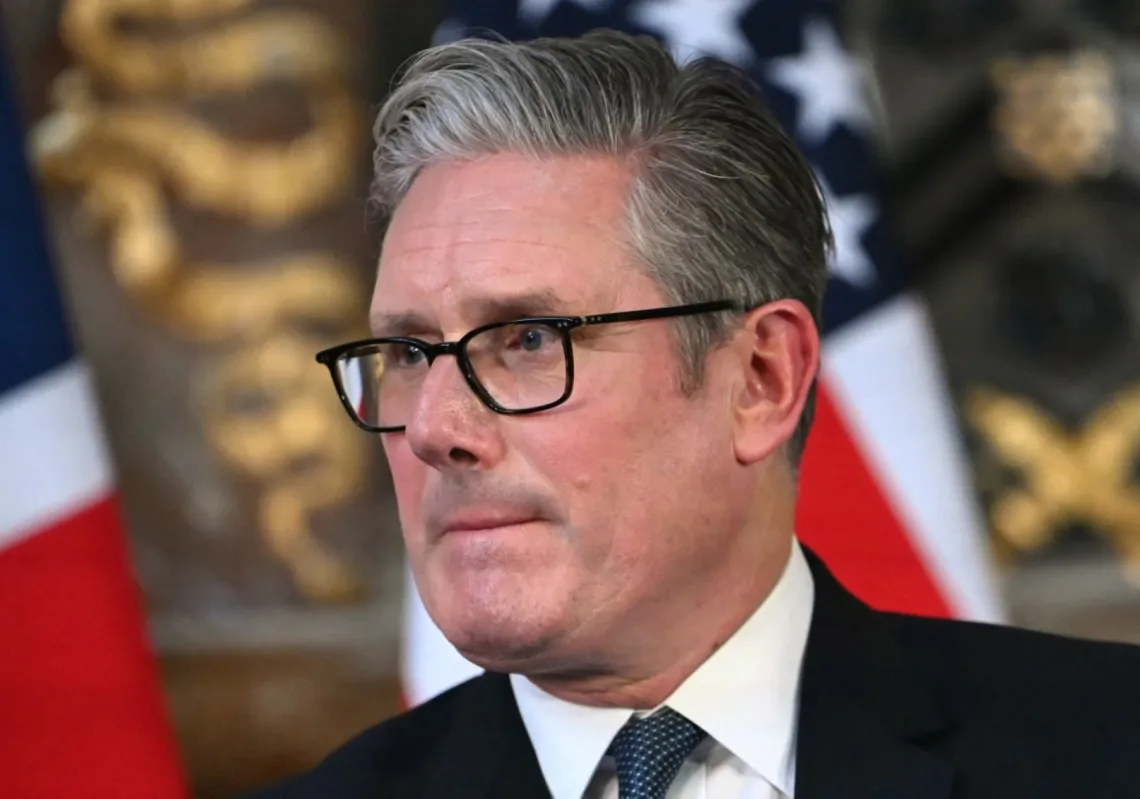
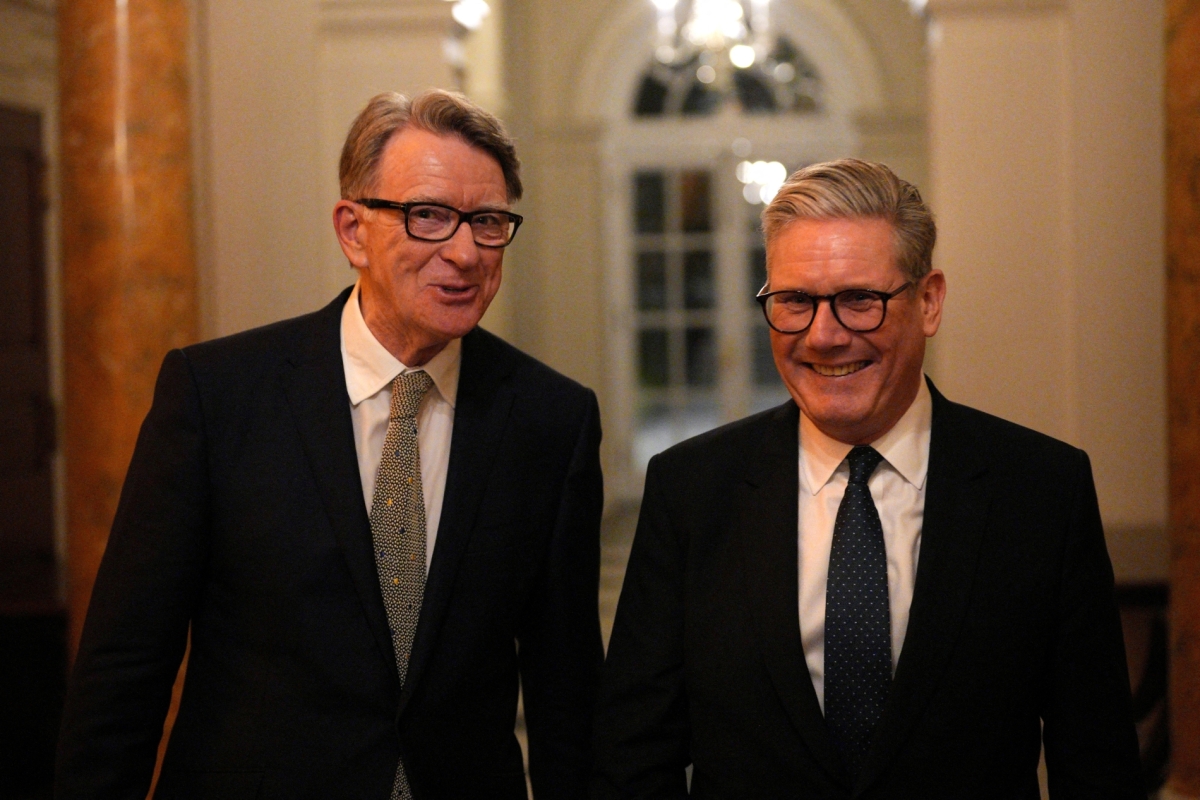
UK Prime Minister Keir Starmer talks with UK ambassador to the United States Peter Mandelson during a welcome reception at the ambassador's residence on 26 February 2025, in Washington, DC.

Epstein-Mandelson files rock Starmer's government

He’s had a whole bunch of nicknames. Back in the days of New Labour, he was known as the Prince of Darkness, owing to his shady machinations as Tony Blair's chief spin doctor. More recently, since his ennoblement, he has become the Dark Lord. To many of his detractors, he has always been known, with just a hint of homophobia, as Mandy.

For as long as most political pundits can remember, ‘Mandy’ has had the last laugh. He has survived political scandals with apparent ease, each time proving Nietzsche’s maxim in defiance of the obituarists: writing him off has only made him stronger.

Peter Mandelson’s first scandal involved a large sum of money borrowed from a fellow Labour MP, Geoffrey Robinson, and not declared. Mandelson complained that he was miserable in his flat in Clerkenwell. He needed somewhere he could relax and entertain his friends. As we shall see, the concept of relaxation amounts to Mandelson’s ruling passion. The loan was duly spent on a house in Notting Hill, without the knowledge of his building society or of parliament. Robinson wasn’t invited to the housewarming party. When the facts came to light, Mandelson resigned as Secretary of State for Trade and Industry.

His second spell in government lasted less than four months. In October 1999, he was made Secretary of State for Northern Ireland. By January 2000, he’d been forced to resign after attempting to fast-track a British passport for a wealthy Indian businessman. This did not prevent him being chosen two years later to be the UK’s European Commissioner. During his time in the job, there were a few minor scandals involving rich moguls and oligarchs in yachts, but nothing serious enough to get him sacked. He was able instead to return to England unscathed and received a peerage in October 2008.

More surprisingly, in the same month, he was given the role of Business Secretary by Gordon Brown. At the time, there was a great deal of speculation and talk of hugging one’s enemies close. It was no secret that Mandelson had favoured Blair over Brown, and no one was quite sure why the prime minister had decided to embrace his old enemy. Recent revelations from the Epstein files suggest that there are some enemies you just can’t hug into submission.

It’s fair to say there has always been a whiff of scandal about Mandelson. But scandals are part of the Westminster routine. They all seem hugely significant for a time, then the news cycle moves on. There are very few political scandals so huge that they resemble a natural disaster. In the aftermath of such scandals, nothing remains intact. This is the kind presently devastating Britain’s political landscape. It has been compared to the Profumo scandal of the early 60s, and there are some similarities, but the damage may yet be far more profound. As I write, Nigel Farage is calling it the worst political scandal for a century. Perhaps it would be better to admit that this one is unprecedented.

But the man at the epicentre of the present disaster has always cultivated a relaxed demeanour. He has, after all, had a lot of experience with this kind of thing. So, even as sheer havoc rages around him, we see the eternally relaxed Mandelson with every new piece of photographic evidence emerging from the Epstein files—from relaxing on a veranda in his bathrobe to lolling casually on a yacht or idling in a Parisian boudoir in his underpants.
US Justice Department / REUTERS
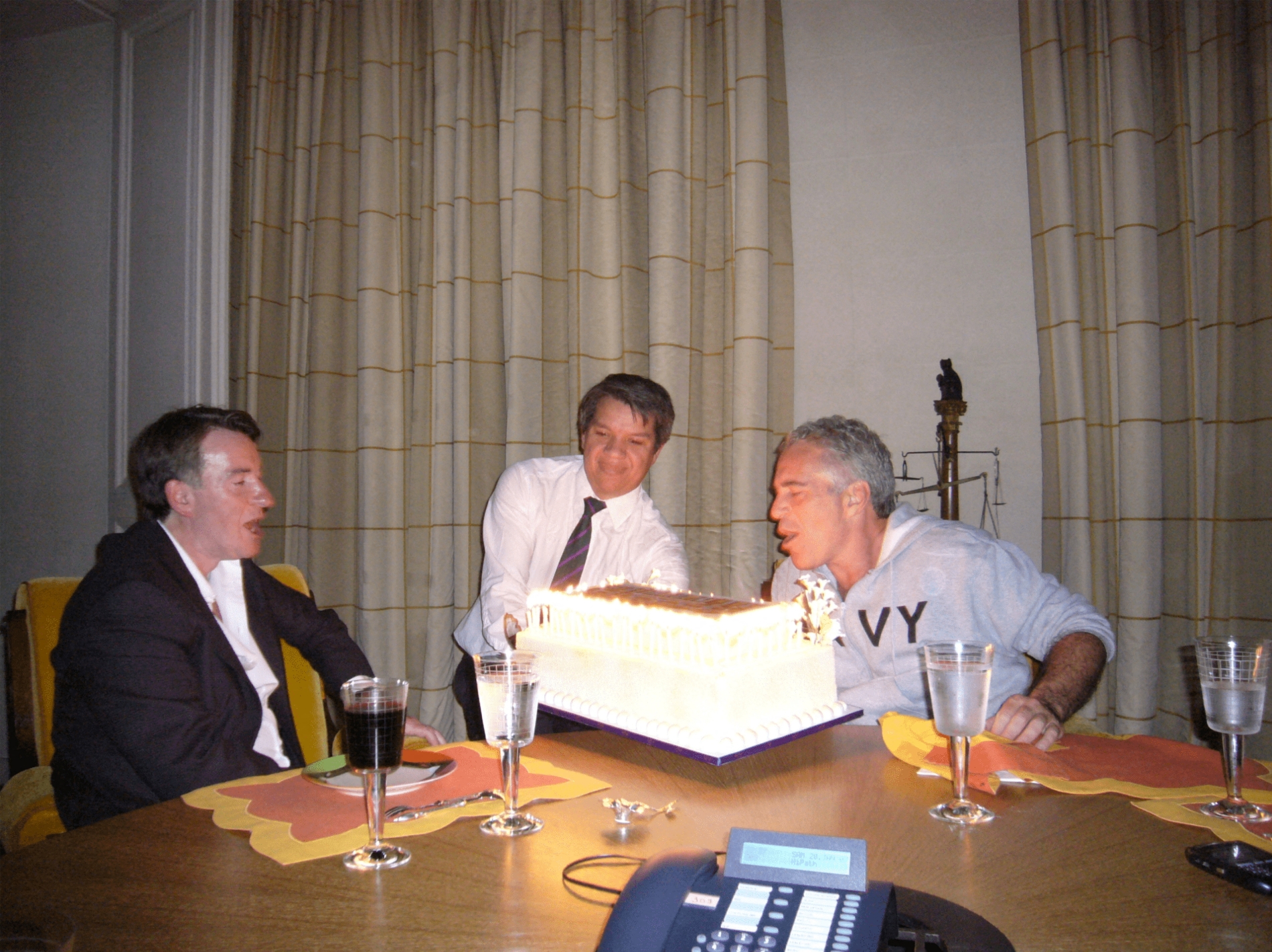
Peter Mandelson sits with late financier and convicted sex offender Jeffrey Epstein, as he blows out the candles on a cake, in an undated photograph released by the Department of Justice in Washington, DC, on 19 December 2025.

Over the years, we have seen him compose numerous relaxed, mildly suggestive emails to his best chum, Jeffrey. He cadges a bit of money when he’s feeling hard up. His motto is “Relax, don’t do it!”

If any of this seems a little unfair on the man – he obviously never guessed these images would become public property one day – there is a kind of poetic justice to it. Back in 1996, Tony Blair had quipped, “My project will be complete when the Labour Party learns to love Peter Mandelson.” There was a deep suspicion of him on the back benches, especially among the Brown faction. I remember thinking at the time how out of place the MP for Hartlepool was in a traditionally progressive party. No Labour figure I knew had ever declared “we are intensely relaxed about people getting filthy rich.” As an afterthought, he added “As long as they pay their taxes.”

What I didn’t know at the time was that he’d expressed this inauspicious sentiment while on a visit to Silicon Valley. These days, even fewer people are relaxed about them.
Mandelson could be charged with misconduct in public office, a crime that carries a possible life sentence

But there's something about these laid-back types: they have a curious gift for relaxing like-minded people. They can get them to relax their guard, for instance, along with any vestigial sense of morality. Let me help you with that moral compass. One such person, now dead, has united his erstwhile chums in an orgy of regret they ever met him, including Mandelson. Everything we learn about Jeffrey Epstein demonstrates how he put the 'lax' into 'relaxation'. He comes across as a smarmy fiend.

There is even an interview, possibly conducted by Steve Bannon, in which he is asked to reveal his infernal identity:

Interviewer: Do you think you're the devil himself?

Epstein (somewhat taken aback): No... (Attempting humour) I do have a good mirror. 

Interviewer: It's a serious question. Do you think you're the devil himself?

Epstein (sounding slightly hurt): Why would you say that?

It's as if the mystery interlocutor has offended the dodgy financier and prolific child sex trafficker's feelings. Yet the sense of his own importance is there too. At one point, he speaks about himself in the third person.

Just like all the others, Mandelson has expressed regret at ever having met Epstein, and, despite his own reputation as the Prince of Darkness, no one is suggesting that his crimes qualify him for the role of Satan. Yet he has come in for a lot more criticism lately than at any previous point in his career. The reason is that his favourite plutocrat was not the only one with a gift for relaxing other people.

Soon after Trump's inauguration, Sir Keir Starmer decided to replace the existing ambassador to the United States. There were various candidates for her replacement. One was David Miliband, who was at least a Labour man. Another, whom the prime minister preferred for a while, was George Osborne, a former Tory chancellor with an attested mania for collecting jobs; at a rough estimate, he was holding down five of them at the time.

When the prime minister eventually chose Mandelson, it was with some reluctance. It is said he was not over-fond of the old charmer. Besides, as we now know, he was aware that the peer's friendship with Epstein had outlasted the financier's imprisonment. Mandelson had even stayed in his Manhattan flat. He hailed his mate's release as 'liberation day.'

AFP
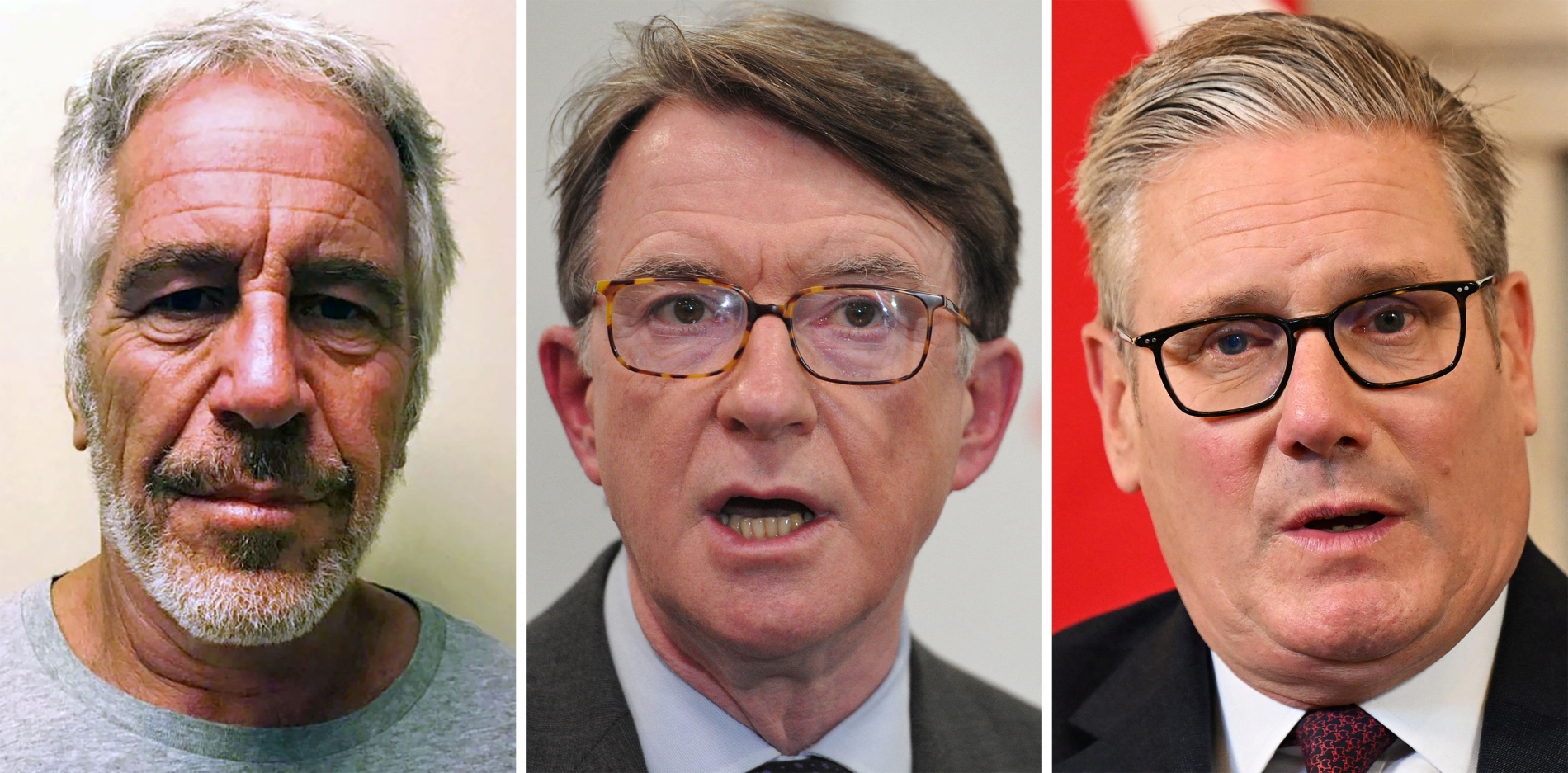
An undated handout photo obtained 11 July 2019, courtesy of the New York State Sex Offender Registry shows Jeffrey Epstein (L); British Labour MP Peter Mandelson (C) and Britain's Prime Minister Keir Starmer (R).

Although some of this was already in the public domain, Starmer's chief of staff, Morgan McSweeney, did not share Sir Keir's qualms. According to one person who observed him at the time (as reported in the New Statesman), "Morgan was relaxed" when he saw the vetting report. He said that Labour had already broached the Epstein issue with Mandelson years before. It was a case of "Relax and do it regardless!" Mandelson's candidature was helped by the fact that McSweeney was his protégé. Eventually, by way of a series of conversations that (for now) remain opaque, Starmer was persuaded that the appointment was high risk, but potentially high reward.

So it was that Labour's very own networking spinmeister landed the plum job of British diplomacy. It was a political appointment; Mandelson had no diplomatic credentials. Who knows, part of the calculation may have been the fact that the new president had also, for a while, been a pal of Jeffrey Epstein. Whatever the thought behind this calamitous lapse in judgment, the decision is now the subject of parliamentary scrutiny after the government was forced to accept an independent inquiry by the Intelligence and Security Committee (ISF). Many Labour MPs had feared a cover-up.

It's hard to recall in the midst of all this drama, but the termination of his role as ambassador back in September followed the emergence of an email in which Mandelson had taken Epstein's side. In 2008, the financier was convicted of soliciting an underage prostitute. Mandelson judged the conviction wrongful and urged his friend to challenge it. In retrospect, this seems like a minor detail.    

What has since been revealed is a man who felt a deeper loyalty to Epstein than to his own country. There is evidence that he may have received large sums of money from him, laying himself open to the charge of taking bribes. Worse still, while business secretary in Gordon Brown's cabinet, he was leaking highly sensitive information to his best mate, including a plan to sell assets to cope with the financial crisis, and even news of Brown's impending resignation. Further evidence suggests he advised Epstein on how the head of the investment bank JP Morgan might "mildly threaten" the British Chancellor to water down plans for a super-tax on bankers' bonuses.

AFP
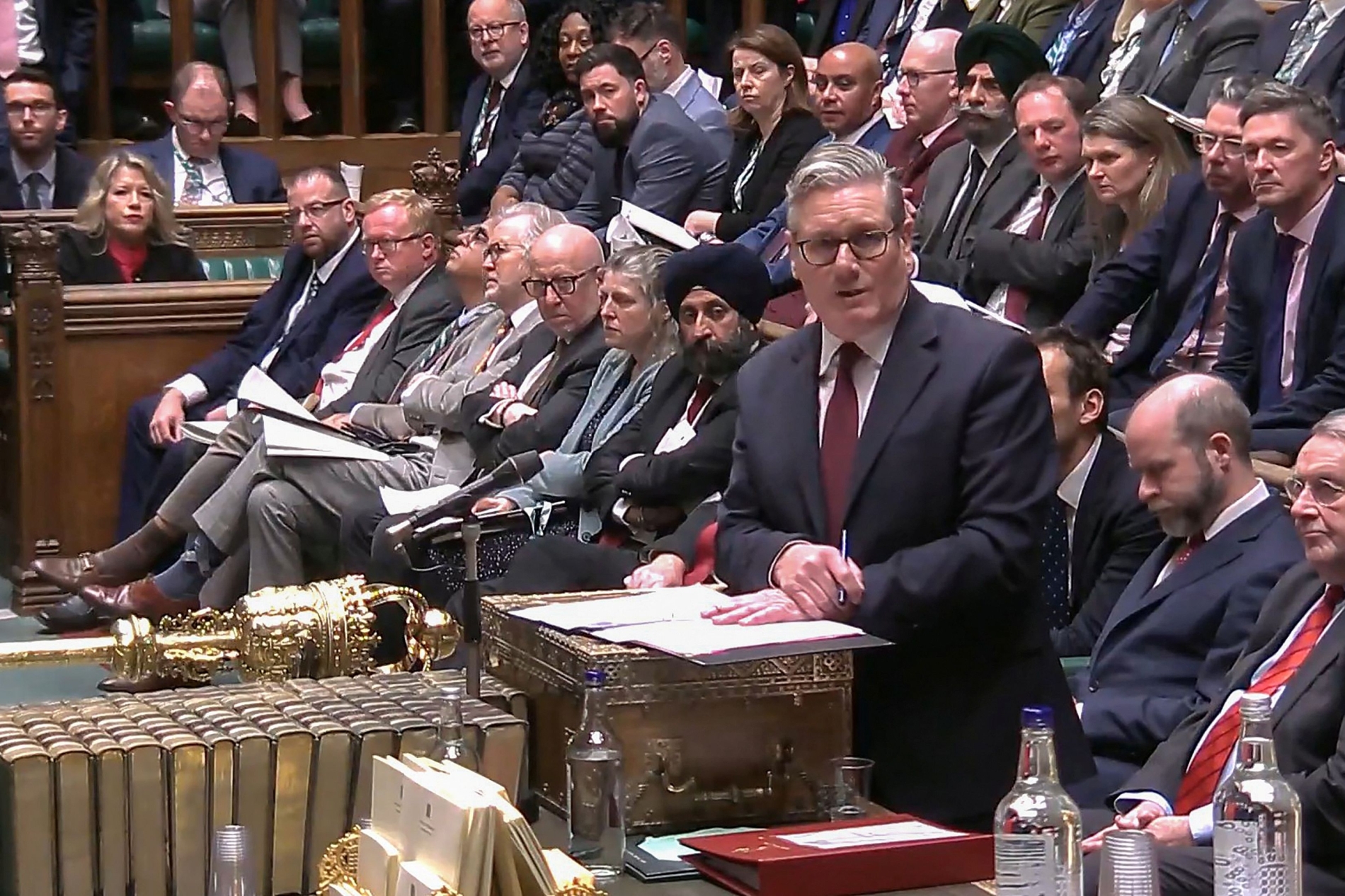
Britain's Prime Minister Keir Starmer speaks in the House of Commons at parliament in London on 4 February 2026, and says he regrets appointing Mandelson as US ambassador.

If substantiated by the police, Mandelson could be charged with misconduct in public office, a crime that carries a possible life sentence. Little wonder, then, that the present member for Hartlepool has called his predecessor 'a traitor'. Another MP said he was 'our Philby.' The prime minister has denounced him in parliament as a serial liar and vowed to strip him of his title. His membership of the Labour party has been cancelled. The King has chucked him out of the Privy Council. And the Metropolitan Police have started their investigations.

Despite all this, one member of his former party feared he would haunt Labour for years to come. The only way of ending his baleful influence for good would be to bury him at a crossroads with a stake through his heart.

In the meantime, the true cost of Downing Street's moment of intense relaxation is yet to be determined. 

font change