Iran’s strategic depth in Latin America: benefits and limits

Iran's deep ties with key countries are enough to set off US anxiety and influence strategic calculations, but not enough to constitute a decisive second front in times of war

Matt Murphy

Iran’s strategic depth in Latin America: benefits and limits

Ever since the US and Israel began their war against Iran on 28 February, attention has naturally focused on the Gulf and the wider Middle East, with some looking as far as Russia and China as Iran’s natural allies. Yet on the other side of the world, in Latin America, Iran has also had ties. Political, diplomatic, and economic, those ties are real, but their wartime value is uneven and often overstated.

Tehran has spent years cultivating links with states and governments that share a common enemy with it: the United States. Among those with an anti-American posture are Venezuela, Bolivia, Nicaragua, and Cuba. With Iran being hit by waves of US-Israeli bombing, however, the nature and depth of those links have become increasingly apparent.

Are these strategic relations? Or do they mainly amount to a generalised sense of anti-imperialist solidarity? That distinction is crucial, since the language used to describe Iran’s Latin American footprint often slides quickly from ‘influence’ to ‘threat’. Some worries relate to Hezbollah-linked finance. Others rely on looser associations, old evidence, or securitised narratives that blur the lines between sympathisers, criminal networks, and centrally directed activity.

A serious analysis must resist two temptations: dismissing the issue as rhetoric or inflating it into an imminent second front. The more credible argument is narrower. Latin America offers Iran selective strategic depth, but that depth is limited, indirect, and contingent.
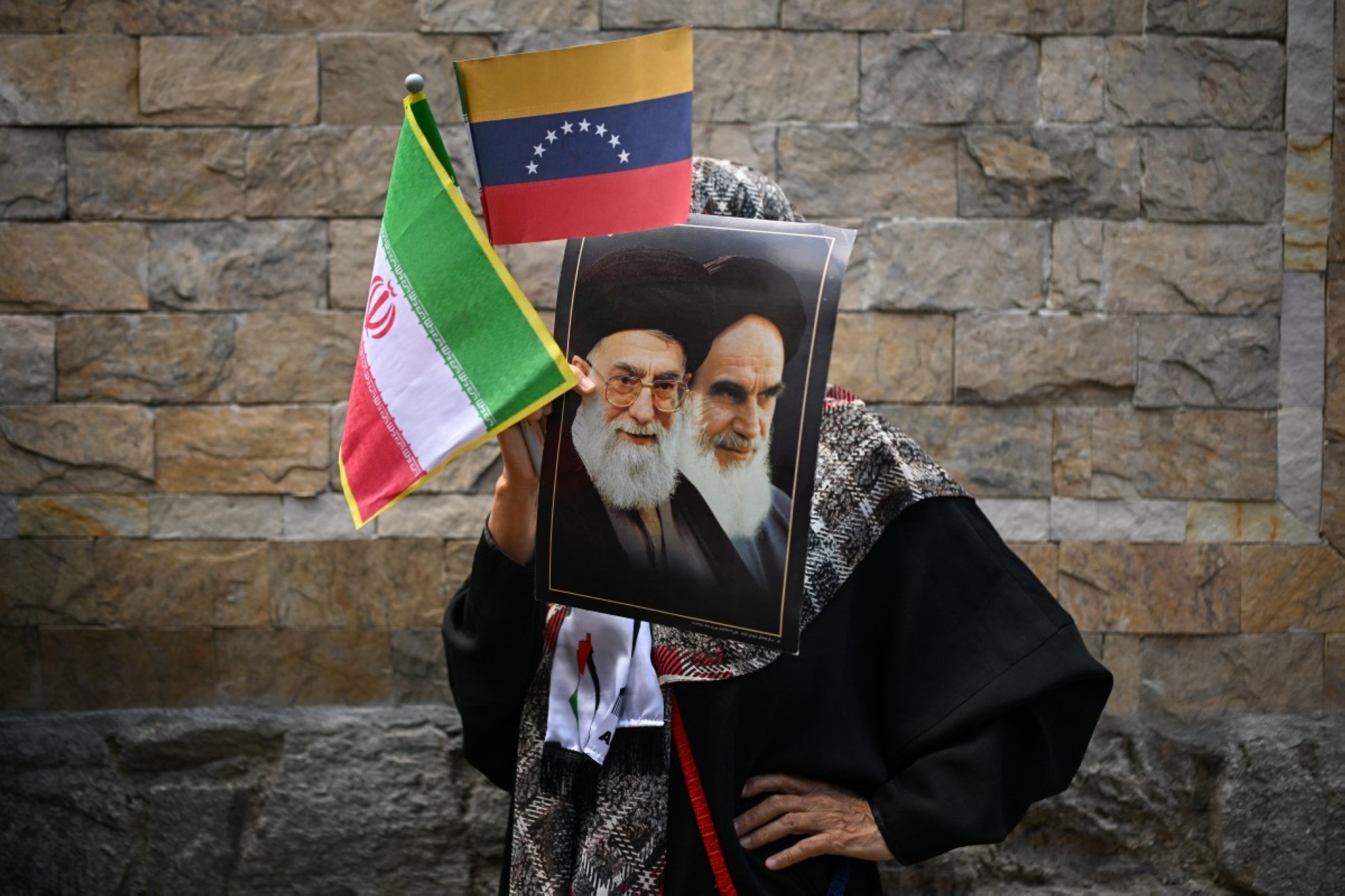
A woman holds pictures of late Iranian supreme leaders Ali Khamenei and Ruhollah Khomeini outside the Iranian embassy in Caracas on 3 March 2026.

Forms of support

Outside the Middle East, strategic depth should not be understood in purely military terms. In Latin America, it includes diplomatic backing in international forums, sanctions-era partnerships, state-to-state channels that outlast crises, symbolic reach into Washington’s hemisphere, and permissive environments that may ease intelligence, facilitation, or financial operations. This is a wider concept than proxy warfare, but a more realistic one.

Iran’s ties in the region have been shaped less by cultural affinity than by converging political interests, above all, a shared hostility to US pressure and a search for external partners amid isolation. Studies on Iran’s relations with Venezuela and Bolivia show that these ties have shifted according to leadership, ideology, sanctions pressure, and commodity cycles, rather than following a fixed alliance logic.

This broader understanding of strategic depth also helps separate state relationships from the more contested question of Hezbollah-linked activity. Policy analysis suggests that the group’s 30-year presence in Latin America has been driven primarily by fundraising and logistics, often through networks ranging from direct sympathisers to actors with looser or more indirect ties.

It also underlines a point often lost in alarmist commentary: there is limited credible evidence that these networks are close to becoming an expansive operational attack architecture across the region. That does not make them irrelevant, but it does limit their value to resilience, finance, and facilitation.
REUTERS/Carlos Garcia Rawlins
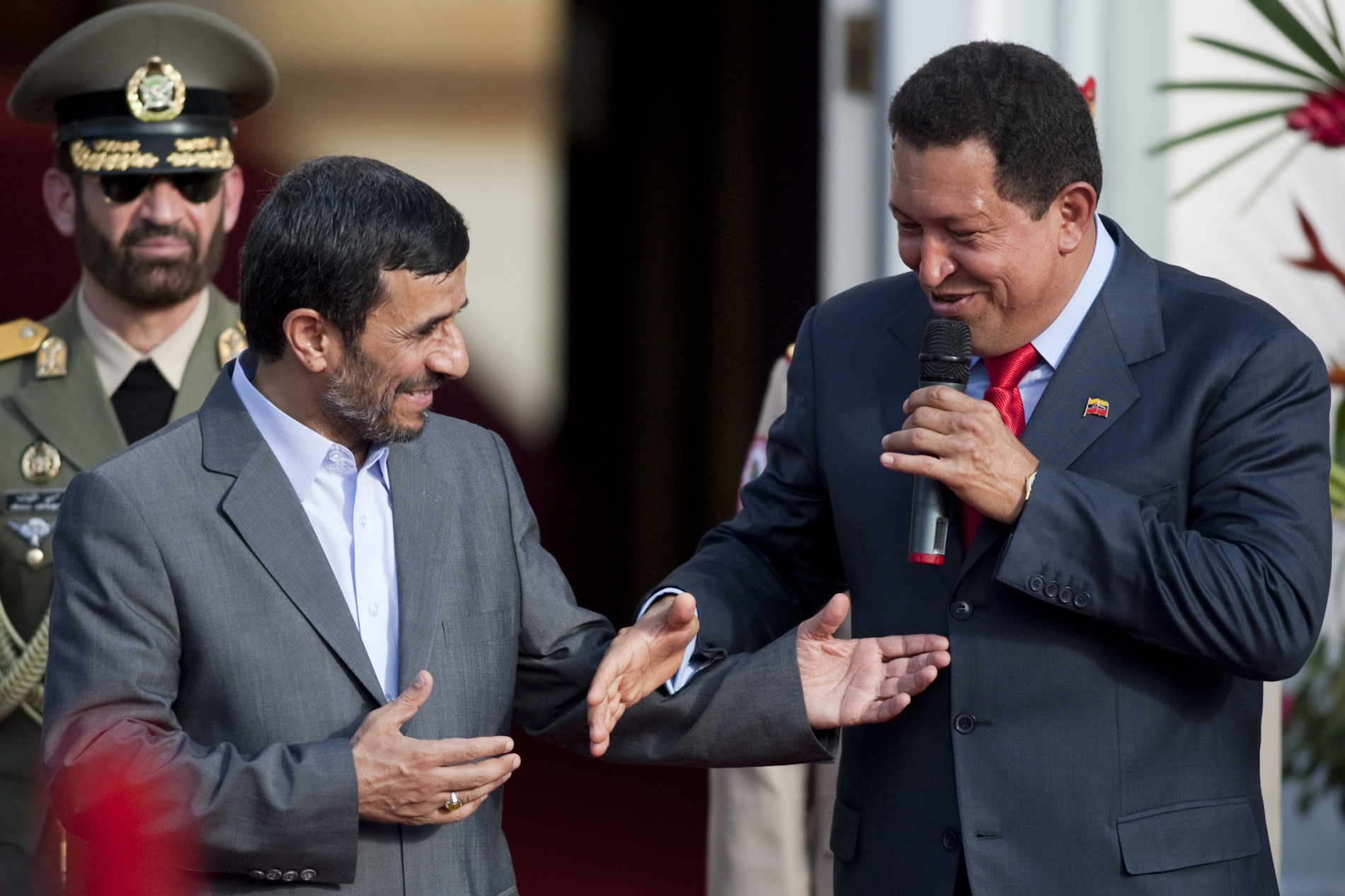
Venezuela's President Hugo Chavez welcomes Iran's President Mahmoud Ahmadinejad at Miraflores Palace in Caracas, on 25 November 2009.

Relations with Venezuela

If Iran has had a principal state partner in Latin America, it is Venezuela. The Caracas-Tehran relationship deepened during the eras of former Venezuelan President Hugo Chávez and former Iranian President Mahmoud Ahmadinejad, and endured beyond both leaderships. This is probably Iran’s strongest regional relationship, built through state visits, trade, and security cooperation. Their ties were not the product of a natural alliance, but of converging anti-imperial postures reinforced by sanctions and political pressure.
Among those with an anti-American posture include Venezuela, Bolivia, Nicaragua, and Cuba

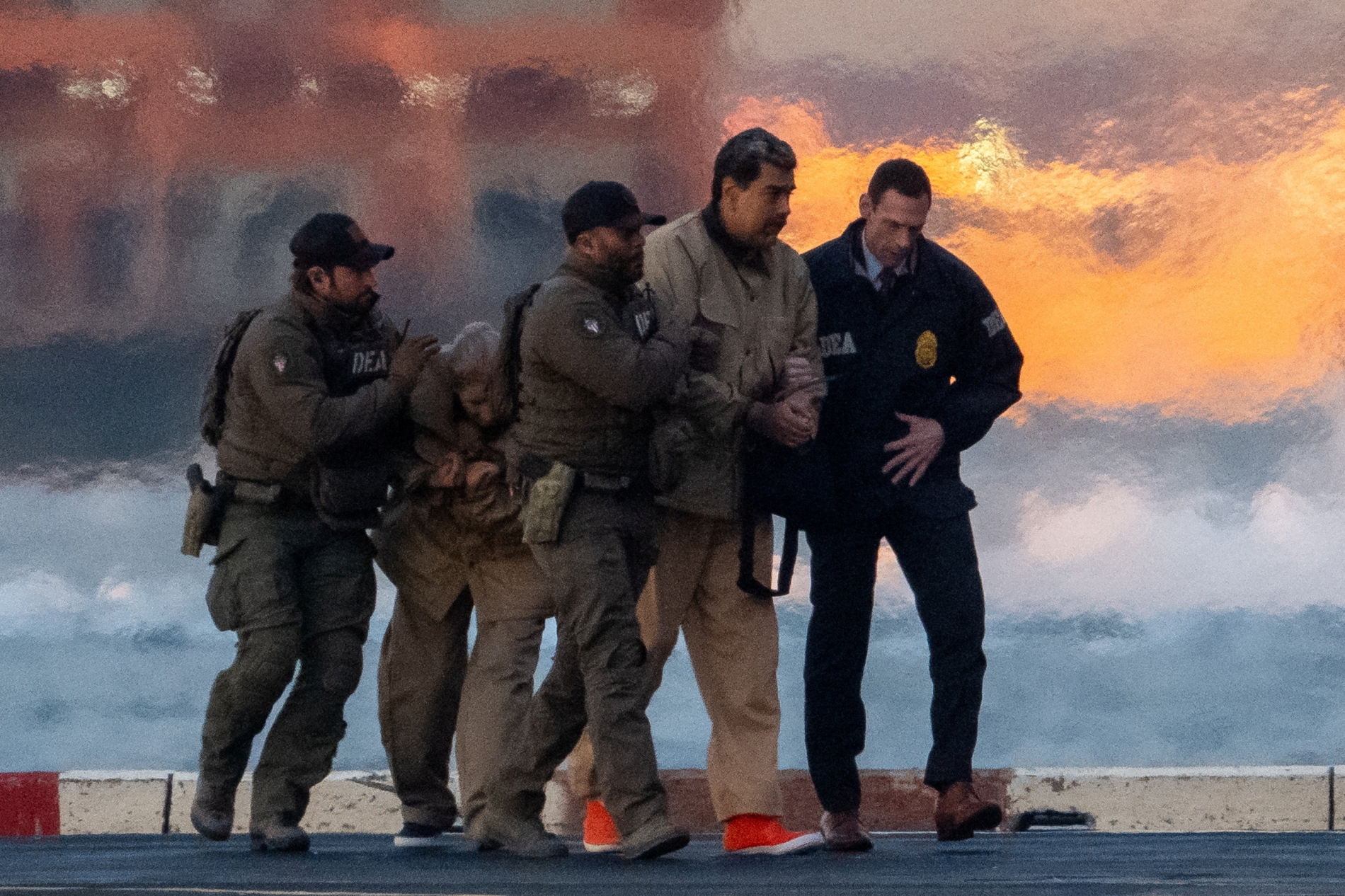
Venezuela showed that Iran could establish a durable presence within the Western hemisphere, but the country is no longer as stable an anchor as it once seemed. Following Nicolás Maduro's capture and removal by US forces in January, quickly followed by Vice-President Delcy Rodríguez's assumption of the interim presidency, Washington has pressed Caracas to scale back its cooperation with US adversaries, including Iran and Cuba. Although Venezuela is not suddenly a US ally, Iran's deepest historical foothold in the region now sits within a more fluid political setting.

Strategic depth is not a fixed asset; it depends on the durability of state partners, the continuity of ruling elites, and whether older networks survive shifting calculations. Iran may still benefit from years of institutional ties with Caracas, but that channel is less secure than it was under Maduro.

Reuters
Detained Venezuelan President Nicolás Maduro and his wife Cilia Flores are escorted into the Daniel Patrick Moynihan Federal Court, at the Midtown Manhattan Heliport, New York City, on 5 January 2026.

Relations with Bolivia

Bolivia as the contemporary test case and occupies a different place in the argument. It is not Venezuela's equal in symbolic weight or economic history with Tehran, but it has become central to current US concerns. In January, Washington pressed Bolivia to expel suspected Iranian spies and to designate the Islamic Revolutionary Guard Corps (IRGC), Hezbollah, and Hamas as terrorist organisations.

Unnamed current US officials and sources with direct knowledge of the diplomatic effort voiced that concern, while the former CIA Caracas chief Rick de la Torre identified Bolivia as one of Tehran's secondary nodes, pointing to permissive counterintelligence conditions and central geography.

Even if such claims are treated with caution, Bolivia now occupies more than a peripheral place in policy thinking. It is revealing not as proof of operational reach, but as an illustration of the political conditions under which Iranian influence can acquire strategic value.

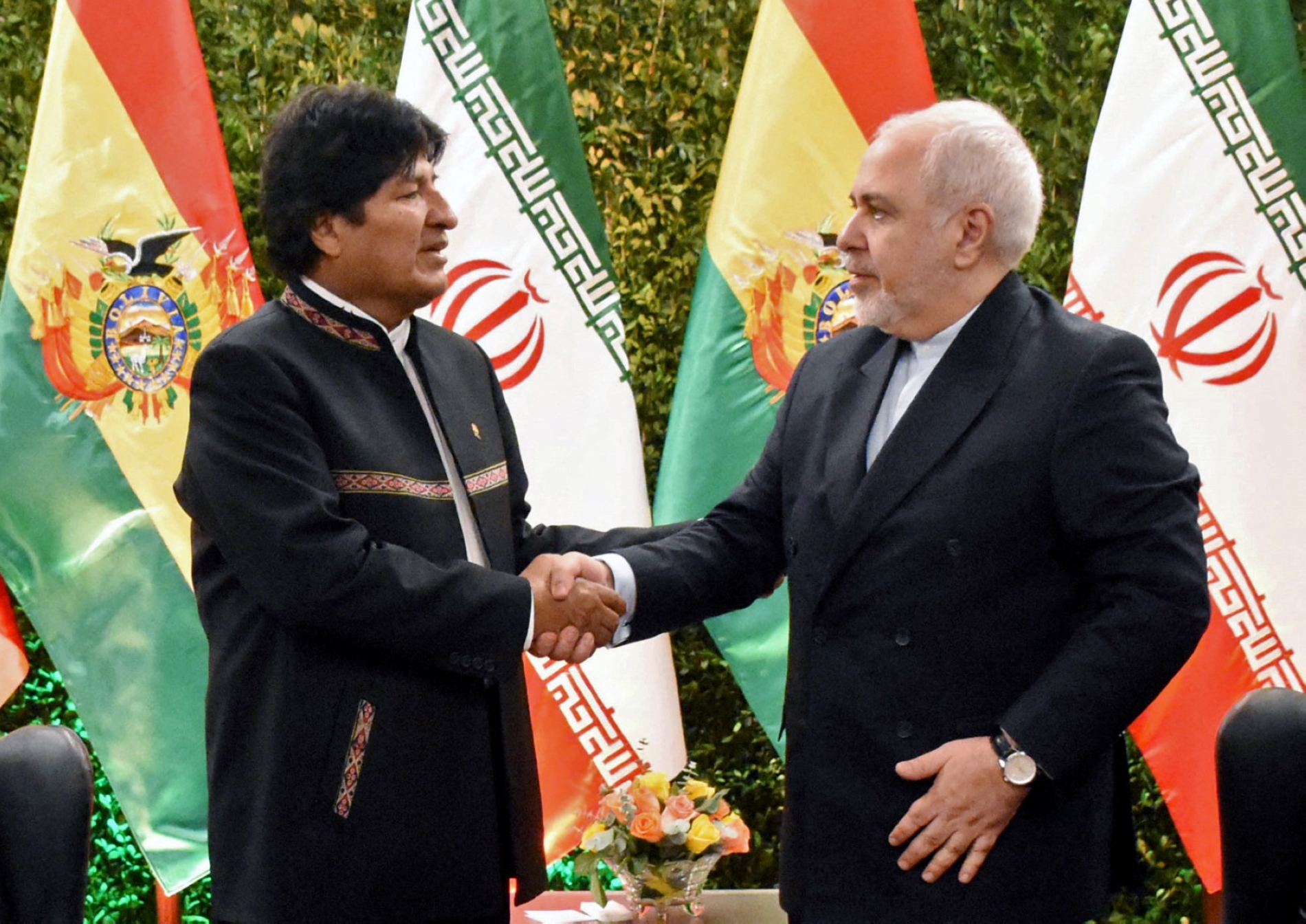
The relationship expanded most visibly under former Bolivian president Evo Morales, who governed from 2006-19 and retained influence under former president Luis Arce (2020-25), even if ties never mirrored the full depth of those enjoyed with Venezuela.

An accord in 2023 between Bolivia and Iran included reconnaissance drones, river boats, cybersecurity cooperation, and military training, although the extent of its implementation remains unclear. That ambiguity is instructive. A smaller and less scrutinised partner can still carry strategic weight through permissiveness, deniability, and room for future projection.

Diego VALERO / AFP
Bolivian President Evo Morales Ayma shaking hands with Iranian Foreign Affairs Minister Mohammad Javad Zarif in Santa Cruz, Bolivia, on 23 July 2019.

The Triple Frontier

The tri-border area in South America where Argentina, Brazil, and Paraguay meet is known as the Triple Frontier, and has long occupied a central place in US and regional security debates, notably after the 1992 bombing of the Israeli embassy in Buenos Aires, and the 1994 bombing of the Argentine Israelite Mutual Association (AMIA) in the same city (Argentina is home to one of the largest Jewish populations outside Israel).

Iranian operatives and those of its Lebanese proxy, Hezbollah, are widely believed to have been behind those attacks, which have been linked to later concerns about illicit finance and logistical support networks on the continent (Argentina designated the IRGC as a terrorist organisation this month). Still, the limited amount of publicly available information makes it difficult to draw robust conclusions about Hezbollah's operational capacity. It is also important to distinguish between the group's direct actions and those of affiliates or sympathisers.

Latin America can offer Iran diplomatic sympathy from a small cluster of governments, symbolic evidence that its international isolation is not complete, and practical channels shaped by years of cooperation under sanctions. Cuba and Nicaragua illustrate that point well. Both condemned Washington's capture and extradition of Maduro as a violation of sovereignty. Nicaragua framed it as an assault on regional self-determination, while Cuba denounced it as state terrorism.

Nicaragua later sent condolences to Tehran after the killing during US-Israeli airstrikes of Iran's Supreme Leader Ali Khamenei on 28 February, underscoring how diplomatic solidarity can still serve Iran in moments of crisis. Even where such ties are more transactional than deep, that alignment has value. It helps Tehran project the image of a state that retains partners beyond its immediate neighbourhood.

Juan BARRETO / AFP
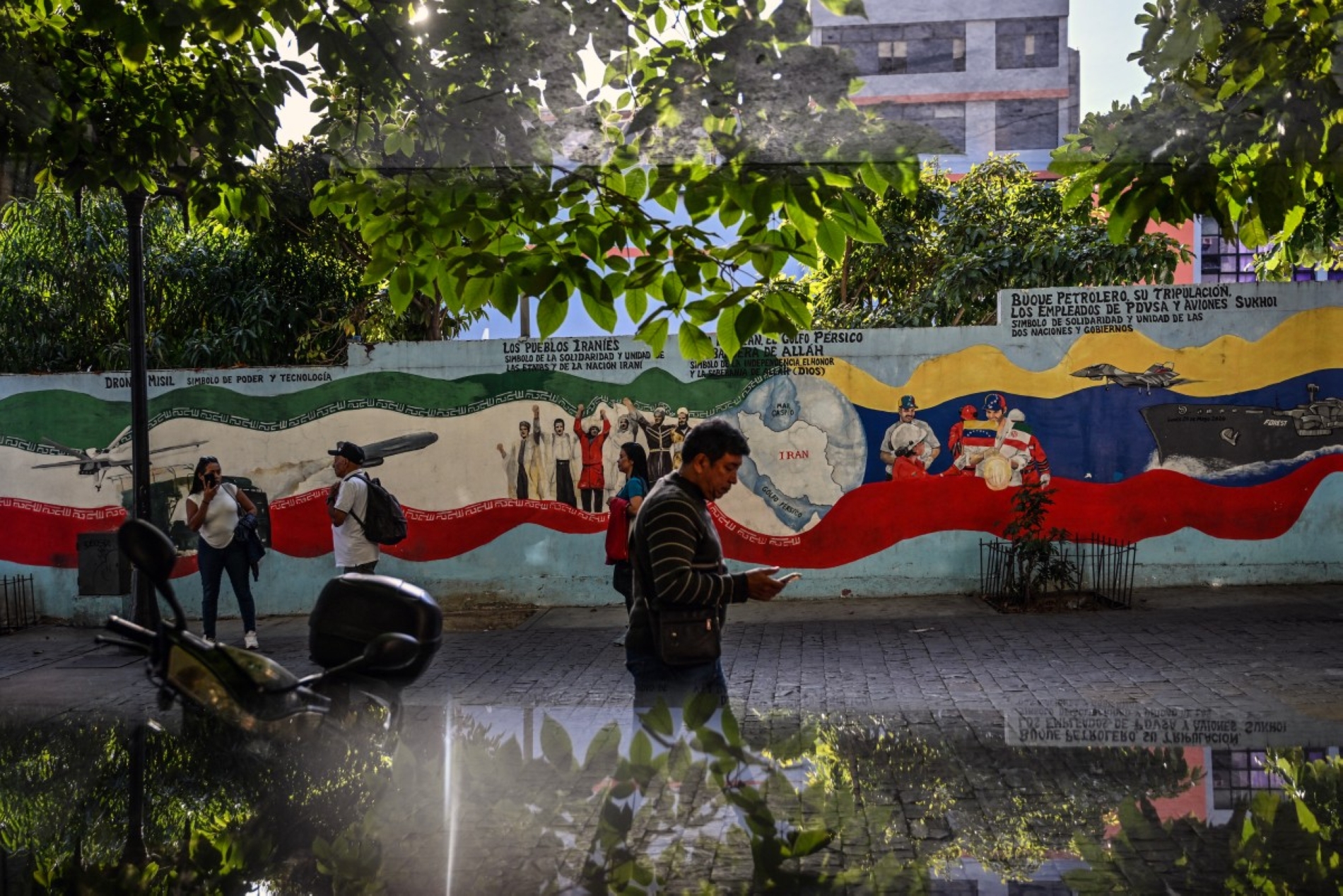
People walk past a mural about the relationship between Iran and Venezuela in Caracas on 19 March 2026.

No second theatre

What Latin America cannot plausibly offer Iran is a second theatre. The region is politically uneven, geographically distant from the core military balance, and dependent on a narrow set of state partners whose durability is far from guaranteed. There is understood to be debate within intelligence circles over whether Hezbollah's presence in Latin America is more of a robust network or a loose mix of fundraising, facilitation, and diaspora-linked financial flows. Iran's footprint, therefore, carries weight chiefly as indirect depth, providing room and occasional leverage. It does not fundamentally alter where the war itself will be decided.

The US has long known that Iran, Hezbollah, and affiliated networks have sought to establish a presence in parts of Latin America, but war has sharpened the urgency with which that presence is interpreted. Bolivia assumes greater salience, Venezuela's transition becomes more consequential, Cuba is forced into highly strained talks with Washington under a de facto oil blockade, and old debates about the Triple Frontier regain force.

Not every Iranian relationship in the region constitutes an imminent threat, but geography carries political weight even when it does not determine the course of the war. Latin America gives Iran selective strategic depth precisely because it lies outside the main battlefield while still touching security anxieties in the Western hemisphere. That is enough to influence strategic calculations, but not enough to constitute a decisive second front.

font change