'Unconditional surrender' was never an option for Iran

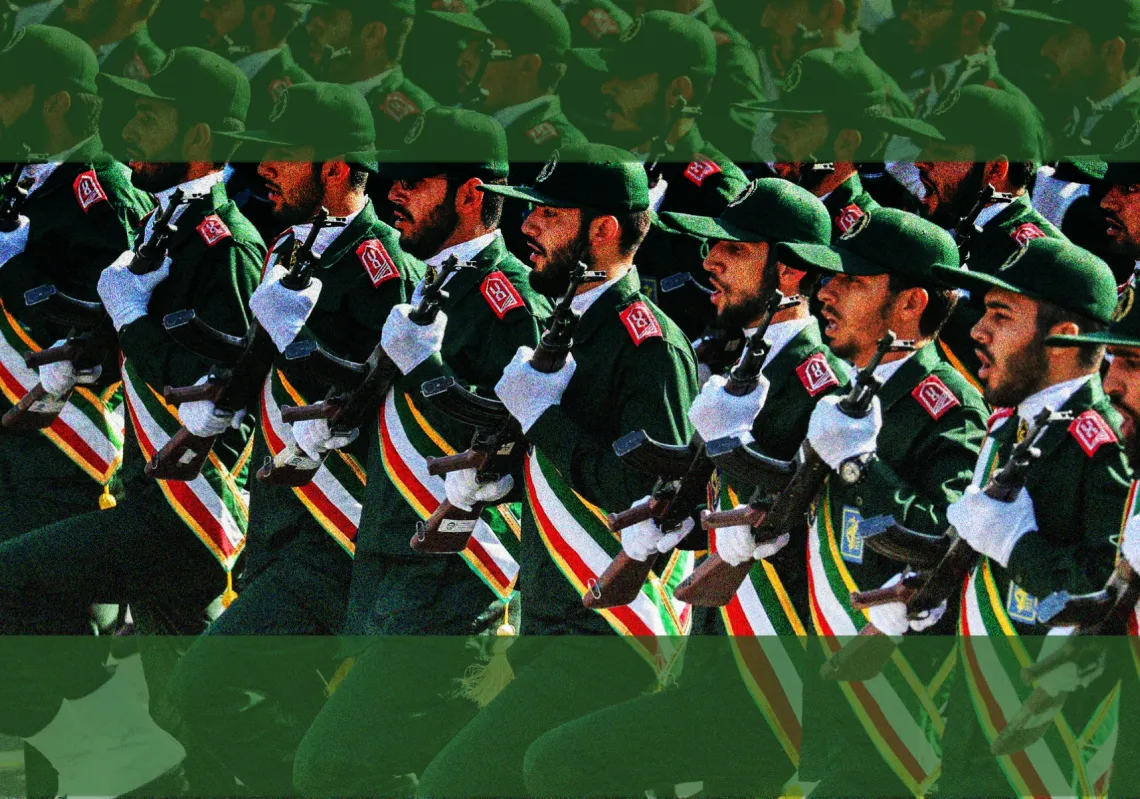
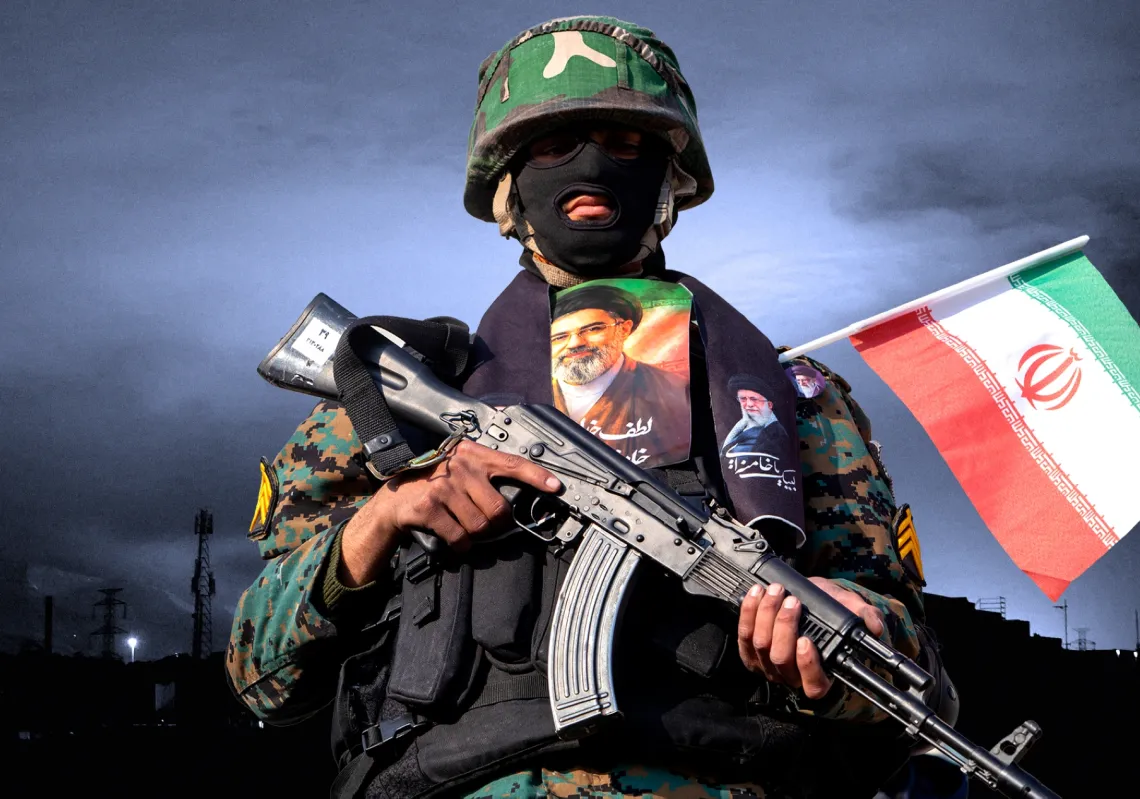
The IRGC doesn't just defend the state, it runs it. To wave the white flag wouldn't just mean giving up its arms; it would mean dismantling the organisation and its patronage networks.

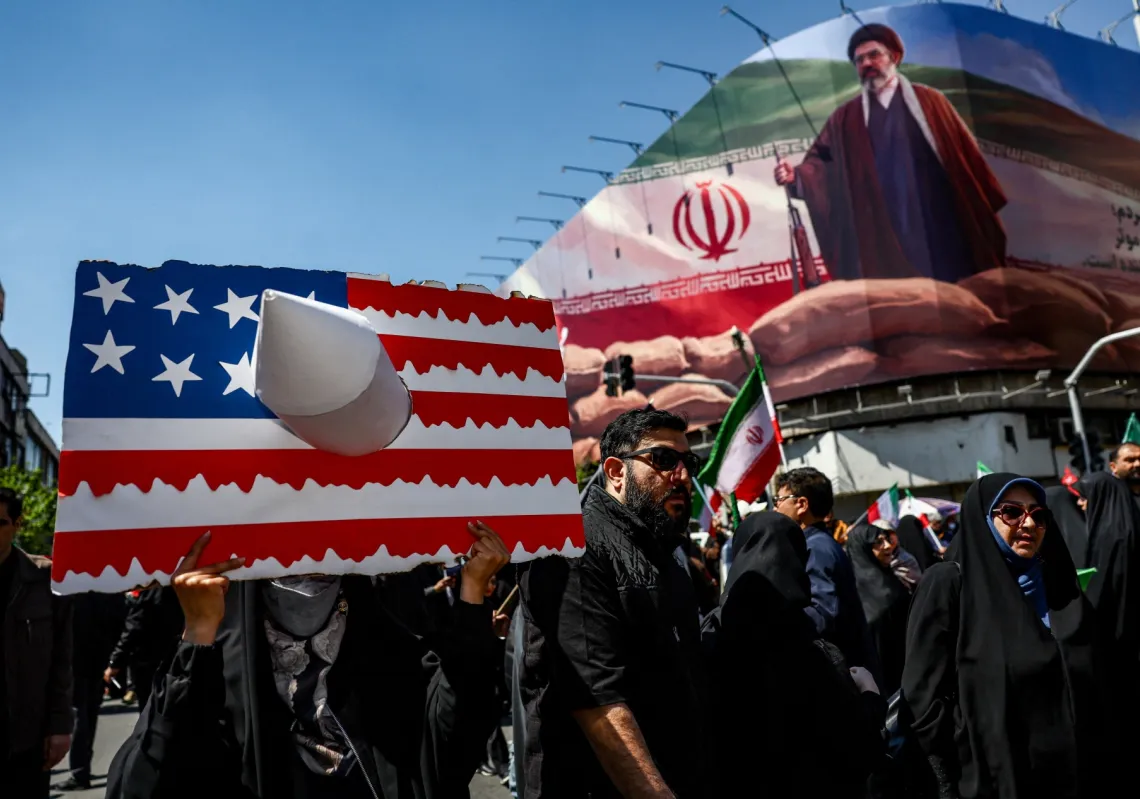
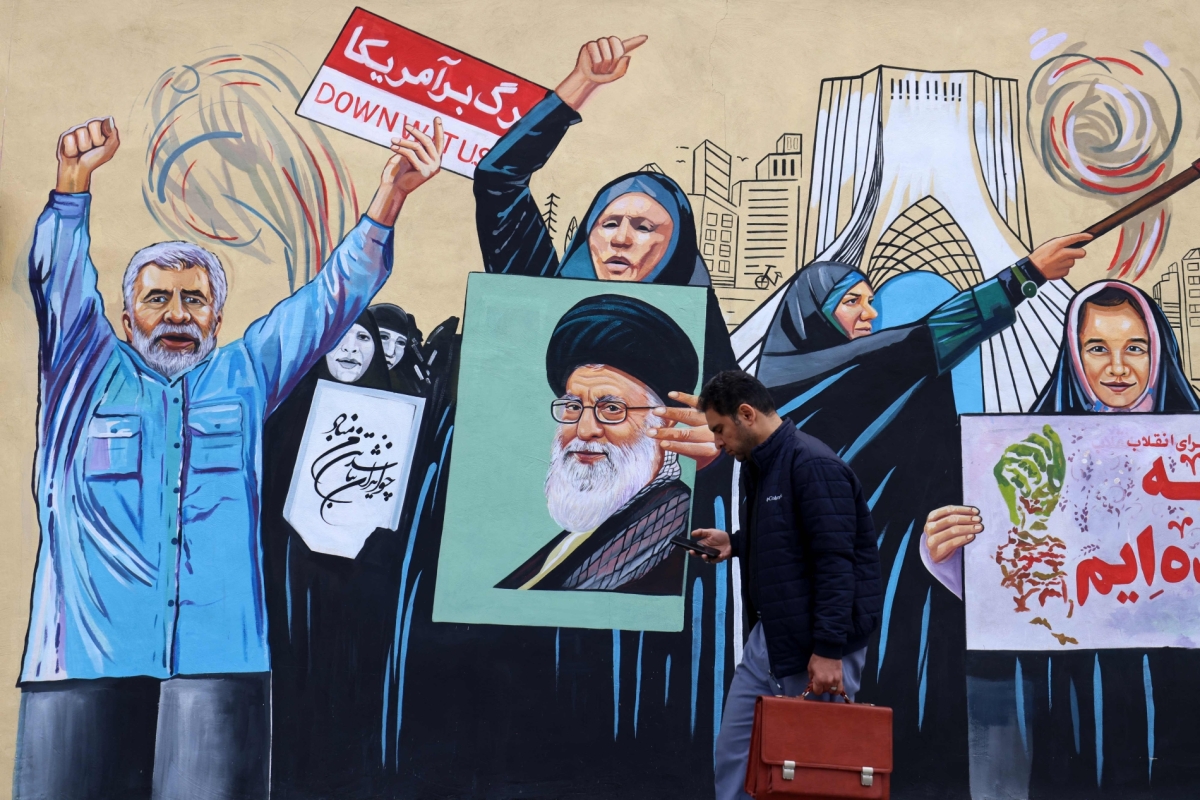
A man walks past an anti-USA and anti-Israel mural in Tehran on 8 April 2026.
ATTA KENARE / AFP
A man walks past an anti-USA and anti-Israel mural in Tehran on 8 April 2026.

'Unconditional surrender' was never an option for Iran

US-Iran talks aimed at finding a permanent end to the war ended on Saturday night without any deal, leaving the fate of a two-week ceasefire hanging in the balance. The meeting in the Pakistani capital of Islamabad brought together Iranian and US officials, chief among them US Vice President JD Vance, but failed to reach a consensus on the parameters for achieving long-term peace.

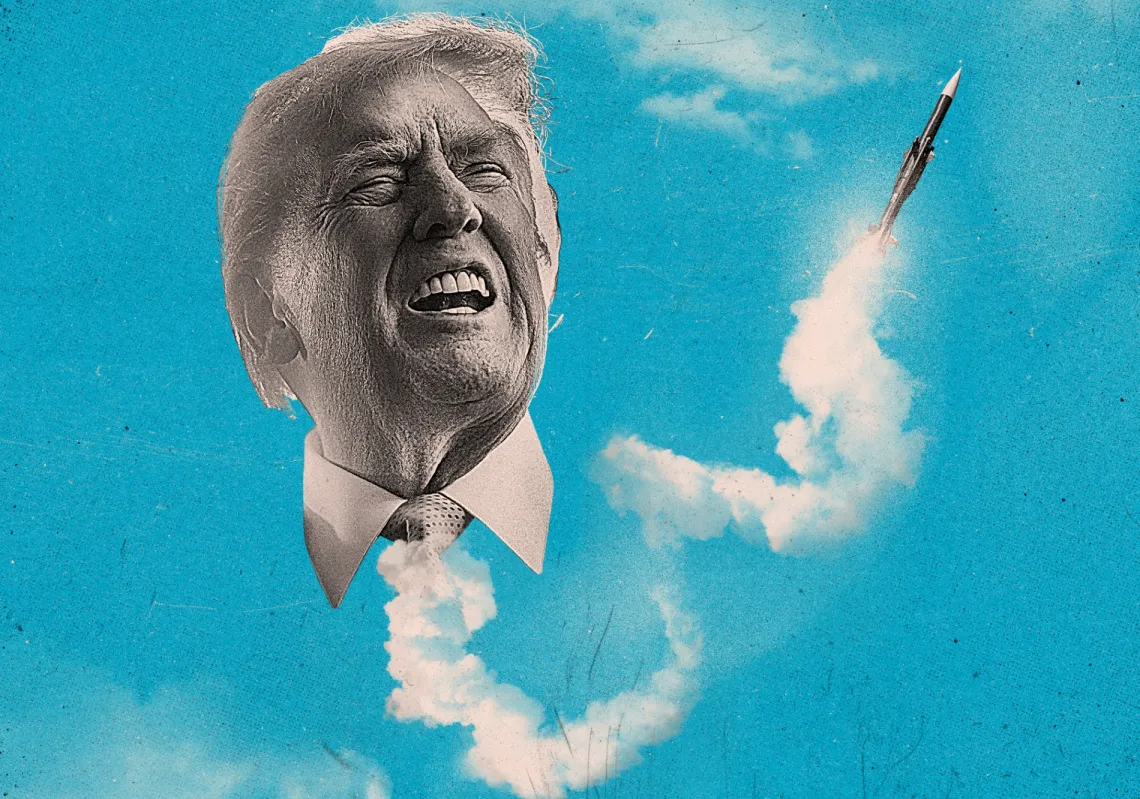
In the first days of the war that erupted on 28 February after Iran was attacked by the US and Israel, US President Donald Trump set a high bar by demanding Iran’s “unconditional surrender". At the time, observers immediately drew parallels to Washington's demand for Tokyo's unconditional surrender in the Potsdam Declaration on 26 July 1945. When it refused, a US bomber dropped the world’s first atomic weapon on Hiroshima on 6 August 1945, and on 9 August, a second atomic bomb was dropped on Nagasaki.

Still, there was no official surrender, so on 14 August the Americans bombed Japan’s last operational oil refinery. Finally, on 15 August, Emperor Hirohito’s announcement that he had accepted the Allies’ terms was broadcast.

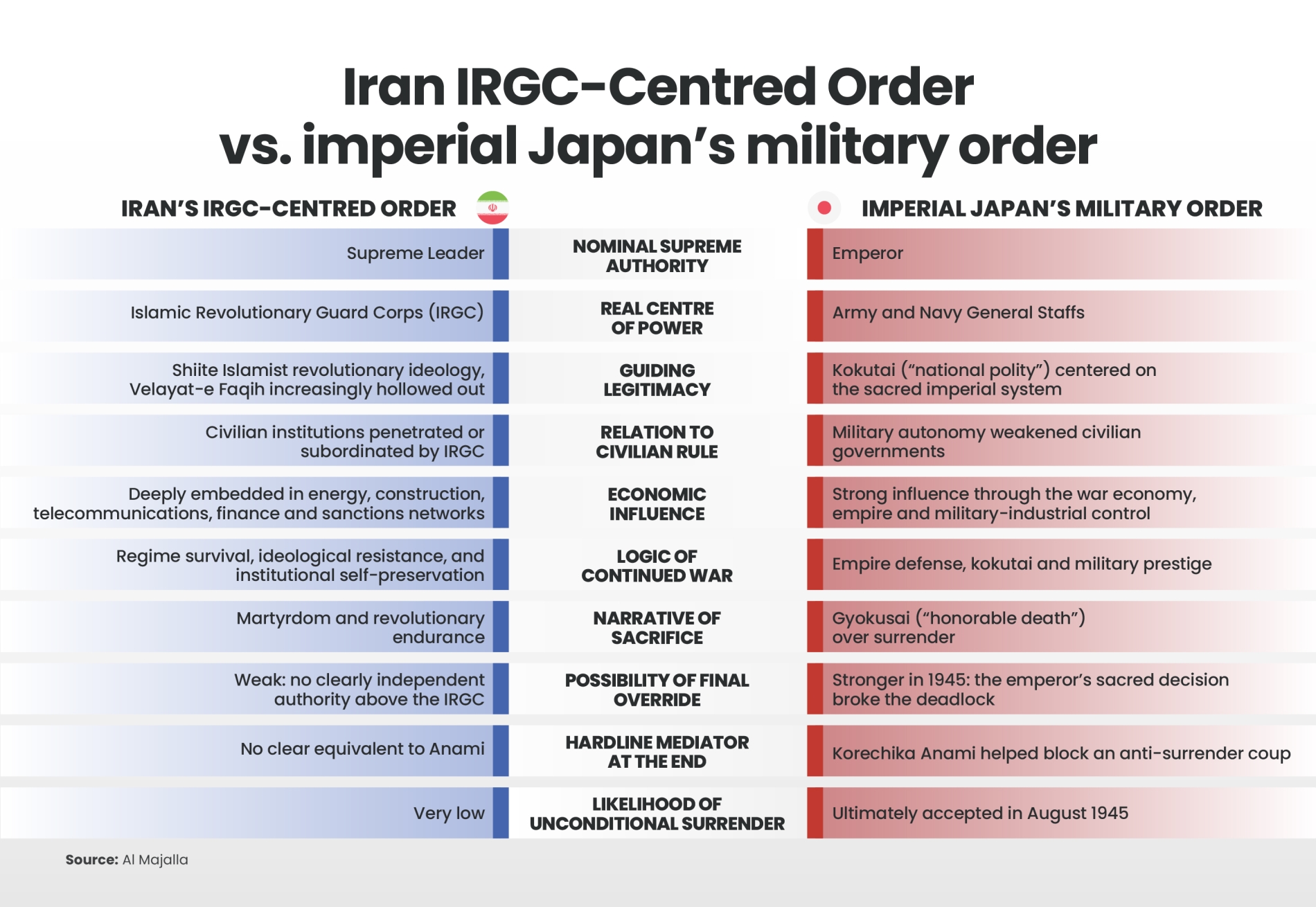
There are some structural similarities between Iran’s Islamic Revolutionary Guard Corps (IRGC) in 2026 and the imperial military order that dominated Japan in the final years before 1945. In both systems, a nominal supreme authority stood above the state, while real power migrated into a militarised apparatus that penetrated politics, diplomacy, intelligence, and the economy. In pre-war Japan, the doctrine of the military’s autonomous command hollowed out civilian rule. In contemporary Iran, the language of “defending the revolution” has enabled the IRGC to achieve a similar level of autonomy.

Both systems have also been marked by diplomatic isolation, ideological rigidity, coercive domestic control, and the elevation of martial virtue over strategic realism. Yet structural resemblance does not produce historical symmetry; the conditions of exit are not the same.

No emperor in Iran

The first and most important difference lies in ultimate authority. Imperial Japan, despite the disorder and insubordination in its military system, still had a figure who stood formally above the armed services: the emperor. In August 1945, when the Supreme War Council remained deadlocked over the Potsdam Declaration, it was Emperor Hirohito’s sacred decision that broke the impasse.

Japan’s surrender was therefore not an automatic consequence of destruction on the battlefield. It required, first, a political decision by a recognised authority and, second, compliance by armed forces that had spent years resisting effective civilian oversight. That distinction matters because a state does not surrender merely because it has suffered terribly; it surrenders when there is a legitimate authority capable of deciding that the war must end, and when the coercive organs of the state can be made to obey.

In Japan, Hirohito’s intervention supplied precisely that missing link. The deadlock inside the leadership was broken from above. Contemporary Iran has no equivalent final arbiter in any meaningful sense. Formally, the Supreme Leader remains the apex of the political order, but in practice, the Islamic Republic has moved towards a praetorian order in which the IRGC has become the decisive centre of power.
Al Majalla

If the Supreme Leader's authority is itself sustained, filtered and increasingly defined by the Guard, then who is left to order the Guard to stop? In Japan, the emperor could still overrule the military. In Iran, the IRGC can no longer be overruled; it is the structure within which such decisions are made.

There is a bitter irony at the centre of the present war. If the United States and Israel intended the killing of long-reigning Supreme Leader Ali Khamenei to decapitate the Islamic Republic, they may instead have empowered the IRGC-centred military dictatorship. So long as Khamenei was alive, however weakened, the system could still claim to be ordered around clerical supremacy, not a military power ruling through a thinning clerical façade.

In that sense, the killing of Khamenei revealed the regime's true structure. It stripped away one of the last residual symbols of juristic authority standing above the Guards and made it easier for the IRGC to dominate the state in more direct form, whether through manipulated succession, dynastic symbolism, or open military preponderance.

Read more: The US-Iran war could empower the IRGC
Unlike Japan's Hirohito, Iran has no equivalent final arbiter in any meaningful sense

Honour in death

The second major difference is ideological. Pre-war Japan had a powerful state mythology. The kokutai (national polity) was a quasi-sacred conception of Japan as an organic imperial state centred on the emperor, presented as historically unique and morally indivisible. In wartime, it came to mean the preservation of the imperial order as a civilisational absolute.

Likewise, gyokusai—literally 'shattering like a jewel'—referred to the ideal of honourable annihilation rather than surrender, of death before dishonour, a spiritualised preference for destruction over capitulation, and it prefigured the more familiar cult of the kamikaze. Yet this militarised spirituality is less doctrinally comprehensive than the IRGC's Shiite Islamist worldview.

For the IRGC, defeat isn't merely a military setback; it signifies the delegitimation of the 1979 Revolution, the rupture of a sacred narrative of resistance, and the humiliation of what it regards as a redemptive historical mission. The Guard's identity is bound up with martyrdom, anti-Americanism, anti-Zionism, revolutionary guardianship, and the conviction that endurance itself confers legitimacy. 

ATTA KENARE / AFP
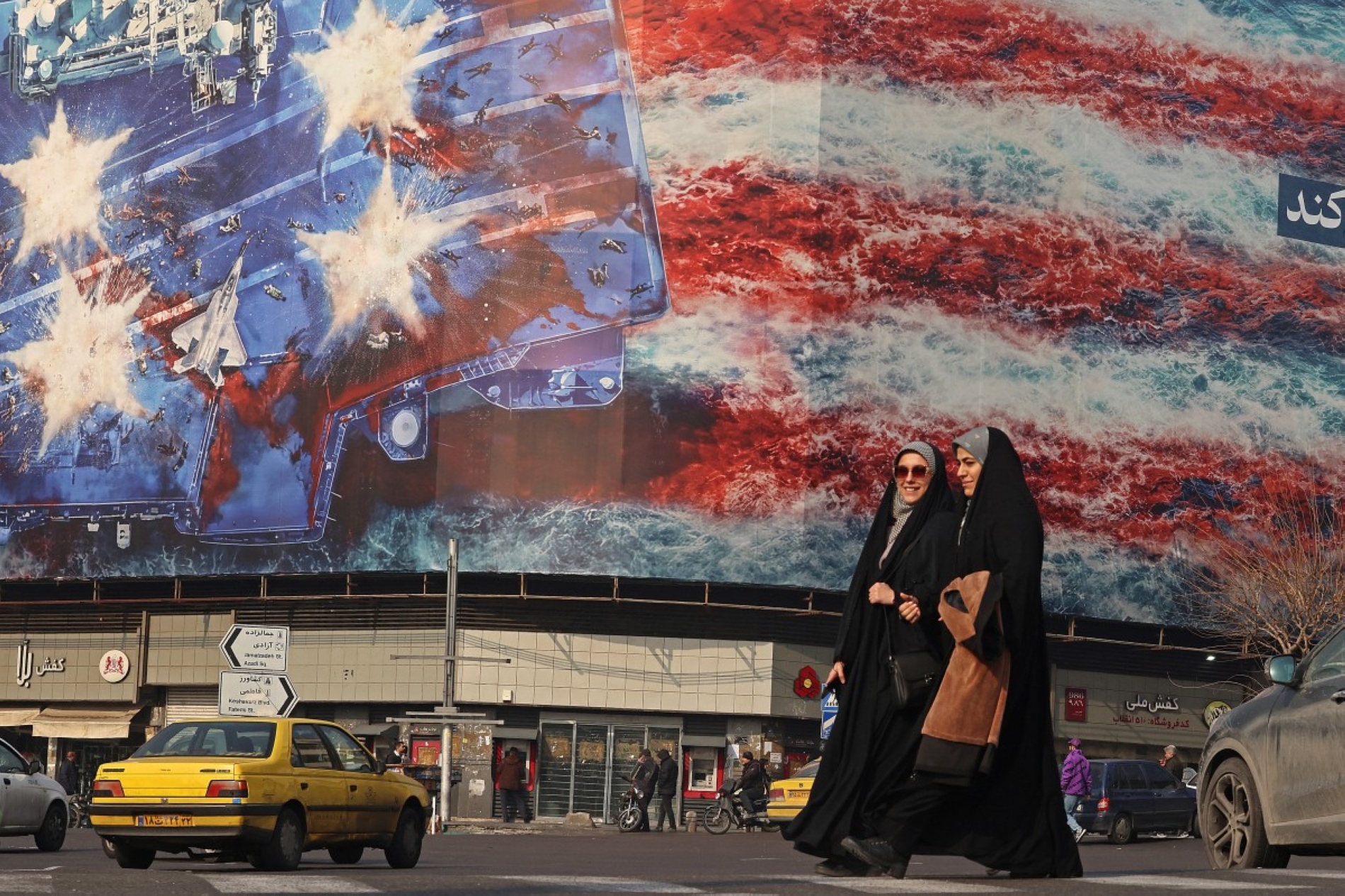
Iranian women walk past an anti-US billboard installed on a building at Enqelab Square in Tehran on 26 January 2026.

That makes compromise exceedingly difficult. A conventional armed force may accept defeat if it survives institutionally, but a revolutionary organisation built upon a quasi-sacral mission cannot easily do so, because surrender would amount not just to strategic failure but to ideological self-negation.

Organisational dismantlement

The third reason is institutional survival. Imperial Japan's military had immense corporate interests, but the IRGC is even more expansive. It is a fighting force, a security apparatus, an economic conglomerate, and the nucleus of Iran's regional network of proxies and partners, all wrapped up into one. It is deeply embedded in construction, energy, telecoms, and finance. In short, it does not simply defend the state; in many respects, it runs the state.

For an institution of this kind, unconditional surrender does not mean merely laying down arms. It implies organisational dismantlement, the destruction of patronage networks, exposure to prosecution, and possibly the physical liquidation of senior figures. In other words, surrender would mean not simply national defeat but institutional extinction. That is why the IRGC will continue fighting. A traditional army may retreat to preserve itself, but a praetorian-revolutionary order that equates peace with regime death has little incentive to stop.

A further difference concerns elite behaviour during crises. Japan had War Minister Korechika Anami, a hardliner who personally favoured continued resistance but would not openly rebel against the emperor and ultimately refused to support the coup plotters who sought to block a surrender. His refusal proved decisive, making surrender possible because a figure respected by the hardline camp chose not to convert political defeat into military civil war.

It is difficult to imagine an equivalent figure emerging within today's IRGC. Anami, in the end, submitted to a higher sovereign principle embodied in the emperor. The IRGC operates in a political order in which the purported higher principle has itself been absorbed into Guard dominance. The force that ought to be restrained is also the force that defines the terms of restraint. That makes an internal turn towards de-escalation far more difficult than in Japan in 1945.

AFP
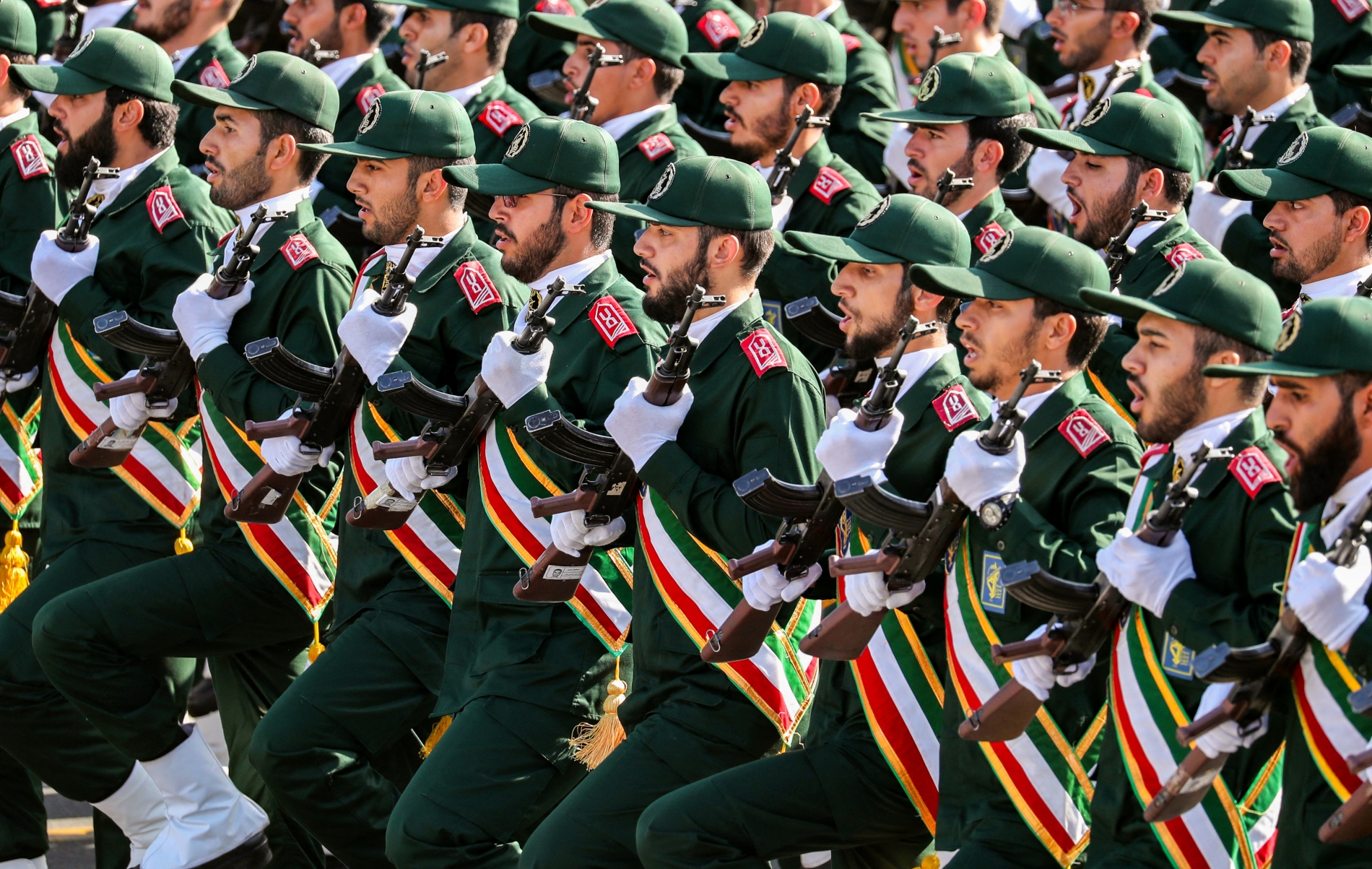
Members of Iran's Revolutionary Guards Corps (IRGC) march during the annual military parade marking the anniversary of the outbreak of the devastating 1980-1988 war with Saddam Hussein's Iraq, Tehran, on 22 September 2018.

Towards attrition

This comparison matters not least because of how Japan's surrender is remembered in the United States. Many in America believe that it was the atomic bombings that made Japan surrender, but many Japanese say the historical reality is far more complicated. The atomic bombs were decisive, but they were not the only factor that led to capitulation.

Japan's surrender emerged from the convergence of several shocks. Weeks earlier, the Soviets had entered the war and invaded Japan. The US was also extensively firebombing cities. There was a fear of domestic collapse, and above all, an internal political decision by the emperor to end the war. In other words, the war ended not just because Japan was struck from outside, but because a decision was finally taken from within.

Although the current Iranian order and Imperial Japan's military order share meaningful structural similarities, Japan had three features that Iran lacks: a sovereign authority capable of imposing peace, a military ideology less theologically total than Shiite Islamism, and a hardline war minister—Anami—who ultimately helped prevent military fragmentation at the hour of surrender.

And as the warring sides are now observing a shaky truce, any breakdown or further escalation by either the US or Israel will come with great risks, since the IRGC views the war as existential. Therefore, it is fully prepared for a longer drawn-out war of attrition. Where Japan accepted unconditional surrender, an IRGC-run Iran, will almost certainly not.

font change