In a leaderless system, these men now govern Iran

Security is the name of the game in Iran these days, and a small huddle of men steeped in the defence of the regime are now seen as central to decision-making in the absence of a visible cleric.

Eduardo Ramon

In a leaderless system, these men now govern Iran

Mojtaba Khamenei was appointed Iran’s Supreme Leader after his father was killed in a US-Israeli strike on 28 February, but has yet to appear in public, and is believed to have been injured in the strike, which also killed several other members of his close family. Yet despite his absence, the Iranian system remains intact, as analysts ponder who now holds decision-making authority in wartime.

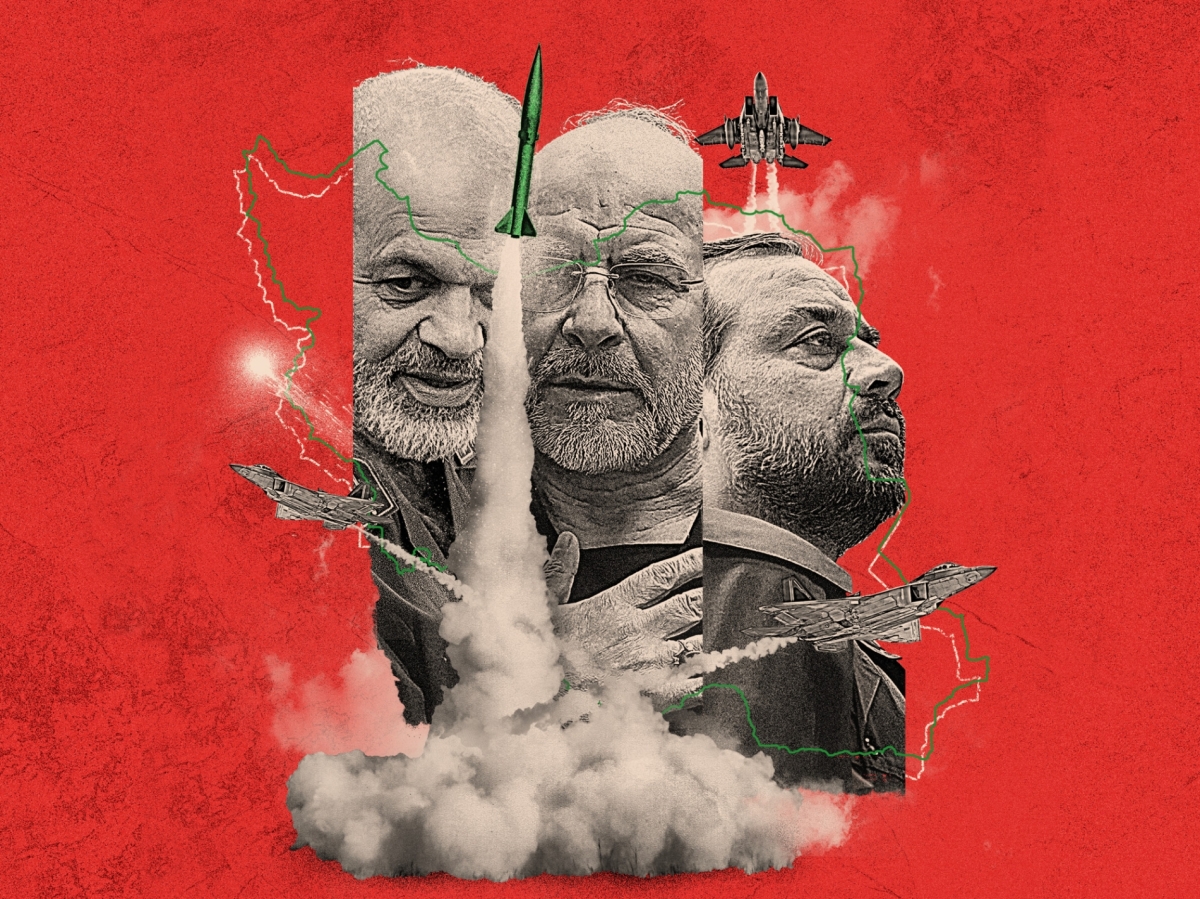
The regime’s survival now rests with a small circle of pivotal figures: the commander of the Islamic Revolutionary Guard Corps (IRGC), the head of the Supreme National Security Council, and the speaker of parliament, all of whom have also emerged from the ranks of the Guard. A judiciary chief and a law enforcement commander are also mentioned in the context of decision-making.

Here, Al Majalla looks at each.


Mohammad Bagher Zolghadr

An elusive figure in his early 70s, Mohammad Bagher Zolghadr epitomises the regime’s opacity and stands at the heart of its real command structure. As the new Secretary of the Supreme National Security Council, he supervises coordination between the army, the IRGC, the intelligence services, and foreign policy. Within his office, the state’s most consequential decisions take shape, including over war and the nuclear programme.

Only a month in post, his appointment in March 2026 was far more than an administrative reshuffle; it signalled a preference for men steeped in security affairs to manage this fraught moment. Zolghadr’s background is not in politics but in the security establishment, coming through the IRGC, the Basij militia, and the General Staff. Even before the 1979 revolution, Zolghadr cut his teeth attacking the monarchy.

According to the Foundation for Defence of Democracies, he is an architect of Iran’s regional proxy network, helping to direct the likes of Hezbollah from afar. Western reports also indicate that he has been sanctioned for his role in the nuclear programme and in the repression of domestic dissent. He is said to be less an autonomous decision-maker than a coordinator of power across multiple centres, a role made more important by the leader’s public absence.
ATTA KENARE / AFP
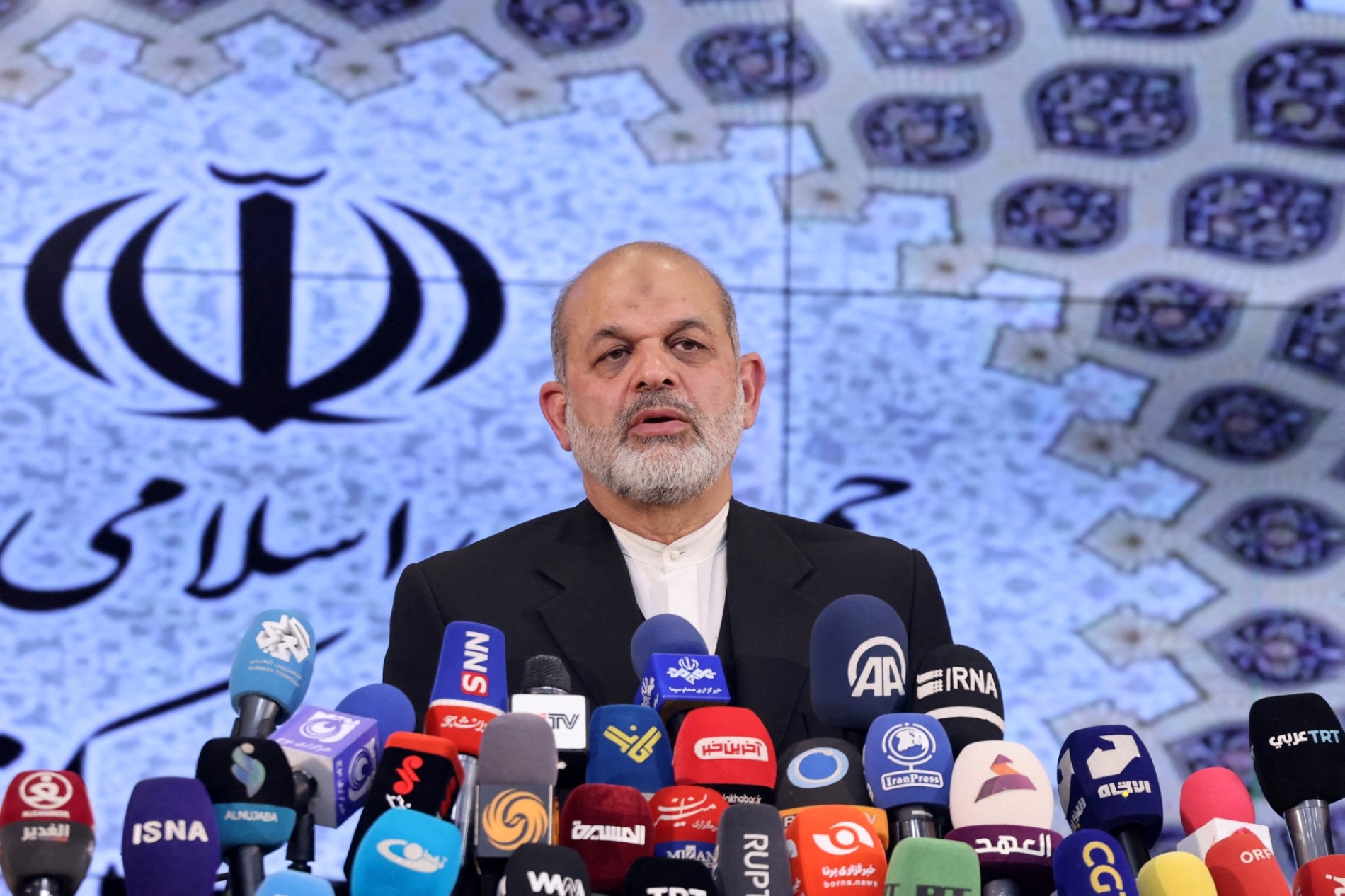
Iranian Interior Minister Ahmad Vahidi speaks during a press conference in Tehran on 4 March 2024.

Ahmad Vahidi

Embodying the Iranian regime’s security doctrine of defence through force, IRGC Commander Gen. Ahmad Vahidi, 67, has long been tied to the Guards’ elite Quds Force, the external arm made famous by the slain commander Qasem Soleimani. Vahidi joined the Quds Force in 1983 and led it from 1988 to 1997. Some link Vahidi to the AMIA bombing in Argentina in 1994, which killed 85 people at a Jewish community centre in Buenos Aires.

Interpol has kept a red notice against him for the AMIA attack, while the United States and European Union reimposed sanctions on him for suppressing the 2022 protests, including through internet shutdowns and the use of force against demonstrators. Some researchers think Vahidi forms part of the advance of the military-security establishment into the very centre of power, accelerated by war. Gen. Vahidi is more than a military commander; he embodies the conviction that the regime’s survival depends on total security control, not on the religious establishment that once wielded such authority.
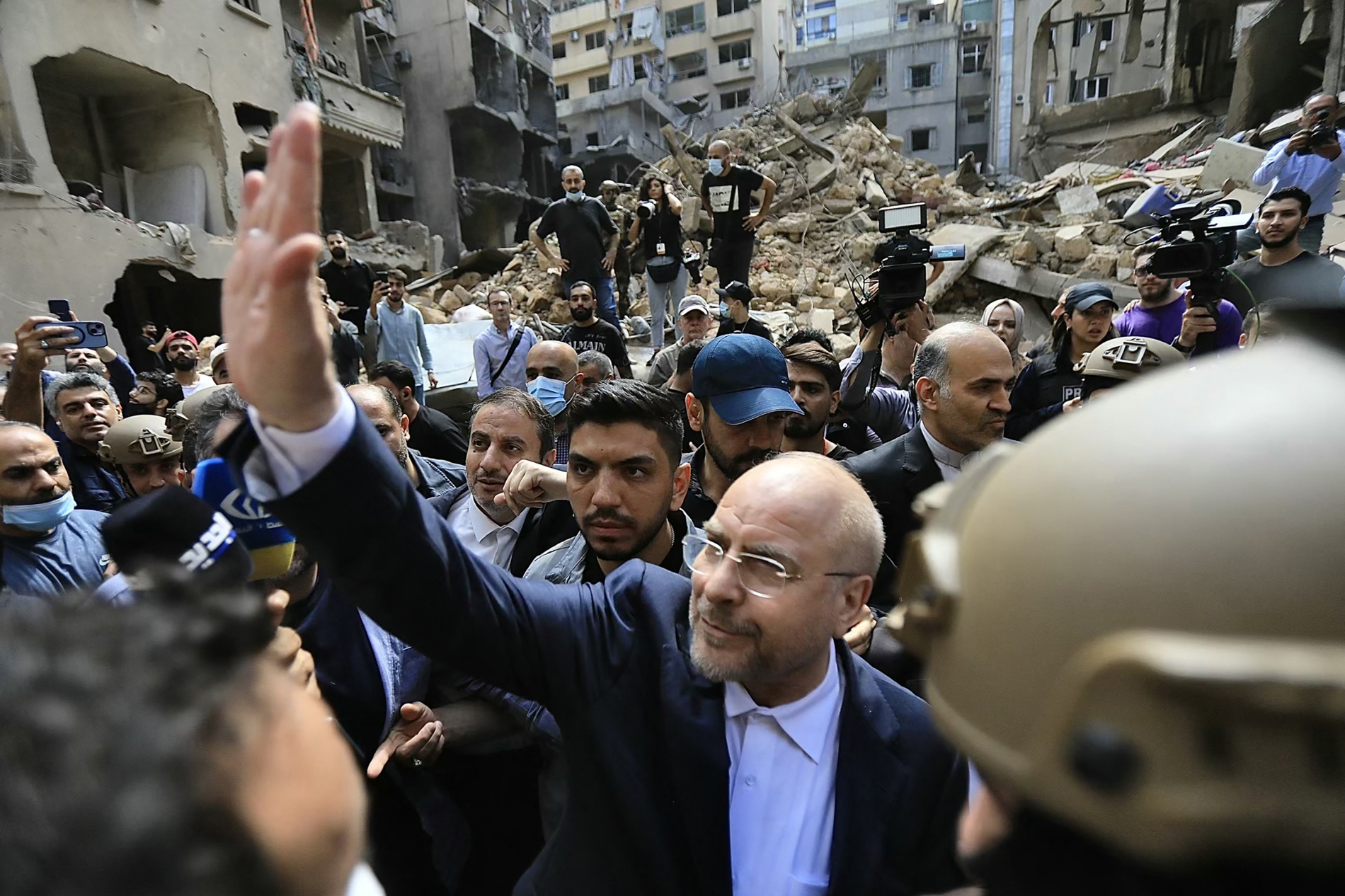
AFP
Iran’s Parliament Speaker Mohammad Bagher Ghalibaf (C) waves as he returns to his car after visiting the site of an Israeli airstrike that targeted Beirut’s Basta neighbourhood on 12 October 2024.

Mohammad Bagher Ghalibaf

Lying somewhere between security and politics, Mohammad Bagher Ghalibaf, 64, is Speaker of Iran’s Parliament and represents a different type of figure. He rose to greater prominence after 17 March, when the former Supreme National Security Council head Ali Larijani was killed. Larijani was a parliamentarian, a former IRGC figure, and a philosopher, and Ghalibaf resembles him in all three respects. He is seen as relatively moderate when compared with the others.

Ghalibaf began his career in the Guards and went on to command its air force. He later led the police, then became mayor of Tehran, before eventually becoming Speaker of Parliament, a path that reveals a distinctly Iranian pattern, whereby the security elite are continually recycled through civilian institutions.
The regime's survival now rests with a small circle of pivotal figures

Reuters reports that Ghalibaf has become more central to decision-making since the US and Israel began attacking on 28 February, particularly through channels of indirect communication with the West. With the traditional balance between clerics and politicians receding, Ghalibaf has emerged as someone who can speak to the military, negotiate in political terms, and shape the domestic narrative.

For those who know him, he is the archetype of the security-political figure who comes to the fore in moments of danger, and is considered relatively moderate despite his sharp rhetoric on social media.

KHAMENEI.IR / AFP
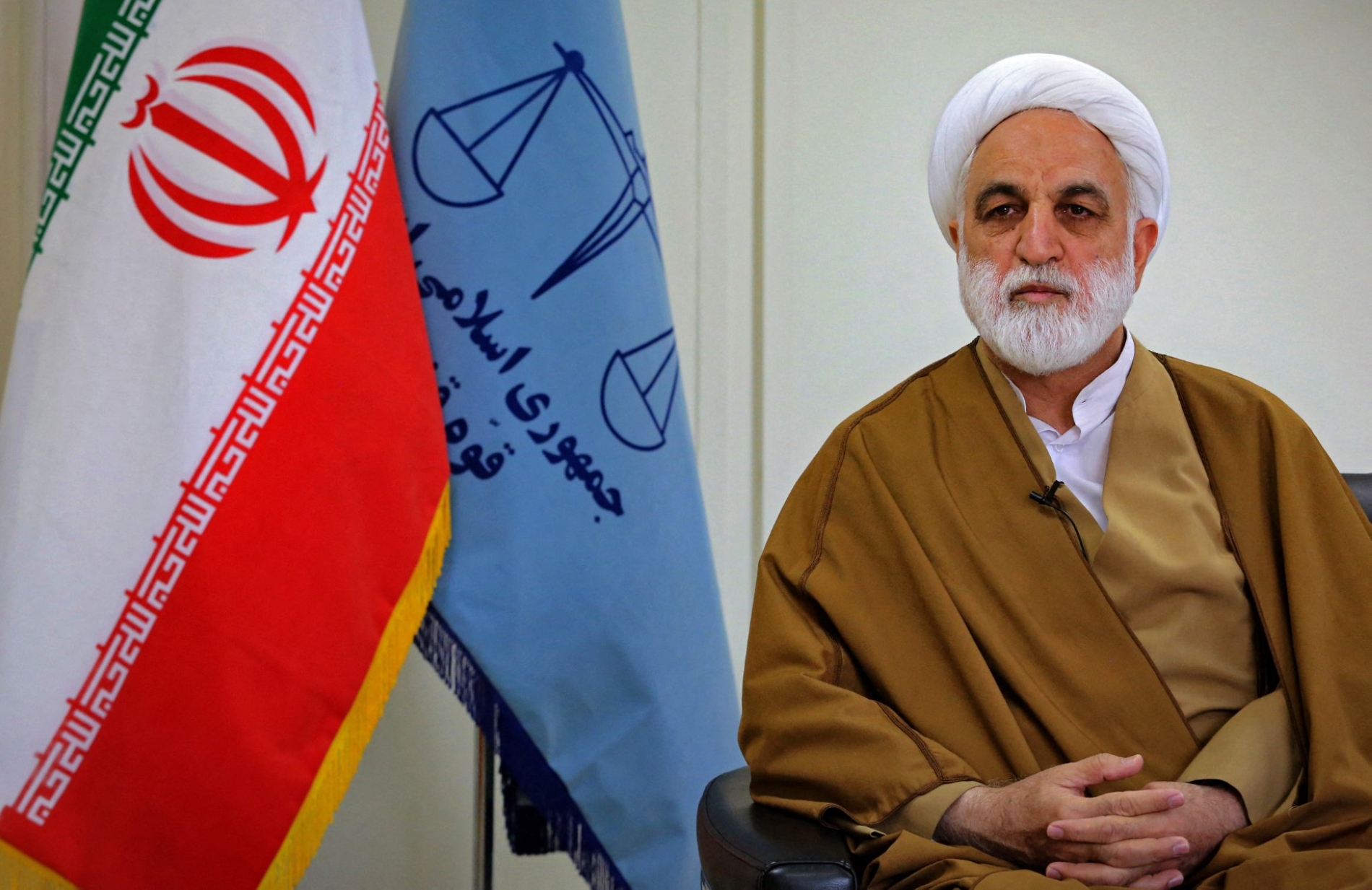
An undated handout picture provided by the Iranian supreme leader's official website on 1 July 2021 shows the new chief of Iran's judiciary authority, Gholamhossein Mohseni-Ejei.

Judiciary and police

The Foundation for Defence of Democracies highlights two other important figures. The first is Gholamhossein Mohseni Ejei, 69, the Chief Justice of Iran and former minister of intelligence. Within the Iranian system, repression is furnished with legal sanction, which is where Ejei comes in. This merging of security and judicial power means he can transform repression into legal legitimacy.

Reuters notes a marked rise in the number of state executions since Ejei's tenure began in 2021. Western sanctions imposed against him since 2009 point to his role in the system of arbitrary arrests and torture. After Khamenei's killing, the judiciary is now an even more important instrument for reasserting control through fear.

The second is Ahmad Reza Radan. If Ejei signs the judgments, police chief Ahmad Reza Radan enforces them in the street. The US and EU have sanctioned him since 2010 for his role in crushing the 2009 demonstrations. Having begun his career in the IRGC, he is also believed to be behind the crushing of the 2025-26 protests, his forces killing thousands of Iranians on the streets throughout the country.

With a rhetoric rooted in direct deterrence, and known within Iran for his strict enforcement of the Islamic dress code, some researchers think Radan is central to what may be described as a system of 'preventive repression,' one that does not wait for a threat to ripen but rather moves in to smother it in advance. Like others on the blacklist, he is understood to wear the sanctions as a 'badge of honour'.

What these principal figures reveal is that this is no mere distribution of power in Iran, but rather a transformation in the very nature of rule. The country is no longer governed by a delicate equilibrium between a clerical leader and the state institutions beneath him, but by an alliance of institutions that mix rivalry and complementarity.

It heralds the emergence of a more collective order of rule, harsher in disposition, less supple in practice, and perhaps, in time, more exposed to competition among its own commanders. That is the real challenge facing Iran's adversaries today. This is not a fragile regime waiting to die; it has reorganised itself around its most durable instruments of survival.

The system still faces grave internal pressures. Financial resources have been drained, while vital service infrastructure, including electricity, gas, railways, and bridges, has been damaged. Whether the Iranian public indulges the official triumphalist rhetoric remains to be seen, especially if the state cannot provide even the most basic services. The post-war period may yet prove to be more perilous to the regime than the war itself.

font change

Related Articles