Prices, debt, and scarcity will strike a blow against the world’s workshop
Aamir QURESHI / AFP
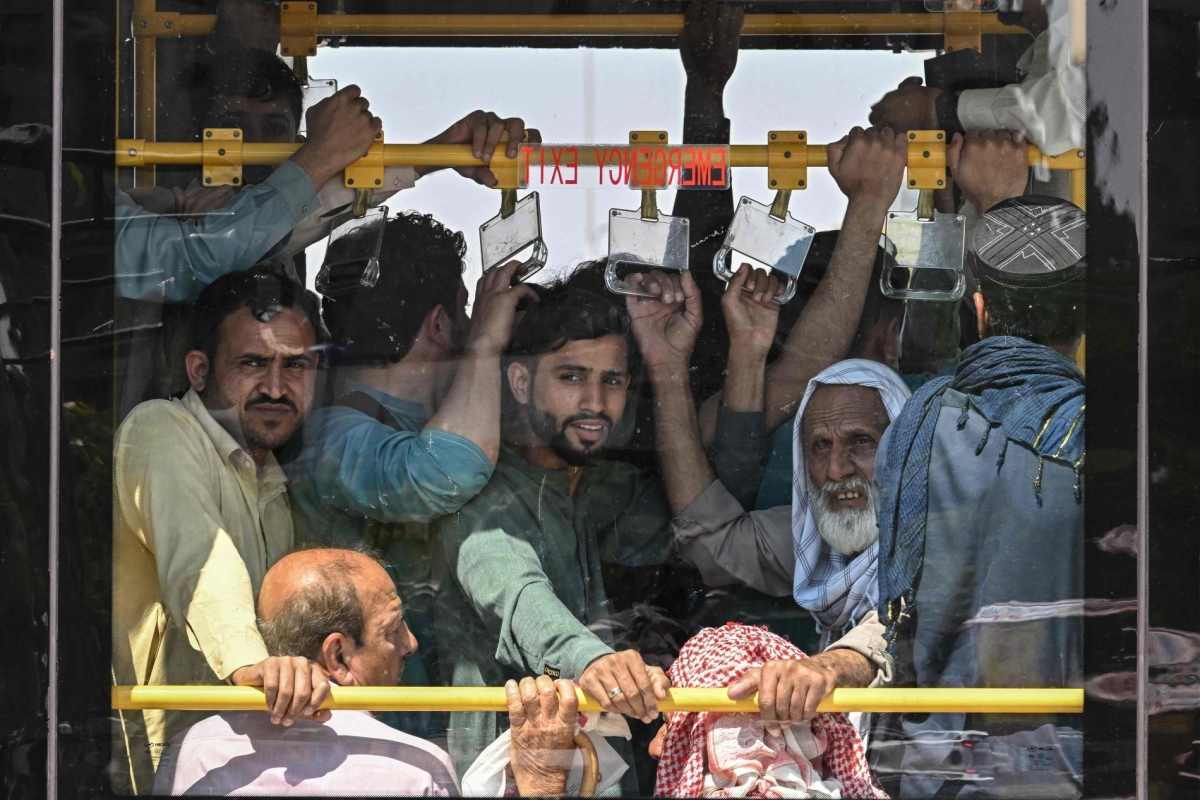
Commuters travel on a free state-run public bus in Islamabad on April 6, 2026, after the government drastically raised fuel prices due to the Iran war.
As missiles and drones fly across the Arabian Gulf, their impact is being felt an ocean away. This war is “an Asian crisis”, Vivian Balakrishnan, Singapore’s foreign minister, told Reuters last week. Around 80% of the oil and 90% of the gas that usually pass through the Strait of Hormuz are bound for Asian markets.
Poor countries are being hit the hardest. In the Philippines, more than 90% of energy imports come from the Middle East; Bangladesh, India and Pakistan receive almost two-thirds of their total LNG supplies via the strait.
But rich Asian countries are far from immune. Japan boasts a strategic oil reserve equivalent to 254 days of domestic demand, a buffer built up following the oil shocks of the 1970s. But bus and ferry services across the country have been curtailed due to a lack of supply. Japanese bathhouses are struggling to make ends meet as fuel costs rise; several across the country have announced temporary or permanent closures. And Yamayoshi Seika, a popular snack-maker, had to temporarily stop production of potato crisps after running out of heavy oil for its fryers.
The Strait’s closure presents three big risks to Asian economies. The first is rising fuel prices. These will increase costs elsewhere and stunt growth, potentially causing a stagflationary spiral. The immediate pain is being felt by motorists across the region, but especially in Southeast Asia. Globally, petrol prices have risen by 14% since the war began; in Southeast Asian countries, the figure is 42%. Prices in the Philippines and Myanmar have shot up by more than 70%, among the biggest jumps in the world.
In the Philippines, more than 90% of energy imports and Bangladesh, India and Pakistan receive almost two-thirds of their total LNG supplies via the strait
In other parts of Asia, such as India and Bangladesh, the jump has not yet been felt at the pumps—but that is only because their governments control fuel prices. On 27 March, the Indian government said it would slash central excise duties on petrol and diesel to prevent pump prices from rising. Australia and Vietnam have promised similar measures to absorb higher oil prices. In South Korea, which imports 70% of its oil from the Middle East, the government has imposed a fuel-price cap to limit the damage.
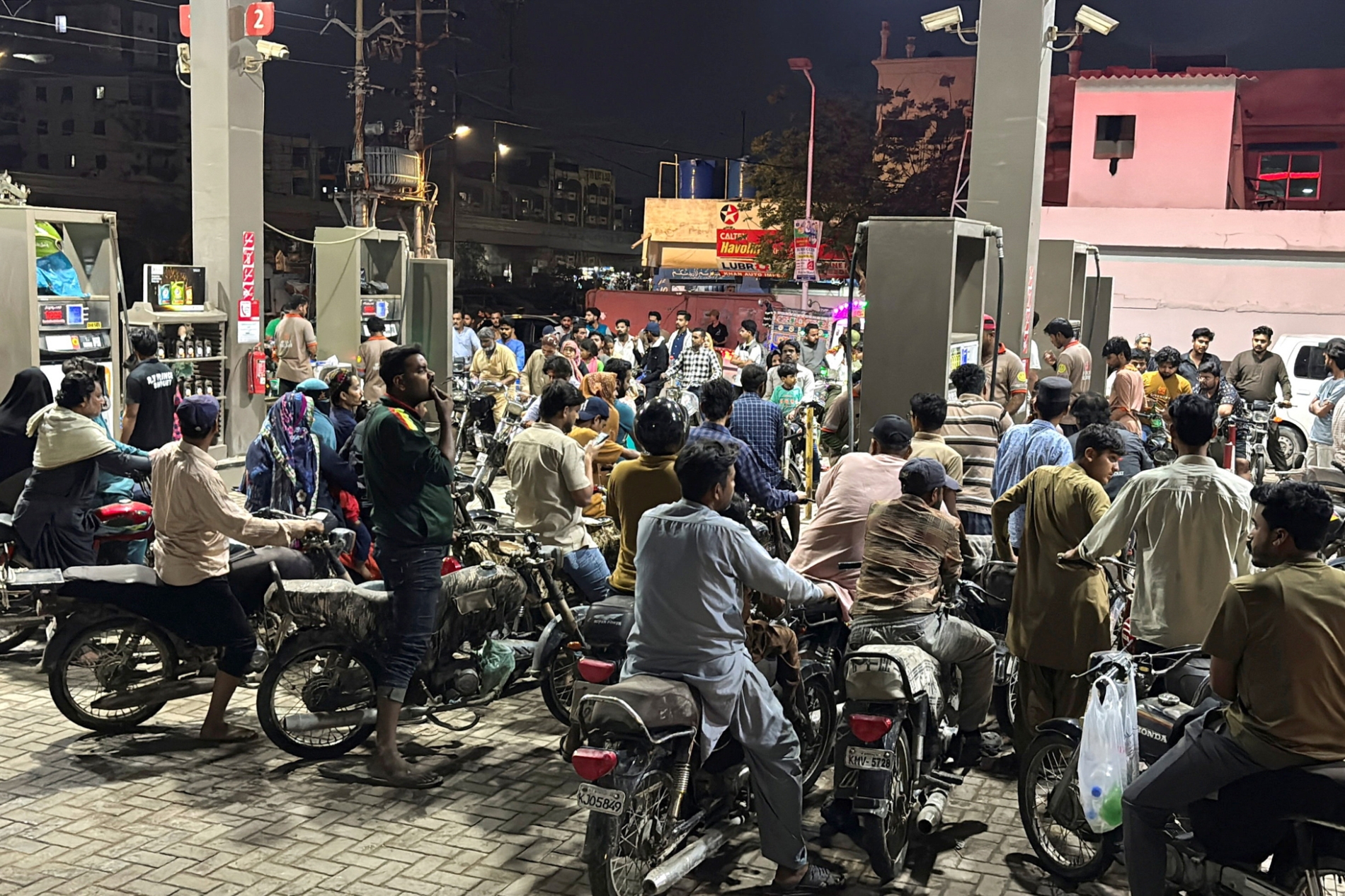
Cyclists crowd in front of petrol stations in Karachi, Pakistan, as prices soar amid war, on 2 April 2026.
The second risk, therefore, is to Asian governments' balance sheets. Many already spend heavily to subsidise energy or set fuel prices, but the fiscal room available for such interventions varies enormously. In Indonesia, rising fuel subsidies could result in the country breaching its fiscal-deficit cap of 3% of GDP. Investor confidence, already fragile, would erode further.
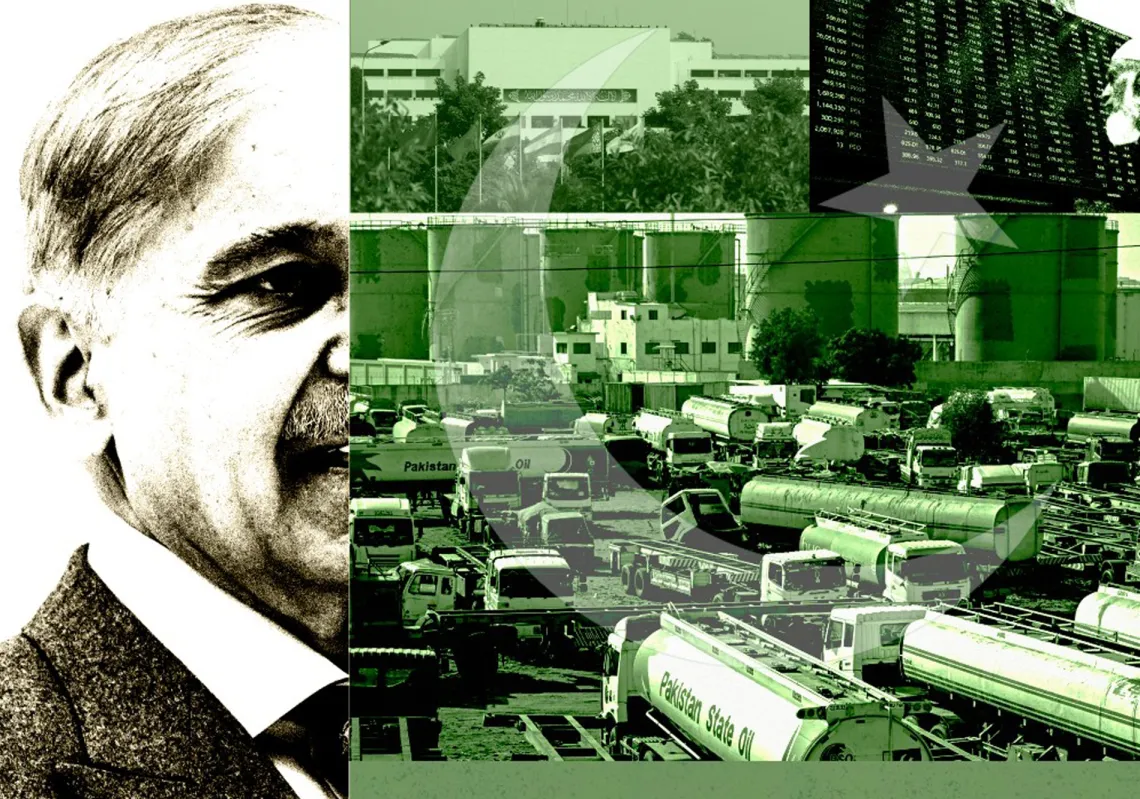
Cash-strapped Pakistan, under IMF scrutiny, has already had to put up fuel prices by 20%. Such pressures could invite unwanted attention from speculators looking for shaky currencies. Japan's finance ministry is already said to be considering intervening in the oil-futures market to prop up the yen.
Regardless of what governments do, some inflation is inevitable. Where governments do not absorb costlier crude, rising energy prices will fuel headline inflation. Crude-importing countries with weak exchange rates and big oil bills, such as the Philippines and Pakistan, will suffer the most. But even in those countries that apply fuel-price caps, the war in Iran will exert inflationary pressure through other channels. Supply-chain disruptions will push up costs in other industries, such as chemicals and logistics.
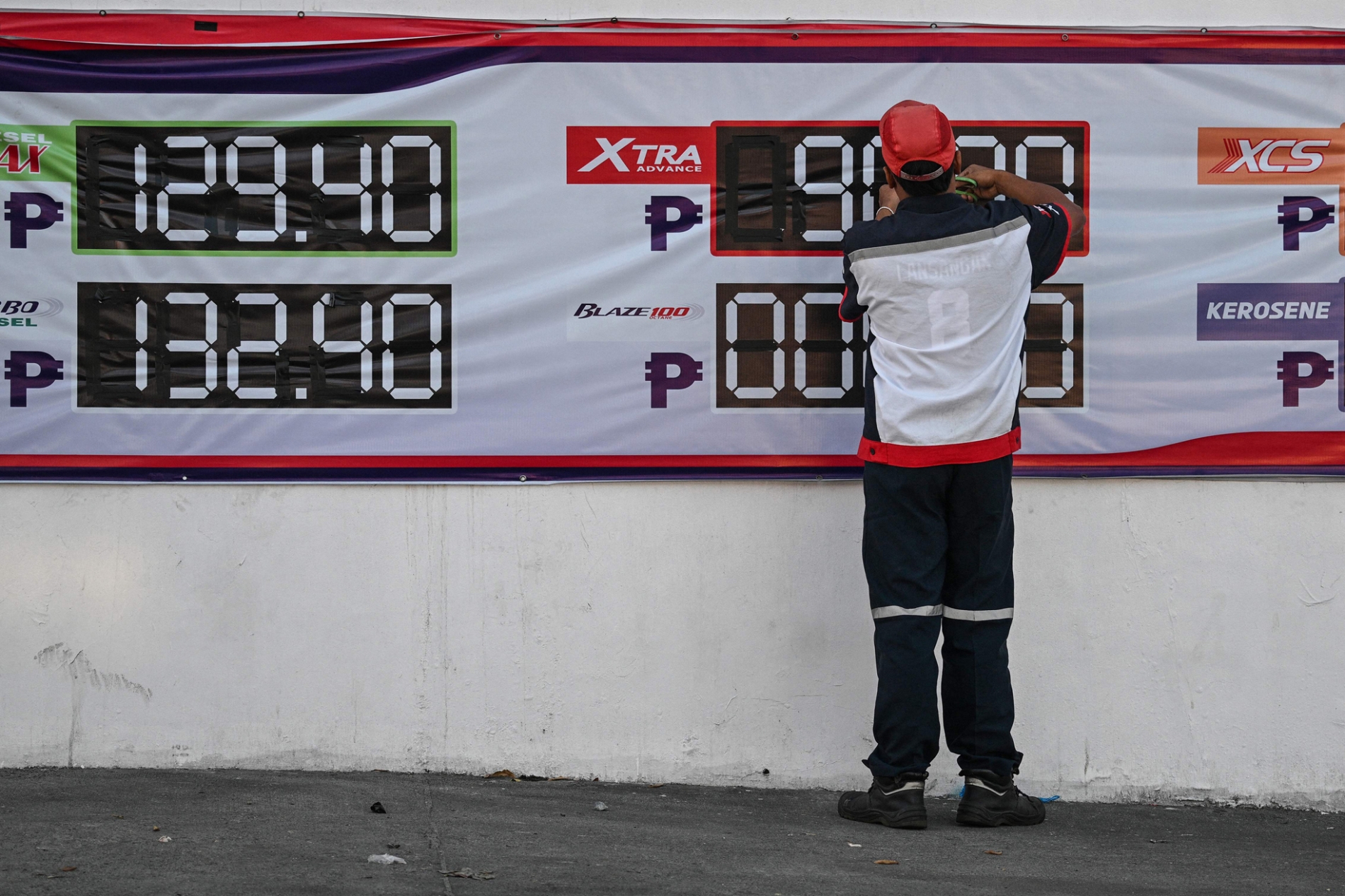
An employee changes the fuel price board at a gas station in the Philippines amid rising prices, on 3 April 2026.
The biggest inflationary force could come through food. The war has ensnared roughly a third of global seaborne fertiliser trade, which will drive up food prices, especially when the sowing season begins later this year. The Asian Development Bank (ADB) had projected that prices in Asia would creep up by just 2.1% in 2026. It now warns that figure could exceed 5%, depending on how long the war lasts.
If rising prices are an economics problem for Asian policymakers, the availability of fuel is one of politics and geography: a third big problem for Asia. Along with Japan's 254 days of fuel reserves, estimates suggest that China has enough to cover 100 days. Both have started to tap those reserves to ease the strain. But analysis from Kpler, a data firm, suggests the situation is precarious in other parts of Asia. It estimates that the Philippines, Vietnam, and Thailand hold just enough onshore oil supplies to cover about three weeks of normal demand.
The looming shortages are already upending entire sectors. Aviation and tourism may be the hardest hit. China and South Korea have imposed limits on jet-fuel exports from their refineries. Airlines across the region have reduced flights. Over the past week, around half of all cancellations globally were flights originating from airports in Asia, according to FlightAware, a flight-tracking service. Air New Zealand has cancelled 1,100 flights. Governments may intervene with more drastic action. Ferdinand Marcos junior, the Philippines' president, has warned that grounding planes is a "distinct possibility".
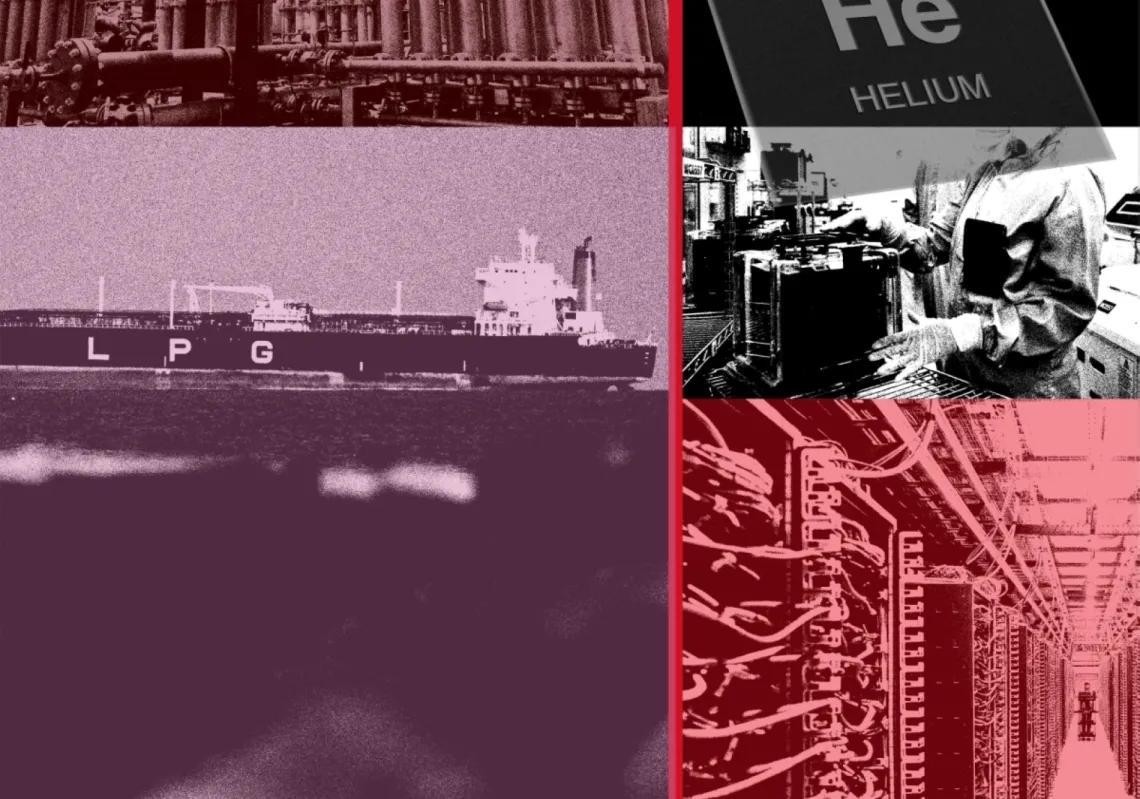
Combined with disruptions to other inputs, such as helium and aluminium, the energy shock could sap Asia's economic growth. The ADB predicts that South-East Asia would be hit the hardest with growth rates potentially 2.3 percentage points lower, if the war drags on. In South Asia, the bank predicts that growth could fall by 0.8 percentage points. The slowdown would have far-reaching effects: Asia is the global economy's factory floor.
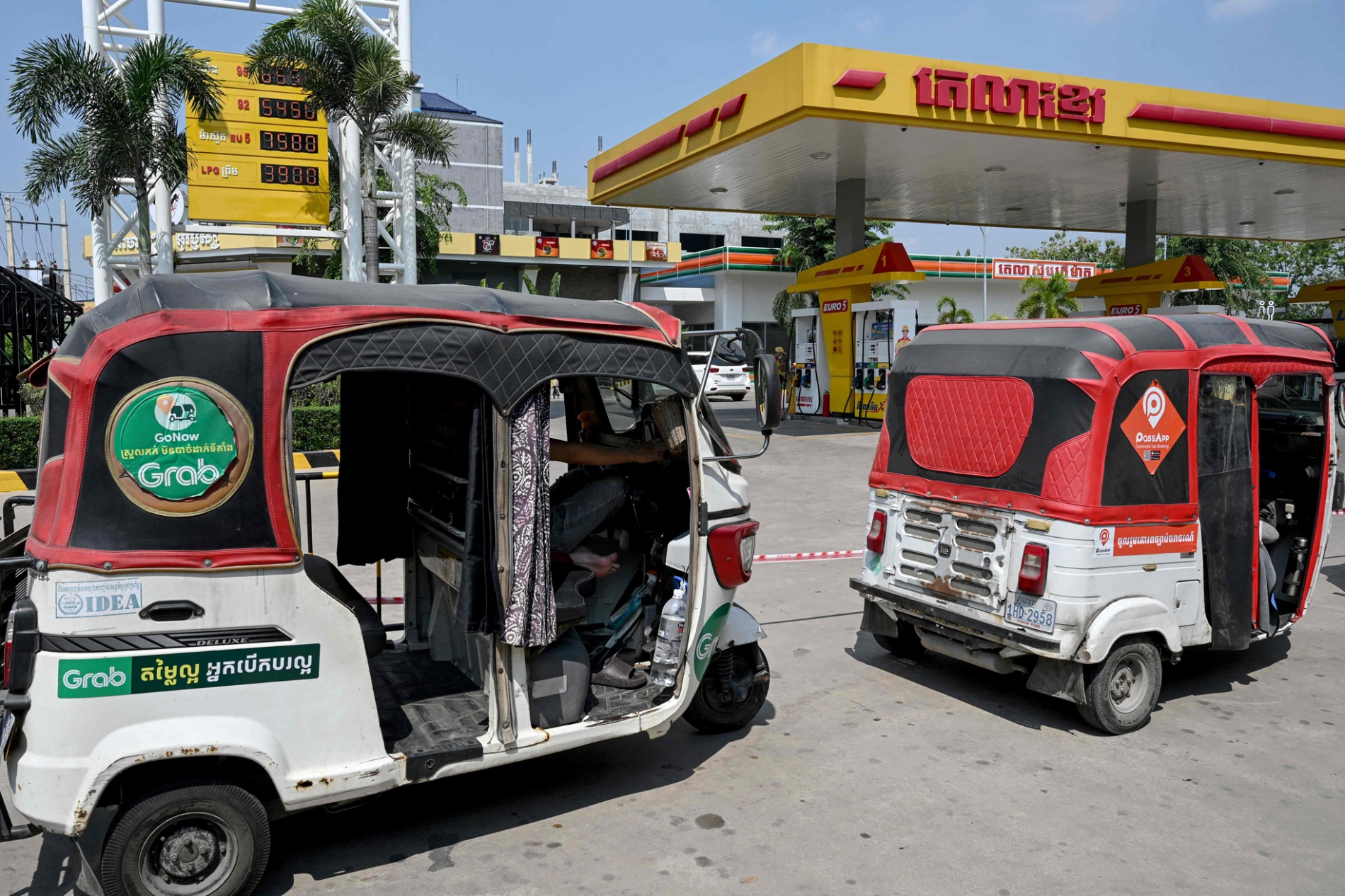
"Tuk-tuks" line up to refuel with gas in Phnom Penh, Vietnam, after fuel prices doubled since the start of the war, on 1 April 2026.
Expect a bigger push into alternative energy. Solar is being rolled out, but that drive could speed up. Many more electric vehicles could start zipping around the cities of Southeast Asia. Nuclear power will also get a second wind. This week, Vietnam said it will build a nuclear power plant with Russia. But Asia will also fall back to a familiar, dirty source of energy: coal. Japan's government has approved a return to full capacity for coal power plants, lifting a restriction meant to limit emissions. Indian officials worried about electricity demands in the summer have told a coal-fired electricity plant in the state of Gujarat to restart operations.
The push towards coal is driven by concerns about political stability. Asians are sensitive to energy prices and willing to take to the streets over them: transport workers in the Philippines have already launched protests. During the energy shock of 2022, when gas prices soared after Russia invaded Ukraine, political turmoil unfolded in South Asia. In the year to October 2022, around a quarter of all protests in the region were related to food and energy, according to an estimate by the Friedrich-Ebert-Stiftung, a German think tank.
After analysing social unrest across 101 developing countries between 2000 and 2020, researchers at the IMF found a clear association between fuel-price increases and protests. These demonstrations can be revolutionary: riots in Sri Lanka, fuelled by high energy prices, contributed in large measure to the government's ousting in 2022. What has begun as an energy shock could become a political one.