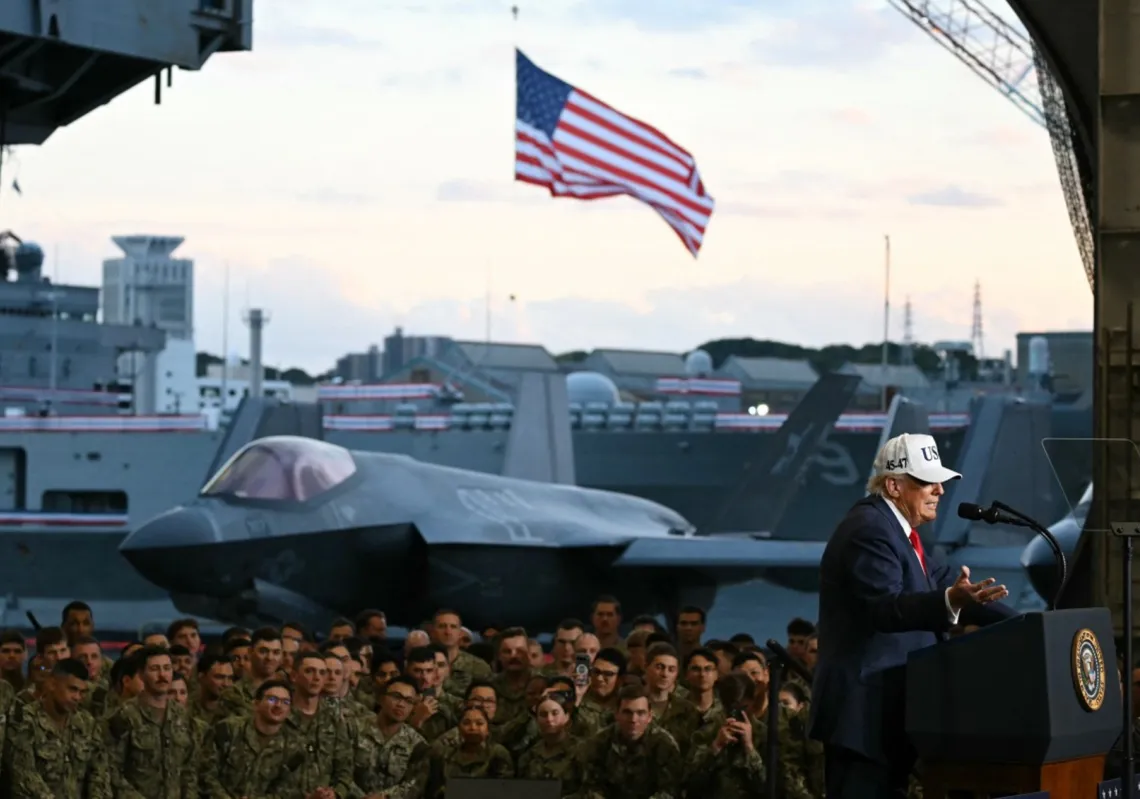
For decades, Arab security rested on the assumption that Washington would defend its Middle Eastern partners if ever needed, while in return those partners would host US bases and provide oil and gas. That assumption has not merely weakened of late—it has collapsed, shattered and fragmented by Gaza, Iran, and myriad other conflicts.
Recent weeks have shown Arab states that their dependence on Washington is dangerous. Their economic foundations are threatened, as is global energy security. Unable to match the conventional military power arrayed against it, Tehran has pursued asymmetric attrition, raising the cost of confrontation to intolerable levels for Gulf states. Many host US bases. Some have normalised relations with Israel.
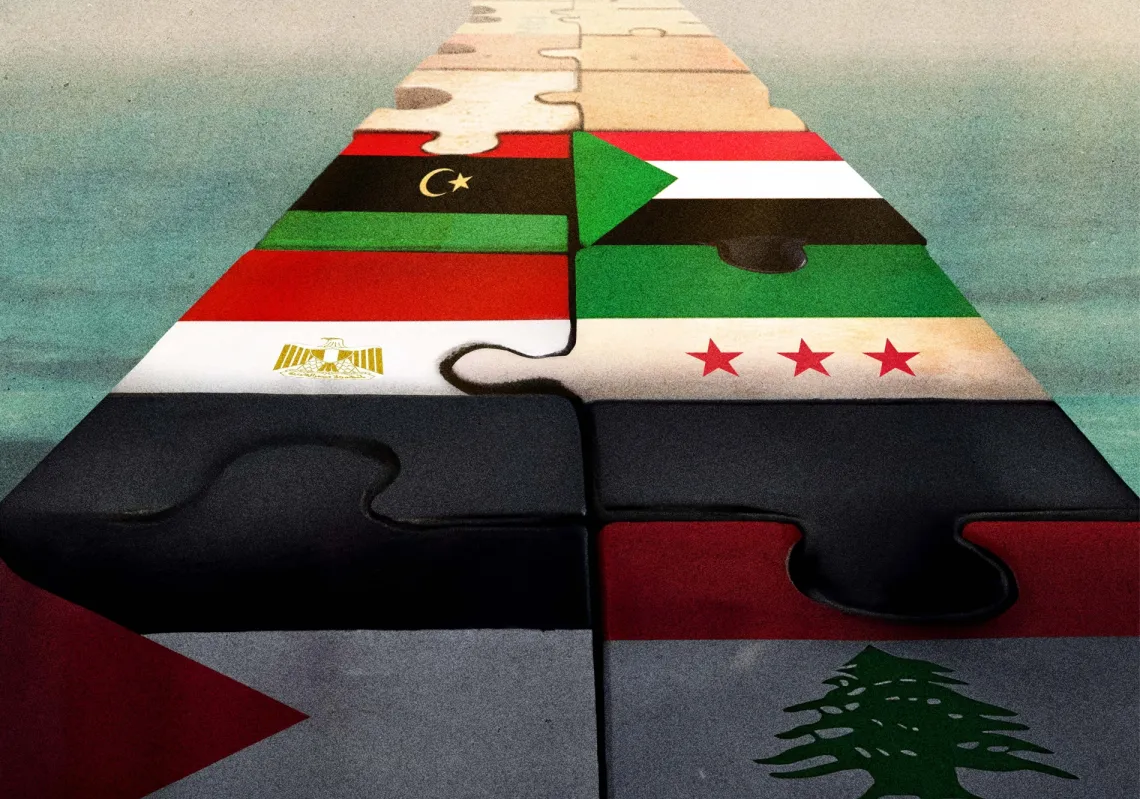
Many now believe the era of US patronage, bilateral arms deals, and the subordination of Arab strategic preferences to external powers is nearing its end. The answer, they say, is a new architecture built on Arab collective capacity and genuine strategic autonomy, anchored in Egypt and Saudi Arabia, with Türkiye playing a key role.
Misreading the Accords
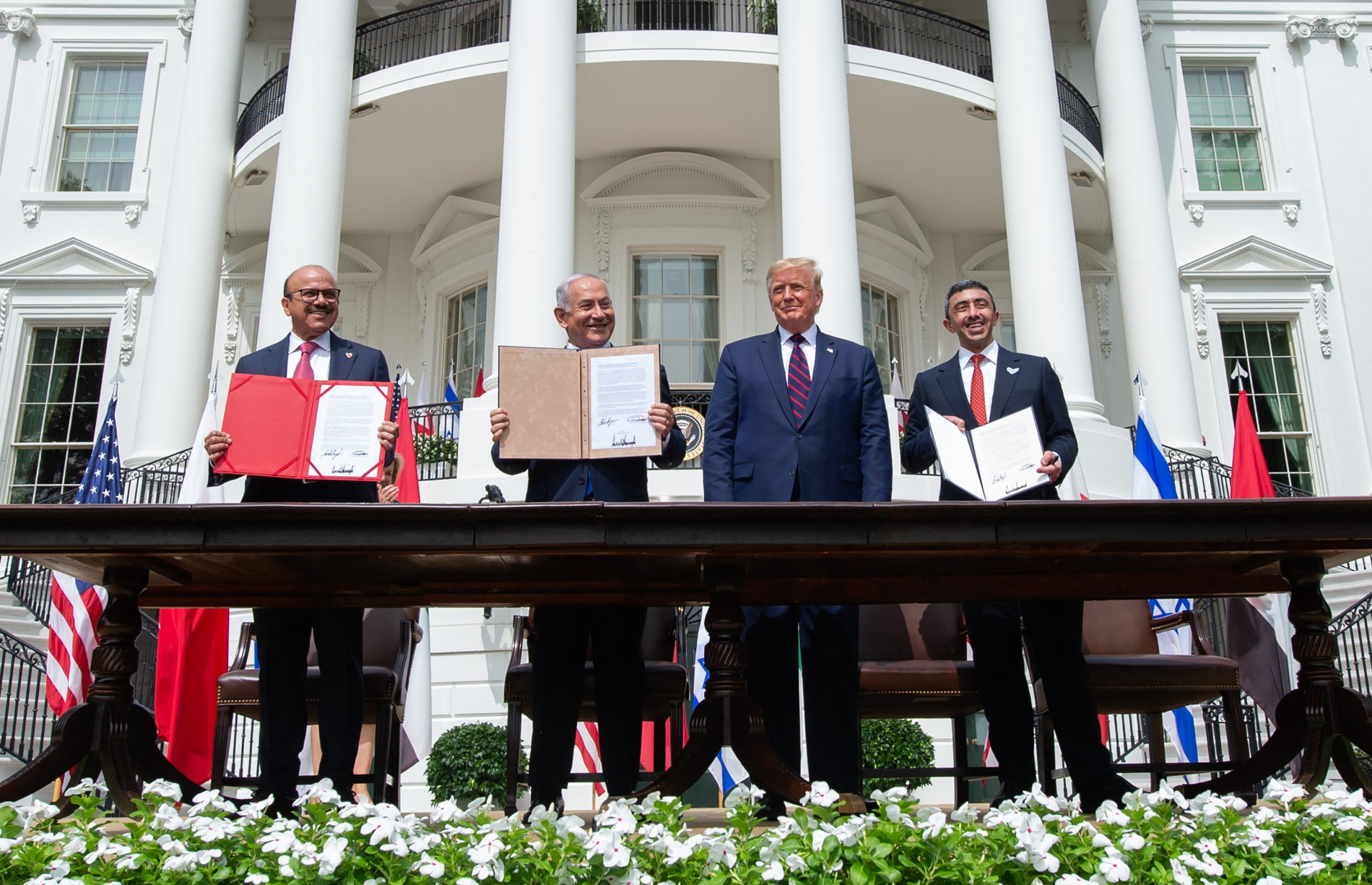
Since the end of the Cold War era, most analysts have treated Iran as the primary threat to Gulf stability, while Israel has been treated by some as a de facto partner against Tehran. The Abraham Accords, signed between Israel, the United Arab Emirates, and Bahrain in 2020, were portrayed in Washington as the foundation of an anti-Iran Arab-Israeli alignment. That was a damaging misreading.
Anwar Gargash, the UAE’s diplomatic adviser and one of the Accords’ Emirati architects, has explained that the Abraham Accords were never designed to be an instrument of confrontation with Iran; their purpose was instead to stabilise and normalise relations with Israel, acknowledging its power and opening up economic, technological, and diplomatic engagement.
(L-R)Bahrain Foreign Minister Abdullatif al-Zayani, Israeli Prime Minister Benjamin Netanyahu, US President Donald Trump, and UAE Foreign Minister Abdullah bin Zayed Al-Nahyan after signing the Abraham Accords on 15 September 2020.
He saw the Accords as pragmatic statecraft—a tool for managing bilateral relationships, not a regional security doctrine. Appending an anti-Iran element to the Accords was an error made by external actors seeking to instrumentalise Arab choices for their own strategic purposes, and even the limited objectives of the Accords framework have been suspended since Israel began levelling Gaza in 2023.
Israel’s military campaign (which later extended to Lebanon, Syria, and Yemen) has inflicted catastrophe in Gaza of historic proportions, showing that Israeli military power directly threatens Arab populations and the stability of Arab governments. When it led to the most intense direct exchange of fire between Israel and Iran in the region’s history, Gulf Cooperation Council (GCC) states found themselves caught in the middle.
Arab states now see both Israel and Iran as the two main security challenges facing their states that must be managed simultaneously. Iran’s attacks on Gulf energy infrastructure are a clear and obvious danger, while Israel’s bombing of much of the Levant, together with its nuclear capability and its lack of restraint owing to American protection, makes the Israeli challenge structural. The idea that Arab states can choose between Israel and Iran is a trap. The only viable posture is one that addresses both threats on Arab terms.
Destructive footprint
Israel’s military operations since October 2023 are not discrete security responses but the cumulative expression of a coherent strategic doctrine, the aims of which include: dismantling any force capable of deterring Israel; establishing buffer zones in other states’ territories; establishing a permanent military presence abroad; and eroding the foundations of any Arab counterbalancing coalition. Taken together, this amounts to Israeli hegemony.
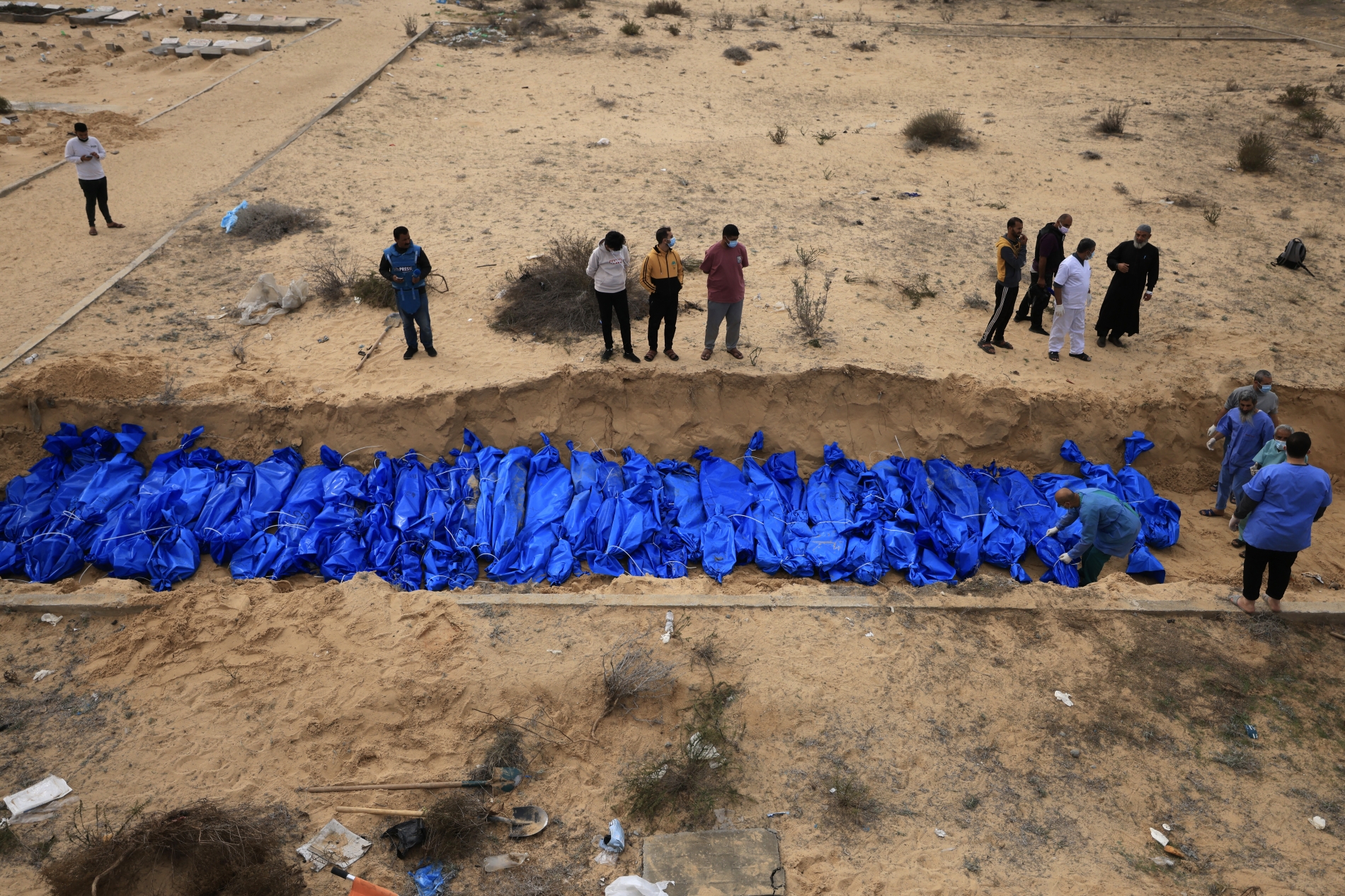
What does that look like in practice? In Gaza, conservative estimates put the death toll at 70,000 Palestinians (mostly civilians) killed by Israel, which the International Court of Justice has deemed a plausible genocide.
Murdered Palestinians are buried in a mass grave in Khan Yunis cemetery, in the southern Gaza Strip, on November 22, 2023, in the early months of Israel's war on Gaza.
In Lebanon, Israel has established five permanent military outposts and killed thousands of Lebanese nationals, including after the ceasefire took effect. In Syria, Israel added six outposts to the 1974 demilitarised zone and attacked the Syrian government inside Syria, treating the departure of former president Bashar al-Assad as a vacancy to be occupied. In Yemen, Israel bombed critical infrastructure.
All this shows Israel’s ability to project power far from home, as did the attempted assassination of a senior Hamas delegation in Qatar, a key American ally, in September 2025. The launch of ballistic missiles against official compounds in the capital, Doha, was the first-ever Israeli strike on a GCC state, and one that was openly celebrated by Israeli leaders (even though the Hamas leaders survived).
Arab strategic autonomy isn't an anti-Western call for defiance; it is the realisation that Arabs should shape their security environment, not just react to it
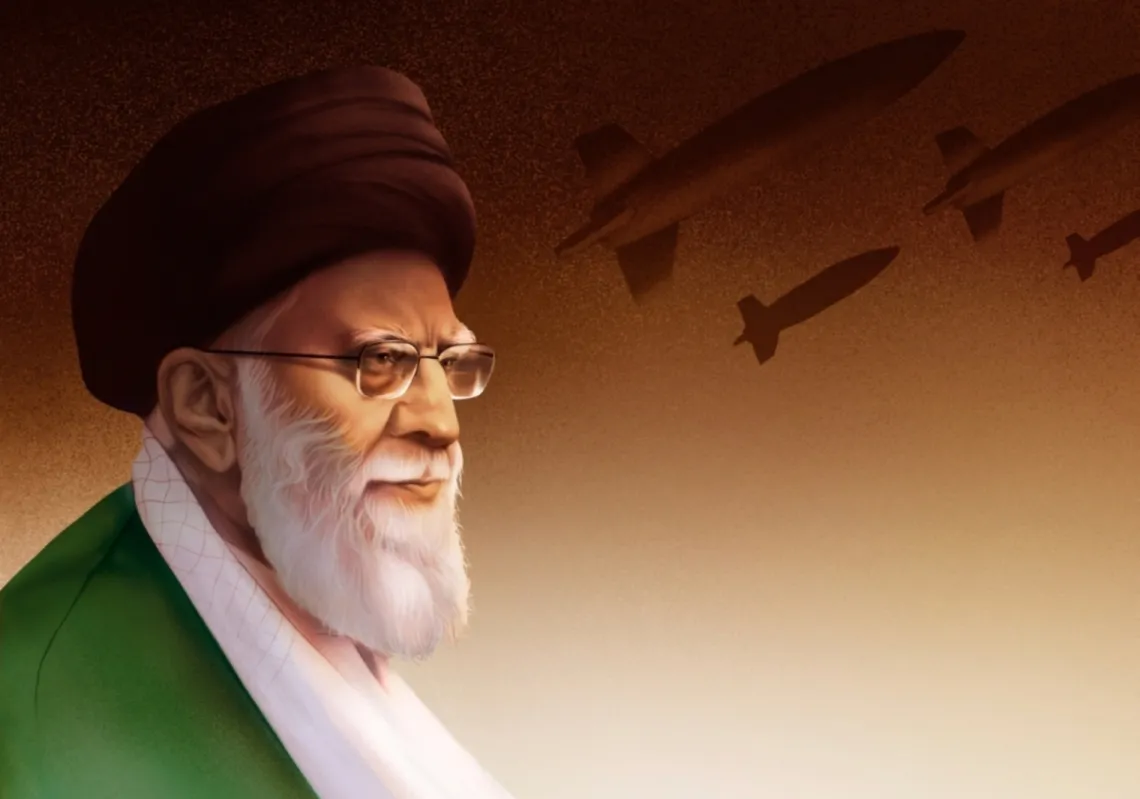
The absence of a categorical collective Arab response sent a critical signal to Israeli decision-makers about the limits of Arab solidarity, and the US-Israeli war against Iran that began in February represents the logical culmination of this. Having spent 12 days attacking Iranian nuclear and military capabilities last year, Israel went after Iran's Supreme Leader Khamenei this time around, as well as the destruction of major military and nuclear facilities, with the explicit objective of regime change.
The end goal is for Israel to usher in a new regional order in which no state can challenge it. This is not the Israel that the Abraham Accords envisioned as a stabilising partner; it is a revisionist hegemon operating beyond any framework of mutual restraint.
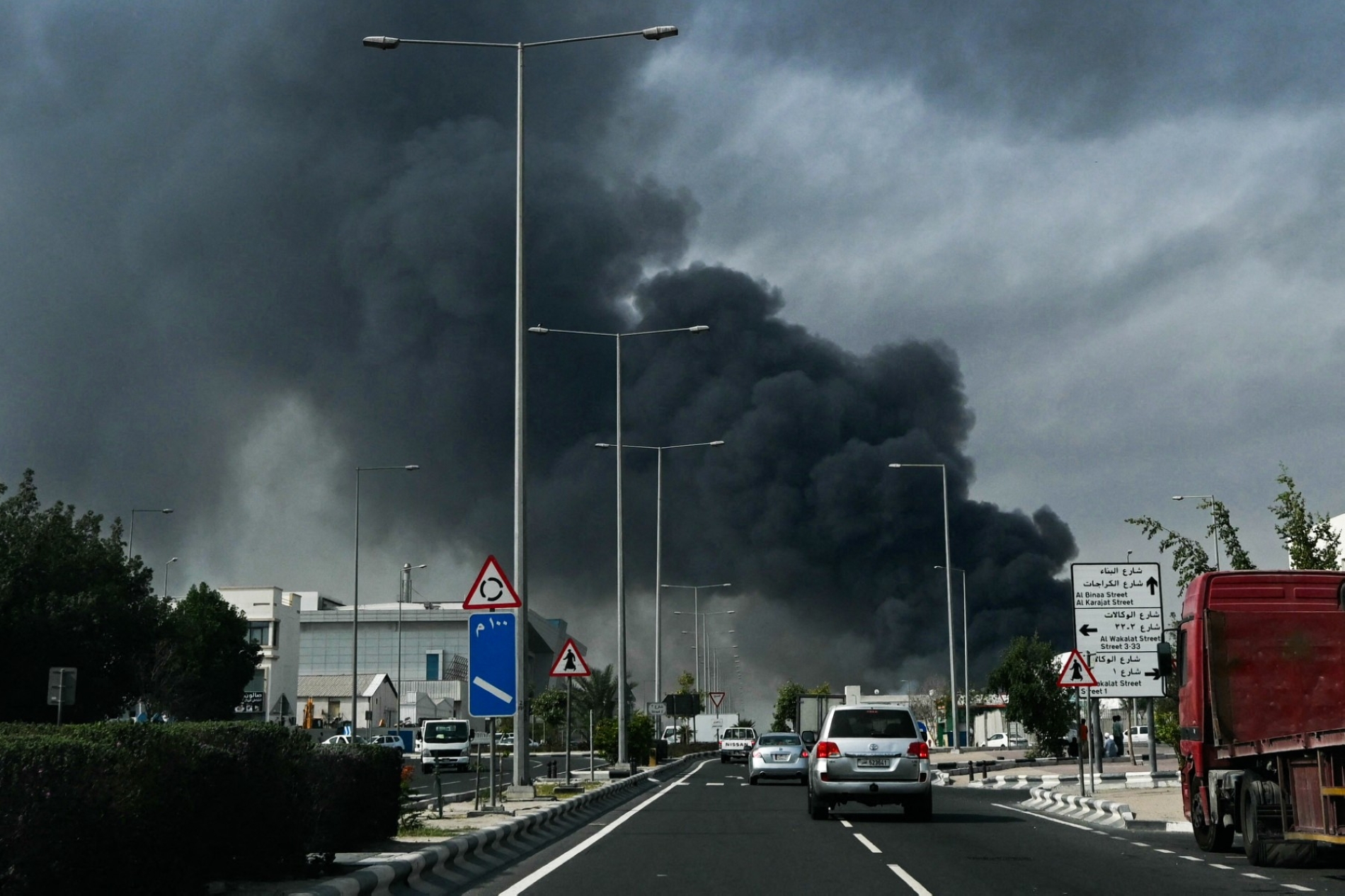
The GCC states' exposure in the current conflict is a direct consequence of their security model, not an accident. US bases in Gulf states enable American power projection, so when Washington and Tel Aviv attacked, Iran retaliated by targeting US bases in Bahrain, Qatar, Kuwait, and the UAE. Airports, energy infrastructure, and civilian population centres near those bases became part of Iran's target set through the geometric logic of counter-force planning—not through hostility to the Arab states themselves.
Motorists drive past a plume of smoke rising from a reported Iranian strike in the industrial district of Doha on 1 March 2026.
Structural problem
The structural problem runs deeper. GCC states spend vast sums on military procurement but are unable to influence the decision over a war in their own neighbourhood. Gulf states reportedly lobbied the US against attacking Iran, whereas Israel lobbied for attacking it. The outcome speaks for itself, showing which side the US will take if it has to choose between the two.
The war has shown that the Abraham Accords are not a security instrument and has vindicated Gargash in highlighting their purpose. Gulf states that normalised relations with Israel and allowed this to be weaponised in the US-Israeli conflict against Iran found themselves drawn into a war on terms entirely outside their control.
The Accords as originally conceived—bilateral normalisation in pursuit of pragmatic coexistence—is a defensible, if contested, choice. The transformation of that framework into a platform for joint military confrontation with Iran was an entirely different project, the costs of which GCC states are now having to absorb. Saudi Arabia, which conditioned any normalisation on genuine progress toward Palestinian statehood, maintained greater strategic coherence than the two signatories: the UAE and Bahrain.
That Saudi position has now become the Arab world's effective collective position. It was Saudi Arabia and Egypt that together authored the September 2025 Arab League Ministerial Council resolution, which laid the doctrinal foundation for the architecture now under construction.
A deeper pathology underlies these specific failures: the systematic decoupling of Gulf security from the broader Arab security order. Since the first Gulf War more than 30 years ago, GCC states have treated the Arabian Peninsula as a discrete problem, separable from the security of Egypt, the Levant, and the Palestinian territories. That strategy has now failed. Gulf security cannot be decoupled from the broader Arab political and military environment, because threats to the Gulf originate outside it.
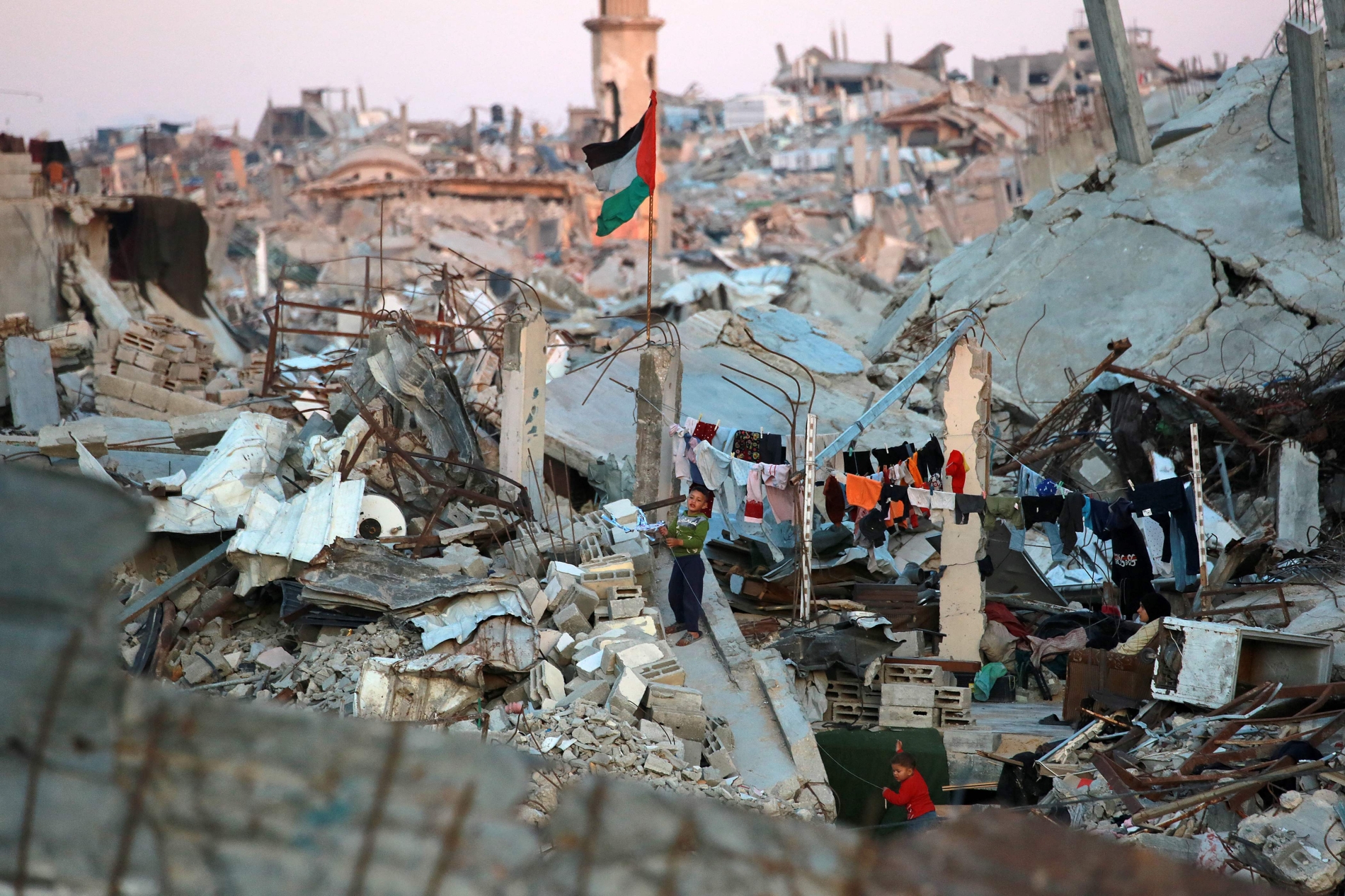
A boy stands by laundry hanging on lines amidst the rubble of collapsed buildings in Jabalia in the northern Gaza Strip on 14 April 2025.
The carnage and destruction of Gaza produced such Arab rage and sympathy that domestic political pressure across every Arab society constrained governments' freedom to manoeuvre and legitimised Iranian retaliatory narratives. Gulf money, deployed in the absence of a coherent political framework, only bought the illusion of security, not its reality. The war in Iran further underscores how Gulf and Arab security cannot be separated.
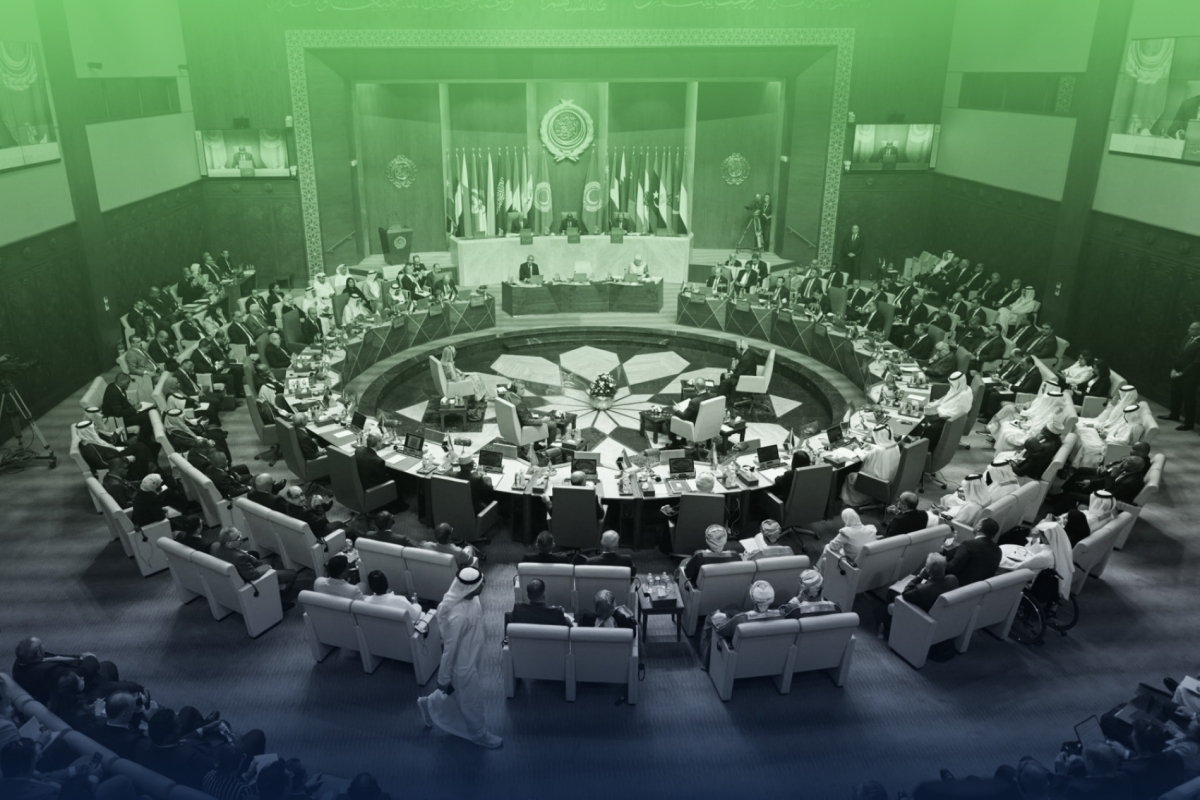
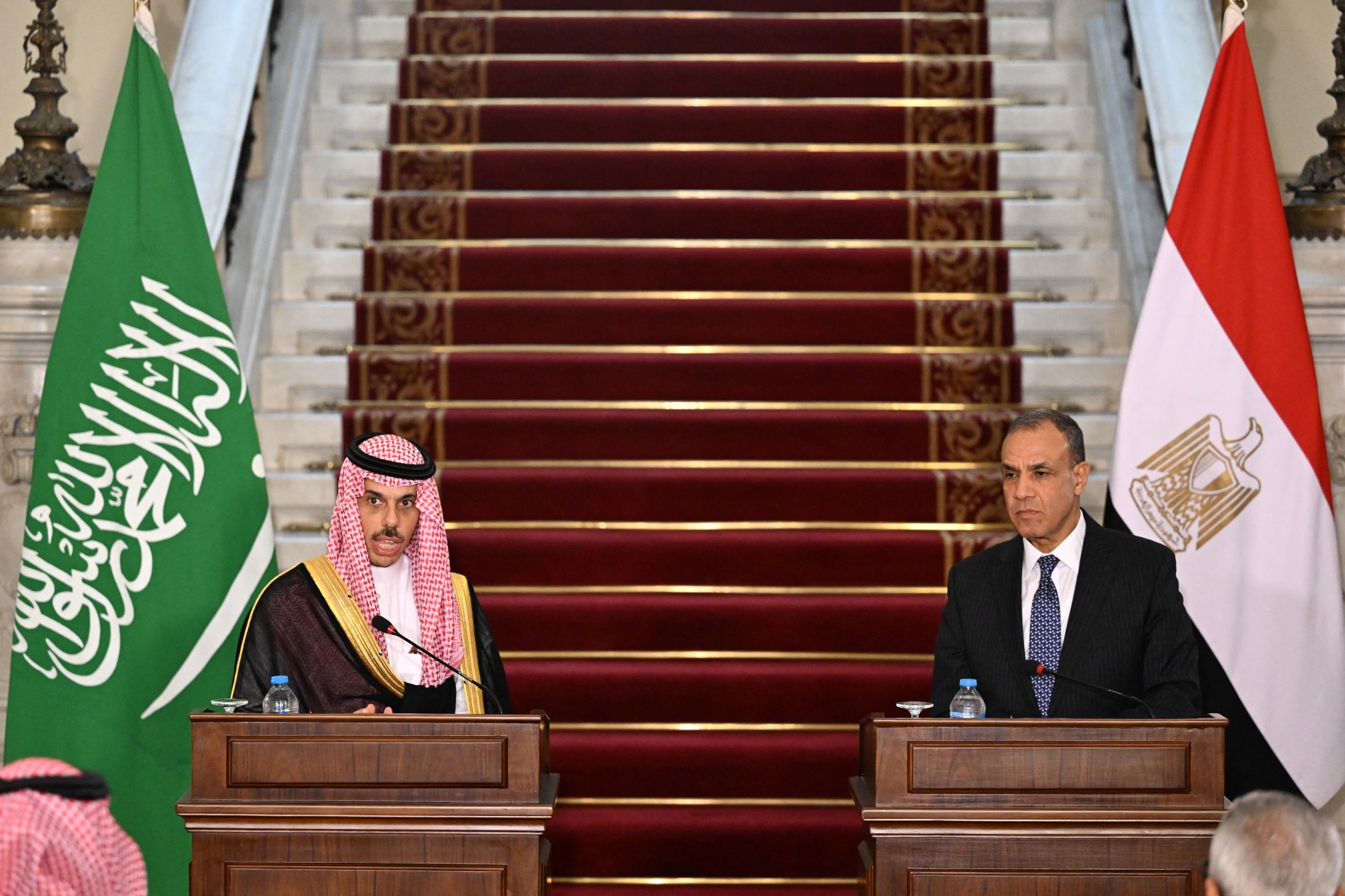
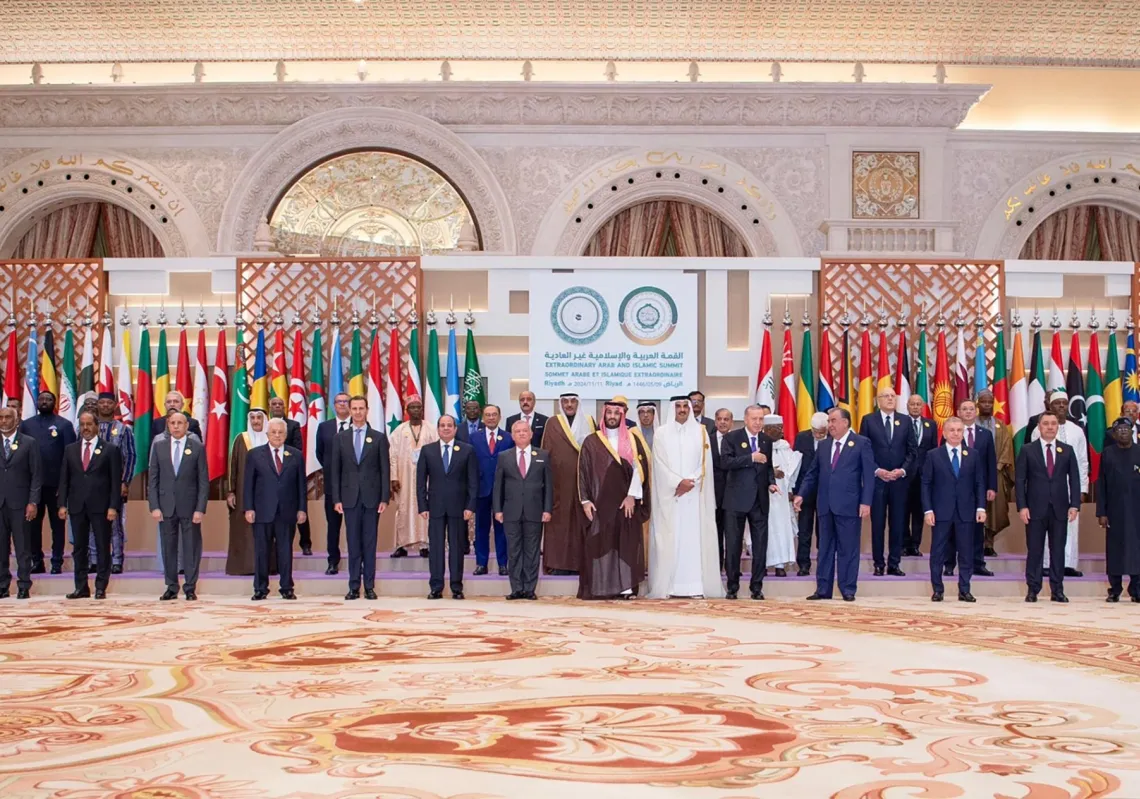
In September 2025, the League of Arab States adopted an Egyptian-Saudi resolution titled Joint Vision for Security and Cooperation in the Region. The joint authorship was its most significant feature—these are the Arab world's two most strategically consequential states. One has the Gulf's biggest financial, energy, and diplomatic levers; the other has military power, a key geographic location, and diplomatic legitimacy. Joint authorship showed that Cairo and Riyadh have a shared strategic vision and have chosen to act in concert.
The Gulf oil for US security paradigm has collapsed under the weight of Israel's war on Gaza, Iran, the wider region
In light of the war, the resolution reads more like a diagnosis and prognosis. It declared, for instance, that regional security can only be achieved collectively, respecting the sovereignty and territorial integrity of all states—a direct rebuttal of Israel's seizure of buffer zones and its denial of Palestinian national rights. It categorically rejected any unilateral security arrangements or the imposition of new facts by force, and it affirmed that Arab states can define any regional security arrangement, rather than have it be defined by others or by circumstance.
The resolution was adopted before the US-Israeli war against Iran, before the Egypt-Türkiye military framework agreement, and before the full scope of Israeli military expansion had become visible. It functions as a strategic prospectus, an articulation of principles that the subsequent crisis has validated at every turn.
Saudi Arabia's Foreign Minister Faisal bin Farhan (L) gives a joint press conference with his Egyptian counterpart Badr Abdelatty (R) at Tahrir Palace in the centre of Cairo on 10 September 2024.
Saudi-Egypt nexus
The foundation of the emerging Arab security architecture is the strategic partnership between Egypt and Saudi Arabia. This is not a partnership of convenience, forged in response to war. Their assets are structurally complementary. Saudi Arabia commands financial, energy, and diplomatic influence across Washington, Beijing, and Moscow. It is building a diversified, investor-friendly economy that can neither be held hostage by Iran nor destabilised by Israel.
Furthermore, Riyadh offers moral clarity on a big issue. Saudi Arabia's conditional approach to normalising relations with Israel—no genuine partnership without a verifiable pathway to Palestinian statehood—is both coherent and far-sighted, preserving Riyadh's freedom of manoeuvre when others have effectively surrendered theirs.
Egypt does not arrive empty-handed. It maintains one of the Arab world's largest militaries and controls the geographic pivot bordering Gaza, Libya, and Sudan, straddling both the Mediterranean and the Red Sea. It carries diplomatic weight both in Arab forums and the wider non-aligned world, and hosts no US bases, so it retains the room to manoeuvre that Gulf states currently lack. This lets Cairo speak credibly to multiple parties simultaneously, which it regards as a strategic asset.
It is their complementarity that makes the Egypt-Saudi initiative so consequential. Their alignment could become the core of a new, much-needed Arab security architecture with genuine operational capacity, harnessing Saudi financial and diplomatic weight with Egyptian military mass and pan-Arab legitimacy.
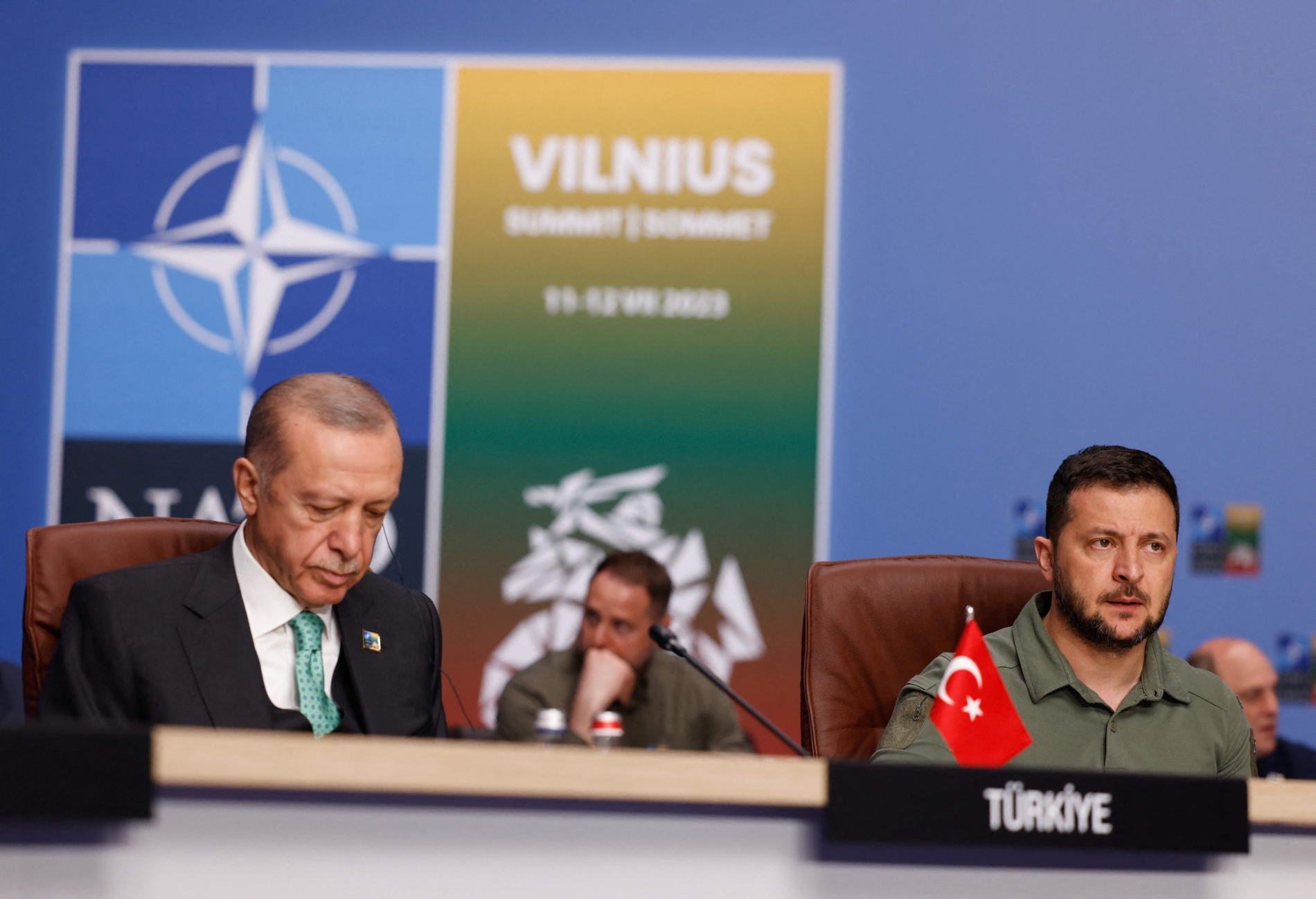
To this, Turkish involvement would offer additional depth. The military framework agreement between Egypt and Türkiye was signed on 4 February 2026. The $350mn defence cooperation package—including joint drone manufacturing, air defence, artillery production, and armoured vehicle development—reflects a convergence around shared opposition to Israeli adventurism and a common commitment to the territorial integrity of Arab states in the Levant and North Africa.
Türkiye's President Recep Tayyip Erdogan (L) and Ukraine's President Volodymyr Zelenskyy attend a meeting of the NATO-Ukraine Council during the Nato Summit in Vilnius on 12 July 2023.
Türkiye's added value is specific, rather than foundational. It offers NATO-standard armed forces (the alliance's second-largest standing military, after the US), a defence-industrial base with operationally validated capabilities across multiple conflict environments, and control of the Bosphorus and the Dardanelles, two critical waterways.
Its conduct during the opening phase of the US-Israeli war against Iran demonstrated the practical value of its alignment. Ankara refused to allow the use of Turkish territory—including Incirlik Air Base—for offensive operations against Iran and publicly condemned the war as against international law, but also called on Iran to exercise restraint. This posture—neither pro-American, nor pro-Iranian—validates the model of strategic independence that the September resolution called on Arab states to assert.
While the Egypt-Saudi axis is the nexus of this new set-up, the Egyptian-Turkish military partnership extends its operational reach beyond the Arab world and opens a relationship with a NATO member state on genuinely equal terms. Together, the three states provide a framework within a broader collective including the Gulf states, Jordan, the Levant and North Africa.
Designing a new era
Arab strategic autonomy is not a call for anti-Western defiance; it is the demand that Arab states be able to shape their own security environment, rather than merely react to it. Around the central axis, then, different components are needed. The first is a reformed collective defence mechanism. Gaza and Iran have set the foundation for collective action.
This convergence must be institutionalised before it dissipates, specifically through Arab League reform that introduces a qualified majority threshold for security decisions, formally integrates sub-regional security arrangements within a League framework, and establishes a permanent Security Council with a standing military staff committee capable of real-time crisis coordination.
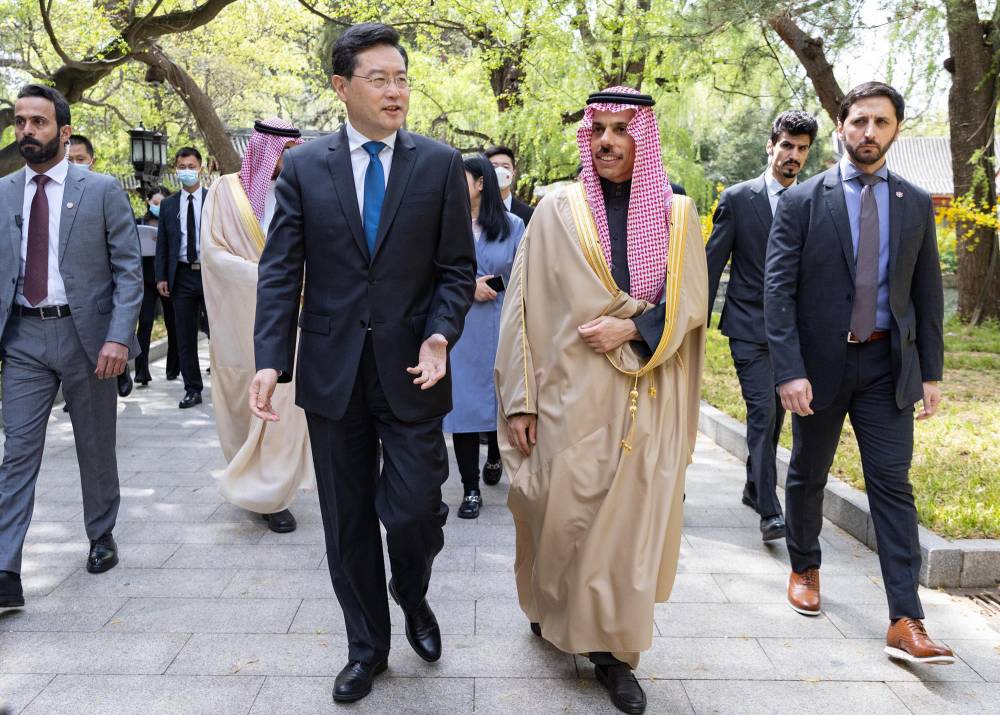
Saudi Foreign Affairs Minister Prince Faisal bin Farhan (C-R) walking alongside former Chinese Foreign Minister Qin Gang (C-L) in Beijing on 6 April 2023.
Diversifying partnerships
Another component is diversified security partnerships. Relations with America should be maintained, but relations with China, Russia, and key European states should be deepened. The goal is not to replace Washington but to eliminate the vulnerability that comes from exclusive dependency. A patron with no competition has no incentive to honour its commitments.
Alongside this, there must be an indigenous defence-industrial capacity. Arab states spend more on defence as a percentage of GDP (gross domestic product) than anywhere else, yet they are still almost entirely reliant on foreign suppliers. Most Gulf weapons systems are bought and organised for integration into US-led operations, not for the autonomous defence of Arab sovereign interests. The Egyptian-Turkish defence cooperation framework is the model that a broader Arab industrial strategy should follow and scale.
Perhaps the most urgent priority is for dedicated critical infrastructure protection. Defending thousands of kilometres of pipelines, offshore platforms, LNG (liquefied natural gas) terminals, and energy processing facilities against a determined asymmetric campaign requires integrated air and missile defence, shared early warning systems, rapid response protocols, and pooled counter-drone and counter-missile capabilities. This cannot be left to ad hoc arrangements or the goodwill of external guarantors.
Iran and Palestine
Like it or not, Iran will remain a critical factor in the region's security, so a structured regional security dialogue that includes Iran will also be important. Iran will have every incentive to undermine any framework that excludes it. Structured engagement, with clear red lines and a mechanism for crisis management, is not appeasement. Wars fought on Gulf energy infrastructure need a political (as well as a military) response.
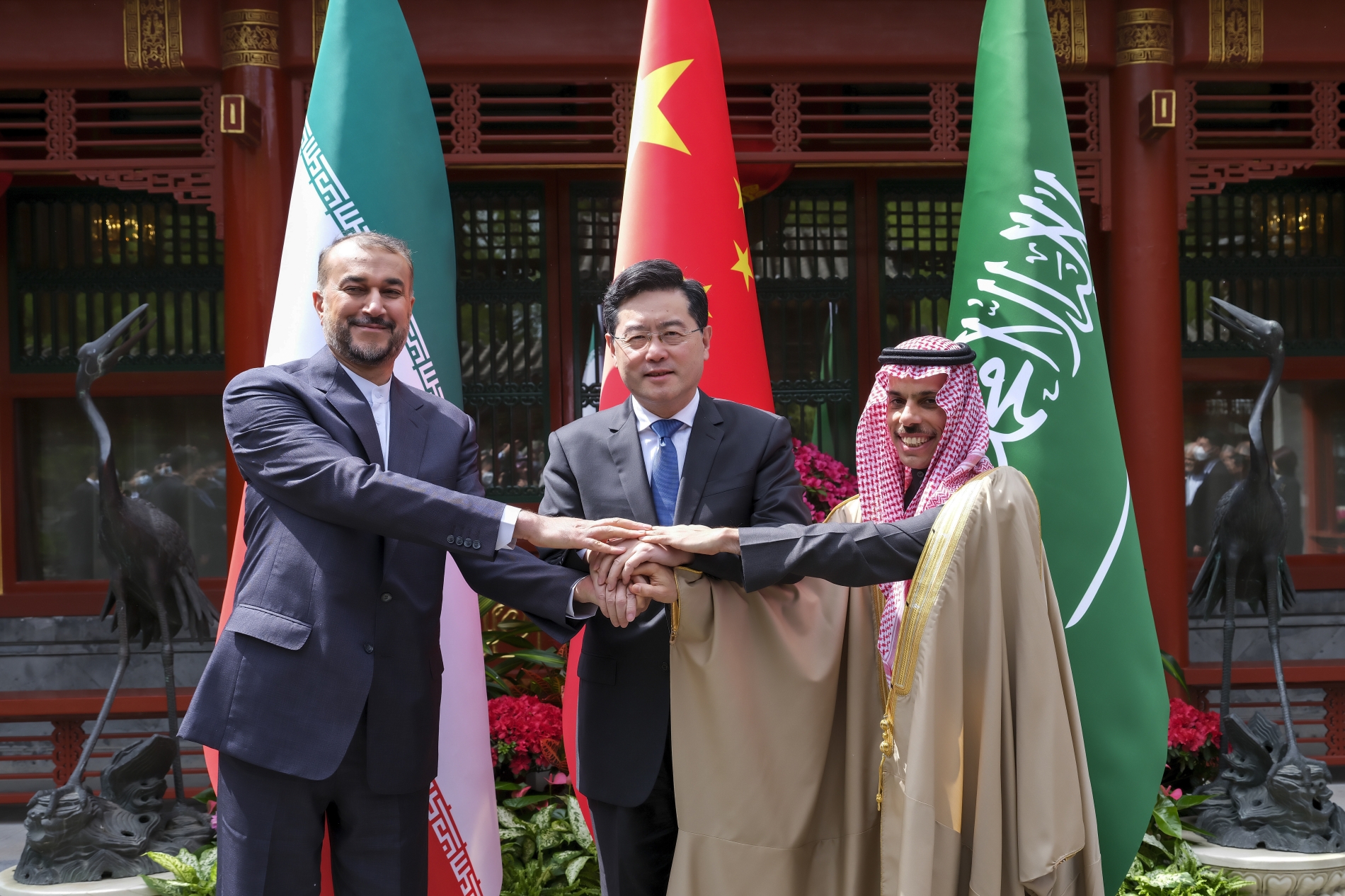
Iranian Foreign Minister Hossein Amir Abdollahian, with his Saudi counterpart Prince Faisal bin Farhan Al Saud, right, and former Chinese counterpart Qin Gang in Beijing on 6 April 2023.
Another important component is a unified Arab diplomatic posture on Palestine, which will remain a strategic liability as long as it remains unresolved. It is the single most powerful instrument available to any actor seeking to radicalise Arab populations, delegitimise Arab governments, and undermine stable regional relationships.
An Arab security architecture without visible progress towards Palestinian statehood will lack both internal legitimacy and external coherence. Saudi Arabia's condition—no normalisation without a verifiable pathway to Palestinian statehood—must be maintained collectively and without exception. This does not foreclose the kind of pragmatic bilateral relationship management that the Abraham Accords originally represented in their more limited conception; it merely insists that such arrangements cannot substitute a genuine resolution of the Palestinian question.
To succeed, an Arab security alliance must encompass military, political, legal, and economic dimensions. For instance, it must be able to deter Israel militarily, insist on genuine Arab consultative rights over operations launched from Arab territory, and be represented at every relevant international forum. It ought not to exclude any regional actor, since a stable Middle East will ultimately require the participation of all.
Whether Israel can be included will depend on its posture. If Tel Aviv remains intent on maintaining military hegemony and denying Palestinians a viable sovereign state, integration into a collective regional order will be difficult. If, however, it were to accept the creation of a viable Palestinian state and abandon its pursuit of regional dominance, it would be well-positioned to join.
Palestinian children play in Umm Safa village, north of Ramallah in the occupied West Bank, opposite an Israeli flag that was raised on a hilltop overlooking the village on 16 February 2026.
In summary, the Arab League's September 2025 resolution—jointly authored by Egypt and Saudi Arabia—constituted the most substantive collective Arab statement on regional security doctrine since the 1970s, and the Egyptian-Turkish military framework agreement, together with deepening relations between Ankara and Riyadh, represent the first structural elements of Arab security autonomy. This will be Arab in its decision-making, Arab in its institutional form, and Arab in the interests it serves.
Abandoning exceptionalism
Critical to success is abandoning Gulf exceptionalism. The idea that the Arabian Peninsula's security can be managed in isolation from the rest of the Arab world has been conclusively disproven. The Gulf states are no more secure for having stood apart from the Arab collective. Rather, they are less secure, more exposed, and more constrained.
Their reintegration into a pan-Arab security architecture, in which their financial resources are brought to bear on behalf of collectively defined Arab interests, would translate the September resolution into a durable strategic reality. Combining money, military, and diplomatic legitimacy is a potentially powerful combination.
While the Egypt-Saudi axis is key to the new set-up, partnering with Türkiye gives it more reach by opening a relationship with a NATO member state
Historical caution is warranted. The Arab world has previously converged, only to dissolve once the immediate pressure has lifted, retreating back into the familiar patterns of great-power clientelism and inter-Arab competition. Even today, the Saudi economic transformation relies on American technology and investment, likewise Egypt's military. For this reason, Arab security autonomy is a walk, not a run.
Egypt and Saudi Arabia made the case together in September 2025: true collective security, integration rather than fragmentation, connecting Gulf wealth to Arab strategic depth, and treating Palestinian sovereignty as a cornerstone, not a casualty. It will take years, if not decades, but it is necessary—and will remain so. As such, it needs to begin somewhere.