An Arab vision for regional security

From dependency to strategic agency

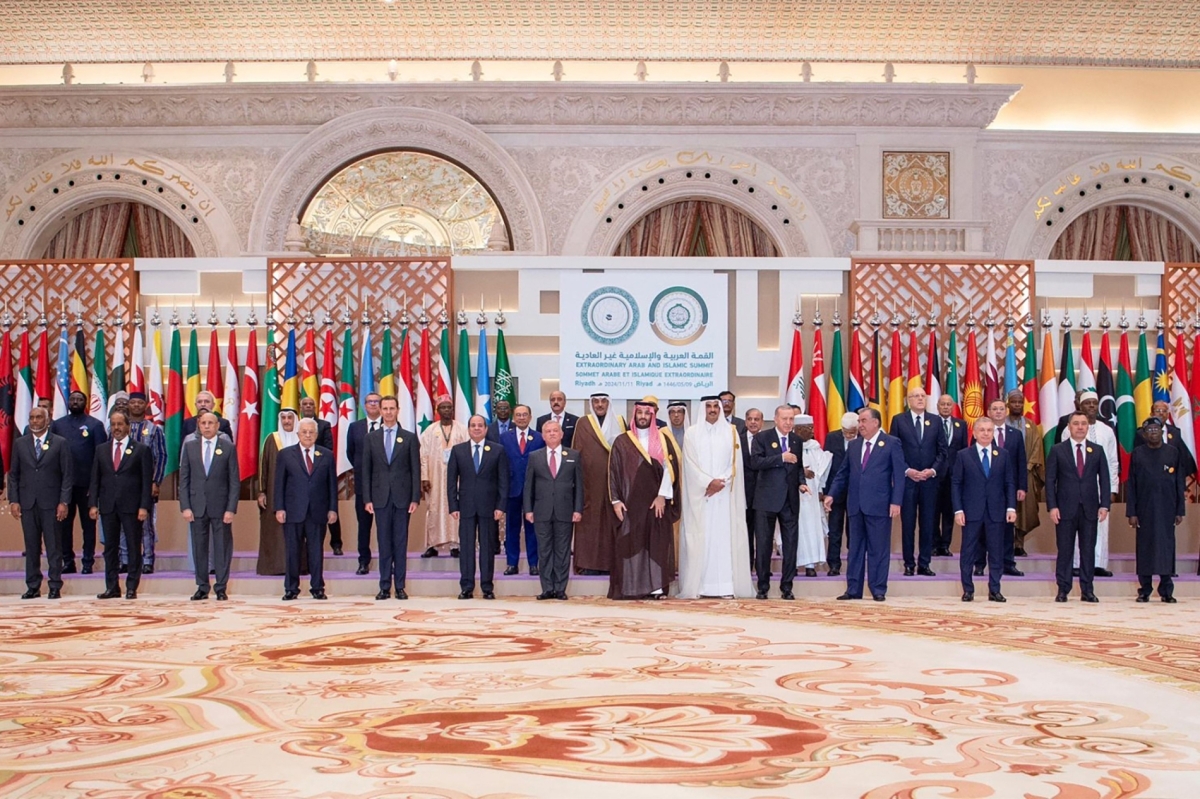
The Arab Summit and the Organisation of Islamic Cooperation in Riyadh on 11 November 2024.
SPA
The Arab Summit and the Organisation of Islamic Cooperation in Riyadh on 11 November 2024.

An Arab vision for regional security

The Middle East is used to conflict, but the current moment is fundamentally different. Wars overlap, alliances are in flux, and long-standing assumptions about external protection and the regional order are eroding. For the Arab world, this is not simply another phase of instability; it is a strategic inflection point.

A basic question now confronts Arab states: will they continue to operate within a regional system shaped by others, or will they begin to shape their own security environment? The question cannot be deferred any longer. The costs of fragmentation have risen sharply, and the region’s vulnerability today stems less from a shortage of power than from a shortage of collective vision.

After decades of foreign intervention, internal conflict, and institutional decay, the Arab world has a choice: continue with division and dependency, or articulate a coherent regional security framework that restores Arab agency. The war in Gaza, Israel’s expanding regional footprint, and the reduced engagement of the United States expose the fragility of the existing order.

Increasingly, the West seems selective in its application of international law and inconsistent in its defence of civilian protection and sovereignty. This has not gone unnoticed. Double standards undermine the credibility of the very system meant to uphold stability. For Arab states, it underscores a hard truth: reliance on external guardians is no longer strategically viable, nor politically sustainable. Despite its devastating human toll, Gaza may have catalysed a strategic reckoning that may yet redefine Arab thinking about security, sovereignty, and responsibility.

For much of the past three decades, Middle East security has been conceived primarily through an external lens. The 2003 US invasion of Iraq and subsequent military interventions were all premised on the belief that political realities could be reshaped by military superiority, but the invasion dismantled state institutions and unleashed sectarian dynamics whose consequences still reverberate.

The Arab uprisings of 2011 resulted from popular discontent, but rather than usher in democratic transformation, the grievance-led uprisings often produced state collapse, civil wars, and power vacuums exploited by extremists and regional rivals.

What compounded these failures was the widening gap between Western rhetoric and practice. Calls for a rules-based international order increasingly coexisted with selective enforcement, particularly in the Middle East. As Canadian Prime Minister Mark Carney acknowledged at Davos this year, Western credibility has been undermined by double standards in the application of international law and the protection of civilians.

Mask off moment

This was not just symbolic. It confirmed the erosion of Western normative authority as structural rather than episodic. For Arab states, this has sharpened awareness that security frameworks anchored primarily in external legitimacy are inherently brittle. These developments have therefore profoundly weakened Arab collective action. The Arab League, for instance, has lost relevance as individual states prioritised bilateral security arrangements with external powers.

States’ strategic approaches diverged. Some relied on US security guarantees, others chose Russia or China. A few sought to position themselves as ‘regional brokers.’ The result was fragmentation and strategic incoherence, leaving the Arab world to react to crises, rather than shape their outcomes.
The Gaza war, Israel's expanding regional footprint, and the reduced US engagement in the region expose the fragility of the existing order

Both the 2022 and 2026 US National Security Strategy documents detail Washington's pivot toward great-power competition with China and Russia. The Middle East, while still important, is no longer central. This should offer Arab states greater theoretical autonomy, while also exposing the risks of continued dependence. Without a collective framework, the region risks becoming an arena for external rivalry, rather than an actor with defined interests.

Flawed model

For decades, regional security rested on a flawed model of external guarantees, military deterrence detached from political settlement, and the assumption that Arab divisions could be managed indefinitely. This model did not resolve conflicts; it merely postponed them. Israel's overwhelming military superiority, with Western backing, fostered unilateralism and the belief that force could replace diplomacy. 

Omar AL-QATTAA / AFP
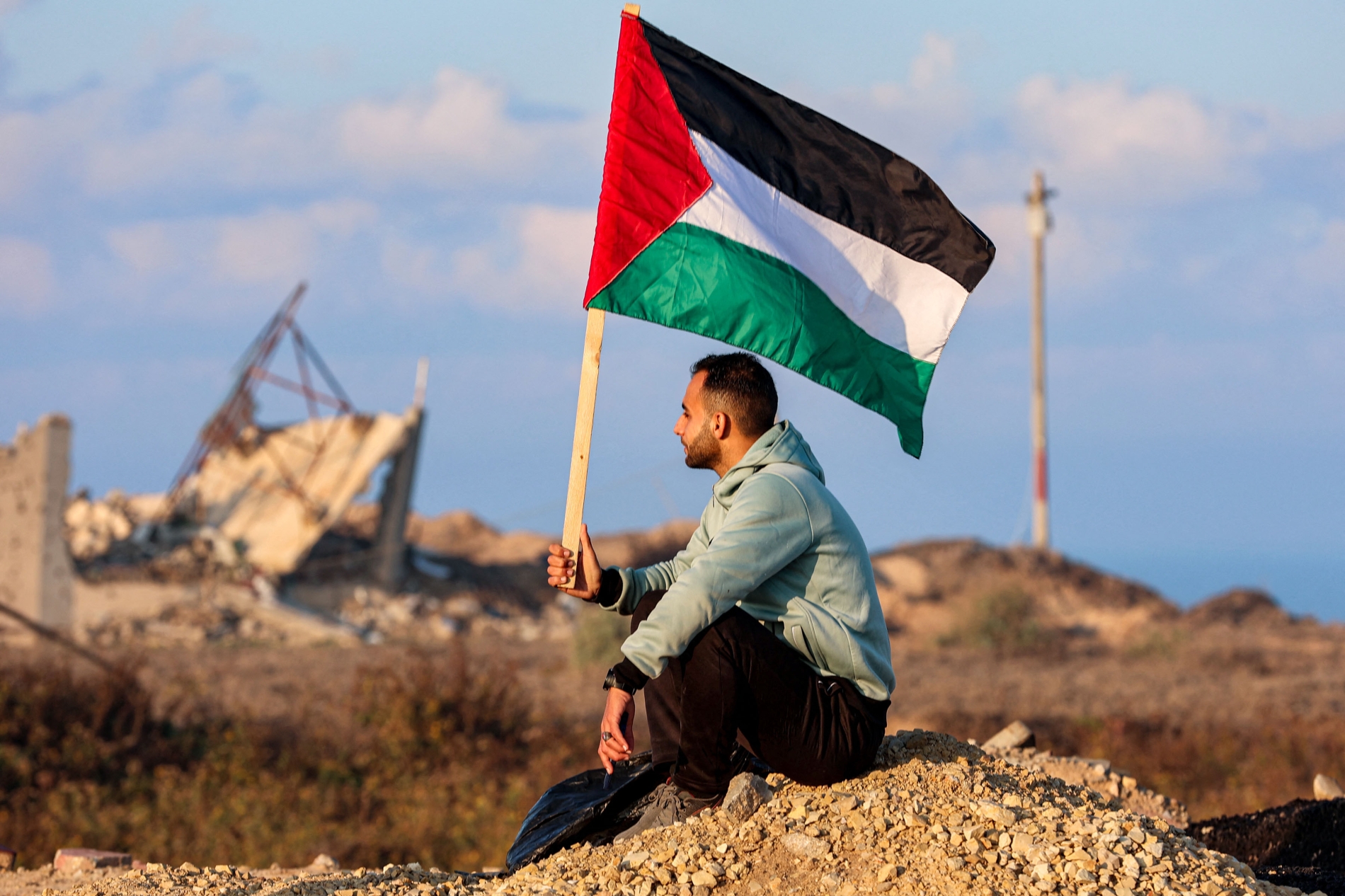
A man raises the Palestinian flag as he watches the return of displaced people to northern Gaza via the Netzarim Corridor.

Palestinians were marginalised, treated as an inconvenient complication rather than a core political issue. Arab states pursued narrow national arrangements at the expense of a collective strategy. This hollowed out Arab influence, allowing non-Arab actors to define the rules. International law gave way to power, consensus to coercion.

Today, that model is visibly collapsing, accelerated by the weakening of the normative order that once accompanied Western power. As Carney conceded, when rules are applied selectively, they cease to function as rules and become instruments of power. In the Middle East, this translates into conditions fundamentally incompatible with long-term stability.

The war in Gaza has exposed Israel's true intention: hegemony over the Middle East. Yet it has also produced strategic clarity, shattering the illusion that the Palestinian question can be indefinitely sidelined without consequence. The scale of civilian suffering has generated unprecedented public pressure, forcing Arab governments to confront the inadequacy of a bankrupt approach that treated Palestinian rights as negotiable and accepted normalisation with Israel without political resolution.

At the same time, Gaza revealed the potential for Arab coordination. The Arab-Islamic Summit, convened in response to the war, while limited in effect, marked a significant diplomatic mobilisation around shared principles, particularly the revival of a credible two-state solution. Arab diplomacy over Gaza also became more assertive, grounded in international law and UN resolutions rather than passive alignment with the West.

The shift was reinforced by the growing recognition—including in Western capitals—that selective adherence to international laws, norms, and UN resolutions has eroded their effectiveness and authority. It also reflects a growing recognition that Arab states command substantial diplomatic, economic, and soft-power resources which, when coordinated, can influence events and constrain destabilising behaviour. The lesson is clear: disengagement no longer buys stability; it merely defers confrontation.

MAHMOUD ZAYYAT / AFP
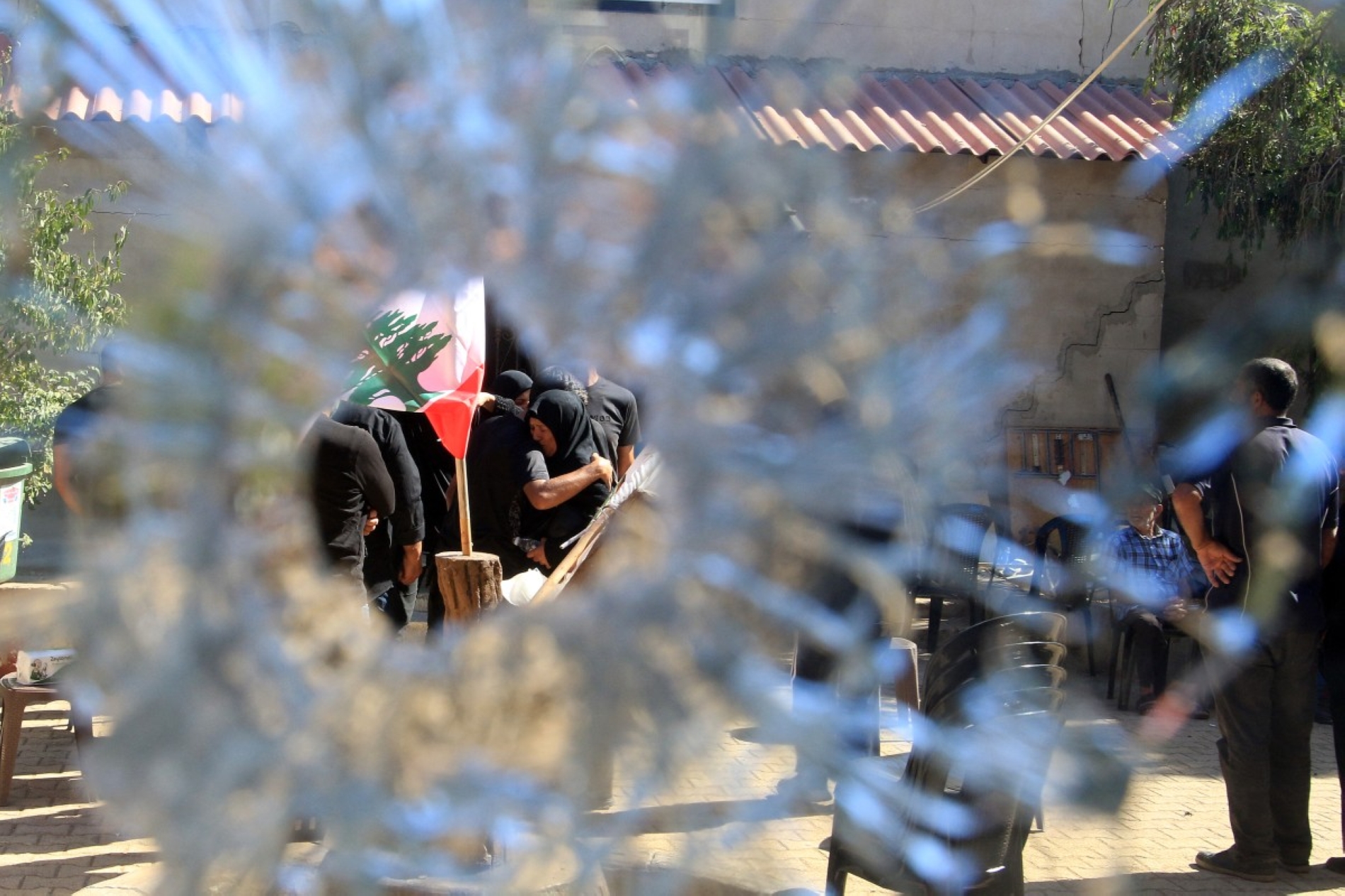
People gather outside the municipality building in the southern Lebanese border village of Blida in the aftermath of an Israeli army raid on the village, on 30 October 2025.

Hegemonic designs

From an Arab perspective, Israel's conduct in Gaza, Syria, Lebanon, and the occupied Palestinian territories reflects a broader regional strategy: military freedom of action without reciprocal obligations, normalisation without political compromise, and integration without acceptance of Palestinian sovereignty or equality.

Israel's intervention in Syria and Lebanon is now routine, its rejection of a viable Palestinian state is now explicit, and its territorial advances beyond the Golan Heights show how its ambitions extend beyond immediate self-defence. Arab engagement with Israel, where it exists, cannot be insulated from this broader behaviour, nor can Arab states accept a regional order in which international law is selectively applied, and Arab lives are treated as expendable.

A sustainable security framework requires political horizons, mutual restraint, and respect for sovereignty. Furthermore, countering Israeli unilateralism does not require military parity. A coherent Arab framework that coordinates diplomatic positions, leverages economic relationships, and sustains international legal pressure can raise the costs of aggression and constrain destabilising actions.

Gaza may have catalysed a strategic reckoning that may yet redefine Arab thinking about security, sovereignty, and responsibility

Iran remains a challenge to Arab security, but the nature of that challenge has shifted. Tehran has gained regional influence less through its own strength than through Arab fragmentation and prolonged conflicts. The degradation of Iran's proxy network has exposed the fragility of its forward-defence doctrine.

The core lesson here is that unresolved Arab conflicts invite external intervention. A coherent Arab strategy focused on restoring the state's authority, resolving conflicts, and advancing collective security would do more to limit Iranian influence than confrontation.

In parallel, Türkiye represents both a challenge and an opportunity. Its military capabilities, defence industry, and geopolitical positioning could contribute to regional stability if embedded in a cooperative framework grounded in sovereignty, transparency, and reciprocity. Arab engagement with non-Arab regional powers like Türkiye must therefore move from reactive diplomacy toward rule-setting interaction. 

AFP
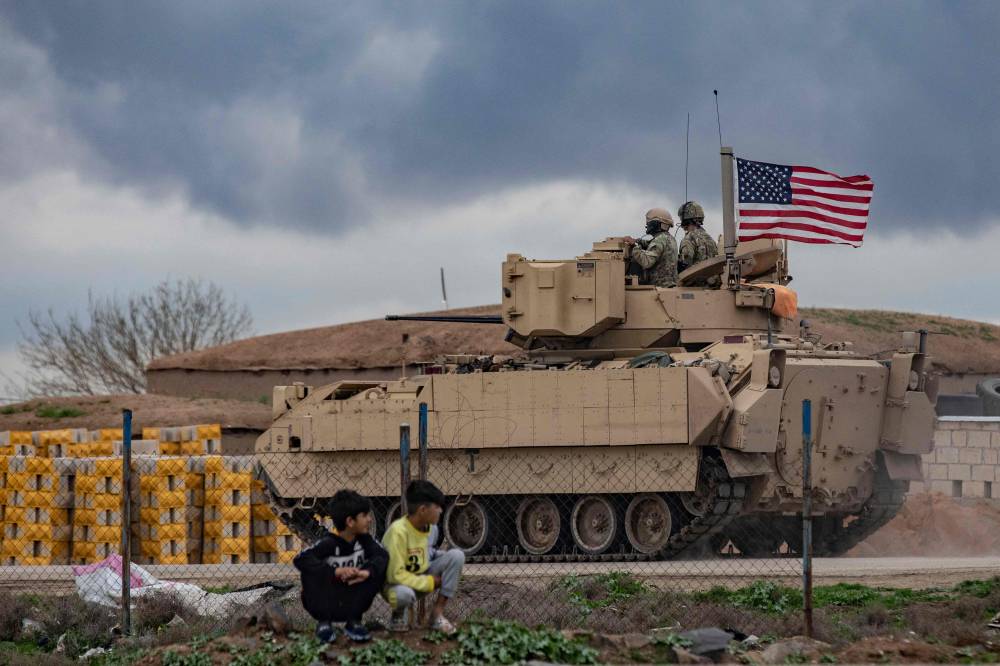
A US armoured vehicle on the outskirts of the town of Rumaylan in the northeastern Syrian province of Hasakah, bordering Türkiye, on 27 March 2023.

Sobering reality

One of the most consequential shifts shaping today's Middle East is the steady decline of the region's priority in US strategic thinking. Washington remains engaged but increasingly reluctant to invest the political capital required for regional stabilisation. Russia's capacity is constrained by Ukraine, while China's focus remains economic.

For Arab states, this reality is sobering. Dependence on external guarantees is no longer sufficient. Multipolarity offers opportunities only to those who act collectively. Individually, Arab states have limited leverage; together, they can be a significant force. A credible Arab security framework is possible, but it means moving beyond principles to implementation. Past failures did not flow from flawed diagnosis, but from weak execution and the desire to avoid difficult trade-offs.

Success requires flexible coalitions and renewed regional institutions able to coordinate. It should begin with a core group willing to lead—full consensus has too often produced paralysis. A smaller coalition—anchored by key Gulf states, plus Egypt, and Jordan—could then gradually expand. Initial efforts should focus on areas of defence where interests already converge, such as maritime security, protection of critical infrastructure, air-defence, and counter-drone capabilities.

Demonstrating tangible gains in these areas would build trust and establish habits of cooperation. Thereafter, Arab diplomacy must become synchronised and sustained, rather than episodic. A standing coordination mechanism is needed to align positions in international forums, engage major powers, and respond collectively to crises.

Iraqi Prime Minister Media Office/  REUTERS
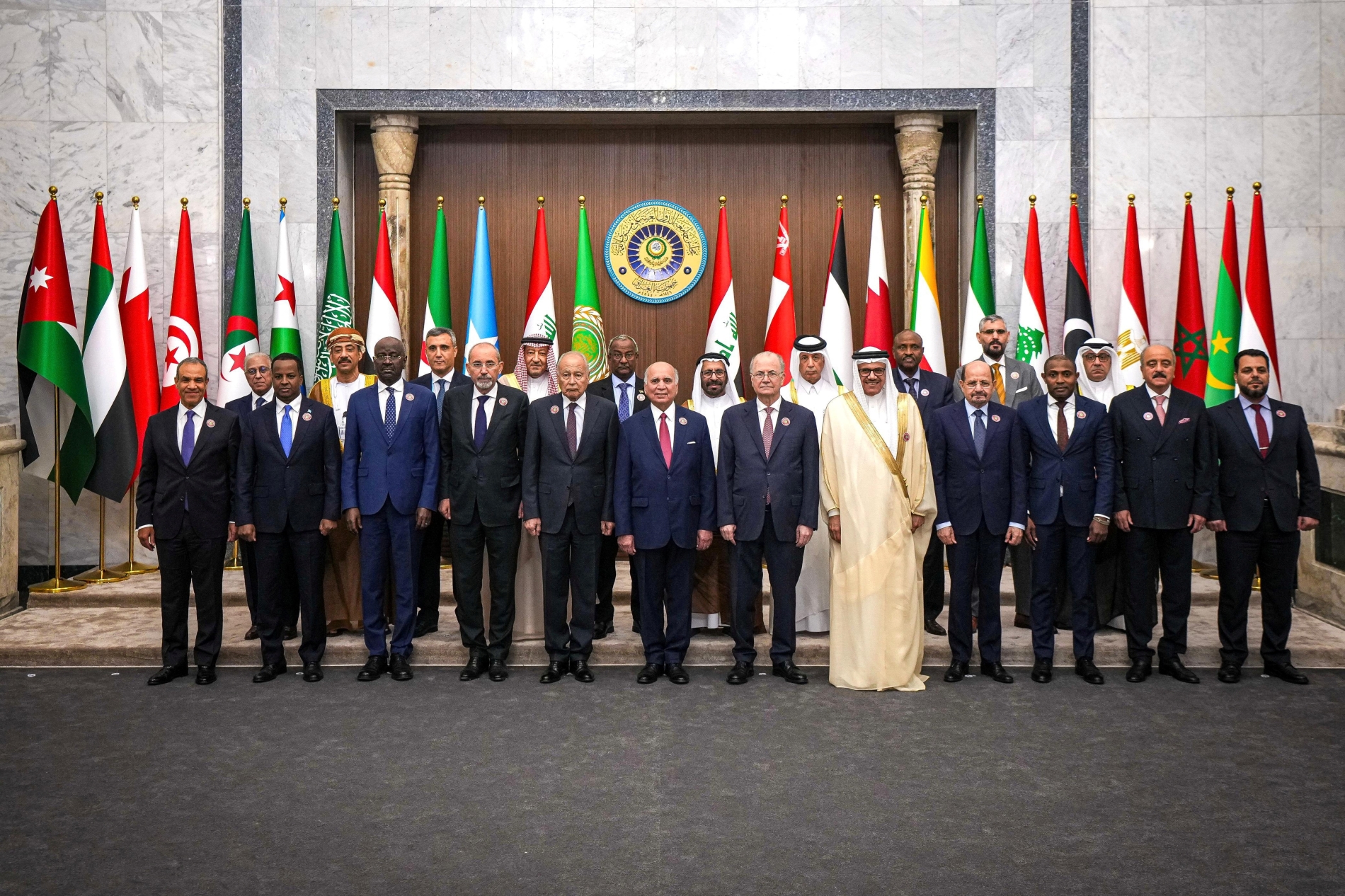
Iraqi Foreign Minister Fuad Hussein poses for a group photo with his counterparts from Arab League member states during a preparatory meeting ahead of the 34th Arab League Summit, in Baghdad, Iraq on May 15, 2025.

A reformed Arab League 

In this context, a reformed Arab League plays a pivotal role, serving as a permanent forum for agreeing on rules, actions, and monitoring mechanisms. Historically marginalised and institutionally weak, it would give Arab cooperation both legitimacy and practical effect. Coordinated diplomacy, reinforced by calibrated economic and political signalling, would significantly amplify Arab leverage.

Alongside this, the Palestinian cause must be repositioned as a regional security priority, rather than a symbolic cause. Arab engagement with Israel—whether through normalisation, economic cooperation, or regional integration—should be explicitly linked to measurable political commitments, including halting settlement expansion and building towards a Palestinian state. This is not confrontation; it is strategic coherence. Without it, no regional security architecture will command legitimacy or endurance.

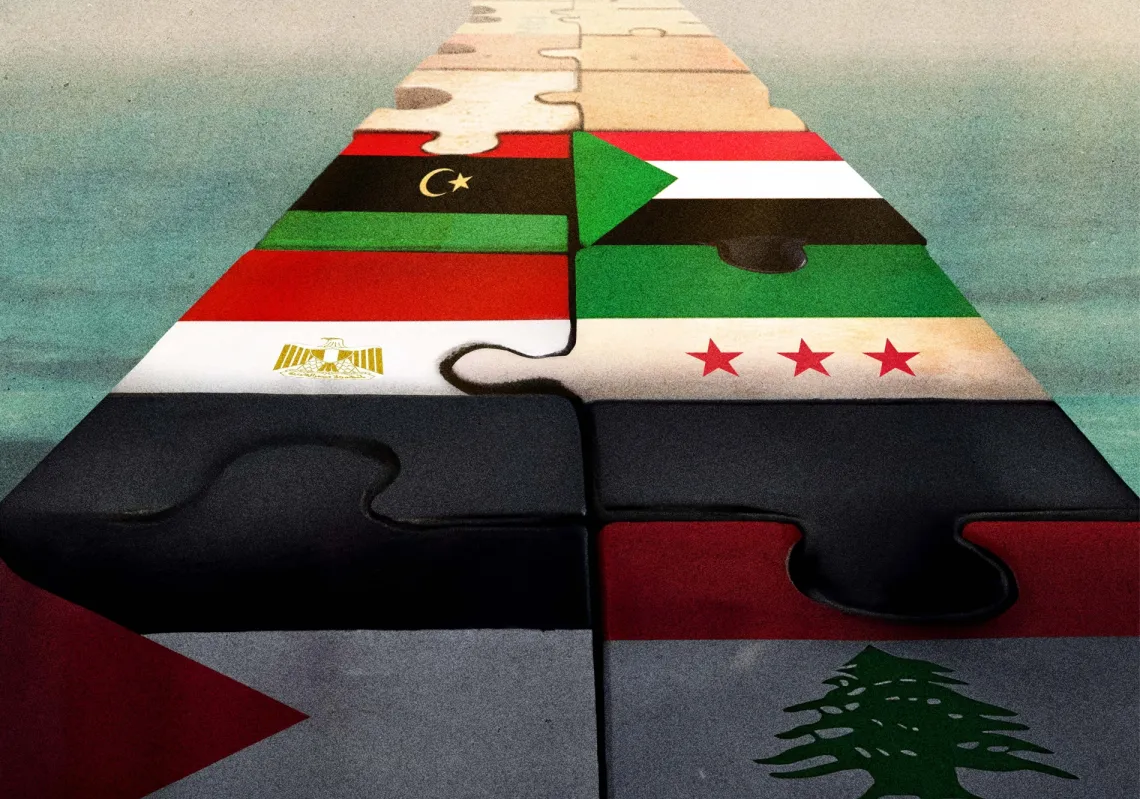
Together and as one, Arab states must likewise invest in conflict de-escalation and state restoration in places like Sudan, Libya, Yemen, Syria, and Lebanon, where structural vulnerabilities invite external intervention and perpetuate instability. Unified mediation efforts, targeted financial assistance, and collective pressure on local actors and their external patrons can gradually reduce fragmentation.

AFP
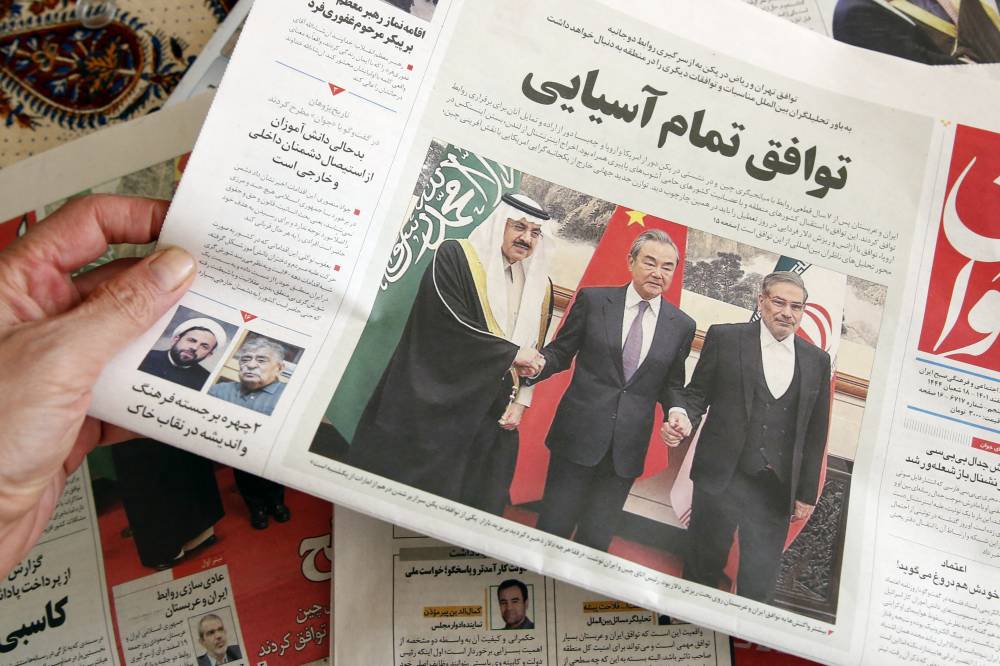
A man in Tehran holds a local newspaper reporting on its front page the China-brokered deal between Iran and Saudi Arabia to restore ties, signed in Beijing the previous day, on 11 March 2023.

Constructive engagement

In parallel, constructive engagement with both Iran and Türkiye is essential. Engagement with Iran must be conditional, reciprocal, and preferably multilateral. Dialogue must rest on respect for sovereignty, non-interference, and the primacy of state institutions. Multilateral frameworks can reduce asymmetries and limit divide-and-rule dynamics, while clarifying expectations and red lines.

For Arab states, the strategic task is to engage Türkiye not reactively but proactively, shaping incentives, norms, and institutions that channel Ankara's ambitions into a cooperative regional order. If anchored in sovereignty, mutual respect, and inclusivity, Arab-Turkish cooperation can strengthen an emerging Middle East security architecture.

Security cooperation must extend beyond military domains. Climate stress, food insecurity, water scarcity, and energy transition are now central drivers of instability. Joint resilience initiatives and deeper economic integration—such as through shared energy grids, transport corridors, and trade facilitation—can raise the costs of conflict while strengthening regional bargaining power with external partners.

The Arab world is often described as 'at a crossroads.' This moment demands choice, not passivity. Arabs can continue adapting to arrangements shaped by others, or they can undertake the difficult work of constructing a regional security order grounded in collective responsibility and political solutions. The horrors of Gaza, the erosion of regional norms, and the shifting global balance of power have made one reality unmistakable: the old order has collapsed. What replaces it will depend on whether Arabs choose agency over accommodation.

font change