How war in Iran is impacting Armenia and Azerbaijan

If the Islamic Republic were to fall, there would be different implications for both Caucasus countries. Decision-makers in Baku and Yerevan have much to ponder.

Al Majalla

How war in Iran is impacting Armenia and Azerbaijan

The launch of US-Israeli airstrikes against Iran on 28 February led to a response by the Islamic Republic that has drawn in more than a dozen countries. Less than a week into the conflict, Azerbaijan became one of them. Iran and Azerbaijan share a border, and Azerbaijan has good relations with the Israelis.

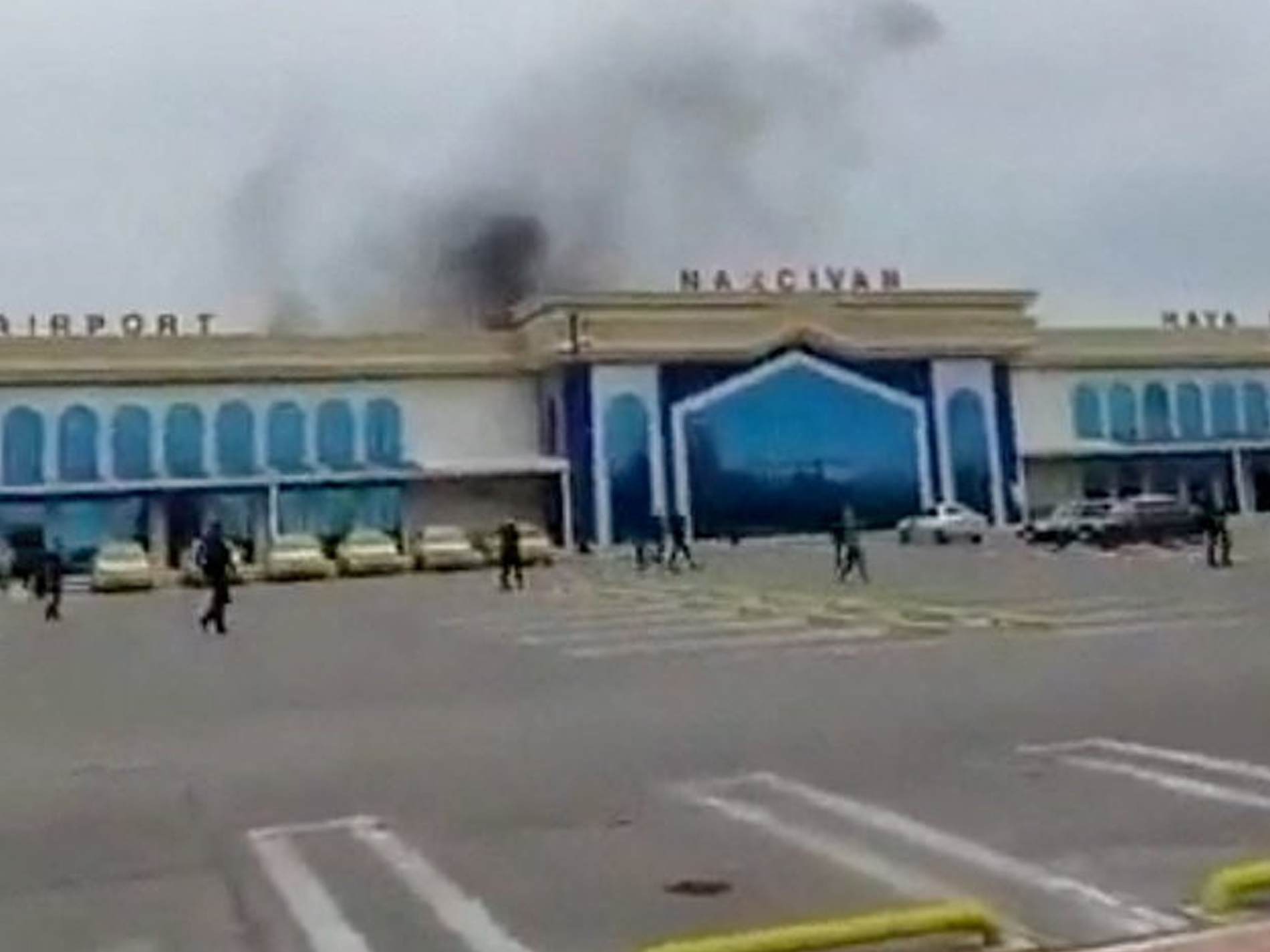
In the early days of the war, Azerbaijan aimed for neutrality, offering condolences to the Iranian people regarding the death of their Supreme Leader but not condemning the airstrikes. On 5 March, however, the media reported that at least three drones had entered Azerbaijani airspace over the exclave of Nakhchivan. One was downed, another hit the airport terminal, and a third exploded near a school, injuring civilians.

Iran called it a “false flag” operation by Israel, designed to draw Baku into the war. Azerbaijan President Ilham Aliyev was outraged, calling it an “act of terror,” withdrawing diplomatic staff from Azerbaijan’s embassy and consulate in Iran, and mobilising the army to prepare for a “military operation”.

He called Iranian forces “ugly, cowardly, and disgusting,” adding: “Independent Azerbaijan is a place of hope for the Azerbaijanis living in Iran.” This is a particularly sensitive issue because as many as 25 million ethnic Azeris are thought to live in Iran, where they cannot receive an official education in their native language. A multi-ethnic state, Iran is wary of threats of separatism on ethnic grounds.
Reuters
A drone explodes at Nakhchivan Airport in Azerbaijan, in a still image taken from a video circulating on social media, published on 5 March 2026.

Awkward neighbours

While Iran and Azerbaijan share cultural similarities, political relations are strained, in part because Azerbaijan has close ties to Tel Aviv. In 2020 and 2023, Azerbaijan used Israeli drones and technology to defeat Armenian soldiers and reclaim the territory of Nagorno-Karabakh. Iran thinks Azerbaijan could be used as an Israeli base from which to attack. To make matters worse, Azerbaijan also has close ties to Türkiye, Iran’s other major regional rival.

Economically, Iran and Azerbaijan work together. Just four days before Iran was attacked, they outlined joint initiatives in ten sectors such as transport, energy, electricity and water. Their plans included connecting their power grids and exporting electricity from Azerbaijan to Iran.

Another major economic project linking the two countries is the International North-South Transit Corridor (INSTC), which connects ports in India to Russia and, potentially, to the rest of Europe. Last year, around 120,000 Iranian trucks used this route to travel through Azerbaijan, and more than 50,000 Azerbaijani trucks entered Iran. Tehran and Baku sought to increase this overland trade to 15 million tonnes by 2030.

Iran thinks Azerbaijan could be used as an Israeli base from which to attack it. Azerbaijan also has close ties to Türkiye, Iran's other major regional rival.

Bilateral trade has remained relatively stable in recent years ($647mn in 2024 and $644mn in 2025), with the vast majority of trade consisting of imports from Iran. Given the current situation, industrial exports from Iran to Azerbaijan (such as nitrogen, argon, stone granules, cement, and food items such as oranges, potatoes, peppers, and cheese) may now be reduced.

Vugar Bayramov, an Azerbaijani parliamentarian, voiced concern about the rising price of goods imported from Iran, saying: "There is a need to replace these products from alternative markets by bringing them in more quickly." Still, Iran accounts for less than 3% of imports into Azerbaijan, so the long-term impact may be negligible. For Baku, the main concern is an influx of ethnic Azeri refugees from Iran if the war worsens.

Iran as a trade route

Armenia, which has been at loggerheads with Azerbaijan for decades, remains cautious. Since the end of the Second Karabakh War in 2020, Armenia has been wary of potential military action by Azerbaijan to capture the so-called Zangezur Corridor in its south, which would connect the exclave of Nakhchivan with the rest of Azerbaijan.

AFP
US President Donald Trump shakes hands with Azerbaijani President Ilham Aliyev (left) and Armenian Prime Minister Nikol Pashinyan after signing an agreement at the White House in Washington, DC, on 8 August 2025.

Iran was a regional player that had warned against such plans, saying it would "cross a red line". In August 2025, things began looking up when the Armenian Prime Minister and Azerbaijan's President Ilham Aliyev signed an agreement at the White House, brokered by Donald Trump. In the months that followed, Azerbaijan allowed goods to transit through its territory from Russia and exported symbolic quantities of petroleum and diesel to Armenia, whose border had been closed for three decades.

Iran's defeat under intense US-Israeli bombing would cause alarm in Armenia, were it not for the August 2025 agreement with Azerbaijan and their improved relations since. In recent days, their foreign ministers have been in contact, Azerbaijan expressing gratitude to Armenia for its support.

Two of Armenia's four borders remain closed, despite increased dialogue with Türkiye and Azerbaijan. Iran is therefore a key route for Armenia, with up to 25% of Armenia's foreign trade passing through the Islamic Republic, mostly to and from the port at Bandar Abbas, thanks to a free-trade agreement between Iran and the Eurasian Economic Union, of which Armenia is a member.

In recent years, Armenia has invested billions of dollars in construction projects in the south of the country to improve overland connections between the two states, aiming to reduce the distance and time between the Iranian border in Armenia's south and the Georgian border in Armenia's north by around 100km and two hours, respectively. Iranian engineering companies are involved in this work.

While Iran and Azerbaijan share cultural similarities, political relations are strained, in part because Azerbaijan has close ties to Tel Aviv

Imports and exports

Trade between Iran and Armenia has been active in recent years ($737mn in 2024 and $768mn in 2025), around 85% of which is comprised of imports from Iran, including natural gas and petroleum products, construction materials, and agricultural products. Armenia also gets around 450 million cubic metres of gas from Iran, covering around 15% of the country's needs.

In comparative terms, however, Iran is not a major source of imports, nor a major destination for Armenian exports. Yet political relations between the two have always been strong, the Armenian defence minister visiting Iran just days before the war.

At the same time, Armenia's Prime Minister Nikol Pashinyan sees the country as having a European future and seeks to curry favour with the United States, so may not be too disheartened by any new pro-Western government in Iran, especially given that the lifting of sanctions against Iran could help Pashinyan diversify his country's options, as he looks to reduce Armenia's dependence on Russia.

Pashinyan knows that the Armenian government must continue to keep improving relations with Azerbaijan and Türkiye, especially while Iran is distracted, but he faces an uphill battle in elections in June, where he may not win a clear majority. Opposition parties want Armenia to return to the Russian orbit.

AFP
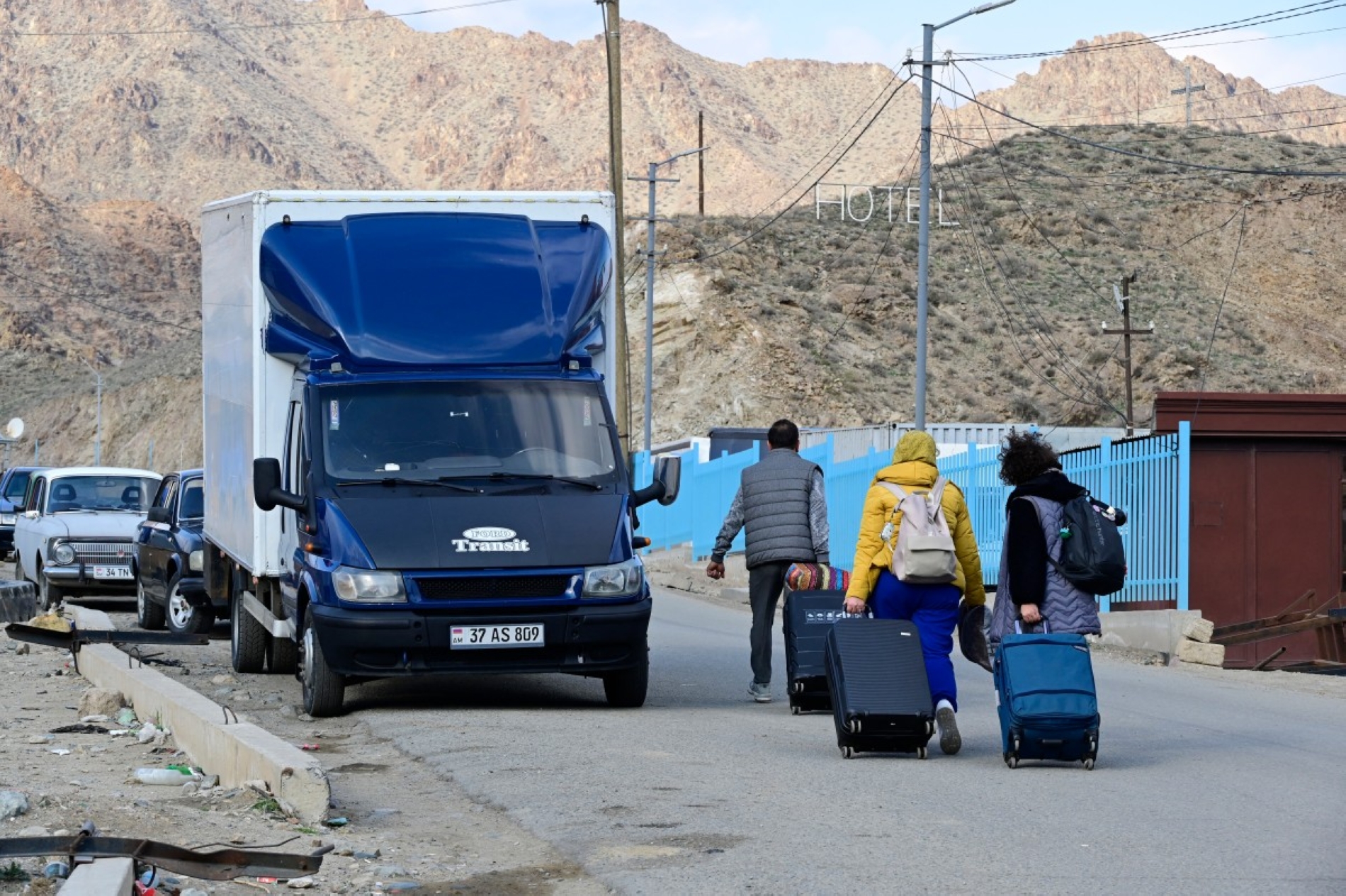
Iranian refugees carry their belongings after crossing the border from Iran into Armenia at a border checkpoint in the town of Meghri, southern Armenia, on 5 March 2026.

Refugee surge

There are political risks for Armenia if Iran descends into chaos, with tens of thousands of Armenians who call Iran home. Armenia has seen recent influxes of Armenian refugees from Syria, Lebanon, and Nagorno-Karabakh, the latter in September 2023, while the Russian invasion of Ukraine in 2022 also saw tens of thousands of Ukrainians fleeing to Armenia. A new wave from Iran would lead to problems in housing and social services in this small Caucasus country.

On a practical level, Armenia and Azerbaijan have seen some benefits from the war against Iran. For example, the closure of Iranian airspace and drone attacks on Gulf countries mean that many commercial airlines are now flying through a narrow air corridor above Azerbaijan and Armenia, bringing new revenue to both.

War is also expected to further boost a trade route named the Trump Route for International Peace and Prosperity (TRIPP), about which US Vice President JD Vance recently visited both countries. The route is expected to start operating by 2030 and could prove crucial if transit through Iran becomes difficult. But long-term planning would currently be brave.

The political, security, and economic implications of the war in Iran continue to unfold in real time, with Armenia and Azerbaijan deciding their next moves. The region could soon be a very different place.

font change