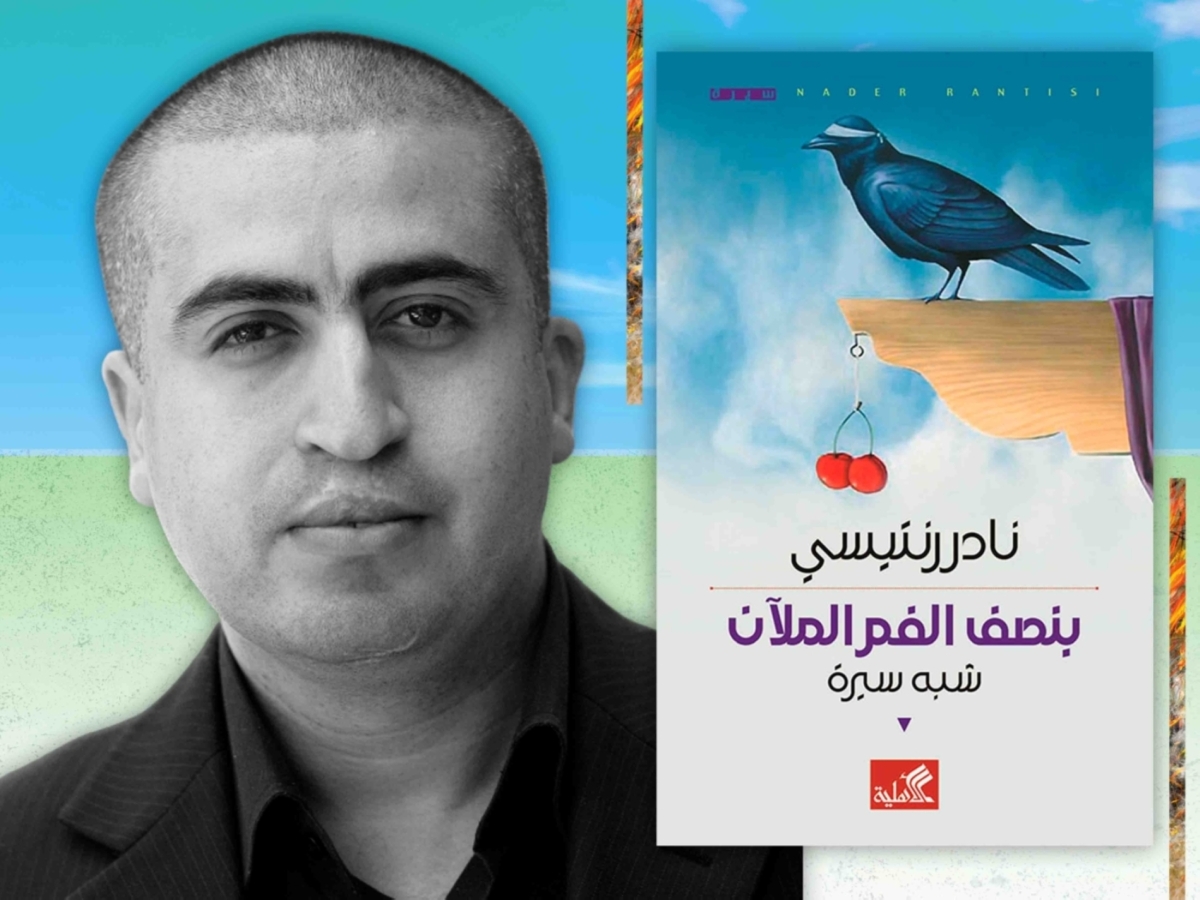
'The Palestinian writer is fortunate to have a never-ending cause'

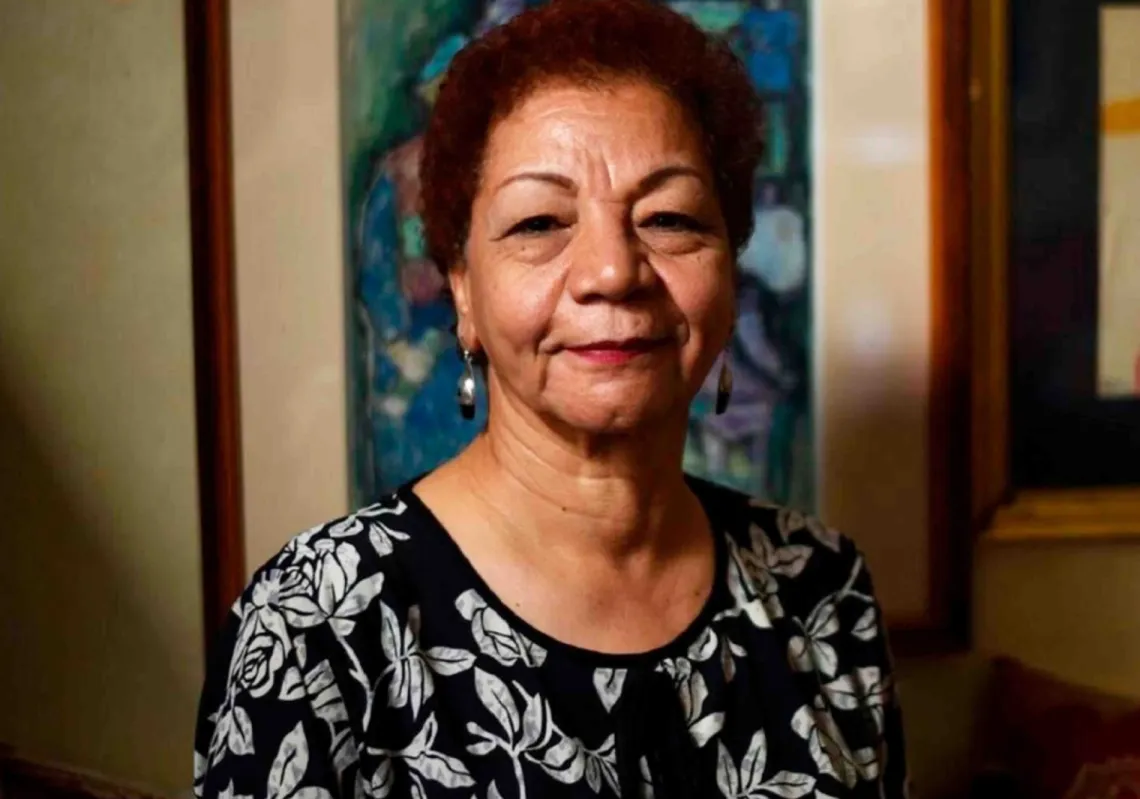
Palestinian novelist Nader Rantisi has spent years tackling weightier themes, from history to identity, while also examining the mundane aspects of everyday life

Al Majalla

'The Palestinian writer is fortunate to have a never-ending cause'

From a book that reconstructs a wounded Palestinian childhood to a new short story collection focusing on the disorientation of contemporary life, Nader Rantisi’s writing is shaped by change more than by memory.

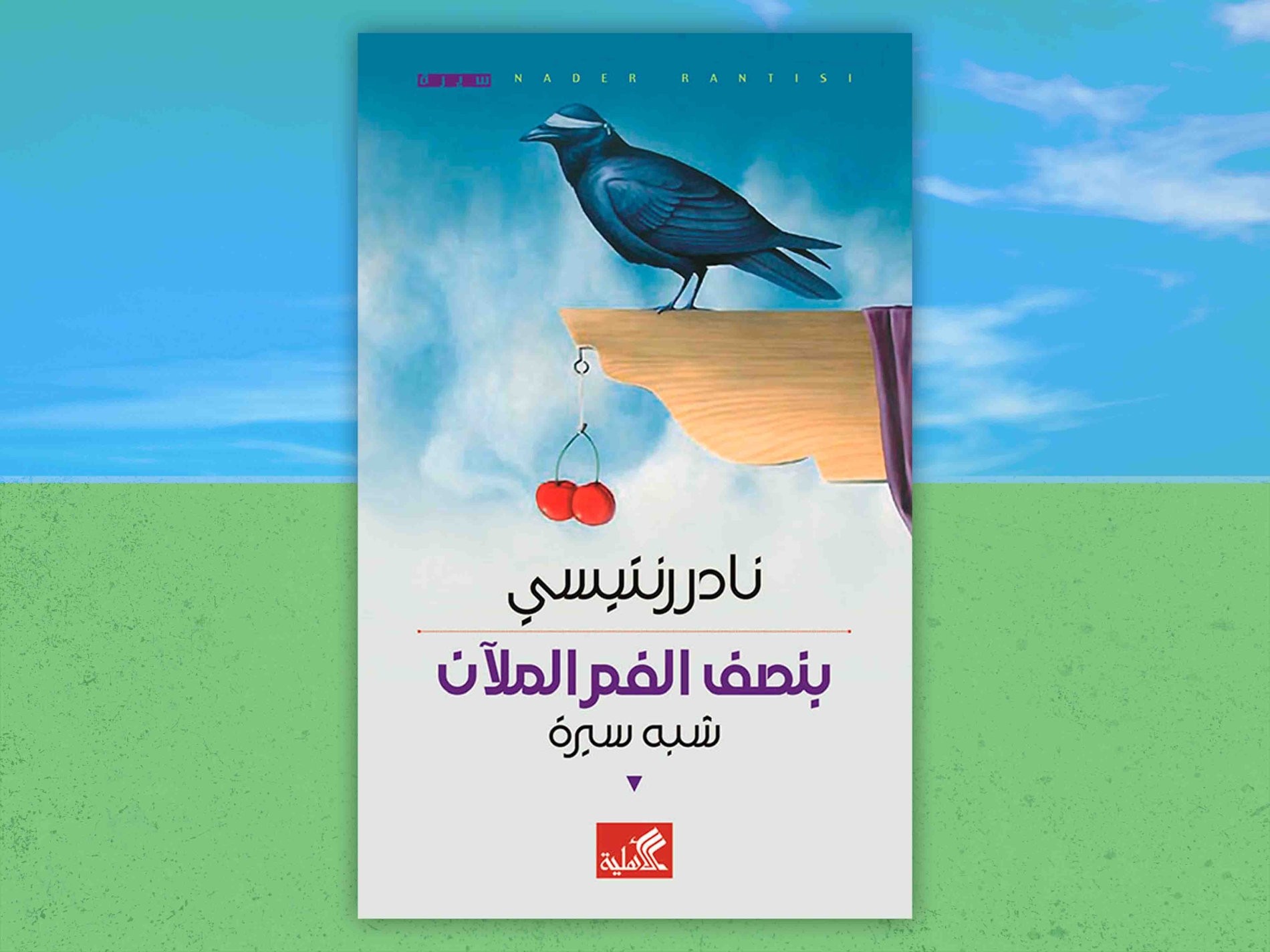
In Half a Full Mouth, a quasi-memoir, the body becomes an archive of pain and exile, and the family a mirror reflecting a wider history of loss and uprooting, while in his new short story collection, he looks at daily life, whether that be fragile marriages or the isolation caused by excessive screen time.

Shortly before publication of this series of short stories, Rantisi spoke to Al Majalla about the hidden thread between texts, between geographical and digital exile, and between a home threatened by war and one threatened by loneliness. Here is the conversation.


Your new short story collection leans towards daily life, but in Half a Full Mouth, you were concerned with memory and exile. How do you see the shift from memory that is collective and personal to one that is digital?

It’s a forced shift. In Half a Full Mouth, I emptied everything from the life of a child, a family, and a country. I weighed the narrative down with intimate, borderline details along a rising timeline spanning 30 years of a boy’s life, his country, and his temporary addresses. I wanted it to be a condensed cinematic reel that settled on no single protagonist or plot.

Through the incomplete mouth of someone born with a cleft lip, I narrated Iraq’s wars in the 1980s and 90s, traced chapters of the Palestinian Nakba, and told the story of the father and mother—their marriage, infidelity, misery, drama—until the invasion takes place and the mother leaves with her child, scarred physically and mentally, forced to journey from Kuwait to Jordan.

If there is a thread between the two books, it is the moment when the events of Half a Full Mouth end, after the American invasion of Iraq and the fading of the Second Palestinian Intifada, in the early years of the new millennium. By then, the child has become a young man, despairing of the riddle of his mouth. At that time, he held his first mobile phone, a tool that carried him into the contemporary digital world, which I first devoted to the book You Delete Half Your Life, published in Beirut in 2012.
In stories like On the Beach, Above the Mountain and A Spoon and Precious Things, there is a tension between virtual reality and material reality. Is this an extension of the themes of body and language in Half a Full Mouth?

Perhaps the extension lies in the fact that there is always a parallel life. In the 1980s and 90s, before the internet, a parallel life existed in what we imagined, in what we did not possess, and in what we expected but never happened. In the 21st century, there is only one life—both virtual and material, fragmented into images, videos, short phrases claiming wisdom and perfection, and the angry opinions of those ready to fight any difference, even linguistic differences.

In the latest stories, there is a clear focus on the loneliness produced by the digital age, and of love through (emojis of) red hearts and digital lips. You fall asleep with the phone on your bed. You only use your voice to cough. This is a life that you think is complete, except for the human element.

As a child, I felt incomplete, like Palestine. I often linked my difference, my distorted speech, and hearing loss to Palestine's unique circumstances

Palestinian novelist Nader Rantisi

In this collection, strained relations seem to be the central axis. Was this a conscious choice to rethink the meaning of home and family?

The shift in the short story collection moves from the personal to the general, from an individual experience to multiple experiences, in other exiles after Kuwait. What happens in one home is what happens in homes. I do not claim complete fidelity in depiction, because I assigned many details and stories to imagination, presenting these realistic models with only partial faithfulness.

Is there a thematic or aesthetic thread that binds the stories in the new collection?

Thematically, there are two lines. The first draws on exile, longing, loneliness, lacking, grinding work routines, and digital relationships. The second returns to the neighbourhoods of Beirut and Amman, their streets and hotels, in stories concerned with existence, relationships, and punishment. Aesthetically, cinema appears in more than one story, whether through films, characters, or techniques, but there is a deliberate variation in narrative approaches, so no two are written in the same style.

The title of Half a Full Mouth carries a paradox. Did you intend the bodily defect to become a metaphor for a fractured Palestinian existence?

I remember writing in a school notebook that I was incomplete, like Palestine. I often linked my difference, my distorted speech, and the hearing I lost in Kuwait to Palestine's unique circumstances, then later added my Palestinian identity itself to the list of absence. The 'full' part in the title traces back to a phrase by the great poet Mahmoud Darwish: 'Carry your country wherever you go, and be narcissistic when necessary.'

Palestinians have the misfortune of being Palestinian, but the Palestinian writer may be fortunate to have a never-ending cause

Palestinian novelist Nader Rantisi

The book revisits your childhood in Kuwait and the family's move to Jordan after the Gulf War. How did you balance the personal and the public?

No tool, however sharp, can separate public from private, especially in warm social atmospheres like those that prevailed in Kuwait in the 1970s and 80s. The 1990 war brought the public into every home in the region, followed by a new Palestinian migration to Jordan.

The public was also present in all my father's conversations, including the communist journalist who helped defend Kuwait against invasion. In the book, the family was poor but not cut off from its roots. It had social and national extensions, and a father who talked politics even at the dining table, which was made of newspaper sheets.

The father's presence comes laden with disappointments and ideology, while the mother appears more steadfast. Was that a conscious choice?

I was absolutely faithful in conveying their image. My father was not formally educated. This complex stayed with him for life (he died aged 54). He worked in modest jobs before pushing himself to learn writing, then journalism, through evening study. He became a party member and a party journalist, but he remained poor, regretting every opportunity that slipped away because of his limited schooling.

My mother remains steadfast. She placed my father and the family above all else and carried us through. Five children would not have made it after my father's early death without her steadiness.

What draws you to the short story genre?

It is like a quiet neighbourhood, with few residents. Over three decades, many of its writers have left for the more famous neighbourhoods of the novel, so you write the short story without panting after prizes, bestseller lists, hall lights and book fairs. You write with less concern for the whims of the reader and what readers want. You write a story because a cat came into your home. You don't need to kill the cat for the story to become a novel.

The short story is like a quiet neighbourhood, with few residents. Over three decades, many of its writers have left for the more famous neighbourhoods of the novel.

Palestinian novelist Nader Rantisi

Does the short story give you space to experiment with new forms of language compared with writing a memoir?

All writing gives you that space. All literary forms can be subjected to every kind of experiment in language, structure, narration, and beyond. I experimented in Half a Full Mouth. I'm not sure about the outcome, but from the reactions, many felt that reading it was deeply enjoyable, and it retained its element of suspense across its chapters, which brought it closer to the art of storytelling and the atmosphere of the novel.

Do you think writing can make up for the gaps that diaspora leaves in memory and belonging?

In general, writing does not make up for anything. I don't like to load it beyond its capacity. Sometimes it is a job for a limited income, and often it is simply a talent. For me, writing was compensation for a nasal, distorted voice. That is enough for me.

Can Palestinian literature today renew its language and tell its story without falling into repetition?

Palestinians have the misfortune of being Palestinian, but the Palestinian writer may be fortunate to have a never-ending cause. After eight decades, the Palestinian people have not known political stability. From the tent to the rifle to the negotiator's file, the Palestinians' cause cannot even be confined to a single geography. Consider the footballers at Club Deportivo Palestino in Chile.

What role would you like your works to play in the Arab and Palestinian literary scene?

The scene is crowded, and I am short. It is fast, too. There is no longer a Mahmoud Darwish to sit at the summit of poetry for 40 years, or a Naguib Mahfouz for the novel to be tied to his name for 60 years. What I used to hope for, and still hope for, is occasional messages of praise for my writing. As for later, I am not anxious about my part in the scene.

font change