The return of Al-Jazira and the question of Syria’s economic renewal

As Raqqa, Deir ez-Zor, and Al-Hasakah return to state authority, this resource-rich region re-emerges as a cornerstone of economic recovery

Eduardo Ramon

The return of Al-Jazira and the question of Syria’s economic renewal

When people speak of Al-Jazira’s return to the national fold, they refer to the provinces of Raqqa, Deir ez-Zor, and Al-Hasakah—a region of profound strategic and economic significance. This vast expanse is home to Syria’s principal oil and gas fields, yields rich harvests of wheat, barley, and cotton, and sustains expansive herds of sheep, cattle, and goats. Most importantly, it shelters a reservoir of human potential—skilled, industrious, and historically pivotal in advancing the nation’s productive capacity.

Together, these three provinces comprise nearly 30% of the Syrian Arab Republic’s total territory. The restoration of Al-Jazira to state authority opens the door to judicious and far-reaching utilisation of its resources, enabling every corner of the country to benefit from a region vital to economic recovery, social cohesion, and human advancement.

With sound governance, these resources have the potential to generate billions of dollars a year for the public treasury, bolstering the national budget and enriching education, healthcare, and public services. Ensuring measures are taken to safeguard these assets against misappropriation is essential. In a country tasked with reconstruction, development, and job creation, steady stewardship remains key.

Al-Jazira is home to approximately 14 oil and gas fields, the most prominent of which are in Al-Hasakah, including the Suwaydiya field, Syria’s richest in terms of oil output.

AFP
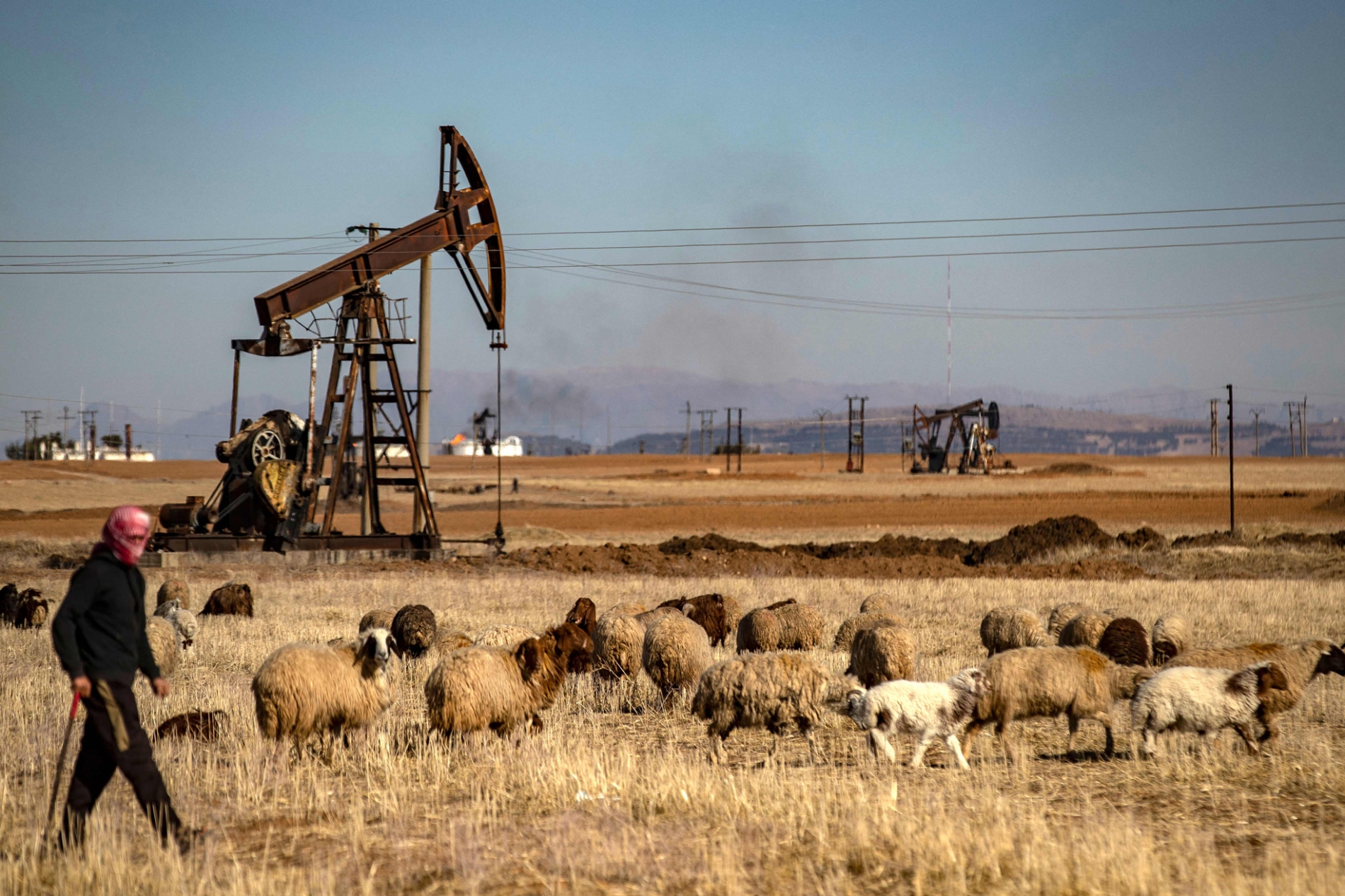
A sheep herder near the Rumaylan military site in northeastern Syria, on 8 January 2025.

Poised for revival

The oil fields of Al-Hasakah include Rmelan, known for both its oil and gas production, and Karachok. These fields have been producing crude since the 1960s and possess confirmed reserves estimated at 2.5 billion barrels. The crude from this region has a 7% sulphur content and an API gravity of 24°. It is heavy, asphaltic oil.

To render it suitable for domestic refining, it must be blended with lighter crude—specifically the 36° API oil from the Deir ez-Zor fields. The Homs refinery addressed this requirement by installing a thermal cracking unit to maximise output from the heavy blend. Much of this oil has historically—prior to 2011—been exported to Europe, including Italy, Greece, the UK, and several Eastern European nations.

The current production capacity of Al-Hasakah stands at approximately 100,000 barrels per day (bpd). With redevelopment, this figure could rise to 200,000bpd. The cost of rejuvenation is expected to remain modest. The fields were neither heavily damaged nor entirely shut down, and they continued to operate, with a portion of their output smuggled into neighbouring territories.

In previous years, the Syrian government purchased some of this oil through intermediaries affiliated with the Syrian Democratic Forces (SDF), who had seized control of the fields and sold parts of their production to Türkiye and the Kurdistan Region of Iraq. The past decade witnessed an extensive smuggling network that deprived the Syrian state of vital revenues due to the SDF’s hold over the region.

Now that these fields have returned to the Ministry of Energy’s jurisdiction, following recent advances by the Syrian army, investment can proceed on a more secure footing. Syrian expertise—long embedded and highly experienced in production drilling, extraction, and reservoir management—can once more be fully engaged. Pipelines may be rehabilitated, restoring crude oil flow to the port of Tartus for export.
Reuters
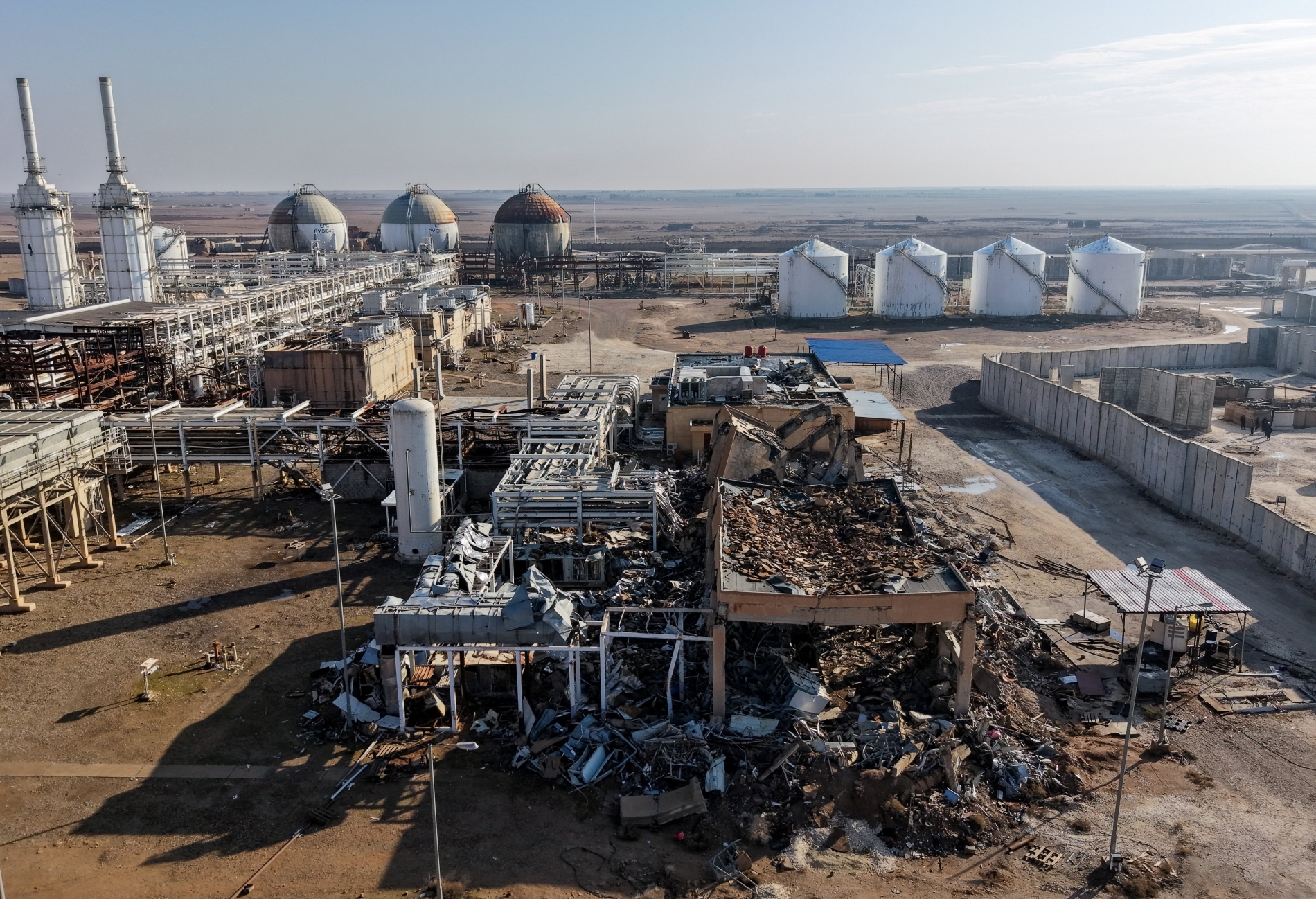
Damage to the Conoco gas plant, after it came under the control of the Syrian government following the withdrawal of the SDF forces from the Deir ez-Zor countryside, Syria, on 19 January 2026.

The potential of light crude

Al-Jazira is also rich in light crude fields yielding 36° to 37° API, placing it in close comparison with Brent Crude. Among these fields, the most prominent is Omar, the largest in this category. It could produce 80,000bpd if the damaged infrastructure is repaired and the production systems are modernised.

Shell’s longstanding expertise in exploration, drilling, and production significantly shaped the early foundations of the oil sector in Deir ez-Zor. American firms, including Bechtel, also played a role in the region’s development. At an earlier stage, the French company Total was commissioned to advance both the Omar and Taym fields, the latter located to the east of Deir ez-Zor.

With appropriate investment and enhancement, the combined output of these two fields could reach 150,000bpd. Further output may be drawn from the Tanak and Markada fields and a constellation of smaller sites, pushing overall production even higher.

Between 2011 and 2013, total output from the Al-Hasakah and Deir ez-Zor fields reached approximately 400,000bpd. By contrast, in the late 1980s and early 1990s, Syria’s oil production had surged to between 600,000 and 700,000bpd. Revenues at the time hovered around $1.8bn annually. However, these substantial sums never made their way to the state treasury.

This misappropriation left the Syrian state burdened by persistent deficits, culminating in a chronic balance-of-payments shortfall. The country’s most vital economic asset—its oil revenue—was diverted and administered from a discreet office in the Malki district of Damascus, overseen by Mohammed Makhlouf, father of Rami Makhlouf and brother-in-law of Hafez al-Assad, assisted by two engineers. This trio exercised control over the companies granted exploration rights and the firms authorised to purchase crude, which, in turn, paid commissions to the same office. Their influence extended to a network of operations in Cyprus and London.

In this climate, Syria endured its most severe economic crisis. Employment prospects diminished, investment faltered, and the state struggled to finance even its most essential imports. The prime minister could access no more than $300mn to secure wheat and medical supplies and respond to a narrow range of pressing needs.
AFP
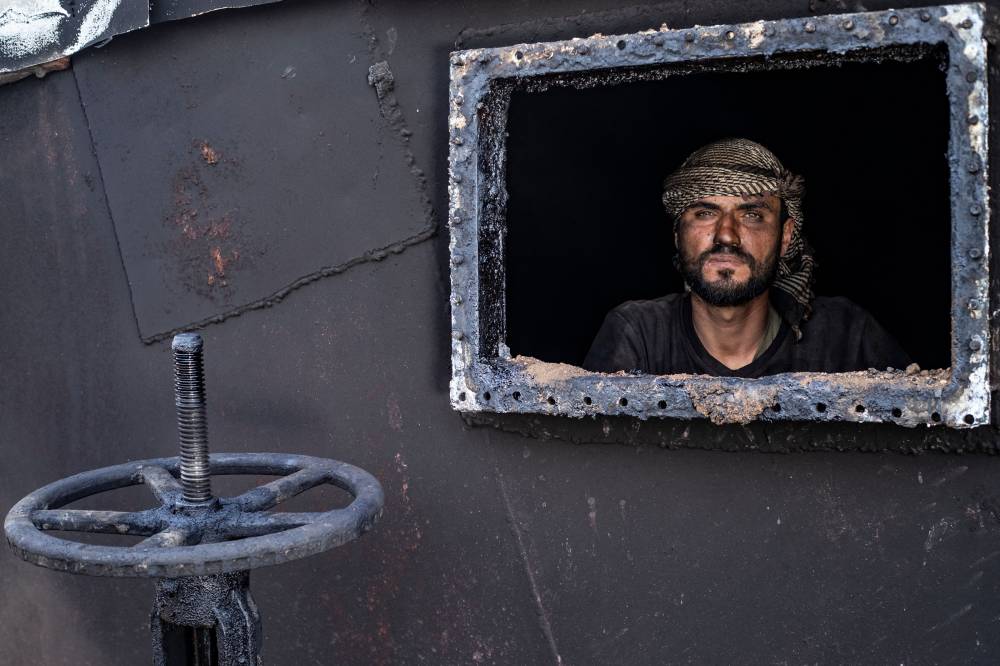
A worker at a primitive oil refinery poses for a picture at the facility in the town of al-Qahtaniya in Syria's Kurdish-controlled northeastern Hasakah province, near the border with Türkiye, on 15 November 2021.

Syria’s natural gas fields

At the forefront of Syria’s natural gas resources stands the Conoco field. Current production is around 450 million cubic feet per day, equivalent to approximately 13 million cubic metres per day. The Tabiyah plant, located atop the Tabiyah field, takes its name from the Conoco company, which established a processing station there in 2000.

Additional reserves have been identified along the corridor stretching from Al-Nabk and Deir Atiyah to the town of Qarah in the Damascus countryside. The Qarah fields produce a notable share of Syria’s natural gas, with output estimated at roughly one million cubic metres per day. Production began from individual wells in 2018 and is reported to be capable of reaching 150,000 cubic metres per day, or about 5.3 million cubic feet.

Extraction takes place from wells numbered Qarah-1 and Qarah-3, as well as Qarah-4. The nearby Al-Bureij well yields around 200,000 cubic metres daily, while the Qarah-8 well is now in operation. Investment in the rehabilitation of these fields and upgrading their infrastructure is expected to further raise output.
For progress to be made, the gas sector not only requires restructuring but also the establishment of an integrated national database

For progress to be made, the gas sector not only requires restructuring but also the establishment of an integrated national database. The gas fields of Al-Shaer and Ebla, which form the backbone of Syria's energy security, must also be restored. Exploration in the Al-Nabk-Deir Atiyah-Qarah corridor, an area believed to hold substantial untapped potential, must also be resumed. 

More broadly, estimates suggest that the wider eastern Mediterranean basin, including Syria's maritime economic zone, contains vast quantities of natural gas. Confirmed onshore reserves alone are assessed at around 240 billion cubic metres, while total reserves are estimated at approximately 40 trillion cubic feet.

Present output is estimated at around 90,000 barrels of oil per day from 87 fields, alongside approximately 7.5 million cubic metres of natural gas daily. With development, these figures could rise to 200,000 barrels of oil per day and more than 15 million cubic metres of gas. This, then, is the scale of Syria's expanding fossil wealth following the reintegration of the four eastern provinces.

AFP
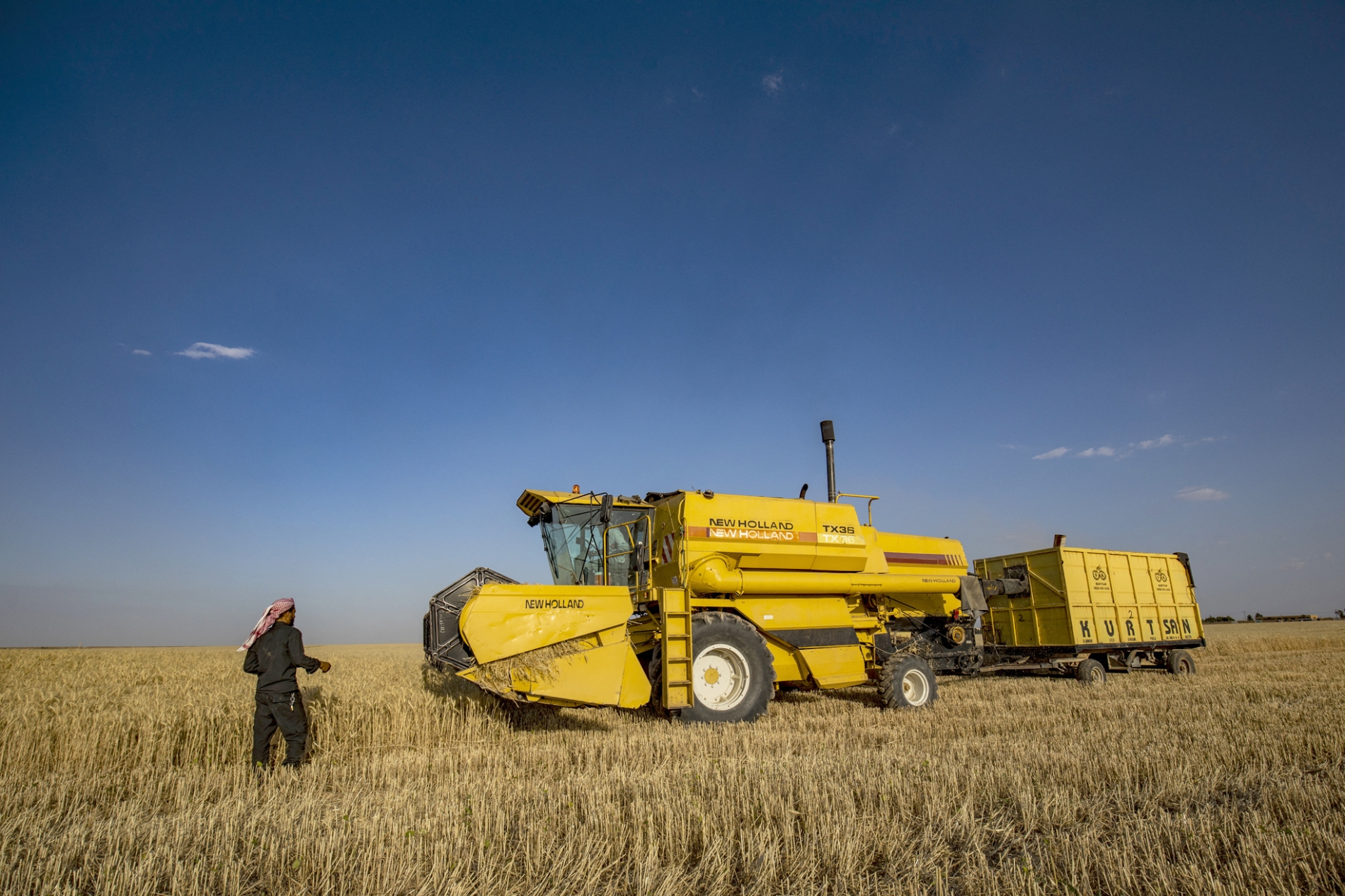
A farmer harvests wheat fields in Raqqa, northeastern Syria, on 23 May 2024.

Al-Jazira: a repository of minerals

Al-Jazira spans vast stretches of arable land devoted to grain cultivation. In productive seasons, Syria's harvests have reached roughly 4.5 million tonnes of wheat, 1.5 million tonnes of barley, and close to one million tonnes of cotton. Fields east of the Euphrates account for nearly 80% of this output. 

The region also sustains significant livestock herds. At one point, Syria's sheep population alone numbered around 25 million Awassi, alongside roughly 200,000 head of cattle, as well as various breeds of goats and other animals.

To this agricultural wealth must be added the mineral and industrial inputs found across Al-Jazira. Mount Abdulaziz and the Bishri range contain natural asphalt deposits, while rock salt mines lie at the entrance to Deir ez-Zor. The area also contains uranium and minerals used in silicon-based industries. These resources, readily available yet still awaiting investment, add another layer to the region's promise. 

When a territory yields such abundance—both above and below the ground—the state must take the lead in driving investment, laying the foundations for an industrial base anchored in agriculture and fossil resources.

Syria has regained valuable resources. Investment can now be directed toward its people, creating a powerful impetus for renewal

A blueprint for regional recovery

A priority is the construction of an oil refinery in the Raqqa area, with a capacity suited to local output. It should be located at a safe distance from the Euphrates and from residential zones to avoid pollution—a lesson underscored by the experience of Homs, where refinery operations and repeated airstrikes caused widespread toxic emissions, endangering nearby communities and ecosystems. 

A cluster of industries based on petroleum and gas derivatives can be established around the refinery, including plants producing ethylene and methanol, facilities for organic fertilisers, and units manufacturing plastic pellets and polymers. The development of such industries can advance in parallel with the reactivation of the hydroelectric turbines at the Euphrates Dam. Of the dam's six turbines, only two are currently operating, generating approximately 150MW. If the remaining turbines are brought back into service, total output could reach around 450MW—a supply sufficient to support industry and household consumption across the three provinces.

Natural gas can also be harnessed to supply fertiliser production, sustain ammonia facilities, drive sugar processing, and power the cement plants required to meet Syria's reconstruction needs.

AFP
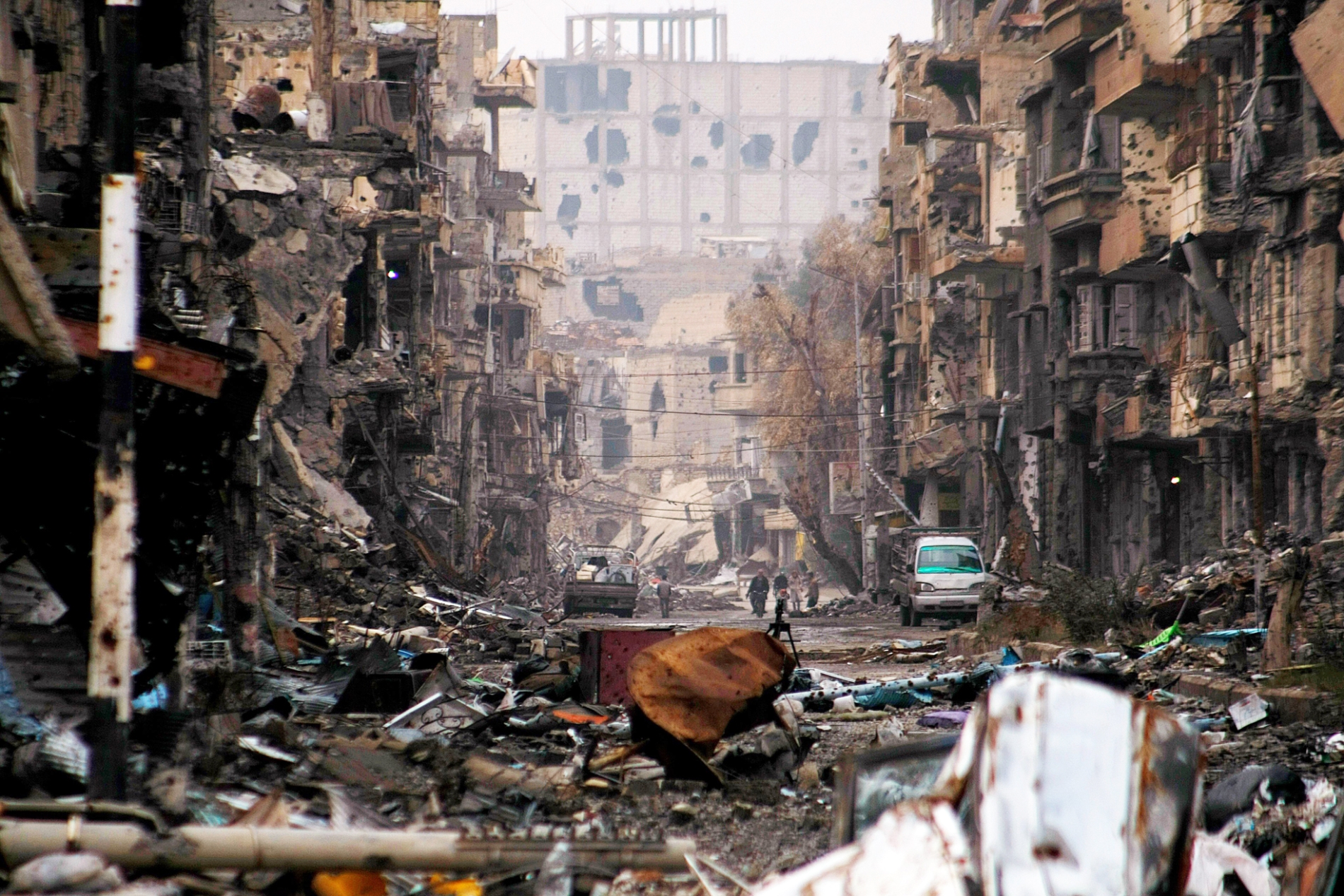
A destroyed neighbourhood in Deir ez-Zor in northeastern Syria in January 2014

Nearly 80% of Deir ez-Zor city lies in ruins, and much of its surrounding countryside remains devastated. These areas require comprehensive rebuilding. A clear investment roadmap—announced publicly and governed by transparent regulations—would encourage both foreign and regional investors to engage with a region rich in opportunity. 

Establishing a large industrial free zone in these provinces would provide space for industrial, agricultural, and research initiatives, while supporting employment strategies that draw on the region's human capital. The return of displaced residents to their towns and villages would restore a vital workforce, while revitalising consumption and production alike.

This promising region may justly be seen as the vanguard of Syria's wider renewal. Its revival should be matched by modern transport links, highways suited to contemporary needs, and high-speed rail networks, connecting production zones with centres of consumption, as well as the industrial hubs of neighbouring cities and beyond.

Such a vision is neither a flight of fancy nor idle speculation. It lies within reach, provided investment is guided with deliberation and foresight. Integrating agricultural output, especially wheat and other grains, with flour mills can significantly increase its value beyond what raw exports provide. 

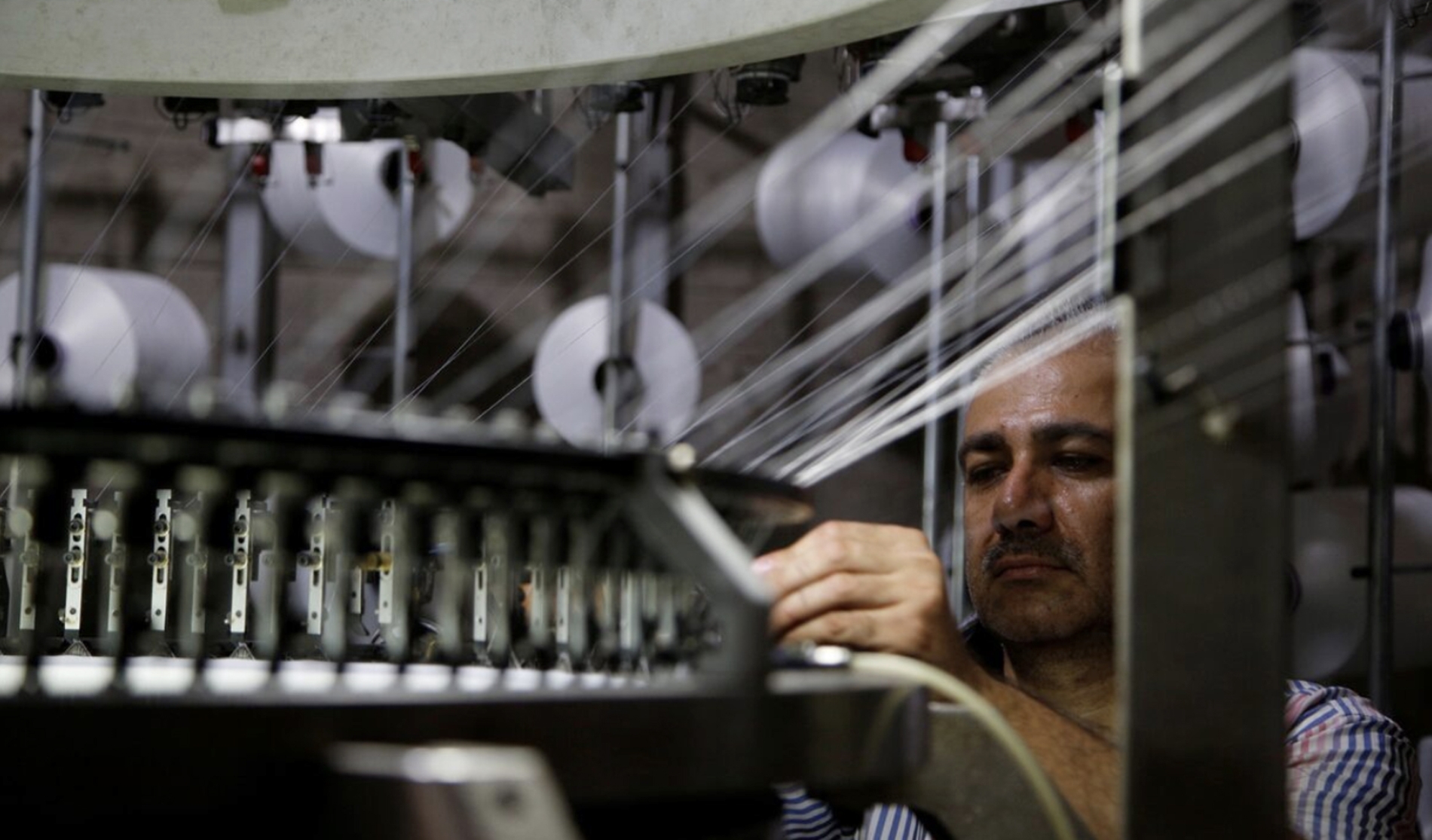
Cotton, when linked to ginning facilities, spinning and weaving mills, and garment production, can form the backbone of a textile industry with genuine economic and export potential. The same holds for oil extracted from cottonseed and for wool from sheep and goats, both of which can support a value-added textile sector.

Reuters
A man works on a cotton-spinning machine in Aleppo.

Factories for canned foods and preserved goods can draw on the abundant production of vegetables, fruits, and meat. Such industries can meet local demand while also supporting exports, alongside quantitative and qualitative output expansion and careful attention to competitiveness in destination markets. This, in turn, would create jobs for skilled labour, enable the training of unskilled workers, and generate broader momentum toward the renewal of the agricultural, industrial, and service sectors. 

Pursued in this way, resources can be used to optimal effect, building a promising Syria that serves its population, expands production, and increases annual economic growth to 7%, and potentially even 10%. Such a pace would help bridge the gap between the losses of the lean years and the ambition of a more prosperous future.

Impetus for renewal

Syria has regained valuable resources, and attention and investment can now be directed toward them, creating a powerful impetus for renewal. The land retains great potential, and its people still possess the will and the capacity to rise above years of hardship and decline. A new chapter can be opened, supported by the considerable possibilities that the eastern region, with its three provinces, now offers.

font change